Wen Hua Cai Jing

Search documents
哈萨克1-9月铜产量同比增加1.2%
Wen Hua Cai Jing· 2025-10-17 01:19
Group 1 - The core point of the article highlights the production changes in Kazakhstan's metal industry, with refined copper output increasing by 1.2% year-on-year to 355,305 tons, while refined zinc production decreased by 3% to 193,859 tons, and alumina and unprocessed aluminum production fell by 0.8% to 1,345,312 tons [2] Group 2 - The article discusses the challenges faced by China's copper industry, including rising dependence on foreign resources, overcapacity in the midstream processing sector, and suppressed downstream demand due to high copper prices [2] - To assist the industry in navigating these challenges, Shanghai Nonferrous Metals Network has collaborated with copper industry enterprises to compile a bilingual distribution map of the Chinese copper industry chain for 2026 [2]


金属涨跌互现,美元走软构成支撑【10月16日LME收盘】
Wen Hua Cai Jing· 2025-10-17 00:38
Core Insights - LME copper prices experienced a slight increase, supported by a weaker dollar, but market sentiment was dampened by trade tensions and ongoing U.S. government shutdown uncertainties [1][4] - Concerns over supply tightness due to mining disruptions pushed copper prices to a 16-month high of $11,000 per ton last week [1] Price Movements - LME three-month copper rose by $6, or 0.06%, closing at $10,647 per ton [2] - Other base metals also saw price changes, with three-month aluminum increasing by $42.5 (1.55%) to $2,788.5 per ton, and three-month zinc rising by $25 (0.85%) to $2,973 per ton [2] Economic Impact - The ongoing U.S. federal government shutdown could lead to economic losses of up to $15 billion per week, putting pressure on the dollar [4] - Concerns regarding manufacturing growth and demand have led some companies betting on rising copper prices to reduce their positions [4] Market Outlook - Analysts from Goldman Sachs expect the market to remain in a temporary surplus, with current high copper prices reflecting investor optimism for 2026, driven by anticipated Fed rate cuts, a weaker dollar, and capital expenditures related to artificial intelligence [4] - Significant increases in copper demand are anticipated in data centers and power infrastructure investments over the coming years [4] Aluminum Market - Concerns about tightness in the LME aluminum market have led to spot contracts trading at a premium over three-month aluminum, with premiums rising to over $21 per ton, the highest since February [4]
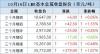
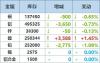
10月15日LME金属库存及注销仓单数据
Wen Hua Cai Jing· 2025-10-16 08:43
Group 1 - The core point of the news is the recent changes in LME (London Metal Exchange) inventory levels for various metals, indicating fluctuations in supply and demand dynamics in the market [1][2][4]. Group 2 - Copper inventory decreased by 900 tons, resulting in a total of 137,450 tons, with a registered warehouse stock of 129,900 tons and a cancellation ratio of 5.49% [1][4]. - Aluminum inventory fell by 3,650 tons to 495,325 tons, with a registered stock of 405,650 tons and a cancellation ratio of 18.10% [1][5]. - Zinc inventory saw a slight decrease of 50 tons, bringing the total to 38,300 tons, with a registered stock of 24,400 tons and a cancellation ratio of 36.29% [1][9]. - Nickel inventory increased by 3,588 tons, reaching 250,344 tons, with a registered stock of 244,122 tons and a cancellation ratio of 2.49% [1][13]. - Tin inventory remained stable at 2,575 tons, with a registered stock of 2,340 tons and a cancellation ratio of 9.13% [1][11].
秘鲁8月铜产量同比减少1.6% 金锌银铅锡产量同比均增
Wen Hua Cai Jing· 2025-10-16 08:17
Group 1 - Peru's copper production in August decreased by 1.6% year-on-year to 242,740 tons [2] - Cumulative copper production from January to August 2025 reached approximately 1.81 million tons, reflecting a year-on-year increase of 2.6% [2] - Peru is the world's third-largest copper producer [2] Group 2 - In August, the production of other key metals showed varied performance: gold increased by 8.1%, zinc by 17.2%, silver by 2.1%, lead by 1.5%, while tin decreased by 3.2% [2] - The cumulative production figures for January to August 2025 indicate a decline in gold production by 1.4%, while zinc, silver, lead, and tin saw increases of 16.1%, 7.4%, 6.0%, and 2.0% respectively [2] Group 3 - China's copper industry faces three major challenges: increasing dependence on foreign upstream resources, overcapacity in the midstream processing sector, and suppressed downstream demand due to high copper prices [3] - A bilingual report titled "2026 China Copper Industry Chain Distribution Map" has been compiled to assist the industry in addressing these challenges [3]
阿根廷矿业部长强调该国在全球能源转型中的重要作用
Wen Hua Cai Jing· 2025-10-16 08:17
Core Insights - Argentina aims to become a key supplier of critical minerals for global energy transition, expanding beyond lithium to include copper, liquefied natural gas (LNG), uranium, and renewable energy [1] - The country possesses a diverse resource base, including the lithium triangle and Patagonia's wind and solar potential, providing a unique platform to support global clean energy transition [1] - Argentina's resource strategy extends beyond lithium, with significant shale gas reserves positioning it as an important LNG exporter and government-supported small modular reactor projects promoting nuclear energy development [1] Industry Environment - Argentina has excellent geological conditions, a mature mining rights legal system, a skilled workforce, and relatively low community conflicts compared to other regions [2] - The approval process for mining projects is reasonable, and societal acceptance of the mining industry is continuously improving [2] - While infrastructure remains a challenge, Argentina's solid fundamentals and transparent regulatory framework provide stability for long-term investments [2] Investment Appeal - The country is actively seeking investment and aims to become one of the most business-friendly nations, allowing companies to operate without unnecessary interference [3] - Argentina welcomes commercial cooperation and is eager to partner with responsible investors committed to advancing global energy transition [3]
沪铜高位调整 社库小幅累积【10月16日SHFE市场收盘评论】
Wen Hua Cai Jing· 2025-10-16 07:57
Core Viewpoint - Copper prices experienced a slight increase of 0.11% at closing, despite fluctuations throughout the day, reflecting ongoing adjustments amid macroeconomic uncertainties and a slight rise in domestic copper inventories [1] Macroeconomic Context - The U.S. federal government shutdown has led to delays in the release of important economic data, with the Federal Reserve's Beige Book indicating little change in recent economic activity and stable employment, although some signs of weakness have emerged [1] - Market expectations for a potential interest rate cut by the Federal Reserve in October have increased, influenced by recent comments from Chairman Powell suggesting that balance sheet reduction is nearing its end [1] - Ongoing trade tensions continue to raise concerns about demand forecasts in the market [1] Domestic Copper Market - Domestic refined copper social inventories have accumulated since the holiday, as downstream demand has been suppressed due to rising copper prices [1] - According to SMM data, the operating rate of refined copper rod enterprises increased by 1.93 percentage points month-on-month to 70.3% in September, but is expected to decline by 6.95 percentage points to 63.35% in October, marking a year-on-year decrease of 5.65% [1] - The significant rise in copper prices in October has severely inhibited downstream purchasing activities, leading to increased finished product inventories during the holiday period, prompting many refined copper rod enterprises to reduce or halt production [1] Price Outlook - Jinrui Futures indicates that short-term concerns regarding tariffs have caused price declines, but the impact is expected to be less severe than in April [1] - Ongoing disruptions in mining operations are providing some support for short-term prices, which are anticipated to continue fluctuating at high levels [1]
LME WEEK:麦格理预计镍市供过于求态势或将持续至2030年
Wen Hua Cai Jing· 2025-10-16 06:52
Core Viewpoint - The global nickel market is expected to remain oversupplied until 2030, driven by a surge in supply from Indonesia and other major producers [1][2] Supply Dynamics - Indonesia's nickel production has increased from 30% of global supply five years ago to 70% currently, with no signs of slowing down [1] - Macquarie forecasts that Indonesia's nickel supply will grow by approximately 16% this year and next, extending into non-nickel pig iron products [1] - Indonesia's nickel production is projected to reach 2.4 to 2.5 million tons this year, with potential capacity increasing to 4 million tons by 2030 [1] - The government of Indonesia is tightening regulations on nickel mining, reviewing environmental permits, and has already seized some mining assets [1][2] Market Conditions - Despite a reduction of 500,000 tons in nickel supply from other regions since 2022, global supply is still expected to grow [2] - Nickel prices have fallen to a low point, with the London Metal Exchange price hitting $15,000 per ton, and many industry players facing negative cash flow at this price [2] - The demand for nickel is shifting towards traditional stainless steel applications as battery usage slows down [2][3] Demand Insights - The stainless steel industry accounts for approximately 65% of nickel demand, showing strong growth due to cheaper nickel prices [4] - In Europe and North America, the impact on the global primary nickel market is limited, with their share being less than 10% [4] - About 55%-60% of nickel production in Europe and North America uses recycled materials, compared to only 15% in China and Indonesia [4]
LME WEEEK:美国铝价格走升刺激加拿大对美国铝出口
Wen Hua Cai Jing· 2025-10-16 06:41
Core Insights - Canadian aluminum producers have increased shipments to the U.S. market due to rising spot market aluminum prices, highlighting the impact of the 50% aluminum import tariff imposed by Trump earlier this year [1] - The U.S. aluminum tariff, effective from June, aims to boost domestic aluminum production and encourage investment in metals used in electricity, construction, and packaging industries [1] Group 1: Market Dynamics - As of October, U.S. consumers are paying a premium for aluminum above LME prices, in addition to taxes, freight, and handling costs [1] - The U.S. is projected to import 2.7 million tons of aluminum from Canada in 2024, accounting for 70% of total U.S. aluminum imports for that year [1] Group 2: Price Trends - U.S. aluminum premiums reached a record high of $0.77 per pound or $1,697 per ton, marking a 250% increase since January [2] - The aluminum premium for Canadian producers has decreased, leading to a 46% increase in European aluminum premiums to $266 per ton since June [3] Group 3: Export Data - From January to August, Canadian exports of unwrought aluminum to the U.S. fell by 22% year-on-year to 1.4 million tons [3] - In August, shipments from Canada to the U.S. totaled 123,474 tons, a 51% decrease from March levels [4] - Conversely, Canadian aluminum shipments to Europe increased by 94% year-on-year to 189,320 tons for the same period [5] Group 4: Inventory and Future Outlook - U.S. Comex aluminum inventories have dropped by 73% since January, totaling 7,661 tons [6] - Analysts suggest that without new trade agreements, aluminum premiums in the U.S. Midwest may have further upward potential [6]
日本、西班牙和韩国就不可持续的铜加工费发出警告
Wen Hua Cai Jing· 2025-10-16 02:44
Group 1 - Japan, Spain, and South Korea issued a rare joint statement expressing deep concern over the declining copper treatment and refining charges (TC/RCs), warning that the current situation is unsustainable for both smelters and miners [2] - The industrial sectors of the three countries stated that the deterioration of TC/RCs is prompting a reassessment of global copper smelting operations, with some companies indicating intentions to reduce or exit copper concentrate smelting [2] - TC/RCs, which are a primary revenue source for smelters, have turned negative in some spot transactions this year, forcing smelters to pay miners for providing smelting services [2] Group 2 - The three countries' industrial departments highlighted that the current market environment hinders the sustainable development of the copper smelting industry and mining sectors in resource-producing countries, increasing dependency on specific nations [2] - They expressed a desire for TC/RCs in copper concentrate trade to return to sustainable levels and committed to collaborating with relevant countries and stakeholders to establish a resilient and sustainable copper supply chain [2] - Japanese copper smelters JX Advanced Metals and Mitsubishi Materials announced plans to reduce copper concentrate processing due to declining fees eroding profit margins [3]
印尼预计锡产量将于2026年恢复正常水平
Wen Hua Cai Jing· 2025-10-16 02:00
Core Insights - Indonesia, the world's second-largest tin producer, is experiencing a rise in global tin prices due to the government's strict crackdown on tin mining [2] Industry Summary - The Indonesian government has implemented stringent measures against tin mining, which has contributed to an increase in global tin prices [2] - Tin production in Indonesia is expected to return to normal levels by 2026 as a result of these government actions [2]