美股IPO

Search documents
美联储即将重启“降息周期”,高盛:财政货币双宽松、新联储主席、AI刺激,都将推高明年的资产和通胀
美股IPO· 2025-09-14 11:00
Core Viewpoint - Goldman Sachs warns that the upcoming interest rate cut cycle by the Federal Reserve is relatively straightforward this year, but may face complexities in 2026 due to loose financial conditions, fiscal stimulus, and AI-related risks [1][3]. Group 1: Interest Rate Cuts - The Federal Reserve is expected to initiate its first interest rate cut next week and continue to lower rates until the end of the year [3]. - Goldman Sachs believes that the current U.S. labor market is softening, with indicators such as unemployment rate and job vacancies showing a downward trend [4]. - Despite uncertainties in actual employment growth, the unemployment rate has already increased, prompting the Fed to normalize policy rates closer to neutral levels [4]. Group 2: Inflation and Asset Prices - As the policy rate approaches 3%, the Fed will face more complex decisions, especially if the labor market does not deteriorate sharply [5]. - The market is pricing in a dovish premium for the terminal rate during Trump's term, reflecting a lower probability of rate hikes [5]. - Since early June, the U.S. financial conditions index has eased by 75 basis points, with the stock market being the largest contributor [6]. Group 3: Economic Growth and AI Impact - Potential GDP is expanding at approximately 2.25%, with strong productivity growth offsetting negative impacts from reduced immigration [6]. - Goldman Sachs anticipates that as the effects of high tariffs diminish and fiscal policy becomes more expansionary, the U.S. economy will gradually accelerate back to potential growth levels by 2026 [6]. - The key question remains how much AI technology can elevate this growth figure [6].


美银Hartnett:弱美元周期开启,“除美元外皆可买”时代来临
美股IPO· 2025-09-14 11:00
Core Viewpoint - The market paradigm is shifting from "Anything But Bonds" (ABB) to "Anything But The Dollar" (ABD), driven by the peak in U.S. nominal GDP growth, leading to a weaker dollar and a return of the bond bull market [1][3][12] Group 1: Market Trends - The anticipated end of the ABB trading logic will occur as nominal GDP growth in the U.S. is expected to peak in 2025, slowing from 6% to 4% due to weakening government spending and labor market [9][12] - Major asset performance has shown significant divergence this year, with gold leading at a 38% increase, while the dollar and oil have declined by 10% and 13% respectively, supporting the view of a weakening dollar [5][12] Group 2: Investment Strategies - The new investment theme for 2025 is ABD, suggesting a focus on non-dollar assets as the dollar weakens and fiscal expansion occurs in Europe and Asia [13] - Gold is highlighted as a strategic asset for hedging against risks of government instability and dollar depreciation, with expectations for further price increases [13] Group 3: AI Bubble and Credit Market - The capital expenditure for AI is rapidly increasing, with spending on data centers rising from 35% to 72% of cash flow, indicating a growing reliance on debt financing [14][16] - The credit spread in the tech sector is at its narrowest since 1997, suggesting a lack of concern among credit investors regarding the risks associated with the AI sector [16] Group 4: Policy, Profits, and Politics - The market perceives the Fed's rate cuts as preemptive, which has led to a narrowing of credit spreads and a rise in interest-sensitive stocks, but caution is advised if certain market indicators reverse [19] - Weak labor market conditions are being offset by a strong wealth effect, with significant increases in household equity wealth projected for 2024 and 2025 [20] - Rising populism poses social risks in the U.S., with high inflation and unemployment potentially leading to policies reminiscent of the early 1970s, which could further support gold and cryptocurrency prices [21]

“5个月大涨32%的美股”碰上“恢复降息的美联储”,下周会发生什么?
美股IPO· 2025-09-14 11:00
Core Viewpoint - The U.S. stock market, after a record surge of $14 trillion, is at a critical turning point as the Federal Reserve is expected to restart its rate-cutting cycle, creating a complex interplay between monetary policy expectations and economic slowdown concerns [1][3]. Market Dynamics - The S&P 500 index has surged 32% since its low in April, driven by expectations of multiple rate cuts by the Federal Reserve this year, with the market fully pricing in a 25 basis point cut next week [3][5]. - Historical data suggests that after the Fed pauses rate hikes for six months or more and then resumes cuts, the S&P 500 typically sees an average increase of 15% over the following year [5][6]. Economic Concerns - Despite strong economic growth and healthy corporate profits, rising unemployment rates have raised concerns about the potential for an economic "hard landing," leading to debates on the extent of necessary rate cuts by the Fed [6][10]. - The market's performance reflects a shift in risk appetite, with traditional monetary policy's influence being challenged by structural changes in investment flows [6][8]. ETF Influence - ETFs have attracted over $800 billion in funds this year, with $475 billion flowing into the stock market, indicating a significant structural force reshaping market logic [7][8]. - The "automatic driving effect" of ETFs, where retirement savings are regularly invested in passive index funds, provides stable support for risk assets regardless of economic data [7][8]. Investment Strategies - Historical patterns during rate-cutting cycles show that cyclical sectors like financials and industrials perform best when the economy is strong and the Fed makes only a few preventive cuts [9]. - Conversely, in periods requiring more substantial cuts due to economic weakness, defensive sectors such as healthcare and consumer staples tend to outperform [9][10]. - Investors are focusing on various strategies, with some favoring small-cap stocks sensitive to interest rates, while others continue to hold leading tech stocks like Nvidia and Amazon, betting on their resilience amid gradual economic slowdown [9][10].

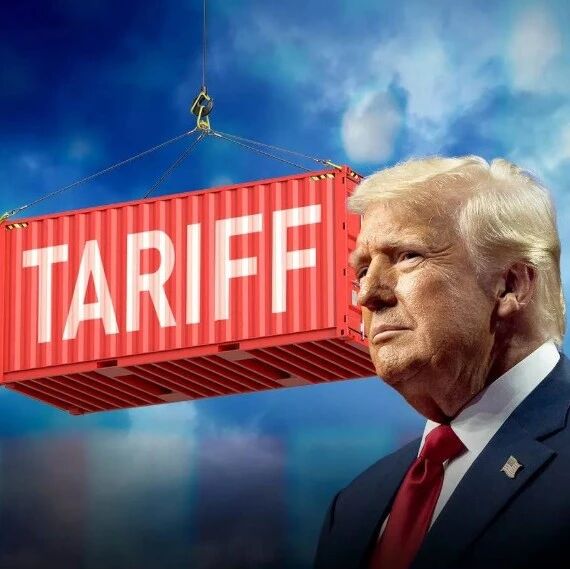
花旗:“雷声大雨点小”!特朗普“关税战”影响远小于“理论水平”,关键原因是“豁免”
美股IPO· 2025-09-13 13:10
Core Viewpoint - The actual effective tariff rate in the U.S. is only around 9%-10%, significantly lower than the theoretical rate of approximately 18%, indicating that the negative impact of tariffs on inflation and corporate profits is overstated [1][3][5] Group 1: Tariff Impact Analysis - The report highlights a significant discrepancy between the theoretical effective tariff rate (17%-18%) and the actual effective rate (around 10%), suggesting that the real impact of the trade war is less severe than perceived [5][6] - The primary reason for this discrepancy is attributed to policy exemptions and carveouts rather than transshipment practices, which are believed to have a limited effect [6][7] - The "tariff-flation" effect has not materialized as expected, with the annualized growth rate of the tariff basket's prices remaining moderate at 2% [8] Group 2: Inventory and Profitability Concerns - U.S. companies have engaged in significant import stockpiling prior to the tariffs, with excess imports equivalent to 5-6 months of normal import levels, indicating that inventory buffers are nearing depletion [9] - There is limited evidence to support the notion that companies are absorbing tariff costs by compressing their profits, as profit margins for the S&P 500 remain stable [9]
高盛TMT大会:华尔街对AI“热情高涨”
美股IPO· 2025-09-13 13:10
Core Insights - The article highlights a significant divide in the tech industry driven by AI, with companies like Oracle experiencing a 359% increase in contract revenue due to AI partnerships, while traditional software firms face scrutiny over their AI monetization strategies [1][2][4]. Group 1: AI Impact on Companies - Oracle's stock surged due to a projected 359% increase in future contract revenue, largely attributed to its deal with OpenAI, showcasing the direct valuation impact of AI on the market [2][4]. - Companies directly involved in AI infrastructure, such as Nvidia and OpenAI, attracted significant investor interest, contrasting sharply with traditional software firms that struggled to demonstrate their AI capabilities [2][3]. - Investors are demanding clear monetization paths for AI from software companies, with a focus on how customers are utilizing AI features and whether they are willing to pay for them [3][5]. Group 2: AI Monetization Strategies - Google Cloud's Thomas Kurian reported that Google has already earned billions through AI, emphasizing the importance of clear AI monetization examples to investors [5]. - Twilio discussed its AI tools that enhance revenue through features like text-to-speech, indicating a growing trend among companies to showcase specific AI applications that drive income [5]. - Grindr's CEO highlighted how their AI features could generate potential matches for paid users, reflecting the ongoing exploration of AI's impact on business models within software companies [5][6]. Group 3: Data Infrastructure Companies - Companies like Databricks, Snowflake, and MongoDB are gaining investor favor as they provide essential support for AI infrastructure, managing the vast amounts of data generated by AI [6]. - The stock performance of data infrastructure companies has been strong, with Snowflake's stock up 43% and MongoDB's up 37% this year, indicating a robust market recognition of their value in the AI ecosystem [6]. - Databricks recently completed a $1 billion funding round and reported annualized revenue exceeding $1 billion from its AI products, underscoring the critical role of data processing capabilities in the AI era [6].



摩根大通:阿里“一体化电商生态”谋划:外卖与闪购的“利润率改善”,高德“到店战略”,组织变革
美股IPO· 2025-09-13 13:10
Core Viewpoint - Morgan Stanley believes Alibaba is building an "integrated e-commerce ecosystem" to improve profitability in its food delivery and flash purchase businesses through four key drivers: user structure optimization, order structure adjustment, fulfillment efficiency enhancement, and monetization capability improvement [1][3]. Group 1: Key Drivers for Profitability Improvement - User structure optimization focuses on enhancing the retention rate and lifecycle value of repeat customers, supported by strong new user retention [5]. - Order structure optimization aims to reduce the GMV share of low-margin categories like milk tea by introducing more Tmall brand merchants to the flash purchase platform [6][7]. - Fulfillment efficiency enhancement leverages a network of 2 million delivery riders and high urban density to optimize delivery costs [8]. - Monetization capability improvement seeks to attract a large user base to the flash purchase platform, capitalizing on rapidly growing traffic for commercialization [9][10]. Group 2: "Taobao Big Member System" - The "Taobao Big Member System" is a foundational loyalty program that integrates multiple domestic businesses, allowing users to accumulate "Taoqi values" through cross-scenario consumption and interactions [11]. - Achieving a high membership level is key to unlocking significant discounts and exclusive privileges, enabling Alibaba to flexibly adjust investment intensity across different businesses [12]. - The overall growth strategy of the ecosystem allows Alibaba to maintain flexibility in competition, even if individual businesses face investment pressures [13]. Group 3: Gaode Map's Role - Gaode Map, with 170 million daily active users, serves as a natural entry point into China's local service market [14]. - The investment intensity for Gaode's local service strategy is expected to be lower than that for food delivery and flash purchase businesses, with monetization opportunities including advertising, coupons, and ride-hailing services [15]. - Gaode's user base and technological advantages provide Alibaba with a differentiated competitive edge in the local life service sector, potentially becoming a new growth engine [16]. Group 4: Organizational Changes - Alibaba's management emphasizes enhancing execution through organizational streamlining, reducing the number of partners by nearly half, and fostering entrepreneurial leadership talent [17][18]. - The reduction in partner numbers reflects Alibaba's management philosophy of "simplifying complexity," aiming to improve decision-making efficiency and execution capability [18]. - These organizational changes support Alibaba's strategic execution consistency and efficiency in building the "integrated e-commerce ecosystem" [19].

两天涨近14%!特斯拉股价大爆发,发生了什么?
美股IPO· 2025-09-13 00:05
Core Viewpoint - Tesla is experiencing significant stock price increases driven by recent developments in its Robotaxi service, new energy storage products, and a groundbreaking compensation plan for CEO Elon Musk, which aims to secure his leadership for the next decade [1][5][6]. Group 1: Robotaxi Service Expansion - Tesla has received approval from Nevada to test its Robotaxi service on public roads, which has positively impacted its stock price [5][7]. - The company aims to expand its Robotaxi service across various states, including California and Arizona, with a target to cover half of the U.S. population by the end of the year [10][11]. - The approval process for Robotaxi services is relatively friendly in Nevada, requiring Tesla to complete an operational self-certification before launching the service [8][9]. Group 2: New Energy Storage Products - Tesla launched the Megapack 3 and Megablock systems, which are expected to significantly reduce installation time by 23% and construction costs by 40% [12][13]. - The energy storage business has shown strong growth, with sales reaching approximately $11 billion over the past year, a 43% increase year-over-year [14]. - Despite being a smaller segment compared to automotive sales, the energy storage business is growing rapidly and is expected to contribute significantly to Tesla's overall performance [14][15]. Group 3: CEO Compensation Plan - Tesla's board has proposed a historic compensation plan for Elon Musk, potentially worth up to $1 trillion, aimed at ensuring his focus on the company's growth over the next decade [6][16]. - The plan includes ambitious targets such as increasing Tesla's market value to $8.5 trillion and producing 1 million Robotaxis and humanoid robots [16][19]. - The compensation structure is designed to enhance Musk's voting power within the company and includes provisions for a succession plan to address future leadership transitions [17][18].


大摩吹响“买中国”号角:外资对中国资产兴趣创2021年新高,资金流入一触即发!
美股IPO· 2025-09-13 00:05
Core Viewpoint - Morgan Stanley indicates that over 90% of investors expressed willingness to increase their investment exposure to the Chinese market during a recent 1.5-week marketing roadshow in the U.S., suggesting a significant influx of capital is anticipated as U.S. investors begin reallocating funds [1][2][6]. Investment Themes - Investors are advised to focus on A-shares, particularly in sectors such as biopharmaceuticals, artificial intelligence/semiconductors, humanoid robotics, and new consumption [1][3]. Drivers of Increased Interest - Four key drivers have been identified for the surge in investor interest: 1. **Technological Leadership**: U.S. investors recognize China's global dominance in humanoid robotics and biopharmaceuticals, making participation in the Chinese market essential [4]. 2. **Improving Policy Environment**: Gradual measures by Chinese policymakers to stabilize the economy and support the stock market have bolstered investor confidence, suggesting that the worst may be over [4]. 3. **Improved Liquidity Conditions**: The liquidity situation in the Chinese market is significantly improving, which supports a longer-lasting stock market rebound and provides better entry and exit mechanisms for investors [7]. 4. **Rising Diversification Needs**: There is an increasing demand among U.S. investors for diversified investments, as their asset allocation has been overly concentrated in the U.S. market, presenting new opportunities in the Chinese stock market [7]. Market Preferences - Historically, U.S. investors primarily focused on ADRs due to time zone limitations, but there is a shift towards greater attention on themes and sectors in the Hong Kong and A-share markets, including biopharmaceuticals, AI/semiconductors, humanoid robotics, and new consumption [8]. - The preferred trading sequence for U.S. investors remains ADRs, followed by Hong Kong stocks and A-shares, indicating a gradual shift in focus [8]. - Despite the heightened interest, the reallocation of funds by U.S. investors to China is still in its early stages, with many needing time to conduct due diligence on individual stocks, especially in humanoid robotics/automation and new consumption themes [8].
The Information:英伟达DGX Cloud云计算业务受挫缩减,AI开发者抵触高价
美股IPO· 2025-09-13 00:05
Core Viewpoint - Nvidia is scaling back its cloud computing business due to limited demand for its DGX Cloud services, which were initially aimed at attracting enterprise customers [3][4] Group 1: Strategic Adjustments - Nvidia plans to use most of its DGX Cloud server capacity for internal research rather than for external customers, indicating a shift in focus [4] - The company previously committed to spending $13 billion to rent its AI chips from large cloud service providers, aiming for $150 billion in revenue through a rental business model [3][4] Group 2: Market Challenges - AI developers are resistant to the high prices of DGX Cloud servers, which are typically more expensive than those offered by traditional cloud service providers [3][4] - The reduction in cloud business efforts may alleviate competitive pressure from major cloud service providers, which account for half of Nvidia's revenue [3] Group 3: Future Prospects - Nvidia's CEO had previously expressed ambitious goals for DGX Cloud, envisioning direct rentals of AI chip servers to large enterprises [6] - Despite earlier claims of success, recent disclosures indicate a lack of prioritization for external customer services in the cloud segment [4][6] Group 4: New Service Models - Nvidia is exploring new service models, such as the DGX Cloud Lepton platform, which allows companies to access GPU resources through a network of cloud service providers [7] - Unlike the original DGX Cloud, the Lepton platform allows cloud service providers to list available GPU server capacity independently, which may create competition with Nvidia's own offerings [8]

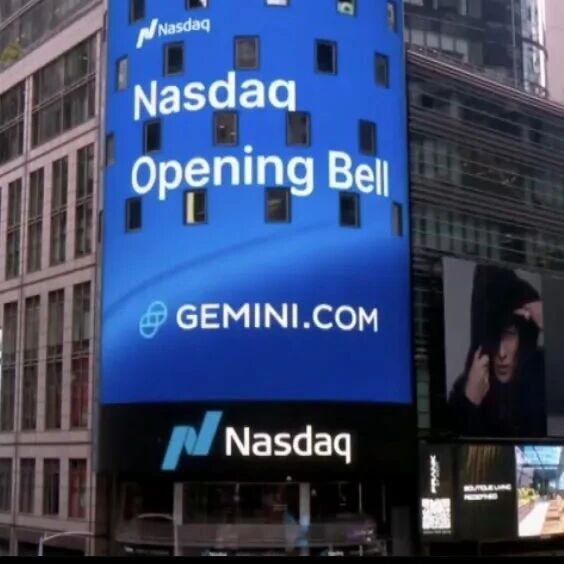
币圈新股本周压轴大戏:Gemini首秀一度飙涨超60%,IPO太火被爆“限售”
美股IPO· 2025-09-13 00:05
Core Viewpoint - The IPO of Gemini Space Station Inc. was highly successful, reflecting strong investor demand for cryptocurrency-related companies, with a significant increase in share price on its debut [1][3][7]. IPO Performance - Gemini's IPO price was set at $28 per share, which was a substantial increase of at least 37% from the previously adjusted guidance range, leading to a closing price of $32, marking a 14% rise on the first day [1][5]. - The stock opened at $37.01, a 32.2% increase, and peaked at $45.89, a 63.9% rise, before closing at $32 [3]. - The IPO was oversubscribed by more than 20 times, with a final fundraising amount of $425 million, despite a lower number of shares issued than initially planned [7][8]. Financial Performance - Gemini reported a total revenue of $142.2 million in the previous year, a 45% increase, but faced a decline in revenue in the first half of the current year, with $68.6 million, down nearly 8% from $74.3 million in the same period last year [12]. - The company experienced a net loss of $282.5 million in the first half of this year, surpassing the total net loss of $159 million for the previous year [13]. - Despite financial challenges, Gemini's platform showed positive trends with a 50% increase in trading volume to $24.8 billion and a 30% growth in platform assets to $182 billion [14]. Market Context - The successful IPO of Gemini aligns with a broader trend of enthusiasm for cryptocurrency companies, with other firms like Circle and Bullish also experiencing significant stock price increases upon their IPOs [17]. - The regulatory environment under the Trump administration has created a favorable atmosphere for cryptocurrency IPOs, with recent shifts in the SEC's stance indicating increased confidence in the industry [18]. - Nasdaq's strategic investment of $50 million in Gemini highlights the growing interest of traditional financial institutions in cryptocurrency infrastructure [19]. Founders' Perspective - Winklevoss brothers, founders of Gemini, expressed optimism about Bitcoin's future, suggesting it could reach $1 million in ten years, viewing it as "Gold 2.0" with significant growth potential [15][16].