美股IPO

Search documents
涨势远超黄金!白银站上60美元,发生了什么?
美股IPO· 2025-12-10 00:52
今年以来,白银涨幅已接近110%,远超黄金60%涨幅,导致金银比价降至70倍以下,为2021年7月以来首次。美联储降息预期、供应短缺,以及因被列 入美国"关键矿产"清单引发的囤积效应等因素,共同推升白银价格走高。 受美联储降息预期升温、全球供应紧张加剧以及被列入美国关键矿产清单等多重因素推动,白银价格周二强势突破每盎司60美元关口,创下历史新高。 今年以来,白银涨幅已接近110%,表现远超黄金和铂金。 纽约期货价格上涨4.4%,至每盎司60.97美元,盘中一度触及每盎司61.06美元的高点;现货价格上涨3.9%,至每盎司60.46美元,盘中一度触及每盎 司60.50美元。 作为对比,尽管黄金今年也上涨了60%并突破4200美元大关,但在涨幅力度上仍逊色于白银,导致 金银比价降至70倍以下,为2021年7月以来首次。 引发本轮行情的直接导火索是美联储的货币政策会议。市场普遍押注美联储将在本周三结束的会议上宣布降息25个基点。更为关键的结构性驱动力来自 于供应端的剧烈收缩。除了传统的产需缺口外,美国地质调查局上个月将白银列入"关键矿产"清单,这一举措加剧了市场对供应稳定的担忧,引发囤货 潮。 降息预期叠加供应紧张 ...


财报前夕“放卫星”,摩根大通:博通明年AI收入将超500亿美元!
美股IPO· 2025-12-10 00:52
Core Viewpoint - Morgan Stanley predicts that Broadcom's AI revenue will exceed $50 billion in fiscal year 2026, driven by the continued ramp-up of Google's TPU and new orders from Meta [1][2][3] Group 1: Short-term Performance - Strong demand for AI networking and custom ASICs is expected to drive Broadcom's revenue for the October quarter and January quarter guidance above market consensus [1][2] - For the upcoming October quarter (F4Q25), revenue is projected to exceed $17.5 billion, with AI revenue expected to reach over $6.6 billion, surpassing the market expectation of $6.2 billion [2][6] - January quarter guidance is anticipated to exceed $19 billion, significantly higher than the market consensus of $18.5 billion, supported by ongoing demand for Google TPU and Meta MTIA projects [2][6] Group 2: Long-term Growth Potential - Broadcom is expected to achieve approximately $20 billion to $21 billion in AI revenue for fiscal year 2025, representing a year-over-year growth of about 60% [3] - The growth is primarily driven by the ongoing iteration of Google's TPU project, with the current TPU v6 3nm (Ironwood) chip in mass production and the next-generation TPU v7 expected to ramp up in mid-2026 [3][5] Group 3: Non-AI Business and Synergies - Broadcom's traditional semiconductor business is gradually improving due to cyclical trends, while VMware's software infrastructure continues to show strong momentum [7] - The report highlights the accelerating revenue synergies from VMware as large enterprise customers renew contracts and upgrade to higher-priced VCF full-stack solutions [7] - Broadcom's strong fundamentals in AI, combined with aggressive synergies in its software business, create a unique investment logic [7] Group 4: Financial Performance and Cash Flow - Broadcom is expected to achieve strong double-digit free cash flow growth, supporting future dividend increases [7] - The company is anticipated to announce a double-digit dividend increase during the earnings call, with strong cash flow also aiding in deleveraging and reducing interest expenses [7]


2025年末冲刺!对冲基金净杠杆飙至99%高位,连续7周疯狂加仓全球股市、美股占大头
美股IPO· 2025-12-09 07:15
Core Insights - Hedge funds have net bought global stocks for the seventh consecutive week, with a significant shift in market sentiment and strategies observed [3][5][11] - The S&P 500 index is nearing its historical closing record, driven by various market forces and expectations surrounding the Federal Reserve's interest rate decisions [3][11] - Corporate buyback activities have surged, with trading volumes significantly higher than previous years, indicating companies' strategies to counter market weakness [11][12] Hedge Fund Activity - Hedge funds' total gross leverage increased by 1.5% to 286.6%, while net leverage rose by 0.4 percentage points to 81.2%, reaching the 99th percentile for the past year [5] - All major regions, except for Asian emerging markets, experienced net buying, with North America leading the gains [5] - The net buying ratio of long positions to short positions among hedge funds is 1.3 to 1, indicating a strong bullish sentiment [3][5] Market Trends - There is a notable rotation of funds from defensive sectors to cyclical stocks, with utilities down 4.83% and cyclical stocks up 5.01% [4] - Quantum computing stocks have seen a five-day increase of 14.61%, while non-profitable tech stocks rose by 9.61% [4] CTA Strategy - CTA strategy funds have shifted to a buying stance across various market conditions, with expected purchases of $29.8 billion in flat conditions and $31.2 billion in rising conditions [7][10] - The model predicts that these strategies will reach target exposure levels in the coming days [10] Corporate Buybacks and IPOs - Corporate buyback activities are at a peak, with trading volumes 80% higher than the average for the same period in 2024 and 100% higher than in 2023 [11] - In North America, new issuances and expansions reached $9.95 billion this week, totaling $390.2 billion year-to-date, indicating a favorable supply-demand balance for stock prices [12] Investor Sentiment - Retail investor sentiment has improved significantly, with the AAII sentiment survey showing a bullish percentage increase of 12.3 points to 44.3% [13] - The CNN Fear & Greed Index rose from 18 to 40, marking the highest level since late October, while Goldman Sachs' sentiment indicator has returned to neutral territory [15]

瑞银预测:美光传统内存DDR毛利率将首次超过HBM
美股IPO· 2025-12-09 07:15
Core Viewpoint - UBS believes that the traditional DRAM market is experiencing a significant shift due to a supply squeeze, leading to enhanced pricing power and profitability for traditional DRAM, which is expected to surpass HBM margins starting in Q2 2026 [1][3][4]. Group 1: Market Dynamics - The shift in industry capacity towards HBM has resulted in a tightening supply of traditional DRAM, while demand remains robust, creating a mismatch that drives up pricing power [7]. - UBS forecasts that traditional DRAM gross margins will reach 67% in Q2 2026, surpassing HBM's 62% for the first time, with margins expected to further increase to 71% in Q3 and 75% in Q4 [5][11]. Group 2: Financial Projections - For Q1 FY2026, traditional DRAM revenue is projected to be $8.22 billion, with a mere 1% increase in shipment volume but a significant 16% rise in average selling price [5]. - UBS's revenue and EPS forecasts for Micron in Q1 FY2026 are significantly higher than management's guidance, driven primarily by improved pricing [12]. Group 3: HBM Business Outlook - Although HBM remains a core growth story for Micron, UBS anticipates a slowdown in HBM revenue growth due to capacity constraints, with Q1 FY2026 HBM revenue expected to grow approximately 35% quarter-over-quarter [8]. - For the full year, UBS estimates HBM revenue will reach $13.05 billion in FY2026 and increase to $21.24 billion in FY2027, with HBM's share of total revenue rising from 17% in FY2025 to 26% in FY2027 [11]. Group 4: Long-term Market Trends - UBS emphasizes that the current semiconductor cycle may last longer than market expectations due to HBM's significant consumption of wafer capacity, effectively creating a "crowding out" effect on the traditional storage market [11][12]. - The report indicates that the structural supply shortage provides a durable competitive advantage for major players like Micron [11].

摩根士丹利两年多来首次下调特斯拉评级
美股IPO· 2025-12-09 07:15
Core Viewpoint - Tesla's stock experienced a significant decline of 3.39% on December 8, closing at $439.58, marking its largest single-day drop in a week, influenced by Morgan Stanley's downgrade from "Overweight" to "Neutral" [1][3]. Group 1: Financial Performance - Tesla's projected P/E ratio for the next 12 months is approximately 210, ranking second among S&P 500 constituents, significantly higher than Palantir Technologies at 186 and lower only than Warner Bros. Discovery at 220 [3]. - For Q3 2025, Tesla reported revenue of $28.1 billion, a year-over-year increase of 12%, achieving a historical high for the period. However, net profit fell to $1.373 billion, a 37% decline, with an operating margin of only 5.8%, the lowest in nearly five years [3]. - Adjusted net profit was reported at $1.77 billion, down 29% year-over-year, attributed to increased operational costs driven by sales, general administrative expenses, R&D for AI, and a decrease in one-time Full Self-Driving (FSD) revenue recognition [3]. Group 2: Strategic Developments - Tesla is preparing to expand its Texas Gigafactory, planning to build a dedicated facility for mass production of its humanoid robot, Optimus, aiming for an annual production capacity of 10 million units [4]. - CEO Elon Musk indicated that the company's Robotaxi fleet is expected to double in size next month, although no specific timeline for commercialization has been provided for these initiatives [4]. Group 3: Market Sentiment and Analyst Ratings - Notable short-seller Michael Burry criticized Tesla's valuation as "absurdly high," suggesting that this situation has persisted for a considerable time [5]. - Tesla's stock has seen a cumulative increase of about 10% this year, underperforming the S&P 500's 16% gain, ending a two-year trend of doubling or high growth [5]. - Morgan Stanley raised Tesla's target price from $410 to $425 based on expectations for its automotive, robotaxi, network services, and humanoid robot businesses, with the Optimus project potentially valued at $60 per share [5]. - Currently, Wall Street analysts have assigned Tesla 28 "Buy," 19 "Hold," and 16 "Sell" ratings, indicating a potential reevaluation of the company's valuation logic amid increasing industry competition and profit pressures [5].

瑞银测算:内存涨价对手机影响多大?
美股IPO· 2025-12-09 07:15
瑞银预测,"十年一遇"的内存供应短缺和价格上涨周期将到来。明年四季度,内存成本预计将占高端手机物料清单(BOM)的14%,而中低端手机甚至 可能飙升至34%,显著挤压厂商利润空间。成本压力或迫使中低端市场的厂商采取减配或提价策略,可能需要提价17%才能完全对冲成本上涨。 一场"十年一遇"的内存涨价潮,预计将显著推高智能手机的制造成本。 瑞银12月8日发布的最新全球智能手机调查报告显示,受AI需求挤压,内存行业正进入一个罕见的供应短缺周期。而内存价格的急剧上涨将不成比例地 冲击手机制造商, 迫使它们在牺牲利润、提升售价或降低配置之间做出艰难抉择。 这一现状将对2026年的智能手机行业构成严峻挑战,尤其是对利润本就微薄的中低端市场。相比之下,拥有规模和高端产品组合的头部品牌处境更有 利,它们更强的议价能力和更高的利润率,为其提供了缓冲垫。 内存成本飙升:2026年手机厂商最大"逆风" 瑞银的行业调查显示,在强劲的AI需求持续挤压供应的背景下,内存行业正进入一个"十年一遇"的严重供应短缺年份。报告预计,DDR和NAND的合同 价格上涨势头至少会持续到2026年第三或第四季度。 这对智能手机原始设备制造商(OEM)构 ...
美银:市场或已不信“鹰派降息”,哈赛特带来“买谣言,卖事实”交易机会
美股IPO· 2025-12-09 07:15
Core Viewpoint - Bank of America anticipates a 25 basis point rate cut by the Federal Reserve this week, but Powell may struggle to present a "hawkish cut," leading the market to potentially bet more aggressively on further cuts in January [1][3]. Group 1: Federal Reserve Rate Cut Expectations - The market expects a 95% probability of a 25 basis point rate cut at the upcoming Federal Reserve meeting, with economic forecasts suggesting an upward revision for growth in 2025-2026, while unemployment rate predictions may also rise [3]. - The median dot plot may indicate two rate cuts next year, with the potential for a more dovish stance from the new Fed chair, Hassett, raising concerns about long-term interest rates [3][6]. Group 2: Liquidity Management and RMPs - Bank of America predicts the Federal Reserve will announce a Reserve Management Purchase (RMP) plan, starting in January with monthly purchases of $45 billion in Treasury securities, exceeding market expectations [4][11]. - This liquidity injection is expected to support arbitrage trading and maintain a low volatility environment, benefiting the front-end market [4][12]. Group 3: Market Reactions and Investment Strategies - The anticipated decline in the 10-year U.S. Treasury yield below 4% is likely to occur, driven by the "buy the rumor" strategy surrounding Hassett's nomination, which may also lower 30-year mortgage rates below 6% [7][9]. - Bank of America maintains an overweight recommendation on agency MBS, non-agency MBS, and CMBS, expecting the MOVE index to decline further, leading to a tightening of spreads [9]. Group 4: Credit and Securitized Asset Allocation - In the credit market, if the new Fed chair adopts a dovish stance, investment-grade corporate bond spreads may initially narrow due to duration chasing, while the yield curve between 10-year and 30-year bonds may flatten [13]. - CLOs are highlighted as resilient assets with good carry yield and price stability, while high-yield bonds face challenges due to volatility driven by AI and shifting Fed expectations [13].
高盛:减肥药进入"以价换量"新阶段,消费化趋势加速,低价将刺激巨大需求释放
美股IPO· 2025-12-09 04:00
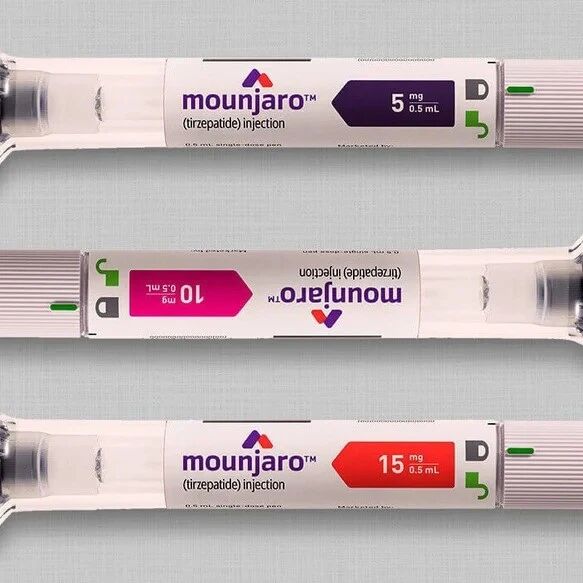
高盛认为,全球减肥药市场正转向"以价换量"新模式,核心驱动力是礼来和诺和诺德等与美政府达成的GLP-1药物降价协议,这将解锁巨大 的"医保"和现金支付需求。同时,DTC(现金支付)渠道、新零售和远程医疗正加速市场"消费化",进一步降低用药门槛。因此,其将2030年 市场规模预测上调至千亿美元。 据追风交易台消息,高盛12月8日发布的报告显示,礼来和诺和诺德近期与特朗普政府达成的定价协议是这一转变的主要催化剂。这些协议将从 2026年开始大幅降低Zepbound和Wegovy等关键GLP-1药物的价格,其中最引人注目的进展是为庞大的美国联邦医疗保险(Medicare)计划覆 盖这些药物打开了大门。 与此同时,直接面向消费者(DTC)的销售渠道、零售商合作以及远程医疗平台的兴起,正共同推动减肥药市场的"消费化"浪潮,显著降低了 患者的用药门槛并刺激了需求增长。 受降价预期推动及消费化的趋势影响,高盛将其对2030年全球抗肥胖药物(AOM)市场的规模预测上调至约1020亿美元。 "以价换量":定价协议解锁三大渠道 根据高盛的报告,礼来和诺和诺德与白宫达成的GLP-1药物定价协议是重塑市场的核心。该协议旨在通过降低价 ...


股价大涨42%!Kymera 口服降解剂疗效媲美达必妥,潜力无限,能否撼动百亿“自免药王”地位吗?
美股IPO· 2025-12-09 04:00
12月8日,Kymera Therapeutics公布全球首创STAT6 PROTAC新药KT-621治疗中至重度特应性皮炎的1b期临床最新数据。受良好数据影响, Kymera Therapeutics股价周一大涨42%,市值达到68亿美元。 挑战药王 : Kymera Therapeutics 的口服 STAT6 降解剂 KT-621 在特应性皮炎 1b 期研究中展现出与 Dupixent 相当甚至更优的疗效。 数据炸裂 :治疗 4 周后, EASI 评分平均下降 62%-63% ,约 75% 的患者达到 EASI-50 ,优于 Dupixent 历史数据。 机制验证 :血液中 STAT6 蛋白降解率达 98% ,皮肤中达 94% ,远超公司预期。 KT-621此次披露为1b期临床数据,同时正在进行治疗特应性皮炎的2b期临床,预计2027年中披露数据,2026年一季度计划启动治疗哮喘的 2b期临床。 BROADEN临床设计如下,探索100mg、200mg两个剂量组,分别入组10例、12例AD患者。 | | Design | | --- | --- | | | · Single arm, open label ...

英国金融时报:特朗普称英伟达可以向中国出售H200芯片
美股IPO· 2025-12-09 04:00
Core Viewpoint - The decision by Donald Trump to allow Nvidia to export H200 AI chips to China raises concerns among U.S. security officials and lawmakers regarding the access to advanced AI technology by China [3][4][5]. Group 1: Export Decision and Implications - Trump announced that the U.S. will permit Nvidia to deliver H200 products to China and other qualified customers, contingent on ensuring national security [3][4]. - The same export policy will apply to competitors like AMD and Intel, which could lead to significant revenue growth for Nvidia if China allows its companies to purchase these chips [4][5]. - Nvidia's stock price increased by 1.7% following the announcement, indicating positive market sentiment regarding the potential for revenue recovery [5]. Group 2: Technology and Market Dynamics - The H200 chip is significantly more powerful than the H20 chip, which was specifically designed for export to China, but it is now considered outdated compared to the latest Blackwell chip [6]. - Nvidia previously agreed to pay the U.S. government 15% of its revenue from H20 chip sales to restore exports, although this agreement is not finalized [6]. - The decision contrasts sharply with the Biden administration's comprehensive export controls on chip-related technologies [7][8]. Group 3: Competitive Landscape - Experts suggest that allowing the sale of H200 chips could provide a substantial boost to China's AI industry, potentially narrowing the technological gap with the U.S. [6][7]. - Huawei has acknowledged that it cannot produce chips superior to the H200 for at least two years, highlighting the competitive advantage that Nvidia could maintain in the Chinese market [7]. - Trump's comments reflect a shift from the previous administration's approach, which aimed to restrict China's access to critical technologies [8][9].