美股IPO

Search documents
巴克莱:详解美国数据中心狂潮,45GW,2.5万亿美元投资,谁在建设,谁在掏钱?
美股IPO· 2025-11-03 04:39
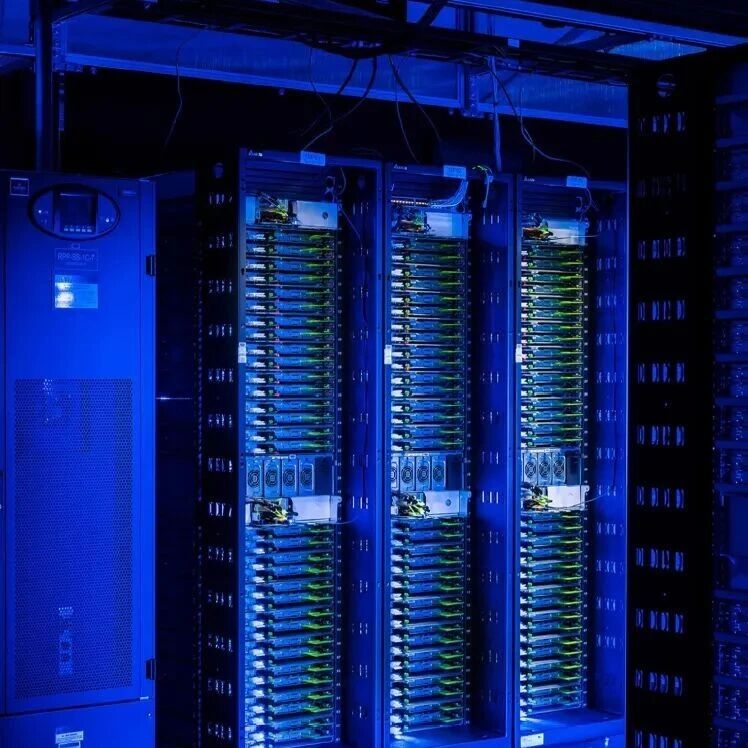
Core Insights - The article highlights a significant surge in data center projects in the U.S., with a total capacity exceeding 45 GW and projected investments surpassing $2.5 trillion, driven by major tech companies like OpenAI, Amazon, Meta, Microsoft, and xAI [4][14]. Group 1: Investment and Capacity - The current wave of data center construction is primarily fueled by the need for advanced AI model training and operation, leading to unprecedented demand for computational power [4][5]. - OpenAI's Stargate project aims for a capacity of 10 GW with an investment of $500 billion by the end of 2025, having already committed approximately 7 GW across various states [8][13]. - Amazon has added 3.8 GW of capacity globally in the past year and is expected to double its capacity by 2027, potentially increasing by about 13 GW in the U.S. alone during 2026-2027 [8][14]. Group 2: Power Infrastructure Challenges - The rapid increase in power demand from data centers is creating significant challenges for the existing U.S. electrical grid, leading to a phenomenon referred to as the "power wall" [4][12]. - Companies are increasingly adopting a "Bring-Your-Own-Power" strategy, opting to build on-site power generation facilities to ensure reliable electricity supply and expedite project timelines [12][14]. - For instance, the Stargate 1 project plans to deploy approximately 350 MW of on-site natural gas generation capacity despite having grid access approval for 1.2 GW [12][13]. Group 3: Financing and Cost Structures - The financing landscape for these massive investments is complex, involving not only the capital expenditures of tech giants but also significant contributions from private equity firms and specialized infrastructure funds [14]. - The construction cost for data centers has escalated, with reports indicating costs exceeding $17 million per MW, and OpenAI's Stargate project reflecting a staggering $5,700 million per MW when including IT equipment [11][14]. - The "Energy as a Service" (EaaS) model is emerging, with energy companies entering long-term power purchase agreements to support data center operations, exemplified by Williams' $2 billion investment in Meta's Prometheus project [14]. Group 4: Supply Chain and Labor Challenges - The explosive demand for power generation equipment is straining supply chains, with heavy gas turbine prices rising by 50% in less than two years and extended delivery times [15]. - Companies are facing challenges in sourcing components and labor, prompting some to acquire second-hand or unused equipment to mitigate long wait times [15].



花旗:美联储12月是否降息,或许取决于“美国政府关门何时结束”
美股IPO· 2025-11-02 06:28
Core Viewpoint - The ongoing U.S. government shutdown is creating a "data fog" for the Federal Reserve, making its December interest rate decision uncertain. The longer the shutdown lasts, the less likely a rate cut will occur, according to Morgan Stanley, while Citigroup remains optimistic about a resolution within two weeks, allowing for potential rate cuts [1][4][12]. Group 1: Impact of Government Shutdown - The duration of the government shutdown directly affects the availability of key economic data, which the Federal Reserve relies on for decision-making. A longer shutdown leads to a higher probability of pausing rate cuts [4][9]. - The Federal Reserve's Chairman Jerome Powell has indicated that the lack of data will lead to more cautious actions, comparing the situation to "driving in fog" [3][5]. Group 2: Market Perspectives - Morgan Stanley believes that the longer the shutdown continues, the lower the chances of a rate cut, emphasizing the importance of timely data for the Fed's decisions [4][11]. - In contrast, Citigroup expresses confidence that the government will reopen within two weeks, which would provide the Fed with sufficient data to support a rate cut in December [12][16]. Group 3: Scenarios Based on Shutdown Duration - Scenario 1: If the shutdown ends next week, the Fed could receive multiple employment reports and key inflation data, supporting a rate cut decision [11]. - Scenario 2: If the shutdown ends by mid-November, the Fed may only have limited data, but state-level unemployment data could still provide some insights [11]. - Scenario 3: If the shutdown extends past Thanksgiving, the Fed may only have access to September's data, increasing the likelihood of pausing rate cuts unless strong negative signals emerge [11]. Group 4: Immediate Economic Pressures - The shutdown has already impacted social welfare programs, with the Supplemental Nutrition Assistance Program (SNAP) benefits ceasing on November 1, affecting up to 42 million Americans [13]. - There is an impending crisis regarding military pay, as funds for military salaries are running low [14]. - Upcoming local elections may create new political momentum to resolve the shutdown [15].



大摩:刚刚,亚马逊的“AI转折点”出现了?
美股IPO· 2025-11-02 06:28
Core Insights - Amazon's AWS has launched Project Rainier, a significant AI infrastructure milestone, now operational and supporting the training of Anthropic's Claude model [3][4][6] - The system features nearly 500,000 Trainium 2 chips, expected to double to 1 million by year-end, making it one of the largest AI training computers globally [4][5][6] - Morgan Stanley forecasts AWS revenue growth rates of 23% and 25% over the next two years, with potential incremental revenue of up to $6 billion from Anthropic by 2026 [6][11][15] Infrastructure Expansion - Project Rainier marks the beginning of AWS's large-scale AI capacity expansion [8] - The system connects thousands of super servers via NeuronLink technology to minimize communication delays and enhance overall computing efficiency [9] - AWS plans to increase its capacity by an additional 1GW by year-end and aims to double its GW capacity by 2027 [9] Chip Development Strategy - Amazon's AI strategy focuses on its proprietary chip systems, Trainium for AI training and Inferentia for inference, forming a "dual engine" for AI computing [9][10] - The Trainium series has become a multi-billion dollar core business, with a quarterly growth rate of 150% [10] - The upcoming Trainium 3 chip is expected to be unveiled at the re:Invent conference, with broader market applications anticipated by 2026 [10] Market Dynamics - Morgan Stanley has upgraded Amazon's rating, citing AWS entering an "AI growth acceleration cycle" [11][13] - Key growth drivers include rapid capacity expansion, structural growth cycles, a surge in AI orders, and accelerated innovation [13][15] - AWS is currently experiencing a "capacity-constrained" state, with new business signed in October exceeding the total for the entire third quarter, amounting to approximately $18 billion [14][15] Future Outlook - Analysts believe that despite significant investments in computing capacity, the demand will absorb the new capacity immediately, presenting unprecedented opportunities for AWS customers [18]

三季度再卖61亿、连续5季度不回购、三年累计卖1840亿美元股票!巴菲特给伯克希尔留下的是:3820亿美元现金
美股IPO· 2025-11-02 06:28
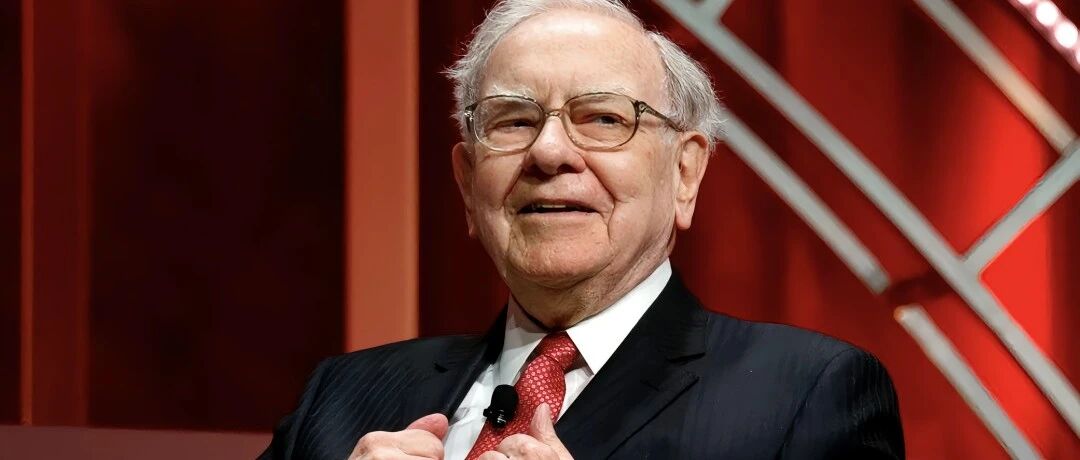
Core Viewpoint - Berkshire Hathaway is accumulating a record cash reserve of $382 billion, reflecting a cautious investment strategy as Warren Buffett prepares to step down as CEO. The company has not repurchased shares for five consecutive quarters and has been selling off significant stock holdings, indicating a belief that current market opportunities are limited [1][5][8]. Group 1: Cash Reserves and Stock Sales - As of the third quarter, Berkshire's cash reserves reached $381.7 billion, an increase of $37.6 billion from the previous quarter, averaging $4.2 million in cash accumulation daily [1][6]. - Over the past three years, Berkshire has net sold approximately $184 billion in stocks, with $6.1 billion in stock sales occurring in the third quarter alone [3][13]. - The largest stocks sold include Apple, American Express, and Bank of America, with the trend of selling outpacing buying for the twelfth consecutive quarter [10][9]. Group 2: Market Signals and Stock Performance - The latest financial report suggests that Buffett perceives more selling opportunities than buying ones in the current market [5][4]. - Since Buffett announced his intention to step down in May, Berkshire's Class A shares have declined by about 12%, while the S&P 500 index has risen by approximately 20% during the same period [14][15]. - The ongoing stock sales and suspension of buybacks have contributed to Berkshire's stock lagging behind the market, returning to levels seen in August of the previous year [15]. Group 3: Future Leadership and Challenges - Warren Buffett will officially step down as CEO at the end of the year, with Greg Abel, the head of non-insurance operations, set to take over. Abel will manage a business empire with nearly 200 subsidiaries and $382 billion in cash [18]. - The effective deployment of this substantial cash reserve will be Abel's primary challenge, as he navigates a market filled with uncertainties [18]. - Some long-term investors express optimism about Abel's leadership, while others are eager for Berkshire to deploy its cash more aggressively [18].
伯克希尔·哈撒韦Q3运营利润大增34%,现金储备飙至3817亿美元创历史新高
美股IPO· 2025-11-01 16:03
Core Viewpoint - Berkshire Hathaway's third-quarter operating profit surged by 34% year-on-year to $13.49 billion, primarily driven by a more than 200% increase in insurance underwriting profit to $2.37 billion, indicating a significant recovery in its core business segments, including insurance and railroads [4][8]. Financial Performance - The company reported a net profit of $30.8 billion for the third quarter, a 17% increase compared to $26.5 billion in the same period last year [4]. - Total revenues for the third quarter reached $94.97 billion, up from $92.99 billion year-on-year [6]. - Insurance premiums earned amounted to $22.445 billion, while investment gains were reported at $21.939 billion [6]. Insurance Business - The insurance segment was the main driver of profit growth, with underwriting profits rising significantly due to low disaster activity in the third quarter [8]. - The insurance float remained stable at $176 billion, showcasing the company's strong pricing and risk management capabilities [4][8]. Cash Reserves and Stock Buybacks - Cash reserves reached a record high of $381.7 billion, surpassing the previous high of $347.7 billion set earlier this year, providing ample ammunition for future acquisitions [7]. - The company has not repurchased any stock for nine consecutive months, reflecting a cautious investment approach in the current market environment [3][10]. Stock Sales - Berkshire Hathaway continued to net sell stocks, recording $10.4 billion in taxable gains, indicating a trend of reducing equity holdings as the company perceives a lack of attractive investment opportunities [10]. - The company sold $6.1 billion worth of stocks in the third quarter alone [10]. Leadership Transition - Warren Buffett announced his retirement as CEO at the end of the year, with Greg Abel set to take over, while Buffett will remain as chairman [12].

“十月连涨神话”破灭!比特币本月跌近5%,六年来首次十月收跌
美股IPO· 2025-11-01 16:03
比特币10月下跌近5%,终结2018年以来在10月上涨的纪录。受特朗普关税威胁影响,10月中旬短短数日,比特币从12.6万美元历史高点暴跌至10.4万 美元,引发史上最大规模清算事件。分析指出,市场不确定性冲击下,投资者未大规模回流比特币,资产波动性仍大。 比特币打破连续七年在10月上涨的纪录。 本月加密货币市场遭遇了史上最大规模的清算事件。据受特朗普关税威胁影响,加密货币市场大幅下跌,比特币从10月6日创下的逾12.6万美元历史新 高暴跌,一度在10月10日至11日期间跌至10.4万美元左右。 数字市场数据提供商Kaiko的高级研究分析师Adam McCarthy表示, 当不确定性今年首次真正冲击市场时,投资者并未大规模回流至比特币。这次暴跌 提醒人们,这一资产类别仍然非常狭窄,比特币和以太坊在15到20分钟内仍可能出现10%的回撤。 尽管本月收跌,比特币今年迄今仍上涨逾16%。由于特朗普拥抱数字资产,撤销了针对知名加密平台的多起诉讼,并推动金融监管机构为数字资产制定 专门规则,加密货币今年整体获得提振。 七年连涨纪录终结 比特币本月以11.4万美元开盘,延续了9月5%涨幅的看涨情绪。这种乐观情绪推动比特币 ...

12月降息悬了?美联储内部现六年来罕见分歧,“老债王”格罗斯出手做空美债!
美股IPO· 2025-11-01 16:03
Group 1 - The Federal Reserve's recent interest rate decision saw two dissenting votes among the 12 committee members, marking a rare occurrence of opposing views, with one member advocating for a 50 basis point cut and another for maintaining the current rate [1][6] - The uncertainty surrounding the Fed's policy path has led to increased market volatility, with notable figures like Bill Gross beginning to short U.S. Treasury bonds [4][9] - The probability of a rate cut in December has decreased significantly from 91.7% to 63% according to the CME FedWatch Tool, indicating a shift in market expectations [2][5] Group 2 - Bill Gross, co-founder of PIMCO, has expressed a bearish outlook on U.S. Treasuries, citing concerns over rising deficits and a weakening dollar as key factors influencing his decision to sell 10-year Treasury futures [3][11] - The internal divisions within the Federal Reserve are becoming a focal point for market participants, with various officials presenting differing views on the necessity of rate cuts [6][8] - Analysts suggest that in the current environment, investors may need to adjust their strategies towards longer-term bonds, which are less sensitive to short-term policy fluctuations [11]

“消费信心跌至数十年最差水平”!高盛警告美国中产消费“失速”,25-35岁人群“捂紧钱包”
美股IPO· 2025-11-01 16:03
Core Viewpoint - Goldman Sachs warns that consumer weakness has spread from low-income groups to the middle class, particularly affecting consumers aged 25-35, with many executives reporting the worst consumer confidence in decades [1][3]. Group 1: Consumer Sentiment and Market Performance - Goldman Sachs' consumer goods expert Scott Feiler notes a significant shift in market discussions, with more companies reporting a slowdown in consumption that now includes middle-income groups [3]. - The non-essential consumer goods sector has underperformed the market by 500 basis points over the past two weeks, indicating a broader market concern [3][9]. - Kraft Heinz CEO Carlos Abrams-Rivera stated that the company is facing one of the worst consumer confidence levels in decades, leading to a downward revision of annual sales guidance by 3% to 3.5% [3][5]. Group 2: Impact on Specific Companies - Chipotle's stock plummeted by 17%, citing reduced spending frequency among lower and middle-income customers due to pressures like unemployment and stagnant wage growth [5]. - CAVA and home goods retailer SG also saw significant stock declines of 11% and 9.6%, respectively, reflecting the broader trend of reduced consumer spending [5]. - O'Reilly Automotive reported moderate pressure on DIY transactions, indicating a reaction from consumers to rising prices [6]. Group 3: Broader Economic Indicators - The consumer discretionary sector has faced severe sell-offs, with non-essential goods underperforming the market by 400 basis points this week alone [8][9]. - Despite the overall consumer spending slowdown, high-end market segments remain resilient, with Visa reporting strong performance across various spending categories [9]. - Starbucks noted positive growth in transaction volume, particularly in its university and campus business, indicating some segments of the market are still thriving [9].




当前AI泡沫究竟多大?瑞银:已具备泡沫周期的七大前提条件!但三大见顶信号尚未出现
美股IPO· 2025-11-01 10:18
Core Viewpoint - UBS reports that the market is in the early stages of a potential bubble, but key signals indicating a peak—extreme valuations, long-term overheating catalysts, and short-term peak signals—have not yet emerged [1][3][4]. Group 1: Current Market Conditions - UBS identifies that the current U.S. stock market meets all seven prerequisites for a bubble, including a 14% annual outperformance of stocks over bonds in the past decade and significant new technology emergence [5]. - The report emphasizes that the rationale behind the current AI bubble is more robust than that of the 2000 internet bubble, as the key peak events have not yet occurred [3][5]. Group 2: Generative AI Potential - The disruptive potential of generative AI and its unprecedented adoption speed are unique, with OpenAI attracting 800 million users in just three years, compared to Google's 13 years for the same scale [6][7]. - If generative AI can temporarily boost productivity growth by 2%, it could support a 20-25% upside in the stock market [7]. Group 3: Macro Risk Structure - The macro risk structure has fundamentally changed; during the 2000 internet bubble, the U.S. government had a budget surplus, while now the government debt-to-GDP ratio is double that of the past, with high fiscal deficits [8][11]. - This "weak government, strong corporate" dynamic may lead investors to shift funds from nominal assets to real assets, lowering the equity risk premium (ERP) and supporting higher stock valuations [11]. Group 4: Valuation Signals - UBS notes that extreme valuations typically accompany bubble peaks, but current valuations in AI-related sectors are not at dangerous levels [12]. - The absolute valuation levels are still distant from historical peaks, where at least 30% of stocks had P/E ratios soaring to 45-73 times [12]. - The current ERP is around 3%, indicating that the market has not completely ignored risks due to excessive optimism [14]. Group 5: Long-term Catalysts - There are currently no clear long-term structural factors, such as over-investment and excessive leverage, that typically trigger bubble bursts [22]. - ICT investment as a percentage of GDP remains below the peak levels of 2000, suggesting that a capital expenditure frenzy has not yet formed [22][26]. - The risk of excessive debt financing is low, as major tech companies rely on strong cash flows rather than debt for investments [26]. Group 6: Short-term Peak Signals - No short-term peak signals have emerged, such as major merger and acquisition activity comparable to the internet bubble's peak [32][34]. - Current market conditions do not exhibit extreme price momentum, with semiconductor stocks only 35% above their 200-day moving average, compared to 70% at the peak in 2000 [40]. Group 7: Conclusion - UBS provides a detailed "bubble map" for investors, indicating that despite the AI boom, key indicators across valuation, macro catalysts, and short-term triggers suggest that the current market may not be nearing its end [43].

科技巨头AI竞赛转向表外融资,万亿债务定时炸弹成危机前兆?
美股IPO· 2025-11-01 10:18
Core Viewpoint - Technology companies are increasingly turning to Special Purpose Vehicles (SPVs) and off-balance-sheet financing methods to raise substantial funds for AI development, raising concerns about hidden debts and financial risks [1][3][4]. Group 1: Financing Methods - Major tech firms are utilizing SPVs and joint ventures to place hundreds of billions of dollars in debt off their balance sheets, allowing them to meet massive funding needs without directly impacting their financial status or credit ratings [3][4]. - Meta has secured approximately $600 billion for data center construction, with $300 billion raised through off-balance-sheet transactions facilitated by Morgan Stanley [3][4]. - Elon Musk's xAI is seeking $20 billion through SPVs to lease NVIDIA chips, limiting its financial exposure to a five-year lease agreement [5][6]. Group 2: Historical Context and Risks - The resurgence of off-balance-sheet financing tools is reminiscent of past financial scandals, such as Enron's bankruptcy in 2001, which was linked to hidden debts [8][10]. - Analysts express concerns about the potential for hidden liabilities and the ability to track commitments associated with these financial engineering practices [10][12]. - The rapid obsolescence of technology poses risks, as the effective lifespan of chips may be shorter than anticipated, potentially leading to significant financial implications for companies [11][12]. Group 3: Market Dynamics - The market value and strength of hyperscalers like Meta, valued at $2 trillion, enable them to explore financing options that exceed previous project funding amounts [5]. - The demand for debt financing in the AI sector is significant, with estimates suggesting that the entire AI ecosystem requires approximately $1.5 trillion in external funding, with over $1.15 trillion expected to come from debt [14][15][16]. - Private credit funds are playing a crucial role in this financing landscape, attracting billions from institutional investors seeking high-yield opportunities in AI infrastructure [13].