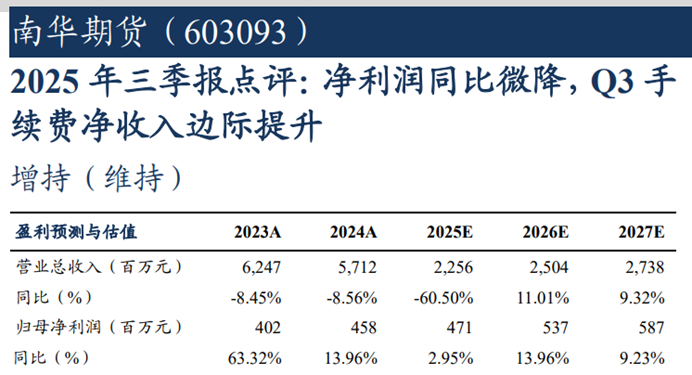
Nanhua Futures(603093)
Search documents
南华期货玉米、淀粉产业日报-20251028
Nan Hua Qi Huo· 2025-10-28 00:53
Report Information - Report Title: Nanhua Futures Corn & Starch Industry Daily Report [1] - Report Date: October 28, 2025 [1] - Analyst: Dai Hongxu (Investment Consulting License No.: Z0021819) [1] - Research Assistant: Kang Quangui (Qualification Certificate No.: F03148699) [1] Core Viewpoints - The corn market is under price pressure due to the ample supply of new grain. The harvest is nearing completion, and the selling pressure remains high, keeping prices under downward pressure. However, the supportive effect of policy purchases is emerging. The Northeast production area has stabilized, while the North China production area is in the recovery phase after weather disruptions, with short - term supply increasing and prices weak. The decreasing supply of high - quality grain will support future prices [2]. - On Monday, the corn futures market declined across the board, with a near - term weak and long - term strong contract structure. The spot market pressure has pushed prices into a short - term correction phase, and prices are likely in a bottom - grinding stage. The starch futures market followed the corn market down. Supported by stable corn prices in the Northeast, the starch spot price remained stable, with moderate trading and high inventory limiting price increases [2]. - On Monday, CBOT corn futures rose by over 1%, as progress in Sino - US economic and trade negotiations boosted export expectations, pushing the futures price to a phased high [2]. 利多 and 利空 Factors Bullish Factors - The number of state reserve purchase points is gradually increasing, clearly aiming to support prices and limit price drops [2]. - The shortage of high - quality corn in North China will become more apparent over time, supporting the expectation of stronger long - term prices [2]. Bearish Factors - The pig industry is in the process of capacity regulation, which may affect long - term corn feed demand. However, the high inventory in the fourth quarter and the current entry of second - fattening pigs support the feed demand at a relatively good level [2]. - Price rebounds have led to increased selling pressure, and the market focus has returned to supply pressure, pushing prices into a short - term correction phase [2]. Price and Basis Data Corn and Starch Spot Prices and Main - Contract Basis | Location | Corn Price (Yuan/Ton) | Price Change (Yuan/Ton) | Location | Corn Starch Price (Yuan/Ton) | Price Change (Yuan/Ton) | | --- | --- | --- | --- | --- | --- | | Jinzhou Port | 2150 | - 10 | Shandong | 2760 | 0 | | Shekou Port | 2290 | - 10 | Jilin | 2550 | 0 | | Harbin | 2010 | 0 | Heilongjiang | 2460 | 0 | | Jinzhou Port Main - Contract Basis | 38 | 11 | Shandong Main - Contract Basis | 335 | 16 | [3] Corn and Starch Futures Prices | Contract | October 24, 2025 | October 27, 2025 | Price Change | Percentage Change | | --- | --- | --- | --- | --- | | Corn 11 | 2110 | 2098 | - 12 | - 0.57% | | Corn 01 | 2133 | 2112 | - 21 | - 0.98% | | Corn 03 | 2161 | 2140 | - 21 | - 0.97% | | Corn 05 | 2237 | 2217 | - 20 | - 0.89% | | Corn 07 | 2258 | 2240 | - 18 | - 0.80% | | Corn 09 | 2250 | 2250 | 0 | 0.00% | | Corn Starch 11 | 2423 | 2431 | 8 | 0.33% | | Corn Starch 01 | 2441 | 2425 | - 16 | - 0.66% | | Corn Starch 03 | 2462 | 2442 | - 20 | - 0.81% | | Corn Starch 05 | 2558 | 2545 | - 13 | - 0.51% | | Corn Starch 07 | 2574 | 2559 | - 15 | - 0.58% | | Corn Starch 09 | 2619 | 2598 | - 21 | - 0.80% | | Wheat Average Price | 2499 | 2499 | 0 | 0.00% | [3][5] US Corn Price and Import Profit | Item | Price | Daily Change | Percentage Change | Import Profit (Yuan/Ton) | | --- | --- | --- | --- | --- | | CBOT Corn Main - Contract | 428 | 4 | 0.94% | | | COBT Soybean Main - Contract | 1083.5 | 23 | 2.17% | | | CBOT Wheat Main - Contract | 526 | 13 | 2.53% | | | US Gulf Port CIF Price | 2128.05 | - 6.81 | - 0.32% | 171.95 | | US West Coast Port CIF Price | 2005.89 | 24.07 | 1.21% | 294.11 | [28]
双重影响下延续偏强运行,持续性有待观察
Nan Hua Qi Huo· 2025-10-27 09:39
Report Overview - Report Title: Stock Index Futures Daily Report [1] - Report Date: October 27, 2025 [2] Industry Investment Rating - Not provided Core Viewpoints - Weekend Sino-US trade negotiations showed new progress, and the Fourth Plenary Session's policy orientation continued to influence. Today, stock indices opened higher and fluctuated, with trading volume in the two markets exceeding 2 trillion yuan, and the Shanghai 50 Index hitting a new high for the year. This week, the full - version of the "15th Five - Year Plan Proposal" and Sino - US negotiation results may be announced. It is expected that the stock indices will continue to be strong in the short term, but the upward trend driven by sentiment may not be sustainable. Today, the basis of stock index futures declined, and the short - selling willingness increased, reflecting market doubts about the upward trend. In terms of index style, small - and medium - cap stocks were dominant, but their advantage was not obvious, and the sustainability of small - cap stocks' dominance is limited [4] Market Review - Today, stock indices opened higher and fluctuated, with small - cap stocks performing strongly. The CSI 300 Index closed up 1.19%. The trading volume in the two markets increased by 365.922 billion yuan, and stock index futures rose with increased volume [3] Important Information - Sino - US economic and trade consultations in Kuala Lumpur: Reached a basic consensus on arrangements to address each other's concerns, and agreed to further determine specific details and complete domestic approval procedures [4] - US core CPI in September increased by 0.2% month - on - month, the slowest in three months, increasing the expectation of another Fed rate cut this year [4] - The People's Bank of China conducted 900 billion yuan of Medium - term Lending Facility (MLF) operations in October, with a net investment of 200 billion yuan. After hedging the matured reverse repurchase, the net investment of medium - term liquidity in October reached 60 billion yuan, maintaining a high level, showing a moderately loose monetary policy [4] - From January to September 2025, the profits of industrial enterprises above the designated size in China increased by 3.2% [4] Strategy Recommendation - Hold and wait and see [5] Market Observation Futures Market | Index | Main Contract Intraday Change (%) | Trading Volume (10,000 lots) | Trading Volume MoM (10,000 lots) | Open Interest (10,000 lots) | Open Interest MoM (10,000 lots) | | --- | --- | --- | --- | --- | --- | | IF | 1.24 | 11.3332 | - 0.2849 | 26.2244 | 0.6831 | | IH | 0.74 | 5.6298 | - 0.2681 | 9.8162 | 0.2833 | | IC | 1.76 | 13.6694 | - 0.1034 | 25.2585 | 0.8981 | | IM | 0.75 | 21.4742 | - 0.9711 | 35.8844 | 0.9755 | [6] Spot Market | Index | Value | | --- | --- | | Shanghai Composite Index Change (%) | 1.18 | | Shenzhen Component Index Change (%) | 1.51 | | Ratio of Rising to Falling Stocks | 1.32 | | Trading Volume in Two Markets (billion yuan) | 2340.132 | | Trading Volume MoM (billion yuan) | 365.922 | [6]
南华期货苹果产业周报:霜降后苹果如何了?-20251027
Nan Hua Qi Huo· 2025-10-27 07:13
1. Report Industry Investment Rating No information provided in the report. 2. Core Viewpoints of the Report - The core contradictions affecting apple prices are the low high - quality fruit rate due to continuous rain delaying the harvest time and reducing the sales period, and the uncertainty of apple storage volume. The storage volume in Gansu is expected to be lower than last year, while Shaanxi's storage volume may be higher but with lower effective inventory, and Shandong will also have lower effective inventory [2]. - In the short - term trading logic, the market bets on the quality and low high - quality fruit rate of late Fuji apples, causing the futures price to rise. The recent increase of 11, 12, and 01 contracts is weaker than that of the far - month contracts because the logic that the later the contract, the fewer deliverable fruits, prevails [3]. - In the long - term trading logic, the market expects the price to decline after a high opening price. However, if the low high - quality fruit rate leads to low storage data and a shortage of high - quality fruits in the later sales period, the 05 contract may have no goods for delivery [4]. - The upward momentum of apple prices has increased recently, but the profitable seats have reduced their long positions, indicating a lack of confidence in further price increases [7]. 3. Summary by Relevant Catalogs 3.1 Core Contradictions and Strategy Recommendations 3.1.1 Core Contradictions - The main reason for the recent rise in apple futures prices is the low high - quality fruit rate. Continuous rain has postponed the harvest time in the east and west regions, and the approaching frost has compressed the sales period [2]. - Affected by the quality decline, the storage volume in Gansu is expected to be lower than last year. Shaanxi's storage volume may be higher, but the effective inventory will be lower, and Shandong will also have lower effective inventory [2]. 3.1.2 Speculative Strategy Recommendations - **Market Positioning**: The upward momentum of apple prices has increased, but the profitable seats have reduced their long positions, with a net long position of only 1632 lots [7]. - **Basis, Spread, and Hedging Arbitrage Strategy Recommendations**: There is no basis strategy. The recommended spread strategy is to short the 01 - 05 spread [8][9]. 3.1.3 Industry Customer Operation Recommendations - **Price Range Forecast**: The monthly price range of apples is predicted to be 8400 - 9000 yuan/ton, with a current volatility of 10.5% and a historical percentile of 26.6% (3 - year) [10]. - **Hedging Strategy**: For inventory management, when worried about low apple purchase prices due to a bumper harvest, enterprises can short apple futures (AP2601, sell, 25%, entry range 8900 - 9000) and sell call options (AP2601C, sell, 25%, entry range 200 - 300) to lock in profits and reduce costs. For procurement management, when worried about high purchase prices due to low inventory and a shortage of high - quality fruits, enterprises can buy apple futures (AP2601, buy, 75%, entry range 8600 - 8700) and sell put options (AP2511P8600, buy, 75%, entry range 150 - 180) to lock in purchase costs and reduce costs [10]. 3.2 This Week's Important Information and Next Week's Focus Events 3.2.1 This Week's Important Information - In Gansu, there is no more apple supply for purchase. In Shandong, the supply has increased recently, about one week later than usual. The prices of different grades of apples are as follows: 80 above general goods are 2.4 - 2.8 yuan/jin, first - and second - grade semi - products are 2.8 - 3.4 yuan/jin, and first - and second - grade products are 3.2 - 3.6 yuan/jin. Shaanxi has a serious water - rot problem, and merchants have suspended purchases. In Liaoning, high - quality apples are attractive, with prices exceeding 4 yuan/jin [11]. - The opening prices of western late Fuji apples are 0.5 - 1 yuan/jin higher than last year [11]. - The number of apple trucks arriving at the three major markets in Guangdong has fluctuated significantly. After the Mid - Autumn Festival, the number has decreased. The sales of new late Fuji high - quality apples are okay, but there is pressure on daily digestion, and there is some inventory backlog in transit warehouses [13]. - The cold storage of new apples in Gansu is likely to be lower than last year. In Shandong, the effective inventory will be lower due to quality problems. In Shaanxi, the storage volume may be higher, but the effective inventory will be lower [13]. 3.2.2 Next Week's Important Information No information provided in the report. 3.3 Disk Interpretation 3.3.1 Price, Volume, and Fund Interpretation - Last week, the apple futures price rose, but the main contract fluctuated greatly, and the price increase was much smaller than that of the 05 contract. The total apple position is similar to that of last year and the year before. The profitable seats reduced their positions last week. Technically, the main contract of apple futures maintains an oscillating upward structure, and the short - term trend is still strong [19]. 3.3.2 Basis and Spread Structure - **Apple Basis Structure**: The apple basis structure is very complex. The quality of apples varies each year, and the grading conditions in Shandong and the northwest are different. The futures delivery rules are constantly changing, and the number of deliverable fruits this year is unknown due to the low overall quality [21]. - **Apple Spread Structure**: The apple spread structure has typical large - volume fluctuations when the near - month contract approaches the delivery month, which is related to the number of deliverable fruits. According to seasonal rules, the 10 - contract trades the opening price, and the short - term supply is much lower than that of the 11 - and 12 - contracts. The 01 - contract is around the Spring Festival, with a relatively large delivery volume and tight delivery time. However, due to the low overall quality of apples this year, the pre - festival contract may be weak, and the post - festival high - quality apples may be in short supply and strengthen [21][22]. 3.4 Valuation and Profit Analysis - Apple profits are mainly divided into planting profits and storage profits. Currently, the market focuses on storage profits, which are closely related to the opening price. The storage profit for the 25/26 season is undetermined. Due to the large number of low - quality apples and a shortage of high - quality apples this year, storage is facing a huge test [24]. 3.5 Supply and Inventory Deduction - According to the previous bagging data, the 25/26 apple season is expected to have a slight increase in production, with a 2.35% increase to 3736.64 million tons. Shaanxi is expected to increase production by 7.57% to 878.84 million tons, Shandong to decrease by 9.89% to 782.37 million tons, Gansu to increase by 2.18% to 379.15 million tons, Henan to increase by 21.09% to 274.28 million tons, and Shanxi to increase by 28.39% to 352.19 million tons. However, considering only the bagging number cannot accurately infer the production, and not considering the quality cannot determine the price. Due to dry - hot wind in April 2025 and excessive rainfall since September, the final apple production may decrease compared to last year, and the quality may decline significantly [26][27].
南华期货尿素产业周报:宏观带动需求回暖-20251027
Nan Hua Qi Huo· 2025-10-27 03:54
Group 1: Report Industry Investment Rating - No relevant information provided Group 2: Core Views of the Report - The fundamental valuation of urea is low. Without further adjustments to export policies, urea will continue to accumulate inventory in the fourth quarter. The short - term internal drive of the industry is weak, and both compound fertilizer and industrial demand are sluggish, so the medium - term trend is weak. The production cost of gas - based enterprises cannot effectively support the price at present. Attention should be paid to whether there will be new export quotas. Macro factors also need to be monitored [2]. - Urea is expected to fluctuate weakly. The operating range of UR2601 is 1550 - 1750. It is recommended to short at prices above 1750 and conduct reverse arbitrage for the 1 - 5 spread when it is above - 10 [12]. Group 3: Summary by Directory Chapter 1: Core Contradictions and Strategy Recommendations 1.1 Core Contradictions - Urea's fundamental valuation is low. In the absence of export policy adjustments, it will accumulate inventory in Q4. Industry internal drive is weak, and demand from compound fertilizer and industry is sluggish, leading to a weak medium - term trend. Gas - based production costs can't support prices. New export quotas and macro factors should be watched [2]. - For the near - term, although new delivery warehouses are added, the cheapest deliverable locations are still Henan and Shandong. With the disappearance of export expectations for the 01 contract, a reverse arbitrage for the 1 - 5 spread is appropriate. The 01 contract still has a premium due to autumn fertilizer expectations [5]. - For the long - term, domestic daily urea production fluctuated between 19.5 - 20.1 million tons around holidays, then dropped to around 19.5 million tons. Inventory increased after the holiday, and demand, especially agricultural demand, is weak [10][20]. 1.2 Trading Strategy Recommendations - **Trend Judgement**: Urea will fluctuate weakly. The price range of UR2601 is 1550 - 1750. Short at prices above 1750 and conduct reverse arbitrage for the 1 - 5 spread when it is above - 10 [12]. - **Basis, Spread and Hedging Arbitrage Strategies**: For basis strategies, contracts 11, 12, 01 have a weak unilateral trend, and attention should be paid to when pre - holiday price cuts for order collection increase. Contracts 02, 03, 04, 05 are strong due to peak - season demand expectations. For spread strategies, the upper pressure on the 01 contract is 1710 - 1720 yuan/ton, and the static support is 1550 - 1620 yuan/ton. It is recommended to short the 01 contract at high prices and conduct reverse arbitrage for the 1 - 5 spread. No hedging arbitrage strategy is recommended [13][14]. Chapter 2: This Week's Important Information and Next Week's Events to Watch 2.1 This Week's Important Information - **Positive Information**: India announced a new round of urea import tenders on October 1st, with the opening on October 15th and the latest shipping date on December 10th. The fourth quarter is the winter storage period for the fertilizer industry, and low prices may attract spontaneous reserves [16]. - **Negative Information**: Urea daily production has been above 19 million tons this year, and inventory pressure is high. Market confidence is lacking due to falling prices, and downstream procurement enthusiasm is low [17][18]. 2.2 Next Week's Important Events to Watch - On October 19th, Vice - Premier He Lifeng of the State Council agreed with the US to hold a new round of Sino - US economic and trade consultations as soon as possible. The Fourth Plenary Session of the 20th Central Committee will be held next week, and it is an important time - point for the "15th Five - Year Plan" [19]. Chapter 3: Market Analysis 3.1 Price, Volume and Capital Analysis - Domestic daily urea production fluctuated around 19.5 - 20.1 million tons around holidays and then dropped to around 19.5 million tons. Inventory increased after the holiday, and demand is weak. Agricultural demand in Shandong and Henan is postponed due to rain, and compound fertilizer factories have large - scale shutdowns. The impact of previous Indian tenders and export speculation has weakened, and downstream procurement willingness is low [20]. - The weak domestic demand is the main contradiction. It is expected that export growth cannot offset the weakening domestic demand, and the medium - term trend is under pressure. The 1 - 5 spread of urea is in a reverse arbitrage pattern [21]. 3.2 Industry Hedging Recommendations - **Price Range Forecast**: The price range of urea is 1650 - 1950, with a current 20 - day rolling volatility of 27.16% and a 3 - year historical percentile of 62.1% [28]. - **Hedging Strategies**: For inventory management, when product inventory is high, short urea futures, buy put options, and sell call options. For procurement management, when inventory is low, buy urea futures, sell put options [28]. Chapter 4: Valuation and Profit Analysis 4.1 Upstream Profit Tracking - The report presents the seasonal data of urea's production costs (fixed - bed, natural - gas, water - coal - slurry gasification) and production profits (water - coal - slurry gasification, fixed - bed) [31][34][36]. 4.2 Upstream Capacity Utilization Tracking - The report shows the seasonal data of urea's daily production, weekly capacity utilization, and capacity utilization of different production methods (coal - based, natural - gas) [40][42]. 4.3 Upstream Inventory Tracking - The report provides the seasonal data of China's urea enterprise inventory, port inventory, Guangdong and Guangxi inventory, and total inventory (port + inland) [44][46][48]. 4.4 Downstream Price and Profit Tracking - The report presents the seasonal data of compound fertilizer's capacity utilization, inventory, production cost, and production profit, as well as the data of melamine's production profit, capacity utilization, and market price in different regions [50][52][56]. 4.5 Spot Sales and Production Tracking - The report shows the seasonal data of urea's average sales and production, and sales and production in different regions (Shandong, Henan, Shanxi, Hebei, East China) [74][76].
商品策略周报:原油借制裁东风-20251027
Nan Hua Qi Huo· 2025-10-27 01:33
商品策略周报 I 2025 年 10 月 27 日 原油借制裁东风 本周主要观点: 风险点:反内卷政策落实、中美谈判进展、宏观政策变化; 重要声明:本报告内容及观点仅供参考,不构成任何投资建议 南华研究院 投资咨询业务资格: 证监许可【2011】1290 号 顾双飞 投资咨询证号:Z0013611 王建锋 投资咨询证号:Z0010946 胡乐克 投资咨询证号:Z0013991 陈敏涛 期货从业证号:Z0022731 请务必阅读正文之后的免责条款部分 1. 不管涨势还是跌势,很难会持续流畅。毕竟,市场中有很多 品种,彼此面对的基本面或节奏都不同,大盘指数出现反 弹,很正常。反而对于趋势没有走完的品种来说,更是一次 绝佳的加仓机会。至少我们并不认为原油和钢材会有持续的 上涨行情。对于农产品而言,估值偏低,仍须等待中美贸易 和关税有了初步眉目,才有更好的安全边际。 2. 策略方面,原油暂时偏强,追涨有风险。 原油借制裁东风 商品策略周报 I 2025 年 10 月 27 日 周行情观点综述 近期商品市场出现持续的反弹,一方面是部分品种的超跌反弹,另一方面,也 是由于美国再次制裁俄罗斯,引发市场担忧原油供应问题。从涨 ...
南华期货铅产业周报:供应趋紧,高位震荡-20251026
Nan Hua Qi Huo· 2025-10-26 13:15
Report Investment Rating No investment rating information is provided in the report. Core Views - This week, lead prices were in a narrow high - level range. After the environmental protection traffic restriction news on Thursday, prices rapidly rose to a six - month high and then maintained high - level oscillations. The confirmed October interest rate cut, Trump's optimistic signals on China - US relations, and China's emphasis on "anti - involution" after the Fourth Plenary Session influenced market sentiment. Due to the environmental protection traffic restriction in Hebei, lead supply is short - term tight. Since May, recycled lead has been troubled by raw materials, with low operating rates. Low lead prices have compressed smelting profits, and the supply side's weakness has been long - standing. Although the price increase has restored some smelting profits, supply recovery is expected to take about a month, and low inventories support high - level lead price oscillations in the short term [2]. - In the near - term, some of October's domestic demand has been consumed by September's policies and pre - holiday stockpiling. After the environmental protection traffic restriction, lead is in a tight - balance state. In the long - term, the Fed's possible consecutive interest rate cuts are beneficial to lead prices, but overseas macro - factors have a relatively weak driving force on lead prices compared to other non - ferrous metals. Domestically, the macro - impact on lead prices mainly comes from consumption and supply structure adjustments, and an optimistic attitude is maintained due to supply - side structural adjustments and lithium - battery export restrictions [2][6][8]. Summary by Section Chapter 1: Core Contradictions and Strategy Recommendations 1.1 Core Contradictions - This week, lead prices were in a narrow high - level range, then rose sharply on Thursday due to environmental protection traffic restriction news and maintained high - level oscillations. Macro - factors such as the confirmed October interest rate cut, Trump's signals on China - US relations, and China's "anti - involution" emphasis affected market sentiment. Fundamentally, the environmental protection traffic restriction in Hebei led to short - term tight supply. Recycled lead has had low operating rates due to raw material shortages since May, and low lead prices have compressed smelting profits. Although the price increase restored some profits, supply recovery will take time, and low inventories support high - level price oscillations [2]. - Near - term trading logic: Some of October's domestic demand has been consumed, and after the environmental protection traffic restriction, lead is in a tight - balance state. Long - term trading expectations: The Fed's possible interest rate cuts are beneficial to lead prices, but overseas macro - factors have weak driving force. Domestically, an optimistic attitude is maintained due to supply - side and export - related factors [6][8]. 1.2 Trading - Type Strategy Recommendations - **Market Positioning**: The Shanghai lead main contract is in a high - level oscillation. The pressure level is around 17,850 yuan/ton, and the support level is around 17,000 yuan/ton. Trading volume and open interest are neutral [9]. - **Short - Term Futures Strategy**: High - sell and low - buy within the range. Lightly go long around 17,200 - 17,300 yuan/ton with a stop - loss at 17,000 yuan/ton; go short around 17,700 - 17,850 yuan/ton with a stop - loss at 19,000 yuan/ton [9]. - **Short - Term Options Strategy**: Sell wide - straddle options to collect premiums for stable returns [9]. - **Basis Strategy**: Lead basis fluctuates little, so no basis strategy is recommended [11]. - **Calendar Spread Strategy**: Calendar spreads are stable, so no calendar spread strategy is recommended [12]. - **Hedging and Arbitrage Strategy**: The lead - zinc spread is stable. Wait for the export window to open to try long - short arbitrage between domestic and overseas markets [13]. 1.3 Industrial Customer Operation Recommendations - **Inventory Management**: For high finished - product inventories and concerns about price drops, sell 75% of the Shanghai lead main futures contract at around 17,400 yuan/ton [14]. - **Raw Material Management**: For low raw material inventories and concerns about price increases, buy 50% of the Shanghai lead main futures contract at around 16,500 yuan/ton [14]. Chapter 2: This Week's Important Information and Next Week's Events to Watch 2.1 This Week's Important Information - **Macroeconomic Data**: In the first three quarters, China's GDP was 10,150.36 billion yuan, with a year - on - year increase of 5.2% at constant prices. Different industries and quarters had different growth rates, and the third - quarter GDP had a 1.1% quarter - on - quarter increase [15]. - **Environmental Protection Traffic Restriction**: Hebei restricted vehicle entry, affecting the transportation of recycled lead and lead battery enterprises, lengthening the transportation cycle [15]. - **Spot Transaction Information**: SMM 1 lead's daily, weekly, and monthly average prices, domestic and imported lead concentrate prices, and recycled lead average prices all increased to varying degrees [16][18]. 2.2 Next Week's Important Events to Watch - China - US trade consultations [15] Chapter 3: Disk Interpretation 3.1 Price, Volume, and Fund Interpretation - **Domestic Market**: This week, lead prices were in a narrow high - level range with strong bottom support, closing at 17,575 yuan/ton. Profitable positions and foreign capital are mainly long - biased, indicating a long - term bullish logic among institutions [19]. - **LME Market**: LME lead was weak this week, closing at $2,012/ton on Friday. Investment companies and credit institutions hold the majority of positions. The LME lead calendar spread structure is stable, showing a deep C - structure, and the import window has opened [18][24][42]. Chapter 4: Valuation and Profit Analysis 4.1 Upstream and Downstream Profit Tracking in the Industry Chain - Lead concentrate processing fees continued to decline, and the decline of silver - containing lead concentrate processing fees was obvious [46]. 4.2 Import and Export Profit Tracking - Information on the relationship between lead concentrate import profits and imports, and the seasonality of various lead - related product imports and exports is provided, but no specific conclusions are drawn [50]. Chapter 5: Supply - Demand and Inventory Projection 5.1 Supply - Demand Balance Sheet Projection - Information on the seasonality of domestic lead ingot supply and actual consumption is provided, but no specific conclusions are drawn [57]. 5.2 Supply - Side and Projection - The global lead ore market is tight this year. Although smelting willingness for primary lead is high, raw material shortages may limit production [58]. 5.3 Demand - Side and Projection - This week, the operating rate of lead battery enterprises increased slightly due to post - holiday rework [69].
南华期货生猪产业周报:旺季可期-20251026
Nan Hua Qi Huo· 2025-10-26 12:54
1. Report Industry Investment Rating No relevant content provided. 2. Core Viewpoints of the Report - Policy interventions are frequent, and the far - month supply of live pigs may be affected. Long - term strategic bullishness is possible, but the short - to - medium term is still based on fundamentals. The policy bottom has emerged, but the market bottom may require a production cycle to form. Currently, the fundamental situation is one of oversupply, but with the arrival of the peak season, demand is expected to improve, and there may be a structural shortage of large pigs, supporting peak - season prices [2]. - The decline momentum of the market is slowing, and there is a possibility of a staged rebound. The 11000 - 13500 range may be the bottom - rebound grinding range [10]. 3. Summary According to Relevant Catalogs 3.1 Chapter 1: Core Contradictions and Strategy Recommendations 3.1.1 Core Contradictions - Policy end: The government has launched a pig reserve purchase policy at a pig - grain ratio of 6:1, indicating the determination for price control, and the policy bottom has emerged [2]. - Fundamental situation: Currently, supply exceeds demand. Due to policy expectations, epidemics in some provinces, and transportation issues, there was concentrated slaughter during the double festivals, leading to a rapid decline in short - term pig prices [2]. - Near - term trading logic: High pig inventory, heavy slaughter pressure on pig enterprises, concentrated slaughter by second - fattening farms during the peak season, and the entry of speculative second - fattening due to low pig prices [5]. - Long - term trading logic: Policy - led expectations of reducing the number of reproductive sows, weakening breeding profits, and the peak - season sales expectation from the fourth quarter to the Spring Festival [8]. 3.1.2 Speculative Strategy Recommendations - Trend judgment: The decline momentum is slowing, and there may be a staged rebound [10]. - Price range: The low point of the main contract last week may be a staged low, and there may be a second bottom - testing near contract expiration. The 11000 - 13500 range may be the bottom - rebound grinding range [10]. - Basis, calendar spread, and hedging arbitrage strategies: Unwind previous short positions, wait and see, or lightly bet on the peak - season rebound. The basis is expected to strengthen during the peak season, and consider staging calendar spread positive spreads [11][15]. 3.1.3 Industry Customer Strategy Recommendations - Inventory management: For high - inventory enterprises, short live - pig futures, sell call options, or buy out - of - the - money put options to manage risks [12]. - Procurement management: For enterprises with future procurement plans, buy live - pig forward contracts, sell put options, or buy out - of - the - money call options to manage risks [12]. 3.2 Chapter 2: Market Information 3.2.1 This Week's Main Information - Positive information: Increased willingness of second - fattening to enter the market; the Ministry of Agriculture and Rural Affairs predicts that pig and pork prices may stop falling and rebound in the second half of the fourth quarter; the pig price in mid - October may be the annual low; a hearing on the anti - dumping case of pork and pig by - products will be held [14][16]. - Negative information: Continuous decline in the slaughter quotes of large enterprises; significant year - on - year increase in the number of live - pig slaughter by listed companies in September [16]. 3.2.2 Next Week's Main Information Pay attention to the slaughter quotes of large enterprises [16]. 3.3 Chapter 3: Disk Interpretation 3.3.1 Price - Volume and Fund Interpretation This week, the main live - pig contract showed a staged stabilization trend. It opened at 11800 yuan/ton at the beginning of the week and closed at 12175 yuan/ton at the weekend, rising 375 points or 4.33%. The open interest increased by 5425 contracts to 112,000 contracts, indicating intensified long - short competition [16]. 3.3.2 Basis and Calendar Spread Structure Analysis - Calendar spread structure: The overall live - pig calendar spread shows a contango structure. Although the 1 - 3 month spread shows a back structure, it is a normal seasonal pattern. The near - end price is under pressure due to epidemics and transportation difficulties [18]. - Basis structure: Reduced live - pig slaughter, stable and rebounding spot prices, and a possible structural shortage of large pigs drive the basis to strengthen [22]. 3.4 Chapter 4: Valuation and Profit Analysis - The current live - pig breeding profit is narrowing, with losses in the profit of purchasing piglets and negative average profit per head for self - breeding and self - raising this week. The profit of selling piglets has also turned negative. The profit of second - fattening is attractive due to the high seasonal spread between standard and fat pigs. The slaughter profit is improving, and the terminal consumption may pick up during the peak season [25]. 3.5 Chapter 5: This Week's Supply - Demand Situation 3.5.1 Supply - Side Situation - Reproductive sows: In August, the number of reproductive sows was 40.38 million, a decrease of 40,000 from July. The data from Steel Union shows a downward trend, and the culling of sows has increased [29]. - Live pigs: The inventory of large - scale enterprises in the first half of the year was at a high level in the past three years, and the average slaughter weight remained stable this week [31]. - Piglets: Piglet prices are relatively low compared to last year, showing a seasonal decline, and the profit margin continues to decline [33]. - Second - fattening: The spread between standard and fat pigs has widened rapidly this week, and the utilization rate of second - fattening pens has decreased significantly [35]. - Feed: Corn prices are fluctuating downward, while soybean meal prices remain stable [37]. 3.5.2 Demand - Side Situation - Slaughter: Slaughter enterprises had high slaughter volumes in the first half of the year. Current slaughter profits have turned positive, cold - storage inventory is gradually increasing, and there are signs of inventory preparation. This week, slaughter profits slightly declined, and the average post - slaughter weight slowly increased [42]. - Terminal consumption: Terminal consumption remains weak. The fresh - meat sales rate of slaughter enterprises is at the lowest level in the past five years seasonally, and the spread between white - haired and fresh - meat prices is the worst in the same period [44]. 3.5.3 Import - Export Situation - Import: The import volume is at the lowest level in the same period in the past five years [46]. - Export: The export volume is at the highest level in the same period in the past five years [51]. 3.5.4 Cost - Profit Situation - Breeding profit: The breeding profit is narrowing, with losses in the profit of purchasing piglets and negative average profit per head for self - breeding and self - raising [25]. - Cost: Corn prices are fluctuating downward, and soybean meal prices are stable. The cost of second - fattening is also presented in the report [37][55].
非银金融行业跟踪周报:业绩高增长或将驱动保险、券商股估值修复-20251026
Soochow Securities· 2025-10-26 11:19
Investment Rating - The report maintains an "Overweight" rating for the non-bank financial sector [1] Core Views - The insurance and brokerage stocks are expected to see valuation recovery driven by high earnings growth [1] - The non-bank financial sector has shown a mixed performance, with insurance leading in growth, followed by diversified finance and securities [8][9] Summary by Sections Non-Bank Financial Subsector Performance - In the recent five trading days (October 20-24, 2025), all non-bank financial subsectors underperformed the CSI 300 index, with insurance up by 2.99%, diversified finance by 2.70%, and securities by 2.02% [8] - Year-to-date performance shows insurance leading with a 14.47% increase, followed by diversified finance at 12.38%, and brokerage at 7.73% [9] Non-Bank Financial Subsector Insights Securities - Trading volume has increased year-on-year, with October's average daily stock trading volume at CNY 25,070 billion, up 12.07% from last year [13] - Margin financing balance reached CNY 24,510 billion, a year-on-year increase of 47.76% [13] - The average price-to-book (PB) ratio for the securities industry is projected at 1.3x for 2025 [23] Insurance - Major insurers like China Life and New China Life are expected to report significant profit increases for Q3, with China Life's net profit projected between CNY 156.8 billion and CNY 177.7 billion, reflecting a 50%-70% year-on-year growth [25] - The insurance sector is benefiting from regulatory support for high-quality health insurance development [31] Diversified Finance - The trust industry is experiencing a stable transition, with total trust assets expected to reach CNY 29.56 trillion by the end of 2024, a 23.58% year-on-year increase [34] - The futures market saw a trading volume of 770 million contracts in September, with a transaction value of CNY 71.50 trillion, reflecting a 33.16% year-on-year growth [38] Industry Ranking and Key Company Recommendations - The non-bank financial sector is currently undervalued, presenting a safety margin for investors [34] - The recommended ranking for investment is insurance > securities > diversified finance, with key companies including China Ping An, New China Life, China Pacific Insurance, CITIC Securities, and Tonghuashun [34]
南华原油风险管理日报-20251024
Nan Hua Qi Huo· 2025-10-24 13:34
Report Summary 1. Investment Rating No investment rating for the industry is provided in the report. 2. Core View - Recent sanctions on Russian oil companies by the US and geopolitical rumors about Venezuela have pushed up the crude oil market, with Brent crude returning to $65, a cumulative increase of over $5. However, the current geopolitical risks are only at the news level and have not escalated into major conflicts. The impact is estimated to be $2 - 3 for 1 - 2 trading days, and the market has basically reflected this. Sanctions mainly affect sentiment, and the actual supply - demand is less affected. If the situation does not escalate, there is a risk of a market decline due to the cooling of geopolitical sentiment before next Monday. In the medium - to - long - term, the market is still suppressed by fundamental negatives, and the rebound space is limited [1]. 3. Trading Strategies - **Unilateral**: It is recommended to wait and see for now and go short on rallies [3]. - **Arbitrage**: Close short positions on the monthly spread at an appropriate time and wait and see in the short term [3]. - **Options**: Wait and see [4]. 4. Logic梳理 Short - term rise driver - The core driver of the short - term rise is the increase in geopolitical risk sentiment. US sanctions on two major Russian oil companies and geopolitical rumors about Venezuela have pushed up the overnight crude oil market. The impact of geopolitical news on the crude oil market is currently in the "news disturbance stage", with a neutral estimated impact of $2 - 3 for 1 - 2 trading days [7]. Limited impact on actual supply - demand - The US sanctions have room for maneuver. Rosneft's German subsidiary is exempted, and Russia can hedge the impact by increasing oil transportation to Germany and supplies to the Asia - Pacific region. - The supply side has spare adjustment capacity. The Kuwaiti oil minister said OPEC is ready to increase production. - Russia's stance indicates that the sanctions are more for pressure rather than blocking exports, and the impact on actual exports is limited. - The current rise is mainly sentiment - driven and does not change the medium - to - long - term fundamental pattern of the crude oil market. Compared with July - September, the geopolitical support has weakened, and the fundamental pressure has increased [8]. 5. Related Information - Brazilian President Lula will discuss topics including Venezuela with Trump. He hopes to persuade Trump to cancel tariffs on Brazilian products and sanctions on Brazilian officials [9]. - The Kuwaiti oil minister said OPEC is ready to increase oil production if requested [9]. - As of the week ending October 17, US natural gas inventories were 380.8 billion cubic feet, an increase of 8.7 billion cubic feet from the previous week, 3.4 billion cubic feet more than the same period last year (a year - on - year increase of 0.9%), and 16.4 billion cubic feet higher than the 5 - year average (a 4.5% increase) [9]. 6. Price and Spread Changes - **Global crude oil prices**: On October 24, 2025, Brent crude M + 2 was $65.27, WTI crude M + 2 was $61.19, SC crude M + 3 was 459.70 yuan/barrel, etc. There were corresponding price changes compared with previous periods [4][10][11]. - **Arbitrage indicators**: Various indicators such as Brent M + 2 SC M + 3, SC M + 3 theoretical price, SC theoretical landing profit, etc. showed different degrees of change in weekly and monthly terms [4].
南华期货煤焦产业周报:叙事偏强,适合作为四季度黑色多配-20251024
Nan Hua Qi Huo· 2025-10-24 12:35
1. Report Industry Investment Rating No information about the report industry investment rating is provided in the content. 2. Core Viewpoints of the Report - The recent concentrated replenishment by downstream coke and steel mills, combined with the decline in the operation of mines in some production areas, has improved the coking coal inventory structure. The coking profit has been severely damaged, and the production enthusiasm of independent coke enterprises has been frustrated. With the tight supply of coke and the cost support of coking coal, the coke price may be strong in the short term [2][5]. - In the short term, the inventory pressure of finished steel products is relatively large, showing obvious characteristics of a lackluster peak season. There is still pressure on the real - end of steel products. If the contradictions in finished steel products cannot be effectively resolved and the profitability of steel mills continues to deteriorate, it may trigger a negative feedback risk in the black - metal industry [5]. - In the fourth quarter, under the constraints of the "anti - involution" and "over - production inspection" policies, the operating rate of domestic mines faces a theoretical upper limit, and the supply elasticity of coking coal is limited. As the starting year of the "14th Five - Year Plan" in 2026, the long - term market expectations have significantly improved. This year's winter storage scale is expected to be better than last year, which will form a phased support for the prices of coking coal and coke [9]. - If the coking coal supply continues to tighten in the fourth quarter and the winter storage demand is released in mid - to late November, the overall valuation center of the black - metal industry is expected to move up, and coking coal and coke are suitable as long - position varieties in the black - metal sector [2]. 3. Summary According to Relevant Catalogs 3.1 Core Contradictions and Strategy Recommendations 3.1.1 Core Contradictions - The concentrated replenishment by downstream coke and steel mills and the decline in mine operation in some areas have improved the coking coal inventory structure, leading to a tight supply situation in the spot market, which has strengthened both the basis and the calendar - spread positive arbitrage of coking coal. The coking profit has been severely damaged, and the second - round price increase is about to be implemented. There is a possibility that coking coal prices will continue to rise and squeeze coking profit. The production enthusiasm of independent coke enterprises has been frustrated, resulting in a tight supply of coke. With the cost support of coking coal, the coke price may be strong in the short term. However, approaching the off - season, the marginal demand for steel has weakened, and the high hot - metal output has intensified the inventory contradiction of finished steel products, putting pressure on steel prices and continuously shrinking steel mill profits. The potential negative feedback risk will restrict the short - term rebound height of coking coal and coke prices [2]. 3.1.2 Trading - Type Strategy Recommendations - **Trend Judgment**: The market will fluctuate within a range. The operating range of JM2601 is 1100 - 1350, and that of J2601 is 1550 - 1850 [12]. - **Basis Strategy**: Recently, the basis of coking coal is strong, and the valuation of the futures market relative to the spot market is low. Customers with purchase plans can adopt a buying - hedging strategy. The basis of coke has shrunk, and the basis level is moderately low. Eligible industrial customers can consider participating in the positive cash - and - carry arbitrage of coke [12]. - **Calendar - Spread Strategy**: The 1 - 5 reverse arbitrage of coking coal is temporarily abolished. The spot market in the near - term is strong, and the logic of reverse arbitrage is not clear. It is recommended to wait and see for the time being [12]. - **Hedging and Arbitrage Strategy**: Short the coking profit in the futures market at high prices. The recommended entry range is 1.5 - 1.55 for the ratio of 01 - contract coke to coking coal [12]. 3.1.3 Operation Recommendations for Industrial Customers - **Price Range Forecast**: The price range of coking coal is predicted to be 1100 - 1350, and that of coke is 1550 - 1850 [13]. - **Risk Management Strategy Recommendations**: For inventory hedging, when steel mill profits are marginally shrinking and it is more difficult for coke enterprises to raise prices, coke enterprises worried about future price drops can short the J2601 contract of coke. For procurement management, when factors such as macro - sentiment fluctuations, seasonal low operating rates of coking coal mines, and off - season inspections and anti - involution policies disrupt coking coal supply, coking plants worried about future raw - material price increases can long the JM2605 contract of coking coal [13]. 3.1.4 Basic Data Overview - **Coking Coal Supply and Inventory**: The operating rate and daily production of 523 coking coal mines have decreased, while the operating rate and daily production of 314 coal - washing plants have increased. The total inventory of coking coal samples has increased slightly [14]. - **Coke Supply and Inventory**: The production capacity utilization rate and daily output of independent coke enterprises have decreased slightly, while those of 247 steel mills have increased slightly. The total inventory of coke samples has remained basically unchanged [14]. - **Spot and Futures Prices**: The spot prices of coking coal and coke have generally increased, and the basis and calendar - spread of coking coal and coke have shown different trends [15][16][17]. 3.2 This Week's Important Information and Next Week's Concerns 3.2.1 This Week's Important Information - **Positive Information**: The supply and demand of the five major steel products have both increased. The environmental protection in Wuhai has been tightened again, affecting the production of some coal mines. The production capacity utilization rate of 523 coking coal mines has decreased [19]. - **Negative Information**: The average loss per ton of coke for 30 independent coking plants has increased. The profitability of steel mills has deteriorated, and the daily hot - metal output has decreased slightly [21]. 3.2.2 Next Week's Important Events to Watch - The Federal Reserve FOMC will announce its interest - rate decision next Thursday. China's official manufacturing PMI for October and the annual rate of the US core PCE price index for September will be released next Friday [21]. 3.3 Disk Interpretation 3.3.1 Price - Volume and Fund Interpretation - **Unilateral Trend**: The current spot market of coking coal shows a tight supply situation. If the coking coal main contract can effectively break through the 1260 pressure level, it is expected to冲击 the previous high of 1330 in the short term; otherwise, it will return to the 1100 - 1260 oscillation range [22]. - **Fund Trends**: Recently, the net short positions of the main seats in coking coal and coke have significantly decreased, indicating that some short - side funds are actively leaving the market. The market's bullish expectations for the future have increased, and the marginal improvement in fund sentiment has provided some support for the prices of coking coal and coke [24]. - **Calendar - Spread Structure**: Recently, the term structure of coking coal has changed from a deep C - structure to a gentle C - structure, and the 1 - 5 calendar - spread positive arbitrage has strengthened [28]. - **Basis Structure**: Recently, the basis of coking coal is strong, and customers with purchase plans can adopt a buying - hedging strategy; the basis of coke has shrunk, and eligible industrial customers can consider participating in the positive cash - and - carry arbitrage of coke [31]. - **Spread Structure**: The coking profit in the futures market has continued to fluctuate at a low level this week. The idea of shorting the coking profit in the futures market at high prices remains unchanged [36]. 3.4 Valuation and Profit Analysis 3.4.1 Tracking of Upstream and Downstream Profits in the Industry Chain - The cost of coal for coking has increased, and the profit of mines has improved month - on - month, while the immediate coking profit has been damaged. The inventory pressure of finished steel products is large, the profits of blast - furnace and electric - arc - furnace steel mills have continued to shrink, and the hot - metal output has slightly decreased marginally [38]. 3.4.2 Tracking of Import and Export Profits - Since June, the profit of long - term coking coal trade with Mongolia has recovered, and the enthusiasm for customs clearance has significantly increased compared with the second quarter. The current customs clearance of Mongolian coal is basically the same as that of the same period last year. The inventory pressure at the port is not large, and traders are actively holding up prices. The calculated sea - borne coal profit has shrunk since mid - September, and the import profit of some coal types has turned negative, but the import window remains open, and the coal shipping volume is still at a high level [40][47]. 3.5 Supply - Demand and Inventory Deduction 3.5.1 Supply - Side and Deduction - Due to the pressure of over - production inspection and safety supervision, the production - increase space of coking coal mines in the fourth quarter may be limited. It is estimated that the average weekly output of coking coal in November will be 9.7 - 9.75 million tons. In terms of imports, although the import profit of sea - borne coal has declined compared with July, the import window remains open, and the supply of imported coal in the fourth quarter is expected to remain at a high level. It is estimated that the net import volume of coking coal in November will be 9.8 - 10 million tons, equivalent to an average weekly net import volume of about 2.3 million tons. The production enthusiasm for coke has been suppressed, and it is estimated that the weekly coke output in November will be maintained at 7.7 - 7.75 million tons [62][64]. 3.5.2 Demand - Side and Deduction - The profitability of blast furnaces has rapidly deteriorated recently. Although there has been no large - scale active production reduction in the industry at present, as the traditional off - season approaches, the number of steel mills planning to conduct maintenance is gradually increasing. It is expected that the hot - metal output will show a slow downward trend in the later period. According to the current maintenance plan, the national daily average hot - metal output is expected to drop to 2.39 million tons next week [67]. 3.5.3 Deduction of the Supply - Demand Balance Sheet - The coking coal and coke supply - demand balance sheets show the changes in production, net import, total supply, supply - converted theoretical hot - metal, actual hot - metal, inventory, and the difference between theoretical and actual hot - metal in different weeks from Week 31 to Week 45 in 2025 [69].