King's Luck(603369)

Search documents
今世缘今日大宗交易折价成交10万股,成交额308万元
Xin Lang Cai Jing· 2026-01-22 09:40
Group 1 - The core point of the news is that Jiuziyuan conducted a block trade on January 22, with a total of 100,000 shares traded, amounting to 3.08 million yuan, which represents 1.21% of the total trading volume for that day [1][2] - The transaction price was 30.8 yuan per share, which is a discount of 9.17% compared to the market closing price of 33.91 yuan [1]



白酒板块1月22日跌0.61%,古井贡酒领跌,主力资金净流出9.04亿元
Zheng Xing Xing Ye Ri Bao· 2026-01-22 09:01
| 代码 | 名称 | 收盘价 | 涨跌幅 | 成交量(手) | 成交额(元) | | --- | --- | --- | --- | --- | --- | | 000596 | 古井贡酒 | 127.03 | -1.22% | 3.32万 | 4.25 Z | | 603369 | 今世缘 | 33.91 | -0.91% | 7.36万 | 2.51亿 | | 615009 | 贵州茅台 | 1340.06 | -0.81% | 5.90万 | 79.62亿 | | 000568 | 泸州老窖 | 112.35 | -0.73% | 8.24万 | 9.30亿 | | 616809 | 金徽酒 | 19.87 | -0.50% | 3.57万 | 7121.10万 | | 600779 | 水井坊 | 38.75 | -0.46% | 3.75万 | 1.45亿 | | 600702 | 舍得酒业 | 54.44 | -0.33% | 4.65万 | 2.53亿 | | 603198 | 迎驾贡酒 | 38.84 | -0.31% | 3.33万 | 1.29亿 | | 000858 | 五粮液 | 1 ...




今世缘董秘王卫东入选“2025年度十大杰出董秘”
Sou Hu Cai Jing· 2026-01-21 10:00
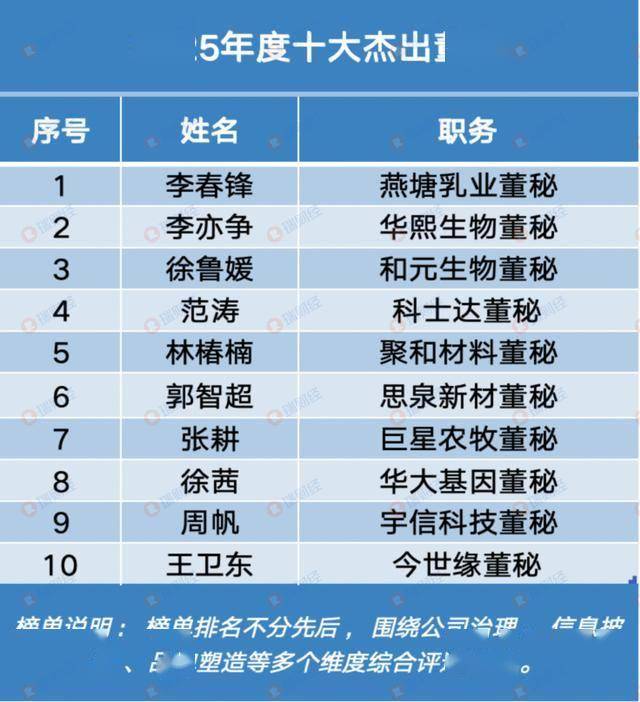
瑞财经1月21日,由瑞财经推出的"2025年度十大杰出董秘"榜单揭晓,今世缘董秘王卫东入选。 "2025年度十大杰出董秘"榜单围绕公司治理、信息披露、品牌塑造等多个维度综合评选得出。 王卫东,公司董事、副总经理、总会计师及董事会秘书。河海大学工商管理专业硕士,高级经济师,高 级会计师。2013年12月起,兼任淮安市轻工业协会常务副会长;2015年3月起,兼任华泰瑞通投资管理 有限公司董事;2018年11月起,兼任江苏省上市公司协会财务专业委员会副主任委员;2019年11月起, 兼任江苏省会计学会理事;2023年11月起,兼任中国上市公司协会第三届董秘委员会委员。 2025年,王卫东在资本市场履职、公司经营策略调整、财务与数字化管理等多个领域均有亮眼表现,有 力支撑了公司在复杂市场环境中的稳定发展。 | 序号 | 。姓名 | 职务 。 | | --- | --- | --- | | 1 | 李春锋 | 燕塘乳业董秘 | | 02 | 李亦争。 | 华熙生物董秘 | | 3 | 徐鲁媛 | 和元生物董秘 | | 4 | 范涛 | 科士达董秘 | | 5 | 林椿楠 | 聚和材料董秘 | | 6 | 郭智韶 | 思 ...
白酒板块1月21日跌1.83%,*ST岩石领跌,主力资金净流出26.42亿元
Zheng Xing Xing Ye Ri Bao· 2026-01-21 08:53
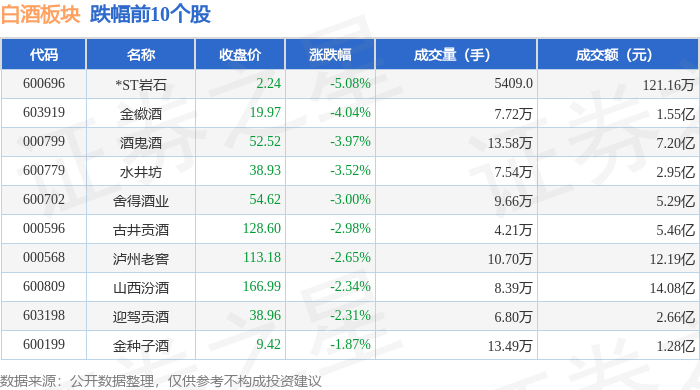
Core Viewpoint - The liquor sector experienced a decline of 1.83% on January 21, with *ST Rock leading the drop, while the overall market indices showed slight increases [1] Group 1: Market Performance - The Shanghai Composite Index closed at 4116.94, up 0.08% [1] - The Shenzhen Component Index closed at 14255.12, up 0.7% [1] - The liquor sector saw a net outflow of 2.642 billion yuan from main funds, while retail investors contributed a net inflow of 858 million yuan [1] Group 2: Individual Stock Performance - *ST Rock closed at 2.24 yuan, down 5.08% with a trading volume of 5409 lots [1] - Other notable declines included Quan Wei Jiu down 4.04%, Zhi Si Li down 3.97%, and Shui Jing Fang down 3.52% [1] - The highest closing price was for Shanxi Fen Jiu at 166.99 yuan, down 2.34% [1] Group 3: Fund Flow Analysis - Main funds showed a significant outflow from several stocks, including Lao Bai Gan Jiu with a net outflow of 18.7589 million yuan [2] - Retail investors had a net inflow in stocks like Jin Shi Zi Jiu, which saw a net inflow of 12.814 million yuan [2] - The overall trend indicates a mixed sentiment among different types of investors within the liquor sector [2]



白酒板块1月20日涨0.3%,洋河股份领涨,主力资金净流入1.91亿元
Zheng Xing Xing Ye Ri Bao· 2026-01-20 08:51
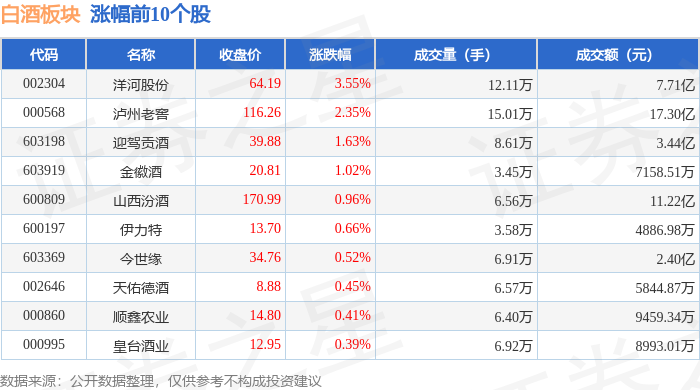
Market Overview - The liquor sector experienced a slight increase of 0.3% on January 20, with Yanghe Distillery leading the gains [1] - The Shanghai Composite Index closed at 4113.65, down 0.01%, while the Shenzhen Component Index closed at 14155.63, down 0.97% [1] Individual Stock Performance - Yanghe Distillery (002304) closed at 64.19, up 3.55% with a trading volume of 121,100 shares and a transaction value of 771 million [1] - Luzhou Laojiao (000568) closed at 116.26, up 2.35% with a trading volume of 150,100 shares and a transaction value of 1.73 billion [1] - Other notable performers include: - Yingjia Grape Wine (603198) at 39.88, up 1.63% [1] - Shanxi Fenjiu (600809) at 170.99, up 0.96% [1] - Wuliangye (000858) at 104.91, up 0.34% [2] Capital Flow Analysis - The liquor sector saw a net inflow of 191 million from institutional investors, while retail investors experienced a net outflow of 1.88 billion [2] - The capital flow for key stocks includes: - Yanghe Distillery with a net inflow of 80.15 million from institutional investors [3] - Luzhou Laojiao with a net outflow of 111 million from retail investors [3] - Wuliangye with a net inflow of 10.61 million from institutional investors [3]

食品饮料行业:月聚焦:如何布局零食“春季躁动”?
GF SECURITIES· 2026-01-20 06:14
Group 1 - The report highlights the "Spring Excitement" in the snack sector, indicating a historical high relative win rate of 70% for the food and beverage sector in the 40 days leading up to the Spring Festival [7][16] - The report emphasizes that the "Spring Excitement" is not solely dependent on the annual beta of the food and beverage sector, as structural opportunities still exist despite a long-term adjustment period since 2021 [7][16] - Key catalysts for the upcoming Spring Festival include concentrated demand for gifts and gatherings, which leads to more planned channel stocking, creating a positive feedback loop of expectations and validations [7][16][28] Group 2 - In December, the food and beverage sector underperformed the market by 7.5 percentage points, with a decline of 5.2%, ranking last among 31 primary industries [7][61] - The report notes a divergence in performance among sub-sectors, with snacks and soft drinks showing gains while liquor and beer experienced declines [7][61][64] - The absolute and relative valuations of the food and beverage sector are at their lowest since 2010, indicating potential investment opportunities [7][61][64] Group 3 - The report tracks the recovery of consumer confidence, with a 0.9% year-on-year increase in retail sales in December, showing improvement from the previous month [7][63] - It highlights that the liquor sector is facing weak demand and declining prices, with the price adjustments for premium liquor nearing levels seen between 2011 and 2015 [7][63][64] - The report identifies structural differentiation in costs, with some packaging materials and agricultural products experiencing price increases [7][63][64] Group 4 - Investment recommendations include a focus on liquor stocks that have undergone a four-year adjustment period, with potential for a "valuation + performance" double bottom [7][64] - For consumer goods, the report anticipates a moderate increase in industry prices in 2026, with specific recommendations for companies like Anjuke Foods, Qianhe Flavor, and Eastroc Beverage [7][64] - The report suggests that the upcoming Spring Festival will provide a favorable environment for growth narratives, particularly in the restaurant supply chain and certain chain formats [7][64]



月聚焦:如何布局零食“春季躁动”?
GF SECURITIES· 2026-01-20 01:07
Group 1 - The core view of the report emphasizes the high relative success rate of the food and beverage sector during the pre-Spring Festival period, with a historical success rate of 70% in the last ten years [7][16] - The report identifies structural opportunities within the food and beverage sector despite a long-term adjustment phase since 2021, highlighting the importance of seasonal demand and planned channel stocking [7][16] - The report suggests three strategic approaches for investment in the snack sector during the "spring excitement" period, focusing on companies with clean chips, strong growth themes, and clear growth drivers [7][49] Group 2 - In December, the food and beverage sector underperformed the market, with a decline of 5.2%, lagging behind the CSI 300 index by 7.5 percentage points, ranking last among 31 primary industries [7][61] - The report notes a divergence in performance among sub-sectors, with snacks and soft drinks showing gains while liquor and beer sectors faced declines [7][61] - The report highlights that the absolute and relative valuations of the food and beverage sector are at their lowest levels since 2010, indicating potential investment opportunities [7][61][64] Group 3 - The report tracks the recovery of consumer confidence, with a December retail sales growth of 0.9%, showing improvement from the previous month [7][63] - It notes that the liquor sector is experiencing weak demand and price adjustments, particularly for high-end products like Moutai, which is nearing historical price levels [7][63] - The report indicates that the cost structure is showing divergence, with some packaging materials and agricultural products experiencing price increases [7][63][64] Group 4 - Investment recommendations include a focus on liquor stocks that have undergone a four-year adjustment period, with potential for valuation and performance recovery [7][64] - For consumer goods, the report anticipates a moderate increase in industry prices in 2026, highlighting opportunities in new products and channels [7][64] - Specific stock recommendations include Luzhou Laojiao, Shanxi Fenjiu, and various consumer goods companies such as Anjuke Foods and Dongpeng Beverage [7][64]
打造蓉酒品牌 成都如何发力?
Sou Hu Cai Jing· 2026-01-19 12:43
Core Viewpoint - The adjustment in pricing strategies by leading liquor companies, such as Guizhou Moutai, reflects the transformation anxiety and desire for breakthroughs in the Chinese liquor industry, which is currently undergoing a deep adjustment phase due to intense competition and market saturation [1] Group 1: Industry Trends - The liquor industry in China is transitioning from "scale competition" to "value competition," making brand strength a key factor for regional differentiation and success [3] - The revenue rankings of major liquor companies indicate that Guizhou Moutai leads with 170.61 billion yuan, followed by Wuliangye at nearly 90 billion yuan and Luzhou Laojiao at approximately 34 billion yuan, while Chengdu's Shui Jing Fang has a revenue of only 5.217 billion yuan, highlighting significant room for growth [3] - Chengdu is actively seeking to enhance its liquor brand through policy measures aimed at supporting the development of the "Rong Jiu" brand and promoting flagship products [5] Group 2: Policy Initiatives - The "Measures for Promoting High-Quality Development of the Liquor Industry in Chengdu" draft emphasizes the need for brand protection and support for liquor companies in intellectual property rights and market order maintenance [5] - Chengdu's government plans to explore the establishment of a liquor fund and include liquor companies in the "Huirong Loan" whitelist to alleviate financing difficulties, providing a sustainable financial support system for high-quality industry development [9] Group 3: Market Dynamics - The shift in consumer behavior from business banquets to social and self-consumption is prompting a focus on innovative consumption scenarios, with policies encouraging the integration of liquor with tourism and experiential consumption [12] - Chengdu's liquor industry is developing a unique liquor tourism route that combines historical culture, brewing techniques, and tourism experiences, aiming to attract both domestic and international visitors [13]
长三角商界牌桌“交手” 掼蛋联谊赛成企业家新社交场
Yang Zi Wan Bao Wang· 2026-01-19 01:20
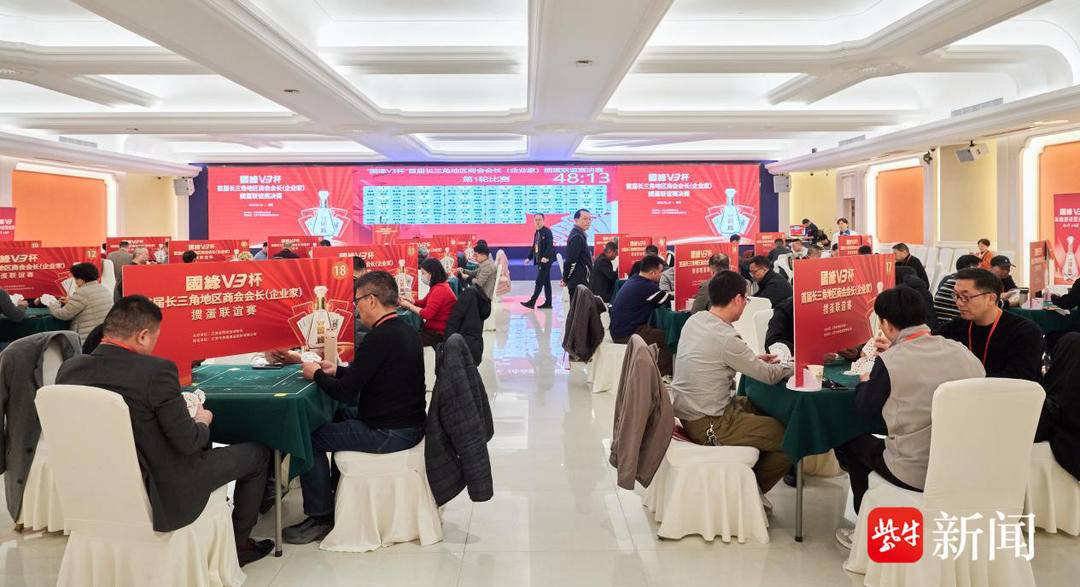
Group 1 - The "Guoyuan V3 Cup" first Yangtze River Delta Chamber of Commerce Presidents (Entrepreneurs) Dou Di Zhu Friendship Tournament concluded in Nanjing after over two months, with nearly 700 business professionals participating and 96 finalists competing in a friendly yet intense intellectual contest [1][3] - The event was organized by the Jiangsu Dou Di Zhu Sports Association, which highlighted the tournament's role in enhancing the festive atmosphere and providing an efficient platform for business exchanges among entrepreneurs in the Yangtze River Delta region [3][6] - Dou Di Zhu, a popular intellectual game, has increasingly been integrated into business social settings, reflecting a trend where such events facilitate networking and the sharing of industry insights among participants [5][6] Group 2 - Jiangsu Jinshiyuan Liquor Co., Ltd. supported the event, with its Vice General Manager Chen Jiuquan emphasizing the cultural significance of the tournament in fostering connections and resonance in business interactions [5][8] - Industry insiders believe that combining intellectual sports with business communities offers new opportunities for interaction among enterprises in the Yangtze River Delta, promoting the flow and integration of regional economic elements in a relaxed atmosphere [6]
食品饮料行业:春节走访:河南、上海市场跟踪
GF SECURITIES· 2026-01-18 10:06
Core Insights - The report maintains a "Buy" rating for the food and beverage industry, consistent with previous ratings, indicating a positive outlook for the sector [4] - The report highlights the cautious inventory management in the liquor market, particularly in Henan, with the upcoming Spring Festival sales performance still uncertain [17][19] - The demand for frozen food in Henan is showing signs of improvement as preparations for the Spring Festival begin, with increased confidence among distributors [22] - In Shanghai, the "锅圈" (Guoquan) stores are undergoing significant renovations, leading to a notable increase in daily sales post-renovation [25][27] Weekly Focus: Henan & Shanghai Market Tracking - **Henan Liquor Market**: Inventory levels are low, and major brands like Moutai are seeing stable pricing, with the Spring Festival sales performance yet to be observed [17][19] - **Henan Food Supply Market**: Distributors are beginning to stock up for the Spring Festival, with a slight uptick in demand noted [22] - **Shanghai Guoquan Store Renovations**: The store renovations have led to a significant increase in daily sales, with new product categories contributing to revenue growth [25][27] Food and Beverage Sector Overview - The food and beverage sector experienced a decline of 2.1% in the week of January 12-16, underperforming compared to the CSI 300 index [29] - The valuation of the food and beverage sector stands at a PE-TTM of 21.2X, with the white liquor sector at 18.3X, indicating a relative valuation compared to the broader market [43][46] Recent Key Announcements & News - The report includes updates on major companies like Qianwei Culinary and Sanquan Foods, highlighting their strategic adjustments and product innovations aimed at enhancing competitiveness [23][24] - The report notes that the industry is moving away from price wars towards a focus on product innovation and quality assurance [24] Investment Recommendations - The report recommends key liquor brands such as Luzhou Laojiao, Shanxi Fenjiu, and Moutai, as well as consumer goods companies like Anjuke Foods and Tianwei Foods, indicating potential investment opportunities [8][12]