WLY(000858)

Search documents
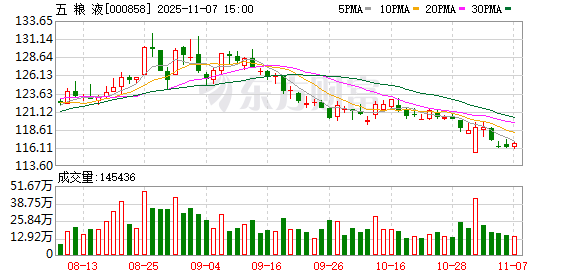
五粮液:董秘感谢投资者建议,新浪财经提示信息风险
Xin Lang Cai Jing· 2025-11-07 21:08
Core Viewpoint - The company is experiencing a prolonged decline in stock price, prompting suggestions for a share buyback to stabilize the situation [1] Group 1 - Investors have expressed concerns regarding the company's continuously low stock price [1] - The company acknowledges the suggestion for a share buyback as a potential strategy to address the stock price issue [1]

五粮液:截止10月31日公司股东有60余万户
Xin Lang Cai Jing· 2025-11-07 21:08
Core Points - As of October 31, 2025, the number of shareholders for the company is over 600,000 [1] Summary by Category - **Shareholder Information** - The company has over 600,000 shareholders as of the specified date [1]
曾从钦董事长率队调研山西太原市场!
Sou Hu Cai Jing· 2025-11-07 19:44
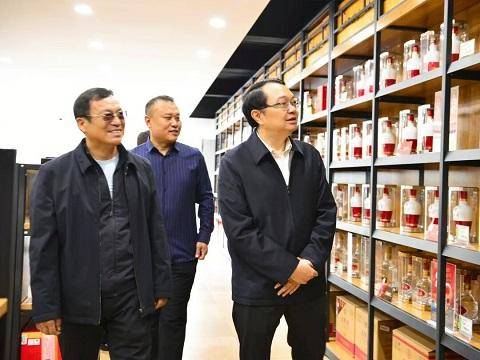
Core Insights - The core theme of the market research conducted by Wuliangye Group focuses on "deepening the terminal market and empowering distributor development" [1][3]. Group 1: Market Research Activities - The chairman of Wuliangye Group, Zeng Congqin, led a team to conduct market research in Taiyuan, Shanxi Province, engaging in various activities such as visiting specialty stores and core terminals, and holding discussions with distributor teams to understand market conditions and gather feedback [1][3]. - During the research, Zeng Congqin visited several key distributors in Taiyuan, closely examining product displays, promotional activities, and consumer service processes to assess the current operational status and core customer demands [3]. Group 2: Distributor Engagement and Strategy - Zeng Congqin encouraged distributors to view the current market challenges as a critical opportunity for adjustment, emphasizing the importance of focusing on terminal value and enhancing service capabilities to transition from "product transportation" to "consumer service" [5]. - The company aims to optimize its product layout in the Shanxi market to meet new demands for lower alcohol content and scenario-based consumption, while also increasing support for distributors to strengthen consumer cultivation and brand experience [7].

11月7日国企改革(399974)指数跌0.1%,成份股深南电路(002916)领跌
Sou Hu Cai Jing· 2025-11-07 09:57
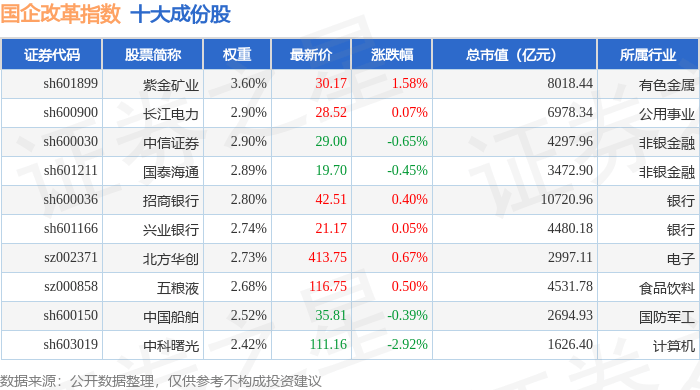
Core Points - The State-Owned Enterprise Reform Index (399974) closed at 1916.43 points, down 0.1% with a trading volume of 135.68 billion yuan and a turnover rate of 0.7% [1] - Among the index constituents, 43 stocks rose while 56 fell, with Wanhua Chemical leading the gainers at a 5.79% increase and Shenzhen South Circuit leading the decliners at a 3.36% decrease [1] Index Constituents Summary - The top ten constituents of the State-Owned Enterprise Reform Index include: - Zijin Mining: 3.60% weight, latest price 30.17 yuan, market cap 801.84 billion yuan, sector: Non-ferrous metals [1] - Changjiang Electric Power: 2.90% weight, latest price 28.52 yuan, market cap 697.83 billion yuan, sector: Utilities [1] - CITIC Securities: 2.90% weight, latest price 29.00 yuan, market cap 429.80 billion yuan, sector: Non-banking financial [1] - Taihai Chemical: 2.89% weight, latest price 19.70 yuan, market cap 347.29 billion yuan, sector: Non-banking financial [1] - China Merchants Bank: 2.80% weight, latest price 42.51 yuan, market cap 1072.10 billion yuan, sector: Banking [1] - Xingye Bank: 2.74% weight, latest price 21.17 yuan, market cap 448.02 billion yuan, sector: Banking [1] - North Huachuang: 2.73% weight, latest price 413.75 yuan, market cap 299.71 billion yuan, sector: Electronics [1] - Wrigley: 2.68% weight, latest price 116.75 yuan, market cap 453.18 billion yuan, sector: Food and Beverage [1] - China Shipbuilding: 2.52% weight, latest price 35.81 yuan, market cap 269.49 billion yuan, sector: Defense and Military [1] - Zhongke: 2.42% weight, latest price 111.16 yuan, market cap 162.64 billion yuan, sector: Computer [1] Capital Flow Analysis - The net outflow of main funds from the index constituents totaled 4.52 billion yuan, while retail investors saw a net inflow of 2.98 billion yuan [1] - Notable net inflows from retail investors were observed in Wanhua Chemical, TCL Zhonghuan, and China Satellite, while significant outflows were noted in China Chemical and China Unicom [2]





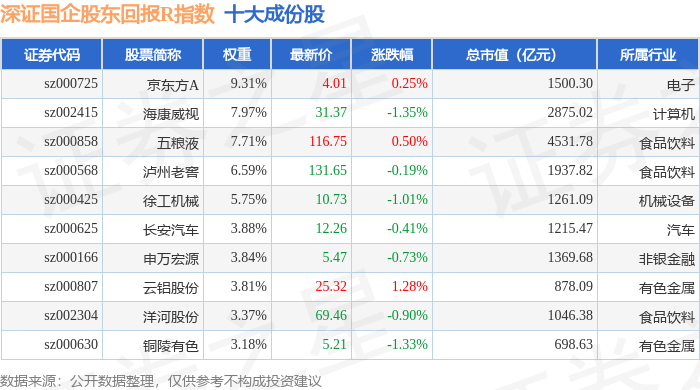
11月7日深证国企股东回报R(470064)指数跌0.1%,成份股佛燃能源(002911)领跌
Sou Hu Cai Jing· 2025-11-07 09:57
Core Points - The Shenzhen State-Owned Enterprises Shareholder Return Index (470064) closed at 2289.78 points, down 0.1% with a trading volume of 24.519 billion yuan and a turnover rate of 0.91% [1] - Among the index constituents, 20 stocks rose while 28 stocks fell, with Jiangsu Guotai leading the gainers at a 10.01% increase and Fuan Energy leading the decliners at a 4.13% decrease [1] Index Constituents Summary - The top ten constituents of the Shenzhen State-Owned Enterprises Shareholder Return Index include: - BOE Technology Group (sz000725) with a weight of 9.31%, latest price at 4.01 yuan, and a 0.25% increase [1] - Hikvision (sz002415) with a weight of 7.97%, latest price at 31.37 yuan, and a 1.35% decrease [1] - Wuliangye Yibin (sz000858) with a weight of 7.71%, latest price at 116.75 yuan, and a 0.50% increase [1] - Luzhou Laojiao (sz000568) with a weight of 6.59%, latest price at 131.65 yuan, and a 0.19% decrease [1] - XCMG Machinery (sz000425) with a weight of 5.75%, latest price at 10.73 yuan, and a 1.01% decrease [1] - Changan Automobile (sz000625) with a weight of 3.88%, latest price at 12.26 yuan, and a 0.41% decrease [1] - Shenwan Hongyuan (sz000166) with a weight of 3.84%, latest price at 5.47 yuan, and a 0.73% decrease [1] - Yunnan Aluminum (sz000807) with a weight of 3.81%, latest price at 25.32 yuan, and a 1.28% increase [1] - Yanghe Brewery (sz002304) with a weight of 3.37%, latest price at 69.46 yuan, and a 0.90% decrease [1] - Tongling Nonferrous Metals (sz000630) with a weight of 3.18%, latest price at 5.21 yuan, and a 1.33% decrease [1] Capital Flow Summary - The index constituents experienced a net outflow of 527 million yuan from institutional investors, while retail investors saw a net inflow of 399 million yuan [3] - Notable capital flows include: - Jiangsu Guotai (002091) with a net inflow of 180 million yuan from institutional investors [3] - BOE Technology Group (000725) with a net inflow of 86.93 million yuan from institutional investors [3] - Wuliangye Yibin (000858) with a net inflow of 32.59 million yuan from institutional investors [3]




五粮液与博鳌亚洲论坛续签战略合作 秉“和美”智慧共赴国际化新篇
Xin Hua Cai Jing· 2025-11-07 08:57
Core Points - The signing ceremony between Boao Forum for Asia and Wuliangye Group marks the continuation of Wuliangye as a strategic partner, enhancing its role in global discussions and promoting the internationalization of Chinese liquor [2][3][6] - Wuliangye's commitment to sustainable development and cultural heritage was praised by Ban Ki-moon, highlighting the company's role as a leader in the liquor industry and a representative of Asian enterprises in global governance [5][6] - The partnership aims to foster regional cooperation and contribute to sustainable development agendas in Asia, with Wuliangye participating in the 2026 annual meeting and related international activities [3][6] Company and Industry Insights - Wuliangye has been a key partner of the Boao Forum since 2018, enhancing its international presence and showcasing the unique charm of Chinese liquor on global platforms [6][8] - The company has set a "zero-carbon" goal and is implementing a comprehensive green management system across its entire supply chain, demonstrating a commitment to ecological protection and sustainable practices [7][8] - Recent achievements include receiving the highest score in the history of the China Enterprise History Creation Award and winning the "United Nations Sustainable Development Goals Implementation and Corporate Performance Excellence Award," which enhances Wuliangye's brand influence [8]
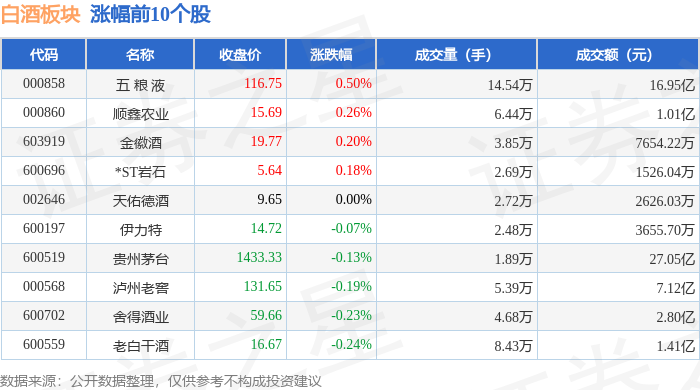
白酒板块11月7日跌0.14%,口子窖领跌,主力资金净流出3.76亿元
Zheng Xing Xing Ye Ri Bao· 2025-11-07 08:41
Market Overview - The liquor sector experienced a slight decline of 0.14% on November 7, with Kuaizi Jiao leading the drop [1] - The Shanghai Composite Index closed at 3997.56, down 0.25%, while the Shenzhen Component Index closed at 13404.06, down 0.36% [1] Individual Stock Performance - Wuliangye (000858) closed at 116.75, up 0.50% with a trading volume of 145,400 shares [1] - Shunxin Agriculture (000860) closed at 15.69, up 0.26% with a trading volume of 64,400 shares [1] - Kweichow Moutai (600519) closed at 1433.33, down 0.13% with a trading volume of 18,900 shares, generating a transaction value of 2.705 billion [1] - Luzhou Laojiao (000568) closed at 131.65, down 0.19% with a transaction value of 712 million [1] Capital Flow Analysis - The liquor sector saw a net outflow of 376 million from institutional investors, while retail investors contributed a net inflow of 197 million [2] - The main capital flow data indicates that Wuliangye had a net inflow of 32.596 million from institutional investors, but a net outflow from retail investors [3] Summary of Capital Flows by Company - Wuliangye (000858) had a net inflow of 32.596 million from main capital, but a net outflow of 30.204 million from retail investors [3] - Kweichow Moutai (600519) experienced a net outflow of 6.5481 million from main capital, while retail investors contributed a net inflow of 9.5224 million [3] - Other companies like Gujing Gongjiu (000596) and Tianyoude Jiu (002646) also showed significant net outflows from main capital [3]


食品饮料行业2026年策略:从胜率和赔率角度看食品饮料行业投资机会
Dongxing Securities· 2025-11-07 08:26
Core Insights - The report emphasizes the investment opportunities in the food and beverage industry from the perspectives of win rate and odds, suggesting a transition from low win rates to high win rates driven by macroeconomic changes [4][13][22]. Investment Summary - The theoretical expected return formula is defined as expected investment = win rate × odds - (1 - win rate), where odds reflect valuation and potential upside versus downside risk, while win rate indicates the probability of successful investment based on fundamental momentum [4][13]. - The food and beverage sector is currently in a phase of high odds and low win rates, with the potential for improvement in win rates depending on macroeconomic conditions and overall demand changes [4][13][14]. - The report predicts that the food and beverage sector could achieve dual growth in fundamentals and valuations in 2026, contingent on macroeconomic recovery [4][14]. Investment Strategy - High win rate opportunities are primarily found in the mass consumer goods sector, particularly companies benefiting from new channels and product categories, such as leading snack food companies [5][14]. - The liquor sector is in a bottoming phase, with win rates expected to improve as fundamentals recover, representing an "odds-first" investment choice [5][14]. Valuation Perspective - The food and beverage sector's overall valuation is currently low, with the Shenwan Food and Beverage Index's price-to-earnings (PE) ratio at 21.29, which is in the 11.85th percentile historically, indicating limited downside potential and significant upside potential if fundamentals improve [15][16]. - The calculated odds for the food and beverage industry stand at 4.57, indicating a favorable risk-reward ratio [16]. Win Rate Analysis - The win rate is assessed through various dimensions, including profitability momentum, funding conditions, and macroeconomic policy environments, with a focus on how these factors influence the food and beverage sector [22][23]. - The report highlights a strong correlation between macroeconomic indicators and the revenue and net profit of the food and beverage sector, suggesting that macroeconomic changes will significantly impact industry performance [24][26]. Macroeconomic and Policy Impact - Recent macroeconomic policies aimed at boosting consumption and expanding domestic demand are expected to create a favorable environment for the recovery of the food and beverage sector [27][29]. - The report notes that as macroeconomic totals increase, food and beverage consumption is likely to follow suit, enhancing the certainty of growth in the sector [27][29]. Interest Rate Influence - The report discusses the negative correlation between interest rates and asset pricing in the food and beverage sector, indicating that a decrease in U.S. interest rates could positively impact domestic valuations [30][31]. Growth Momentum - The report identifies three underlying forces affecting the profitability momentum in the food and beverage sector: demand-side changes, cost-side pressures, and corporate governance [35]. - It emphasizes that the recovery of the macroeconomic environment will lead to improved demand, thereby enhancing the overall win rate for the food and beverage sector [35]. Conclusion on Investment Opportunities - The food and beverage sector is positioned for a transition from low to high win rates, with significant investment potential as macroeconomic conditions improve [36][40]. - Recommended companies include leading snack food firms such as Salted Fish and Sweet Potato, as well as liquor giants like Kweichow Moutai and Wuliangye [40].


老登们的社交货币全崩了
投中网· 2025-11-07 06:46
Group 1: Market Overview - The Shanghai Composite Index is challenging the 4000-point mark, but the market remains highly differentiated, particularly in the traditional high-end consumption sector represented by liquor, which is in a prolonged stagnation phase [6][11]. - Despite limited market funds seemingly abandoning the shift from tech stocks to traditional consumer stocks, some investors are still betting on liquor stocks, believing in a potential recovery after significant negative news [7][11]. Group 2: Liquor Industry Performance - The liquor industry recently reported its worst third-quarter performance, with 18 listed companies achieving a total revenue of 317.66 billion yuan, a year-on-year decline of 5.84%, and a net profit of 122.69 billion yuan, down 6.88% [11][12]. - The third quarter saw a dramatic year-on-year revenue drop of 18.42% and a net profit decline of 22.03%, reversing the growth trend observed in the same period of the previous year [11][12]. - Even leading companies like Kweichow Moutai experienced a significant slowdown, with third-quarter revenue growth dropping to 0.56% and net profit growth to 0.48%, marking the lowest growth rates in recent years [12][14]. Group 3: Challenges in the Liquor Market - Kweichow Moutai's pricing issues are emblematic of broader operational challenges, with its flagship product's price falling below 1700 yuan, a significant drop from previous highs [14][15]. - The overall liquor market is facing a decline in sales volume, with a 20% drop during key festive periods, and high inventory levels leading to price inversions affecting half of the companies [16]. - The traditional distribution model is under strain as companies like Moutai shift towards direct sales and e-commerce, disrupting the established dealer network and altering market dynamics [16]. Group 4: Tea Industry Developments - In contrast to the liquor sector, the high-end tea industry has seen positive developments, with Baima Tea successfully listing on the Hong Kong Stock Exchange after multiple failed attempts, achieving an impressive 86.7% increase on its first trading day [18][19]. - Baima Tea's growth strategy focuses on brand enhancement, digitalization, and addressing industry pain points, although its franchise system has shown slight contraction [19]. - The high-end tea market heavily relies on the gift market, and the performance of tea companies is closely tied to their ability to navigate complex social and business relationships [20][22]. Group 5: Broader Consumer Trends - The liquor and tea industries are both attempting to connect with younger consumers, while traditional products like Pizhou Huang are struggling, with significant declines in revenue and profit [23][26]. - The market for high-end gifts and social currencies like liquor and traditional medicine is under pressure as societal dynamics shift, leading to a reevaluation of their long-term appeal [28][30].


手握4700亿家底,白酒抗跌能力变强
21世纪经济报道· 2025-11-07 04:00
Core Viewpoint - The 2025 Q3 report for the liquor industry indicates it is the worst quarter in the past decade, with most companies experiencing significant declines in performance, while only a few, like Guizhou Moutai and Shanxi Fenjiu, managed to maintain positive growth [1][4]. Group 1: Performance Comparison - Among the 21 A-share liquor companies, only 15 have fully experienced the previous adjustment period, showing improved resilience against downturns [2]. - In 2025 Q3, the revenue and net profit of these 15 companies fell by 4.5% and 5.5%, respectively, compared to more severe declines in 2013 and 2014 [4]. - The number of leading liquor companies maintaining positive growth has increased, with Guizhou Moutai and Shanxi Fenjiu being the only ones to achieve this in 2025 Q3 [5]. Group 2: Profitability and Financial Resilience - The total net profit of the 15 liquor companies in 2025 Q3 exceeded 110 billion, significantly higher than the less than 28 billion in 2013 [10]. - The accumulated undistributed profits of these companies reached 468.8 billion, five times that of 2013, indicating a stronger financial cushion [10][12]. - The profitability of leading companies has improved, with Moutai maintaining a gross margin above 90% and Wuliangye's gross margin rising to over 80% [13][14]. Group 3: Sales and Marketing Strategies - Unlike the previous cycle, companies have been more restrained in their sales expenditures, with many reducing their sales expense ratios compared to 2013 and 2014 [17][19]. - Guizhou Moutai's sales expense ratio remains low at around 3-4%, reflecting strong brand recognition and market confidence [20]. Group 4: Channel Confidence and Cash Flow - The confidence of distributors has improved, with contract liabilities for the 15 companies increasing by 3.6% in 2025 Q3, contrasting sharply with the declines seen in the previous cycle [22][24]. - However, some non-leading companies have reported negative cash flow from operating activities, indicating potential financial strain [28].