
YanKershop(002847)

Search documents
盐津铺子20250526
2025-05-26 15:17
Summary of Salted Fish's Conference Call Company Overview - **Company**: Salted Fish (盐津铺子) - **Industry**: Snack Food Industry Key Points and Arguments 1. **Revenue and Profit Growth**: Salted Fish achieved a revenue growth rate of 32% and a net profit growth rate close to 40%, driven by strong performance in high-potential categories like quail eggs and konjac [2][3][5] 2. **Channel Strategy**: The company has effectively leveraged channel opportunities, with a balanced channel structure: 25% from wholesale, 22% from e-commerce, and coverage in membership stores. This diversified approach has enhanced operational efficiency [2][9][20] 3. **Product Performance**: The "Big Demon King" product has achieved monthly sales exceeding 100 million, setting a record for snack products in China. The explosive growth of quail eggs and konjac is closely linked to upstream supply chain management [2][5][12] 4. **Management and Incentives**: The introduction of experienced executives and a professional management model has provided long-term incentives, driving overall high growth in performance [6] 5. **Market Trends**: The Chinese retail channel has undergone significant changes, creating new opportunities. The rise of discount formats and the need for traditional supermarkets to adapt are notable trends [7][8] 6. **Cost Leadership**: Salted Fish has achieved a unit factory cost significantly below the industry average, supporting its price-performance strategy. The company controls channel markup rates and factory prices to maintain competitive pricing [4][16][17] 7. **Product Development Strategy**: The company focuses on developing products with high growth potential, aligning with health trends and maintaining competitive pricing. Key products include konjac jelly, konjac, and quail eggs [14] 8. **Overseas Market Expansion**: Salted Fish has made significant strides in overseas markets, with 2024 overseas revenue reaching approximately $63 million, and the first quarter of 2025 already matching last year's total [15] 9. **Future Growth Expectations**: The company anticipates over 30% revenue growth driven by the development of wholesale channels and the expansion of the konjac category [20] 10. **Net Profit Margin Outlook**: The net profit margin is expected to steadily improve due to enhanced operational efficiency from product structure optimization [21] 11. **Valuation Level**: Salted Fish's current valuation is around 30 times earnings, reflecting market recognition of its high growth potential in the snack food sector [22] Additional Important Insights - **Supply Chain Stability**: The company has strategically positioned itself in high-demand categories with unstable supply, ensuring stability in key areas like konjac powder and quail farming [18] - **Fixed Asset Management**: Salted Fish has focused on improving turnover efficiency rather than expanding fixed assets, leading to faster turnover rates compared to peers [19]
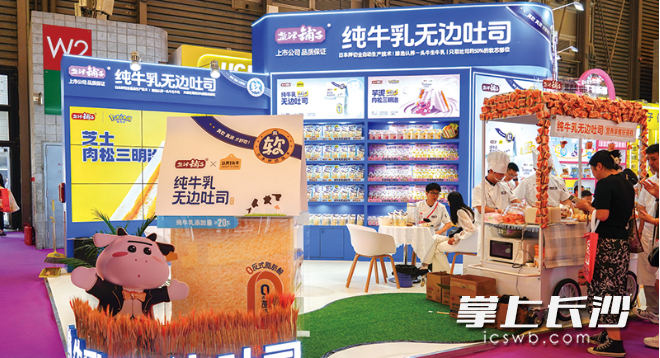
一季度增长25.69%!盐津铺子多款新品亮相上海西雅展
Chang Sha Wan Bao· 2025-05-25 11:01
Group 1 - The SIAL International Food Exhibition recently held in Shanghai attracted over 5,000 exhibitors from 75 countries and regions, showcasing the latest trends and products in the food and beverage industry [1] - Salted Fish, a leading domestic snack food company, presented several new sweet products at the exhibition, including collaborations with various brands [1] - The Chinese baking market is expected to see a trend towards combining health and taste by 2025, with a shift from "delicious" to "healthy eating" [1] Group 2 - The new products showcased by Salted Fish incorporate multiple technological innovations, such as a new generation of toast production lines and upgraded equipment to enhance flavor and texture [2] - In 2023, Salted Fish initiated a category brand strategy, establishing three business units focused on spicy, sweet, and healthy products, resulting in significant revenue growth [4] - The company achieved a revenue of 5.304 billion yuan in 2024, representing a year-on-year increase of 28.89%, and reported a revenue of 1.537 billion yuan in the first quarter of 2025, a 25.69% increase compared to the same period last year [4]

食品饮料行业周观点:白酒行业逐步施压,餐供龙头边际修复
GOLDEN SUN SECURITIES· 2025-05-25 06:23
Investment Rating - The report maintains an "Increase" rating for the food and beverage industry, indicating a positive outlook for key players in the sector [5]. Core Insights - The white liquor industry is experiencing gradual pressure, with a focus on rational targets for 2025. The report emphasizes three main investment lines: leading brands with competitive advantages, high-certainty regional brands, and flexible stocks benefiting from recovery and increased risk appetite [1][2]. - The beer sector shows a slight decline in production, with a 0.6% year-on-year decrease in the first four months of 2025. However, there is potential for recovery in the upcoming peak season, suggesting a favorable investment window [3]. - The report highlights the broad recovery potential in the catering supply space, with leading companies expected to benefit from improved performance and market expansion strategies [4][7]. Summary by Sections White Liquor - The industry consensus is shifting towards stable, high-quality growth with a focus on market share rather than aggressive growth targets. Key strategies include product innovation, market penetration, and international expansion [2]. - Major companies like Guizhou Moutai and Shanxi Fenjiu are focusing on maintaining market stability and enhancing their brand presence among younger consumers [2]. Beer and Beverage - The beer production for January to April 2025 was 11.44 million kiloliters, reflecting a slight decline. However, April showed a 4.8% increase in production, indicating potential for recovery [3]. - The beverage sector is characterized by intense competition, but new product launches and recovery in consumer demand are expected to sustain high growth [3]. Catering Supply - The report notes significant opportunities for leading companies in the catering supply sector, particularly with the introduction of new products and expansion into new categories [4][7]. - Companies like Three Squirrels are diversifying their product lines and enhancing their distribution channels to capture more market share [7].




盐津铺子(002847):修内功扩边界,解构破局者的成长之路
GOLDEN SUN SECURITIES· 2025-05-23 08:28
Investment Rating - The report initiates coverage with a "Buy" rating for the company [3][5]. Core Views - The company has successfully expanded its product categories and channels over the past 20 years, focusing on core products and brand development to drive growth [1][3]. - The retail landscape in China is undergoing rapid transformation, with the company effectively leveraging new channel opportunities to enhance its competitive position [2][3]. - The company has established a strong cost leadership through efficient supply chain management, supporting its high-quality and cost-effective product offerings [3][4]. Summary by Sections Company Development - The company has evolved through three key phases: initial establishment focusing on product diversification, a phase of channel expansion through innovative store formats, and a recent shift towards a multi-channel strategy emphasizing core product branding [13][15]. - Revenue has grown significantly from 750 million in 2017 to an expected 5.3 billion in 2024, with a CAGR of 32.1% [1][15]. Channel Expansion - The company has adapted to the changing retail environment by embracing new channels such as discount stores and e-commerce platforms, achieving notable operational success in these areas [2][3]. - The introduction of the "Egg Emperor" product in Sam's Club has positioned the company favorably within the competitive landscape [2][3]. Product System - The company is focusing on building category brands to enhance market recognition and drive profitability, with successful launches of products like "Big Demon King" and "Egg Emperor" [3][4]. - The company has achieved a leading position in cost management through raw material control and efficient supply chain practices, which supports its competitive pricing strategy [3][4]. Financial Forecast - The company is projected to achieve revenues of 6.96 billion, 8.63 billion, and 10.24 billion in 2025, 2026, and 2027 respectively, with corresponding net profits of 846 million, 1.07 billion, and 1.30 billion [4][5]. - The expected growth rates for revenue and net profit from 2025 to 2027 are 31.2%, 24.0%, and 18.7% for revenue, and 32.2%, 26.8%, and 21.5% for net profit [4][5].
盐津铺子:修内功扩边界,解构破局者的成长之路-20250523
GOLDEN SUN SECURITIES· 2025-05-23 06:48
Investment Rating - The report initiates coverage with a "Buy" rating for the company [3][5]. Core Views - The company has successfully expanded its product categories and channels over the past 20 years, focusing on core products and brand development to drive growth [1][3]. - The retail landscape in China is undergoing rapid transformation, with the company effectively leveraging new channel opportunities to enhance operational efficiency and profitability [2][3]. - The company has established a competitive advantage through cost leadership and a robust supply chain, enabling it to maintain high product quality and affordability [3][4]. Summary by Sections Company Development - The company has evolved through three key phases: initial establishment focusing on product diversification, a phase of channel expansion through innovative store formats, and a recent shift towards a multi-channel strategy emphasizing core product branding [13][15]. - From 2017 to 2020, the company launched the "Golden Shop" and "Blue Sapphire" store formats, significantly increasing its market presence and revenue [14][15]. - Since 2021, the company has embraced a full-channel expansion strategy, resulting in substantial revenue growth and improved profitability metrics [15][18]. Channel Expansion - The retail sector is rapidly changing, with a focus on efficiency and the rise of discount formats, which the company has capitalized on through strategic partnerships and channel diversification [2][3]. - The company has achieved notable success in emerging channels such as discount stores and e-commerce platforms like Douyin, enhancing its competitive positioning [2][3]. Product System - The company is focused on building brand recognition for its core products while maintaining a diverse product portfolio to meet evolving consumer demands [3][4]. - The establishment of a cost leadership position through effective supply chain management supports the company's long-term competitive advantage [3][4]. Financial Forecast - The company is projected to achieve significant revenue growth, with estimates of 69.6 billion, 86.3 billion, and 102.4 billion yuan for 2025, 2026, and 2027 respectively, alongside corresponding net profit growth [3][4].
盐津铺子(002847) - 关于公司股东解除质押并继续质押部分股份的公告
2025-05-21 08:16
证券代码:002847 证券简称:盐津铺子 公告编号:2025-031 盐津铺子食品股份有限公司 关于公司股东解除质押并继续质押部分股份的公告 本公司及董事会全体成员保证信息披露的内容真实、准确、完整, 没有虚假记载、误导性陈述或重大遗漏。 盐津铺子食品股份有限公司(以下简称"公司")近日收到股东张学文先生 的函告,张学文先生所持有本公司的部分股份办理了解除质押并继续质押部分股 份,具体事项如下: 截至本公告披露日,上述股东及其一致行动人持有本公司股份累计质押情况 一、股东股份质押的基本情况 | 股东 名称 | 是否为控股股东 或第一大股东及 | | 本次解除 质押数量 | 占其所持股份 比例(%) | 占公司总股 本比例(%) | 起始日 | 解除日期 | 质权人 | | --- | --- | --- | --- | --- | --- | --- | --- | --- | | | 一致行动人 | | (股) | | | | | | | 张学文 | | 是 | 1,155,000 | 2.75 | 0.42 | 2022.06.23 | 2025.05.20 | 北京银行股份 | | | | | | | ...
河南引领新食尚
He Nan Ri Bao· 2025-05-18 23:37
Group 1 - The 22nd China (Luohe) Food Expo serves as a platform for showcasing innovations in the food industry and fostering new consumption growth [2][4] - The event highlights new trends, technologies, and products in the food sector, emphasizing the integration of Henan's food industry into the national market [2][6] - The expo attracted 1,268 exhibitors from 12 countries and 26 provinces, showcasing a wide range of food products and innovations [15][16] Group 2 - Companies like Sanjianjieke Food Technology Co. have partnered with the Central Plains Food Laboratory to accelerate the development of functional dairy products, leading to successful new product launches [4][5] - Luohe Weikang Biotechnology Co. has established a large probiotic strain resource library and is focusing on the integration of probiotics with traditional food to enhance product value [5][6] - The Central Plains Food Laboratory has become a key player in food innovation, collaborating with numerous enterprises to address technical challenges and improve product offerings [8][9] Group 3 - The food industry in Henan is experiencing a transformation driven by technological innovation, with a focus on high-quality, health-oriented products [6][10] - The establishment of a modern food industry cluster is a strategic goal for Henan, aiming to integrate into the national unified market [13][17] - The development of a cold chain logistics system is crucial for enhancing the competitiveness of Henan's food products in national markets [19] Group 4 - The use of data analytics to understand consumer preferences is essential for companies to adapt their products and improve market penetration [20] - The expo has facilitated international collaborations, attracting major global food companies to Luohe, enhancing the region's position in the food industry [16][17] - Luohe's food products, including sugar substitutes and probiotics, are gaining international recognition, with significant export volumes [17]

重视零售变革,继续关注新品类新渠道机会
China Securities· 2025-05-18 15:35
Investment Rating - The report maintains a rating of "Outperform" for the food and beverage sector [4]. Core Insights - The food and beverage sector's Q1 performance remains stable, with a focus on boosting consumption as a key driver for economic growth. The government has introduced a comprehensive action plan to stimulate consumption, highlighting opportunities in four key areas: 1) Baijiu, with Moutai leading the industry; 2) Low-alcohol beverages, with beer sales rebounding; 3) Restaurant chains benefiting from product diversification; 4) Snack foods maintaining high demand due to new products and channels [1][3][7]. Summary by Relevant Sections Food and Beverage Sector Performance - The A-share market saw an increase, with the Shanghai Composite Index closing at 3367.46 points, up 0.76%. The food and beverage sector rose by 0.48%, underperforming the market by 0.29 percentage points [2][54]. - Among sub-sectors, health products showed the highest increase at 8.54%, while other alcoholic beverages experienced the largest decline at -3.12% [2][60]. Investment Recommendations - The report suggests that the food and beverage sector, as a typical domestic demand sector, presents significant investment value. The Baijiu sector is expected to recover as domestic consumption increases, with leading companies likely to see improved profitability. Current valuations in the Baijiu sector are still low, indicating long-term investment potential [3][7]. - The report emphasizes the high growth potential in snack foods and beverages, driven by new channels and products, particularly in the konjac product category [3][11][13]. Company-Specific Insights - Salted Fish Company (盐津铺子) is focusing on six core categories, with its konjac products performing exceptionally well, indicating strong growth potential [19][70]. - Qiaqia Food (洽洽食品) is concentrating on sunflower seeds and nuts, with a focus on flavor innovation and market penetration, expecting cost pressures to ease in the coming quarters [28][71]. Market Trends and Developments - The report highlights the ongoing transformation in retail channels, with an emphasis on the growth of discount stores and the adaptation of food companies to new retail formats [13][70]. - The government’s initiatives to boost consumption are expected to positively impact the food and beverage sector, particularly in the context of restaurant recovery and consumer spending [3][10].


白酒配置价值更强,大众品拥抱新消费——行业周报
KAIYUAN SECURITIES· 2025-05-18 15:05
Investment Rating - The industry investment rating is "Positive" (maintained) [1] Core Viewpoints - The report emphasizes that the value of liquor allocation is stronger, and consumer goods are embracing new consumption trends. The food and beverage index increased by 0.5% from May 12 to May 16, ranking 15th among 28 sub-industries, underperforming the CSI 300 by approximately 0.6 percentage points. Sub-industries such as health products (+8.5%), baked goods (+2.4%), and dairy products (+1.5%) performed relatively well [3][10][12] - The report indicates that liquor companies are experiencing slow revenue growth, which is already anticipated by the market. This is due to demand remaining at a low level and companies reducing channel burdens. The report suggests that liquor is currently at a bottom range, with signs of marginal recovery in business demand and a pragmatic approach from liquor companies to reduce supply growth to alleviate channel pressure. Future performance growth is expected to rise gradually [3][10][11] - New consumption trends are emerging due to changes in business models and consumer perceptions, focusing on consumer demand and reconstructing consumption scenarios and experiences. This is reflected in new channels within the food and beverage industry, where traditional retail channels face challenges such as traffic loss and declining profit margins [11] Summary by Sections Market Performance - The food and beverage index increased by 0.5%, ranking 15th out of 28, and underperformed the CSI 300 by about 0.6 percentage points. Leading sub-industries included health products (+8.5%), baked goods (+2.4%), and dairy products (+1.5%) [10][12] - Individual stocks such as Xianle Health, Youyou Foods, and Xiwang Foods showed significant gains, while Bai Run Foods, Ganyuan Foods, and ST Jia Jia experienced declines [12][18] Upstream Data - Some upstream raw material prices have decreased. For instance, the price of whole milk powder increased by 30.6% year-on-year, while the price of fresh milk decreased by 10.0% year-on-year [18][21] - The price of pork increased by 1.8% year-on-year, while the price of live pigs decreased by 3.8% year-on-year [24][25] Liquor Industry News - Moutai's sales through major e-commerce channels grew by over 30% in the first four months of the year. The company is also implementing new policies to boost sales for events and weddings [44] Recommendations - Recommended stocks include Shanxi Fenjiu, Guizhou Moutai, and Ximai Foods. Shanxi Fenjiu faces short-term demand pressure but has high mid-term growth certainty. Guizhou Moutai is focusing on sustainable development and increasing dividend rates. Ximai Foods is expected to improve profitability due to better raw material costs [4][51]



行业周报:白酒配置价值更强,大众品拥抱新消费-20250518
KAIYUAN SECURITIES· 2025-05-18 08:24
Investment Rating - The industry investment rating is "Positive" (maintained) [1] Core Viewpoints - The report emphasizes that the value of liquor allocation is stronger, and consumer goods are embracing new consumption trends. The food and beverage index increased by 0.5% from May 12 to May 16, ranking 15th among 28 sub-industries, underperforming the CSI 300 by approximately 0.6 percentage points. Sub-industries such as health products (+8.5%), baked goods (+2.4%), and dairy products (+1.5%) performed relatively well [3][10][12] - The report indicates that liquor companies are experiencing low revenue growth, which is already anticipated by the market. This is due to demand remaining at a low level and companies reducing channel burdens. The report suggests that liquor is currently at a bottom range, with signs of marginal recovery in business demand and a pragmatic approach from liquor companies to reduce supply growth to alleviate channel pressure. Future performance growth is expected to rise gradually [10][11] - New consumption trends are emerging, driven by changes in business models and consumer perceptions. This is reflected in the food and beverage industry through new channels. Traditional offline retail channels are facing challenges, leading to opportunities for upstream brand suppliers. Retailers are adopting differentiated product selections and focusing on quality, which benefits suppliers with strong brand and product capabilities [11][12] Summary by Sections Market Performance - The food and beverage index increased by 0.5%, ranking 15th out of 28, and underperformed the CSI 300 by about 0.6 percentage points. Health products, baked goods, and dairy products showed leading performance [10][12] - Individual stocks such as Xianle Health, Youyou Foods, and Xiwang Foods saw significant gains, while Bai Run Foods, Ganyuan Foods, and ST Jia Jia experienced declines [12][18] Upstream Data - Some upstream raw material prices have decreased. For instance, the price of whole milk powder increased by 30.6% year-on-year, while the price of fresh milk decreased by 10.0% year-on-year [18][21] - The price of pork increased by 1.8% year-on-year, while the price of live pigs decreased by 3.8% year-on-year [24][25] Liquor Industry News - Moutai's sales through major e-commerce channels grew by over 30% in the first four months of the year. The company is also implementing new policies to boost sales during banquets [44] Recommendations - Recommended stocks include Shanxi Fenjiu, Guizhou Moutai, and Ximai Foods. Shanxi Fenjiu is expected to have high growth certainty in the medium term, while Guizhou Moutai is focusing on sustainable development and increasing dividend rates. Ximai Foods is anticipated to improve profitability due to better raw material costs [4][51]