
反内卷

Search documents
市场传闻引发资金预期与博弈,短期关注价格向上机会
Wu Kuang Qi Huo· 2026-02-28 14:02
1. Report Industry Investment Rating - Not provided in the report 2. Core View of the Report - In the medium to long - term, the report maintains the view that the long - position trend of commodities will continue, but the short - term market may continue the shock and volatility - reduction cycle, suppressing the overall atmosphere. The black sector remains in a weak position among all commodities and is likely to be short - allocated in the short term. For manganese silicon, its supply - demand pattern is not ideal, but the current price may have already factored in these negative factors. For silicon iron, its supply - demand structure remains basically balanced with some marginal improvements. The key factors influencing the prices of manganese silicon and silicon iron in the future are the direction of the black sector and market sentiment, the cost - push problem caused by manganese ore for manganese silicon, and the supply contraction (or contraction expectation) of silicon iron due to losses or "dual - carbon" policies. The report also suggests paying close attention to potential restrictions on manganese ore exports and the progress of "dual - carbon" policies [18] 3. Summary by Directory 3.1 Week - to - Week Assessment and Strategy Recommendation - **Market Performance**: After the Spring Festival holiday, the manganese silicon futures price first declined slightly and then rebounded significantly, with a weekly increase of 258 yuan/ton or +4.47%. The silicon iron futures price also followed a similar trend, rising 244 yuan/ton or +4.44% week - on - week [13][15] - **Driving Factors**: The price movements were mainly driven by market rumors about the increase in South African power costs, the imposition of manganese ore ecological export tariffs (the latter was later disproven), and rumors of energy consumption monitoring, energy consumption dual - control, and "anti - involution" policies, which triggered market capital speculation [13][15] - **Technical Analysis and Target Prices**: The manganese silicon futures price has entered a bullish offensive pattern, approaching the resistance level of 6080 yuan/ton. If it breaks through, the next target prices are 6200 yuan/ton and 6450 yuan/ton. The silicon iron futures price is approaching the long - term downward trend line. If it breaks free, the next resistance levels are 5900 yuan/ton and 6100 yuan/ton [13][15] - **Weekly Key Points Summary** - **Demand**: The weekly output of rebar was 165.1 million tons, a decrease of 5.28 million tons week - on - week. The daily average pig iron production was 233.28 million tons, an increase of 2.79 million tons week - on - week. In January 2026, the cumulative production of magnesium metal was 8.59 million tons, a year - on - year increase of 22.02%. From January to December 2025, China's cumulative silicon iron exports were 40.09 million tons, a year - on - year decrease of 6.50% [17] - **Spot and Futures Prices**: The spot price of Tianjin 6517 manganese silicon was 5750 yuan/ton, an increase of 70 yuan/ton week - on - week. The futures price of the main contract (SM605) was 6026 yuan/ton, an increase of 256 yuan/ton week - on - week. The basis was - 86 yuan/ton, a decrease of 186 yuan/ton week - on - week. The spot price of Tianjin 72 silicon iron was 5850 yuan/ton, an increase of 150 yuan/ton week - on - week. The futures price of the main contract (SF605) was 5726 yuan/ton, an increase of 234 yuan/ton week - on - week. The basis was 124 yuan/ton, a decrease of 84 yuan/ton week - on - week, with a basis rate of 2.12% [17] - **Profit**: The estimated immediate profit of manganese silicon remained low. In Inner Mongolia, it was - 547 yuan/ton, a decrease of 97 yuan/ton week - on - week; in Ningxia, it was - 635 yuan/ton, an increase of 21 yuan/ton week - on - week; in Guangxi, it was - 460 yuan/ton, remaining stable week - on - week. The estimated immediate profit of silicon iron in Inner Mongolia was - 44 yuan/ton, a decrease of 200 yuan/ton week - on - week; in Ningxia, it was - 360 yuan/ton, remaining stable week - on - week; in Qinghai, it was - 897 yuan/ton, remaining stable week - on - week [17] - **Cost**: The estimated immediate cost of manganese silicon in Inner Mongolia (excluding depreciation) was 6197 yuan/ton, an increase of 97 yuan/ton week - on - week; in Ningxia, it was 6235 yuan/ton, an increase of 9 yuan/ton week - on - week; in Guangxi, it was 6210 yuan/ton, remaining stable week - on - week [17] - **Supply**: According to Mysteel data, the weekly output of manganese silicon was 19.74 million tons, an increase of 0.36 million tons week - on - week. The weekly output of silicon iron was 9.86 million tons, an increase of 0.06 million tons week - on - week, remaining at a low level compared to the same period [17] - **Inventory**: The estimated visible inventory of manganese silicon was 63.8 million tons, an increase of 1.24 million tons week - on - week, remaining at a high level compared to the same period. The estimated visible inventory of silicon iron was 8.81 million tons, a decrease of 3.49 million tons week - on - week (significantly affected by the centralized cancellation of warehouse receipts at the end of February), remaining at a low level compared to the same period [18] 3.2 Spot and Futures Market - **Manganese Silicon Basis**: As of February 27, 2026, the spot price of Tianjin 6517 manganese silicon was 5750 yuan/ton, an increase of 70 yuan/ton week - on - week. The futures price of the main contract (SM605) was 6026 yuan/ton, an increase of 256 yuan/ton week - on - week. The basis was - 86 yuan/ton, a decrease of 186 yuan/ton week - on - week, at a relatively low level in historical statistics [23] - **Silicon Iron Basis**: As of February 27, 2026, the spot price of Tianjin 72 silicon iron was 5850 yuan/ton, an increase of 150 yuan/ton week - on - week. The futures price of the main contract (SF605) was 5726 yuan/ton, an increase of 234 yuan/ton week - on - week. The basis was 124 yuan/ton, a decrease of 84 yuan/ton week - on - week, with a basis rate of 2.12%, at a relatively high level in historical statistics [26] 3.3 Profit and Cost - **Manganese Silicon Production Profit**: As of February 27, 2026, the estimated immediate profit of manganese silicon (excluding depreciation) remained low. In Inner Mongolia, it was - 547 yuan/ton, a decrease of 97 yuan/ton week - on - week; in Ningxia, it was - 635 yuan/ton, an increase of 21 yuan/ton week - on - week; in Guangxi, it was - 460 yuan/ton, remaining stable week - on - week [31] - **Manganese Silicon Production Cost** - **Raw Material Prices**: As of February 27, 2026, the price of South African manganese ore was 37 yuan/ton - degree, an increase of 0.2 yuan/ton - degree week - on - week; the price of Australian manganese ore was 42 yuan/ton - degree, remaining stable week - on - week; the price of Gabonese manganese ore was 42.8 yuan/ton - degree, remaining stable week - on - week. The market price of off - grade metallurgical coke was 1185 yuan/ton, remaining stable week - on - week [32] - **Import Volume**: In December, the import volume of manganese ore was 3.274 billion tons, an increase of 0.58 billion tons month - on - month and an increase of 0.723 billion tons year - on - year. From January to December, the cumulative import volume was 32.842 billion tons, a cumulative year - on - year increase of 3.56 billion tons or 12.17% [35] - **Port Inventory**: As of February 13, 2026, the port inventory of manganese ore continued to decline, reporting 4.301 billion tons, an increase of 0.098 billion tons week - on - week. Among them, the total port inventory of Australian manganese ore was 0.782 billion tons, an increase of 0.056 billion tons week - on - week; the total port inventory of high - grade manganese ore (including Australian, Gabonese, and Brazilian manganese ore) was 1.357 billion tons, an increase of 0.05 billion tons week - on - week [38][41] - **Electricity Price and Cost**: As of February 27, 2026, the electricity price in Inner Mongolia increased by 0.0225 yuan/kWh week - on - week, while the electricity prices in other regions remained stable week - on - week. The estimated immediate cost of manganese silicon in Inner Mongolia (excluding depreciation) was 6197 yuan/ton, an increase of 97 yuan/ton week - on - week; in Ningxia, it was 6235 yuan/ton, an increase of 9 yuan/ton week - on - week; in Guangxi, it was 6210 yuan/ton, remaining stable week - on - week [44] - **Silicon Iron Production Profit**: As of February 27, 2026, the estimated immediate profit of silicon iron in Inner Mongolia was - 44 yuan/ton, a decrease of 200 yuan/ton week - on - week; in Ningxia, it was - 360 yuan/ton, remaining stable week - on - week; in Qinghai, it was - 897 yuan/ton, remaining stable week - on - week [47] - **Silicon Iron Production Cost** - **Raw Material Prices**: As of February 27, 2026, the price of silica in the northwest region was 210 yuan/ton, remaining stable week - on - week. The price of semi - coke small materials was 750 yuan/ton, remaining stable week - on - week [50] - **Electricity Price and Cost**: As of February 27, 2026, the electricity price in Inner Mongolia increased by 0.0225 yuan/kWh week - on - week, while the electricity prices in other regions remained stable week - on - week. The estimated production cost of silicon iron in Inner Mongolia was 5704 yuan/ton, an increase of 180 yuan/ton week - on - week; in Ningxia, it was 5560 yuan/ton, remaining stable week - on - week; in Qinghai, it was 6147 yuan/ton, remaining stable week - on - week [53] 3.4 Supply and Demand - **Supply** - **Manganese Silicon Total Output**: As of February 27, 2026, the weekly output of manganese silicon was 19.74 million tons, an increase of 0.36 million tons week - on - week. In January 2026, the output of manganese silicon was 85.40 million tons, an increase of 1.05 million tons month - on - month, and a cumulative year - on - year decrease of 3.3 million tons or 3.72% [58] - **Manganese Silicon Output in Main Production Areas**: Not elaborated in detail in terms of specific data changes in the report [59] - **Silicon Iron Total Output**: As of February 27, 2026, the weekly output of silicon iron was 9.86 million tons, an increase of 0.06 million tons week - on - week, remaining at a low level compared to the same period. In January 2026, the output of silicon iron was 43.71 million tons, a decrease of 1.71 million tons month - on - month, and a cumulative year - on - year decrease of 3.43 million tons or 7.28% [68] - **Silicon Iron Output in Main Production Areas**: Not elaborated in detail in terms of specific data changes in the report [69] - **Demand** - **HeSteel Tendering**: In January 2026, HeSteel Group's tender volume for manganese silicon was 17,000 tons, an increase of 2300 tons month - on - month; the tender price was 5920 yuan/ton, an increase of 150 yuan/ton month - on - month. In February 2026, HeSteel Group's tender volume for 75B silicon iron alloy was 2150 tons, a decrease of 1163 tons month - on - month and an increase of 690 tons year - on - year; the tender price was 5760 yuan/ton, remaining stable month - on - month [73] - **Manganese Silicon Apparent Consumption and Rebar Output**: As of February 27, 2026, the weekly apparent consumption of manganese silicon was 11.02 million tons, a decrease of 0.15 million tons week - on - week. The weekly output of rebar was 165.1 million tons, a decrease of 5.28 million tons week - on - week [76] - **Pig Iron and Crude Steel Output**: As of February 27, 2026, the daily average pig iron production was 233.28 million tons, an increase of 2.79 million tons week - on - week. In December 2025, China's crude steel output was 68.18 billion tons, a decrease of 1.72 billion tons month - on - month and a decrease of 7.82 billion tons year - on - year. From January to December, the cumulative crude steel output was 950 billion tons, a cumulative year - on - year decrease of 41.22 billion tons or 4.16% [78] - **Magnesium Metal**: In January 2026, the cumulative production of magnesium metal was 8.59 million tons, a year - on - year increase of 22.02%. As of February 27, 2026, the price of magnesium metal in Fugu area was 16,650 yuan/ton, an increase of 200 yuan/ton week - on - week [83] - **Silicon Iron Exports**: From January to December 2025, China's cumulative silicon iron exports were 40.09 million tons, a year - on - year decrease of 2.79 million tons or 6.50%. As of February 27, 2026, the estimated export profit of silicon iron was - 97 yuan/ton, remaining at a low level compared to the same period [86] 3.5 Inventory - **Manganese Silicon Visible Inventory**: As of February 27, 2026, the estimated visible inventory of manganese silicon was 63.8 million tons, an increase of 1.24 million tons week - on - week, remaining at a high level compared to the same period. The inventory of 63 sample enterprises was 39.83 million tons, an increase of 0.35 million tons week - on - week. In February, the average available days of manganese silicon in steel mills was 18.57 days, an increase of 1.09 days month - on - month [94][97][100] - **Silicon Iron Visible Inventory**: As of February 27, 2026, the estimated visible inventory of silicon iron was 8.81 million tons, a decrease of 3.49 million tons week - on - week (significantly affected by the centralized cancellation of warehouse receipts at the end of February), remaining at a low level compared to the same period. In February, the average available days of silicon iron in steel mills was 18.72 days, an increase of 1.2 days month - on - month, and steel mills replenished inventory at a low level, with the raw material inventory continuing to rise month - on - month [103][106]
汉星能源王雅琪:以技术开路 抢占储能行业制高点
Shang Hai Zheng Quan Bao· 2026-02-27 19:04
Core Insights - The article highlights the successful transition of Hanxing Energy from photovoltaic to energy storage, emphasizing the company's confidence in the national new energy strategy [2][3] - Hanxing Energy has established itself as a leading player in the energy storage sector in Anhui Province, focusing on a full-chain layout in electrochemical energy storage [2][4] Company Development - Hanxing Energy has achieved an annual energy storage output of 3 GWh, with a potential to reach 5 GWh at full capacity, positioning itself as a leader in both technology and market scale within the region [2][4] - The company has received several accolades, including being recognized as a national high-tech enterprise and a provincial specialized and innovative enterprise [3] Strategic Focus - The company has concentrated 90% of its business on the energy storage sector, with the remaining 10% in charging and swapping [4] - Hanxing Energy plans to invest over 11 million yuan in research and development over the next three years, aiming to leverage capital markets for accelerated growth [5] Technological Advancements - The company is focusing on the development of sodium-ion battery technology, aiming to establish a new production base for this next-generation technology [6] - Hanxing Energy employs a flexible production model across two bases to meet both large-scale and customized energy storage orders [7] Long-term Vision - The company emphasizes a balanced approach to revenue and risk, focusing on stable cash flow from core product sales while being selective in project partnerships [8] - Hanxing Energy acknowledges industry challenges such as competition, funding issues, and talent shortages, and is committed to enhancing innovation and maintaining its market leadership [9] Future Aspirations - The company aims for steady growth rather than rapid expansion, aspiring to be a socially responsible enterprise that benefits shareholders, employees, and customers alike [9]


阿特斯(688472.SH):2025年度净利润10.21亿元,同比减少54.56%
Ge Long Hui A P P· 2026-02-27 12:47
Core Viewpoint - The company reported a significant decline in both revenue and net profit for the fiscal year 2025, reflecting challenges in the photovoltaic industry and increased competition [1] Financial Performance - The company achieved an operating revenue of 40.256 billion yuan, a decrease of 12.80% compared to the same period last year [1] - The net profit attributable to the parent company was 1.021 billion yuan, down 54.56% year-on-year [1] - The net profit excluding non-recurring gains and losses was 1.006 billion yuan, a decline of 54.84% from the previous year [1] - Basic earnings per share were 0.28 yuan, representing a decrease of 54.10% year-on-year [1] Operational Challenges - The decline in revenue was attributed to a decrease in component shipment volume, rising tariff costs, and increased overall manufacturing costs, which led to a drop in gross margin [1] - The growth in energy storage revenue and a slight increase in average sales price of components partially offset the negative impacts [1] - The company noted a reduction in non-recurring gains such as government subsidies compared to the previous year [1] Industry Context - The photovoltaic industry continues to face an imbalance in supply and demand, with intensified competition and increased external uncertainties [1] - The company is responding to the national call to avoid excessive competition by prioritizing profit in its sales strategy, optimizing shipment structure and pace, and focusing on high-value regions and long-term strategic customers [1] Future Outlook - The company has a substantial reserve of energy storage projects and contracts that are entering a harvest period, which supports healthy profit levels [1] - The global brand and channel capabilities in the energy storage business, along with integrated solutions and long-term service capabilities, provide strong backing for the company's profitability [1]

【广发宏观郭磊】从政策框架看资产配置的均衡化
郭磊宏观茶座· 2026-02-27 12:44
Core Viewpoint - The article discusses the key points from the Central Political Bureau meeting on February 27, emphasizing a more proactive fiscal policy and moderately loose monetary policy to stabilize market expectations regarding macroeconomic policies. It highlights the importance of the upcoming government work report and the 15th Five-Year Plan draft, which will provide mid-term guidance for economic development [6][7]. Group 1: Fiscal and Monetary Policy - The meeting reiterated the need for a "more proactive" fiscal policy and "moderately loose" monetary policy, aiming to stabilize market expectations regarding macroeconomic policies. It is anticipated that the narrow and broad deficit rates will remain at high levels similar to those in 2025 [6][7]. - The government work report will clarify the deficit rate and other important indicators related to broad fiscal policy, which are expected to be consistent with the high levels seen in 2025 [6][7]. Group 2: Economic Framework - The meeting emphasized the policy framework of "expanding domestic demand, optimizing supply, improving increment, and revitalizing stock," which was introduced at the end of last year. This framework aims to address the prominent issue of "strong supply but weak demand" and the challenges of transitioning from old to new growth drivers [8][9]. - "Expanding domestic demand" will primarily rely on boosting consumption and increasing investment, which corresponds to consumer and cyclical assets. Specific actions include implementing special measures to stimulate consumption and optimizing the management of local government special bonds to increase project construction funding [9][10]. Group 3: Supply Optimization and New Growth Drivers - "Optimizing supply" will focus on reducing internal competition and improving competitive order, which is expected to benefit certain midstream and upstream industries. The meeting outlined measures to regulate capacity, enforce standards, and combat unfair competition [11][12]. - "Improving increment" will depend on nurturing new growth drivers, particularly in emerging and future industries such as integrated circuits, aerospace, and biomedicine. The government work report and the 15th Five-Year Plan will provide further insights into specific policy benefits [12][13]. Group 4: Revitalizing Existing Assets - "Revitalizing stock" will involve restructuring balance sheets, including urban renewal and optimizing the use of state-owned assets. The meeting highlighted the need to compile a macro asset balance sheet and optimize the structure of assets and liabilities [14][15]. - The focus on expanding domestic demand and technological innovation will be key themes in the upcoming government work report, indicating a balanced approach to asset allocation across consumer, cyclical, and technology assets [15].

化纤头条 | 上游迫于成本涨价,下游观望心态不改……纺织人需要多久才能接受成本上涨?
Xin Lang Cai Jing· 2026-02-27 11:43
Group 1 - The geopolitical tensions in Iran have escalated, leading to increased military presence from the US and a rise in international oil prices, which has subsequently affected the polyester chain, resulting in a price increase across various products after the Spring Festival [2][3] - After the Spring Festival, Brent crude oil prices rose by 5.52% compared to pre-holiday levels, significantly boosting the costs in the petrochemical market, with 67% of 42 major petrochemical products experiencing price increases [3] - Specific petrochemical products that saw price increases include petroleum coke (5.1%), PX (3.67%), styrene (3.06%), pure benzene (2.92%), and PTA (2.8%) [3] Group 2 - Despite the price increases in upstream materials, downstream weaving enterprises remain cautious, with many still on holiday and those operating hesitant to ramp up production without existing orders, resulting in average sales rates for polyester filament remaining at 20-30% [5] - The chemical industry, including polyester, is expected to operate under a "de-involution" logic in 2026, moving away from the previous model of exchanging price for volume, with a focus on controlling production capacity to prevent excessive inventory growth [7] - The textile industry faces challenges in raising fabric prices due to significant existing inventory, which continues to exert pressure on the spot market, indicating that while upstream de-involution is showing effects, the downstream sector still has a long way to go [7] Group 3 - Recent tariff issues in the US may create a temporary window for textile exports, allowing Chinese textiles to face only a 10% tariff, similar to Southeast Asia and Mexico, potentially leading to a surge in exports and supporting market conditions in the first half of the year [8]

2月最后一个交易日 沪指“精准”收于本月新高!什么信号?
Mei Ri Jing Ji Xin Wen· 2026-02-27 07:37
Market Overview - The three major indices showed mixed results, with the Shanghai Composite Index rising by 0.39% and the ChiNext Index falling by 1.04% [2] - Rare metal stocks experienced a surge, while sectors like steel, gas, coal, electricity, and environmental protection saw significant gains. In contrast, cloud computing, AI applications, and computing power leasing were active, while computing hardware, semiconductors, and commercial aerospace stocks adjusted [2] - In February, the Shanghai Composite Index recorded a cumulative increase of 1.09%, showing a "high after narrow fluctuations" trend, achieving three consecutive monthly gains. The Shenzhen Component Index rose by 2.04%, while the ChiNext Index fell by 1.08% [2] Trading Activity - Daily trading volume exceeding 1 trillion yuan has become the norm, with the market remaining active post-Spring Festival, as the Shanghai and Shenzhen stock exchanges recorded over 2 trillion yuan in trading volume for four consecutive trading days [2] - The latest closing point for the Shanghai Composite Index reached 4162.88, marking a new high for the month and the second-highest this year, just below the January 12 high of 4165.29 [2] Key Indicators - The Wind All A and average stock price indices both reached new highs recently, indicating a positive market sentiment [4] - The average stock price for the All A index was reported at 30.43, reflecting a slight increase of 0.37% [6] Future Expectations - The market is anticipated to enter a "Two Sessions market," with expectations of policy shifts and increased capital inflow from foreign and domestic sources, which could bolster the spring market [7] - Analysts suggest focusing on structural opportunities, particularly in AI technology stocks, while also considering defensive allocations and stocks benefiting from "anti-involution" trends [7] Sector Performance - The rare metals sector has shown the largest cumulative gains this week, driven by price increase logic, although it has also experienced fluctuations [9] - The electricity sector has demonstrated a consistent upward trend, providing better feedback for investors compared to other sectors [11] - Recent reports indicate that China's AI usage has surpassed that of the U.S., with implications for electricity and computing power demand, particularly given China's lower electricity costs [12]
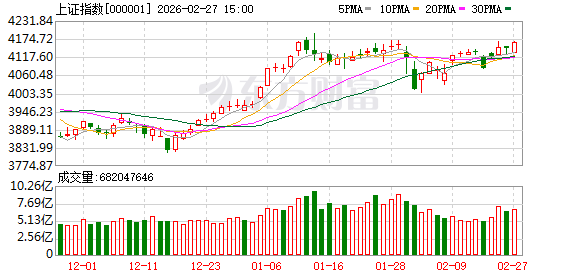
三月会议将近,“内需”“科技”“反内卷”等成为政策预期较强方向
Mei Ri Jing Ji Xin Wen· 2026-02-27 02:29
Core Viewpoint - The upcoming national conference in March is expected to outline government work reports and set targets for 2026, focusing on economic growth and domestic demand expansion [1] Group 1: Economic Outlook - The conference will likely propose GDP growth rates, inflation, deficit targets, and monetary and fiscal policy arrangements for 2026 [1] - "Stabilizing economic growth and expanding domestic demand" is anticipated to be a key focus for this year's conference [1] Group 2: Market Analysis - The Shanghai Composite Index is approaching a resistance level of 4200 points, with a faster rotation of A-share market hotspots [1] - Investors are advised to focus on balanced and diversified layouts rather than chasing single hot themes [1] Group 3: Investment Tools - The CSI 300 Index is recommended as a tool for capturing "policy expectations" and "performance prosperity," as it covers leading stocks across technology, consumption, and cyclical sectors [1] - There are over 30 ETFs tracking the CSI 300 Index, with the Huaxia CSI 300 ETF (510330.SH) noted for its superior liquidity and low management fee of 0.15% per year [1] - Investors can consider regular investments in the Huaxia CSI 300 ETF Connect C (005658.OF), which has no subscription fee and waives redemption fees after holding for more than 7 days [1]
一键把握核心资产 银华中证有色金属ETF联接基金正在发行
Zheng Quan Ri Bao Wang· 2026-02-26 11:10
Core Viewpoint - The overall metal sector showed a strong oscillating pattern during the Spring Festival holiday, driven by a dual focus on risk aversion and stagflation trading, with investors encouraged to seize opportunities in the metal sector [1] Group 1: Market Analysis - Multiple uncertainties in the global macro environment during the holiday period supported the price increase of metal assets, including both non-ferrous and precious metals [1] - According to Zhongyin Securities, by 2026, the market is expected to enter a "profit-driven upward phase," with domestic re-inflation narratives strengthening under the influences of "anti-involution" and expanding domestic demand [1] - The strong cyclical attributes of metal assets are anticipated to manifest, with financial attributes and industrial trends leading to revaluation opportunities [1] Group 2: Investment Opportunities - Investors are advised to consider industrial metals and minor metals as offensive strategies, while using precious metals as a defensive measure to effectively capture market opportunities [1] - The ongoing issuance of the Yinhua CSI Non-Ferrous Metal ETF linked fund provides a convenient investment tool for investors seeking exposure to resource assets [1] - This fund closely tracks the CSI Non-Ferrous Metal Index, allowing investors to easily access core assets in the non-ferrous industry [1] Group 3: Investment Strategy - Given the diverse subcategories and significant stock volatility within the non-ferrous industry, investors can leverage the Yinhua Non-Ferrous ETF and its linked fund to significantly reduce stock selection difficulty and trading costs [1] - This approach enables more efficient participation in the overall growth of the industry [1]

东兴证券晨报-20260226
Dongxing Securities· 2026-02-26 08:45
Core Insights - The report highlights the performance of various sectors and companies, indicating potential investment opportunities in the market. [2][5] Economic News - The People's Bank of China conducted a 7-day reverse repurchase operation of 320.5 billion yuan at an interest rate of 1.4%, resulting in a net withdrawal of 79.5 billion yuan from the market. [3] - The overnight SHIBOR rate reported at 1.3680%, down by 1 basis point, while the 7-day SHIBOR rate decreased by 4 basis points to 1.4570%. [3] - The Supreme People's Court reported over 27,000 cases related to cross-border fraud, with significant sentences handed down to key criminal groups. [3] - The Ministry of Industry and Information Technology discussed the feasibility of new frequency bands for IMT and future 6G technology at a recent international meeting. [3] - Heilongjiang Province's government report emphasized the reform of state-owned enterprises and support for private sector development. [3] - The establishment of a national quality inspection center for rare earth permanent magnet motors in Liaoning Province aims to enhance quality assurance in high-end manufacturing. [4] Company News - Wens Foodstuff Group announced a share buyback plan of 800 million to 1.2 billion yuan at a maximum price of 24.00 yuan per share. [5] - Jiangxi Tungsten Holdings is planning to issue A-shares to specific investors to enhance its core competitiveness and fund acquisitions totaling up to 1.882 billion yuan. [5] - Huylon New Materials is undergoing a significant change that may affect its control, leading to a temporary suspension of its stock. [5] - Fangzheng Valve reported a revenue of 733 million yuan for 2025, a decrease of 2.98%, with net profit down by 6.34%. [5] - Nanya New Materials achieved a revenue of 5.228 billion yuan, a year-on-year increase of 55.52%, with net profit rising by 378.65% due to market demand recovery. [5] Transportation Industry Insights - In January 2026, domestic airline capacity decreased by approximately 4.3% year-on-year, but increased by 5.8% compared to December 2025, as airlines prepared for the Spring Festival. [7] - The overall passenger load factor for airlines improved by about 1.6 percentage points year-on-year, although it decreased by 0.4 percentage points compared to December. [7] - During the Spring Festival holiday, national civil aviation transported 22.05 million passengers, with a flight completion rate of 95.8%, indicating growth compared to the previous year. [8] - International flight capacity increased by 2.6% year-on-year in January, with a slight improvement in load factors, although some airlines faced challenges due to changes in the Japanese route. [9] - Baiyun Airport reported a significant increase in passenger throughput, while Shanghai Airport experienced a decline, attributed to shifts in travel demand. [10] - The report suggests focusing on large airlines for their earnings elasticity, as the industry moves towards a more balanced supply-demand dynamic. [11]





博汇纸业:白卡纸价格回升,看好公司盈利改善-20260226
CSC SECURITIES (HK) LTD· 2026-02-26 08:24
2026 年 02 月 26 日 赵旭东 H70556@capital.com.tw 目标价(元) 10 公司基本信息 | 产业别 | | 轻工制造 | | --- | --- | --- | | A 股价(2026/2/25) | | 8.39 | | 上证指数(2026/2/25) | | 4147.23 | | 股价 12 个月高/低 | | 8.98/3.99 | | 总发行股数(百万) | | 1336.84 | | A 股数(百万) | | 1336.84 | | A 市值(亿元) | | 112.16 | | 主要股东 | | 山东博汇集团有 | | | | 限公司(28.84%) | | 每股净值(元) | | 5.52 | | 股价/账面净值 | | 1.52 | | | 一个月 三个月 | 一年 | | 股价涨跌(%) | 19.3 38.9 | 81.2 | 近期评等 | 出刊日期 | 前日收盘 | 评等 | | --- | --- | --- | | 产品组合 | | | | 白纸板 | | 62.2% | | 文化纸 | | 25.1% | | 箱板纸 | | 6.9% | | 石膏 ...
