
供需关系

Search documents
能源化策略:地缘再次扰动油价,化?超跌有反弹需求
Zhong Xin Qi Huo· 2025-09-24 07:27
1. Report Industry Investment Rating The report doesn't provide an overall investment rating for the industry. However, the mid - term outlook for most energy and chemical products is "shock - weakening", with a few in "shock" status [3][6][8][11][12]. 2. Core Viewpoints - Geopolitical concerns have reignited, and the supply pressure on crude oil continues. The geopolitical situation between Russia and Ukraine has escalated, and the market is worried about Russia's crude oil supply. Meanwhile, OPEC+ is accelerating production increases, and the later period will face the dual pressures of the peak and decline of refinery operations and OPEC+ production increases [1][6]. - Most chemical trade data shows that imports of most varieties have declined year - on - year, while imports of methanol, PX, and pure benzene have increased. Exports of PVC, PE, PP, and styrene have performed well. The chemical chain valuation has been slightly compressed recently, and the rebound of crude oil may trigger the replenishment demand of the industrial chain, leading to the stabilization of chemical product prices [2]. - The overall energy and chemical industry will continue the pattern of shock and consolidation [3]. 3. Summary by Related Catalogs 3.1 Market Quotes and Views 3.1.1 Crude Oil - **Viewpoint**: Geopolitical concerns have reignited, and supply pressure continues. - **Main Logic**: Overnight oil prices rebounded. Geopolitical concerns dominated by the Russia - Ukraine situation are still fermenting, supporting the bottom of the range. API data shows that US crude oil and gasoline inventories decreased last week. Under the background of OPEC+ accelerating production increases, crude oil will face the dual pressures of the peak and decline of refinery operations and OPEC+ production increases in the later period. - **Outlook**: Oil prices are expected to fluctuate weakly, and attention should be paid to short - term geopolitical disturbances [6]. 3.1.2 Asphalt - **Viewpoint**: The asphalt - fuel oil price difference has declined rapidly. - **Main Logic**: Saudi Arabia promotes OPEC+ to continue increasing production, the US may impose tariffs on Russia, and Russia may stop exporting diesel, leading to a sharp rise in oil prices but limited increase in asphalt futures prices and compressed profits. The asphalt - fuel oil price difference has decreased rapidly, and the planned asphalt production in October has increased by 19% year - on - year. - **Outlook**: The absolute price of asphalt is over - estimated, and the asphalt monthly spread is expected to decline with the increase of warehouse receipts [8]. 3.1.3 High - Sulfur Fuel Oil - **Viewpoint**: Geopolitical disturbances drive the sharp rise of fuel oil futures prices. - **Main Logic**: Saudi Arabia promotes OPEC+ to continue increasing production, the US may impose tariffs on Russia, and Russia may stop exporting diesel, leading to a sharp rise in fuel oil futures prices. However, the demand for high - sulfur fuel oil is expected to deteriorate due to factors such as the increase in import tariffs, weak gasoline in the US, and low refinery operating rates. - **Outlook**: Geopolitical escalation will have a short - term impact on prices, and attention should be paid to changes in the Russia - Ukraine situation [9]. 3.1.4 Low - Sulfur Fuel Oil - **Viewpoint**: Low - sulfur fuel oil fluctuates and rises following crude oil. - **Main Logic**: Low - sulfur fuel oil follows the rise of crude oil, but the pressure level of 3500 is effective in the short term. It faces negative factors such as the decline in shipping demand, green energy substitution, and high - sulfur substitution. The domestic refined oil supply pressure has increased, and it is expected to maintain a low - valuation operation. - **Outlook**: Affected by green fuel substitution and limited high - sulfur substitution demand space, but with a low current valuation, it fluctuates following crude oil [11]. 3.1.5 Methanol - **Viewpoint**: The increase in external procurement in the inland area boosts the methanol futures price to fluctuate. - **Main Logic**: The methanol futures price fluctuated on September 23. The increase in the external procurement demand of some olefin enterprises in Inner Mongolia and Shaanxi has supported the price. The inland inventory pressure is limited, but the port inventory pressure is still large in the near - term. Considering the high probability of overseas shutdown in the far - term, some funds still bet at low prices. - **Outlook**: Short - term shock [21]. 3.1.6 Urea - **Viewpoint**: The pattern of loose supply and demand is difficult to change, and the futures price continues to be under pressure along the cost line. - **Main Logic**: On September 23, the daily production and operating rate on the supply side remained high, the demand side lacked strong support, and the export expectation was weakening. - **Outlook**: The fundamentals of supply and demand remain loose. Before the festival, the demand is mainly for order collection, and the downstream transactions are moderately promoted. It is expected to fluctuate and wait for other positive factors [23]. 3.1.7 Ethylene Glycol (MEG) - **Viewpoint**: The downstream demand support is weak, and the supply - demand margin weakens. - **Main Logic**: The cost side has no obvious support, and the commodity atmosphere is not good. The overall supply remains high, and there is an expectation of inventory accumulation in the later period. - **Outlook**: The price fluctuates weakly, looking for support at the lower level [15][16]. 3.1.8 PX - **Viewpoint**: The supply - demand margin weakens, the demand is lower than expected, and the processing fee is under pressure. - **Main Logic**: Oil prices fluctuate at a low level, and the atmosphere in the energy and chemical sector is not good. The supply remains high, the downstream demand is still weak, and the processing fee is still under pressure. - **Outlook**: Shock - weakening [12]. 3.1.9 PTA - **Viewpoint**: The basis continues to weaken, and the willingness to hold goods is low. - **Main Logic**: The cost side fluctuates weakly, and the support is insufficient. The supply maintenance increases, but it still cannot effectively suppress market liquidity. The basis is still weak, and the processing fee has not improved significantly. - **Outlook**: Shock - weakening [12]. 3.1.10 Short - Fiber - **Viewpoint**: The inventory is slightly reduced, and the processing fee is firm. - **Main Logic**: The prices of upstream polyester raw materials fluctuate and weaken, and the cost support is insufficient. The supply is stable, the downstream production and sales are tepid, and the processing fee is firm. - **Outlook**: The absolute value of short - fiber fluctuates with raw materials, and it fluctuates weakly in the short term [18][19]. 3.1.11 Bottle - Chip - **Viewpoint**: The processing fee runs stably, and attention should be paid to contract negotiations. - **Main Logic**: The cost of upstream polyester raw materials weakens, and the absolute price of bottle - chips fluctuates and declines. The processing fee is relatively firm, and attention should be paid to the speculative replenishment demand of downstream at low prices. - **Outlook**: Shock - weakening, and the absolute value fluctuates with raw materials [19]. 3.1.12 PP - **Viewpoint**: The maintenance rate increases, and PP should pay attention to the support strength at the previous low. - **Main Logic**: Oil prices fluctuate. The plastic futures price declines in the short term, and the downstream transactions still increase. Although the downstream start - up in the peak season is slow, there is still some support for demand. The fundamentals of PP are still under pressure, and the supply side still has certain pressure. - **Outlook**: Short - term shock - weakening [26][27]. 3.1.13 Propylene (PL) - **Viewpoint**: It fluctuates following PP, and PL fluctuates and declines in the short term. - **Main Logic**: Traders in the market are generally bearish on the future market. Affected by the psychology of "buying on rising, not on falling", downstream pre - festival inventory - building willingness is general, and the market trading is dull. - **Outlook**: PL fluctuates weakly in the short term [27]. 3.1.14 Plastic (LLDPE) - **Viewpoint**: The downstream transactions still increase, and plastic fluctuates and declines. - **Main Logic**: Oil prices fluctuate. The plastic futures price declines in the short term, and the downstream transactions still increase. Although the downstream start - up in the peak season is slow, there is still some support for demand. The fundamentals of plastic are still under pressure, and the supply side still has certain pressure. - **Outlook**: The fundamental support is limited, and it fluctuates in the short term [25]. 3.1.15 Pure Benzene - **Viewpoint**: The future market expectation is still pessimistic, and pure benzene returns to decline. - **Main Logic**: At the beginning of the week, the inventory in East China ports decreased, and downstream had certain replenishment demand. However, after the positive news of interest rate cuts was realized, and affected by the postponement of pure benzene maintenance and import transactions, the prices of pure benzene and styrene declined. Pure benzene is difficult to destock before the end of the year, and the inventory accumulation is the most obvious in October. - **Outlook**: If the styrene maintenance is implemented from September to October, the pattern of pure benzene will return to the situation of oversupply and inventory accumulation [13][14]. 3.1.16 Styrene - **Viewpoint**: The fundamentals lack positive factors, and styrene resumes decline. - **Main Logic**: At the beginning of the week, the news of Zhejiang Petrochemical's maintenance boosted the sentiment of styrene. After the positive news of interest rate cuts was realized, and affected by the postponement of pure benzene maintenance and import transactions, the styrene price declined. The current contradiction of styrene is the high inventory of upstream and downstream, which is difficult to destock. The cost side of pure benzene also drags down the styrene price. - **Outlook**: The profit has reached a low level, and one can try to widen the styrene profit. The idea of shorting on rebounds remains unchanged [14][15]. 3.1.17 PVC - **Viewpoint**: The market sentiment has declined, and PVC should be cautiously bearish. - **Main Logic**: At the macro level, the domestic anti - involution policy is to be implemented, and overseas has entered the interest rate - cut cycle, so the market sentiment is prone to fluctuations. At the micro level, the fundamentals of PVC are under pressure, but the dynamic cost has increased, and the market sentiment may recover. - **Outlook**: PVC fluctuates, with pressure from the medium - and long - term fundamentals and support from the increase in dynamic cost and the recovery of market sentiment [29]. 3.1.18 Caustic Soda - **Viewpoint**: The expectation is strong, but the reality is weak, and the market fluctuates. - **Main Logic**: At the macro level, the domestic anti - involution policy is to be implemented, and overseas has entered the interest rate - cut cycle, so the market sentiment is prone to fluctuations. At the micro level, the fundamentals of caustic soda still have pressure, but the demand expectation is good. The support comes from the strong expectation of caustic soda inventory - building for the production of 4.8 million tons of alumina in Guangxi in Q1 2026. - **Outlook**: It fluctuates in the medium - and long - term. The spot price is weakly stable before the festival, and the market may rebound due to the strong inventory - building expectation for alumina production in Q4. If the inventory - building expectation is realized after the festival, the market may return to the weak reality [30]. 3.2 Variety Data Monitoring 3.2.1 Energy and Chemical Daily Index Monitoring - **Cross - Period Spread**: The report provides the cross - period spreads of various varieties such as Brent, Dubai, PX, PTA, etc., including the latest values and change values [32]. - **Basis and Warehouse Receipts**: It shows the basis and warehouse receipts of varieties like asphalt, high - sulfur fuel oil, low - sulfur fuel oil, etc., including the latest values and change values [33]. - **Cross - Variety Spread**: The cross - variety spreads of different categories are presented, such as 1 - month PP - 3MA, 1 - month TA - EG, etc., along with the latest values and change values [34]. 3.3 Commodity Index - **Comprehensive Index**: The commodity index, commodity 20 index, and industrial product index all declined on September 23, 2025, with declines of 0.73%, 0.75%, and 0.76% respectively [276]. - **Energy Index**: On September 23, 2025, the energy index was 1179.87, with a daily decline of 1.64%, a decline of 4.31% in the past 5 days, a decline of 4.01% in the past month, and a decline of 3.91% since the beginning of the year [278].
《有色》日报-20250924
Guang Fa Qi Huo· 2025-09-24 03:13
1. Report Industry Investment Ratings No investment ratings are provided in the reports. 2. Core Views of the Reports Copper - Short - term, the copper market has weak drivers, and the main contract of Shanghai copper fluctuates narrowly. Macroscopically, if subsequent inflation and employment data strengthen the expectation of interest rate cuts, copper prices may benefit. Fundamentally, it is in a state of "weak reality + stable expectation". In the medium - to - long - term, the supply - demand contradiction provides bottom support, and the center of copper prices will gradually rise. The main contract is expected to fluctuate between 79,000 - 81,000 yuan/ton [1]. Aluminum - For alumina, it is in a fundamental pattern of "high supply, high inventory, and weak demand", and this pattern is difficult to change fundamentally in the short term. The main contract is expected to fluctuate between 2,850 - 3,150 yuan/ton. For electrolytic aluminum, it is expected to maintain a volatile operation, and the main contract is expected to be in the range of 20,600 - 21,000 yuan/ton [3]. Aluminum Alloy - The spot price of aluminum alloy is expected to remain firm in the short term, the inventory accumulation rate will slow down, and the price difference between aluminum alloy and aluminum is expected to further converge. The short - term main contract is expected to operate in the range of 20,200 - 20,600 yuan/ton [5]. Zinc - Since September, Shanghai zinc has been relatively weak in the non - ferrous metal sector due to the expectation of loose supply. In the short term, the price may be driven by the macro - environment, but the upside space is limited. It is expected to fluctuate mainly, and the main contract is expected to be in the range of 21,500 - 22,500 yuan/ton [7]. Tin - The supply of tin ore remains tight, and the demand is weak. Tin prices are expected to continue to fluctuate at a high level, with the operating range of 265,000 - 285,000 yuan/ton [11]. Nickel - The macro - environment is weak, and there are disturbances in the ore end, but the actual impact is limited. The cost still has support. In the short term, there is no obvious supply - demand contradiction, but the inventory reduction rhythm has slowed down. The price is expected to fluctuate in the range of 119,000 - 124,000 yuan/ton [13]. Stainless Steel - The stainless - steel market is in a state where the downstream is replenishing goods moderately before the festival, but the overall transaction is based on rigid demand. The raw material price is firm, and the cost has support. The short - term disk is expected to adjust in a volatile manner, and the main contract is expected to be in the range of 12,800 - 13,200 yuan/ton [15]. Lithium Carbonate - The lithium carbonate market is in a state of tight balance. The supply path is becoming clearer, and the trading space is weakening. The strong demand in the peak season provides support for the price. The short - term disk is expected to fluctuate and sort out, and the main price center is expected to be in the range of 70,000 - 75,000 yuan/ton [17]. 3. Summaries According to Relevant Catalogs Copper Price and Basis - SMM 1 electrolytic copper price was 80,010 yuan/ton, down 0.27% from the previous day. The SMM 1 electrolytic copper premium was 55 yuan/ton, down 5 yuan/ton from the previous day. The refined - scrap price difference was 1,799 yuan/ton, down 3.93% [1]. Fundamental Data - In August, the electrolytic copper production was 117.15 million tons, down 0.24% month - on - month; the import volume was 26.43 million tons, down 10.99% month - on - month [1]. Aluminum Price and Spread - SMM A00 aluminum price was 20,680 yuan/ton, down 0.34% from the previous day. The import loss was 1,541 yuan/ton, up 242.3 yuan/ton from the previous day [3]. Fundamental Data - In August, the alumina production was 773.82 million tons, up 1.15% month - on - month; the electrolytic aluminum production was 373.26 million tons, up 0.30% month - on - month [3]. Aluminum Alloy Price and Spread - SMM aluminum alloy ADC12 price was 20,850 yuan/ton, down 0.48% from the previous day. The month - to - month spread of 2511 - 2512 was - 25 yuan/ton, up 15 yuan/ton from the previous day [5]. Fundamental Data - In August, the production of recycled aluminum alloy ingots was 61.50 million tons, down 1.60% month - on - month; the production of primary aluminum alloy ingots was 27.10 million tons, up 1.88% month - on - month [5]. Zinc Price and Spread - SMM 0 zinc ingot price was 21,880 yuan/ton, down 0.32% from the previous day. The import loss was 3,145 yuan/ton, up 147.64 yuan/ton from the previous day [7]. Fundamental Data - In August, the refined zinc production was 62.62 million tons, up 3.88% month - on - month; the import volume was 2.57 million tons, up 43.30% month - on - month [7]. Tin Price and Spread - SMM 1 tin price was 270,700 yuan/ton, down 0.48% from the previous day. The import loss was 11,388.05 yuan/ton, up 1,007.77 yuan/ton from the previous day [11]. Fundamental Data - In July, the tin ore import was 10,278 tons, down 13.71% month - on - month; the SMM refined tin production was 15,940 tons, up 15.42% month - on - month [11]. Nickel Price and Basis - SMM 1 electrolytic nickel price was 121,950 yuan/ton, down 0.61% from the previous day. The LME 0 - 3 spread was - 177 dollars/ton, up 2 dollars/ton from the previous day [13]. Fundamental Data - The domestic refined nickel production was 32,200 tons, up 1.26% month - on - month; the import volume was 17,536 tons, down 8.46% month - on - month [13]. Stainless Steel Price and Spread - The price of 304/2B (Wuxi Hongwang 2.0 coil) was 13,100 yuan/ton, unchanged from the previous day. The month - to - month spread of 2511 - 2512 was - 15 yuan/ton, up 65 yuan/ton from the previous day [15]. Fundamental Data - The production of 300 - series stainless - steel crude steel in China (43 companies) was 171.33 million tons, down 3.83% month - on - month; the import volume was 11.72 million tons, up 60.48% month - on - month [15]. Lithium Carbonate Price and Spread - SMM battery - grade lithium carbonate average price was 73,850 yuan/ton, unchanged from the previous day. The month - to - month spread of 2510 - 2511 was - 220 yuan/ton, down 20 yuan/ton from the previous day [17]. Fundamental Data - In August, the lithium carbonate production was 85,240 tons, up 4.55% month - on - month; the demand was 104,023 tons, up 8.25% month - on - month [17].
光大期货有色金属类日报9.24
Xin Lang Cai Jing· 2025-09-24 01:19
Copper - Copper prices experienced narrow fluctuations overnight, with macroeconomic factors influencing the market. Fed Chairman Powell indicated risks of inflation and employment, reiterating that tariffs are expected to have a one-time impact on prices, without suggesting support for rate cuts next month. He also warned about high valuations in the US stock market, signaling potential risks [1] - Domestic monetary policy remains supportive, with the central bank's governor stating no adjustments to short-term policies are planned. The current stance is to implement moderately loose monetary policy [1] - Inventory levels showed a decrease in LME copper by 400 tons to 144,975 tons, while Comex inventory increased by 91 tons to 288,837 tons. SHFE copper warehouse receipts fell by 2,166 tons to 27,727 tons, and BC copper decreased by 25 tons to 6,445 tons [1] - Demand from downstream sectors is weak due to high copper prices and macroeconomic uncertainties, with concerns over pre-holiday inventory replenishment [1] Nickel & Stainless Steel - LME nickel rose by 0.92% to $15,340 per ton, while SHFE nickel increased by 0.47% to 121,740 yuan per ton. LME inventory rose by 1,554 tons to 230,454 tons, while domestic SHFE warehouse receipts decreased by 72 tons to 25,464 tons [2] - Nickel ore prices remained stable, and stainless steel weekly inventory showed a significant decrease. Nickel iron prices strengthened, providing cost support, although supply increased [2] - In the new energy sector, demand for ternary materials slightly weakened in September, but cobalt policies may lead to tight MHP supply. The overall nickel price may see slight upward movement due to macroeconomic factors and rising nickel iron and MHP prices, although inventory remains a significant resistance [2] Alumina, Electrolytic Aluminum & Aluminum Alloy - Alumina prices showed a weak trend, with AO2601 settling at 2,881 yuan per ton, down 0.62%. SHFE aluminum also experienced a slight decline, with AL2510 at 20,670 yuan per ton, down 0.07% [3] - Aluminum alloy prices remained strong, with AD2511 at 20,305 yuan per ton, up 0.22%. SMM alumina prices fell to 3,032 yuan per ton, while aluminum ingot prices showed a slight decrease [3] - The recovery of alumina plants has increased social inventory pressure, while domestic mines have not resumed production, leading to a decline in ore inventory. Overall, alumina remains bearish but may have reached a bottom [3] Industrial Silicon & Polysilicon - Industrial silicon prices showed a weak trend, with the main contract at 8,925 yuan per ton, down 2.3%. The reference price for industrial silicon was 9,604 yuan per ton, up 121 yuan from the previous trading day [4] - Polysilicon prices also declined, with the main contract at 50,260 yuan per ton, down 2.74%. The N-type polysilicon price rose to 52,500 yuan per ton, with a significant increase in the minimum delivery price [4] - The energy consumption policy draft for polysilicon has slightly raised standards, but the overall impact remains moderate. There is a strong sentiment for production and export in the polysilicon market, leading to a divergence between policy and actual supply-demand dynamics [4] Lithium Carbonate - Lithium carbonate futures for the 2511 contract fell by 0.16% to 73,660 yuan per ton. The average price for battery-grade lithium carbonate remained at 73,850 yuan per ton, while industrial-grade was at 71,600 yuan per ton [5] - Import data showed that in August 2025, China imported 61.92 million tons of lithium spodumene, a decrease of 17.5% month-on-month. Carbonate imports increased by 57.8% month-on-month and 23.5% year-on-year [5] - Weekly production increased by 400 tons to 20,363 tons, with significant contributions from various lithium extraction methods. Inventory levels decreased by 981 tons to 137,531 tons, primarily driven by downstream replenishment [5]


国庆节前下游备货可期,有色或再度企稳回升
Zhong Xin Qi Huo· 2025-09-23 06:13
1. Report Industry Investment Rating The report does not explicitly provide an overall industry investment rating. However, it offers outlooks for individual metals: - Copper: Expected to be in a moderately bullish and volatile pattern [5][6] - Alumina: Short - term outlook is volatile and bearish, suggesting short - selling at high prices or staying on the sidelines [6][7][8] - Aluminum: Expected to be volatile in the short - term, with a potential upward shift in the medium - term [9][10] - Aluminum Alloy: ADC12 and ADC12 - A00 are expected to be in a low - level volatile state in the short - term, with potential for an upward movement later [11][12] - Zinc: Expected to be volatile in the short - term, with a downward trend in the medium - to long - term [12][13] - Lead: Expected to be moderately bullish and volatile [14][16] - Nickel: Expected to be in a wide - range volatile pattern in the short - term, with a wait - and - see approach in the medium - to long - term [17][18] - Stainless Steel: Expected to be volatile [19][22] - Tin: Expected to be in a volatile state [23] 2. Core Viewpoints of the Report - Overall for non - ferrous metals: Before the National Day holiday, downstream restocking is expected, and non - ferrous metals may stabilize and rebound. In the short - to medium - term, weak US dollar and supply disruptions support prices, while weak terminal demand limits the upside. In the long - term, potential domestic stimulus policies and supply disruptions in copper, aluminum, and tin support prices [1] - For individual metals: - Copper: The Fed's interest rate cut and supply disruptions, along with the approaching peak demand season, support copper prices. However, factors such as unexpected tariff policies and weak domestic demand recovery pose risks [5][6] - Alumina: The fundamental situation remains weak, with excess supply and strong inventory accumulation. Prices are under pressure until factors such as smelter losses and production cuts or ore - end policy disruptions occur [6][7][8] - Aluminum: After the short - term interest rate cut, the demand side shows marginal improvement, but the inventory decline inflection point is not clear. The price is expected to be volatile [9][10] - Aluminum Alloy: Cost support is strong, but the peak season demand needs to be verified. The price is expected to be volatile in the short - term, and there are opportunities for cross - variety arbitrage [11][12] - Zinc: The supply is increasing, and the demand is weak. In the short - term, the price is expected to be volatile at a high level, and there is a downward trend in the long - term [12][13] - Lead: Before the National Day, the demand for lead ingots increases, and the supply may tighten. The price is expected to be moderately bullish and volatile [14][16] - Nickel: The market sentiment dominates the market, and the industrial fundamentals are weakening marginally. The price is expected to be in a wide - range volatile pattern in the short - term [17][18] - Stainless Steel: Pay attention to the fulfillment of peak - season demand and inventory changes. The price is expected to be volatile [19][22] - Tin: The supply is tight, providing strong support for the price. However, the terminal demand is weakening, and the price is expected to be in a volatile state [23] 3. Summary by Relevant Catalogs 3.1行情观点 3.1.1 Copper - Information: The Fed cut interest rates by 25bp; the Grasberg copper mine in Indonesia suspended operations; in August, SMM China's electrolytic copper production decreased month - on - month and increased year - on - year; on September 22, the spot price of 1 electrolytic copper and copper inventory changed [5] - Logic: The Fed's interest rate cut and supply disruptions support copper prices. The approaching peak demand season increases downstream restocking willingness. If the inventory continues to decline, copper prices may continue to be strong [6] - Outlook: Copper may show a moderately bullish and volatile pattern [6] 3.1.2 Alumina - Information: On September 22, the spot price of alumina in different regions changed; an electrolytic aluminum plant in Xinjiang tendered for alumina, and the price decreased; the alumina warehouse receipt increased [6][7] - Logic: The fundamentals remain weak, with excess supply and strong inventory accumulation. The price is under pressure until there are factors such as smelter losses and production cuts or ore - end policy disruptions [6][7][8] - Outlook: Short - term outlook is volatile and bearish. Consider short - selling at high prices or staying on the sidelines, and pay attention to arbitrage opportunities [8] 3.1.3 Aluminum - Information: On September 22, the price of SMM AOO aluminum, aluminum ingot inventory, aluminum rod inventory, and Shanghai Futures Exchange aluminum warehouse receipt changed; in August, China's aluminum and its products exports decreased year - on - year; the Fed cut interest rates; an Indonesian aluminum smelter plans to be put into production [9] - Logic: After the short - term interest rate cut, the demand side shows marginal improvement, but the inventory decline inflection point is not clear. The price is expected to be volatile [9][10] - Outlook: Volatile in the short - term, with a potential upward shift in the medium - term [9][10] 3.1.4 Aluminum Alloy - Information: On September 22, the price of Baotai ADC12, the price difference between Baotai ADC12 and SMM AOO aluminum, and the Shanghai Futures Exchange registered warehouse receipt changed; in August, the import of unforged aluminum alloy decreased year - on - year; the EU may impose a tax on scrap metal exports [10][11] - Logic: Cost support is strong, but the peak season demand needs to be verified. The price is expected to be volatile in the short - term, and there are opportunities for cross - variety arbitrage [11][12] - Outlook: ADC12 and ADC12 - A00 are expected to be in a low - level volatile state in the short - term, with potential for an upward movement later [11][12] 3.1.5 Zinc - Information: On September 22, the spot price of zinc in different regions and SMM's seven - region zinc ingot inventory changed; CZSPT released the guidance price range for imported zinc concentrate procurement in the fourth quarter of 2025 [12] - Logic: The supply is increasing, and the demand is weak. In the short - term, the price is expected to be volatile at a high level, and there is a downward trend in the long - term [12][13] - Outlook: Volatile in the short - term, with a downward trend in the medium - to long - term [12][13] 3.1.6 Lead - Information: On September 22, the price of waste electric vehicle batteries, the price difference between primary and secondary lead, the price of SMM1 lead ingot, and lead ingot inventory changed; downstream lead - acid battery enterprises are restocking before the National Day [13][14] - Logic: Before the National Day, the demand for lead ingots increases, and the supply may tighten. The price is expected to be moderately bullish and volatile [14][16] - Outlook: Moderately bullish and volatile [14][16] 3.1.7 Nickel - Information: On September 22, LME nickel inventory increased, and Shanghai nickel warehouse receipt decreased; the price of high - nickel pig iron is supported by cost and the peak season, but the demand is weak; some nickel - related events such as corporate acquisitions and land seizures occurred [16][17] - Logic: The market sentiment dominates the market, and the industrial fundamentals are weakening marginally. The price is expected to be in a wide - range volatile pattern in the short - term [17][18] - Outlook: Wide - range volatile in the short - term, wait - and - see in the medium - to long - term [17][18] 3.1.8 Stainless Steel - Information: The stainless steel futures warehouse receipt inventory decreased; the spot price difference between Foshan Hongwang 304 and the stainless steel main contract, and the transaction prices of high - nickel pig iron in China and Indonesia were reported [19][22] - Logic: Pay attention to the fulfillment of peak - season demand and inventory changes. The price is expected to be volatile [19][22] - Outlook: Volatile in the short - term [19][22] 3.1.9 Tin - Information: On September 22, LME tin warehouse receipt inventory increased, Shanghai tin warehouse receipt inventory increased, Shanghai tin positions decreased, and the spot price of 1 tin ingot increased [23] - Logic: The supply is tight, providing strong support for the price. However, the terminal demand is weakening, and the price is expected to be in a volatile state [23] - Outlook: Volatile [23] 3.2行情监测 The report only lists the names of various metals for monitoring (copper, alumina, aluminum, aluminum alloy, zinc, lead, nickel, stainless steel, tin) but does not provide specific monitoring content [25][26][40] 3.3 Commodity Index - Comprehensive Index: Not detailed - Special Index: The commodity 20 index increased by 0.44% to 2510.95, the industrial products index decreased by 0.34% to 2246.26 [151] - Sector Index: The non - ferrous metals index on September 22 was 2385.20, with a daily increase of 0.17%, a 5 - day decrease of 0.85%, a 1 - month decrease of 0.33%, and a year - to - date increase of 3.33% [153]
广发早知道:汇总版-20250923
Guang Fa Qi Huo· 2025-09-23 02:12
Report Industry Investment Rating No relevant content provided. Core Viewpoints of the Report - The overall market shows a complex situation with different trends in various sectors. In the stock index futures market, the TMT sector is booming, but the overall market volume is shrinking. The bond market is affected by factors such as central bank policies and market sentiment, showing a mixed situation. The precious metals market is driven by overseas political turmoil and the divergence of Fed officials' attitudes, with prices reaching new highs. The shipping index shows a volatile trend, and the commodity futures market, including non - ferrous metals, black metals, and agricultural products, also presents different supply - demand and price trends [2][5][8][11]. Summary by Directory Financial Derivatives - Financial Futures Stock Index Futures - **Market Situation**: On Monday, A - shares strengthened in the afternoon. The Shanghai Composite Index rose 0.22%, the Shenzhen Component Index rose 0.67%, and the ChiNext Index rose 0.55%. The four major stock index futures contracts all rose with the index, but the basis was deeply discounted. The consumer electronics sector led the rise, while the consumer - related sectors declined [2][3]. - **News**: Domestic news includes a press conference on the "14th Five - Year Plan" of the financial industry. Overseas, there are differences between South Korea and the US on a $350 billion investment [3][4]. - **Funding**: On September 18, the trading volume of A - shares decreased. The central bank carried out reverse repurchase operations, with a net investment of 260.5 billion yuan [4]. - **Operation Suggestion**: After the Fed's interest rate cut, the market turned to shock. It is recommended to sell put options on MO2511 near the strike price of 6600 to collect premiums when the index pulls back [4]. Treasury Bond Futures - **Market Performance**: The 30 - year, 10 - year, 5 - year, and 2 - year treasury bond futures contracts all rose, and the yields of major interest - rate bonds in the inter - bank market generally declined [5]. - **Funding**: The central bank restarted the 14 - day reverse repurchase, with a net investment of 260.5 billion yuan. The inter - bank market funds continued to improve [6]. - **Policy**: The central bank's monetary policy is supportive, and it will ensure liquidity and promote the decline of social financing costs [6]. - **Operation Suggestion**: The bond market is still mixed. It is recommended to operate within the range, and consider the basis narrowing strategy for the TL contract [7]. Financial Derivatives - Precious Metals - **Market Review**: Due to the political turmoil in Argentina and the divergence of Fed officials' attitudes towards interest rate cuts, the precious metals market was driven by risk - aversion sentiment, with gold and silver prices reaching new highs [8][9]. - **Outlook**: In the short term, gold will maintain high - level volatility, and it is recommended to buy on dips or buy out - of - the - money call options. For silver, it is recommended to sell out - of - the - money put options when the price is above $41 [10]. - **Funding**: The Fed's loose monetary policy stimulates institutional investors to increase their holdings of ETFs [10]. Financial Derivatives - Container Shipping Index (European Line) - **Spot Quotation**: As of September 22, the freight quotes for Shanghai - Europe routes from different shipping companies are in different ranges [11]. - **Shipping Index**: The SCFIS European line index decreased by 14.3%. The Shanghai - Europe freight rate decreased by 9%, the Shanghai - US West freight rate increased by 31%, and the Shanghai - US East freight rate decreased by 23% [11]. - **Fundamentals**: As of September 22, the global container shipping capacity increased by 7.35% year - on - year. The eurozone's August composite PMI was 51, and the US August manufacturing PMI was 48.7 [11]. - **Logic**: The futures market was volatile. It is expected that the spot inflection point will appear in mid - to - late October, and attention can be paid to the upward opportunities of the 12 and 02 contracts [12]. - **Operation Suggestion**: The market is bearish, and it is advisable to consider the spread arbitrage between the 12 - month and 10 - month contracts [12]. Commodity Futures - Non - Ferrous Metals Copper - **Spot**: As of September 22, the average price of electrolytic copper increased, but the market procurement sentiment weakened when the price returned to around 80,000 yuan/ton [12]. - **Macro**: The Fed cut interest rates by 25BP in September, and the future interest rate cut path is uncertain. Attention should be paid to the US September non - farm and inflation data [13][14]. - **Supply**: The spot TC of copper concentrate is at a low level. The domestic electrolytic copper production in August decreased slightly month - on - month but increased year - on - year. It is expected to decrease in September [14]. - **Demand**: The operating rates of copper rod production increased after the price correction, and the overall spot trading improved [15]. - **Inventory**: LME and domestic social inventories decreased, while COMEX inventory increased [16]. - **Logic**: The short - term driving force is weak. The market is in a state of "weak reality + stable expectation". The medium - and long - term supply - demand contradiction provides support for the price [17]. - **Operation Suggestion**: The main contract is expected to fluctuate between 79,000 and 81,000 yuan/ton [17]. Alumina - **Spot**: On September 22, the spot prices of alumina in various regions decreased slightly, and the supply pattern was gradually loosening [17]. - **Supply**: In August, China's metallurgical - grade alumina production increased year - on - year and month - on - month. It is expected to continue to increase slightly in September [18]. - **Inventory**: The port inventory decreased, and the total registered warehouse receipts increased [18]. - **Logic**: The market is in a situation of "high supply, high inventory, and weak demand". It is expected to fluctuate between 2,900 and 3,200 yuan/ton in the short term [19]. - **Operation Suggestion**: Pay attention to the support at 2,900 yuan/ton [19]. Aluminum - **Spot**: On September 22, the average price of A00 aluminum decreased, and the market trading activity increased [19]. - **Supply**: In August, domestic electrolytic aluminum production increased year - on - year and month - on - month, and the proportion of molten aluminum increased [20]. - **Demand**: The operating rates of downstream industries were in the process of recovery [20]. - **Inventory**: The domestic social inventory of electrolytic aluminum ingots increased, and the LME inventory remained unchanged [20]. - **Logic**: The macro environment is generally positive, but the inventory is still in the accumulation stage. It is expected to fluctuate between 20,600 and 21,000 yuan/ton in the short term [21]. - **Operation Suggestion**: The main contract is expected to operate in the range of 20,600 - 21,000 yuan/ton [21]. Aluminum Alloy - **Spot**: On September 22, the spot prices of aluminum alloy ADC12 remained unchanged [21]. - **Supply**: In August, the production of recycled aluminum alloy ingots decreased. It is expected that the operating rate will increase slightly in September [22]. - **Demand**: In August, the terminal demand for cast aluminum alloy was weak, but it is expected to recover moderately in September [22]. - **Inventory**: The social inventory increased, and some areas' inventories were close to full [22]. - **Logic**: The price of scrap aluminum is high, and the cost support is significant. The demand is gradually recovering, and the spot price is expected to remain firm in the short term [23]. - **Operation Suggestion**: The main contract is expected to operate in the range of 20,200 - 20,600 yuan/ton [23]. Zinc - **Spot**: On September 22, the average price of 0 zinc ingots decreased slightly, and some downstream enterprises replenished stocks at low prices [23][24]. - **Supply**: The import TC of zinc concentrate continued to rise, and the domestic refined zinc production is expected to decrease slightly in September but increase year - on - year [24]. - **Demand**: The operating rates of primary processing industries increased in the peak season, and the inventory of raw materials increased [25]. - **Inventory**: Both domestic social inventory and LME inventory decreased [25]. - **Logic**: The short - term driving force is weak, and it is expected to fluctuate between 21,500 and 22,500 yuan/ton [26]. - **Operation Suggestion**: The main contract is expected to operate in the range of 21,500 - 22,500 yuan/ton [26]. Tin - **Spot**: On September 22, the price of 1 tin increased, and the spot premium remained unchanged. The trading activity decreased after the price increase [26][27]. - **Supply**: The domestic tin ore import volume in August was at a low level, and the tin ingot import volume decreased [28]. - **Demand**: The operating rate of the solder industry increased in August, but the overall market is still in a tight - balance situation [29]. - **Inventory**: The LME inventory and the warehouse receipts of the Shanghai Futures Exchange increased, while the social inventory decreased [29]. - **Logic**: The supply side provides support for the price. Attention should be paid to the import situation of tin ore from Myanmar [30]. - **Operation Suggestion**: The main contract is expected to operate in the range of 265,000 - 285,000 yuan/ton [30]. Nickel - **Spot**: As of September 22, the average price of electrolytic nickel decreased slightly [30]. - **Supply**: The production of refined nickel is at a high level and is expected to increase slightly [31]. - **Demand**: The demand for electroplating and stainless steel is weak, while the demand for alloys is relatively good. The price of nickel sulfate has increased recently but may face pressure in the medium term [31]. - **Inventory**: The overseas inventory is at a high level and increased, while the domestic social inventory increased slightly and the bonded area inventory decreased [31]. - **Logic**: The macro environment is weak, and the supply - demand situation is relatively stable. The price is expected to fluctuate between 120,000 and 125,000 yuan/ton [32][33]. - **Operation Suggestion**: The main contract is expected to operate in the range of 120,000 - 125,000 yuan/ton [33]. Stainless Steel - **Spot**: As of September 22, the prices of 304 cold - rolled stainless steel in Wuxi and Foshan remained unchanged [33]. - **Raw Materials**: The price of nickel ore is firm, the price of nickel iron is stable, and the price of chromium ore is rising [34]. - **Supply**: The estimated production of stainless steel in August and September increased [34]. - **Inventory**: The social inventory decreased slowly, and the warehouse receipts decreased [35]. - **Logic**: The market is in a state of narrow - range fluctuation. The cost support is significant, but the peak - season demand has not been fully realized [36]. - **Operation Suggestion**: The main contract is expected to operate in the range of 12,800 - 13,200 yuan/ton [36]. Lithium Carbonate - **Spot**: On September 22, the spot prices of battery - grade and industrial - grade lithium carbonate increased slightly [37]. - **Supply**: The production in August increased, and it continued to increase in September. The supply is affected by new projects and imports [37][38]. - **Demand**: The demand is stable and optimistic, and the seasonal performance is weakened. The demand in September and October is expected to increase [38]. - **Inventory**: The overall inventory decreased last week, with the smelter inventory decreasing and the downstream inventory increasing [38]. - **Logic**: The market is in a tight - balance state. The price is expected to fluctuate between 70,000 and 75,000 yuan/ton in the short term [39]. - **Operation Suggestion**: The main contract is expected to operate in the range of 70,000 - 75,000 yuan/ton [39]. Commodity Futures - Black Metals Steel - **Spot**: The spot prices of rebar and hot - rolled coil increased slightly [39]. - **Cost and Profit**: The cost of raw materials is affected by production restrictions and supply - demand relationships. The profit of steel products has declined [40]. - **Supply**: The production of iron elements increased in the first eight months, and the production of rebar decreased while that of hot - rolled coil increased [40]. - **Demand**: The apparent demand for five major steel products was basically flat in the first eight months. The export of steel products supported the valuation [40]. - **Inventory**: The inventory of five major steel products increased, with rebar inventory decreasing and hot - rolled coil inventory increasing [41]. - **Viewpoint**: The steel price is expected to maintain a high - level volatile trend. It is recommended to go long lightly and pay attention to the seasonal recovery of demand. The spread between hot - rolled coil and rebar is expected to continue to converge [43]. Iron Ore - **Spot**: As of September 22, the prices of mainstream iron ore powders were stable or increased slightly [44]. - **Futures**: The main contract of iron ore increased slightly [44]. - **Basis**: The basis of different iron ore varieties is positive [45]. - **Demand**: The daily average pig iron production and blast furnace operating rates increased, while the steel mill profitability decreased slightly [45]. - **Supply**: The global iron ore shipment decreased last week, while the arrival volume at 45 ports increased [45]. - **Inventory**: The port inventory decreased, the daily average dredging volume increased, and the steel mill inventory increased [45]. - **Viewpoint**: The iron ore market is in a tight - balance state. It is recommended to go long on the 2601 contract on dips and consider the spread arbitrage of going long on iron ore and short on hot - rolled coil [46]. Coking Coal - **Futures and Spot**: The coking coal futures fluctuated and declined. The spot auction price showed signs of stabilization and rebound [47][49]. - **Supply**: The coal mines in the main production areas continued to resume production, and the import coal price followed the futures price [49]. - **Demand**: The pig iron production continued to increase, and the downstream replenishment demand increased [49]. - **Inventory**: The overall inventory increased slightly, with coal mines, ports, and steel mills reducing inventory and coal - washing plants, coking plants, and ports increasing inventory [49]. - **Viewpoint**: The coking coal market is moving towards a tight - balance state. It is recommended to go long on the 2601 contract on dips and consider the spread arbitrage of going long on coking coal and short on coke [49]. Coke - **Futures and Spot**: The coke futures fluctuated and declined. Some coking enterprises started to raise prices [50][52]. - **Profit**: The average profit per ton of coke for independent coking plants was - 17 yuan/ton [50]. - **Supply**: The coking enterprises in the north have high enthusiasm for resuming production [52]. - **Demand**: The steel mills continued to resume production, and the demand for coke was supported [52]. - **Inventory**: The overall inventory increased slightly, with the coking plant inventory decreasing and the steel mill and port inventories increasing [52]. - **Viewpoint**: The coke spot price is expected to rebound. It is recommended to go long on the 2601 contract on dips and consider the spread arbitrage of going long on coking coal and short on coke [52]. Commodity Futures - Agricultural Products Meal - **Spot Market**: The domestic spot prices of soybean meal increased on September 22, and the trading volume increased. The trading volume of rapeseed meal was zero [53]. - **Fundamentals**: Argentina temporarily cancelled the export tax on soybeans and their derivatives. The US is expected to increase soybean planting next year, and the soybean planting in Brazil has started [53][54]. - **Market Outlook**: The cancellation of the export tax in Argentina put pressure on the US soybean and domestic oil - meal markets. The domestic soybean meal market is expected to maintain a weak - volatile trend [56]. Live Pigs - **Spot Situation**: The spot price of live pigs fluctuated weakly, with prices in various regions decreasing [57]. - **Market Data**: The profit of live pig breeding decreased, and the average slaughter weight increased. The enthusiasm for slaughtering by farmers and second - fattening increased [57]. - **Market Outlook**: The pressure on live pig slaughter is high, and the spot price is difficult to improve before the National Day. It is recommended to pay attention to the spread arbitrage opportunities between different contracts [58].
宏观降息托底价格,关注短期地缘扰动 | 投研报告
Zhong Guo Neng Yuan Wang· 2025-09-22 02:08
Group 1: Core Insights - The Federal Reserve's decision to cut interest rates by 25 basis points in September indicates a potential for two more rate cuts within the year, which may support price stabilization in the oil market [1][2] - Geopolitical risks, including sanctions on Russia, the situation in Venezuela, and the Israel-Iran conflict, remain key concerns for the market, although geopolitical premiums may trend weaker [2][3] - The supply-demand imbalance is expected to persist in the medium term, with a decrease in electricity demand in the Middle East in September potentially leading to increased exports from the region [1][2] Group 2: Oil Market Analysis - As of September 18, WTI spot prices were at $63.57, up by $1.2, while Brent spot prices were at $67.8, up by $1.39 [2] - The EIA reported a decrease in commercial crude oil inventories by 9.285 million barrels for the week ending September 12, with a notable drop in gasoline inventories as well [2] - U.S. crude oil production stands at 13.482 million barrels per day, with a reduction in net imports by 88.2% [2] Group 3: Refining and Petrochemical Sector - Short-term demand for refined products during the peak season may be lower than expected, but a decrease in refinery operations could tighten supply [3] - The average refining margin for major domestic refineries increased to 922.68 yuan/ton, up by 55.63 yuan/ton, while margins for Shandong refineries decreased to 204.74 yuan/ton, down by 73.48 yuan/ton [3] - Polyester sector shows weak demand with a decline in profitability for various types of polyester yarn, indicating pressure on pricing [3][4] Group 4: Olefins Market - The domestic ethylene market price averaged 7085 yuan/ton, down by 145 yuan/ton, reflecting a 2.01% decrease [4] - The propylene market in Shandong saw a decrease in average transaction prices to 6625 yuan/ton, down by 75 yuan/ton, indicating limited short-term support for demand [5]
价格崩,股价跌!3000多的茅台,这次真扛不住了?
Sou Hu Cai Jing· 2025-09-21 12:21
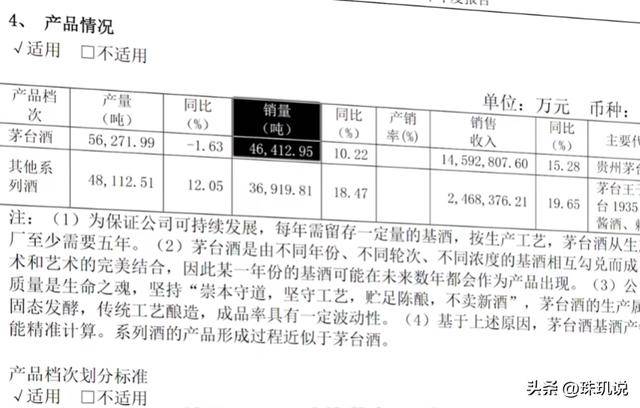
Core Viewpoint - The production cost of Moutai is significantly low compared to its market price, leading to high profit margins for the company and its distributors [1][3][4]. Financial Performance - Moutai's total operating cost for 46,400 tons of Moutai series liquor is 8.662 billion yuan, resulting in a production cost of approximately 87.89 yuan per bottle [1][3]. - The sales revenue for Moutai liquor reached approximately 145.93 billion yuan, with a gross margin of 94.06% [5]. Market Dynamics - The market price of Moutai has seen a decline, dropping from a peak of around 4,000 yuan to approximately 1,800 yuan [10][20]. - The decline in market price is attributed to changes in supply and demand dynamics, with increased direct sales from the company reducing reliance on distributors [27][29]. Supply and Demand Analysis - Moutai's production has increased from 39,300 tons in 2016 to 56,300 tons in 2024, contributing to a surplus in supply [36]. - Social inventory of Moutai is estimated to be equivalent to 14 to 15 months of sales, exacerbating the supply issue [39]. Economic Impact - Moutai contributes significantly to the local economy, with its annual revenue of 174.1 billion yuan accounting for 7.68% of Guizhou's GDP [8]. - The company has a substantial impact on employment, supporting numerous distributors and shareholders [6][8]. Investor Sentiment - Despite the overall positive performance of the stock market, Moutai's stock price has been declining, reflecting investor concerns about the future of the liquor industry [12][45]. - The decrease in stock holdings among funds indicates a lack of confidence in Moutai's growth prospects amid declining industry performance [47][54]. Consumer Behavior - Moutai is primarily consumed in business settings and as gifts, with 90% of its consumption occurring in these contexts [58]. - The perception of Moutai as a high-quality product remains strong, but its market dynamics are influenced by broader economic conditions and consumer preferences [76][81].

合成橡胶周度报告-20250921
Guo Tai Jun An Qi Huo· 2025-09-21 09:29
1. Report Industry Investment Rating No relevant content provided. 2. Core Viewpoints of the Report - The synthetic rubber market is under pressure but the downside space is narrowing. The butadiene market is facing increasing fundamental pressure, with supply expansion outpacing demand growth in the medium to long term [2][4][5]. 3. Summary by Related Catalogs 3.1 This Week's Synthetic Rubber Views Supply - Shandong Weite, Taihang Yubu, and Haopu New Materials' butadiene rubber plants continued maintenance. The output of high - cis butadiene rubber was 28,000 tons, a 5.12% decrease from last week, and the capacity utilization rate was 69.72%, a 3.76 - percentage - point decline [4]. Demand - In terms of rigid demand, the capacity utilization rate of sample enterprises fluctuated slightly. Some tire companies increased production of winter tires, but overall shipment was below expectations. Substitute demand remained high, and the overall demand for butadiene rubber maintained a year - on - year high growth rate. As of September 17, 2025, the inventory of domestic butadiene rubber sample enterprises decreased by 2.29% [4]. Valuation - The static valuation range of butadiene rubber futures is 11,000 - 11,800 yuan/ton, and the dynamic valuation is expected to decline. The upper limit of the fundamental valuation is 11,700 - 11,800 yuan/ton, and the lower theoretical valuation is 11,000 yuan/ton [4]. Viewpoint - In the short term, it is under pressure and the driving force is neutral downward, but the downside space is narrowing. The fundamentals of butadiene rubber and butadiene are under increasing pressure, mainly from high supply. The macro - environment has a limited impact on the commodity market [4]. Strategy - For single - side trading, short at high levels within the static valuation range, with an upper pressure of 11,700 - 11,800 yuan/ton and a lower support of 11,000 - 11,100 yuan/ton. For cross - variety trading, the nr - br spread will fluctuate in the short term [4]. 3.2 This Week's Butadiene Views Supply - The weekly output of Chinese butadiene sample enterprises was estimated to be 100,900 tons, a 2.26% decrease from the previous period. Next week, the output is expected to increase slightly to about 102,000 tons [5]. Demand - In the synthetic rubber sector, the demand for butadiene remained high. In the ABS sector, the demand was expected to be constant due to large inventory pressure. In the SBS sector, the demand remained stable [5]. Inventory - From September 11 - 17, 2025, the total domestic butadiene sample inventory decreased by 4.88% week - on - week. Although the short - term inventory decreased, there were still expectations of ship arrivals [5]. Viewpoint - In the short term, supply and demand are both increasing, and the inventory is neutral, with butadiene oscillating. In the medium to long term, supply pressure is the main contradiction, and the market is expected to enter a weak pattern [5]. 3.3 Butadiene Fundamentals Capacity - Butadiene is in a state of continuous expansion to match the growth of downstream industries, and the expansion speed and amplitude are slightly faster than those of downstream industries at certain stages. In 2024, the new capacity was 380,000 tons, and in 2025, it is expected to be 860,000 tons [10][12]. Supply - Side - Operating Rate - Multiple plants were under maintenance, affecting the output. The operating rate data showed fluctuations over the years [14][15]. Net Imports - The net import volume data showed changes over the years, and the import profit was also affected by factors such as market price and import cost [16]. Demand - Side - Capacity of Downstream Products - The capacity of downstream products such as butadiene - styrene rubber and butadiene rubber continued to expand, and the operating and maintenance conditions of related plants varied [20][26]. Demand - Side - ABS and SBS Fundamentals - The ABS polymer's operating rate, net profit, and inventory data showed different trends over the years. The SBS capacity utilization rate also fluctuated [32][33]. Inventory - The enterprise inventory, port inventory, and total inventory of butadiene showed different trends over the years, and there were expectations of future inventory changes [34][35][36]. 3.4 Synthetic Rubber Fundamentals Butadiene Rubber - Supply - Output: The output and operating rate data of high - cis butadiene rubber showed changes over the years, and multiple plants had maintenance plans [40][41]. - Cost and Profit: The theoretical production cost, profit, and gross profit margin of butadiene rubber showed different trends over the years [42][43][44]. - Import and Export: The import, export, and apparent demand data of butadiene rubber showed changes over the years [45][46][47]. - Inventory: The enterprise inventory, futures inventory, and trader inventory of butadiene rubber showed different trends over the years [49][50][51]. Butadiene Rubber - Demand - Tires - The inventory and operating rate data of domestic full - steel and semi - steel tires showed different trends over the years [54][55].
「油价又要涨?」降了300元后,时隔两月,油价可能再次上调!
Sou Hu Cai Jing· 2025-09-19 17:43
Core Viewpoint - The recent fluctuations in domestic fuel prices are influenced by a complex interplay of supply and demand factors, with a potential for price adjustments in the near future, but the overall market sentiment remains cautious [1][3][6]. Group 1: Recent Price Trends - From mid-July to early September, domestic gasoline and diesel prices experienced significant declines, with a cumulative drop of approximately 600 yuan per ton, effectively reducing travel costs for consumers [1]. - The price reductions not only offset previous increases but also provided additional savings for consumers, particularly benefiting long-distance freight drivers [1]. Group 2: Factors Influencing Price Movements - International oil prices have shown signs of a rebound in September, driven by several key factors including reduced oil exports from Russia, which is impacting global supply [3]. - Expectations of potential interest rate cuts by the Federal Reserve could weaken the dollar, leading to higher oil prices, as crude oil is priced in dollars [3]. - Ongoing geopolitical risks and uncertainties, such as regional conflicts and trade tensions, are contributing to market volatility and increasing oil prices [3]. Group 3: Technical Analysis and Future Outlook - A recent three-day streak of rising international oil prices signals a potential upward adjustment in domestic fuel prices, according to current crude oil change rate calculations [4]. - Despite the prevailing sentiment for price increases, concerns about weak energy demand persist, as evidenced by rising distillate oil inventories in the U.S., indicating lower-than-expected consumption [6]. - Even if prices do rise, the expected increase may be limited to 25-30 yuan per ton, which translates to a minimal impact on consumers, with only a few extra yuan for a full tank of gas [6].
申万期货品种策略日报:聚烯烃(LL、PP)-20250919
Shen Yin Wan Guo Qi Huo· 2025-09-19 01:30
Group 1: Futures Market Information - The previous day's closing prices of LL (1 - month, 5 - month, 9 - month) were 7188, 7233, 7280 respectively, with changes of - 57, - 56, - 19 and percentage changes of - 0.79%, - 0.77%, - 0.26% compared to the prices two days ago [2]. - The previous day's closing prices of PP (1 - month, 5 - month, 9 - month) were 6926, 6963, 6931 respectively, with changes of - 56, - 54, - 53 and percentage changes of - 0.80%, - 0.77%, - 0.76% compared to the prices two days ago [2]. - The trading volumes of LL (1 - month, 5 - month, 9 - month) were 207880, 9760, 66 respectively, and the trading volumes of PP (1 - month, 5 - month, 9 - month) were 234762, 20649, 871 respectively [2]. - The open interests of LL (1 - month, 5 - month, 9 - month) were 529473, 38224, 67 respectively, with changes of 9217, - 329, 35. The open interests of PP (1 - month, 5 - month, 9 - month) were 574719, 71061, 1575 respectively, with changes of 3878, 3796, 524 [2]. - The current spreads of LL (1 - month - 5 - month, 5 - month - 9 - month, 9 - month - 1 - month) were - 45, - 47, 92 respectively, and the current spreads of PP (1 - month - 5 - month, 5 - month - 9 - month, 9 - month - 1 - month) were - 37, 32, 5 respectively [2]. Group 2: Spot Market Information - In the raw material and spot market, the current prices of methanol futures, Shandong propylene, South China propane, PP recycled materials, North China powder, and plastic film were 2348 yuan/ton, 6625 yuan/ton, 593 dollars/ton, 5600 yuan/ton, 6750 yuan/ton, 8800 yuan/ton respectively [2]. - In the mid - stream spot market, the current price ranges of LL in East China, North China, and South China were 7200 - 7700 yuan/ton, 7150 - 7400 yuan/ton, 7300 - 7750 yuan/ton respectively. The current price ranges of PP in East China, North China, and South China were 6750 - 6900 yuan/ton, 6750 - 6850 yuan/ton, 6700 - 6950 yuan/ton respectively [2]. Group 3: News - On Thursday (September 18), the settlement price of WTI crude oil futures for October 2025 on the New York Mercantile Exchange was $63.57 per barrel, down $0.48 or 0.75% from the previous trading day, with a trading range of $63.33 - $64.55 [2]. - The settlement price of Brent crude oil futures for November 2025 on the London Intercontinental Exchange was $67.44 per barrel, down $0.51 or 0.75% from the previous trading day, with a trading range of $67.19 - $68.42 [2]. Group 4: Core Views and Strategies - Polyolefins closed down with a negative candlestick. In the spot market, the prices of linear LL from Sinopec and part of PetroChina were stable, and the prices of drawn PP from Sinopec and PetroChina were stable [2]. - From a fundamental perspective, the spot market of polyolefins is still mainly driven by supply - demand factors. Currently, the PE inventory is being slowly digested, and the PP inventory has also improved [2]. - After continuous declines, the short - selling pressure has been released, and the stabilization of crude oil prices provides support for chemicals. However, after the Fed's interest rate cut, the market declined due to concerns about future demand realization [2]. - In the medium - term, with the interaction of cost and supply - demand factors, polyolefins may continue to oscillate in a low - level range [2]