AI革命

Search documents
北美“电荒”催生大机遇,基金抢筹电力赛道
Zheng Quan Shi Bao Wang· 2026-01-18 23:19
Core Insights - The power crisis triggered by the surge in AI computing power is creating new opportunities for public funds to explore Chinese power equipment assets overseas [1] - Public funds are intensively reallocating their portfolios, prioritizing the power equipment sector as a key investment area [2] Group 1: Investment Trends - Major public funds such as Ping An Fund, Debon Fund, and others are increasing their positions in smart distribution and gas turbine sectors, with companies like Yingliu Co., Jereh, and Dongfang Electric becoming core holdings [2] - New ETFs focused on power equipment and energy infrastructure are being launched by institutions like Invesco Great Wall and Huabao Fund, indicating a strong interest in this sector [2] Group 2: Supply and Demand Dynamics - The ongoing power gap in North America has led fund managers to recognize the critical role of traditional power sources, with Morgan Stanley raising the projected power shortfall for U.S. data centers from 44 GW to 47 GW [3] - The International Energy Agency warns that global data center power demand will exceed 900 TWh by 2030, with NVIDIA's GPU clusters alone consuming 150-200 GW of power [3] Group 3: Market Performance - The power equipment sector saw an overall increase of over 40% in 2025, with specific segments like smart distribution and gas turbine components rising over 60% [5] - Companies like Siyuan Electric have seen their stock prices soar, with a cumulative increase of 14 times since 2020, benefiting from the upgrade of power grids and overseas demand [4] Group 4: Strategic Insights - The consensus that "AI's end is electricity" is driving public funds to focus on power equipment, as the demand for stable power sources in data centers is increasing [6] - Fund managers emphasize the importance of energy as a hard asset in the context of the AI revolution, highlighting the need for rapid upgrades in power infrastructure to meet growing energy demands [6][7]


你大概还剩 24 个月的时间来掌握这些技能
3 6 Ke· 2026-01-18 23:09
Core Viewpoint - The article discusses the rapid evolution of AI and its impact on various professions, emphasizing the need for individuals to adapt and embrace new tools to remain relevant in the workforce. Group 1: AI Impact on Workforce - The AI revolution is compressing evolution cycles at an exponential rate, threatening traditional skills while elevating the importance of "aesthetic" and "subjectivity" in the workplace [1] - There are three types of individuals in response to AI: resistors, observers, and the curious [4][5][7] - Those who start experimenting with AI today will see their skills compound monthly, while those who wait will find entry-level jobs disappearing by 2027 [8] Group 2: Historical Context - Historical patterns show that technological advancements, like the printing press and industrial revolution, have consistently displaced certain jobs while creating new ones [14][16] - The speed of AI evolution is unprecedented compared to past technological changes, leading to a more urgent need for adaptation [17][18] Group 3: Skills for the Future - The article suggests that no specific skill will save individuals, but the ability to learn quickly is crucial [26] - Three key activities are recommended to develop essential skills: creating personal projects, writing continuously, and using AI to accomplish previously unattainable tasks [27][29][32] Group 4: Personal Development and Aesthetic Judgment - The future belongs to those who can filter out noise and identify valuable content amidst the abundance of easily generated material [22][23] - The distinction between mediocre and exceptional work lies in aesthetic taste, originality of thought, and the ability to provide unique insights [22][30]

银华基金方建: 芒格信徒的“变”与“不变”
Zhong Guo Zheng Quan Bao· 2026-01-18 21:27
Core Viewpoint - The article highlights the investment philosophy of Fang Jian, a fund manager at Yinhua Fund, emphasizing a balance between maintaining a steadfast investment framework and adapting to market realities to enhance investor experience [1][2]. Investment Philosophy - Fang Jian's investment framework remains unchanged, focusing on buying high-quality growth companies at reasonable prices and holding them long-term to benefit from company performance rather than valuation fluctuations [2][3]. - His investment style is characterized by seeking companies with strong growth potential, high market cap ceilings, and excellent management, while emphasizing long-term holding and minimizing short-term speculation [2][3]. Performance Metrics - As of September 30, 2025, the net value growth rate of the Yinhua Zhi Hui fund managed by Fang Jian reached 149.04%, significantly outperforming the benchmark of 32.89% [2]. - The Yinhua Integrated Circuit Fund, managed by Fang Jian, reported a net value growth rate of 73.69% over the past year, with an excess return of 15.05% relative to its benchmark [3]. Product Development - Fang Jian has introduced a new product, Yinhua Hui Xiang Three-Year Open-End Fund, aimed at achieving long-term absolute returns while improving the holding experience for investors [4]. - The focus of this product is on steady growth and consistent profitability for clients, with an emphasis on controlling volatility and drawdowns [5]. Risk Management Strategies - Fang Jian employs three key strategies for managing volatility and controlling drawdowns: 1. Conducting deep research for valuation judgments to identify potential bubbles [5]. 2. Actively responding to market sentiment to take profits when necessary [5]. 3. Establishing clear risk control standards for new investments and reassessing existing holdings to avoid emotional decision-making [5]. AI and Technology Investment - Fang Jian views the AI revolution as an inevitable transformation, addressing fundamental human productivity challenges and believes that AI's overall development does not exhibit a bubble despite localized overvaluation [7][8]. - He outlines a clear investment framework for AI, emphasizing the importance of semiconductors, data storage, and efficient communication technologies as critical components of the AI ecosystem [7]. Robotics and Pharmaceutical Sector - The robotics industry is seen as a significant physical manifestation of AI, with potential for explosive growth as leading companies achieve production breakthroughs [9]. - Fang Jian expresses optimism about China's position in the global innovative pharmaceutical industry, citing advantages in engineering talent and clinical cost efficiency, predicting substantial growth potential post-adjustment [9].
芒格信徒的“变”与“不变”
Zhong Guo Zheng Quan Bao· 2026-01-18 20:45
Core Viewpoint - The article discusses the investment philosophy of Fang Jian, a fund manager at Yinhua Fund, emphasizing his consistent approach to value investing while adapting to market conditions to enhance investor experience [1][2]. Investment Philosophy - Fang Jian's investment framework remains unchanged, focusing on buying high-quality growth companies at reasonable prices and holding them long-term to benefit from company performance rather than market fluctuations [2][3]. - His investment style is characterized by seeking companies with strong growth potential, high market cap ceilings, and excellent management, while maintaining a long-term holding strategy [2][3]. Performance Metrics - As of September 30, 2025, the net value growth rate of the Yinhua Zhi Hui Inner Value A share, managed by Fang Jian since its inception on September 28, 2017, reached 149.04%, significantly outperforming the benchmark of 32.89% [2]. - The Yinhua Integrated Circuit Fund, managed by Fang Jian, reported a net value growth rate of 73.69% over the past year, with an excess return of 15.05% relative to its benchmark [3]. Product Strategy - Fang Jian is exploring two main product types: "industry small giants" focusing on long-term sectors and "absolute return" products aimed at providing stable returns with controlled drawdowns [2][3]. - The newly managed Yinhua Hui Xiang Three-Year Open Fund aims for long-term absolute returns, emphasizing steady growth and investor experience [3][4]. Risk Management - Fang Jian employs a three-pronged approach to manage volatility and control drawdowns: deep valuation assessments, proactive responses to market sentiment, and strict risk control measures for new and existing holdings [4][5]. - He maintains a core position in promising stocks while using tactical trading to manage exposure during market fluctuations, aiming to improve investor experience [5]. Embracing AI Revolution - Fang Jian views the AI revolution as essential, identifying it as a solution to human cognitive and efficiency limitations, and believes that while there may be localized bubbles, the overall AI sector remains sound [6][7]. - He outlines a clear investment framework for AI, focusing on the demand chain from semiconductors to data storage and communication technologies, which are critical for AI development [6][7]. Long-term Outlook - Fang Jian expresses optimism about the long-term potential of the robotics and innovative pharmaceuticals sectors, highlighting China's rising position in the global innovative drug industry [7].
每周主题、产业趋势交易复盘和展望:震荡调整后,还有哪些产业值得重视?-20260118
Soochow Securities· 2026-01-18 07:35
Market Overview - The average daily trading volume of the entire A-share market reached 3.47 trillion CNY, an increase of over 600 billion CNY compared to the previous week[8] - The Shanghai Composite Index experienced a weekly decline of 0.45%[11] Market Style Performance - The ChiNext 50 index had the highest weekly gain of 2.58%[11] - Small-cap growth stocks outperformed large-cap stocks, with a relative advantage in the positive range[13] Participant Performance - The private equity heavy stock index showed the best performance with a weekly increase of 1.52%[19] - The social security heavy stock index decreased slightly by 0.06%[19] Market Sentiment - The margin trading balance increased to over 2.7 trillion CNY, indicating heightened market activity[23] - The number of stocks hitting the daily limit down increased, reflecting negative feedback from high-priced stocks[23] Sector Performance - The report highlights strong sectors, including technology and safety, with a focus on AI and energy security[44] - The report also emphasizes the importance of domestic consumption and service sectors in driving economic growth[44] Risk Factors - Economic recovery may not meet expectations, increasing market uncertainty[47] - Geopolitical risks and uncertainties regarding U.S. policies could negatively impact A-share liquidity[47]
市场,在经历一轮调整期
大胡子说房· 2026-01-16 09:39
Core Viewpoint - The current market environment is characterized by both risks and opportunities, driven by the decline of U.S. hegemony and the potential for technological advancements, particularly in AI [1][8][36]. Group 1: Risks - The U.S. debt crisis is accelerating, leading to global resource distribution issues and potential conflicts as countries compete for their interests [1][37]. - The U.S. is experiencing a "tired hegemony," struggling to maintain its global leadership while facing internal economic challenges and rising military expenditures [1][5][37]. - The world is in a transitional phase where the old order is collapsing, but a new order has yet to be established, creating a vacuum of unpredictability [1][37]. Group 2: Opportunities - The ongoing AI revolution presents significant economic growth opportunities, with advancements in technology expected to drive market changes [8][36]. - Recent breakthroughs in various fields, such as AI, quantum computing, and energy, indicate a potential for rapid technological advancement and economic explosion [9][12][19][20]. - The government's increased support for technological innovation, including raising loan limits for R&D, suggests a favorable environment for tech sector growth [27][28]. Group 3: Market Dynamics - The market is currently experiencing sector rotations, with technology-related stocks showing significant movement, indicating investor interest in AI and related fields [29][30]. - The competition between the U.S. and China in the tech sector, particularly in AI, is expected to shape future market dynamics and economic leadership [32][33]. - The investment landscape is shifting, requiring a new approach to investment strategies that account for both risks and opportunities in a changing environment [40][41].

平安鼎越混合基金经理林清源:看好AI能源与供应链安全两大投资方向
Quan Jing Wang· 2026-01-15 06:57
Core Viewpoint - The report emphasizes the importance of energy as a critical constraint for AI expansion, highlighting the need for stable power sources and infrastructure to support the growing energy demands of data centers [1][2]. Group 1: AI Power Investment - Energy is identified as the biggest bottleneck for AI expansion in the coming years, with data center energy consumption increasing exponentially, necessitating upgrades to the power grid and stable power source construction [2]. - The focus remains on gas turbines as a strategic value for peak shaving and stable power, alongside opportunities in grid equipment exports [2]. Group 2: Global Supply Chain Restructuring - In the context of global supply chain restructuring, the emphasis is on the importance of "internal innovation" for supply chain security and resilience over efficiency, particularly for China [2]. - Continued investment in semiconductor equipment and key components is planned, as the industry shows strong independent growth potential [2]. Group 3: Structural Inflation and Resource Opportunities - The report highlights investment opportunities in metal commodities related to computing power, driven by structural inflation and increased demand for AI infrastructure [2]. - The mismatch between long-term capital expenditure and new demand for certain metals is expected to create significant price elasticity, making these resources core assets with anti-inflation properties [2]. Group 4: Long-term Strategy - The company aims to seek certainty amid uncertainty in 2026, striving to create sustainable long-term returns for its investors [3].
缺电、缺电、缺电!电网建设需7年,巨头们等不起,马斯克建电厂,谷歌买发电公司,扎克伯格押注核能
Jin Rong Jie· 2026-01-15 03:13
Group 1 - The core issue is the increasing electricity consumption of large AI data centers, which is projected to rise from 200 terawatt-hours (TWh) annually to 640 TWh by 2035, equivalent to Germany's total annual electricity usage [1] - There are over 4,000 large data centers in the U.S., with the potential to triple in number over the next four years, leading to significant strain on the aging electrical grid [1] - In Texas, data center electricity requests exceed 10 gigawatts (GW) monthly, but only about 1 GW is approved, resulting in potential increases in residential electricity costs by 25% in clustered data center areas [1] Group 2 - Tech giants are employing various strategies to address power shortages, such as xAI's establishment of a self-sufficient data center with gas turbines and Tesla batteries, and Google's acquisition of a power generation company for $4.8 billion [2] - Meta is investing in nuclear energy to power its AI supercomputing cluster, aiming for 6.6 GW of power by 2035, while Microsoft claims it will not raise electricity costs due to data centers [2] - Despite commitments to renewable energy, major companies still rely on natural gas and nuclear power, with significant portions of their electricity sourced from these non-renewable resources [2] Group 3 - The industry consensus is shifting towards a hybrid energy model combining solar and wind power with large battery storage, natural gas plants as backup, and nuclear power for long-term stability [3] - There is a surge in energy-related hiring among tech companies, with a 34% increase in recruitment for energy procurement and infrastructure roles, indicating a strategic shift in focus [3] - The competition for electricity has led to a reshaping of the energy sector, with companies like General Electric and Siemens seeing stock price increases, while local economies experience mixed impacts from data center developments [3]




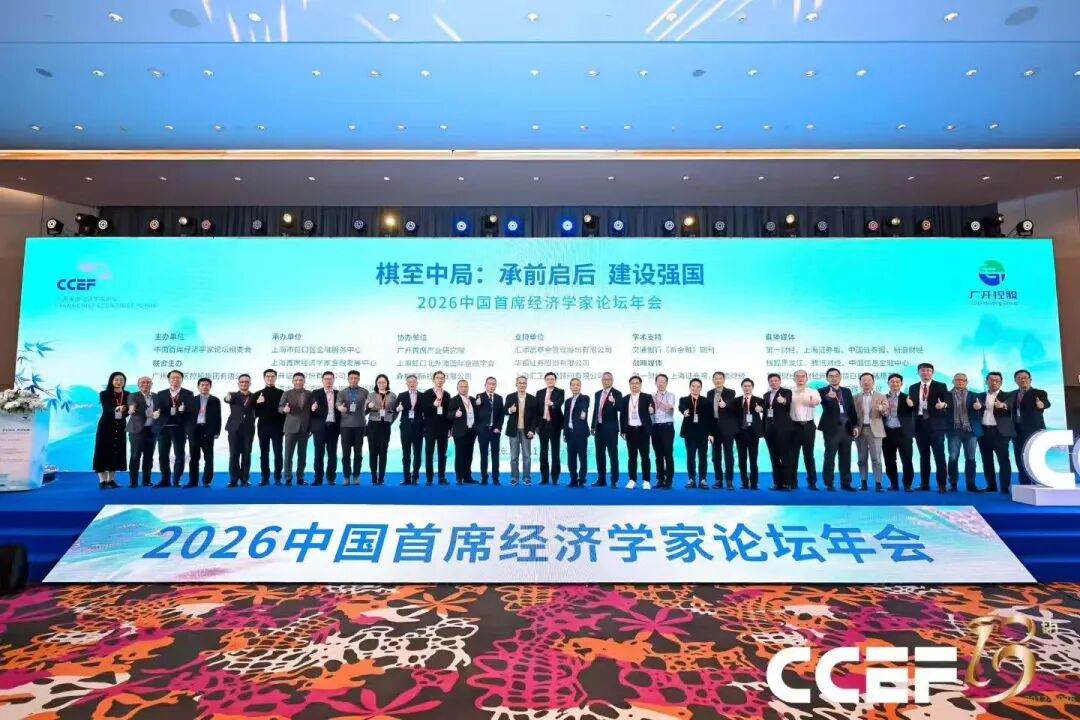
首席经济学家看开年新局 政策稳、产业兴、资本活 中国资产迈入系统性重估周期
Shang Hai Zheng Quan Bao· 2026-01-11 18:51
Core Viewpoint - The 2026 China Chief Economist Forum highlighted a significant shift in the perception of Chinese assets, moving from "overseas optional" to "globally unavoidable," driven by policy certainty, industrial innovation, and unprecedented support from capital markets [2] Policy Determination - The high degree of policy certainty is seen as a core support for Chinese assets, with foreign investors shifting their views from "China is not investable" to "Chinese assets are unavoidable" as they recognize the successful achievement of strategic goals set in the 14th Five-Year Plan [2] - The "15th Five-Year Plan" is characterized by clearer future directions and specific deployments across traditional and emerging industries, indicating a strong internal momentum for the modern industrial system [3] Capital Market Development - The development of capital markets is crucial, with unprecedented policy support for the stock market and a favorable liquidity environment expected to lead to a stable and healthy market operation in 2026 and beyond [4] Industrial Innovation - A robust traditional manufacturing sector is essential for nurturing emerging industries, with the ability to transform technology potential into commercial value being a key advantage for China [5] - The AI sector exemplifies this, where a complete industrial ecosystem is necessary to create a positive economic cycle from substantial initial capital investments [5] Investment Opportunities - Investment focus areas include development, people, and security, emphasizing the need for new productive forces and the importance of investing in human capital and safety across various sectors [7] - Specific investment opportunities identified include mergers and acquisitions, overseas expansion of Chinese companies, technology innovation, and real estate investment trusts (REITs) [7] Market Focus - The stock market remains a focal point, with a core strategy centered around technology sectors, which are expected to continue their structural trends in the first half of the year [8]

首席经济学家谈中国资产:“全球不可回避”!
Shang Hai Zheng Quan Bao· 2026-01-11 15:14
Core Viewpoint - The 2026 China Chief Economist Forum highlighted a significant shift in the perception of Chinese assets, transitioning from "overseas optional" to "globally unavoidable," driven by policy certainty, industrial innovation, and unprecedented support from capital markets [1] Policy Determination: Solidifying Development Foundations - High policy certainty is identified as the core support for Chinese assets, with a notable shift in foreign investors' perspectives towards viewing Chinese assets as indispensable [3] - The 2025 timeline is emphasized as a pivotal year for China's strategic goals, with successful implementation of the 14th Five-Year Plan and "Made in China 2025" initiatives [3] - The "15th Five-Year Plan" is noted for its clearer direction and specific deployment across traditional and emerging industries, showcasing a robust modern industrial system [3] Industry Breakthrough: Activating Growth Momentum - A complete industrial ecosystem and efficient innovation conversion capabilities are seen as key factors for the optimism surrounding Chinese assets [6] - The strong traditional manufacturing base is crucial for nurturing emerging industries, with examples in robotics and AI demonstrating the interdependence of new and traditional sectors [6] - The AI sector is highlighted for its potential to create a virtuous economic cycle through a comprehensive industrial ecosystem that transforms technological potential into commercial value [8] Capital Focus: Investment Opportunities from Revaluation Waves - Investment opportunities in the context of the "15th Five-Year Plan" are summarized under three keywords: development, people, and security [10] - Emphasis is placed on developing new productive forces, which include both strategic emerging industries and the transformation of traditional sectors [10] - Key investment opportunities identified include mergers and acquisitions, overseas expansion of Chinese companies, technology innovation-related ventures, and opportunities in REITs and similar assets [10][11]