
滞胀

Search documents
【招银研究】关税超预期落地,避险情绪大幅上升——宏观与策略周度前瞻(2025.04.07-04.11)
招商银行研究· 2025-04-07 10:55
Core Viewpoint - The implementation of "reciprocal tariffs" by the Trump administration has exceeded market expectations, leading to significant impacts on the U.S. economy and financial markets, with a potential annual tariff scale reaching $480 billion, covering 60% of U.S. imports [2][3]. Group 1: Economic Impact - The new tariffs could push U.S. import tax rates above 20%, marking a century-high level [2]. - Despite a downturn in various economic indicators, U.S. employment remains resilient, with March non-farm payrolls significantly exceeding expectations [2]. - The housing market in the U.S. continues to face challenges, particularly due to a shortage of labor, which is affecting supply [2]. Group 2: Financial Market Reactions - Financial markets have shifted their pricing logic from "inflation risk" to "economic recession," with significant declines in major indices and a drop in the 10-year U.S. Treasury yield [3]. - Recommendations include increasing allocations to U.S. Treasuries and extending duration due to rising recession risks [3]. Group 3: Currency and Commodity Outlook - The U.S. dollar is expected to face downward pressure, potentially challenging the 100 mark, influenced by trade negotiations and liquidity concerns [3]. - Gold prices have seen a pullback post-tariff announcement, but the outlook remains positive as recession risks rise, suggesting a potential increase in allocation after market corrections [4][5]. Group 4: China's Economic Response - China's economy is facing increased external pressures due to the tariffs, with a cumulative 54% increase in tariffs imposed by the U.S. this year [7][9]. - Domestic consumption is showing signs of recovery, particularly in the automotive sector, while the housing market is experiencing localized improvements [8]. - China has announced retaliatory measures, including additional tariffs on U.S. imports and support for domestic demand through macroeconomic policies [9][10]. Group 5: Market Sentiment and Strategy - Domestic risk aversion is rising, leading to a decline in risk appetite and a downward trend in A-shares [13]. - The bond market is expected to see lower yields as risk aversion increases, with a potential return of the 10-year government bond yield below 1.7% [13]. - A balanced allocation strategy is recommended for A-shares, focusing on technology, consumer, and dividend-paying stocks, while being cautious of overvalued sectors [14].

银河证券头条——政策定力较强,债市做多胜率提高
Sou Hu Cai Jing· 2025-04-07 07:41
Core Viewpoint - The U.S. has officially initiated a trade war with the announcement of "reciprocal" tariffs, resulting in an average import tariff rate exceeding 20%, the highest since the 1930s, reflecting a significant shift in global trade dynamics under Trump's administration [1] Tariff Summary - The global average tariff increase is set at 10%, with countries facing larger trade deficits subjected to higher tariffs. The so-called "comprehensive tax rate" includes not only tariffs but also VAT, non-tariff barriers, and any perceived unfair practices by the U.S. [1] - China faces a cumulative tariff burden of approximately 65%, which includes an average pre-Trump tariff of 11%, a 20% tariff related to fentanyl issues, and an additional 34% in reciprocal tariffs [1] Impact on Other Countries - Asian countries are significantly affected, with Vietnam facing a 46% tariff, Thailand 36%, Taiwan 32%, Indonesia 32%, India 26%, and Malaysia 24%. Europe faces a 20% tariff, while the UK is subjected to a 10% tariff, indicating some negotiation flexibility [2] Additional Tax Measures - A 25% tariff on automobiles has been introduced, and the exemption for small Chinese goods has been canceled [3] Strategic Focus of Tariffs - Tariffs are strategically aimed at China, with rates exceeding 60%, and also target key manufacturing sectors related to military and technological security, such as steel, aluminum, and automobiles [4] - Tariffs are also used as leverage in broader negotiations, including issues like the Russia-Ukraine conflict [4] Economic Impact on the U.S. - The imposition of tariffs is expected to create stagflation pressures in the U.S. economy, with an estimated GDP impact of about 1.6 percentage points, increasing the likelihood of a recession in the second half of the year [4] - The tariffs will cause a one-time spike in the Consumer Price Index (CPI), but a decline in overall demand may lead to a deflationary effect, insufficient to alter the Federal Reserve's interest rate policies [4] Impact on China’s Economy and Policy - The cumulative tariffs from the U.S. are projected to reduce China's GDP by approximately 1.0 to 1.5 percentage points. In response, China is likely to enhance domestic demand strategies, with potential policy measures including childcare subsidies and urban renovation projects [5] Market Implications for China - The tariffs exacerbate global economic instability, but China's domestic market resilience may provide a competitive edge. The impact on economic growth is unavoidable, yet available policy tools can effectively mitigate adverse effects, maintaining a stable economic outlook [6] - In the fixed income market, external uncertainties may enhance the appeal of bonds, while stock market activity will influence bond performance, with expectations of more accommodative monetary policy in the second quarter [7] Currency Impact - The impact on the Chinese yuan is expected to be less severe than in 2018, with short-term fluctuations around 7.3. The stability of the yuan is supported by the narrowing interest rate differential between China and the U.S. [7]
中信建投-特朗普关税火线解读
2025-04-06 14:35
Summary of Conference Call Industry or Company Involved - The conference call primarily discusses the implications of new tariffs implemented by the U.S. government, particularly focusing on trade relations with China and other countries. Core Points and Arguments 1. **Tariff Structure**: The new tariff plan includes two main components: a baseline tariff of 10% and higher reciprocal tariffs, with specific rates for different countries, such as 20% for the EU, 24% for Japan, and 46% for Vietnam [1][2]. 2. **Adjustment Flexibility**: President Trump indicated that tariffs could be adjusted based on trade deficits and non-reciprocal treatment, allowing for potential termination of tariffs if certain conditions are met [2][3]. 3. **Negotiation Signals**: The administration's approach suggests that countries willing to negotiate trade agreements may see their tariffs suspended, signaling a potential for diplomatic resolutions [3][11]. 4. **Exemptions and Additional Tariffs**: Certain goods, including copper, pharmaceuticals, and semiconductors, may be exempt from tariffs, while the overall tariff structure may include additional layers beyond existing tariffs [4][6]. 5. **Market Expectations vs. Reality**: The actual tariff implementation was more aggressive than market expectations, which were relatively optimistic prior to the announcement [7][8][9]. 6. **Impact on Emerging Markets**: Countries like Vietnam face severe economic impacts due to high tariff rates, which could lead to significant economic challenges [11][12]. 7. **Domestic Economic Concerns**: The U.S. economy is showing signs of potential downturn, with concerns about inflation and economic recession becoming more pronounced [22][23]. 8. **Future Policy Directions**: The U.S. may need to balance aggressive tariff policies with domestic economic stability, especially in light of upcoming elections [25][26]. 9. **China's Economic Response**: China is expected to face increased economic pressure due to the tariffs, but it has set a GDP growth target of 5% for the year, indicating a proactive fiscal policy stance [26][27]. 10. **Investment Opportunities**: The current market volatility may present trading opportunities, particularly in U.S. equities and gold, as the situation evolves [17][28]. Other Important but Overlooked Content 1. **Long-term Economic Outlook**: The potential for a recession in the U.S. is increasing, with historical patterns suggesting that economic downturns often follow significant policy changes [22]. 2. **Inflationary Pressures**: The combination of tariffs and domestic policies may lead to rising inflation, complicating the economic landscape [23]. 3. **Policy Adjustments**: Future adjustments to tariffs may depend on the success of domestic economic reforms and the political landscape leading up to elections [14][30]. 4. **Global Economic Interconnections**: The tariffs are likely to have ripple effects on global markets, influencing currency valuations and trade balances [16][18]. This summary encapsulates the key discussions and insights from the conference call, highlighting the complexities of the current trade environment and its implications for various stakeholders.

关税疑云:交易逻辑与展望(民生宏观林彦、邵翔)
川阅全球宏观· 2025-04-06 12:05
作者:林彦 邵翔 "对等关税"已经让全球市场乱成了"一锅粥",面对外部的强硬反制,特朗普还在坚称"弱者失败 " ( ONLY THE WEAK WILL FAIL! ),让这场混乱的演变更加难测。 国内投资者的经验证明, 对海外品种一定要维 持"弱者思维" , 也就是先识别海外市场中的主要交易者们(所谓的"强者")在交易什么,再做判断 ,不 要急躁,更不要"上头"。 因此我们将这篇报告分为两个部分:第一部分,是对近期海外市场的一些观察和思考;第二部分,我们再尝 试对政策和市场做一些判断和预测 。 第一部分:市场的交易逻辑 首先、为什么 这次经济的坏消息不是市场的好消息? 我们的答案是只有在经济和通胀预期是同向的时候,经济的坏消息是联储宽松的催化剂,才是市场的利好 , 因为 2008 年以后美联储对于市场重要性越来越大。(美联储一旦宽松起来力度极大, 2009 年其资产 负债表扩张 2.7 倍,其他经济体没这么果断,实际增速更是没有这种弹性)。 但是当经济和通胀的预期是反向的时候(滞胀和复苏初期),经济的坏消息就不是市场的好消息了。 我们 在前面的报告 《滞胀是基准情形,黄金或是版本答案》 中提到:美元、美债和 ...

特朗普在豪赌美国国运!我们该如何应对?
格隆汇APP· 2025-04-06 09:43
Core Viewpoint - The article discusses the implications of Trump's recent "reciprocal tariff" executive order, which imposes a 10% minimum tariff on global trade partners and a 34% tariff specifically on China, highlighting the potential economic risks and market reactions associated with this policy [1][2][3]. Group 1: Objectives of the Tariff Policy - The primary goal of the tariff policy is to alleviate the U.S. debt burden by increasing revenue through higher tariffs [5]. - Another objective is to stimulate the return of manufacturing jobs to the U.S. by making domestic production more financially attractive [6]. - The policy aims to reshape the geopolitical landscape and re-establish U.S. dominance in international trade [7]. Group 2: Market Reactions - Following the announcement, U.S. stock markets experienced significant declines, with the Dow Jones dropping 2.72%, S&P 500 down 3.16%, and Nasdaq falling 4.24% within two days [12]. - Global markets also reacted negatively, with Japan's Nikkei 225 index down 2.6% and Vietnam's stock market plummeting 7% [13]. - The volatility in the markets reflects concerns over the uncertainty of the tariff policy and its long-term implications [14]. Group 3: Investment Strategies - In the U.S. market, a cautious approach is recommended, avoiding high-valuation tech stocks and focusing on defensive sectors such as utilities and healthcare [24]. - For Hong Kong stocks, it is advised to reduce exposure to export-oriented companies and increase holdings in domestic consumption and financial sectors [34]. - In the A-share market, investors are encouraged to consider undervalued blue-chip stocks and sectors benefiting from domestic demand and technological advancements [34]. Group 4: China's Response and Market Risks - China is likely to implement reciprocal tariffs on U.S. goods, particularly in agriculture and energy, while also diversifying its export markets [37]. - Long-term strategies may include tax reductions and infrastructure investments to boost domestic demand, alongside enhancing regional trade cooperation [38]. - Potential risks include increased import costs leading to domestic inflation and the impact of reduced U.S. demand on export-oriented companies [38].
美股暴跌,市场对特朗普关税说“不” | 新京报专栏
Xin Jing Bao· 2025-04-05 10:10
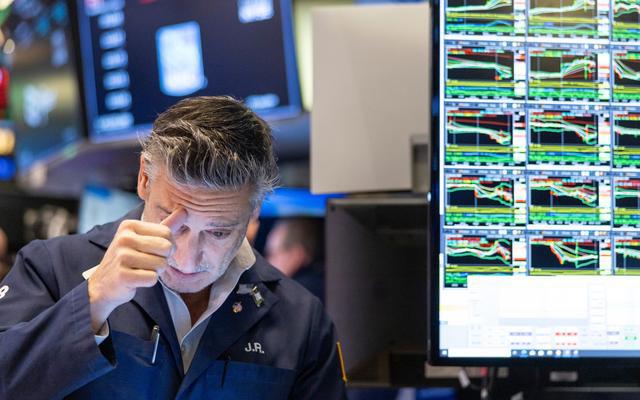
对特朗普关税,市场的恐慌肉眼可见。4月3日,关税政策正式生效后,道指单日暴跌3.98%,纳指跌 5.97%,创2020年3月以来最大跌幅,科技七巨头市值单日蒸发超2万亿美元,苹果、亚马逊跌幅均超 8%。 当地时间2025年4月4日,美国纽约,交易员在纽约证券交易所工作。图/IC photo 特朗普关税的直接后果,已经显现。 据央视新闻报道,美国政府4月2日宣布新的"对等"关税政策后,美国股市剧烈震荡。纽约股市三大股指 继4月3日大幅下跌后,4月4日再次暴跌,纳斯达克综合指数进入熊市。 特朗普关税令市场信心面临崩塌 特朗普宣布的广泛关税政策,引发的不确定性,不仅引起了市场恐慌,更在全球供应链和贸易关系方 面,激起巨大波澜。目前,连锁反应也已经出现,包括盟友反制等。 如欧盟宣布对260亿欧元美国商品加征报复性关税,加拿大对美汽车关税实施反制,英国启动报复性关 税咨询程序。4月4日晚,针对美方"对等关税"的单边霸凌做法,中国接连发布了一系列反制措施。 投资者担心特朗普关税政策可能导致全球贸易紧张局势升级,进而影响经济增长。美国绕过WTO实施 单边关税,被批评为"95年来最大政策失误",而多边规则遭到破坏,可能引发类 ...
“关税日”后的海外宏观逻辑:“对等”概念存预期差,滞胀忧虑强化
Guo Tai Jun An Qi Huo· 2025-04-03 14:11
1. Report Industry Investment Rating No relevant content provided. 2. Core Viewpoints of the Report - The US announced more details of the reciprocal tariff policy on April 3, with the overall intensity exceeding market expectations, and the concept of "reciprocal tariff" differing from the previous market understanding [4]. - The calculation parameter of the "reciprocal tariff" is anchored to the "trade deficit" rather than the "tariff" of the trading partner, which may make it difficult for countries to negotiate with the US [8][11]. - The weighted average tariff rate of the US on China has sharply increased to 71.3%, and it is estimated that China's exports to the US will decrease by 45.6%, total exports will decrease by 12.3%, and real GDP will decline by 1.8% [15]. - In the second quarter, the main macro - and large - asset allocation logic has shifted to stagflation [16]. - The US economic growth forecast for 2025 is adjusted downward to 1.9%, and inflation growth is continuously raised to 3.0%, with a significant divergence between "subjective and objective" and "short - and long - term" inflation [19]. 3. Summary According to Relevant Catalogs 3.1 Trump's Reciprocal Tariff Details and Time - line - Trump plans to set a 10% "minimum benchmark tariff" on global trading partners on April 5, and impose "reciprocal tariffs" on 60 countries with large trade deficits on April 9. The US average external tariff level will increase from 2.3% at the end of 2024 to 23%, theoretically dragging down GDP growth by 2.4% and increasing the inflation level by 1.7% [6]. - Many countries have introduced counter - tariff measures, such as the EU imposing tariffs on 26 billion euros of goods (including 8 billion euros of steel and aluminum), Canada imposing tariffs on various products worth billions of Canadian dollars, and China imposing tariffs on coal, liquefied natural gas, etc. [3]. 3.2 "Reciprocal" Concept - The market expected the "reciprocal tariff" to be based on the average tariff level of each country on the US, plus non - tariff trade barriers. However, the official calculation formula is based on the trade deficit, which may make it difficult for countries to negotiate with the US [11]. 3.3 US Tariffs on China - The weighted average tariff rate of the US on China has reached 71.3%, exceeding the previously announced 60%. It is estimated that China's exports to the US will decrease by 45.6%, total exports will decrease by 12.3%, and real GDP will decline by 1.8% [15]. 3.4 Market Impact - **Macro and Asset Allocation Logic**: The main logic in the second quarter has shifted to stagflation. Different quarters from 2024 to 2025 have different macro themes and asset allocation strategies [16][17]. - **Economic Data**: The "hard data" of the US economy has shown signs of stabilization and rebound, but the "soft data" is still weak. Key economic data in early April, such as non - farm payrolls, CPI, PPI, etc., are highly concerned [32]. - **Market Reaction** - **Commodity Market**: Gold prices are strong, the Bloomberg Commodity Index has declined, and the gold - silver ratio has risen significantly, in line with stagflation characteristics [33]. - **Equity Market**: Global equities are under pressure, especially in the US. The "stagflation" trading is evident in the US stock market [35][37]. - **Bond Market**: The yield of 10 - year US Treasury bonds has declined rapidly, and the yield curve has flattened. The target yield of 10 - year US Treasury bonds is further lowered [39][47]. - **Exchange - Rate Market**: The US dollar has lost its safe - haven status, and the US dollar index has fallen significantly. The target level of the US dollar is further lowered [40][42].
特朗普对等关税点评:红利防御,博弈内需
GOLDEN SUN SECURITIES· 2025-04-03 12:15
Investment Strategy - The report highlights that the recent implementation of "reciprocal tariffs" by the U.S. is expected to increase global trade costs, leading to potential inflationary or recessionary pressures on the global economy [1][8] - The tariffs include a 10% minimum baseline tariff and higher tariffs on specific countries, with China facing a 34% tariff, which could exacerbate external demand challenges for China [7][8] Short-term and Mid-term Market Impact - In the short term, risk appetite is likely to be under pressure due to inflation or recession narratives, impacting asset pricing and increasing demand for safe-haven assets [3][10] - Historical data suggests that after tariff announcements, the A-share market may experience initial pressure followed by potential rebounds, depending on new catalysts [10] - Mid-term asset pricing will revert to fundamentals, with the actual impact of tariffs and retaliatory measures from other countries being crucial [10] Policy Response and Domestic Growth - The report emphasizes the need to monitor the actual impact of tariffs and potential policy responses, as external demand contraction may necessitate stronger domestic growth policies [2][9] - There is an expectation for increased domestic policy measures to stimulate growth, such as interest rate cuts and consumption incentives, especially if negotiations yield positive outcomes before the tariffs take effect [2][9] Asset Allocation Recommendations - The report suggests a defensive approach focusing on dividend-paying assets, as market risk appetite is expected to decline [4][11] - Key sectors to consider include telecommunications, transportation, utilities, and state-owned banks, which are likely to attract defensive capital [11] - Additionally, there is a recommendation to explore offensive opportunities in sectors that may benefit from tariff exemptions or domestic growth policies, such as local consumption and infrastructure investments [12]
特朗普对等关税整体力度大超预期,全球股市普跌,美联储或进一步放缓降息步伐,关注关税反制措施|宏观经济
清华金融评论· 2025-04-03 10:56
Core Viewpoint - The new round of tariffs announced by Trump has led to a significant decline in global stock markets, with Vietnam and Japan experiencing the largest drops, while gold prices reached new highs [1][2]. Tariff Details - The new tariff policy consists of a baseline tariff increase of 10% effective from April 5, which is lower than market expectations. The retaliatory tariffs, effective from April 9, are significantly higher than anticipated, with China facing a 34% tariff (totaling 54%), the EU 20%, Japan 24%, Vietnam 46%, India 26%, and South Korea 25% [3][6]. Market Reactions - Following the announcement, stock markets globally fell, with Vietnam's market plummeting by 7% and Japan's by 3%. The A-share and H-share markets also continued to adjust, with the Shanghai Composite Index down 0.24% and the Hang Seng Index down 1.52%. The Chinese yuan depreciated to 7.35 against the US dollar [3][6]. Reasons for Tariff Increases - The Trump administration's rationale for increasing tariffs includes addressing trade imbalances, national security concerns, domestic political factors, and economic benefits. The administration believes that unfair trade practices by China contribute to the trade deficit and that tariffs can protect U.S. industries and generate government revenue [6][7]. Economic Implications - The tariffs pose a risk of "stagflation" for the U.S. economy, as consumers may face higher costs leading to reduced demand and increased economic pressure. The tariffs are expected to raise price levels and create upward pressure on inflation in the short term. Consumer inflation expectations have surged, with a significant increase noted in March [9]. The Federal Reserve may find it challenging to lower interest rates in the short term due to these economic pressures [9].
国信证券:关税政策终结美国两年多牛市 看好港股云计算、新消费与红利方向
智通财经网· 2025-04-03 08:43
Group 1 - Concerns over tariffs have altered long-term expectations for the US stock market, leading to the conclusion that the bull market that began in October 2022 has ended [1] - The impact of tariff policies is significant, as the current administration prioritizes reducing fiscal deficits over economic growth, inflation, and stock market performance [1] - The risk of stagflation may increase if oil prices rise sharply in the second quarter, with stagflation characterized by uncontrollable inflation beyond 3.0% [1] Group 2 - Domestic economic indicators are gradually improving, with social financing data showing year-on-year increases and PPI showing notable improvements [2] - The A-share market is expected to shift from sentiment-driven to performance-driven in the second quarter, favoring sectors with low valuations and strong earnings [2] Group 3 - The Hong Kong stock market is expected to face limited impact from US tariff policies, with a shift from broad-based gains to sector differentiation anticipated [3] - Key sectors to watch include: 1. Cloud computing, which is expected to benefit directly from deployments in various enterprises [3] 2. New energy vehicles and components, which have shown rapid growth and competitive advantages [3] 3. New consumption and pharmaceuticals, with the latter undergoing valuation recovery after three years of decline [3] 4. Dividend sectors, including insurance and stable earnings from operators, banks, and public utilities [3] 5. A performance revision pool in Hong Kong stocks, with approximately 51% of companies showing upward revisions in earnings [3]
