大宗商品价格

Search documents
PPI转正需要什么样的物价条件?(国金宏观孙永乐)
雪涛宏观笔记· 2025-08-28 10:52
Core Viewpoint - The article discusses the conditions required for the Producer Price Index (PPI) to turn positive, emphasizing the need for significant increases in commodity prices, particularly in the context of current economic conditions and historical precedents [3][4][9]. Summary by Sections Commodity Price Trends - Since July, major commodities have experienced a slight decline after a peak, with coal and black metals rising by 13.8% and 3.9% respectively by mid-August [3]. - The PPI is expected to show a year-on-year increase in August due to a low base last year, but it remains in negative territory for 34 consecutive months [3]. PPI Composition and Impact - The PPI consists of various components, with black metals, non-ferrous metals, crude oil, coal, and other goods contributing 13.6%, 7.3%, 16.7%, 9.3%, and 53.2% respectively [5]. - In the first seven months of 2025, crude oil, black metals, coal, and other goods negatively impacted the PPI by 1, 0.9, 0.5, and 0.9 percentage points, while non-ferrous metals contributed positively by 0.4 percentage points [5]. Price Requirements for PPI to Turn Positive - For the PPI to turn positive by the end of the year, the average month-on-month PPI from August to December needs to reach 0.43%, which is similar to levels seen during the 2016 supply-side reforms [8]. - Corresponding to this, prices for rebar, non-caking coal, copper, and crude oil need to increase by 11% from July levels, reaching 3580 CNY, 940 CNY, 88000 CNY, and 79 USD respectively [8]. - If crude oil and copper prices remain stable, rebar and non-caking coal prices would need to rise by approximately 20% from July averages to achieve a positive PPI [8]. Historical Context and Future Outlook - Historical examples show that significant price increases in commodities often require external factors, such as the 198% rise in non-caking coal prices in 2021 due to energy-saving measures [9]. - A more realistic scenario for PPI turning positive may occur in Q2 of next year, where a 4% increase in prices from July levels would suffice [9]. - However, after Q2 of next year, the low base effect will diminish, necessitating further conditions for PPI positivity, especially if crude oil prices continue to decline [9][11]. Demand Considerations - The analysis assumes that upstream price increases can be effectively transmitted to downstream sectors, which is contingent on sufficient demand [10]. - Weak demand, particularly in the real estate sector, has historically hindered price transmission, preventing the PPI from turning positive despite rising upstream prices [11].


PPI转正需要什么样的价格水平
SINOLINK SECURITIES· 2025-08-28 06:00
Report Summary 1) Report Industry Investment Rating No relevant content provided. 2) Core Viewpoints of the Report - If PPI is to turn positive by the end of this year, the average monthly PPI MoM from August to December needs to reach 0.43%, similar to the average during the 2016 supply - side reform. Commodity prices need to rise significantly, with rebar, anthracite, copper, and crude oil prices needing to increase by 11% from July levels [2][8]. - Given that crude oil and copper are globally - priced commodities and crude oil prices have been weakening, domestic - priced commodities like rebar and coal need to rise more for PPI to turn positive by the end of the year. For example, if oil and copper prices remain flat, rebar and anthracite need to rise about 20% from July averages [8]. - A more realistic scenario is for PPI to approach positive growth in Q2 next year. With a low - base effect, rebar, anthracite, copper, and crude oil prices only need to rise about 4% from July this year to drive PPI to turn positive [9]. - PPI turning positive depends on demand. Weak demand can block price transmission, requiring larger price increases in upstream commodities for PPI to turn positive [12]. 3) Summary by Related Catalog Current Commodity Price Situation - Since July, commodities first rose and then slightly declined. As of mid - August, coal and ferrous metals rose 13.8% and 3.9% MoM respectively compared to mid - July, leading the increase among major commodities [4]. - Due to a low base last year, the PPI YoY in August is expected to rebound but will still remain in negative territory for the 34th consecutive month [4]. PPI Composition and Impact Factors - In the PPI composition, the weights of ferrous metals, non - ferrous metals, crude oil, coal, and other commodities are 13.6%, 7.3%, 16.7%, 9.3%, and 53.2% respectively. From January to July 2025, crude oil, ferrous metals, coal, and other commodities dragged down PPI by 1, 0.9, 0.5, and 0.9 percentage points respectively, while non - ferrous metals boosted PPI by 0.4 percentage points [4]. Representative Commodities for PPI - The spot prices of rebar, anthracite, copper, and Brent crude oil are selected as representative commodities for ferrous, coal, non - ferrous, and crude oil PPI, with correlation coefficients of 81%, 93%, 75%, and 96% respectively [5]. Historical Examples of Commodity Price Increases - In 2021, "sports - style" energy conservation and emission reduction drove coal prices up. In October 2021, anthracite prices rose 198% compared to April, driving the PPI YoY of the coal mining and washing industry from 13% to 103.7% in October [8]. - From 2016 - 2017, the supply - side reform drove up ferrous metal prices. At the end of 2016, rebar and wire rod prices rose 82% and 91% compared to the end of 2015, driving the PPI YoY of the ferrous metal smelting and rolling processing industry up by 35% at the end of 2016 [9]. Commodity Price Requirements for PPI to Turn Positive | Time | Rebar | Anthracite | Copper | Crude Oil | Average Commodity Price Increase | | --- | --- | --- | --- | --- | --- | | July Average | 3213 yuan/ton | 844 yuan/ton | 78644 yuan/ton | 71 dollars/ton | - | | Q4 2025 | 3580 yuan/ton | 940 yuan/ton | 87609 yuan/ton | 79 dollars/ton | 11% | | Q1 2026 | 3519 yuan/ton | 924 yuan/ton | 86115 yuan/ton | 78 dollars/ton | 10% | | Q2 2026 | 3342 yuan/ton | 877 yuan/ton | 81789 yuan/ton | 74 dollars/ton | 4% | [10]
一文讲清楚,特朗普强势降息意味什么,为什么是中国难得的机遇
Sou Hu Cai Jing· 2025-08-26 05:47
Core Viewpoint - The article discusses the implications of U.S. interest rates and the potential benefits and risks of interest rate cuts, particularly in the context of Trump's criticism of the Federal Reserve and its chairman Powell [1][3][11]. Group 1: U.S. Interest Rates and Economic Impact - Trump has been vocal about the need for lower interest rates, arguing that current rates are too high and impose significant economic costs, estimating a $360 billion annual cost for each percentage point of high interest rates [5][7]. - High interest rates lead to reduced borrowing and spending, which can result in job losses and lower economic growth, as evidenced by the disappointing non-farm payroll data [8][10]. - Lowering interest rates could stimulate economic activity by making borrowing cheaper, which is crucial for consumer spending and business expansion [7][11]. Group 2: Global Trade and Currency Dynamics - A reduction in interest rates could weaken the dollar, making U.S. exports more competitive while also mitigating the impact of tariffs on consumers [10][11]. - However, a weaker dollar could also lead to a stronger yuan, potentially harming China's export competitiveness and accelerating the shift of low-end manufacturing to Southeast Asia [21][23]. Group 3: Opportunities and Risks for Emerging Markets - Historically, U.S. rate cuts have led to increased capital inflows into emerging markets, which could benefit markets like China's A-shares [19]. - The influx of capital could also create asset bubbles and financial volatility, particularly in sectors like technology [21][24]. - To mitigate risks, China could enhance its import reserves and support high-tech industries while upgrading its manufacturing capabilities to counteract the effects of a weaker dollar [23][24].

美联储降息对大宗商品价格的影响分析
Qi Huo Ri Bao Wang· 2025-08-26 00:57
Group 1 - The article discusses the potential impact of the Federal Reserve's interest rate cuts on commodity prices, suggesting a strategy of buying on dips for commodities like copper, aluminum, and gold [1][14] - There is a divergence in market opinions regarding the effects of rate cuts on commodity prices, with some believing that rate cuts indicate economic slowdown while others argue that they can stimulate economic growth and liquidity, thus supporting commodity prices [1][3] - Historical data shows that during past rate cut cycles, commodity prices often rebound after initial declines, particularly in the context of economic recovery following rate cuts [2][3] Group 2 - Since 1982, the U.S. has experienced multiple rate cut cycles, with the current cycle beginning in September 2022, resulting in a total reduction of 100 basis points [2] - The article highlights that rate cuts are typically implemented during significant economic downturns, and the pace of cuts tends to be more aggressive compared to rate hikes [2][3] - The relationship between economic performance and commodity prices is emphasized, indicating that global economic growth is a key determinant of commodity price trends [4] Group 3 - Different commodities exhibit varying sensitivities to interest rate changes, with gold being highly sensitive to real interest rates, copper reflecting economic growth expectations, and oil being influenced by both demand and supply factors [5][6] - Statistical data supports the notion that metals and industrial raw materials are more sensitive to interest rate changes compared to agricultural commodities [6] Group 4 - The article outlines the Federal Reserve's monetary policy path, noting that inflation and employment data will significantly influence future rate decisions [9][11] - The current economic environment suggests a potential for further rate cuts, with market expectations indicating a possible reduction in the federal funds rate to between 3.3% and 3.5% in the near future [13][14] - The necessity for rate cuts is underscored by a weakening labor market and declining inflation, which may lead to increased pressure on the Federal Reserve to adjust its policies [14]
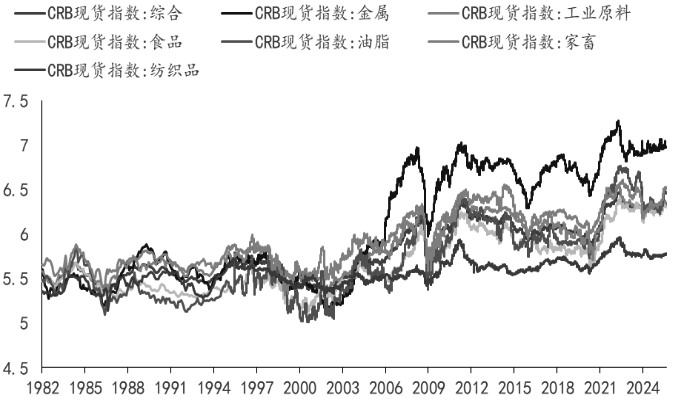
美联储降息对大宗商品价格的影响分析:铜、铝、黄金等 建议以逢低做多为主
Qi Huo Ri Bao· 2025-08-25 23:36
Group 1: Federal Reserve's Interest Rate Policy - The market is increasingly focused on the potential impact of Federal Reserve interest rate cuts on commodity prices, with differing opinions on the effects [1][5] - Since September of last year, the current rate cut cycle has seen a total reduction of 100 basis points, with rates adjusted from 5.25%-5.5% to 4.25%-4.5% [1][3] - The Fed's rate cuts typically occur in response to significant economic downturns, and the pace of rate cuts is generally more rapid compared to rate hikes [1][3] Group 2: Commodity Sensitivity to Interest Rates - Gold is highly sensitive to real interest rates, with rising real rates negatively impacting gold prices due to increased opportunity costs [2] - Copper is viewed as an economic barometer, with its prices affected by economic growth expectations and demand from key sectors [2] - Oil prices are influenced by a complex interplay of demand and supply factors, with rate cuts potentially supporting prices despite economic weakness [2] Group 3: Economic Indicators and Future Projections - The labor market in the U.S. shows signs of cooling, with non-farm employment growth slowing and unemployment remaining low, increasing the necessity for Fed rate cuts [4][7] - Inflation data indicates a moderate rebound, but overall inflation levels are expected to remain weak in the second half of the year [3][4] - Market expectations suggest that the Fed may lower rates to a range of 3.3%-3.5% in the first half of next year, indicating a potential for further cuts [4][7] Group 4: Market Reactions and Investment Strategies - The weakening labor market and ongoing inflation decline highlight the growing necessity for Fed rate cuts, which could benefit commodities sensitive to Fed policies [7][8] - The current geopolitical landscape and central bank gold purchases are expected to support gold prices in the long term, maintaining a bullish outlook [8]
【钢铁】7月电解铝产能利用率达98.4%,续创2012年有统计数据以来新高水平——金属周期品高频数据周报(王招华/戴默)
光大证券研究· 2025-08-12 23:06
Core Viewpoint - The report highlights the current economic indicators and trends in various sectors, including liquidity, infrastructure, real estate, industrial products, and export chains, providing insights into potential investment opportunities and market dynamics. Liquidity - The M1 and M2 growth rate difference was -3.7 percentage points in June 2025, with a month-on-month increase of 1.9 percentage points [4] - The BCI small and medium enterprise financing environment index was 46.09 in July 2025, down 6.16% from the previous month [4] - London gold prices increased by 1.07% compared to the previous week [4] Infrastructure and Real Estate Chain - Key enterprises' average daily crude steel production hit a new low for the year in late July [5] - Price changes included rebar down 0.60%, cement price index down 0.37%, rubber down 1.71%, coke up 3.79%, coking coal up 3.55%, and iron ore up 1.31% [5] - National blast furnace capacity utilization rate decreased by 0.15 percentage points, while cement and asphalt production rates increased by 10.00% and decreased by 0.6% respectively [5] Real Estate Completion Chain - Titanium dioxide and flat glass prices changed by -0.39% and 0.00% respectively, with glass profit at -58 CNY/ton and titanium dioxide profit at -1353 CNY/ton [6] - The flat glass operating rate was 73% this week [6] Industrial Products Chain - Major commodity prices showed cold-rolled steel, copper, and aluminum increasing by 1.26%, 0.33%, and 0.68% respectively, with corresponding profit changes of +6.01%, -18.19%, and +4.26% [7] - The national semi-steel tire operating rate was 74.35%, down 0.10 percentage points [7] Subcategories - The electrolytic aluminum capacity utilization rate reached a new high since 2012 [8] - Graphite electrode price was 18,000 CNY/ton, unchanged, with a comprehensive profit of 1357.4 CNY/ton, down 7.35% [8] - The price of electrolytic aluminum was 20,630 CNY/ton, up 0.68%, with estimated profit at 3,050 CNY/ton (excluding tax), up 4.26% [8] Price Comparison Relationships - The price ratio of rebar to iron ore was 4.24 this week [9] - The price difference between hot-rolled and rebar steel was 140 CNY/ton, while the price difference between Shanghai cold-rolled and hot-rolled steel was 380 CNY/ton, down 10 CNY/ton [9] - The price difference between medium-thick plates and rebar steel was 160 CNY/ton this week [9] Export Chain - The new export orders PMI for China in July 2025 was 47.10%, down 0.6 percentage points [10] - The CCFI comprehensive index for container shipping rates was 1200.73 points, down 2.56% [10] - The U.S. crude steel capacity utilization rate was 78.70%, up 0.30 percentage points [10] Valuation Percentiles - The CSI 300 index increased by 1.23%, with the best-performing cyclical sector being engineering machinery at +6.21% [11] - The PB ratio of ordinary steel and industrial metals relative to the CSI 300 index was 47.28% and 69.23% respectively [11] - The current PB ratio for the ordinary steel sector is 0.57, with the highest value since 2013 being 0.82 [11]

股指黄金周度报告-20250808
Xin Ji Yuan Qi Huo· 2025-08-08 10:33
1. Report Industry Investment Rating - No relevant content provided 2. Core Viewpoints of the Report - In the short - term, due to repeated digestion of previous policy benefits and unimproved corporate profits, the stock index may face callback risks after continuous rise; for gold, although the market's expectation of a Fed rate cut in September has increased, the easing of global trade tensions may lead to a continuation of the adjustment after the rebound, maintaining a band - short thinking [39][40] - In the medium - to long - term, the stock index's valuation is dragged down by the decline in corporate profit growth, and it is expected to maintain a wide - range shock; gold may face a deep adjustment due to the fading of tariff policy uncertainties and the release of dovish signals by the Fed [40] 3. Summary by Relevant Catalogs 3.1. Macroeconomic Data at Home and Abroad - In July this year, the growth rates of imports and exports both rebounded, mainly due to the rise in commodity prices and the low - base effect of the same period last year. However, domestic and foreign demand remains weak [4] 3.2. Stock Index Fundamental Data 3.2.1. Corporate Profit - The rise in commodity prices helps improve the profits of upstream raw material processing industries, but due to weak terminal demand, enterprises still face great operating pressure, with the phenomenon of increasing revenue but not profit. They have to reduce production and inventory, and the inflection point of profit growth has not arrived [15] 3.2.2. Capital Situation - The margin balance of the Shanghai and Shenzhen stock markets is approaching the 2 - trillion - yuan mark. The central bank conducted 1.1267 trillion yuan of 7 - day reverse repurchase operations this week, achieving a net withdrawal of 536.5 billion yuan [19] 3.3. Gold Fundamental Data 3.3.1. US Economic Data - In June, the number of new non - farm jobs in the US was 73,000, far lower than the expected 110,000, and the unemployment rate rose from 4.1% to 4.2%. In July, the ISM manufacturing PMI dropped to 48, contracting for 5 consecutive months. Fed officials released dovish signals, suggesting that the time window for a rate cut is approaching [23] 3.3.2. Gold Inventory - The warehouse receipts and inventory of Shanghai gold futures have soared, while the New York futures inventory has continued to decline, and the market's bullish sentiment has cooled [36] 3.4. Strategy Recommendation - Short - term: Be cautious of the callback risk of the stock index; for gold, maintain a band - short thinking [40] - Medium - to long - term: The stock index is expected to maintain a wide - range shock; gold may face a deep adjustment [40] 3.5. Next Week's Focus and Risk Warning - Key data such as China's July investment, consumption, industrial added value, US CPI, and speeches by Fed officials [41]
国新国证期货早报-20250808
Guo Xin Guo Zheng Qi Huo· 2025-08-08 01:46
Report Industry Investment Rating No indication of the report's industry investment rating is provided in the given content. Core View of the Report The report presents the market performance of various futures and spot commodities on August 7, 2025, including stock index futures, coke, coking coal, sugar, rubber, palm oil, soybean meal, live pigs, copper, cotton, logs, steel, alumina, and aluminum. It also analyzes the influencing factors and future trends of each commodity [1][5][7]. Summary by Commodity Stock Index Futures - On August 7, A-share market showed mixed performance, with the Shanghai Composite Index reaching a new high for the year, closing up 0.16% at 3639.67 points, the Shenzhen Component Index down 0.18% at 11157.94 points, and the ChiNext Index down 0.68% at 2342.86 points. The trading volume of the two markets reached 1825.5 billion yuan, an increase of 91.4 billion yuan from the previous day [1]. - The CSI 300 index had a strong oscillation, closing at 4114.67, up 1.18 [2]. Coke and Coking Coal - Coke's fifth - round price increase was implemented on Monday. Driven by the rapid rise in coal prices at the cost end, coke followed the upward trend, and the coking profit returned to the break - even point. Due to the upcoming military parade, production restrictions are expected, with potential supply and demand reduction in the second half of the month. It is expected that the first - round price cut will start in mid - to late August [5]. - For coking coal, the prices of some varieties increased. The supply side saw a slight decline in mine开工 rate due to stricter safety inspections, and the demand side was relatively healthy. The basis was - 215.5, down 31 [5]. Zhengzhou Sugar - Affected by Brazil's weak export data in July, the US sugar market declined slightly on Wednesday. The Zhengzhou sugar 2601 contract was under pressure from short - sellers on Thursday. As of August 1, India's sugarcane planting area increased compared to the same period last year, and Brazil's sugar exports in July decreased by 5% compared to the same period last year [5]. Rubber - Thailand's meteorological agency warned of potential floods from August 10 - 12, causing the Shanghai rubber futures to rise slightly on Thursday. In July 2025, China's imports of natural and synthetic rubber increased by 3.4% year - on - year, and the cumulative imports from January to July increased by 20.8% [6]. Palm Oil - On August 7, palm oil prices oscillated within the previous day's range. The import cost of palm oil in China decreased, and the price inversion range narrowed. There were no new purchases in the domestic market last week [7]. Soybean Meal - Internationally, CBOT soybean futures declined on August 7. US soybean export sales in the week ending July 31 were higher than expected. Domestically, on August 7, soybean meal futures oscillated. There was sufficient soybean supply, but concerns about future supply shortages remained. The price will continue to adjust, and attention should be paid to US weather and import conditions [8]. Live Pigs - On August 7, live pig futures rose. The current consumption demand is weak, but short - term support comes from reduced slaughter and some secondary fattening demand. In the medium term, the market is still in a state of supply - demand relaxation, and attention should be paid to policy and slaughter conditions [9]. Shanghai Copper - Due to weak economic data and dovish remarks from some Fed officials, the expectation of a Fed rate cut in September increased, and the US dollar index was weak. Coupled with a warm domestic industrial product atmosphere, Shanghai copper temporarily stabilized. In early August, it may still face pressure, but the downside space is limited [9]. Cotton - On Thursday night, the main contract of Zhengzhou cotton closed at 13665 yuan/ton. The cotton inventory decreased, and China's textile and clothing exports in July decreased both year - on - year and month - on - month [10]. Logs - The futures price of logs showed a certain trend, and the spot price was stable. The futures price was driven up by the increase in the external market price. Attention should be paid to spot prices, import data, and market sentiment [11]. Steel - On August 7, steel futures prices were at certain levels. The cost of coking coal still strongly supported steel prices, but weak demand restricted the upward space. In the short term, steel prices may oscillate strongly with frequent ups and downs [11]. Alumina - On August 7, alumina futures closed at 3211 yuan/ton. The spot price was stable, but the market was inactive. The inventory was accumulating, and the price faced upward pressure [12]. Shanghai Aluminum - On August 7, Shanghai aluminum futures closed at 20750 yuan/ton. In the short term, it was under pressure, but with the expectation of a macro - level relaxation, it has the potential to rebound after the off - season. Attention should be paid to inventory and consumption trends in August [12].
6月通胀:三大分化(申万宏观·赵伟团队)
申万宏源研究· 2025-07-10 08:27
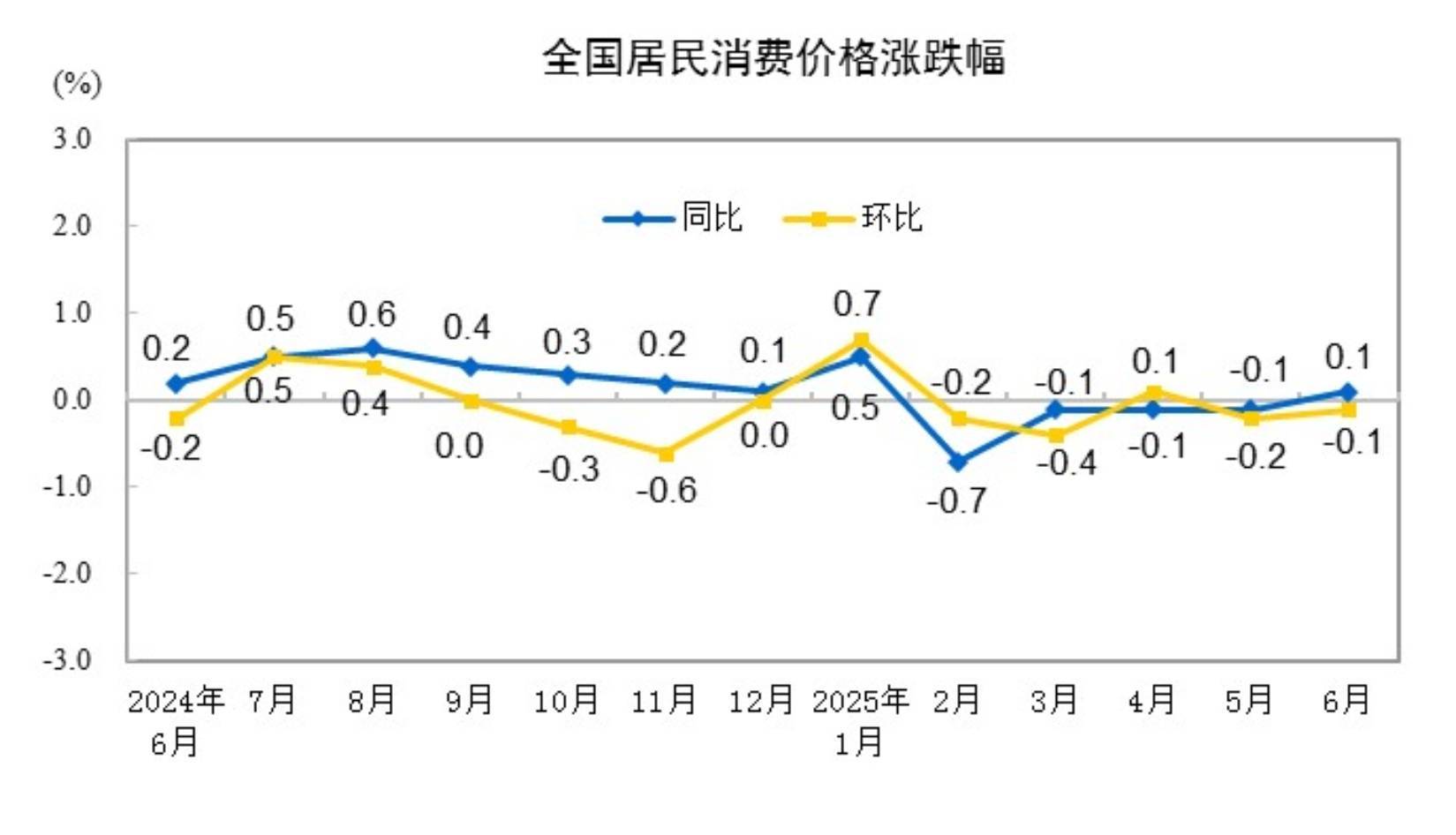
Core Viewpoint - The inflation data for June shows a divergence between CPI and PPI, with CPI rising slightly while PPI continues to decline, indicating a mixed economic environment influenced by various commodity prices [2][8][69]. Group 1: Divergence in Commodity Prices - In June, PPI fell by 0.3 percentage points to -3.6% year-on-year, primarily due to declining prices of upstream commodities like coal and steel, while CPI increased by 0.1% year-on-year, supported by rising food prices and platinum [2][9][69]. - The decline in PPI was driven by oversupply in sectors such as steel, cement, and coal, which contributed to a 0.4% month-on-month decrease, while international oil prices provided some support to PPI, contributing positively from oil and copper prices [2][9][69]. Group 2: Core Commodity PPI and CPI Trends - Core commodity PPI remains at historical lows, reflecting the impact of tariffs and low capacity utilization in domestic downstream industries, with a slight recovery of 0.4 percentage points to -1% year-on-year [3][21][70]. - In contrast, core commodity CPI increased by 0.3 percentage points to 0.6% year-on-year, driven by consumer stimulus policies that have bolstered domestic demand, particularly in durable goods and household items [3][27][70]. Group 3: Service CPI Performance - Service CPI remained stable at 0.5% year-on-year, with core service CPI also holding steady at 0.8%, while rental prices showed weakness, with a month-on-month increase of only 0.1% [4][30][61]. - The overall demand for services has remained stable, but the rental component, which is a significant part of the service CPI, has not performed as well compared to previous years [4][30][61]. Group 4: Future Outlook - The combination of policy measures and recovery in domestic demand is expected to alleviate inflationary pressures, but significant downward pressure on commodity prices is anticipated in the second half of the year, with PPI expected to underperform CPI [4][35][70]. - Factors such as tariff disturbances, low global oil inventories, and weakened investment in real estate and manufacturing are likely to constrain commodity prices, while low capacity utilization in downstream sectors will continue to suppress PPI recovery [4][35][70].

CPI同比连续4个月下降后6月转为上涨,专家:核心CPI创近14个月以来新高,折射部分行业供需结构改善
Sou Hu Cai Jing· 2025-07-09 13:02
Group 1: Consumer Price Index (CPI) - In June, the national Consumer Price Index (CPI) ended a four-month decline, rising by 0.1% year-on-year, while the month-on-month change decreased by 0.1%, narrowing the decline by 0.1 percentage points compared to the previous month [1][4] - The increase in CPI was primarily driven by a rebound in industrial consumer goods prices, with food price declines slightly narrowing and service prices rising by 0.5% [1][3] - The core CPI, excluding food and energy prices, rose by 0.7% year-on-year, marking a 0.1 percentage point increase from the previous month and reaching a 14-month high [1][4] Group 2: Producer Price Index (PPI) - The national Producer Price Index (PPI) fell by 3.6% year-on-year in June, with the decline widening by 0.3 percentage points compared to the previous month, and a month-on-month decrease of 0.4% [5][11] - The decline in PPI was influenced by seasonal price decreases in certain raw materials, with significant drops in prices for black metal smelting and non-metal mineral products [6][7] - The overall PPI for the first half of the year decreased by 2.8% year-on-year, reflecting ongoing adjustments in the real estate market and weak consumer demand [7][8] Group 3: Economic Outlook - The outlook for PPI improvement in the second half of the year remains limited, with an estimated annual decline of around 2.3%, which is better than the first half's decline of 2.8% [8][9] - Domestic demand continues to be weak, with low levels of real estate and infrastructure investment, which are insufficient to drive up related resource prices [8][9] - The overall manufacturing capacity utilization rate is low, leading to a phase of oversupply in certain industries [8]