《提振消费专项行动方案》发布

Search documents
“十五五”居民消费率明显提高大有可为
Di Yi Cai Jing· 2025-12-01 12:39
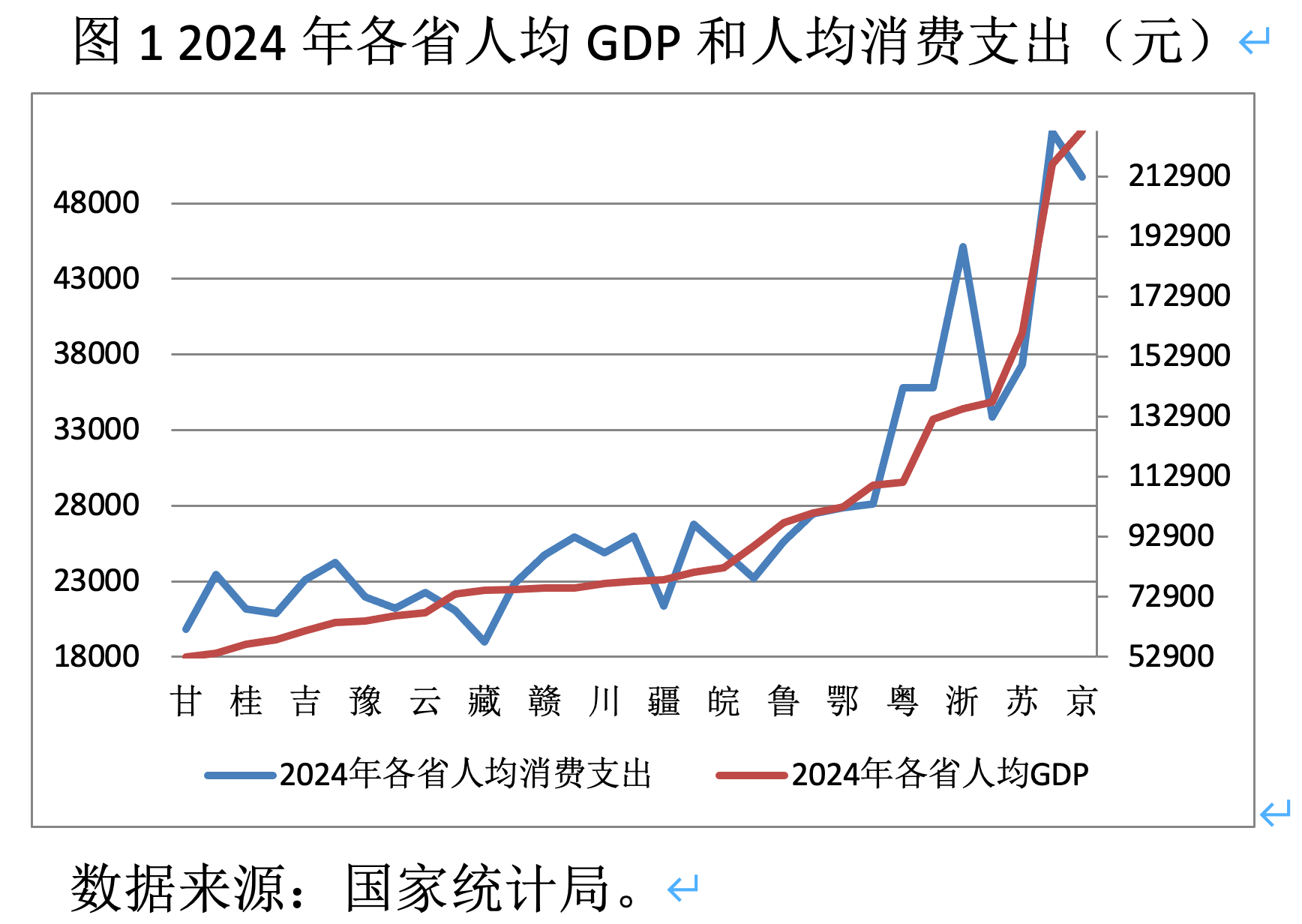
Group 1 - The core viewpoint is that the timing for increasing China's consumption rate is gradually approaching, as highlighted in the central government's proposal for the 15th Five-Year Plan, which emphasizes the need for a consumption-driven economic model [1][2][5] - The proposal suggests that improving residents' income is essential for increasing overall consumption, indicating a correlation between economic development and higher consumption levels in more developed provinces [2][5] - There is a significant disparity in average consumption rates across different regions and income levels in China, with some provinces showing higher consumption rates despite similar income levels [5][7] Group 2 - The relationship between rising housing prices and consumer spending is complex, exhibiting both substitution and complementary effects, where rising housing costs can displace spending in other areas [11][13] - The financial sector has a substantial role in promoting increased consumption rates, with recent government initiatives encouraging financial institutions to enhance personal consumption loan offerings [15][20] - The trend of consumer loans in China has seen fluctuations, with a notable peak in 2016, followed by a decline, indicating a potential shift in consumer behavior and financial strategies [15][16] Group 3 - The classification of housing purchases as investments rather than consumption in statistical reports affects the perception of consumer spending, as many households buy homes primarily for self-use [13][21] - The interplay between housing loans and consumer loans is significant, with higher levels of one type of loan impacting the availability of the other, reflecting a balancing act in household financial management [23][24] - As housing prices stabilize, there is potential for increased consumer spending as household debt constraints ease, particularly among groups with higher average consumption tendencies [24]

如何让14亿人“愿消费”?这场对话揭示三大破局密码
Sou Hu Cai Jing· 2025-05-06 09:43
Core Viewpoint - The release of the "Consumption Boost Special Action Plan" marks the beginning of a significant initiative aimed at restoring consumer confidence for 1.4 billion people in China, focusing on trust rebuilding, supply upgrades, and institutional innovation [1] Group 1: Trust Breakthrough - The market share of domestic milk powder has increased from less than 30% a decade ago to over 68% today, reflecting a significant transformation in Chinese manufacturing [2] - The shift in consumer sentiment towards domestic brands is supported by quality data, with domestic milk powder's bacterial count being only 1/10 of the EU standard and protein content exceeding it by 20% [2] - Government-issued consumption vouchers are seen as a means to rebuild market trust through "government credit endorsement" [2] Group 2: Supply Breakthrough - Only 20% of Chinese consumers meet the recommended daily milk intake, indicating a significant gap in milk product consumption habits among over 1 billion people [3] - Innovations such as A2 protein milk powder and zero-sugar yogurt by Junlebao are aimed at tapping into this potential market [3] - Local initiatives like "night economy" and "concert economy" in Hunan and Jiangsu are designed to create new consumer demand [3] Group 3: Institutional Breakthrough - 62% of consumers believe that distinguishing product quality is too costly, highlighting a barrier to consumer confidence [9] - Policies aimed at increasing income and reducing burdens, such as dynamic adjustments to minimum wages and skill training subsidies, are being implemented [9] - The central bank is increasing consumer loan availability and trialing childcare subsidies to alleviate family financial burdens [11]

北新建材(000786):境外收入高增,毛利率及现金流稳健
HTSC· 2025-03-27 06:19
Investment Rating - The investment rating for the company is "Buy" with a target price of 34.71 RMB [8][9]. Core Views - The company reported a revenue of 25.82 billion RMB and a net profit attributable to the parent company of 3.65 billion RMB for 2024, representing a year-on-year increase of 15.1% and 3.5% respectively. However, the Q4 results showed a revenue of 5.46 billion RMB and a net profit of 0.50 billion RMB, with a decline in net profit by 34.7% year-on-year due to increased sales and management expenses [1][2]. - The company is experiencing strong growth in overseas revenue, which reached 420 million RMB in 2024, up 87.6% year-on-year. The integration of the paint business is expected to enhance competitiveness in industrial coatings [2][3]. - The company is transitioning towards a comprehensive manufacturer and service provider in consumer building materials, benefiting from policies that stimulate demand in home decoration and renovation [4]. Summary by Sections Financial Performance - In 2024, the company achieved revenues of 25.82 billion RMB, with a net profit of 3.65 billion RMB. The Q4 results were below expectations, primarily due to increased expenses [1][5]. - The company’s main products, including gypsum board and waterproof materials, showed varied performance, with gypsum board revenue declining by 4.8% while coatings revenue surged by 328% [2][3]. Cost and Cash Flow - The company’s expense ratio increased to 14.3%, with sales and management expenses rising significantly. However, operating cash flow improved by 8.5% year-on-year, reaching 5.13 billion RMB [3][5]. - The company is optimizing its channel structure, which is expected to maintain strong cash flow levels [3]. Market Trends and Policies - Retail sales of building materials showed a positive growth trend, with a 0.1% year-on-year increase in January-February 2025, indicating a recovery in demand [4]. - The government’s initiatives to boost consumption are expected to further support the company’s growth in the building materials sector [4]. Profit Forecast and Valuation - The profit forecast for the company is adjusted to 4.51 billion RMB for 2025, reflecting a slight decrease in sales assumptions. The target price is set at 34.71 RMB, based on a 13x PE ratio for 2025 [5][8].

集体反弹,智能车ETF(159888)开盘拉升,东风科技涨停
Mei Ri Jing Ji Xin Wen· 2025-03-26 02:39
Group 1 - The A-share market experienced a collective rebound on March 26, with the automotive sector leading the gains, as evidenced by the rise in related ETFs, including the Smart Car ETF (159888) up by 0.97% [1] - Dongfeng Technology reached its daily limit up, while other stocks such as Chip Original Co. surged over 9%, indicating strong market interest in the automotive sector [1] - The recent "Special Action Plan to Boost Consumption" highlights government support for the automotive industry, including initiatives for trade-in programs and promoting green and smart upgrades for durable consumer goods [1] Group 2 - Dongwu Securities predicts a systematic valuation recovery and expansion in the automotive market by 2025, with Tesla continuing to set industry benchmarks through advancements in FSD and robotics technology [1] - The Smart Car ETF (159888) closely tracks the CS Smart Car Index, with its constituent stocks primarily distributed across high-quality sectors such as electronics, computers, and automotive, showcasing a strong technological focus [2] - The Smart Car Index is significantly exposed to concepts related to automotive, consumer electronics, and Huawei, indicating a diverse investment landscape within the smart vehicle sector [2]

【国金电新 周观点】海风催化密集扩散继续提振估值,光伏需求端政策持续发力,蒙西电网电表订单超预期落地
新兴产业观察者· 2025-03-23 15:15
Key Points - The article discusses the recent developments in the renewable energy sector, particularly focusing on solar energy, wind energy, electric vehicles, and hydrogen fuel cells, highlighting the positive trends and potential investment opportunities in these industries [1][15][43]. New Energy - Shanghai Marine Bureau released the "Shanghai Marine Industry Development Plan (2025-2035)" focusing on offshore renewable energy [1] - The National Development and Reform Commission issued guidelines to promote high-quality development of the renewable energy green power certificate market [1] - Domestic solar power installations in January-February reached 39.47 GW, a year-on-year increase of 7% [4] - The export of solar battery components remained stable, with a total export of 47.7 GW in January-February, a decrease of 3% year-on-year [8] Wind Energy - The Shanghai Marine Bureau announced plans to promote deep-sea wind power projects, indicating a strong push for offshore wind energy development [15] - The global wind turbine market saw a total installation of 121.6 GW in 2024, with offshore wind accounting for 11.7 GW [18] - Domestic wind turbine manufacturers are expected to increase their market share overseas, driven by competitive pricing [19] Electric Vehicles & Lithium Batteries - NIO and CATL signed a strategic cooperation agreement to build a comprehensive battery swap network [38] - The sales of electric vehicles in China showed significant growth, with 42.7 million units sold in the first half of March, a year-on-year increase of 41% [28] - BYD launched its new models, Han L and Tang L, with competitive pricing and advanced technology [31] Hydrogen and Fuel Cells - Central state-owned enterprises are leading green hydrogen demonstration projects, with a significant increase in project bids [43] - The installation of fuel cell systems in January-February remained stable, with a total installed capacity of 40.84 MW [44]






一周研读|A股核心资产蓄力上涨
中信证券研究· 2025-03-22 01:01
Core Viewpoint - The article emphasizes the potential for A-share core assets to rise, driven by internal demand policies and a shift towards performance-driven market dynamics as external capital inflow slows down [2][3]. Group 1: Market Strategy - The strategy suggests focusing on A-share and Hong Kong core assets, particularly in high-end manufacturing, AI, innovative pharmaceuticals, and smart vehicles, which are seen as "new core assets" with strategic allocation value [3]. - It highlights the importance of sectors such as domestic computing power, edge AI, lithium batteries, military industry, Hong Kong internet, and innovative pharmaceuticals, while also suggesting to monitor supply-side clearing in aluminum, steel, and panels [3]. - The article points out potential overperformance in Q1 reports for segments like wind power components, engineering machinery, automotive electronics, ophthalmic pharmacies, and service consumption [3]. Group 2: Consumption and Policy - The "Consumption Promotion Special Action Plan" has been officially released, indicating a comprehensive upgrade and innovation in consumption policies, with a focus on increasing residents' income and enhancing consumption capacity [12][16]. - The plan aims to stabilize the real estate market, improve service consumption quality, and optimize the environment to unleash consumption potential, with expectations for retail sales growth of around 4.8% by 2025 [12][16]. Group 3: Sector Focus - The article identifies four major themes for investment: new consumption, military industry, quantum computing, and deep-sea technology, suggesting a balanced approach between manufacturing and consumption [4]. - In the deep-sea sector, the government’s focus on deep-sea technology and offshore wind power is expected to drive growth, particularly in companies with advantages in these areas [7]. - The PD-L1 ADC drugs are highlighted for their potential to tap into a global market exceeding $50 billion, with significant clinical developments anticipated in the coming years [8][9].


晨报|2025年美国财政赤字率或难大幅下降
中信证券研究· 2025-03-21 00:03
贾天楚|中信证券海外研究分析师 S1010524040002 海外研究|特朗普能压降美国财政赤字规模吗? 我们经过测算发现,基准情形下,通过增加关税、压降北约军费支出与DOGE减少支出或难对冲减税带来的财政赤字 增加,2025-2026年美国财政赤字率或难大幅下降。一方面,受限于两院博弈以及党内派系分歧,减税政策或"瘦身 落地";另一方面,通过增加关税、DOGE以及北约军费压缩的方式带来的金额或低于特朗普口头沟通的规模。此 外,特朗普政府或还倾向通过压降联邦基金利率来降低利息支出压力,不过该方法或需至26/27年方能见成效。同时 需关注保险金支出的压降政策。整体来看,2025年美国或仍呈现"小幅宽货币以及稳财政"的政策风格,财政赤字率 或在高位保持稳定。 风险因素:中美关系走向超市场预期;美联储货币政策超预期;美国经济韧性超预期;特朗普贸易政策及关税摩擦超 预期;模型测算及情景假设出现偏差;全球关税摩擦引发的出口波动超预期;马斯克政策执行效果超预期;两党关于 财税等问题博弈超预期。 陈俊云|中信证券前瞻研究首席分析师 S1010517080001 前瞻|全球SaaS云计算:需求趋稳,短期关注宏观预期改善、AI ...

开源证券:开源晨会-20250319
KAIYUAN SECURITIES· 2025-03-19 08:17
Macro Economic Insights - The economic impact of fertility subsidies is significant, with potential annual consumption increase of 0.22%-0.25% and GDP uplift of 0.08%-0.09% from 2025 to 2029 if the subsidy scheme is widely adopted [6][7][10] - Industrial production remains strong, with a slight decline but still maintaining a high growth rate, while service sector growth has slowed [8][9] Retail Industry - In January-February 2025, the total retail sales reached 83,731 billion yuan, showing a year-on-year increase of 4.0%, indicating a mild recovery in consumption [26][27] - Online retail sales grew by 7.3%, with physical goods online sales accounting for 22.3% of total retail sales [28] - Investment recommendations focus on high-quality brands in sectors like traditional retail, gold and jewelry, cosmetics, and medical aesthetics [29] Real Estate Sector - In January-February 2025, the sales area of commercial housing decreased by 5.1% year-on-year, but the decline is narrowing compared to previous years [31][32] - New housing starts are down by 29.6% year-on-year, indicating ongoing challenges in the market [32][33] - Investment suggestions include strong credit real estate companies and those benefiting from both residential and commercial property recovery [34] Food and Beverage Sector - Online sales of liquor increased by 32.2% in February 2025, with a notable rise in the concentration of leading brands [35][36] - The snack food sector saw a decline in online sales, but there is still potential for growth in the overall market [39] - Investment focus is on liquor companies with strong fundamentals and market share potential, as well as the snack food sector's growth prospects [39] Technology and Automotive Sector - The smart driving business of the company is experiencing rapid growth, with a compound annual growth rate of 42.38% from 2021 to 2024 [50][51] - The company has successfully expanded its overseas market presence, securing significant orders from well-known international brands [52]


《提振消费专项行动方案》发布,重点提及文体消费、游戏电竞
Great Wall Securities· 2025-03-19 03:09
Investment Rating - The industry rating is "Outperform the Market" [3] Core Insights - The report highlights the release of the "Consumption Boost Special Action Plan," which emphasizes the importance of cultural and sports consumption, particularly in gaming and esports. The plan supports the development of original IP in animation, games, and esports, aiming to enhance derivative product consumption and expand the domestic market for national brands [1][2] - The policy encourages the integration of traditional cultural elements into gaming IP, enhancing user engagement and commercialization opportunities through esports events. It also promotes the development of derivative products, facilitating monetization pathways for gaming IP through physical merchandise and theme parks [1] - The report suggests that the policy will inject vitality into the entertainment industry by addressing both supply-side (approval streamlining, scene innovation) and demand-side (IP consumption, national brand promotion) factors. Companies that can integrate culture, technology, and consumption are expected to benefit significantly from these policy incentives [2] Summary by Sections Industry Dynamics - The report notes a significant decline in the industry, with a drop of 29% from March 2024 to March 2025, compared to the CSI 300 index [4] Investment Recommendations - The report recommends focusing on companies with strong capabilities in cross-industry resource integration and rapid overseas expansion, including Tencent Holdings, NetEase, Perfect World, and others [2]
中金3月数说资产
中金点睛· 2025-03-17 23:51
Core Viewpoint - The economic performance in January-February 2025 shows stable growth despite a slight decline in production growth rates compared to December 2024, influenced by high base effects from the previous year and the timing of the Spring Festival. Investment is improving at a faster rate than consumption, but uncertainties remain in the real estate and export sectors, necessitating continued policy support [1][2][3]. Economic Performance - January-February industrial added value and service production index grew by 5.9% and 5.6% year-on-year, respectively, down 0.3 and 0.9 percentage points from December 2024 [1][2]. - Fixed asset investment and retail sales grew by 4.1% and 4.0% year-on-year, respectively, with increases of 1.9 and 0.3 percentage points compared to December 2024 [1][3]. - The demand structure indicates that investment is improving more significantly than consumption, with high growth in categories supported by the old-for-new policy, such as home appliances and furniture [1][3]. Real Estate Sector - The real estate sector shows signs of recovery in land acquisition in key cities, with land transaction area and value improving from December 2024's declines to -2.6% and 39.2% year-on-year, respectively [4]. - However, new construction starts have seen a significant decline of 29.6% year-on-year, indicating ongoing weakness in the sector [4][29]. - The sales of new homes have turned negative, with a 5.1% year-on-year decline in sales area, while second-hand home sales remain resilient, growing by 23% [28][29]. Investment Trends - Broad infrastructure investment grew by 9.9% year-on-year, with public utilities and transportation showing strong growth rates of 25.4% and 2.7%, respectively [5][40]. - Manufacturing investment remains robust, driven by prior export improvements and equipment upgrades, with significant increases in automotive and food manufacturing investments [6]. Consumer Market - The retail sales growth rate for January-February was 4.0%, with notable improvements in essential goods and certain discretionary categories, driven by consumption policies [35][36]. - The catering sector saw a 4.3% year-on-year increase, reflecting the impact of the Spring Festival [3][33]. - The introduction of the "Consumption Promotion Action Plan" aims to stimulate demand across various sectors, including maternal and child products [37][45]. Financial Sector - The financial data for February indicates a slight decline in new loans and a weak recovery in credit demand, highlighting the need for further monetary policy support [23][24]. - Government debt issuance has accelerated, contributing to a year-on-year increase in social financing [24][25]. Agricultural Sector - The agricultural sector is experiencing a gradual recovery, with leading companies expanding their market share through improved cost control and operational efficiency [49]. - The overall consumption of agricultural products remains stable, with expectations for a gradual increase in birth rates potentially benefiting the maternal and infant product market [45][46].