有色金属

Search documents
有色金属日报-20260210
Wu Kuang Qi Huo· 2026-02-10 01:00
Group 1: Report Industry Investment Rating - No relevant content provided Group 2: Report Core Views - The overall sentiment in the market is relatively warm in the short - term. The prices of some metals are expected to show different trends, such as copper and aluminum may rise, while others like lead and zinc have complex influencing factors and their future trends need further observation. [5][7] - For different metals, specific strategies are proposed, including reference price ranges and trading suggestions like waiting and seeing or taking long - position at low prices. [5][7][12] Group 3: Summary by Metal Category Copper - **Market Data**: The LME copper 3M closed up 0.96% to $13,185/ton, and the Shanghai copper main contract closed at 102,450 yuan/ton. LME copper inventory increased by 1,025 to 184,300 tons. The domestic electrolytic copper social inventory decreased, and the bonded - area inventory increased slightly. The Shanghai spot copper had a premium of 35 yuan/ton over the futures, while the Guangdong spot had a discount of 105 yuan/ton. The spot import loss was about 700 yuan/ton, and the refined - scrap copper price difference was 3,090 yuan/ton. [3][4] - **Strategy**: Due to factors such as a strong US stock market, plans for key mineral reserves, and a better - than - expected US consumer confidence index, the short - term sentiment is positive. Although the new Fed Chairman's monetary policy is slightly hawkish, the interest - rate cut trend remains. The copper mine supply is tight, but the domestic refined copper supply is growing strongly. It is expected that the copper price will fluctuate strongly. The reference range for the Shanghai copper main contract is 101,000 - 104,000 yuan/ton, and for LME copper 3M is $13,000 - 13,400/ton. [5] Aluminum - **Market Data**: The LME aluminum closed up 0.64% to $3,130/ton, and the Shanghai aluminum main contract closed at 23,625 yuan/ton. The Shanghai aluminum weighted contract's open interest increased by 16,000 to 667,000 lots, and the futures warehouse receipts increased by 9,000 to 165,000 tons. The domestic aluminum ingot and aluminum rod inventories increased, and the aluminum rod processing fee declined. The LME aluminum inventory decreased by 2,000 to 489,000 tons. [6] - **Strategy**: The domestic aluminum inventory is accumulating, and the downstream demand is weak in the off - season. However, the LME aluminum inventory is relatively low, and the US aluminum spot premium is high, providing strong support for the aluminum price. With the stabilization of the US stock market and precious metals, the aluminum price is expected to rise. The reference range for the Shanghai aluminum main contract is 23,300 - 23,900 yuan/ton, and for LME aluminum 3M is $3,080 - 3,160/ton. [7] Lead - **Market Data**: The Shanghai lead index closed up 0.29% to 16,602 yuan/ton, and the LME lead 3S rose by 9.5 to $1,958.5/ton. The SMM1 lead ingot average price was 16,425 yuan/ton, and the refined - scrap lead price difference was at par. The domestic lead ingot social inventory increased by 4,000 tons to 49,900 tons on February 9th compared to February 5th. [8] - **Strategy**: The lead ore's visible inventory has slightly decreased but is still higher than in previous years, and the lead concentrate processing fee remains low. The scrap battery inventory is rising. The smelter's operating rate has seasonally declined. The lead ingot social inventory is accumulating, and the domestic industrial situation is weak. Whether the lead price can stabilize depends on the downstream battery enterprises' restocking willingness after the Spring Festival. [9] Zinc - **Market Data**: The Shanghai zinc index closed up 0.34% to 24,567 yuan/ton, and the LME zinc 3S rose by 76 to $3,361.5/ton. The SMM0 zinc ingot average price was 24,660 yuan/ton. The domestic zinc ingot social inventory increased by 9,800 tons to 128,100 tons on February 9th compared to February 5th. [10] - **Strategy**: The zinc ore's visible inventory accumulation has slowed down, and the zinc concentrate TC has stopped falling. The domestic zinc ingot social inventory has started to accumulate, and the downstream enterprises' operating performance is average. The finished - product inventory of die - casting zinc alloy and zinc oxide enterprises has risen rapidly. Although the domestic zinc industry is weak, short - term funds are greatly affected by macro - sentiment, and strong US PMI may drive the zinc price to rise with the non - ferrous metal sector. [11] Tin - **Market Data**: On February 9th, the tin price slightly decreased, and the Shanghai tin main contract closed at 384,180 yuan/ton, down 7.61%. The supply is difficult to increase significantly in the short - term due to factors such as high - level but stagnant smelter operating rates in Yunnan and low production in Jiangxi due to scrap tin shortages. The demand has not shown strong improvement, and the downstream pre - holiday restocking willingness is not obvious. [12] - **Strategy**: The short - term precious metal price has shown signs of stabilization, and the tin price may rebound. Although the tin price has a long - term upward trend, in the short - term, there is pressure for a sharp rise under the background of a marginal relaxation in supply - demand and a steady increase in inventory. It is recommended to wait and see, with the domestic main contract reference range of 350,000 - 410,000 yuan/ton and the overseas LME tin reference range of $46,000 - 50,000/ton. [12] Nickel - **Market Data**: On February 9th, the nickel price slightly declined, and the Shanghai nickel main contract closed at 134,463 yuan/ton, down 2.03%. The spot market's brand premiums and discounts were stable, and the nickel ore price was stable. The nickel - iron price fluctuated upward. [13] - **Strategy**: After the second decline of precious metals and risk assets, there is a short - term demand for rebound, but the nickel price still faces fundamental pressure. It is expected to fluctuate widely, with the Shanghai nickel price reference range of 120,000 - 150,000 yuan/ton and the LME nickel 3M contract reference range of $16,000 - 18,000/ton. [14] Lithium Carbonate - **Market Data**: The Wuganglian lithium carbonate spot index (MMLC) closed at 136,322 yuan, up 3.21%. The battery - grade lithium carbonate was quoted at 134,200 - 139,200 yuan, with an average increase of 4,200 yuan (3.17%), and the industrial - grade lithium carbonate was up 3.47%. The LC2605 contract closed at 137,000 yuan, up 3.07%. [16] - **Strategy**: The market's pessimistic sentiment has eased. If the resumption of a major mine in Jiangxi fails to materialize, the supply - demand pattern of lithium carbonate will remain tight after the Spring Festival, and the inventory will continue to decline. The downstream has basically completed pre - holiday restocking. The futures position of lithium carbonate has reached a six - month low, and it is likely to fluctuate within a range. The reference range for the Guangzhou Futures Exchange's lithium carbonate 2605 contract is 129,000 - 147,000 yuan/ton. [17] Alumina - **Market Data**: On February 9th, the alumina index rose 1.62% to 2,869 yuan/ton, and the trading volume decreased. The Shandong spot price was 2,555 yuan/ton, at a discount to the main contract. The overseas MYSTEEL Australia FOB price was $304/ton, and the import loss was 75 yuan/ton. The futures warehouse receipts increased by 24,600 tons to 242,600 tons. The ore prices in Guinea and Australia remained stable. [19] - **Strategy**: Workers at a mine in Guinea's Boké region have launched an indefinite strike. The alumina smelting capacity is in an over - supply situation in the short - term, and the inventory is accumulating. It is recommended to wait and see, and the future price trend depends on whether the Guinea mine disruption will materialize and whether the high domestic supply pressure can be effectively alleviated. The reference range for the domestic main contract AO2605 is 2,750 - 3,000 yuan/ton, and key factors to watch include domestic supply contraction policies, Guinea's ore policies, and the Fed's monetary policy. [20] Stainless Steel - **Market Data**: The stainless - steel main contract closed at 13,735 yuan/ton on Monday, up 0.48%. The spot prices in Foshan and Wuxi markets were stable. The raw material prices were also stable. The futures inventory increased, and the social inventory increased to 914,200 tons, with the 300 - series inventory up 2.49%. [22] - **Strategy**: From the supply side, although the raw material supply has recovered, the agents' sales rhythm has slowed down due to the steel mill's price - limit policy. The demand is restricted by the pre - Spring Festival off - season, and the market's purchasing willingness is weak. The steel mills will collectively cut production in February, and the supply is expected to tighten. It is recommended to maintain the strategy of going long at low prices, with the main contract reference range of 13,500 - 13,900 yuan/ton. [23] Cast Aluminum Alloy - **Market Data**: The cast aluminum alloy price rebounded, and the main AD2604 contract closed slightly up 0.54% to 22,165 yuan/ton. The weighted contract's open interest and trading volume remained high, and the warehouse receipts increased. The domestic mainstream ADC12 average price increased by 100 yuan/ton, and the import price was stable. The domestic three - place aluminum alloy inventory decreased. [25] - **Strategy**: The cost of cast aluminum alloy has increased. Although the demand is average, the price is strongly supported in the short - term due to continuous supply - side disruptions and seasonal tightness in raw material supply. [26]
大宗商品的故事远未终结?
券商中国· 2026-02-09 23:29
Core Viewpoint - The article discusses the current volatility and potential opportunities in the commodities market, particularly focusing on gold, industrial metals, and the petrochemical sector, suggesting that these markets are undergoing significant transformations driven by macroeconomic factors and geopolitical dynamics [2][4]. Gold Market Insights - Gold has recently experienced extreme price fluctuations, reaching a historical peak of $5,598 per ounce before a sharp correction, followed by a significant rebound [6]. - The underlying support for gold prices remains strong, driven by central bank purchases and macroeconomic uncertainties, with predictions suggesting a potential rise to $5,400 per ounce by the end of 2026 [8][9]. - Investment strategies for gold include focusing on ETFs that track gold stocks and physical gold, which provide a more manageable approach for ordinary investors [3][9]. Industrial Metals Overview - Industrial metals, particularly copper and aluminum, are witnessing significant price increases, with copper prices rising over 43% in the past year, driven by demand from energy transitions and technological advancements [10][11]. - The supply side is constrained due to declining ore grades and limited new capacity, creating a structural supply-demand gap that supports higher prices [10][11]. - The narrative around industrial metals is evolving, with new demand from sectors like electric vehicles and renewable energy reshaping their roles in the economy [11][12]. Petrochemical Sector Analysis - The petrochemical industry has shown a 45.87% increase in the past year, with expectations of a recovery driven by supply-side reforms and demand from traditional and emerging sectors [14][20]. - The sector is characterized by a slower response to economic cycles compared to industrial metals, with its recovery linked to improvements in manufacturing activity and chemical industry fundamentals [15][16]. - Investment in petrochemical ETFs is suggested as a way to capitalize on the anticipated recovery and structural changes within the industry [22].


【金工】TMT主题基金净值显著回撤,被动资金加仓TMT主题产品——基金市场与ESG产品周报20260209(祁嫣然/马元心)
光大证券研究· 2026-02-09 23:06
Market Performance Overview - In the week from February 2 to February 6, 2025, gold prices increased while domestic equity market indices experienced fluctuations downward [4] - The food and beverage, beauty care, and power equipment sectors showed the highest gains, while non-ferrous metals, communication, and electronics sectors faced the largest declines [4] Fund Product Issuance - A total of 40 new funds were established in the domestic market this week, with a combined issuance of 30.859 billion units [5] - The breakdown of new funds includes 9 FOF funds, 16 equity funds, 7 bond funds, and 8 mixed funds [5] - Across the entire market, 33 new funds were issued, comprising 14 equity funds, 7 mixed funds, 6 FOF funds, and 6 bond funds [5] Fund Product Performance Tracking - Long-term thematic fund indices showed that consumer and new energy thematic funds increased in net value, while other thematic funds performed poorly, with TMT thematic funds experiencing significant declines [6] - As of February 6, 2026, the net value changes for various thematic funds were as follows: consumer (+0.94%), new energy (+0.38%), financial real estate (-0.03%), pharmaceuticals (-0.61%), national defense and military (-1.37%), industry rotation (-2.23%), industry balance (-2.56%), cyclical (-4.60%), and TMT (-5.74%) [6] ETF Market Tracking - This week, the pace of profit-taking in equity ETFs slowed, with a total outflow of 24.3 billion yuan from small and large-cap thematic ETFs, while Hong Kong stock ETFs saw a net inflow exceeding 10 billion yuan [7] - The median return for equity ETFs was -1.75%, with a net outflow of 7.801 billion yuan [7] - Hong Kong stock ETFs had a median return of -2.12% and a net inflow of 18.493 billion yuan, while cross-border ETFs had a median return of -2.51% with a net inflow of 3.210 billion yuan [7] - Commodity ETFs recorded a median return of -6.07% and a net outflow of 2.887 billion yuan [7] Broad-based ETF Insights - The week saw significant net inflows into the Sci-Tech Innovation Board thematic ETFs, totaling 5.507 billion yuan [8] - TMT thematic ETFs also experienced notable net inflows, amounting to 9.964 billion yuan [8] ESG Financial Product Tracking - This week, 21 new green bonds were issued, with a total issuance scale of 20.191 billion yuan [9] - The domestic green bond market has steadily developed, with a cumulative issuance scale of 5.26 trillion yuan and a total of 4,548 bonds issued as of February 6, 2026 [9] - The existing ESG funds in the domestic market total 211, with a combined scale of 156.021 billion yuan [9] - In terms of fund performance, the median net value changes for active equity, passive stock index, and bond ESG funds were -1.15%, -0.84%, and +0.05%, respectively, with low-carbon economy, clean energy, and carbon neutrality thematic funds performing well [9]

【光大研究每日速递】20260210
光大证券研究· 2026-02-09 23:06
Group 1: TMT Sector - TMT theme funds experienced significant net value decline, while passive funds increased their positions in TMT theme products. The overall stock market saw fluctuations, with consumer and new energy theme funds performing well, while other theme funds struggled. A total of 24.3 billion yuan flowed out of mid and large-cap theme ETFs, while Hong Kong stock ETFs saw inflows exceeding 10 billion yuan [5]. Group 2: Metals Sector - The prices of non-ferrous metals fell across the board, but gold, tungsten, molybdenum, and vanadium prices increased month-on-month. The financing environment index for small and medium enterprises rose by 6.62% to 50.27 in January. Weekly inventory levels for hot-rolled coils were at a five-year low, while the price of oriented silicon steel hit a new low since 2018 [5][6]. Group 3: Renewable Energy and Environmental Protection - The market remains optimistic about space photovoltaic developments, with a focus on auxiliary materials and equipment. The hydrogen and ammonia sector performed well, with expectations for future carbon policies to enhance green electricity consumption. The dual control of carbon and non-electric applications is anticipated to drive supply optimization [7]. Group 4: Public Utilities - The utilization rates for wind and solar power in 2025 were 94.3% and 94.8%, respectively, both showing year-on-year declines. There is a positive outlook for non-electric applications of renewable energy and direct connections for green electricity, with recommendations to focus on companies like Electric Investment Green Energy and Jinkai New Energy [8]. Group 5: Pharmaceutical Industry - The Ministry of Industry and Information Technology and other departments issued a plan for the high-quality development of traditional Chinese medicine, aiming for a collaborative system by 2030. This policy is expected to raise compliance thresholds and enhance industry concentration, benefiting leading companies with strong integration, quality control, and research capabilities [8]. Group 6: Company Analysis - Yujian Xiaomian - Yujian Xiaomian, a leading chain of Sichuan-Chongqing flavor noodle restaurants, is expanding its national presence through a combination of direct and franchise operations. The company has shown continuous revenue growth and profitability improvements, despite challenges such as high debt and rental costs. The management team is experienced, and operational optimization is expected to further enhance profitability [9].
【钢铁】有色金属价格普跌,但金、钨、钼、钒价格环比上涨——金属周期品高频数据周报(2026.2.2-2026.2.8)(王招华/戴默)
光大证券研究· 2026-02-09 23:06
Liquidity - The BCI small and medium enterprise financing environment index increased by 6.62% month-on-month to 50.27 in January 2026 [4] - The M1 and M2 growth rate difference was -4.7 percentage points in December 2025, a month-on-month decrease of 1.6 percentage points [4] - The current price of London gold is $4,967 per ounce [4] Infrastructure and Real Estate Chain - Weekly inventory of hot-rolled steel is at a low level compared to the same period over the past five years [5] - Price changes this week include rebar at -0.93%, cement price index at -0.28%, rubber at -2.45%, coke at 0.00%, coking coal at -1.28%, and iron ore at -3.99% [5] - National blast furnace capacity utilization rate, cement, and asphalt operating rates changed by +0.00 percentage points, -3.40 percentage points, and -1.3 percentage points respectively [5] Real Estate Completion Chain - Prices of titanium dioxide and glass are at low levels, with titanium dioxide price unchanged and glass price up by 0.28% [6] - The gross profit for titanium dioxide is -1,880 yuan per ton, while the flat glass operating rate is 73.89% this week [6] Industrial Products Chain - The operating rate of semi-steel tires is at a five-year high [7] - Major commodity price changes this week include cold-rolled steel at -0.53%, copper at -4.34%, and aluminum at -6.21%, with corresponding gross profit changes of turning losses into profits and a loss increase of 10.37% and 17.83% respectively [7] - The national semi-steel tire operating rate is 72.76%, a decrease of 2.08 percentage points [7] Subcategories - The price of oriented silicon steel has reached a new low since 2018 [8] - The price of graphite electrodes is 19,000 yuan per ton, unchanged, with a gross profit of 1,944.04 yuan per ton, up by 1.17% [8] - The price of electrolytic aluminum is 23,110 yuan per ton, down by 6.21%, with a calculated profit of 6,072 yuan per ton (excluding tax), down by 17.83% [8] - The price of electrolytic copper is 100,100 yuan per ton, down by 4.34% [8] - The price of tungsten concentrate is 674,500 yuan per ton, up by 11.49% from last week [8] Price Comparison Relationships - The price ratio of rebar to iron ore is 4.09 this week [10] - The price difference between hot-rolled and rebar steel is 60 yuan per ton this week [10] - The price difference between Shanghai cold-rolled steel and hot-rolled steel reached 370 yuan per ton, an increase of 10 yuan per ton [10] - The price ratio of stainless steel hot-rolled to electrolytic nickel is 0.10 [10] - The price difference between small rebar (mainly used in real estate) and large rebar (mainly used in infrastructure) is 180 yuan per ton this week, a decrease of 10.00% from last week [10] - The price difference between medium-thick plates and rebar steel is 110 yuan per ton this week [10] Export Chain - The new export orders PMI for China in January is 47.80%, a decrease of 1.2 percentage points month-on-month [11] - The China Containerized Freight Index (CCFI) composite index is 1,122.15 points this week, down by 4.55% [11] - The capacity utilization rate for crude steel in the U.S. is 76.00%, a decrease of 0.90 percentage points [11] - Starting January 1, 2026, the Ministry of Commerce and the General Administration of Customs will implement export licensing management for certain steel products, which is expected to further regulate China's steel product exports [11] Valuation Percentiles - The CSI 300 index decreased by 1.33% this week, with the best-performing cyclical sector being engineering machinery at +4.35% [12] - The PB ratio of ordinary steel and industrial metals relative to the PB ratio of the Shanghai and Shenzhen markets is currently 60.06% and 84.30% respectively [12] - The PB ratio of the ordinary steel sector relative to the Shanghai and Shenzhen markets is currently 0.50, with the highest value since 2013 being 0.82, reached in August 2017 [12]

有色金属行业经济效益大幅提升
Jing Ji Ri Bao· 2026-02-09 21:58
Group 1 - The core viewpoint of the news is that the non-ferrous metal industry in China is expected to achieve significant economic growth by 2025, with major increases in the number of enterprises, total assets, revenue, and profits [1] - By 2025, there will be over 12,000 large-scale non-ferrous metal enterprises in China, a 39.2% increase from the end of 2020 [1] - The total assets of the non-ferrous metal industry are projected to exceed 6.6 trillion yuan, an 8.2% increase from 2024 [1] - The industry is expected to achieve a total profit of 528.45 billion yuan, a 25.6% increase from 2024, marking a historical high [1] Group 2 - Continuous policy dividends are stimulating market vitality, with a series of stable growth policies supporting the development of the real economy and infrastructure investment, directly boosting demand for major metals like copper and aluminum [2] - The Ministry of Industry and Information Technology and eight other departments have jointly issued the "Non-Ferrous Metal Industry Stable Growth Work Plan (2025-2026)," providing a clear path for future industry development [2] - High prices for non-ferrous metals such as copper, aluminum, lead, and zinc are expected to maintain a high level in 2025, providing a solid foundation for industry profitability [2] - Emerging industries are expanding growth opportunities for the non-ferrous metal sector, with rapid development in aerospace, new energy, and information technology driving demand for non-ferrous metal products [2] Group 3 - Despite the expected historical leap in economic benefits for the non-ferrous metal industry in 2025, the international environment is becoming increasingly complex, with significant uncertainties [3] - The industry needs to enhance resource security and strengthen high-end supply in 2026 through innovation and structural optimization [3] - The "Non-Ferrous Metal Industry Stable Growth Work Plan (2025-2026)" released in September 2025 is a crucial guide for industry development [3] - There is a need to strengthen resource assurance and build a diversified supply system, including promoting domestic resource development and advancing the recycling of non-ferrous metals [3] Group 4 - In 2025, there is a notable increase in the prices of non-ferrous metal commodities, with expectations for a "structural differentiation and increased volatility" in the market for 2026 [4] - Various domestic and international factors are expected to provide strong support for non-ferrous metal prices in 2026 [4] - The market must remain vigilant against risks such as shifts in overseas macro policies and fluctuations in supply and demand expectations, which could lead to increased volatility [4]
上市公司业绩传递暖意 资金借ETF布局三大景气主线
Shang Hai Zheng Quan Bao· 2026-02-09 18:21
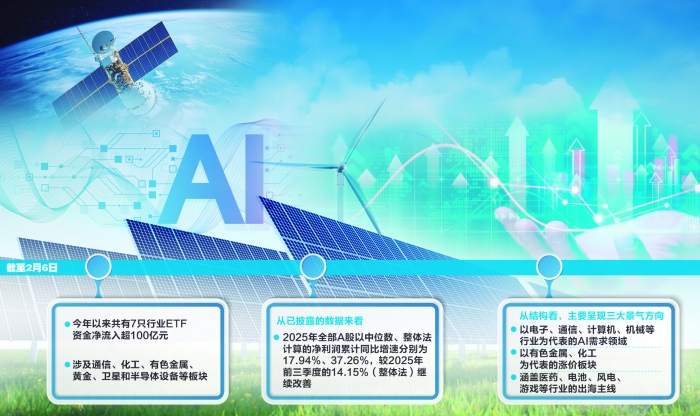
Group 1 - The A-share ETF market is experiencing a shift in capital flow, with traditional broad-based ETFs seeing outflows while sector-specific ETFs in high-growth industries like chemicals, telecommunications, and non-ferrous metals are attracting significant inflows [2][3] - As of February 6, 2026, seven industry ETFs have seen net inflows exceeding 10 billion yuan, with notable inflows into the Guotai Communication ETF (239.54 billion yuan), Penghua Chemical ETF (155.34 billion yuan), and Southern Non-ferrous Metals ETF (127.58 billion yuan) [3] - The overall net profit growth rate for A-shares in 2025 is projected to be 17.94% and 37.26% based on different calculation methods, indicating a recovery trend in corporate earnings [4] Group 2 - The current capital flow reflects investor interest in sectors aligned with industrial trends, particularly AI, price increase chains, and overseas expansion, which are expected to drive market performance [5] - Three key growth areas have been identified: AI demand in electronics and communications, price increases in non-ferrous metals and chemicals, and overseas expansion in pharmaceuticals and renewable energy [4][6] - The free cash flow analysis of A-share companies (excluding financial stocks) indicates an improving fundamental trend, with expectations for a turning point in corporate earnings growth in 2026 driven by AI technology and supportive policies [7] Group 3 - Investment opportunities in A-shares are expected to be abundant, driven by technological innovation, industrial upgrades, and green transformation, with a focus on sectors that are experiencing gradual earnings improvement and policy support [8] - The semiconductor industry in China is projected to continue its growth trajectory, with self-sufficiency rates expected to rise from 16% in 2020 to approximately 26% by 2025, driven by domestic demand and technological advancements [8] - High-end manufacturing sectors, including military, nuclear power, wind energy, and energy storage, are anticipated to produce globally competitive leading enterprises [10]
疯狂的铜条:始于水贝、终于废品站
虎嗅APP· 2026-02-09 14:30
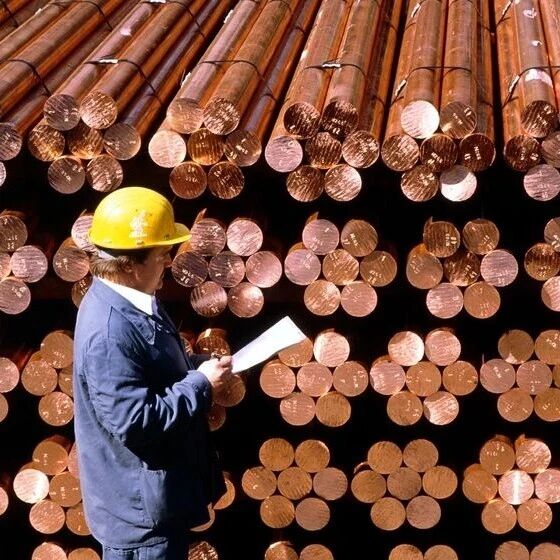
Core Viewpoint - The recent surge in copper bars as a consumer investment reflects a broader search for security rather than a genuine scarcity of copper itself [5][6]. Group 1: Market Dynamics - Copper bars have gained popularity due to their low entry barriers, with retail prices fluctuating between 180 to 299 yuan, later dropping amid tightening regulations and cooling emotions [8][10]. - The average daily sales volume of copper bars in Shenzhen's Shui Bei market has reportedly exceeded a thousand units, indicating strong demand and a shift in pricing dynamics [10]. - The emotional aspect of purchasing copper bars has overshadowed the actual investment value, with consumers driven more by the fear of missing out than by rational financial calculations [10][11]. Group 2: Consumer Behavior - Many consumers are unaware of the difficulties in liquidating their copper bars, often questioning, "Who will I sell to later?" This highlights the impulsive nature of their purchases [13]. - The disparity between the purchase price (around 180 yuan) and the potential resale value (approximately 80 yuan) creates a psychological gap for consumers, leading to feelings of anxiety and regret [13][14]. - The emotional burden of holding copper bars can lead to a gradual erosion of consumer patience and security, as they become increasingly concerned about price fluctuations [15]. Group 3: Investment Risks - Promises of guaranteed returns or buyback options associated with copper bars can mislead consumers, transforming simple transactions into complex financial engagements [17]. - The investment characteristics of copper differ significantly from precious metals, as copper's price is more closely tied to industrial demand rather than safe-haven sentiments [17][18]. - The substantial industrial scale of copper production in China (approximately 13.64 million tons of refined copper and 23.5 million tons of copper processing materials in 2024) underpins its pricing, making retail enthusiasm for copper bars unlikely to impact fundamental market dynamics [18].
招期基本金属铝产业链:氧化铝:现货价格止跌企稳,供应收缩提供上行潜力,电解铝:宏观扰动犹存,价格维持震荡整理铸造铝合金:成本走弱叠加供需收缩,价格维持震荡运行 (2026年02月02日-2026年02月08日)
Zhao Shang Qi Huo· 2026-02-09 13:42
1. Report Industry Investment Rating - Not provided in the content 2. Report's Core Viewpoints Alumina - The overall price of alumina is expected to be volatile and slightly stronger. The marginal contraction of the short - term supply side provides upward potential for the price. It is recommended to buy on dips [16]. Electrolytic Aluminum - Due to strong uncertainties in the current macro - environment and the supply - demand dual - weak characteristics of the fundamentals, the price of electrolytic aluminum is expected to maintain a volatile range in the short term. It is recommended to wait and see [59]. Cast Aluminum Alloy - With the cost weakening and the simultaneous contraction of supply and demand, the price of cast aluminum alloy is expected to maintain a volatile range in the short term. It is recommended to wait and see [108]. 3. Summary by Related Catalogs 3.1 Macro Environment - The probability of a rate cut in March is 21.7% (13.4% last week). The US dollar index is 97.96, the US PMI is 52.60, and the US 10 - 2 - year spread is 0.74%. The domestic manufacturing PMI is 49.30 [4][10][13]. 3.2 Alumina Futures - Last week, the main alumina contract 2605 closed at 2,824 yuan/ton, up 56 yuan/ton from the previous week [16]. Spot - The average domestic alumina spot price last week was 2,610.4 yuan/ton, unchanged from the previous week. The overseas alumina market price in US dollars was 311 US dollars/ton, and the import window of the Chinese alumina market is currently closed [16]. Supply - Alumina plants' production cuts and overhauls are increasing, and the operating capacity continues to decline. As of last Friday, the installed capacity was 114.62 million tons, the operating capacity was 94.25 million tons (down 800,000 tons from the previous week), and the operating rate was 82.3% [16]. Demand - Electrolytic aluminum plants maintain high - load production. As of last Friday, the installed capacity of electrolytic aluminum was 45.402 million tons, the operating capacity was 44.896 million tons (up 420,000 tons from the previous week), and the operating rate was 98.9% [16]. Valuation - The average full cost of alumina decreased last week, and the average profit increased. The basis was - 234 yuan/ton, and the 0 - 3 month spread was - 166 yuan/ton. The weekly trading volume increased, while the open interest decreased [16]. Inventory - As of last Friday, the alumina inventory was 5.621 million tons and continued to accumulate [16]. 3.3 Electrolytic Aluminum Futures - Last week, the LME aluminum closing price was 3,015 US dollars/ton, down 121 US dollars/ton from the previous week. The closing price of the main SHFE aluminum contract was 23,315 yuan/ton, down 1,245 yuan/ton from the previous week [59]. Macro - Overseas, the US ISM manufacturing PMI in January exceeded expectations and returned above the boom - bust line; the ADP employment data was unexpectedly lower than expected; the conflict between the US and Iran eased; the US stock earnings reports increased market concerns about AI capital expenditure. Domestically, relevant departments have introduced consumption - promotion and credit - related policies [59]. Spot - Last week, the average spot price in East China was 23,442 yuan/ton, down 3.56% from the previous week; in South China, it was 23,448 yuan/ton, down 3.55% from the previous week; in Central China, it was 23,336 yuan/ton, down 3.54% from the previous week [59]. Supply - Electrolytic aluminum plants maintain high - load production. As of last Friday, the installed capacity of electrolytic aluminum was 45.402 million tons, the operating capacity was 44.896 million tons (up 420,000 tons from the previous week), and the operating rate was 98.9% [59]. Demand - The weekly operating rate of aluminum products decreased slightly. As of last Friday, the operating rate of aluminum products was 57.9% (down 1.5% from the previous week) [59]. Valuation - The average cost of electrolytic aluminum increased last week, and the average profit decreased. The basis was - 150 yuan/ton, and the 0 - 3 month spread was - 340 yuan/ton. The weekly open interest and trading volume decreased [59]. Inventory - As of last Friday, the electrolytic aluminum inventory was 836,000 tons and continued to accumulate [59]. 3.4 Cast Aluminum Alloy Futures - Last week, the main ADC12 contract 2603 closed at 21,950 yuan/ton, down 870 yuan/ton from the previous week [108]. Scrap Aluminum - Last week, the average price of crushed primary aluminum was 19,150 yuan/ton, down 800 yuan/ton from the previous week, and the average price of crushed secondary aluminum was 19,650 yuan/ton, down 700 yuan/ton from the previous week [108]. Spot - Last week, the average price of Baotai ADC12 was 23,000 yuan/ton, down 600 yuan/ton from the previous week. The import profit of ADC12 last week was - 37 yuan/ton [108]. Supply - The operating rate of recycled aluminum alloy decreased slightly. As of last Friday, the operating rate of recycled aluminum alloy was 58.3% (down 0.6% from the previous week) [108]. Demand - Downstream die - casting enterprises generally replenish inventory based on rigid demand, and the actual demand is generally weak [108]. Valuation - The average cost of ADC12 decreased last week, and the average profit increased. The basis was 1,045 yuan/ton, the 0 - 3 month spread was 875 yuan/ton, and the AD - AL spread was - 140 yuan/ton. The weekly open interest and trading volume decreased [108]. Inventory - As of last Friday, the ADC12 inventory was 45,900 tons, with a slight inventory reduction [108].
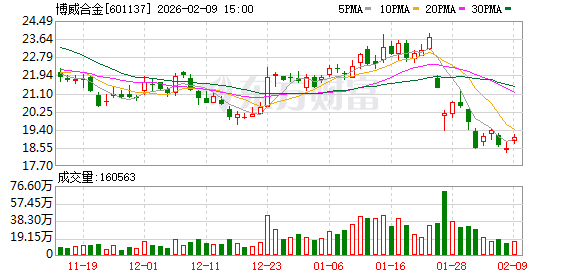
博威合金:越南项目的设备没有进入美国市场的电气认证
Zheng Quan Ri Bao· 2026-02-09 13:36
Group 1 - The core point of the article is that the equipment from the Vietnam project of the company cannot enter the U.S. market due to lack of electrical certification and incompatibility with local power supply systems [2] Group 2 - The company responded to investor inquiries on February 9, indicating the specific issues with the equipment [2] - The parameters of the equipment do not match the requirements of the U.S. power supply system, making it impossible to transfer [2] - The lack of electrical certification is a significant barrier for the equipment's entry into the U.S. market [2]