证券业

Search documents
【笔记20250714— 1.6666 为央妈比心】
债券笔记· 2025-07-14 13:30
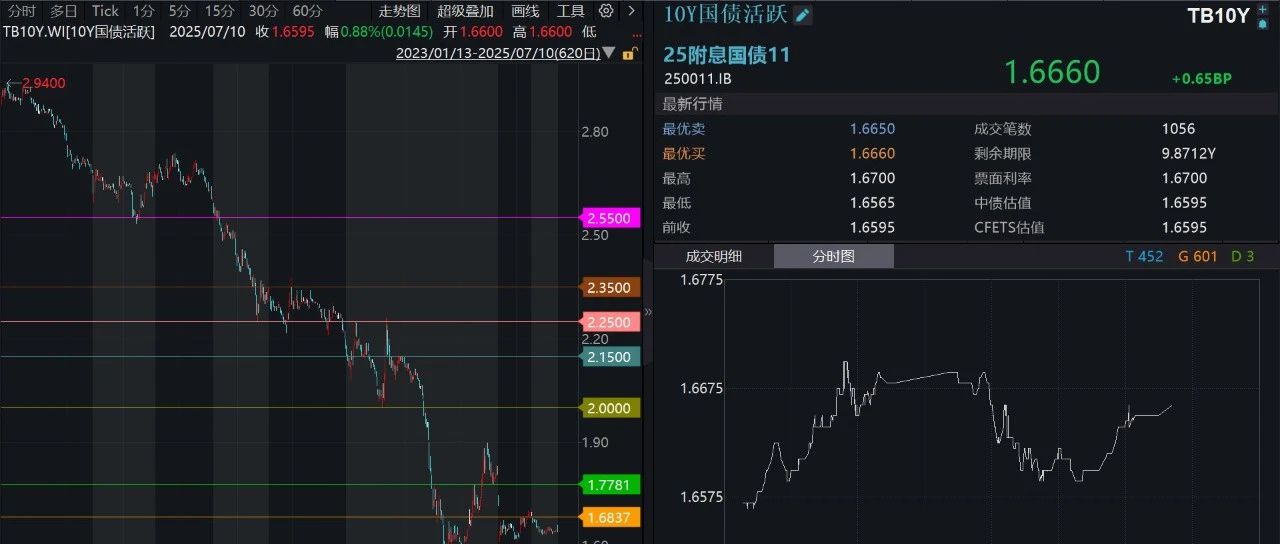
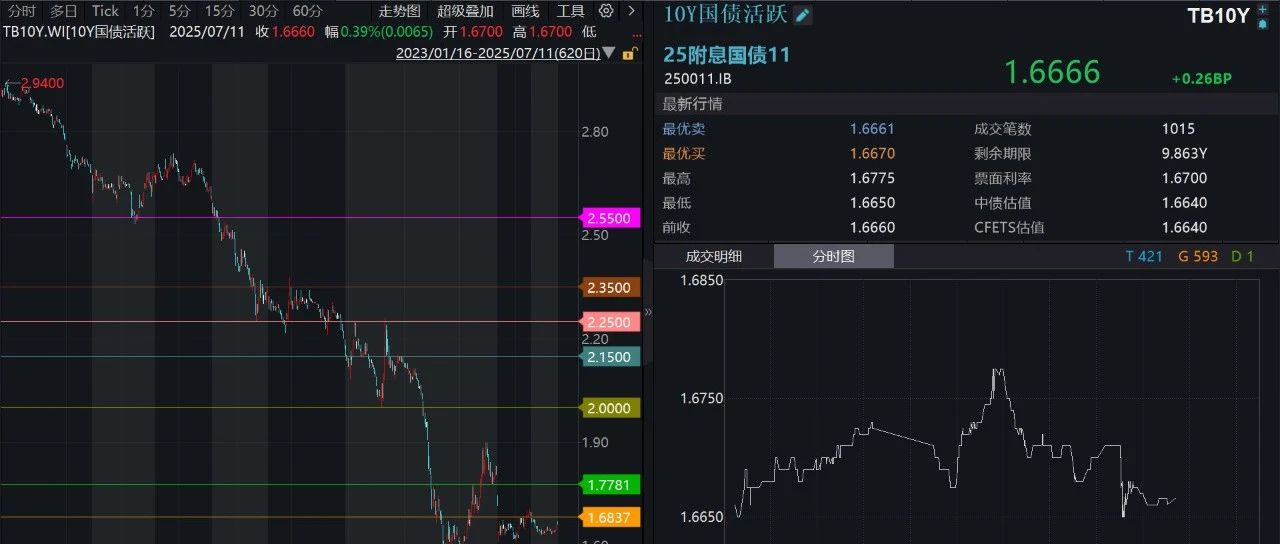
Core Viewpoint - The article emphasizes the importance of recognizing risks or opportunities when there is a discrepancy between personal expectations and market conditions, rather than making excuses for oneself. Group 1: Market Conditions - The central bank conducted a 7-day reverse repurchase operation of 226.2 billion yuan, with a net injection of 119.7 billion yuan after 106.5 billion yuan of reverse repos matured [1] - The central bank will conduct a fixed quantity, interest rate bidding, and multi-price bidding for a 1.4 trillion yuan buyout reverse repurchase operation on July 15 [1] - The money market showed mixed results, with the DR001 rate around 1.42% and DR007 around 1.54% [1] Group 2: Financial Data - Strong import and export data were reported, contributing to a bullish stock market, while primary issuance remained weak [2] - The 10-year government bond yield opened at 1.666% and fluctuated weakly, reaching a high of 1.6775% before settling back to 1.6666% [3] - The central bank's statement regarding "small and medium banks buying bonds" was perceived as a stabilizing measure [4] Group 3: Market Sentiment - The article highlights a cautious sentiment in the bond market, with a notable focus on the central bank's communications and their implications for market stability [4] - The article also references a shift in market interest, comparing the rising popularity of certain investment opportunities to trends in educational admissions [5]

44.3万亿!央行高频提及债券,中小银行债券投资要保持合理的“度”
Bei Jing Shang Bao· 2025-07-14 12:45
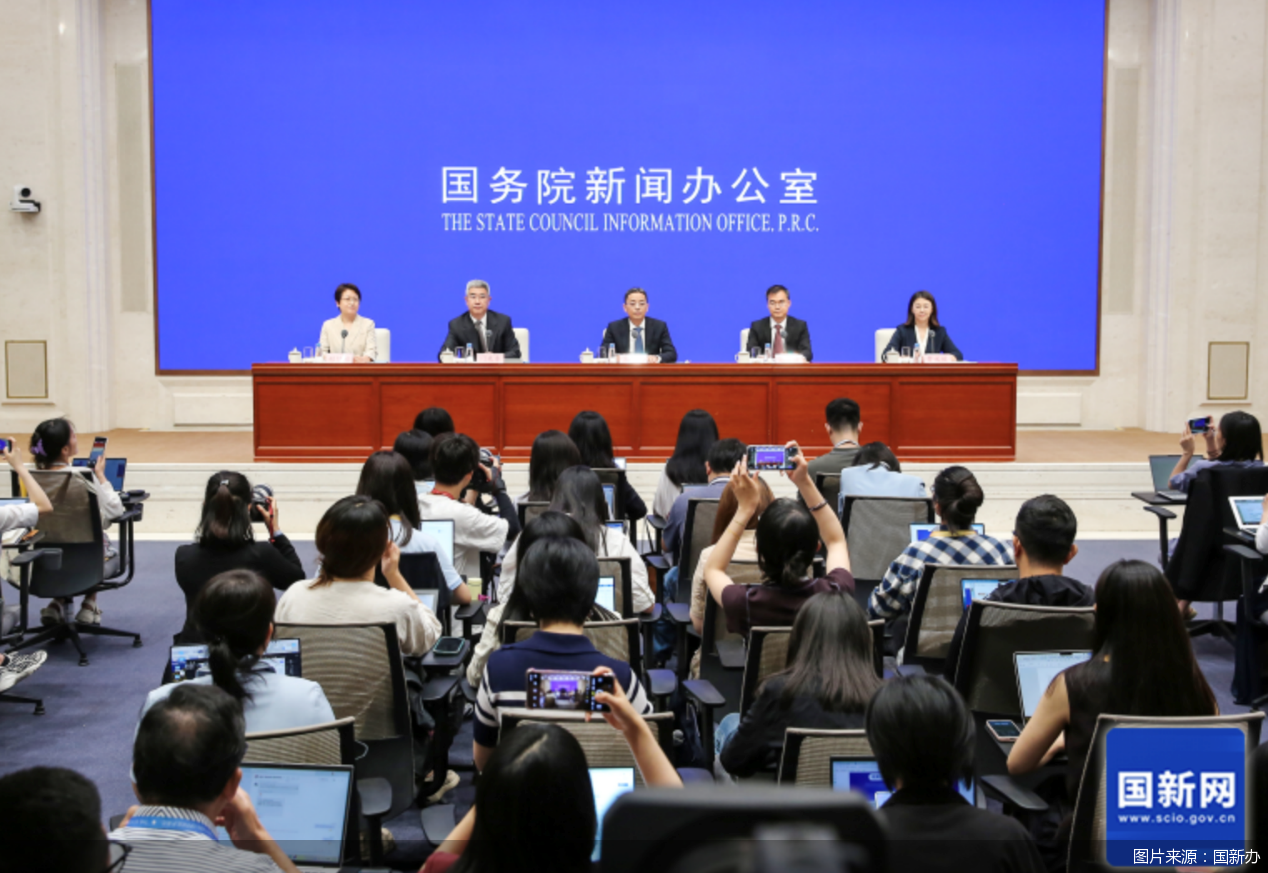
Group 1: Bond Market Overview - The People's Bank of China (PBOC) emphasized the bond market during a press conference, mentioning it 57 times, indicating its growing importance [1] - In the first half of the year, the bond market issued a total of 44.3 trillion yuan, a 16% year-on-year increase, with government bonds at 13.3 trillion yuan, corporate credit bonds at 7.3 trillion yuan, and financial bonds at 6 trillion yuan [3][4] - The net financing from bonds reached 8.8 trillion yuan, accounting for 38.6% of the total social financing increment, supporting fiscal policy and corporate financing [3] Group 2: Financial Institutions and Bond Issuance - Financial bonds saw a significant increase, with a total issuance of 6 trillion yuan, representing a 17.34% growth compared to the previous year [3] - Commercial banks led the issuance with 5.38 trillion yuan, a year-on-year growth of 17.07%, while insurance institutions also saw a notable increase of 136.77% in their issuance [3][4] - The PBOC noted that banks' bond investments are crucial for supporting fiscal policy and the real economy, with banks holding 70% of all government bonds and about 20% of corporate credit bonds [8] Group 3: Monetary Policy and Support for Key Sectors - The PBOC maintained a moderately loose monetary policy, implementing various measures to ensure liquidity and support long-term financing [5][6] - Specific policies were introduced to enhance support for consumption, technological innovation, and other key sectors, which have positively impacted market confidence and bond issuance activity [6][12] - By the end of May, loans for technological innovation and transformation reached 1.7 trillion yuan, supporting 1,500 technology-oriented SMEs [13] Group 4: Risks and Regulatory Considerations - The PBOC acknowledged the aggressive bond investment strategies of some small and medium-sized banks, emphasizing the need for a balanced approach to investment risk and returns [8][9] - Concerns were raised regarding potential credit risks and liquidity issues as the number of bond issuers increases, highlighting the importance of monitoring financial health and risk management [10] - The PBOC plans to enhance market monitoring and share information on high-risk institutions with regulatory bodies to mitigate financial market risks [10] Group 5: Innovation in Bond Market - The establishment of a "Technology Board" in the bond market aims to support innovation financing through differentiated issuance and trading arrangements [12][14] - Since its launch, 288 entities have issued approximately 600 billion yuan in technology innovation bonds, significantly aiding the development of emerging industries [12][14] - The PBOC introduced a risk-sharing tool to support equity investment institutions in issuing bonds, which has led to lower financing costs and longer maturities for these institutions [14][15]
“汉堡”“钢笔”竟是货币!赴港投保下的非法换汇暗流
2 1 Shi Ji Jing Ji Bao Dao· 2025-07-14 11:20
Core Insights - The Hong Kong insurance market is expected to experience a historic surge in 2024, with new premiums reaching HKD 219.8 billion, a 21.4% increase from HKD 180.7 billion in 2023, marking the first time it surpasses HKD 200 billion and setting a new record [1][2] - Mainland visitors contributed HKD 62.8 billion in premiums, a 6.5% increase from HKD 59 billion in 2023, accounting for 28.6% of total premiums in Hong Kong [1][2] - The rise in demand for insurance from mainland residents is attributed to lower interest rates in mainland China, leading to a strong need for wealth management and diversified currency policies [2] Insurance Market Dynamics - The structure of new premiums in 2024 shows that USD policies accounted for 78.9%, HKD policies for 15.7%, and RMB policies for 3.9% [2] - The flexibility of asset selection in Hong Kong insurance products and the ability to cater to cross-border asset allocation needs have significantly increased the attractiveness of these products for high-net-worth individuals from mainland China [2] Illegal Forex Exchange Activities - A criminal group exploited the surge in mainland residents purchasing insurance in Hong Kong by offering illegal foreign exchange services disguised as insurance premium payments, leading to significant financial misconduct [3][4] - The group, consisting of high-earning insurance professionals, utilized coded language and offshore communication tools to facilitate these illegal transactions, which involved transferring funds between domestic and foreign accounts to evade regulatory scrutiny [3][4] Regulatory Response and Market Impact - The illegal forex exchange activities have raised concerns about the security of funds and the potential for these operations to be linked to other criminal activities, such as money laundering and fraud [6][7] - Regulatory measures are being enhanced to address these illegal practices, with a focus on maintaining the integrity of the foreign exchange market and preventing financial crimes [7][8] - The introduction of the Cross-Border Payment System in June 2025 aims to provide a more convenient and cost-effective channel for small cross-border payments, which may help mitigate the demand for illegal forex exchanges [8]
经济半年报即将发布,二季度GDP增速有望实现5%以上
Di Yi Cai Jing· 2025-07-14 01:58
Economic Growth Outlook - The second quarter GDP growth is expected to slow slightly compared to the first quarter but is still projected to exceed 5% [1][2] - The average forecast for GDP growth in the second quarter is around 5.3% to 5.2%, supported by policies and resilient exports [2][3] Industrial Production - Industrial production growth is predicted to remain stable, with June's industrial added value year-on-year growth forecasted at 5.7%, slightly down from 5.8% in May [4][5] - The manufacturing PMI for June is reported at 49.7%, indicating a slight improvement in manufacturing sentiment [4] Consumer Spending - Consumer retail sales growth is expected to slow in June, with a forecasted year-on-year increase of 5.66%, down from 6.4% in May [6][7] - The "trade-in" policy has significantly boosted consumer activity, particularly in the home appliance sector, with online retail sales for major appliances rising by 28% in the second quarter [7] Investment Trends - Fixed asset investment growth is anticipated to slightly decline, with a forecasted growth rate of 3.65% for June [8] - Infrastructure investment is expected to rebound in the second half of the year, supported by government initiatives and project approvals [9]
信用策略周报20250713:5年二债1.9%-20250713
Tianfeng Securities· 2025-07-13 15:16
Group 1 - The report highlights a market correction in the bond market, with credit products showing varying degrees of resilience. The "see-saw" effect between stocks and bonds continues, leading to a decline in the bond market and some profit-taking, particularly in perpetual bonds [2][9]. - Credit products generally follow interest rate adjustments, but their decline is less pronounced than that of interest rates. The credit spread has narrowed passively, with perpetual bonds experiencing a greater decline compared to other credit types [2][9]. - The report notes that the yield on short-term credit products fluctuated, with a passive widening of credit spreads by approximately 5 basis points over the week [2][9]. Group 2 - During the bond market adjustment period, trading volumes for credit bonds have decreased, particularly for perpetual bonds. However, insurance and other institutional investors have shown a notable increase in their holdings of high-quality credit bonds [3][16]. - The report suggests that the market may not need to worry excessively about the current credit market conditions, as the marginal impact of the stock-bond see-saw effect is expected to diminish. The report anticipates a potential re-entry point for investors as the credit spreads adjust [4][27]. - The report recommends focusing on 2-year duration assets for portfolio allocation, as well as considering mid-to-high grade 5-year perpetual bonds, which have seen a decline in yields above 1.9%, indicating potential buying interest [4][29][34].
流动性与机构行为跟踪:关注税期扰动下央行的配合程度
ZHESHANG SECURITIES· 2025-07-13 10:46
1. Report Industry Investment Rating Not provided in the given content. 2. Core View of the Report It is expected that with the combined cooperation of the central bank's short - term reverse repurchase and outright reverse repurchase, the funds' volatility during the tax period may be small. The past week saw a slight tightening of funds, and in the coming week, attention should be paid to the disturbances of government bond net payments and tax period outflows. The trading demand from trading desks has weakened, and the net buying of general credit bonds and Tier 2 capital bonds by major non - bank buyers has significantly decreased. In the future, the disturbances from funds and the equity market to the bond market will increase, and recently, the market may return to active bond trading to avoid liquidity risks during adjustments [1][2]. 3. Summary According to Relevant Catalogs 3.1 Liquidity Tracking 3.1.1 Central Bank Operations - In the past week (7/7 - 7/11), the central bank's open - market operations led to a net liquidity withdrawal of 2265 billion yuan. As of 7/11, the central bank's reverse repurchase balance was 4257 billion yuan, significantly lower than that on 6/30 but still higher than the seasonal level in previous years. In the next week (7/14 - 7/18), the central bank's reverse repurchase will mature 4257 billion yuan, with a relatively small maturity scale evenly distributed daily. In July, the central bank has 1.5 trillion yuan of MLF and outright reverse repurchase maturing, including 3000 billion yuan of MLF, 7000 billion yuan of 3 - month outright reverse repurchase, and 5000 billion yuan of 6 - month outright reverse repurchase [9][10]. 3.1.2 Government Bond Issuance - In the past week, the government bond net payment was 2961 billion yuan, with 1849 billion yuan for national bonds and 1112 billion yuan for local bonds. In the next week, the expected government bond net payment is 3985 billion yuan, with 2761 billion yuan for national bonds and 1224 billion yuan for local bonds. The net payment pressure is relatively large on Monday and Tuesday. As of 7/11, the net financing progress of national bonds is 56.7%, and the remaining net financing space in 2025 is about 2.89 trillion yuan; the issuance progress of new local bonds is 51.8%, with a remaining issuance space of 2.51 trillion yuan; the issuance progress of refinancing special bonds is 89.8%, with a remaining issuance space of 2041 billion yuan. The supply of government bonds accelerated in the second week of July, and the issuance pressure is relatively large in August and September of the third quarter [17][18][20]. 3.1.3 Bill Market - In the past week, bill interest rates showed a divergent trend, with the 3 - month bill interest rate rising and the 6 - month bill interest rate falling. Seasonally, the current bill interest rate trend is still significantly weaker than the seasonal level, indicating that the recovery of credit demand remains slow [25]. 3.1.4 Funds Review - Funds tightened slightly, showing a trend of first loosening, then slightly tightening, and finally relaxing. The funds were the loosest at the opening on 7/7 and the tightest at the opening on 7/10. Most fund interest rates increased, and the term and market stratifications mostly converged [27][30][31]. 3.1.5 Inter - bank Certificates of Deposit - In the past week (7/7 - 7/13), the total issuance of certificates of deposit was 4271 billion yuan, with a net financing of - 833.9 billion yuan. The issuance scale increased compared with the previous week, but the net financing scale declined. As of 7/13, the cumulative net financing of certificates of deposit for the whole year was 1.73 trillion yuan. The issuance weighted term decreased. In the next week, the maturity scale is 8028 billion yuan, and the maturity pressure is relatively large from Tuesday to Friday [50][55]. 3.2 Institutional Behavior Tracking 3.2.1 Secondary Market Transactions - The trading demand from trading desks has weakened, and the net buying of general credit bonds and Tier 2 capital bonds by major non - bank buyers has decreased. Different types of bonds have different buying and selling situations among various institutions. For example, large banks' purchases of short - term national bonds have increased, and the net buying of credit bonds by major non - bank buyers has significantly decreased [61]. 3.2.2 Institutional Duration - The median duration of medium - and long - term bond funds has oscillated upwards. The 10 - day moving average of the median duration of medium - and long - term bond funds on 7/11 was 4.04 years, up from 3.96 years on 7/4. The secondary market trading duration of credit bonds showed mixed trends, with the 5 - day moving average of urban investment bond trading duration rising and that of Tier 2 capital bond trading duration falling [59][64]. 3.2.3 Institutional Leverage - The calculated bond market leverage ratio in the past week was 107.65%, a significant decrease compared with the previous week (107.96%) [66].
新华财经早报:7月13日
Xin Hua Cai Jing· 2025-07-13 01:10
Group 1 - The East Asia Cooperation Foreign Ministers' Meeting was successful, highlighting strong support and cooperation among China and ASEAN countries amidst rising unilateralism and protectionism [3] - The 2025 Service Trade Fair has over 700 enterprises expressing intent to participate, with plans for 14 thematic forums and 76 specialized forums covering various topics including digital trade and global green economy [3] - The Ministry of Finance allocated 197 million yuan to support disaster relief efforts in seven provinces affected by floods and typhoons, focusing on agricultural recovery [3] - The "Source of Good Entrepreneurship" initiative aims to support youth entrepreneurs and projects in need of resource connections, running from July to September [3] - China's forest coverage has increased to over 25%, contributing to a quarter of the world's new greening area, with significant land restoration efforts [3] - Shanghai, Ningbo-Zhoushan, and Singapore ports are identified as preferred global shipping hubs, driving regional economic growth and reshaping global economic geography [3] - The steel industry is expected to maintain a consumption level of 800 to 900 million tons, with a focus on optimizing product structure [3] - The automotive export scale is projected to peak during the 14th Five-Year Plan, with local production in overseas markets becoming a new trend [3] - The China Securities Association issued guidelines to enhance self-regulation and promote high-quality development in the securities industry [3] - The "National Uranium No. 1" demonstration project in Inner Mongolia successfully produced its first barrel of uranium, marking a significant achievement in China's uranium production capacity [3] Group 2 - The U.S. plans to impose a 30% tariff on goods imported from the EU and Mexico starting August 1, leading to strong opposition from European nations [5] - The EU has expressed that the tariffs will disrupt important transatlantic supply chains and may retaliate if necessary [5] - Mexico's government criticized the U.S. tariffs as "unfair" and is seeking diplomatic solutions to resolve trade disputes [5] - The U.S. also announced a 50% tariff on imported copper, posing challenges for Chile, the world's largest copper producer [5] - NVIDIA's CEO is expected to visit China following a meeting with U.S. President Trump, indicating ongoing interest in the Chinese market [5] - Negotiations for a ceasefire between Israel and Hamas have reportedly stalled, with no significant progress made since July 9 [5]
野村:未来几周是关税效应释放的关键窗口,美国滞胀风险加剧,美联储或等到12月才降息
华尔街见闻· 2025-07-12 09:03
Core Viewpoint - The global economy is entering an uncertain phase characterized by multiple risks, including inflationary pressures and geopolitical tensions, particularly influenced by U.S. policies under the Trump administration [1][3][6]. Economic Outlook - The U.S. is expected to face "stagflation" in the second half of the year, with rising inflation and slowing growth. The Federal Reserve is anticipated to be cautious, delaying interest rate cuts until December, with cuts likely lower than market expectations [1][3][6]. - Core CPI in the U.S. is projected to rebound to 3.3% in Q4, influenced by rising import costs and tariffs [1][4][20]. Tariff and Trade Policy - Trump's use of tariffs is not solely aimed at reducing the trade deficit but also serves various geopolitical and economic purposes. The effectiveness of these tariffs will depend on whether they are implemented as planned [4][10]. - The potential for retaliatory measures from the EU if high tariffs are imposed is significant, and ongoing negotiations are crucial [10]. Federal Reserve Independence - Concerns about the independence of the Federal Reserve are at their highest in decades, with political influences potentially impacting monetary policy decisions [2][25][28]. - The upcoming vacancies in the Federal Reserve Board may provide Trump with opportunities to influence monetary policy further [1][25][26]. Global Economic Dynamics - The global economic landscape is shifting, with the U.S. potentially moving from an exceptional growth phase to a more normalized economic state, leading to a diversification of investments away from the U.S. [6][34]. - Other central banks are expected to have more room for rate cuts compared to the Fed, which may further influence global capital flows [7][40]. Inflation Factors - Factors contributing to rising inflation include tariffs, labor shortages due to immigration policies, and potential fiscal expansions as midterm elections approach [21][22][23]. - The impact of artificial intelligence on inflation is acknowledged, but its deflationary effects are still in early stages and may not significantly counteract inflationary pressures in the short term [31][32].

稳就业新政出台,美国关税隐忧再现
Southwest Securities· 2025-07-11 13:44
Domestic Developments - As of June 2025, China's foreign exchange reserves reached $3,317.4 billion, an increase of $32.2 billion (0.98%) from May[8] - The People's Bank of China has increased its gold reserves for eight consecutive months, with reserves reaching 73.9 million ounces (approximately 2,298.55 tons) by the end of June, up 70,000 ounces from May[9] - The State Council introduced 19 measures to stabilize employment, aiming to support businesses and market expectations amid a declining urban unemployment rate of 5% in May[15][16] International Developments - On July 7, 2025, President Trump signed a tariff order imposing tariffs of 25% to 40% on products from 14 countries, effective August 1, which may impact international trade confidence[18] - Eurozone retail sales grew by 1.8% year-on-year in May, surpassing expectations but slowing from a revised 2.7% in April, indicating a weakening consumer spending momentum[20] - The U.S. Treasury plans to increase its cash reserves from approximately $313 billion to $500 billion by the end of July, with further increases expected in September, raising concerns about debt sustainability[22] Market Trends - Brent crude oil prices increased by 2.70% week-on-week, while iron ore prices rose by 2.22%, and copper prices fell by 1.49%[27] - The price of rebar rose by 0.56% week-on-week, while cement prices decreased by 1.23%[33] - The unemployment rate for the 16-24 age group remains high at 14.9%, indicating ongoing challenges in the job market despite overall improvements[16]
【笔记20250711— 免费过山车,包吐包尖叫】
债券笔记· 2025-07-11 13:17
Core Viewpoint - The market's unpredictability is emphasized, highlighting that no prediction system is perfect, and the essence of the market lies in its inherent uncertainty [1]. Group 1: Market Overview - The market experienced a rollercoaster effect today, with the stock market initially rising over 1% before retreating in the afternoon [3][4]. - The bond market showed cautious sentiment, with the 10-year government bond yield fluctuating around 1.66% [3]. - The central bank conducted a 7-day reverse repurchase operation of 847 billion yuan, with a net injection of 507 billion yuan after 340 billion yuan matured [1]. Group 2: Financial Data - The weighted rates for various repurchase agreements are as follows: R001 at 1.40% (up 2 basis points), R007 at 1.51%, and R014 at 1.55% [2]. - The total transaction volume for repurchase agreements was 77,268.99 billion yuan, reflecting a decrease of 3,946.29 billion yuan [2]. - The bond market's performance indicates a "see-saw" effect with the stock market, as bond funds continued to experience net redemptions [2][3]. Group 3: Demographic and Economic Insights - A significant demographic trend is noted, with an average annual decrease of 10 million in the labor population from 2022 to 2036, leading to concerns about pension fund depletion by 2035 [4]. - Investors suggest that a prolonged bull market could provide a solution to demographic challenges, while bond investors express a preference for lower interest rates to enhance returns [4].