
玻璃

Search documents
光大期货:1月20日能源化工日报
Xin Lang Cai Jing· 2026-01-20 02:11
Oil Market - WTI prices were not available due to the Martin Luther King Jr. Day holiday, while Brent crude for March closed at $63.94 per barrel, down $0.19, a decrease of 0.30% [2][15] - Domestic crude oil production in China for 2025 is projected to be 21,605 million tons, a year-on-year increase of 1.5%, with processing volume at 73,759 million tons, up 4.1% [2][15] - The market is currently experiencing a seasonal decline in diesel and gasoline demand, with oil prices showing no significant driving force, maintaining a volatile trend [2][15] Fuel Oil - The main contract for fuel oil (FU2603) rose by 0.12% to 2,538 yuan per ton, while low-sulfur fuel oil (LU2603) increased by 0.07% to 3,060 yuan per ton [16] - Supply of low-sulfur fuel oil is expected to be sufficient, with Singapore receiving approximately 290-300 million tons in January, up from 260-270 million tons in December [16] - The geopolitical situation in Iran continues to significantly impact oil prices, with fluctuations expected to follow oil price movements [16][4] Asphalt - The main contract for asphalt (BU2602) increased by 0.29% to 3,142 yuan per ton, with concerns over raw material supply easing slightly [17] - The market is currently facing a "weak demand reality" against a backdrop of "strong cost expectations," particularly as winter weather impacts demand [17] Rubber - The main contract for rubber (RU2605) fell by 90 yuan per ton to 15,745 yuan per ton, with NR and BR contracts also experiencing declines [18] - China's rubber tire exports for 2025 are expected to reach 9.65 million tons, a year-on-year increase of 3.6% [18] - Inventory levels for natural rubber in Qingdao increased, indicating a seasonal accumulation trend [18] PX, PTA, and MEG - TA605 closed at 5,030 yuan per ton, up 0.24%, while EG2605 fell by 1.08% to 3,755 yuan per ton [19] - PX futures closed at 7,106 yuan per ton, with a slight increase of 0.28%, and the market is expected to see some support due to supply reductions [19] Methanol - Methanol prices in Taicang were reported at 2,207 yuan per ton, with CFR China prices ranging from $262 to $266 per ton [21] - Domestic supply remains stable, but demand is under pressure due to reduced operating rates in MTO facilities [21] Polyolefins - Polypropylene prices are under pressure, with production margins for various methods showing negative values [22] - Demand is expected to recover slightly in early January, but inventory levels are anticipated to rise as the month progresses [22] PVC - PVC prices have decreased, with the market experiencing a supply-demand imbalance and overall bearish sentiment [23] - The upcoming end of export tax rebates is expected to increase upward pressure on long-term contracts [23] Urea - Urea futures prices are experiencing weak fluctuations, with the main contract closing at 1,772 yuan per ton, down 1.45% [24] - Market sentiment is declining, with production rates and demand showing signs of weakness ahead of the Spring Festival [24] Soda Ash - Soda ash futures prices are fluctuating, with the main contract closing at 1,192 yuan per ton, down 0.33% [25] - The industry is facing pressure from supply and demand dynamics, with cautious sentiment prevailing in the market [25] Glass - Glass futures prices fell significantly, with the main contract closing at 1,070 yuan per ton, down 2.9% [26] - The market is experiencing a supply recovery, but demand remains cautious, leading to a bearish outlook [26]


年末需求进入淡季,关注供给改善品种 | 投研报告
Sou Hu Cai Jing· 2026-01-20 01:51
Group 1: Cement Industry - The national market is gradually entering the off-season, with overall demand showing a downward trend, particularly in the housing construction market, while infrastructure demand is regionally differentiated under policy influence, and the civil market shows relatively rigid demand [1] - In the medium term, the cement industry's capacity is expected to continue declining under policies limiting overproduction, leading to a significant increase in capacity utilization and profit elasticity [1] - Key companies to watch include Conch Cement and Huaxin Cement [1] Group 2: Glass Industry - The demand side is experiencing a continuous decline in 2025 due to the impact of real estate, with short-term demand during the traditional peak season showing limited improvement and high inventory levels among intermediaries [1] - The supply side faces ongoing supply-demand contradictions, and despite recent cold repairs of multiple production lines, prices are expected to remain low and fluctuate in the short term [1] - Key company to watch is Qibin Group [1] Group 3: Glass Fiber Industry - As the year-end approaches, many pool kiln factories focus on cash collection, resulting in weak performance in middle and downstream deliveries [2] - The supply side sees the completion of cold repairs at China Jushi's production line, with a resurgence in production; the electronic yarn segment is thriving due to demand from the AI industry, leading to a rise in both volume and price for low dielectric products [2] - Key companies to watch include China Jushi and China National Building Material [2] Group 4: Consumer Building Materials - The industry has reached a profitability bottom, with prices having no downward space after years of competition; there is a strong demand for price increases and profit improvement driven by anti-involution policies [2] - In 2025, multiple categories such as waterproofing, coatings, and gypsum boards are expected to issue price increase notices, with anticipated profit improvements for leading companies in 2026 [2] - Key companies to watch include Oriental Yuhong, Sankeshu, Beixin Building Materials, and Rabbit Baby [2] Group 5: Market Overview - In the past week (January 12–18), the main index performance was as follows: the Shenwan Building Materials Industry Index decreased by 0.67%, the Shanghai Composite Index decreased by 0.45%, the Shenzhen Component Index increased by 1.14%, the ChiNext Index increased by 1.00%, and the CSI 300 Index decreased by 0.57% [2] - Among the 31 first-level sub-industry indices in Shenwan, the building materials sector ranked 18th in terms of performance [2]


地产链2025年数据解读及2026年展望
2026-01-20 01:50
Summary of Key Points from the Conference Call Industry Overview - The real estate development investment in 2025 is projected to decrease, with a notable shift where cash inflow exceeds outflow for the first time, indicating market stabilization and reduced credit risk [1][2] - New construction area is expected to drop to 580 million square meters, while completion area is around 600 million square meters, suggesting the market is digesting historical inventory and entering a phase of reduced volume and price increases [1][4] - The outlook for 2026 indicates a policy shift towards high-quality development, moving away from excessive contraction in the real estate sector [1][5] Key Financial Metrics - In 2025, the real estate market's investment growth is projected at CNY 8.2 trillion, with sales growth at CNY 8.3 trillion, indicating that sales revenue surpasses investment, which is a positive sign for cash flow [2] - Fixed asset investment growth is expected to decline by 3.8% in 2025, with narrow infrastructure investment decreasing by 2.2%, reflecting weak performance in fixed asset and infrastructure investments [1][8] Market Dynamics - Current urban rental yields range from 1.5% to 2.2%, which, when adjusted for inflation, could reach approximately 3.5%, indicating a stable price expectation as inflation rises [1][6] - The period from late March to early April 2026 is anticipated to be a critical turning point for the real estate sector, transitioning from a rotational increase to a proactive increase [1][7] Sector-Specific Insights - The construction materials sector is performing relatively well despite the overall economic downturn, with cement production and sales down by 6.9% [3][13] - Companies like Oriental Yuhong, Henkel Group, and Sankeshu are highlighted for their growth potential, while Beixin Materials and Rabbit Baby are attractive due to low valuations and dividend returns [3][13] - The fiberglass industry is expected to maintain high demand until the fourth quarter of 2026, driven by increased penetration of specialty electronic fabrics [3][14] Challenges and Risks - The construction and manufacturing sectors are facing significant challenges, with real estate down 37% and manufacturing down 11% year-on-year in December, indicating a softening economic foundation [3][12] - Despite fiscal spending remaining positive, the allocation towards traditional infrastructure has decreased, leading to a marginalization of traditional construction projects [3][11] Investment Opportunities - The building materials sector presents several investment opportunities, particularly in consumer building materials, which are expected to provide stable returns [3][17] - Companies like China National Building Material and Xinyi Glass are recommended for their strong market positions and potential for growth in the fiberglass and electronic glass sectors [3][17][18] Conclusion - The real estate and construction sectors are undergoing significant changes, with a focus on high-quality development and stabilization of market dynamics. Investors are advised to remain cautious while exploring opportunities in resilient segments of the building materials industry.
现实?撑有限,板块表现偏弱
Zhong Xin Qi Huo· 2026-01-20 00:46
1. Report Industry Investment Rating - The mid - term outlook for the black building materials industry is "oscillation" [6] 2. Core Viewpoints of the Report - The fundamentals in the off - season are lackluster, and the market is expected to continue its weak adjustment in the short term. Before the Spring Festival, attention should be paid to the downstream restocking intensity. In January, the resumption of production by steel enterprises is expected to boost the restocking expectation, and there is an expectation of a low - level upward movement in the prices of furnace materials [6]. 3. Summary by Related Catalogs 3.1 Iron Element - **Iron Ore**: The expected increase in supply and inventory pressure are gradually rising. There are still expectations of disturbances on the supply side due to weather. The pre - holiday restocking on the demand side supports the ore price. The supply and demand on the ground still need verification, and it is expected to oscillate in the short term [2]. - **Scrap Steel**: The supply of scrap steel is low, the electric furnace profit is acceptable, and the daily consumption keeps increasing, which supports the demand. The overall fundamental contradiction is not prominent, and the spot price is expected to oscillate [2]. 3.2 Carbon Element - **Coke**: The cost side of coke has stabilized and rebounded, and the expectation of steel mill复产 still exists. As the mid - and downstream winter restocking gradually starts, the supply - demand structure of coke may gradually tighten, and the spot price increase is expected to be implemented. The futures market is expected to follow the trend of coking coal [2]. - **Coking Coal**: As the Chinese New Year approaches, the intensity of winter restocking gradually increases, and the subsequent coal mine supply will gradually decline due to the holiday. The fundamentals of coking coal will continue to improve marginally, and the spot price still has upward momentum. However, after the previous rally, the driving force for the futures market to continue rising is limited, and it is expected to oscillate [2]. 3.3 Alloys - **Manganese Silicon**: The cost push of manganese silicon is relatively weak, the market supply - demand pattern is loose, and the de - stocking pressure is large. The upward space of the futures price is limited. However, the current futures price valuation is low, and under the high - cost support, the risk of excessive short - selling should be guarded against [3]. - **Silicon Iron**: Currently, the silicon iron market has weak supply and demand, and the fundamental contradiction is relatively limited. In the short term, the futures price is expected to follow the trend of the sector [3]. 3.4 Glass and Soda Ash - **Glass**: There are still expectations of disturbances in glass supply, but the mid - and downstream inventories are moderately high. Fundamentally, the current supply and demand are still in surplus. If there is no more cold repair before the end of the year, the high inventory will always suppress the price, and it is expected to oscillate weakly; otherwise, the price will rise [3]. - **Soda Ash**: The overall supply and demand of soda ash are still in surplus, and it is expected to oscillate in the short term. In the long run, the pattern of supply surplus will further intensify, the price center will still decline, and capacity de - stocking will be promoted [3]. 3.5 Specific Product Analysis - **Steel**: The cost support is weakening, and the futures market is under pressure. The spot market trading is weak, the steel mill复产 rhythm slows down, the iron water output decreases, and the five major steel products' output growth slows down. The demand still has resilience, but there is seasonal weakening pressure later. The inventory is still being de - stocked, but the de - stocking speed is not obvious, and the inventory level is moderately high. It is expected to be under pressure in the short term [8]. - **Iron Ore**: The market sentiment has declined, with both shipments and arrivals decreasing. Overseas mine shipments have decreased month - on - month, arrivals have declined, and the supply side is expected to be disturbed by weather. The demand side has rigid support, and steel mills are restocking with weak enthusiasm. The port inventory is accumulating, and the supply pressure expectation has increased. It is expected to oscillate in the short term [8]. - **Scrap Steel**: The arrival volume has increased significantly, and the supply has recovered. The electric furnace profit is acceptable, and the daily consumption also keeps increasing, supporting the demand. The supply and demand are both increasing, and the overall fundamental contradiction is not prominent. The spot price is expected to oscillate following the finished products [10]. - **Coke**: The steel mill's rigid demand has declined, and the implementation of the price increase has been postponed. The cost side support is strong, but the steel mill's iron water output has slightly decreased, so the price increase implementation is delayed. The futures market is expected to follow the trend of coking coal [11]. - **Coking Coal**: The spot price is rising well, and the futures market is oscillating. The domestic supply is stable, and the Mongolian coal import has recovered. The demand side has seen an increase in winter restocking by coking enterprises, and the upstream coal mine inventory has been continuously digested. The spot price still has upward momentum, but the futures market's upward driving force is limited, and it is expected to oscillate [12]. - **Glass**: The futures price has corrected, and the spot and futures markets have started to sell. The supply is expected to decline in the long term, but it is difficult to have a large - scale cold repair in the short term. The demand is weak year - on - year, and the large inventory in the middle reaches always suppresses the glass valuation. It is expected to oscillate in the short term. If there is no more cold repair by the end of the year, it will oscillate weakly; otherwise, the price will rise [13]. - **Soda Ash**: The spot price has fallen at a low level, and the futures premium has decreased. The supply and demand fundamentals have not changed significantly, and the industry is still in the stage of clearing at the bottom of the cycle. The downstream demand is showing a downward trend, and the dynamic surplus expectation is further intensifying. It is expected to oscillate in the short term, and the price center will decline in the long run [13]. - **Manganese Silicon**: The cost support is loosening, and the de - stocking pressure still exists. The cost push is weak, the supply pressure is large, and the futures price is running weakly. The demand support in the off - season is limited, and the supply is difficult to achieve high - level inventory digestion. The upward space of the futures price is limited, but excessive short - selling risks should be guarded against [15]. - **Silicon Iron**: The supply - demand contradiction is limited, and it follows the sector's weakening. The market has weak supply and demand, and the overall contradiction is limited. The cost is at a relatively high level, which supports the price bottom. The demand support in the off - season is limited, and the supply is at a low level. In the short term, the futures market is expected to follow the black sector, and the downward space is limited [17]. 3.6 Index Information - **Comprehensive Index**: The commodity index is 2417.77, up 0.01%; the commodity 20 index is 2779.78, up 0.20%; the industrial products index is 2316.27, down 0.28% [103]. - **Plate Index**: The steel industry chain index on January 19, 2026, has a daily increase or decrease of - 0.82%, a five - day increase or decrease of - 1.37%, a one - month increase or decrease of + 1.16%, and an increase or decrease since the beginning of the year of + 1.07% [105].
商品日报(1月19日):贵金属再现强势国内外金价齐创历史新高 情绪降温沪锡连续第二日大幅回调
Xin Lang Cai Jing· 2026-01-19 08:58
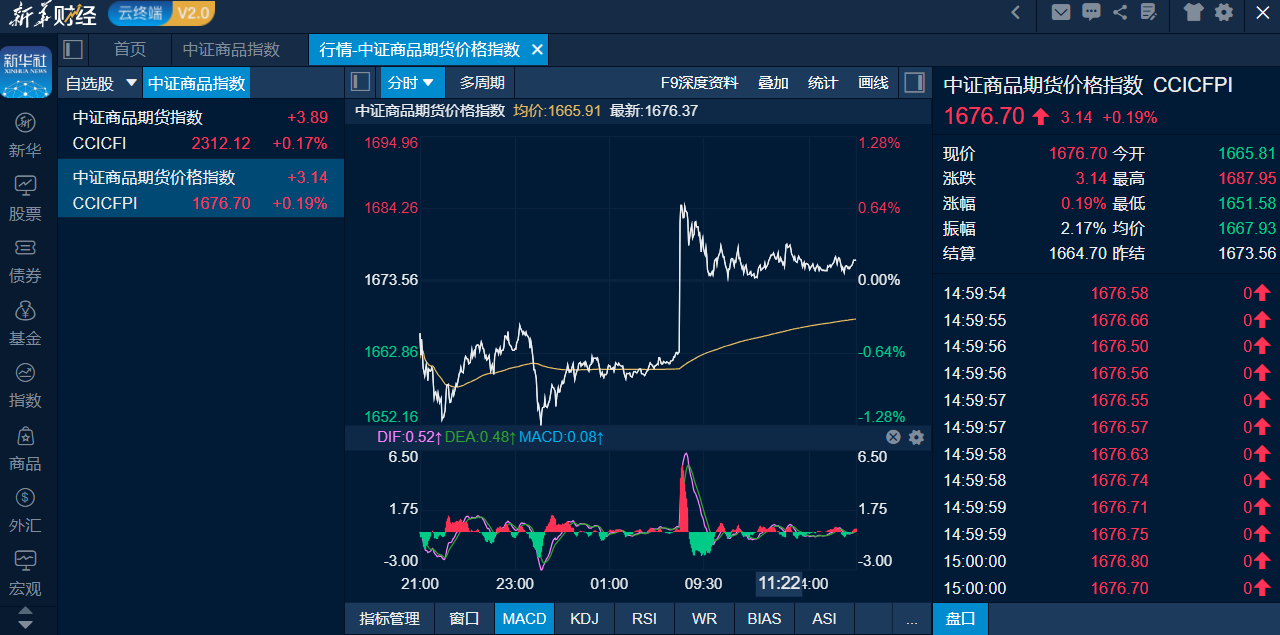
Market Overview - The domestic commodity futures market experienced a weak trend on January 19, with significant differentiation among sectors, resulting in most varieties closing lower. The China Securities Commodity Futures Price Index closed at 1676.70 points, up 3.14 points or 0.19% from the previous trading day, while the China Securities Commodity Futures Index closed at 2312.12 points, up 3.89 points or 0.17% [1]. Precious Metals - The precious metals sector was notably active, with international gold and silver prices reaching historical highs, which boosted domestic gold and silver futures. Shanghai gold hit a new historical high, while Shanghai silver rose nearly 3% by the end of the day [1][3]. Chemical Sector - In the chemical sector, pure benzene and styrene showed strong performance, closing up 3.48% and 1.84% respectively, leading the chemical sector. The strong performance of styrene is attributed to multiple maintenance shutdowns and export factors, which have increased its profitability [4]. Industrial Metals - The industrial metals sector faced widespread pressure, with Shanghai tin leading the decline, falling 5.98% after a significant drop of over 6% the previous Friday. The market sentiment cooled rapidly, leading to a correction in tin prices after reaching historical highs [5]. Other major industrial metals, including copper, aluminum, and zinc, also saw declines ranging from 0.39% to 2.33% [5]. Agricultural Products - The agricultural products sector, particularly rapeseed meal and oil, experienced significant declines, with rapeseed meal dropping 2.37% and rapeseed oil falling 1.50%. Concerns over potential increases in supply due to improved Sino-Canadian relations contributed to this downturn [6]. The overall weak supply-demand dynamics are expected to keep rapeseed meal prices under pressure [6].
建筑材料行业跟踪周报:社融增速小幅回落,关注红利高股息等方向
Soochow Securities· 2026-01-19 05:24
Investment Rating - The report maintains an "Overweight" rating for the construction materials industry [1] Core Insights - The construction materials sector has shown a slight decline in social financing growth, prompting a focus on high-dividend stocks and sectors such as real estate and technology [3] - The cement market is experiencing price fluctuations, with a current average price of 347.7 yuan/ton, down 4.8 yuan from last week and down 56.2 yuan from the same period in 2025 [10][11] - The report highlights potential investment opportunities in companies benefiting from high dividends, export-oriented industries, and home renovation sectors [3] Summary by Sections 1. Cement Market Overview - The national average cement price is 347.7 yuan/ton, reflecting a decrease of 4.8 yuan from the previous week and a decrease of 56.2 yuan year-on-year [10][11] - The average cement inventory ratio is 58.9%, down 1.4 percentage points from last week but up 1.4 percentage points from the same period in 2025 [16][20] - The average daily cement shipment rate is 39.2%, down 5.0 percentage points from last week but up 7.0 percentage points year-on-year [16][20] 2. Glass Market Overview - The average price of float glass is 1138.3 yuan/ton, an increase of 16.3 yuan from last week but a decrease of 246.1 yuan from 2025 [41][42] - The inventory of float glass in 13 provinces is 4,986 million weight boxes, a decrease of 209 million from last week but an increase of 1,071 million from the same period in 2025 [46][49] 3. Fiberglass Market Overview - The effective production capacity for fiberglass is projected to reach 759.2 million tons in 2026, a year-on-year increase of 6.9% [4] - The demand for fiberglass is expected to maintain steady growth, driven by wind power and new applications, despite a potential slowdown in overall growth [4] 4. Investment Recommendations - Recommended companies include China National Building Material, Huaxin Cement, and others that are expected to benefit from industry recovery and structural improvements [4][3] - The report suggests focusing on companies with strong dividend yields and those involved in technology and home renovation sectors [3]


建筑材料行业跟踪周报:社融增速小幅回落,关注红利高股息等方向-20260119
Soochow Securities· 2026-01-19 05:21
Investment Rating - Maintain "Overweight" rating for the construction materials industry [1] Core Insights - The construction materials sector has shown a slight decline in performance, with the sector index down by 0.67% compared to the Shanghai and Shenzhen 300 index, which decreased by 0.57% [3] - The report highlights the importance of focusing on high-dividend stocks and sectors such as home decoration and technology, as well as the potential for recovery in the real estate chain [3] Summary by Sections 1. Bulk Construction Materials Fundamentals and High-Frequency Data - **Cement**: The national average price for high-standard cement is 347.7 yuan/ton, down by 4.8 yuan/ton from last week and down by 56.2 yuan/ton from the same period in 2025. The average cement inventory ratio is 58.9%, down by 1.4 percentage points from last week but up by 1.4 percentage points from 2025 [9][10][16] - **Glass**: The average price for float glass is 1138.3 yuan/ton, an increase of 16.3 yuan/ton from last week but a decrease of 246.1 yuan/ton from 2025. The inventory of float glass stands at 4,986 million weight boxes, down by 209 million from last week but up by 1,071 million from 2025 [41][46] - **Fiberglass**: The market for fiberglass remains stable, with no significant price changes reported. The mainstream transaction price for 2400tex alkali-free winding direct yarn is between 3250-3700 yuan/ton [3][4] 2. Industry Dynamics Tracking - The report indicates that the cement industry is undergoing supply-side adjustments, with a focus on eliminating outdated capacity. The effective capacity for fiberglass is expected to reach 759.2 million tons in 2026, a year-on-year increase of 6.9% [4][9] - The report emphasizes the potential for recovery in the real estate sector, with companies like Arrow Home, Sanhe Tree, and Op Lighting being highlighted for their strategic positioning [3][4] 3. Weekly Market Review and Sector Valuation - The construction materials sector has shown a mixed performance, with some companies demonstrating resilience in their earnings despite overall market challenges. The report suggests that the sector's valuation is at historical lows, indicating potential for recovery [3][4] - Recommendations include focusing on companies with strong dividend commitments and those positioned to benefit from technological advancements and market recovery [3][4]
黑色建材日报-20260119
Wu Kuang Qi Huo· 2026-01-19 01:14
1. Report Industry Investment Rating No relevant content provided. 2. Core Viewpoints of the Report - The overall sentiment in the commodity market cooled last Friday, and the prices of finished steel products continued to fluctuate in the bottom - range. The black - series is still in a bottom - oscillating pattern and is sensitive to marginal news. Pay attention to the destocking progress of hot - rolled coils, the strengthening of "dual - carbon" policies, and their potential marginal impact on the supply - demand pattern of the steel industry [3]. - For iron ore, the overseas shipping season is entering a slow period, and the supply pressure may be marginally relieved. Iron - water production has limited resumption, and the inventory structure problem remains unsolved. Steel mills are starting to replenish their stocks before the Spring Festival, creating room for a relative price increase. Monitor the stock - replenishment and iron - water production rhythm of steel mills [6]. - The long - term bullish sentiment in the commodity market will continue, mainly centered around precious metals and non - ferrous metals. Other sectors are affected by the spill - over of market sentiment, and the scope of sentiment influence may shrink. Be aware of the impact of the high - level fluctuations of leading varieties on market sentiment [9]. - For manganese silicon and ferrosilicon, the future market will be influenced by the overall market sentiment and the cost - push from manganese ore for manganese silicon and the supply contraction for ferrosilicon. Focus on potential restrictions on manganese ore exports and "dual - carbon" policies [10]. - The decline of coking coal and coke prices last week was mainly due to the weakening of market sentiment. In the future, the bullish sentiment in the commodity market will continue, but with short - term fluctuations. Coking coal and coke are expected to show an oscillatingly strong price trend [15][16]. - For industrial silicon, with the reduction of production on the supply side and the weakening of demand, it still faces inventory - building pressure and is expected to have an oscillatingly weak price trend. Monitor the production adjustment rhythm of downstream enterprises [19]. - For polysilicon, the market is in a wait - and - see state. The supply pressure is expected to ease, and the price is expected to fluctuate in the short term. Pay attention to spot transactions and exchange risk - control measures [22]. - For glass, the supply - demand pattern is in a loose balance, with no obvious marginal driver. The price is expected to oscillate widely in the short term, with the main contract in the range of 1015 - 1200 yuan/ton [25]. - For soda ash, the supply - demand game continues, and there is no obvious driving factor. The price is expected to maintain a weak consolidation trend in the short term, with the main contract in the range of 1123 - 1310 yuan/ton [27]. 3. Summary by Related Catalogs Steel Products a. Market Quotes - The closing price of the rebar main contract was 3163 yuan/ton, up 3 yuan/ton (0.094%) from the previous trading day. The registered warehouse receipts were 61,680 tons, an increase of 1510 tons. The main - contract open interest was 1.7553 million lots, an increase of 70,217 lots. The Tianjin and Shanghai summary prices increased by 10 yuan/ton [2]. - The closing price of the hot - rolled coil main contract was 3315 yuan/ton, up 8 yuan/ton (0.241%) from the previous trading day. The registered warehouse receipts were 194,362 tons, unchanged. The main - contract open interest was 1.5147 million lots, an increase of 66,309 lots. The Lecong and Shanghai summary prices increased by 20 and 30 yuan/ton respectively [2]. b. Strategy Views - The production of hot - rolled coils has slightly increased, the apparent demand has improved, but the inventory is high and the destocking is slow. The apparent demand for rebar has increased significantly, the production is at a medium level, and the inventory is basically flat. The overall performance is neutral [3]. Iron Ore a. Market Quotes - The main contract (I2605) of iron ore closed at 812.00 yuan/ton, with a change of - 0.12% (- 1.00). The open interest changed by - 3540 lots to 648,900 lots. The weighted open interest was 995,200 lots. The spot price of PB fines at Qingdao Port was 819 yuan/wet ton, with a basis of 58.72 yuan/ton and a basis rate of 6.74% [5]. b. Strategy Views - Supply: The year - end shipping rush of mines has ended, and the overseas iron - ore shipping volume has continued to decline. The shipping volume from Brazil has decreased significantly, and the shipping of Rio Tinto and BHP has decreased. The shipping from non - mainstream countries has increased, and the near - term arrival volume has continued to rise [6]. - Demand: The daily average pig - iron output was 228.01 tons, a decrease from the previous period. There were both blast - furnace overhauls and restarts. The profitability of steel mills has risen to nearly 40% [6]. - Inventory: The port inventory has continued to increase, and the inventory of imported ore in steel mills has also increased [6]. Ferrosilicon and Manganese Silicon a. Market Quotes - On January 16, the main contract of manganese silicon (SM603) closed down 0.72% at 5828 yuan/ton. The spot price in Tianjin was 5720 yuan/ton, with a basis of 82 yuan/ton. The main contract of ferrosilicon (SF603) closed down 0.71% at 5570 yuan/ton. The spot price in Tianjin was 5800 yuan/ton, with a basis of 230 yuan/ton [8]. b. Strategy Views - The decline in the prices of ferrosilicon and manganese silicon was due to the weakening of market sentiment. In the future, the bullish sentiment in the commodity market will continue, but the main focus is on precious metals and non - ferrous metals. Other sectors are affected by sentiment spill - over [9]. - The supply - demand pattern of manganese silicon is loose, and that of ferrosilicon is basically balanced. The future market will be influenced by market sentiment, the cost - push from manganese ore, and the supply contraction of ferrosilicon [10]. Coking Coal and Coke a. Market Quotes - On January 16, the main contract of coking coal (JM2605) closed down 1.39% at 1171.0 yuan/ton. The spot prices in Shanxi had different basis levels. The main contract of coke (J2605) closed down 1.60% at 1717.0 yuan/ton. The spot prices in Rizhao and Lvliang had different basis levels [12]. b. Strategy Views - The decline in coking coal and coke prices last week was due to the weakening of market sentiment. In the future, the bullish sentiment in the commodity market will continue, but with short - term fluctuations. The supply - demand of coking coal and coke is relatively balanced, and the prices are expected to show an oscillatingly strong trend [15][16]. Industrial Silicon and Polysilicon a. Market Quotes - For industrial silicon, the main contract (SI2605) closed at 8605 yuan/ton on Friday, down 1.43% (- 125). The weighted open interest increased by 6473 lots to 371,875 lots. The spot prices of different grades in East China remained unchanged [18]. - For polysilicon, the main contract (PS2605) closed at 50,200 yuan/ton on Friday, up 3.14% (+ 1530). The weighted open interest decreased by 2173 lots to 84,296 lots. The average spot price of N - type granular silicon increased [20]. b. Strategy Views - For industrial silicon, the supply is expected to decrease, and the demand is also weakening. It still faces inventory - building pressure and is expected to have an oscillatingly weak price trend [19]. - For polysilicon, the market is in a wait - and - see state. The supply pressure is expected to ease, and the price is expected to fluctuate in the short term [22]. Glass and Soda Ash a. Market Quotes - For glass, the main contract closed at 1103 yuan/ton on Friday, up 1.57% (+ 17). The inventory decreased by 2505,000 cases week - on - week. The positions of the top 20 long and short holders changed [24]. - For soda ash, the main contract closed at 1192 yuan/ton on Friday, down 0.08% (- 1). The inventory increased by 0.23 million tons week - on - week. The positions of the top 20 long and short holders changed [26]. b. Strategy Views - For glass, the supply - demand pattern is in a loose balance, with no obvious marginal driver. The price is expected to oscillate widely in the short term, with the main contract in the range of 1015 - 1200 yuan/ton [25]. - For soda ash, the supply - demand game continues, and there is no obvious driving factor. The price is expected to maintain a weak consolidation trend in the short term, with the main contract in the range of 1123 - 1310 yuan/ton [27].
中国宏观周报(2026年1月第3周):春节错位扰动消费出行-20260119
Ping An Securities· 2026-01-19 01:06
Industrial Sector - Weekly average pig iron production decreased, while the apparent demand for major steel products increased[4] - Cement clinker capacity utilization rate showed a seasonal decline this week[11] - The operating rate of float glass remained stable, with inventory levels decreasing[13] Real Estate - New home sales in 30 major cities decreased by 29.0% year-on-year as of January 15, with a slight improvement in growth rate compared to the previous week[21] - The second-hand housing listing price index fell by 1.39%, with the decline expanding by 0.53 percentage points compared to the previous value[25] Domestic Demand - Retail sales of home appliances decreased by 28.5% year-on-year as of January 2, although this was an improvement of 8.4 percentage points from the previous value[31] - The number of domestic flights decreased by 4.9% year-on-year, with a significant drop in growth rate compared to the previous week[30] External Demand - Port container throughput remained high, with a year-on-year increase of 7.3% as of January 11, although this was a slight decline from the previous value[39] - Export container freight rates increased this week, indicating resilience in external demand[39] Price Trends - The Nanhua Industrial Price Index fell by 0.4%, while the Nanhua Non-ferrous Metal Index rose by 0.9%[43] - The agricultural product wholesale price index decreased slightly, indicating mixed price trends in the agricultural sector[43]
政策组合拳助力“开门红”,看好玻纤景气度向上
East Money Securities· 2026-01-18 13:27
Investment Rating - The report maintains a "Strong Buy" rating for the fiberglass sector, indicating a positive outlook for investment opportunities in this industry [2]. Core Insights - The report highlights a favorable policy environment that is expected to support the fiberglass sector's growth, particularly in 2026, with anticipated price increases for electronic fabrics due to supply constraints and high demand for mid-to-high-end products [7][11]. - The report emphasizes the importance of leading companies in the construction materials sector, which are expected to show resilience and profitability as the real estate market stabilizes [7][11]. Summary by Sections Cement - The cement market is entering a seasonal slowdown, with prices expected to decline as demand weakens ahead of the Chinese New Year. The average price is around 353 RMB/ton, with a decrease of 4.7 RMB/ton week-on-week [25][27]. - Southern regions are experiencing a temporary uptick in demand due to project completions before the holiday, while northern regions face declining demand due to cold weather [32][34]. Glass - Float glass prices have seen a slight increase, with an average price of 1,138 RMB/ton, while inventory levels have decreased by 4% week-on-week [35]. - The report anticipates a stable price environment for glass in the short term, with supply reductions expected to support price stabilization as the industry faces ongoing profitability challenges [44]. Fiberglass - The report notes that electronic fabric prices have increased, with the G75 electronic yarn priced between 9,300-9,700 RMB/ton, and the 7628 electronic fabric priced at 4.4-4.85 RMB/meter, reflecting a stable demand and supply situation [49]. - The fiberglass sector is expected to benefit from structural adjustments in product offerings, leading to a favorable supply-demand balance and potential price increases in 2026 [11][45]. Carbon Fiber - Carbon fiber prices are expected to remain stable in the short term, with the report highlighting the potential for increased demand driven by advancements in commercial aerospace [11][13].

