
金属矿产

Search documents
券商晨会精华:持续看好战略金属投资机遇
Sou Hu Cai Jing· 2026-01-14 00:32
Market Overview - The three major indices collectively adjusted, with the Shenzhen Component Index falling over 1% and the ChiNext Index dropping nearly 2% [1] - The total trading volume in the Shanghai and Shenzhen markets reached 3.65 trillion yuan, an increase of 49.6 billion yuan compared to the previous trading day [1] - Over 3,700 stocks in the market declined, while sectors such as AI applications and AI healthcare saw gains [1] Strategic Metals Investment - CITIC Construction maintains a positive outlook on strategic metals investment opportunities due to rising resource nationalism and geopolitical tensions [2] - The importance of strategic mineral resources has increased, becoming a new battleground for countries amid global supply chain disruptions [2] Inflation and Federal Reserve Outlook - CICC reports that the U.S. December CPI rose by 2.7% year-on-year, aligning with market expectations, while core CPI was at 2.6%, below expectations [3] - The report indicates that moderate inflation data is insufficient for the Federal Reserve to consider a rate cut in January, with the next potential cut possibly in March [3] Market Sentiment and Sector Rotation - CITIC Securities highlights that market liquidity is increasing, with A-share trading volume surpassing 3 trillion yuan, leading to accelerated sector rotation [4] - External factors, such as U.S. non-farm payrolls and unemployment rates, have reduced the likelihood of a rate cut by the Federal Reserve in January [4] - Domestic economic recovery remains fragile, with ongoing adjustments in economic and income structures, while support for technology sectors like AI and commercial aerospace continues [4]



当下商品交易两条主线——“去美元”买黄金,“强安全”买金属
Xin Lang Cai Jing· 2026-01-06 08:59
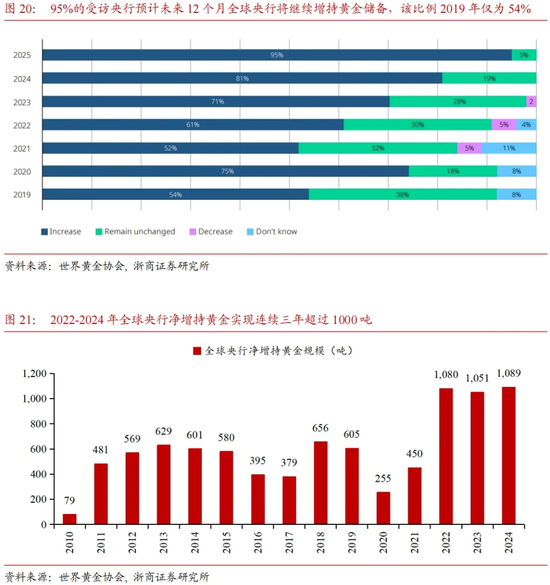
Core Viewpoint - The accumulation of macro risks in developed Western economies and the tense global geopolitical environment are reshaping the super cycle of commodities, with two clear trading lines emerging: "de-dollarization" of reserve asset replacement and accumulation of key metals based on "strong security" logic [1][23]. Group 1: Gold and Reserve Asset Replacement - Global central banks are accelerating the adjustment of reserve structures, reducing reliance on dollar assets and viewing gold as a core tool to hedge against sovereign currency credit risks [1][24]. - As of Q3 2025, the dollar's share in global foreign exchange reserves is expected to decline to 56.92%, continuing a slow downward trend [3][24]. - In 2024, global central banks are projected to net add 1,089 tons of gold, marking three consecutive years of net purchases exceeding 1,000 tons [30][31]. Group 2: Key Metals and Strategic Accumulation - The trend of strengthening security is leading to a revaluation of specific metal assets, with countries urgently needing to stockpile strategic materials to ensure military supply [1][13]. - From January to November 2025, global base metal prices increased by 15%, with tungsten rising by 229%, cobalt by 120%, and copper by 42% [1][23]. - The demand for key metals such as tungsten, lithium, and cobalt is driven by military needs, with significant supply gaps emerging due to recent policies from the US and European allies [1][22]. Group 3: Investment Directions - Investors should focus on gold and related precious metals that possess independent value storage functions to address the instability of the monetary credit system [2][20]. - Attention should also be given to key metals closely related to military demand, which are less affected by the real estate cycle, to capture structural premiums brought by "strong security" [2][39].

以史为鉴
付鹏的财经世界· 2026-01-02 08:14
Core Viewpoint - The article discusses the concept of "war metals," highlighting the historical price trends of metals such as chromium, manganese, tungsten, titanium, uranium, silver, and tin, and draws parallels between the current geopolitical climate and that of the 1970s and 1980s [1][3][4]. Group 1: Historical Context and Comparisons - The current era shares significant similarities with the 1970s and 1980s, characterized by geopolitical tensions and technological advancements that drive demand for certain metals [3][4]. - The period from the 1960s to the 1980s saw a stagnation in productivity in the U.S., similar to the current global trend of de-globalization and rising geopolitical tensions [3][4]. - The article emphasizes that the dual attributes of metals—strategic and productivity-related—are crucial in understanding their price volatility [7][10]. Group 2: Price Volatility and Market Dynamics - The price of strategic metals experienced extreme fluctuations during the 1970s and 1980s due to geopolitical factors, with examples such as cobalt rising from approximately $5.62 per pound in 1977 to a peak of $32.83 per pound in 1979 [9][10]. - The article notes that after 1980, despite technological advancements in sectors like computing and semiconductors, metal prices generally declined, indicating that new industrial demand does not always correlate with sustained price increases [10][11]. - The current market dynamics are influenced by financial derivatives and leverage, making the discussion of strategic metals relevant to a broader audience compared to past decades [8][10]. Group 3: Geopolitical Influences - Historical geopolitical tensions, such as the Cold War, significantly impacted the supply and demand of strategic metals, with the Soviet Union and the U.S. engaging in strategic stockpiling and market manipulation [12][13]. - The article highlights that geopolitical conflicts often lead to panic buying and supply shortages, which exacerbate price volatility in the metals market [14][15]. - The potential for a shift in geopolitical relations, akin to the thawing of U.S.-Soviet tensions in the 1980s, could significantly alter the current market landscape for these metals [19].

中伟股份(300919) - 300919中伟股份投资者关系管理信息20251230
2025-12-30 11:06
定 5-6 亿湿吨镍矿资源的供应,并已在印尼建立四大镍原料产业 基地,打通资源、冶炼、材料的垂直一体化产业链生态。 2、对此次镍价上涨周期怎么看? 答:公司持续完善一体化产业链生态的搭建,LME 镍价上涨 对公司经营利润有积极影响。 3、公司与下游客户的谈价周期和定价机制是什么,是否受 上游金属价格波动影响? 答:公司与大客户主要签订长期合作协议方式,协议时间至 少三年以上。公司采取"以销定产"的经营策略以及"主要原材 料成本+加工费"的价格传导定价机制,辅以套期保值业务,最 大程度降低原材料价格波动的直接影响。 4、公司 2025 年镍系三元未来增长驱动因素有哪些? 答:展望未来,基于中国市场对长续航需求提升、单车带电 量提升、固态电池产业化、欧洲新能源车需求向好,未来镍系材 料仍然具备较大市场增长空间。 5、公司磷酸铁锂相关的资源布局、开采情况及成本等信息? 答:产能布局方面:目前公司在贵州开阳布局了 20 万吨磷 酸铁和 5 万吨磷酸铁锂产能。资源布局方面:磷资源,公司在贵 州开阳掌控优质磷矿资源,磷矿资源量达 9844 万吨,平均品位 25%;规划年开采量 280 万吨,近期即将启动动工;锂资源,公 ...

国泰君安期货商品研究晨报-20251226
Guo Tai Jun An Qi Huo· 2025-12-26 01:48
2025年12月26日 国泰君安期货商品研究晨报 观点与策略 | 黄金:通胀温和回落 | 3 | | --- | --- | | 白银:高位调整 | 3 | | 铜:市场情绪偏暖,支撑价格上涨 | 5 | | 锌:横盘震荡 | 7 | | 铅:库存持续减少,支撑价格 | 9 | | 锡:供应再出扰动 | 10 | | 铝:震荡偏强 | 12 | | 氧化铝:持续磨底 | 12 | | 铸造铝合金:跟随电解铝 | 12 | | 铂:多头情绪占优 | 14 | | 钯:震荡上行 | 14 | | 镍:盘面资金博弈,镍价宽幅震荡 | 16 | | 不锈钢:基本面供需双弱,印尼镍矿消息扰动 | 16 | | 碳酸锂:正极大厂检修,关注回调风险 | 18 | | 工业硅:关注情绪带动 | 20 | | 多晶硅:硅片价格报涨 | 20 | | 铁矿石:高位反复 | 22 | | 螺纹钢:宽幅震荡 | 23 | | 热轧卷板:宽幅震荡 | 23 | | 硅铁:市场信息扰动,宽幅震荡 | 25 | | 锰硅:市场信息扰动,宽幅震荡 | 25 | | 焦炭:震荡反复 | 27 | | 焦煤:震荡反复 | 27 | | 原木:低 ...
国泰君安期货商品研究晨报-20251223
Guo Tai Jun An Qi Huo· 2025-12-23 01:38
Report Industry Investment Ratings No specific investment ratings for the industry are provided in the report. Core Views of the Report The report offers insights and analyses on various commodities in the futures market, covering precious metals, base metals, energy, agricultural products, and more. It presents the current market trends, fundamental data, and macro and industry news for each commodity, along with corresponding trend intensities and trading suggestions. Summary by Commodity Category Precious Metals - **Gold**: Inflation is moderately declining, with a trend intensity of 0 [6]. - **Silver**: Reached a new high, with a trend intensity of 0 [6]. - **Platinum**: Domestic and international markets resonate, and the bullish sentiment remains unabated, with a trend intensity of 1 [26][28]. - **Palladium**: The climbing pace has slowed, with an upward trend in oscillations, and a trend intensity of 1 [26][28]. Base Metals - **Copper**: The price rose as the US dollar declined, with a trend intensity of 1 [10][12]. - **Zinc**: Narrow - range fluctuations, with a trend intensity of 0 [13][15]. - **Lead**: Reduced inventory supports the price, with a trend intensity of 0 [16]. - **Tin**: Supply has encountered new disruptions, with a trend intensity of 1 [18][22]. - **Aluminum**: Range - bound oscillations, with a trend intensity of 1; Alumina had a slight rebound, with a trend intensity of 0; Cast aluminum alloy follows the trend of electrolytic aluminum, with a trend intensity of 0 [23][25]. - **Nickel**: The fundamental contradictions have not changed significantly, and concerns about Indonesian policies have increased, with a trend intensity of 0 [30][34]. - **Stainless Steel**: The fundamentals show weak supply and demand, and the news of Indonesian nickel mines has caused disturbances, with a trend intensity of 0 [30][34]. Energy and Chemicals - **Crude Oil - Related**: Not specifically mentioned in a comprehensive way, but some related commodities like fuel oil and asphalt are covered. - **Fuel Oil**: The night - session price rose, and short - term volatility increased, with a trend intensity of 1 [139]. - **Low - Sulfur Fuel Oil**: Mainly followed the upward trend, and the spot price spread between high - and low - sulfur fuels rebounded slightly, with a trend intensity of 1 [139]. - **Asphalt**: The spot price had a narrow - range adjustment, remaining stable despite the oil price trend, with a trend intensity of 1 [80][89]. - **Chemicals**: - **PTA**: Do not chase the high price, and it is in a high - level oscillating market, with a trend intensity of 0 [63][70]. - **MEG**: The trend is relatively weak, with a trend intensity of 0 [63][70]. - **LLDPE**: Some full - density products have been redirected, and the valuation support is limited, with a trend intensity of 0 [94][96]. - **PP**: The PDH profit has been compressed again, and the trend is weakly oscillating, with a trend intensity of 0 [97][99]. - **Caustic Soda**: A short - term rebound, and attention should be paid to inventory changes, with a trend intensity of 0 [100][102]. - **Methanol**: Oscillations are supported, with a trend intensity of 0 [112][115]. - **Urea**: Oscillating, with a trend intensity of 0 [116][119]. - **Styrene**: Short - term oscillations, with a trend intensity of 0 [120]. - **Soda Ash**: The spot market has changed little, with a trend intensity of 0 [124][125]. - **LPG**: The external cost is relatively strong, with a trend intensity of 0 [127][132]. - **Propylene**: There are expectations of supply - demand tightening, and the short - term trend is supported, with a trend intensity of 0 [128][132]. - **PVC**: A short - term rebound, but the upward space may be limited, with a trend intensity of 0 [136][137]. Agricultural Products - **Palm Oil**: The production cut is gradually being realized, and there is a short - term rebound, with a trend intensity of 1 [168][174]. - **Soybean Oil**: The price of US soybeans rebounded, and it is recommended to conduct range - bound operations, with a trend intensity of 0 [168][174]. - **Soybean Meal**: The US soybeans rose overnight, and the Dalian soybean meal may rebound and oscillate, with a trend intensity of +1 [175][177]. - **Soybean**: Oscillating, with a trend intensity of 0 [175][177]. - **Corn**: Attention should be paid to the spot market, with a trend intensity of 0 [178][181]. - **Sugar**: There is an expectation of a weak basis, with a trend intensity of 0 [182][185]. - **Cotton**: The futures price is oscillating strongly, and attention should be paid to downstream pre - holiday stocking, with a trend intensity of 0 [187][191]. - **Eggs**: Oscillating and adjusting, with a trend intensity of 0 [193]. - **Hogs**: Hold the reverse spread, with a trend intensity of - 1 [195][200]. - **Peanuts**: Attention should be paid to the purchases of oil mills, with a trend intensity of 0 [202][204]. Others - **Logs**: Low - level oscillations, with a trend intensity of 0 [59][62]. - **Synthetic Rubber**: The oscillation center has moved up, with a trend intensity of 0 [77][79]. - **Paper Pulp**: Oscillating, with a trend intensity of 0 [104][106]. - **Glass**: The raw sheet price is stable, with a trend intensity of 0 [109][110]. - **Ferroalloys**: - **Silicon Iron**: The sector and fundamentals resonate, and the trend is strongly oscillating, with a trend intensity of 0 [50][54]. - **Manganese Silicon**: The long and short sentiments are intertwined, and the trend is widely oscillating, with a trend intensity of 0 [50][54]. - **Coke and Coking Coal**: Wide - range oscillations, with a trend intensity of 0 for both [55][58]. - **Container Freight Index (European Line)**: Near - term contracts should focus on the opening guidance, while far - term contracts should focus on the progress of the Gaza peace talks, with a trend intensity of 0 [141][155]. - **Short Fibre**: Short - term follow - up of raw materials, with compressed processing fees, with a trend intensity of 0 [157][158]. - **Bottle Chips**: Short - term follow - up of raw materials, with a trend intensity of 0 [157][158]. - **Offset Printing Paper**: It is recommended to wait and see, with a trend intensity of 0 [160]. - **Pure Benzene**: Short - term oscillations, with a trend intensity of 0 [165][166].
拉美拓展合作渠道消减对美依赖
Jing Ji Ri Bao· 2025-12-18 06:14
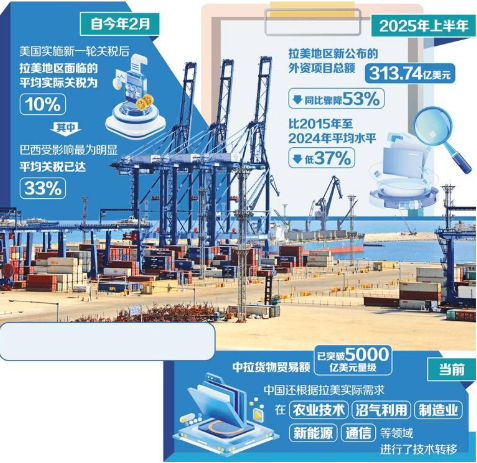
Core Viewpoint - The global tariff increase policy implemented by the U.S. government has significantly impacted the Latin American region, which is highly integrated with the U.S. economy. The UN Economic Commission for Latin America and the Caribbean (ECLAC) emphasizes the urgent need for these countries to reduce their trade dependence on the U.S. and pursue market diversification strategies [1][2]. Trade Dependency Challenges - Since the U.S. imposed a new round of tariffs in February, the average actual tariff faced by Latin America has reached 10%, with Brazil being the most affected at 33%. Despite a projected 5% growth in goods exports by 2025, structural risks remain [2]. - The current trade resilience is largely due to U.S. importers engaging in "front-loading" to avoid anticipated tariffs, indicating that this short-term prosperity is unsustainable. The negative impacts of tariffs are expected to become more pronounced by 2026 [2]. - Foreign investment attractiveness has been severely undermined, with new foreign investment projects in Latin America totaling only $31.374 billion in the first half of 2025, a 53% year-on-year decline and 37% below the average from 2015 to 2024. Investment in export-oriented industries targeting the U.S. market has contracted significantly, with declines exceeding 60% in sectors like automotive, consumer goods, and metal minerals [2]. Structural Transformation Setbacks - The deep dependence of Latin America on the U.S. market is rooted in over a century of "center-periphery" economic relations, with the Monroe Doctrine shaping U.S. policies towards the region. This has led to a dependency on primary product exports, resulting in weak industrial manufacturing and development capabilities [6]. - Despite efforts to promote industrial transformation, the region remains heavily reliant on primary product exports, particularly to the U.S. market, where a significant portion of imports in categories like bananas, sugar, and refined copper comes from Latin America [6]. - Internal structural challenges, such as high informal employment rates, tax system flaws, and inadequate infrastructure, complicate the path to reducing market dependency [7]. Diversified Cooperation for Solutions - To address tariff escalations and dependency issues, ECLAC recommends that regional countries deepen trade relations with diverse partners, including China, the EU, India, and ASEAN, while enhancing regional infrastructure connectivity and trade facilitation [8]. - The current U.S. administration's "America First" policy, characterized by exclusivity, poses challenges to Latin America's ability to collaborate with other major powers. However, the rise of the Global South offers new strategic opportunities for Latin America [8]. - Latin American countries are actively seeking diversified cooperation channels, focusing on practical collaboration with major economies and enhancing South-South cooperation through multilateral platforms [9]. Regional Integration Revitalization - Latin American regional integration is experiencing a resurgence, with leaders focusing on strengthening regional cooperation to collectively address external interventions and hegemonic actions. Countries like Brazil and Colombia are promoting regional integration processes in key areas such as security and energy connectivity [9].
《有色》日报-20251217
Guang Fa Qi Huo· 2025-12-17 01:29
1. Report Industry Investment Ratings No industry investment ratings are provided in the reports. 2. Core Views of the Reports Tin - Despite a significant increase in Indonesian exports in November leading to a decline in tin prices, the fundamental situation remains strong. Tin prices are expected to maintain a strong trend for the rest of the year. It is recommended to hold long positions and adopt a strategy of buying on dips, while also keeping an eye on subsequent macro and supply - side changes [1]. Nickel - After the macro - level factors have been digested, the previous upward drivers for nickel prices are limited. With the decline of the Indonesian nickel ore benchmark price and the accelerating inventory accumulation in China, the fundamental situation is loose, which restricts the upside potential of prices. In the short term, the nickel futures market is expected to be weak, with the main contract price ranging from 110,000 to 116,000 yuan. Attention should be paid to the performance around the 110,000 - yuan resistance level and upstream production cuts and Indonesian policy news [2]. Stainless Steel - The supply pressure has slightly eased, and the stop - falling of nickel iron provides cost support. However, the demand is weak in the off - season, and the inventory reduction is insufficient. In the short term, stainless steel is in a game of weak supply and demand. Affected by the weak performance of Shanghai nickel, it is expected to be weakly adjusted, with the main contract price ranging from 12,200 to 12,800 yuan. Attention should be paid to the implementation of steel mill production cuts and marginal improvements in demand [3][5]. Lithium Carbonate - The fundamental situation has not changed much recently, maintaining a situation of strong supply and demand. The inventory reduction in all links last week was about 2,000 tons, and the recent inventory changes are relatively stable. The market's expectations for resumption of production are constantly adjusted, and in the short term, the futures market may maintain a strong trend driven by capital sentiment. However, in the off - season, the new driving forces may be limited, and the recent increase in news - related interference may cause market fluctuations [7]. Zinc - As the domestic zinc ore enters the production - reduction season, the tightness at the ore end may gradually spread to zinc ingots, and the supply side is gradually changing from loose to tight. The export of refined zinc drives the tightness of the spot market and boosts domestic zinc prices. In the short term, the price of Shanghai zinc may be stronger than that of London zinc. In the future, if the TC stops falling and stabilizes, the smelting profit may be repaired, which may drive the increase in zinc ingot production again. Attention should be paid to the TC inflection point and changes in refined zinc inventory, with the main contract focusing on the support around 22,800 yuan [10]. Copper - The global copper supply and inventory are imbalanced, and the tight situation at the ore end still exists, which pushes up the bottom of copper prices. Macro - events such as the release of US inflation data and the Japanese central bank's interest - rate decision this week may intensify short - term price fluctuations. The main contract should focus on the support in the range of 90,000 - 91,000 yuan [11]. Aluminum - For alumina, the oversupply situation remains unchanged, and the price is expected to maintain a bottom - level oscillation, with the main contract price ranging from 2,450 to 2,700 yuan/ton. Attention should be paid to the risk of active profit - taking due to capital reduction. Whether the market can rebound depends on the actual production - cut scale of existing enterprises and whether the inventory shows a clear inflection point. For electrolytic aluminum, supported by strong macro - expectations and real supply risks, the price is expected to be strong in the short term, but high prices may suppress terminal consumption, and the risk of a pull - back after a rise should be vigilant. The main contract of Shanghai aluminum is expected to oscillate in the range of 21,700 - 22,400 yuan/ton, and attention should be paid to changes in macro - expectations and the actual inventory reduction in China [14]. Industrial Silicon - It is expected that the situation of weak supply and demand will continue in December. The industrial silicon price is expected to oscillate at a low level, mainly in the range of 8,000 - 9,000 yuan/ton. If the production decreases significantly, it may break through 10,000 yuan/ton; if the polysilicon production is significantly reduced and the industrial silicon production cut is less than expected, the price may fall to 7,500 yuan/ton. With a large number of current warehouse receipts, investors should pay attention to position management [15]. Polysilicon - The supply exceeds demand, and the inventory continues to accumulate. There is a contradiction between the strong futures market and weak spot demand. The platform company's registration is favorable for price support or an upward trend in sentiment, but the actual supply - demand balance depends on the implementation of capacity storage and production control. Currently, the polysilicon price maintains a high - level oscillation, and the futures price is strongly rising, with a large premium over the spot market. In the future, attention should be paid to the production - cut amplitude or price - fall pressure. The main contract has shifted to 2605, and it is recommended to wait and see for now [17]. Aluminum Alloy - The casting aluminum alloy market is oscillating strongly in the game between strong cost support and weak demand. The cost support is strong due to the shortage of scrap aluminum raw materials and the increase in prices of auxiliary materials such as copper. However, high prices suppress downstream short - term purchasing willingness, and the operating rates of small and medium - sized die - casting enterprises have declined. The ADC12 price has limited downward space but is restricted from rising by high inventory and high prices. It is expected to maintain a high - level narrow - range oscillation in the short term, with the main contract price ranging from 20,700 to 21,400 yuan/ton. Attention should be paid to the improvement progress of scrap aluminum supply and changes in downstream purchasing rhythm [20]. 3. Summaries by Relevant Catalogs Tin - **Price and Basis**: SMM 1 tin decreased by 1.11% to 320,500 yuan/ton, and the LME 0 - 3 premium increased by 194.12% to 50.00 dollars/ton [1]. - **Internal - External Ratio and Import - Export Profit/Loss**: The import loss was - 13,349.68 yuan/ton, with a 4.43% increase [1]. - **Monthly Spread**: The spread between 2601 - 2602 increased by 24.71% [1]. - **Fundamental Data**: In October, tin ore imports increased by 33.49%, SMM refined tin production increased by 53.09%, and the average SMM refined tin operating rate increased by 53.23% [1]. - **Inventory Change**: SHEF inventory increased by 7.66%, and social inventory increased by 5.59% [1]. Nickel - **Price and Basis**: SMM 1 electrolytic nickel decreased by 2.22% to 114,750 yuan/ton, and the 1 Jinchuan nickel premium increased by 5.66% [2]. - **Cost of Electrolytic Nickel**: The cost of integrated MHP - produced electrolytic nickel increased by 0.19%, while the cost of integrated high - grade nickel matte - produced electrolytic nickel decreased by 3.60% [2]. - **New Energy Material Price**: The average price of battery - grade nickel sulfate decreased by 0.04%, and the average price of battery - grade lithium carbonate increased by 0.95% [2]. - **Monthly Spread**: The spread between 2602 - 2603 increased by 50 yuan/ton [2]. - **Supply - Demand and Inventory**: China's refined nickel production decreased by 9.38%, and imports decreased by 65.66%. SHFE inventory increased by 5.10%, and social inventory increased by 3.73% [2]. Stainless Steel - **Price and Basis**: The price of 304/2B (Wuxi Hongwang 2.0 coil) decreased by 0.78% to 12,700 yuan/ton, and the spot - futures spread increased by 12.24% [3]. - **Raw Material Price**: The average price of 8 - 12% high - grade nickel pig iron decreased by 0.11% [3]. - **Monthly Spread**: The spread between 2602 - 2603 increased by 25 yuan/ton [3]. - **Fundamental Data**: China's 300 - series stainless - steel crude - steel production decreased by 0.72%, and the net export volume decreased by 21.54%. The 300 - series social inventory increased by 0.69% [3]. Lithium Carbonate - **Price and Basis**: The average price of SMM battery - grade lithium carbonate increased by 0.74% to 95,850 yuan/ton, and the average price of SMM industrial - grade lithium carbonate increased by 0.76% [7]. - **Monthly Spread**: The spread between 2601 - 2602 increased by 120 yuan/ton [7]. - **Fundamental Data**: In November, lithium carbonate production increased by 3.35%, and demand increased by 5.11%. In October, imports increased by 21.86%, and exports increased by 63.05% [7]. - **Inventory**: In November, the total lithium carbonate inventory decreased by 23.36%, and the downstream inventory decreased by 21.13% [7]. Zinc - **Price and Spread**: SMM 0 zinc ingot decreased by 1.24% to 23,180 yuan/ton, and the premium increased by 15 yuan/ton [10]. - **Ratio and Profit/Loss**: The import loss was - 2,430 yuan/ton, with a 1,344.70 - yuan increase, and the Shanghai - London ratio increased by 0.09 [10]. - **Monthly Spread**: The spread between 2601 - 2602 increased by 25 yuan/ton [10]. - **Fundamental Data**: In November, refined zinc production decreased by 3.56%, and in October, imports decreased by 16.94% while exports increased by 243.79% [10]. - **Inventory**: China's zinc ingot seven - region social inventory decreased by 7.57%, and LME inventory increased by 48.20% [10]. Copper - **Price and Spread**: SMM 1 electrolytic copper decreased by 0.61% to 91,700 yuan/ton, and the premium decreased by 185 yuan/ton [11]. - **Refined - Scrap Spread**: The refined - scrap spread decreased by 16.29% to 3,981 yuan/ton [11]. - **Monthly Spread**: The spread between 2601 - 2602 increased by 10 yuan/ton [11]. - **Fundamental Data**: In November, electrolytic copper production increased by 1.05%, and in October, imports decreased by 15.61% [11]. - **Inventory**: The domestic social inventory increased by 2.62%, and the bonded - area inventory decreased by 2.58% [11]. Aluminum - **Price and Spread**: SMM A00 aluminum decreased by 0.37% to 21,630 yuan/ton, and the premium decreased by 60 yuan/ton [14]. - **Ratio and Profit/Loss**: The electrolytic aluminum import loss was - 1,983 yuan/ton, with a 99.4 - yuan increase, and the Shanghai - London ratio decreased by 0.01 [14]. - **Monthly Spread**: The spread between AL 2601 - 2602 decreased by 20 yuan/ton [14]. - **Fundamental Data**: In November, alumina production decreased by 4.44%, and domestic electrolytic aluminum production decreased by 2.82% [14]. - **Inventory**: China's electrolytic aluminum social inventory increased by 0.17%, and the aluminum rod social inventory increased by 8.58% [14]. Industrial Silicon - **Spot Price and Basis**: The price of East - China oxygen - containing SI5530 industrial silicon remained unchanged at 9,200 yuan/ton, and the basis decreased by 1.76% [15]. - **Monthly Spread**: The spread between 2601 - 2602 increased by 300.00% [15]. - **Fundamental Data**: National industrial silicon production decreased by 11.17%, and the national operating rate decreased by 4.84% [15]. - **Inventory Change**: The Xinjiang factory - warehouse inventory increased by 3.39%, and the social inventory increased by 0.54% [15]. Polysilicon - **Spot Price and Basis**: The average price of N - type re - feedstock remained unchanged at 52,300 yuan/kg, and the N - type material basis decreased by 9.95% [17]. - **Futures Price and Monthly Spread**: The main contract increased by 0.98% to 58,600 yuan/ton, and the spread between the current month and the first - continuous contract increased by 8.65% [17]. - **Fundamental Data**: Weekly silicon wafer production increased by 1.67%, and monthly polysilicon production decreased by 14.48% [17]. - **Inventory**: Polysilicon inventory increased by 0.69%, and silicon wafer inventory increased by 9.39% [17]. Aluminum Alloy - **Price and Spread**: The price of SMM aluminum alloy ADC12 remained unchanged at 21,600 yuan/ton, and the refined - scrap spread in Foshan for broken primary aluminum increased by 1.98% [20]. - **Monthly Spread**: The spread between 2601 - 2602 increased by 15 yuan/ton [20]. - **Fundamental Data**: In November, recycled aluminum alloy ingot production increased by 5.74%, and primary aluminum alloy ingot production increased by 5.84% [20]. - **Inventory**: The weekly social inventory of recycled aluminum alloy ingots decreased by 1.08%, and the daily inventory in Foshan decreased by 0.12% [20].
郑猛:拉美重塑多元贸易格局正当时
Jing Ji Ri Bao· 2025-12-16 00:05
Core Insights - The report by the United Nations Economic Commission for Latin America and the Caribbean (ECLAC) highlights unprecedented chain reactions in Latin America due to the U.S. tariff increases, leading to a significant reduction in foreign investment and pressure on supply chains [1][2] Economic Impact - Since the U.S. raised tariffs, the average tariff faced by Latin America and the Caribbean has increased by approximately 10%, with Brazil experiencing the most significant impact, where the average tariff has reached 33% [1] - The total value of newly announced foreign investment projects in Latin America and the Caribbean for the first half of 2025 is only $31.374 billion, a dramatic decline of 53% year-on-year and 37% lower than the average from 2015 to 2024 [1] Structural Vulnerabilities - Latin American countries are deeply embedded in the lower-end segments of global supply chains, heavily reliant on resource exports and primary product processing, which has made them vulnerable to U.S. tariff increases that diminish their export price competitiveness [2] - The automotive industry in Mexico, a key part of the U.S. supply chain, has seen a sharp decline in foreign investment projects, leading to idle capacity in local assembly plants and impacting upstream industries like steel and rubber [2] Trade Diversification Strategies - ECLAC's report emphasizes the need for Latin American countries to accelerate market diversification to mitigate trade risks from U.S. tariffs, suggesting a reduction in trade dependency on the U.S. and deepening relationships with China, the EU, India, and ASEAN [3] - The trade volume between Latin America and China is projected to reach $518.47 billion in 2024, a 6% increase year-on-year, with exports to China expected to grow by 7% by 2025, driven by increased agricultural and mineral exports [3] Challenges to Trade Diversification - Political fragmentation in the region complicates cooperation and coordination among Latin American countries, leading to significant differences in industrial policies and investment attraction [4] - Infrastructure deficiencies, particularly in transportation, hinder trade diversification efforts by increasing logistics costs and limiting efficient commodity transport [4] - Geopolitical tensions may introduce external uncertainties, as the U.S. may intensify its influence in the region, potentially disrupting Latin America's partnerships with other countries [4] Future Outlook - Despite the challenges posed by U.S. tariffs, Latin America's inherent economic resilience and potential for diversified cooperation remain promising, supported by its rich natural resources and labor advantages [5] - If Latin America can leverage the historical opportunity of global trade diversification and deepen international cooperation based on its comparative advantages, it may reshape its competitiveness and achieve stable economic recovery and sustainable development [5]
反弹趋于后期,市场重回震荡蓄势
Haitong Securities International· 2025-12-14 14:01
Group 1: Market Overview - The market rebound is entering a late stage, with expectations of a transition to a consolidation phase next week, while downside risk remains limited, providing opportunities for accumulation [5][14]. - The technology sector continues to lead the rebound, while the energy sector is lagging behind [1][9]. - Recent political meetings have emphasized the importance of expanding domestic demand, with state-owned enterprises encouraged to implement major projects to support this initiative [2][10]. Group 2: Consumer Sector Insights - Weak consumption persists, particularly in the liquor sector, with the wholesale price of Feitian Moutai dropping below the official guidance price, leading to new cyclical lows for staple consumer sectors [2][10]. - Despite pessimistic earnings expectations, valuations in the liquor sector have fallen to low levels, and rising dividend yields are beginning to show allocation value [2][10]. Group 3: External Market Influences - The U.S. Federal Reserve's recent rate cut has led to a decline in the U.S. dollar index, while the 10-year U.S. Treasury yield has shifted to a range-bound pattern, reflecting market caution regarding inflation and future rate cuts [3][11]. - International metal prices have seen fluctuations, with precious metals like silver and gold experiencing gains, although profit-taking has occurred in the metals complex [3][11][12]. Group 4: Fund Flows and Market Activity - A-share average daily turnover has risen to RMB1.95 trillion, while Hong Kong market turnover has recovered to HKD207 billion [4][13]. - There have been net outflows from equity ETFs, while margin financing flows remain positive, indicating a mixed sentiment in the market [4][13]. Group 5: Sector-Specific Opportunities - Domestic consumption themes are beginning to receive supportive signals, which may lead to relative outperformance in a range-bound market [5][14]. - Within the technology sector, segments that have corrected more fully, such as the Hang Seng Tech Index and policy-supported domestic computing power, continue to offer value for accumulation on dips [5][14].