原油

Search documents
伊朗局势持续发酵 预计原油期货仍维持震荡偏强
Jin Tou Wang· 2026-01-29 06:02
Group 1 - The domestic energy sector in the futures market showed a mostly positive trend, with crude oil futures opening at 462.1 yuan/barrel and reaching a high of 472.2 yuan, marking a 3.49% increase [1] - The current crude oil market is exhibiting a strong upward trend, with various institutions providing insights on future price movements [2] Group 2 - Everbright Futures noted that risks to Iranian oil supply are pushing prices higher, while a larger-than-expected decline in U.S. crude oil inventories is offset by an increase in refined oil inventories, leading to a forecast of continued strong fluctuations in oil prices [2] - Chaos Tiancheng Futures analyzed that OPEC+ is maintaining production levels amidst geopolitical disturbances and U.S. cold weather affecting shale oil output, while strong U.S. economic resilience and a weaker dollar support non-dollar demand [2] - Zhongcai Futures indicated that EIA commercial crude oil inventories have decreased more than expected, alongside ongoing tensions in Iran, predicting a short-term continuation of a strong fluctuation in oil prices [2]
中信期货晨报20260129:国内商品期市收盘多数上涨,基本金属涨幅居前-20260129
Zhong Xin Qi Huo· 2026-01-29 05:01
Report Industry Investment Rating No investment rating information is provided in the report. Core Viewpoints of the Report - Domestically, the current situation is a combination of "weak reality, stable policies, and strong expectations." The recovery of domestic demand is slow, and the support for risk - assets from the domestic fundamentals is limited in the short - term. Overseas, the macro - environment is still favorable for the resilience of risk - assets, but policy uncertainty is increasing, leading to greater differentiation in asset pricing. In terms of asset allocation, it is recommended to over - allocate long positions in domestic mid - cap style equities, specifically the CSI 500 stock index futures; maintain a neutral stance on national bonds and standard - allocate long positions in 2 - year national bond futures; standard - allocate long positions in precious metals; over - allocate long positions in non - ferrous metals; and adopt a range - trading strategy for the black sector [14]. - For different sectors, most varieties are expected to show a volatile trend in the short - term, with some showing a volatile upward or downward trend [15][17]. Summary by Relevant Catalogs 1. Financial Market Fluctuations - **Stock Index Futures**: On January 28, 2026, the CSI 300 futures price was 4,732.8, with a daily increase of 0.14%, a weekly increase of 0.5%, and a monthly increase of 2.89%. The Shanghai 50 futures price was 3,069.8, with a daily increase of 0.01%, a weekly increase of 1.05%, and a monthly increase of 1.48%. The CSI 500 futures price was 8,622, with a daily increase of 0.62%, a weekly decrease of 0.42%, and a monthly increase of 17.1%. The CSI 1000 futures price was 8,377.8, with a daily increase of 0.1%, a weekly decrease of 1.63%, and a monthly increase of 12.66% [2]. - **National Bond Futures**: The 2 - year national bond futures price was 102.394, with a daily increase of 0.01%, a weekly decrease of 0.02%, and a monthly decrease of 0.06%. The 5 - year national bond futures price was 105.87, with a daily increase of 0.05%, a weekly decrease of 0.01%, and a monthly increase of 0.1%. The 10 - year national bond futures price was 108.21, with a daily increase of 0.03%, a weekly increase of 0.01%, and a monthly increase of 0.32%. The 30 - year national bond futures price was 112.09, with a daily increase of 0.07%, a weekly decrease of 0.19%, and a monthly increase of 0.61% [2]. - **Foreign Exchange**: The US dollar index was 95.7725, with a daily decrease of 1.32%, a weekly decrease of 1.78%, and a monthly decrease of 2.54%. The US dollar central parity rate was 6.9545 pips, with a daily increase of 3, a weekly decrease of 87, and a monthly decrease of 345 [2]. 2. Fluctuations in Popular Industries - On January 28, 2026, among various industries, non - ferrous metals had the highest daily increase of 6.02%, with a weekly increase of 10.59% and a monthly increase of 31.19%. The defense and military industry had a daily decrease of 1.71%, a weekly decrease of 4.62%, and a monthly increase of 7.96%. The banking industry had a daily decrease of 0.63%, a weekly decrease of 0.33%, and a monthly decrease of 7.3% [5]. 3. Fluctuations in Overseas Commodities - **Energy**: On January 27, 2026, NYMEX WTI crude oil was priced at $62.57, with a daily increase of 3.2%, a weekly increase of 2.11%, and a monthly increase of 8.99%. ICE Brent crude oil was priced at $66.76, with a daily increase of 3.07%, a weekly increase of 2.02%, and a monthly increase of 9.6% [8]. - **Precious Metals**: COMEX gold was priced at $5,179.6, with a daily increase of 1.91%, a weekly increase of 3.94%, and a monthly increase of 19.56%. COMEX silver was priced at $112.345, with a daily decrease of 2.74%, a weekly increase of 8.8%, and a monthly increase of 58.28% [8]. - **Non - ferrous Metals**: LME copper was priced at $13,006.5, with a daily decrease of 1.46%, a weekly decrease of 0.93%, and a monthly increase of 4.08%. LME aluminum was priced at $3,207, with a daily increase of 0.58%, a weekly increase of 1.06%, and a monthly increase of 7.01% [8]. 4. Macro Highlights - **Domestic Macro**: The current domestic macro - situation is a combination of "weak reality, stable policies, and strong expectations." The recovery of domestic demand is slow, price levels remain low, and credit repair mainly relies on the government and policy tools. The policy is in an observation and verification stage, and the improvement in physical work and demand is more likely to be concentrated in the first quarter. In the short - term, the direct support from domestic fundamentals for risk - assets is limited [14]. - **Overseas Macro**: Overseas, the demand is weakening marginally, inflation is falling slowly, and policy uncertainty is increasing. The US consumption has some resilience, but its internal driving force is weakening. The core inflation is cooling, but the decline is not smooth. The market's focus has shifted to the expectation of the Fed's leadership change, increasing policy uncertainty [14]. - **Large - scale Assets**: It is recommended to over - allocate long positions in domestic mid - cap style equities (CSI 500 stock index futures), standard - allocate long positions in 2 - year national bond futures, standard - allocate long positions in precious metals, over - allocate long positions in non - ferrous metals, and adopt a range - trading strategy for the black sector [14]. 5. Viewpoint Highlights - **Financial Sector**: Stock index futures are expected to fluctuate upwards, stock index options are expected to fluctuate, and national bond futures are expected to fluctuate [15]. - **Precious Metals**: Gold and silver are expected to fluctuate upwards, but short - term volatility risks should be noted [15]. - **Shipping Sector**: Container shipping on European routes is expected to fluctuate [15]. - **Black Building Materials Sector**: Most varieties such as steel, iron ore, coke, etc. are expected to fluctuate, with some showing a volatile upward or downward trend [15]. - **Non - ferrous Metals and New Materials Sector**: Most non - ferrous metal varieties are expected to fluctuate, with some showing a volatile upward trend, such as copper, aluminum, nickel, etc. [15]. - **Energy and Chemical Sector**: Most energy and chemical varieties are expected to fluctuate, and some agricultural products such as corn/starch, live pigs, etc. are expected to fluctuate downwards, while cotton is expected to fluctuate upwards [17]. - **Agricultural Sector**: Most agricultural products are expected to fluctuate, with some showing a volatile upward or downward trend [17].
《能源化工》日报-20260129
Guang Fa Qi Huo· 2026-01-29 02:01
1. Report Industry Investment Ratings - No industry investment ratings are provided in the reports 2. Core Views Polyester Industry - **PX**: The overall supply and demand of PX and PTA in Q1 are weaker than expected, with limited self - driving force before the Spring Festival. However, due to the expected tight supply - demand in Q2, the low - price support for PX is strong. It is expected to fluctuate at a high level with limited drive, with a short - term range of 7200 - 7600 and a long - term bullish view [1]. - **PTA**: Although the market is optimistic about the Q2 supply - demand, in the short term, with high valuation and weak reality, the drive is limited. It is expected to fluctuate at a high level in the range of 5200 - 5500, and TA5 - 9 is recommended for low - position positive hedging in the medium term [1]. - **Ethylene Glycol**: The supply - demand pattern is weak in the near term and strong in the long term. In the near term, there is pressure on inventory accumulation, while in Q2, the supply is expected to shrink, and it is possible to reduce inventory. Strategies include EG5 - 9 positive hedging at low prices and holding the seller of put option EG2605 - P - 3800 [1]. - **Short - fiber**: The overall supply - demand pattern is weak. The supply remains high, and demand decreases near the Spring Festival. The price of the spot is relatively firm. The strategy is the same as PTA, and the PF processing fee on the disk is expected to fluctuate between 800 - 1000, and it is advisable to shrink the spread when it is high [1]. - **Polyester Bottle - chip**: With the implementation of maintenance plans, the domestic supply is expected to decline significantly, and the inventory is decreasing. The absolute price and processing fee are expected to follow the cost side. PR2603 is recommended to pay attention to the support around 6200, and the processing fee on the main PR contract is expected to fluctuate between 400 - 550 yuan/ton [1]. LPG Industry - The report does not provide a clear overall view, but shows price increases in some LPG futures contracts and changes in inventory and upstream - downstream operating rates [2]. Natural Rubber Industry - The supply is shrinking, and the cost support is strengthening. The demand for some export - oriented semi - steel tire enterprises is sufficient, but the domestic sales are slow. The inventory in Qingdao is decreasing. The rubber price is expected to fluctuate strongly in the short term, but there is still significant pressure at the 16500 level [4]. Glass - Soda Ash Industry - **Soda Ash**: The spot price fluctuates in a narrow range. The supply is still high, and the demand is mainly for fulfilling orders. The inventory decreased last week but is still high year - on - year. The futures price is expected to fluctuate weakly [7]. - **Glass**: The spot price is stable, and the market transaction is average. The supply and demand are both weak, and the inventory has increased slightly. The futures price is expected to fluctuate weakly, and attention should be paid to changes in production lines and inventory [7]. PVC - Caustic Soda Industry - **Caustic Soda**: The futures price rebounded slightly, but the spot price continued to decline. The supply - demand imbalance remains, with high inventory and weak demand. The futures price is expected to fluctuate weakly, and attention should be paid to the impact of downstream procurement and price fluctuations [8]. - **PVC**: The futures price fluctuated weakly, and the spot price was weakly stable. The supply - demand has not improved, with supply exceeding demand and inventory accumulation pressure. The cost support has increased, and the policy support is insufficient. The disk is expected to fluctuate and correct, with the main contract focusing on the 4820 - 5000 range [8]. Urea Industry - The futures price rose and then fell, and the spot price increased. The supply is sufficient, and the industrial demand is average, while the agricultural demand is warming up. The urea factory's pre - Spring Festival order - receiving pressure is not significant. The market is expected to fluctuate slightly before the Spring Festival, and the main contract is recommended to focus on the 1760 - 1820 range [9]. Crude Oil Industry - International oil prices continued to rise sharply. Affected by the winter storm in the US, production decreased, EIA data showed a decline in commercial inventory and a small increase in refined oil inventory. The production of the Tengiz oilfield in Kazakhstan recovered slowly, and the US had a tough stance on Iran. Short - term positive factors still exist, and attention should be paid to geopolitical conflicts in the Middle East [11]. Methanol Industry - The futures price fluctuated in a narrow range at a high level, and the spot was purchased on demand. The supply and demand in the methanol market are both weak. The inventory in the inland area decreased, but high production and pre - Spring Festival inventory clearance limited the rebound. The port inventory increased slightly, and the MTO demand was weak. Key variables include the reduction rhythm of imported methanol and geopolitical risks [13]. Pure Benzene - Styrene Industry - **Pure Benzene**: The price rebounded, but the port inventory increased unexpectedly. With the improvement of disproportionation profit, some devices are expected to restart, and the import is expected to increase. The price is expected to face pressure at a high level, and it is advisable to wait and see and shrink the EB - BZ spread when it is high [15]. - **Styrene**: The load remains high under high profit, but the supply - demand is expected to weaken. The port inventory increased slightly, and the price is expected to face pressure at a high level. It is advisable to wait and see and shrink the EB - BZ spread when it is high [15]. Polyolefin Industry - The prices of LLDPE and PP are strong, driven by capital and geopolitical tensions. The static fundamentals show a decrease in supply and demand and inventory reduction, with low upstream inventory and strong price - holding intention. For PP, the supply pressure is relieved by maintenance; for PE, the pressure on standard products increases, and the downstream demand enters the off - season. Attention should be paid to spot transactions, inventory, and macro - sentiment [17]. 3. Summaries by Directory Polyester Industry - **Downstream Polyester Products**: POY150/48 price increased by 1.2%, FDY150/96 price remained unchanged, DTY150/48 price remained unchanged, etc. The cash - flow of some products changed, such as POY150/48 cash - flow decreased by 9.5% [1]. - **Upstream Prices**: Brent crude (March) increased by 1.23%, WTI crude (March) increased by 1.31%, CFR Japan naphtha increased by 2.8%, etc. [1]. - **PX - related**: CFR China PX decreased by 0.6%, PX spot price (RMB) decreased by 0.8%, PX - naphtha spread decreased by 6.1%, etc. [1]. - **PTA - related**: PTA East China spot price increased by 0.2%, TA05 - TA09 spread decreased by 62.5%, PTA spot processing fee increased by 4.8%, etc. [1]. - **MEG - related**: MEG East China spot price decreased by 0.2%, EG05 - EG09 spread decreased by 5.7%, MEG port inventory increased by 7.9%, etc. [1]. LPG Industry - **LPG Prices and Spreads**: The prices of PG2603, PG2604, and PG2605 increased, and the spreads such as PG03 - 04 and PG03 - 05 changed [2]. - **LPG Outer - market Prices**: FEI swap M1 and M2 contracts, CP swap M1 and M2 contracts all decreased [2]. - **LPG Inventory**: LPG refinery storage capacity ratio increased by 5.23%, LPG port inventory decreased by 1.53%, LPG port storage capacity ratio decreased by 1.36% [2]. - **LPG Upstream - downstream Operating Rates**: The main refinery operating rate increased by 1.99%, the PDH operating rate decreased by 14.81%, etc. [2]. Natural Rubber Industry - **Spot Prices and Basis**: The price of Yunnan state - owned whole latex increased by 0.63%, the basis decreased by 15.49%, the price of Thai standard mixed glue increased by 0.66%, etc. [4]. - **Monthly Spreads**: 9 - 1 spread decreased by 4.35%, 1 - 5 spread increased by 2.40%, 5 - 9 spread increased by 23.08% [4]. - **Fundamental Data**: The production of Thailand in November decreased by 9.39%, the production of Indonesia decreased by 2.58%, the production of China increased by 20.88%, etc. The operating rates of semi - steel and all - steel tires changed, and the tire production and export volume in December increased [4]. - **Inventory Changes**: The bonded area inventory decreased by 0.07%, the futures inventory of natural rubber in SHFE decreased by 2.49%, etc. [4]. Glass - Soda Ash Industry - **Glass - related Prices and Spreads**: North China, East China, Central China, and South China glass prices remained unchanged, glass2605 and glass2609 prices increased slightly, and the 05 basis decreased by 1.79% [7]. - **Soda Ash - related Prices and Spreads**: North China, East China, Central China, and Northwest soda ash prices remained unchanged, soda2605 and soda2609 prices increased slightly, and the 05 basis decreased by 7.14% [7]. - **Supply and Demand**: The soda ash operating rate decreased by 0.46%, the weekly production decreased by 0.46%, the float glass daily melting volume increased by 0.20%, etc. [7]. - **Inventory**: The glass factory warehouse inventory increased by 0.38%, the soda ash factory warehouse inventory decreased by 0.16%, and the glass factory's soda ash inventory days increased by 0.43% [7]. - **Real Estate Data**: The year - on - year changes in new construction, construction, completion, and sales areas of real estate showed different trends [7]. PVC - Caustic Soda Industry - **PVC and Caustic Soda Spot & Futures**: The prices of Shandong 32% liquid caustic soda decreased by 0.7%, East China calcium carbide - based PVC decreased by 0.2%, etc. [8]. - **Caustic Soda Overseas Quotes & Export Profits**: FOB Middle East port price decreased by 1.4%, export profit increased by 0.6% [8]. - **PVC Overseas Quotes & Export Profits**: CFR Southeast Asia price increased by 4.8%, FOB Tianjin Port calcium carbide - based price decreased by 1.7%, export profit decreased by 577.7% [8]. - **Supply: Chlor - alkali Operating Rate & Industry Profit**: The caustic soda industry operating rate increased by 1.9%, the PVC operating rate decreased by 1.4%, the profit of externally purchased calcium carbide - based PVC decreased by 15.0%, etc. [8]. - **Demand: Caustic Soda Downstream Operating Rate**: The alumina industry operating rate decreased by 2.3%, the viscose staple fiber industry operating rate remained unchanged, the printing and dyeing industry operating rate decreased by 3.8% [8]. - **Demand: PVC Downstream Products Operating Rate**: The Longzhong sample pipe operating rate increased by 4.5%, the profile operating rate increased by 5.4%, the PVC pre - sales volume decreased by 4.5% [8]. - **Caustic Soda Inventory: Social and Factory Inventory**: The liquid caustic soda East China factory warehouse inventory increased by 5.5%, the Shandong inventory decreased by 0.4%, the PVC upstream factory warehouse inventory decreased by 0.9%, the PVC total social inventory increased by 2.7% [8]. Urea Industry - **Futures Revenue Prices**: The 01, 05, and 09 contracts of urea increased, and the methanol main contract increased by 1.52% [9]. - **Futures Contract Spreads**: 01 - 05 spread decreased by 16.67%, 05 - 09 spread increased by 31.82%, UR - MA main contract spread decreased by 6.16% [9]. - **Main Positions**: The long - position of the top 20 increased by 0.99%, the short - position of the top 20 increased by 6.89% [9]. - **Upstream Raw Materials**: The prices of anthracite small pieces, thermal coal pit - mouth, and port prices remained unchanged, and the synthetic ammonia price decreased by 0.09% [9]. - **Spot Market Prices**: The prices of urea in Shandong, Shanxi, Henan, etc., showed different changes [9]. - **Cross - regional Spreads**: The spreads between Shandong - Henan, Guangdong - Henan, and Guangdong - Shanxi remained unchanged [9]. - **Basis**: The basis in Shandong, Shanxi, Henan, and Guangdong changed [9]. - **Downstream Products**: The prices of melamine, compound fertilizers, etc., remained unchanged, and the price of ammonium sulfate increased by 1.35%, the price of sulfur decreased by 1.50% [9]. - **Supply - demand Overview**: The daily production of domestic urea increased by 2.64%, the coal - based urea daily production increased by 3.92%, the gas - based urea daily production decreased by 4.90%, etc. [9]. Crude Oil Industry - **Crude Oil Prices and Spreads**: Brent increased by 1.23%, WTI increased by 1.31%, SC increased by 1.47%, and the spreads such as Brent M1 - M3, WTI M1 - M3, and SC M1 - M3 changed [11]. - **Refined Oil Prices and Spreads**: NYM RBOB increased by 1.45%, NYM ULSD increased by 0.75%, ICE Gasoil increased by 2.08%, and the spreads such as RBOB M1 - M3, ULSD M1 - M3, and Gasoil M1 - M3 changed [11]. - **Refined Oil Crack Spreads**: The crack spreads of US gasoline, European gasoline, Singapore gasoline, etc., changed [11]. Methanol Industry - **Methanol Prices and Spreads**: MA2605 and MA2609 prices increased, MA59 spread decreased by 16.00%, Taicang basis decreased by 28.57%, etc. [13]. - **Methanol Outer - market Prices**: The lowest CFR China price decreased by 0.10% [13]. - **Methanol Inventory**: The methanol enterprise inventory decreased by 3.12%, the social inventory increased by 0.05%, and the port inventory increased by 1.00% [13]. - **Methanol Upstream - downstream Operating Rates**: The domestic enterprise operating rate decreased by 0.64%, the northwest enterprise sales - production ratio decreased by 3.28%, the external MTO device operating rate decreased by 1.56%, etc. [13]. Pure Benzene - Styrene Industry - **Upstream Prices and Spreads**: Brent crude and WTI crude prices increased, CFR Japan naphtha increased by 2.8%, CFR Northeast Asia ethylene remained unchanged, CFR China pure benzene increased by 1.5%, etc. [15]. - **Styrene - related Prices and Spreads**: Styrene East China spot price increased by 1.3%, EB2603 and EB2604 prices increased, EB basis (03) decreased by 14.3%, etc. [15]. - **Pure Benzene and Styrene Downstream Cash - flows**: The cash - flows of phenol, caprolactam, aniline, etc., changed [15]. - **Pure Benzene and Styrene Inventory**: The pure benzene Jiangsu port inventory increased by 2.7%, the styrene Jiangsu port inventory increased by 7.6% [15]. - **Pure Benzene and Styrene Industry Chain Operating Rates**: The Asian pure benzene operating rate remained unchanged, the domestic pure benzene operating rate decreased by 2.5%, etc. [15]. Polyolefin Industry - **L2605, L2609, PP2605, PP2609 Prices**: The prices of these contracts increased [17]. - **Spreads**: L59 spread decreased by 54.84%, PP59 spread remained unchanged, LP05 spread decreased by 0.53% [17]. - **Spot Prices**: The East China PP拉丝, North China LLDPE spot prices increased [17]. - **Basis**: The North China LL basis decreased by 18.75%, the East China pp basis remained unchanged [17]. - **PE and PP Standard Prices**: The prices of East China LDPE, HD film, HD injection, etc., changed [17]. - **PE Upstream - downstream Operating Rates**: The PE device operating rate increased by 3.77%, the PE downstream weighted operating rate decreased by 3.42% [17]. - **PE and PP Inventory**: The PE enterprise inventory decreased by 3.58%, the PE social inventory increased by
两个万亿元 标注国资央企创新刻度
Ren Min Ri Bao· 2026-01-29 01:42
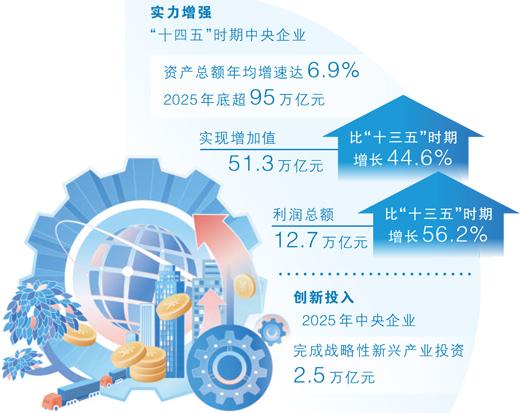
Core Insights - The central enterprises in China are projected to achieve a total profit of 2.5 trillion yuan and fixed asset investment of 5.1 trillion yuan by 2025, with total assets exceeding 95 trillion yuan by the end of 2025 [1] Group 1: Scale and Performance - During the 14th Five-Year Plan period, the total assets of central enterprises increased significantly, reaching over 90 trillion yuan with an average annual growth rate of 6.9% [2] - The added value of central enterprises reached 51.3 trillion yuan, a 44.6% increase compared to the previous five-year period, while total profits grew by 56.2% to 12.7 trillion yuan [2] - Key product outputs, such as crude oil and electricity generation, saw substantial increases of 24.7% and 38.2% respectively during the same period [2] Group 2: Innovation and R&D Investment - Central enterprises invested over 5 trillion yuan in R&D during the 14th Five-Year Plan, with R&D intensity increasing by 0.27 percentage points and a nearly 50% rise in the number of technology talents [4] - By 2025, R&D investment is expected to reach 1.1 trillion yuan, with significant achievements in major technological projects and innovations [4] - Central enterprises are leading or participating in all 22 national major science and technology projects, overcoming 121 key technologies [4] Group 3: Strategic Emerging Industries - Revenue from strategic emerging industries is projected to exceed 12 trillion yuan by 2025, with a continuous annual growth of 1 trillion yuan [5] - Investment in strategic emerging industries will account for 41.8% of total investments, reflecting a shift towards new industry structures [5][6] - Central enterprises are focusing on sectors such as integrated circuits, biotechnology, and new energy vehicles, while also enhancing their positions in high-end equipment manufacturing and artificial intelligence [6] Group 4: Traditional Industry Transformation - Central enterprises are actively transforming traditional industries by establishing smart factories and promoting green technologies [7] - The construction of intelligent factories and the implementation of advanced technologies are opening new development spaces for traditional sectors [7] Group 5: Future Goals and Regulatory Framework - In 2026, central enterprises will enhance procurement efforts for first sets and batches of products, aiming for continuous growth in value added and alignment with national GDP growth [9][10] - A more precise evaluation system will be implemented to improve the quality and internal value of state-owned enterprises [10] - The focus will be on increasing high-quality technological supply and advancing original technology development [11]

降息预期没了,黄金飙升到5400美元,该减持吗?
Sou Hu Cai Jing· 2026-01-29 01:25
降息预期没了,美股怎么走?今天凌晨,美联储最新的货币会议决策出来了,宣布将联邦利率目标区间维持在3.5%至3.75之间,这符合市场的预期,就是维 持原来的利率,1月份不降息。 这次议息会议中,有两位理事投了反对票,分别是米兰和沃勒,这两大理事更倾向于降息25个基点。 不过之所以维持不降息,是因为政策制定者表示当前的就业增长保持低位,失业率显现出了一些企稳的迹象,关键是删除了此前关于就业下行风险增加的表 述,现在美股的投资者有一个认识,那就是6月份之前不太可能降息了。 不过从黄金的走势图看,出现了明显的非理性特征,黄金上了5400美元就很难再说是机会了,我觉得恰恰是短期的风险敞口在提高,从我自身的角度而言, 已经在考虑是不是得减仓黄金了? 但斌总,持仓迎来新变化!但斌总去年四季度的持仓曝光了,第一大重仓股出现变化,之前是英伟达,如今变成了谷歌,当然了英伟达仍然是第二大重仓 股,从最新的持仓中可以看出的是,但总重视的是AI上下游产业链,从基础的算力到应用。 不过总体上依然还是对美股大型科技股看好,这个态度没有改变,但是从我自身的角度而言,我觉得美股未来进一步向上拓展空间很难了,特别在指数层 面,因为一方面需要技术 ...
五矿期货能源化工日报-20260129
Wu Kuang Qi Huo· 2026-01-29 00:58
Report Industry Investment Rating No relevant content provided. Core Viewpoints of the Report - The heavy oil crack spread can be taken profit, and crude oil can be bought on dips in the shale oil break - even cost range [2] - The current valuation of methanol is low, and its pattern will improve marginally next year. Although there are still short - term negative pressures, it has the feasibility of buying on dips due to the geopolitical instability in Iran [4] - The current situation of the domestic - foreign price difference of urea has opened the import window, and with the expectation of improved start - up at the end of January, the fundamental negative expectation of urea is coming, so it should be short - allocated on rallies [5] - The chemical sector may fluctuate or decline after the rise. The seasonality of rubber is weak, and it is necessary to guard against the decline of RU. Currently, a neutral - bearish mindset is adopted, with short - term trading on the disk and quick entry and exit. If RU2605 falls below 16000, a short - selling mindset should be adopted. It is recommended to partially build a position by buying the main contract of NR and short - selling RU2609 [10] - The fundamentals of PVC are poor, with strong domestic supply and weak demand. In the short term, electricity price expectations, rush - to - export, and strong commodity sentiment support PVC. In the medium term, the idea of short - allocating on rallies should be maintained before substantial production cuts in the industry [14] - The non - integrated profit of styrene has been significantly repaired, and profits can be gradually taken [17] - OPEC+ plans to suspend production growth in Q1 2026, and the crude oil price may have bottomed out. The spot price of polyethylene remains unchanged, and there is still room for the PE valuation to decline. In the medium term, with no further production cuts in China, the valuation is expected to be compressed [20] - In the context of weak supply and demand, the overall inventory pressure of polypropylene is high, and there is no prominent short - term contradiction. The long - term contradiction has shifted from cost - driven downward trends to production mismatches. It is advisable to buy on dips the spread between PP5 and PP9 [23] - Currently, PX maintains a high load, and downstream PTA has many maintenance plans. It is expected to maintain an inventory - building pattern before the maintenance season. The medium - term pattern is good, and attention should be paid to the opportunity of buying on dips following crude oil [25] - PTA is expected to enter the Spring Festival inventory - building stage. In the short term, it is necessary to guard against the risk of processing fee correction, and there is still room for valuation increase after the Spring Festival. Medium - term attention should be paid to buying on dips opportunities and grasping the rhythm [30] - In the industrial fundamentals of ethylene glycol, the overall load is still high, and the port inventory - building cycle will continue. In the medium term, there is an expectation of further profit compression and load reduction under the pressure of inventory - building and high start - up. The valuation is currently high compared to the same period, and in the medium term, the valuation is expected to be compressed without further production cuts in China [32] Summary by Related Catalogs Crude Oil - On January 29, 2026, the main INE crude oil futures closed up 11.20 yuan/barrel, a 2.49% increase, at 460.30 yuan/barrel. The main futures of related refined products, high - sulfur fuel oil, closed up 60.00 yuan/ton, a 2.23% increase, at 2751.00 yuan/ton, and low - sulfur fuel oil closed up 73.00 yuan/ton, a 2.31% increase, at 3232.00 yuan/ton [1] Methanol - On January 29, 2026, the regional spot prices in Jiangsu, Lunan, Henan, and Inner Mongolia decreased by 33 yuan/ton, 7.5 yuan/ton, 25 yuan/ton, and 12.5 yuan/ton respectively, while that in Hebei remained unchanged. The main futures contract increased by 33.00 yuan/ton to 2339 yuan/ton, and the MTO profit increased by 65 yuan [3] Urea - On January 29, 2026, the regional spot prices in Shandong, Henan, and Jiangsu increased by 10 yuan/ton, while those in Hebei, Hubei, Shanxi, and Northeast China remained unchanged. The overall basis was reported at - 49 yuan/ton. The main futures contract increased by 9 yuan/ton to 1799 yuan/ton [5] Rubber - On January 29, 2026, the chemical sector oscillated downward, with butadiene rubber and natural rubber (RU) falling. The sharp rise in butadiene rubber may be due to large - scale allocation of long positions in the chemical sector by macro funds, the expected increase in the cost of naphtha and butadiene due to the expected naphtha consumption tax policy, and the expected reduction in butadiene production, as well as the increase in butadiene exports due to spot demand in South Korea. The inventory at East China ports decreased significantly. The long - side of natural rubber believes that the rubber production in Southeast Asia may be limited, and the seasonality usually turns upward in the second half of the year, with improved demand expectations in China. The short - side believes that the macro - expectations are uncertain, and supply is increasing while demand is in the seasonal off - season [7] PVC - On January 29, 2026, the PVC05 contract increased by 2 yuan to 4913 yuan. The spot price of Changzhou SG - 5 was 4700 (- 10) yuan/ton, the basis was - 213 (- 12) yuan/ton, and the 5 - 9 spread was - 112 (+5) yuan/ton. The overall PVC start - up rate was 78.7%, a 0.9% decrease from the previous period. The downstream start - up rate was 44.9%, a 1% increase from the previous period. The in - plant inventory was 30.8 tons (- 0.3), and the social inventory was 117.8 tons (+3.3) [12] Pure Benzene & Styrene - On January 29, 2026, the cost - side East China pure benzene price was 5960 yuan/ton, an increase of 10 yuan/ton; the closing price of the active pure benzene contract was 6130 yuan/ton, an increase of 10 yuan/ton; the pure benzene basis was - 170 yuan/ton, a decrease of 130 yuan/ton. The styrene spot price remained unchanged at 7900 yuan/ton; the closing price of the active styrene contract was 7785 yuan/ton, an increase of 136 yuan/ton; the basis was 115 yuan/ton, a decrease of 136 yuan/ton. The upstream start - up rate was 69.63%, a decrease of 1.23%. The inventory at Jiangsu ports decreased by 0.71 tons to 9.35 tons. The weighted start - up rate of the three S products was 42.40%, an increase of 0.49%. The PS start - up rate was 57.30%, a decrease of 0.10%, the EPS start - up rate was 58.71%, an increase of 4.65%, and the ABS start - up rate was 66.80%, a decrease of 3.00% [16] Polyethylene - On January 29, 2026, the closing price of the main polyethylene contract was 6967 yuan/ton, an increase of 68 yuan/ton, and the spot price was 6825 yuan/ton, unchanged. The basis was - 142 yuan/ton, a decrease of 68 yuan/ton. The upstream start - up rate was 81.56%, a 1.23% increase from the previous period. The production enterprise inventory decreased by 4.51 tons to 35.03 tons, and the trader inventory remained unchanged at 2.92 tons. The downstream average start - up rate was 41.1%, a 0.11% decrease from the previous period. The LL5 - 9 spread was - 48 yuan/ton, a decrease of 17 yuan/ton [19] Polypropylene - On January 29, 2026, the closing price of the main polypropylene contract was 6778 yuan/ton, an increase of 69 yuan/ton, and the spot price was 6655 yuan/ton, an increase of 40 yuan/ton. The basis was - 123 yuan/ton, a decrease of 29 yuan/ton. The upstream start - up rate was 76.61%, a 0.01% decrease from the previous period. The production enterprise inventory decreased by 3.67 tons to 43.1 tons, the trader inventory decreased by 1.08 tons to 19.39 tons, and the port inventory decreased by 0.05 tons to 7.06 tons. The downstream average start - up rate was 52.58%, a 0.02% decrease from the previous period. The LL - PP spread was 189 yuan/ton, a decrease of 1 yuan/ton. The PP5 - 9 spread remained unchanged at - 36 yuan/ton [21][22] PX - On January 29, 2026, the PX03 contract increased by 106 yuan to 7392 yuan, and the PX CFR increased by 21 dollars to 924 dollars. The basis was 37 yuan (+52), and the 3 - 5 spread was - 124 yuan (- 34). The PX load in China was 88.9%, a 0.5% decrease from the previous period; the Asian load was 81%, a 0.4% increase from the previous period. Zhejiang Petrochemical further reduced its load, Sinochem Quanzhou restarted, and the South Korean GS device restarted. The PTA load was 76.6%, a 0.3% increase from the previous period. In January, the export of South Korean PX to China in the first and middle ten - days was 21.5 tons, a year - on - year decrease of 6.8 tons. The inventory at the end of November was 446 tons, a 6 - ton increase from the previous month [24] PTA - On January 29, 2026, the PTA05 contract increased by 112 yuan to 5370 yuan, and the East China spot price increased by 10 yuan to 5235 yuan. The basis was - 80 yuan (- 1), and the 5 - 9 spread was 6 yuan (- 10). The PTA load was 76.6%, a 0.3% increase from the previous period. The downstream load was 86.4%, a 1.9% decrease from the previous period. The terminal texturing load decreased by 4% to 66%, and the loom load decreased by 6% to 49%. The social inventory (excluding credit warehouse receipts) on January 23 was 208.3 tons, a 3.8 - ton increase from the previous period. The spot processing fee of PTA decreased by 94 yuan to 362 yuan, and the disk processing fee increased by 42 yuan to 521 yuan [27] Ethylene Glycol - On January 29, 2026, the EG05 contract increased by 32 yuan to 3970 yuan, and the East China spot price decreased by 8 yuan to 3835 yuan. The basis was - 118 yuan (- 1), and the 5 - 9 spread was - 96 yuan (- 4). The ethylene glycol load was 73%, a 1.4% decrease from the previous period. The downstream load was 86.4%, a 1.9% decrease from the previous period. The terminal texturing load decreased by 4% to 66%, and the loom load decreased by 6% to 49%. The import arrival forecast was 14.7 tons, and the East China departure was 1.51 tons on January 27. The port inventory was 85.8 tons, a 6.3 - ton increase from the previous period. The naphtha - based production profit was - 840 yuan, the domestic ethylene - based production profit was - 534 yuan, and the coal - based production profit was 352 yuan. The ethylene price decreased to 700 dollars, and the Yulin pit - mouth steam coal price decreased to 530 yuan [31]
原油:WTI升至四个月新高 特朗普警告伊朗尽快达成协议
Xin Lang Cai Jing· 2026-01-28 21:49
Core Viewpoint - Oil prices have surged to a four-month high due to potential risks to Iranian oil supply, driven by U.S. President Donald Trump's threats against Iran and calls for negotiations on a nuclear agreement [1][2][3] Group 1: Oil Price Movements - WTI futures settled above $63 per barrel, marking the highest level since late September, with a previous day's increase of 2.9% [1][3] - Brent crude futures also saw an increase, settling at $68.40 per barrel, up 1.2% [4] Group 2: Market Sentiment and Supply Dynamics - Despite predictions of an oversupply in the market, oil futures have shown strong performance this year, with a monthly increase exceeding 10% [1][3] - A government report indicated a significant drop in U.S. crude oil inventories by 2.3 million barrels, surpassing expectations, although an increase in gasoline inventories offset this positive data [2][3] Group 3: Geopolitical Factors - Trump's statements on military deployments in the Middle East and the potential for a more severe response to Iran have contributed to market volatility [1][3] - The Iranian UN representative's readiness for dialogue, while also warning of unprecedented responses if necessary, adds to the geopolitical tension affecting oil prices [1][3] Group 4: Currency Impact - The U.S. Treasury Secretary's reaffirmation of a strong dollar policy has led to a rebound in the dollar index, which may further limit oil price increases as a stronger dollar reduces the attractiveness of dollar-denominated commodities [1][3] Group 5: Analyst Insights - Analysts from Standard Chartered noted a shift in market sentiment towards a more positive outlook as narratives of oversupply diminish, predicting increased market volatility and heightened attention to supply-demand risks [2][3]

英特尔大涨10%,美股存储芯片爆发,金银创新高,国际油价拉升,特朗普威胁伊朗
2 1 Shi Ji Jing Ji Bao Dao· 2026-01-28 15:52
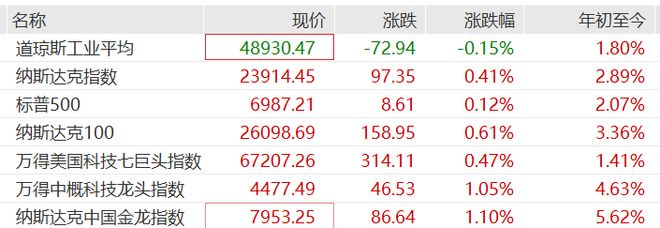
记者丨张嘉钰 编辑丨江佩佩 1月28日,美股开盘集体上涨,截至23:12,三大指数涨跌不一,道指跌0.15%,纳指涨0.41%。标普500 涨0.12%,盘中一度涨穿7000点整数位心理关口,创盘中历史新高。 | 名称 | 现价 | 涨跌 | 涨跌幅 | 年初至今 | | --- | --- | --- | --- | --- | | 道琼斯工业平均 | 48930.47 | -72.94 | -0.15% | 1.80% | | 纳斯达克指数 | 23914.45 | 97.35 | 0.41% | 2.89% | | 标普500 | 6987.21 | 8.61 | 0.12% | 2.07% | | 纳斯达克100 | 26098.69 | 158.95 | 0.61% | 3.36% | | 万得美国科技七巨头指数 | 67207.26 | 314.11 | 0.47% | 1.41% | | 万得中概科技龙头指数 | 4477.49 | 46.53 | 1.05% | 4.63% | | 纳斯达克中国金龙指数 | 7953.25 | 86.64 | 1.10% | 5.62% | 大型科技股多数上涨 ...


彻底爆发,资金狂买两大顶流
Ge Long Hui· 2026-01-28 11:31
Group 1: Gold Market - Gold prices have reached historic highs, with New York futures surpassing $5,300 per ounce and spot gold touching $5,270 per ounce, marking a year-to-date increase of 21.37% and over 175% in the last three years [1] - Central banks globally have continued to increase their gold reserves, with a net addition of over 1,000 tons for four consecutive years, and Poland's central bank planning to purchase up to 150 tons of gold [13] - The SPDR Gold Shares ETF attracted approximately $3.2 billion in inflows during early 2026, reflecting strong investor interest [14] Group 2: Oil and Chemical Industry - WTI and Brent crude oil futures have both seen significant price increases, driven by geopolitical tensions and extreme weather conditions affecting U.S. oil production [1][10] - The Deutsche Bank has raised its Brent crude oil price forecast to $61.50 per barrel, anticipating a reduction in the oversupply of oil in the second half of 2026 [17] - The chemical industry is experiencing a recovery in demand, supported by domestic policies aimed at expanding consumption, with significant inflows into the chemical sector ETFs [18] Group 3: Market Dynamics - The weakening U.S. dollar, which has dropped 2.6% since the beginning of 2026, is contributing to rising commodity prices, as a weaker dollar increases the purchasing power of other currencies [3][10] - Geopolitical tensions, including U.S. military movements in the Middle East and unrest in Iran, are creating uncertainty that drives demand for safe-haven assets like gold [22][24] - The chemical sector is expected to see limited new supply due to a slowdown in capital expenditure growth, while demand is projected to increase from sectors like electric vehicles and AI data centers [28][30]
彻底爆发!资金狂买两大顶流
Ge Long Hui· 2026-01-28 09:21
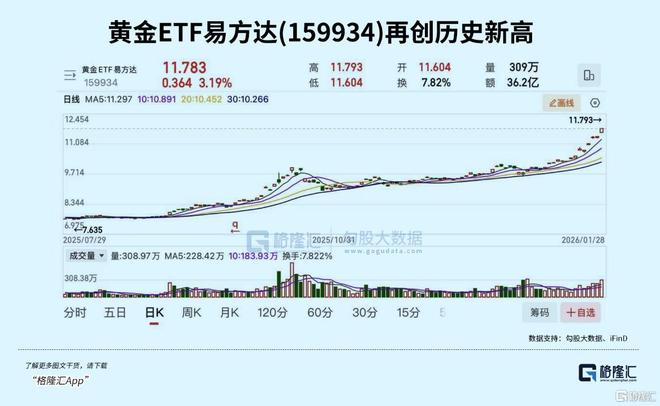
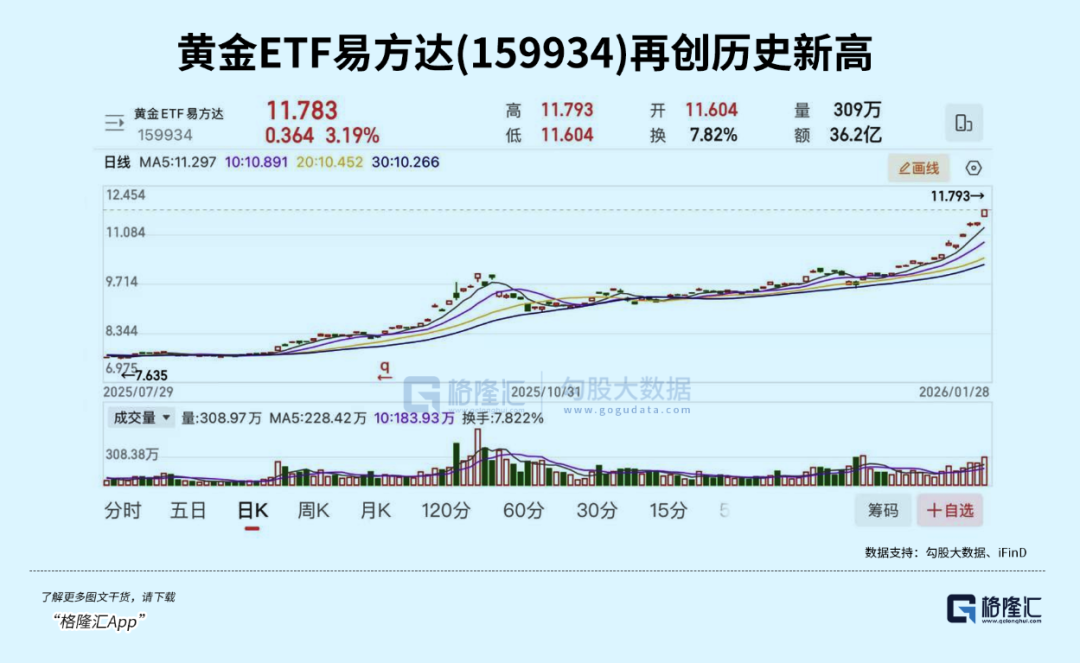
Core Viewpoint - The article highlights the significant rise in gold and oil prices, driven by a weak US dollar and geopolitical tensions, creating investment opportunities in these sectors [1][10]. Group 1: Gold Market - Gold prices have reached historical highs, with New York futures surpassing $5,300 per ounce and spot gold touching $5,270 per ounce [1]. - The gold ETF E Fund (159934) surged by 3.19%, marking a 21.37% increase year-to-date and over 175% in the past three years [1]. - Central banks globally have consistently increased gold reserves, with over 1,000 tons added for four consecutive years, indicating strong demand [11]. - The SPDR Gold Shares (GLD) attracted approximately $3.2 billion in inflows during early 2026, reflecting robust investor interest [12]. Group 2: Oil Market - WTI and Brent crude oil futures have both seen significant price increases due to geopolitical tensions and extreme weather conditions affecting production [1][10]. - The Baltic Dry Index (BDI) rose by 12.30% due to heightened sensitivity to Middle Eastern tensions, particularly regarding oil trade routes [9]. - OPEC+ representatives indicated plans to maintain current oil production levels, which could help stabilize prices amid global supply concerns [9]. Group 3: Economic Factors - The US dollar index fell to its lowest level in nearly four years, down 2.6% since the beginning of 2026, contributing to rising commodity prices [5][6]. - The weak dollar enhances the purchasing power of other currencies, further driving demand for commodities like gold and oil [9]. - The US government's increasing budget deficit and political polarization are expected to exert long-term downward pressure on the dollar [6][18]. Group 4: Chemical Industry - The chemical sector is experiencing a recovery, with demand expected to grow due to economic stimulus measures and a shift in consumer behavior [14]. - Deutsche Bank raised its Brent crude oil price forecast to $61.50 per barrel, anticipating a narrowing of supply surplus in the latter half of 2026 [14]. - The chemical industry ETF E Fund (516570) saw a net inflow of over 2.26 billion yuan in recent trading days, indicating renewed investor interest [15]. Group 5: Future Outlook - Geopolitical tensions and a weak dollar are likely to sustain demand for gold and oil, with investors seeking safe-haven assets [17][18]. - The chemical industry is expected to face limited new supply in the coming years, with capital expenditure growth turning negative [19]. - Despite potential market corrections, both gold and the chemical sector may continue to see upward trends due to underlying demand dynamics [25].