
玻璃

Search documents
建材行业周报:关注春节后的涨价预期与地产催化
GUOTAI HAITONG SECURITIES· 2026-02-10 13:30
Investment Rating - The report assigns an "Accumulate" rating for the building materials industry [5] Core Insights - The report emphasizes the expectation of price increases post-Spring Festival and the potential catalyst from the real estate sector. It highlights that the consumption building materials sector may begin to show fundamentals independent of real estate from 2025-2026, with a focus on the resilience of the real estate market after the Spring Festival [2][7] - The report recommends leading companies in the consumption building materials sector that have independent growth logic and sufficient dividend valuation support, particularly in the waterproof materials sub-sector [5][7] Summary by Sections Building Materials Industry Investment Strategy - The consumption building materials sector is anticipated to benefit from potential macroeconomic improvements, with a focus on the resilience of the real estate market post-Spring Festival. The report highlights the importance of observing second-hand housing transactions for signs of market recovery [7] - Recommended companies include Oriental Yuhong, Beixin Building Materials, Weixing New Materials, and others that are expected to perform well due to their growth strategies and market positions [7] Market Review - From February 2 to February 6, 2026, the building materials sector increased by 0.70%, with specific segments like glass manufacturing rising by 5.32% [10] - The report notes significant individual stock movements, with companies like Hanjian Heshan and Jinjing Technology showing notable weekly gains [17] Cement Industry - The national cement market price decreased by 1% week-on-week, with significant price drops in regions like Henan and Hubei. The average shipment rate for cement companies fell by approximately 8 percentage points [24][25] - The report anticipates a stabilization in cement prices as the market enters a holiday period, with a focus on the execution of production restrictions in 2026 [7][24] Glass Industry - The average price of domestic float glass increased to 1154.49 RMB/ton, reflecting a week-on-week rise of 9.69 RMB/ton. However, demand is expected to weaken as downstream processing plants shut down for the holiday [42] - The report recommends leading companies in the glass sector, including Fuyao Glass and Xinyi Glass, due to their strong market positions and dividend yields [42][43] Fiberglass Industry - The report indicates that the fiberglass market is experiencing price increases, particularly in the electronic yarn segment, driven by tight supply and steady demand [55] - Recommended companies in this sector include China Jushi and Zhongcai Technology, which are expected to benefit from structural demand upgrades [55]





建材行业周报:关注春节后的涨价预期与地产催化-20260210
GUOTAI HAITONG SECURITIES· 2026-02-10 11:15
Investment Rating - The report assigns an "Accumulate" rating for the building materials industry [5]. Core Insights - The report emphasizes the expectation of price increases post-Spring Festival and the potential catalyst from the real estate sector. It highlights that the consumption building materials sector may begin to show fundamentals independent of real estate from 2025-2026, with a focus on the resilience of the real estate market after the Spring Festival [2][7]. - The report recommends leading companies in the consumption building materials sector that have independent growth logic and sufficient dividend valuation support, particularly in the waterproof materials sub-sector [5][7]. Summary by Sections Investment Strategy - The consumption building materials sector is anticipated to benefit from potential macroeconomic improvements, with a focus on the resilience of the real estate market post-Spring Festival. The report highlights the importance of observing the transaction data in the real estate market for signs of sustained improvement [7]. - Recommendations include companies like Oriental Yuhong, Beixin Building Materials, and Weixing New Materials, which are expected to perform well due to their growth strategies and market positioning [7]. Market Review - The building materials sector saw a 0.70% increase, with cement manufacturing up 0.15%, glass manufacturing up 5.32%, and glass fiber manufacturing down 1.81% during the period from February 2 to February 6, 2026 [10]. - The report notes significant individual stock movements, with Han Jian He Shan and Jin Jing Technology showing notable weekly gains [17]. Cement Industry - The national cement market price decreased by 1% week-on-week, with significant price drops in regions like Henan and Hubei. The average shipment rate for cement companies in key regions fell by approximately 8 percentage points [24]. - The report anticipates a stabilization in cement prices as the market enters a holiday period, with a focus on the potential for price increases post-holiday [24][25]. Glass Industry - The average price of domestic float glass increased to 1154.49 CNY/ton, reflecting a week-on-week rise of 9.69 CNY/ton. However, demand is expected to weaken as downstream processing plants shut down for the holiday [42]. - The report suggests that companies like Fuyao Glass and Xinyi Glass are well-positioned due to their high dividend yields and global market presence [42][43]. Glass Fiber Industry - The report indicates that the price of glass fiber is on an upward trend, supported by tight supply and steady demand. The market for electronic yarn remains strong, with prices for certain products increasing [55]. - Leading companies in this sector, such as China Jushi and Zhongcai Technology, are recommended due to their competitive advantages and market positioning [55].

建材行业2025年年报业绩前瞻:周期建材分化,消费建材个股修复
Shenwan Hongyuan Securities· 2026-02-10 10:31
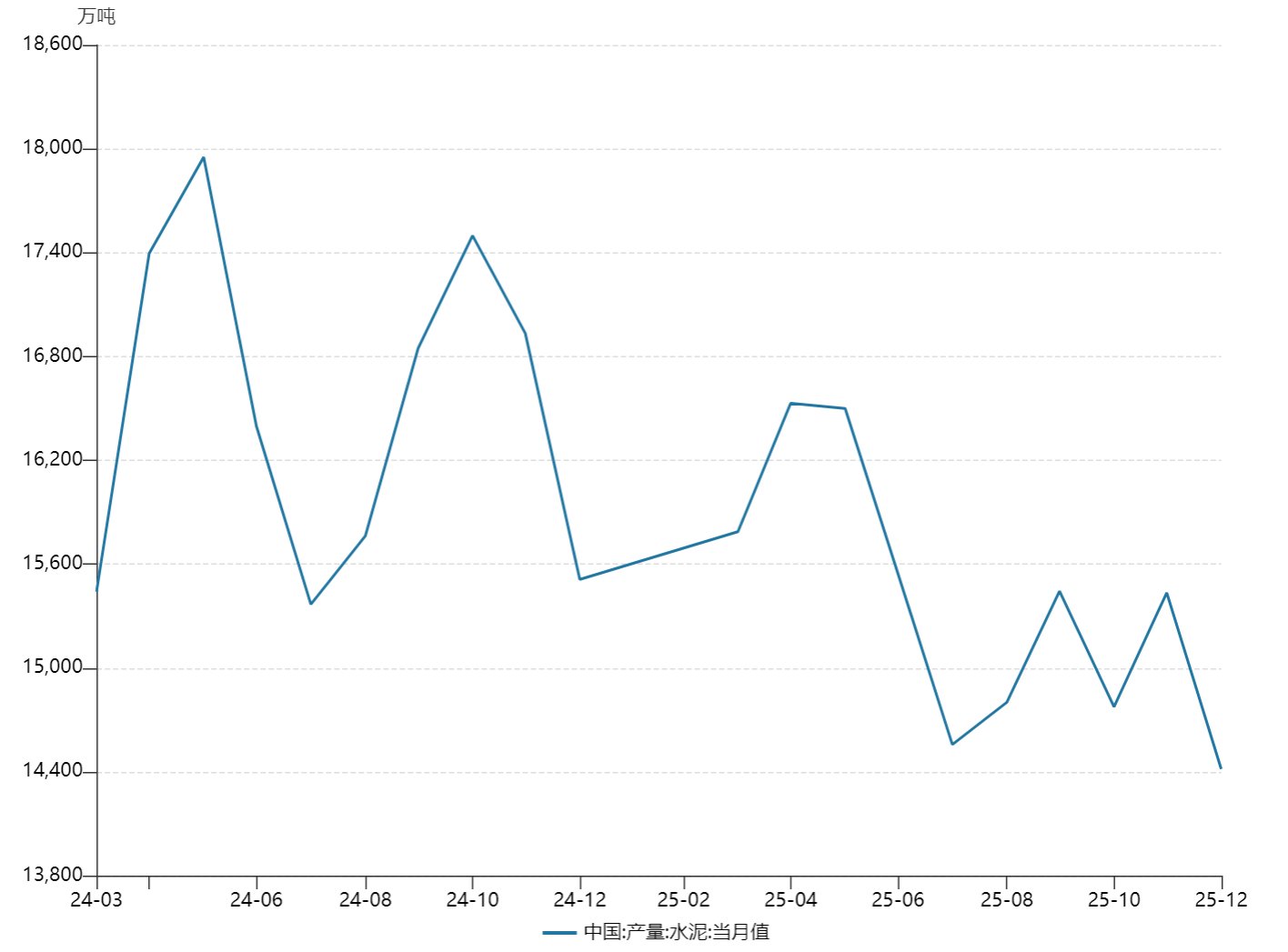
Investment Rating - The report rates the construction materials industry as "Overweight," indicating an expectation for the industry to outperform the overall market [2][12]. Core Insights - Domestic cement prices are expected to show a trend of high prices followed by a decline, with an average price of 372.8 RMB/ton in 2025, a decrease of 12.6 RMB/ton year-on-year. Cement production is projected to decline by 7.2% in 2025, with a gradual recovery in profitability anticipated in 2026 due to supply-side improvements [4]. - The glass sector continues to face pressure, with the average price of flat glass expected to drop to 1323.3 RMB/ton in 2025, a significant decrease of 383.4 RMB/ton year-on-year. The industry is entering a period of accelerated cold repairs, which may enhance profitability in the future [4]. - The fiberglass yarn market remains relatively stable, with an expected average price of 3866 RMB/ton in 2025, reflecting a year-on-year increase of 174 RMB/ton. The demand for specialty electronic fabrics is anticipated to grow rapidly, contributing positively to the sector's performance [4]. - Consumer building materials are expected to show strong performance, with companies like Sanke Tree and Han Gao Group maintaining excellent revenue and profit due to strong channel development and brand advantages [4]. Summary by Sections Cement Industry - The average cement price in 2025 is projected at 372.8 RMB/ton, down 12.6 RMB/ton from the previous year. The first quarter's average price is expected to be 400.8 RMB/ton, declining to 358.0 RMB/ton by the fourth quarter. Cement production is expected to decrease by 7.2% in 2025, with a recovery in profitability anticipated in 2026 due to supply-side improvements [4]. Glass Industry - The average price of flat glass is expected to be 1323.3 RMB/ton in 2025, a decrease of 383.4 RMB/ton year-on-year. The industry is entering a cold repair cycle, with daily melting capacity dropping below 150,000 tons. This may lead to improved profitability in the future [4]. Fiberglass Sector - The average price of fiberglass yarn is projected to be 3866 RMB/ton in 2025, an increase of 174 RMB/ton year-on-year. The demand for specialty electronic fabrics is expected to accelerate, contributing positively to the sector's performance [4]. Consumer Building Materials - Companies such as Sanke Tree and Han Gao Group are expected to perform strongly due to their robust channel development and brand advantages. Other companies in the sector are also expected to maintain good operational quality, with potential for significant performance recovery in 2026 [4]. Investment Recommendations - The report suggests focusing on companies with improving quarterly reports and those benefiting from supply-side adjustments. Recommended companies include Conch Cement, Huaxin Cement, and Tianshan Shares in the cement sector, as well as China Jushi and Zhongcai Technology in the fiberglass sector. In consumer building materials, companies like Dongfang Yuhong and Kezhong Shares are highlighted for their strong performance [4].



黑色产业链日报-20260210
Dong Ya Qi Huo· 2026-02-10 09:47
Report Date - The report is dated February 10, 2026 [1] Steel Report Core View - The blast furnace operating rate remains at a high level, while the production of electric furnaces has significantly decreased seasonally due to the Spring Festival. Terminal demand has further shrunk, with transactions showing a situation of "prices but no market". Inventory has continued to accumulate, with the accumulation rate of rebar accelerating year-on-year, and hot-rolled coils having shifted from destocking to stockpiling. The significant increase in hot-rolled coil warehouse receipts has exerted upward pressure on coil prices. Overall, finished steel products are oscillating weakly and may test the lower limit of the box-shaped oscillation [3]. Price Data - Rebar: On February 10, 2026, the closing prices of the 01, 05, and 10 contracts were 3,133 yuan/ton, 3,052 yuan/ton, and 3,097 yuan/ton respectively [4]. - Hot-rolled coils: On February 10, 2026, the closing prices of the 01, 05, and 10 contracts were 3,263 yuan/ton, 3,220 yuan/ton, and 3,239 yuan/ton respectively [4]. Spread Data - Rebar spreads: The 01 - 05 spread was 81 yuan/ton, the 05 - 10 spread was -45 yuan/ton, and the 10 - 01 spread was -36 yuan/ton on February 10, 2026 [4]. - Hot-rolled coil spreads: The 01 - 05 spread was 43 yuan/ton, the 05 - 10 spread was -19 yuan/ton, and the 10 - 01 spread was -24 yuan/ton on February 10, 2026 [4]. Iron Ore Report Core View - The supply and demand situation is significantly weak. Overseas shipments have seasonally decreased, and attention should be paid to the impact of the rainy season in the Southern Hemisphere on Australian shipments. Steel mills have decent profits, and molten iron production is expected to steadily increase. Terminal steel consumption has entered the pre - holiday off - season. The accumulation rate of social inventory is slower than in previous years, and port inventory has continued to accumulate above the seasonal level, facing significant pressure. Market risk appetite is low, and prices are under pressure [21]. Price Data - On February 10, 2026, the closing prices of the 01, 05, and 09 contracts were 732 yuan/ton, 761.5 yuan/ton, and 744 yuan/ton respectively. The daily changes were 0, 0, and 1 yuan/ton respectively, and the weekly changes were -17, -16, and -16 yuan/ton respectively [22]. Fundamental Data - On February 6, 2026, the average daily molten iron production was 228.58 tons, the 45 - port desilting volume was 341.08 tons, and the global shipment volume was 2,535.3 tons [26]. Coking Coal and Coke Report Core View - As the Chinese New Year approaches, domestic mines have reduced production, and the supply of coking coal has seasonally shrunk. The domestic and foreign prices of imported coal are inverted, and the arrival volume is at a low level. The first round of coke price increase has been implemented, and coking profits have improved. The resumption of production of blast furnace steel mills has been slow, and the short - term supply and demand are relatively loose. Attention should be paid to the resumption of production rhythm of mines and steel mills after the Spring Festival. There may be a supply - demand mismatch under the background of tight seaborne coal imports [33]. Price Data - On February 10, 2026, the 09 - 01 spread of coking coal was -175 yuan/ton, the 05 - 09 spread was -77.5 yuan/ton, and the 01 - 05 spread was 252.5 yuan/ton [34][36]. - On February 10, 2026, the 09 - 01 spread of coke was -94 yuan/ton, the 05 - 09 spread was -74.5 yuan/ton, and the 01 - 05 spread was 168.5 yuan/ton [36]. Ferroalloy Report Core View - Cost support and the pressure of the downstream terminal steel inventory accumulation are in a game. Silicon manganese is facing its own high - inventory pressure, and the manganese ore quotation provides bottom support. Ferroalloy production is already at a low level, and it is difficult to see a significant reduction in production. The resumption of production of steel mills may drive an increase in molten iron, but the demand increase is limited due to the off - season inventory accumulation of terminal steel products. The decline in finished steel products suppresses prices, and in the short term, it will maintain a range - bound oscillation [48]. Price Data - For silicon iron on February 9, 2026, the basis in Ningxia was 26 yuan/ton, and the spot prices in Ningxia, Inner Mongolia, Qinghai, Shaanxi, and Gansu were 5,370 yuan/ton, 5,390 yuan/ton, 5,300 yuan/ton, 5,400 yuan/ton, and 5,400 yuan/ton respectively [49]. - For silicon manganese on February 10, 2026, the basis in Inner Mongolia was 182 yuan/ton, and the spot prices in Ningxia, Inner Mongolia, Guizhou, Guangxi, and Yunnan were 5,570 yuan/ton, 5,650 yuan/ton, 5,700 yuan/ton, 5,750 yuan/ton, and 5,700 yuan/ton respectively [50][53]. Soda Ash Report Core View - There is an expectation of weakening rigid demand, and soda ash is oscillating weakly, with industrial contradictions still accumulating. If the futures price rises, there is a certain restocking space for middle - stream players such as those involved in futures - cash arbitrage, but the demand elasticity is limited due to the general demand situation. The downward price space needs inventory accumulation to open up. In terms of supply and demand, as new production capacity gradually releases output, the daily production of soda ash is at a high level, and the expectation of high - level long - term supply of soda ash remains unchanged. The inventory of the photovoltaic glass industry is at a high level, the daily melting volume is temporarily stable, and the overall rigid demand is moderately weak. The balance of heavy soda ash continues to be in surplus. Soda ash exports remain at a high level, which continues to relieve domestic pressure to a certain extent [68]. Price Data - On February 10, 2026, the closing prices of the 05, 09, and 01 contracts of soda ash were 1,171 yuan/ton, 1,234 yuan/ton, and 1,282 yuan/ton respectively. The daily changes were -10 yuan/ton, -9 yuan/ton, and -4 yuan/ton respectively, and the daily decline rates were -0.85%, -0.72%, and -0.31% respectively [69]. Glass Report Core View - According to market news, due to environmental protection pressure, four coal - fired production lines in Shahe may undergo cold repair before the Spring Festival, with a total daily melting volume of 2,700 tons. There may be more definite news in the next few days. Coupled with the 1,200 - ton cold repair of Dongtai Zhongbo last week and the expectation of 1,000 - ton cold repair of Deyang Xinyi before the Spring Festival, it means that float glass will experience concentrated cold repair before the Spring Festival, slightly exceeding expectations. The daily melting volume will decline to around 146,000 - 147,000 tons. Although there are many new production lines to be ignited in the Shahe area, even the earliest ones will not be implemented until after the Spring Festival, and it will take several months to produce products. This wave of pre - Spring Festival concentrated cold repair will help relieve the inventory accumulation pressure and spot price pressure after the Spring Festival. In terms of supply and demand, float glass is in a situation of weak supply and demand. Regardless of how the supply expectation changes, the high inventory of the glass middle - stream is a risk point. Currently, it seems that the terminal may not be able to digest it, so once a negative feedback occurs, the spot price pressure will be significant [91]. Price Data - On February 10, 2026, the closing prices of the 05, 09, and 01 contracts of glass were 1,087 yuan/ton, 1,189 yuan/ton, and 1,224 yuan/ton respectively. The daily changes were 23 yuan/ton, 19 yuan/ton, and -9 yuan/ton respectively, and the daily increase/decrease rates were 2.16%, 1.62%, and -0.73% respectively [92].
"反内卷"进入深水区,建材产能加速出清,关注建材ETF(159745) 低负债龙头估值修复机会
Sou Hu Cai Jing· 2026-02-10 05:48
Group 1 - The construction materials industry is transitioning from "incremental expansion" to "stock optimization" due to policy guidance and market clearing, which may support a systematic uplift in the sector's valuation center [1] - Multiple government departments have implemented a "de-involution" strategy for the construction materials industry, tightening capacity replacement policies for basic materials like cement and glass [2] - In 2024, the cement clinker capacity is expected to decrease by approximately 30 million tons, primarily affecting small kiln lines that do not meet energy consumption standards [2] Group 2 - The construction materials industry has experienced two consecutive years of negative capital expenditure, with a projected 18% year-on-year decline in 2024 for the cement sector, marking the lowest new clinker capacity in a decade [5] - The market concentration in the cement industry has increased, with the top ten companies' market share rising from 58% in 2021 to 67% in 2024, indicating a shift towards an oligopolistic competition structure [5] - Leading companies are shifting focus from market share competition to profit protection, with peak production execution rates increasing from 70% to over 90% [6] Group 3 - In Q4 2024, cement prices in East China rebounded by over 20% from their annual low, demonstrating the effectiveness of supply-side reforms [6][8] - The construction materials sector exhibits a low asset and low debt advantage, with a median debt-to-asset ratio of 48.7% compared to 72.3% for the real estate development sector, indicating stronger financial resilience [9] - The sector's business model emphasizes "light assets + channel penetration," resulting in healthy cash flow generation capabilities, with a year-on-year increase of 8.9% in net cash flow from operating activities by Q3 2025 [11] Group 4 - The construction materials ETF (159745) tracks the CSI All-Share Construction Materials Index, covering leading companies across the entire industry chain, providing an efficient tool for investors to gain exposure to the sector [12] - The top ten holdings in the ETF include major players like Conch Cement and Oriental Yuhong, reflecting a high concentration in industry leaders [13] - The construction materials sector is viewed as a core cyclical investment, with demand recovery, supply optimization, and profit recovery supporting its investment value, especially during market shifts towards cyclical stocks [13]

市场情绪一般,钢价震荡偏弱
Hua Tai Qi Huo· 2026-02-10 05:20
1. Report Industry Investment Rating - Not provided in the given content 2. Core Viewpoints of the Report - The market sentiment is average, and steel prices are fluctuating weakly. The supply - demand contradictions in the glass and soda ash markets remain unresolved, leading to wide - range fluctuations. For double - silicon, the pre - holiday replenishment is nearing the end, causing significant declines in double - silicon futures [1][3] - Glass is expected to show an oscillatory trend, while soda ash is expected to oscillate weakly. Both silicon manganese and silicon iron are expected to show an oscillatory trend [2][4] 3. Summary by Related Catalogs Glass and Soda Ash Market Analysis - Glass: The main glass contract showed wide - range fluctuations yesterday, with the open interest steadily increasing as the market rebounded and high market activity. Spot prices fluctuated with the market, and downstream buyers mainly made purchases based on rigid demand [1] - Soda Ash: The main soda ash contract showed a weak - oscillatory trend yesterday, with obvious multi - short game. The short - position open interest increased, spot prices stabilized, and buyers mainly replenished stocks based on rigid demand [1] Supply - Demand and Logic - Glass: Glass production decreased slightly year - on - year due to cold - repair and production cuts, alleviating supply pressure and providing some support for prices. However, the downstream is still in the traditional off - season, and the inventory - replenishment sentiment is low, limiting the upside space for prices. The absolute glass price is currently low, and the tolerance for inventory during the Spring Festival is high. The fundamental contradictions have not been effectively resolved [1] - Soda Ash: The current production of soda ash is high, and with the advancement of new projects, the supply - side pressure is increasing. Downstream consumption shows a seasonal decline as cold - repair increases. The total inventory of domestic soda ash manufacturers remains at a high level, and the de - stocking process is slow, resulting in significant supply - demand contradictions [1] Strategy - Glass: Oscillatory [2] - Soda Ash: Weakly oscillatory [2] Double - Silicon (Silicon Manganese and Silicon Iron) Market Analysis - Silicon Manganese: As the Chinese New Year approaches, raw - material replenishment is nearing the end, and the silicon manganese futures dropped significantly yesterday. The silicon manganese market is oscillating, with strong market wait - and - see sentiment at the beginning of the week. The mainstream steel procurement has not yet started. The price of 6517 silicon manganese in the northern market is 5580 - 5680 yuan/ton, and in the southern market is 5720 - 5770 yuan/ton [3] - Silicon Iron: The silicon iron futures followed the overall downward trend of the black - metal market yesterday. The silicon iron market is operating weakly, with strong cautious wait - and - see sentiment. The ex - factory price of 72 - grade silicon iron natural lumps in the main production areas is 5250 - 5350 yuan/ton, and the price of 75 - grade silicon iron is 5850 - 6000 yuan/ton [3] Supply - Demand and Logic - Silicon Manganese: The fundamentals of silicon manganese have improved, and there is an expectation of an increase in hot - metal production in the future, leading to a marginal improvement in silicon manganese demand. However, the inventory pressure is still large, and the supply - demand pattern remains relatively loose. The recent tariff policy in South Africa may increase the cost of manganese ore, so attention should be paid to the cost support of manganese ore and inventory changes [3] - Silicon Iron: The fundamental contradictions of silicon iron are controllable, and enterprises are actively reducing production loads. Considering the resumption of production by steel mills, the demand for silicon iron is expected to improve marginally. The overall over - capacity of silicon iron suppresses the price increase. Continuous attention should be paid to the de - stocking situation of silicon iron and the electricity - price policy in the production areas [3] Strategy - Silicon Manganese: Oscillatory [4] - Silicon Iron: Oscillatory [4]
未知机构:科顺股份电子布再提价推升业绩弹性消费建材小阳春可期本周76-20260210
未知机构· 2026-02-10 02:10
Summary of Conference Call Notes Industry and Company Involved - The notes primarily focus on the **electronic fabric** industry and **real estate** market, with specific mentions of companies such as **China Jushi**, **Keshun Co., Ltd.**, **Sankeshu**, **Rabbit Baby**, **Hankao Group**, **Beixin Building Materials**, **Weixing New Materials**, **Oriental Yuhong**, **Qingniao Fire Protection**, **Qiba Group**, and **Xinyi Glass**. Key Points and Arguments 1. **Price Increase in Electronic Fabric** The price of 7628 electronic fabric has increased again, with international composite materials rising by **0.5-0.6 yuan/meter**. The supply-demand dynamics in the industry continue to improve, leading to a tight supply of traditional electronic yarn and fabric, alongside a strong demand for mid-to-high-end products. This trend supports a continued price increase, and the outlook for the fiberglass sector is positive for **2026** [1][1][1]. 2. **Stable Demand in Fiberglass Sector** The demand in sectors such as wind power and thermoplastics remains stable, and the expected impact of new supply in **2026** is limited. The supply-demand balance is anticipated to improve marginally, with a strong recommendation for **China Jushi** and suggestions to pay attention to **International Composite Materials**, **Changhai Co.**, and **China National Materials Technology** [1][1][1]. 3. **Real Estate Market Recovery** In January **2026**, the transaction volume of second-hand houses in major cities (Beijing, Shanghai, Guangzhou, Shenzhen) has collectively rebounded, with a **16% month-on-month increase** and a **33% year-on-year increase** in transaction area. The growth in first-tier cities exceeds **20%** year-on-year, supported by ongoing real estate policy adjustments that help stabilize the market [2][2][2]. 4. **Price Recovery in Construction Materials** The real estate downturn has accelerated the clearing of supply in the construction materials industry, leading to a rebound in prices for certain products. Several leading companies have begun to report profit recovery after strategic adjustments over the past 2-3 years. Recommended companies for stable growth include **Sankeshu** and **Rabbit Baby**, with additional attention to **Hankao Group**, **Beixin Building Materials**, **Weixing New Materials**, **Oriental Yuhong**, **Keshun Co.**, and **Qingniao Fire Protection** [2][2][2]. 5. **Opportunities in Float Glass Industry** The float glass industry is facing challenges, with two new cold repair lines added this week, reducing production capacity to approximately **14.9 million tons/day**. The industry is currently experiencing losses, and the pressure from inventory accumulation during the traditional Chinese New Year may accelerate the exit of production capacity. The glass sector is expected to stabilize, with recommendations to focus on **Qiba Group** and **Xinyi Glass** [2][2][2]. Other Important but Potentially Overlooked Content - The overall sentiment in the electronic fabric and construction materials sectors indicates a positive outlook for **2026**, with price increases and demand stability being key themes. - The recovery in the real estate market is seen as a potential catalyst for related industries, suggesting a broader economic recovery may be on the horizon. - The mention of specific companies provides actionable insights for investors looking to capitalize on emerging trends in these sectors [1][2][2].


2026年02月10日:期货市场交易指引-20260210
Chang Jiang Qi Huo· 2026-02-10 01:44
1. Report Industry Investment Ratings - **Macro - finance**: Bullish on stock indices in the medium - to - long - term with a strategy of buying on dips; expect government bonds to move in a range [1][6] - **Black building materials**: Short - term trading for coking coal, range trading for rebar, buying on dips for glass [1][6] - **Non - ferrous metals**: General traders are advised to reduce trading positions before the holiday, while hedgers are recommended to increase hedging coverage for copper; strengthen observation for aluminum; wait - and - see for nickel; range trading for tin, gold, and silver; expect lithium carbonate to move in a range [1][10] - **Energy and chemicals**: Range trading for PVC, styrene, rubber, urea, and methanol; temporary wait - and - see for caustic soda and soda ash; expect polyolefins to be weakly volatile [1][20] - **Cotton textile industry chain**: Expect cotton and cotton yarn to adjust in a range, apples and jujubes to move in a range [1][29] - **Agriculture and animal husbandry**: Short - term supply - demand game for hogs, with a strategy of selling on rallies for off - season contracts; sell on rallies for hedging post - festival contracts of eggs; short - term cautious about chasing high prices for corn, and grain holders can wait for rallies to sell for hedging; expect soybean meal to be mainly volatile in the short term, with the M2603 contract paying attention to the performance at the 3030 level; expect oils and fats to be volatile at high levels in the short term, and recommend buying on pullbacks [1][31] 2. Core Views of the Report - The report provides trading suggestions for various futures products based on their fundamentals, market sentiment, and macro - economic factors. It takes into account factors such as supply and demand, cost, inventory, and policy to analyze the price trends of different commodities and gives corresponding investment strategies [1][6] 3. Summary by Relevant Catalogs Macro - finance - **Stock indices**: Bullish in the medium - to - long - term, expected to be volatile and stronger. Overseas rebounds and reduced liquidity shock disturbances may drive stock indices to move in this way. It is recommended to buy on dips [1][6] - **Government bonds**: Expected to move in a range. Although institutions may have a demand to hold bonds during the holiday, the rebound of the TL2603 contract was blocked, and there are uncertainties after the holiday [6] Black building materials - **Double - coking coal**: Expected to move in a range, with short - term trading recommended. The coal market has short - term fluctuations, but the price increase is not sustainable due to weak demand and other factors [7][8] - **Rebar**: Expected to move in a range. The price is currently at a low static valuation, and the recent weakness is due to weakened cost support. It is recommended to trade with a light position before the holiday [8] - **Glass**: Expected to move in a range with a bullish bias. There are industry rumors, and although there is pressure above, the price is at a relatively low level again. It is recommended to buy on dips [9][10] Non - ferrous metals - **Copper**: Expected to be volatile at a high level. The recent sharp decline is due to macro - level panic. Although there are uncertainties, it may stabilize in a range after risk release. Traders are advised to reduce positions, and hedgers to increase coverage [11][12] - **Aluminum**: Expected to be volatile at a high level. Supply is increasing, while demand is weakening. It is recommended to strengthen observation and reduce positions before the holiday [13] - **Nickel**: Expected to move in a range. Although there is positive news, the fundamentals are weak. It is recommended to wait and see [15] - **Tin**: Expected to move in a range. Supply is tight, and consumption is in a recovery stage. It is recommended to conduct range trading [16][17] - **Silver and gold**: Expected to move in a range. Affected by factors such as the nomination of the Fed chairman and economic data, the medium - term price center is rising. It is recommended to conduct range trading and pay attention to relevant economic data [17][18] - **Lithium carbonate**: Expected to move in a range. Supply and demand are both changing, and it is necessary to pay attention to the impact of mine - end disturbances [19] Energy and chemicals - **PVC**: Expected to be volatile at a low level in a wide range. The current supply - demand situation is weak, but there are opportunities for industrial upgrading in the long - term. It is recommended to be cautious about chasing high prices [21] - **Caustic soda**: Expected to be volatile at a low level. Demand is weak, and supply is under pressure. It is recommended to wait and see [22] - **Styrene**: Expected to move in a range. There is support for inventory reduction, but the valuation is high. It is recommended to be cautious about chasing high prices and pay attention to cost and supply - demand changes [23] - **Rubber**: Expected to move in a range. Supply is tightening, and demand is under pressure. It is recommended to conduct range trading [23] - **Urea**: Expected to move in a range. Supply is increasing, and demand is stable. It is recommended to pay attention to factors such as compound fertilizer production and export policies [24][25] - **Methanol**: Expected to move in a range. Supply is decreasing, and demand is weak. It is affected by geopolitical and port factors [25] - **Polyolefins**: Expected to be weakly volatile. Supply is high, and demand is weakening. It is recommended to sell on rallies and pay attention to downstream demand and inventory [26][28] - **Soda ash**: It is recommended to wait and see. Supply is expected to shrink, and there is cost support. The price may have limited downward space [28] Cotton textile industry chain - **Cotton and cotton yarn**: Expected to adjust in a range. Although there is short - term pressure, the long - term outlook is optimistic [29] - **Apples and jujubes**: Expected to move in a range. The market for apples in production areas is stable, and the price of jujubes is determined by quality [29][31] Agriculture and animal husbandry - **Hogs**: Expected to build a bottom in a range. In the short - term, there is a supply - demand game, and it is recommended to sell on rallies for off - season contracts. In the long - term, pay attention to capacity reduction [31] - **Eggs**: Expected to rebound from a low level. The supply is sufficient in the short - term, and the market will experience a grinding process in the long - term. It is recommended to be cautious about short - selling and consider hedging on rallies [33] - **Corn**: The price increase is limited. In the short - term, it is recommended to be cautious about chasing high prices, and grain holders can sell on rallies for hedging. In the long - term, the supply - demand pattern is relatively loose [34][35] - **Soybean meal**: Expected to be volatile at a low level. Pay attention to the support at 2700 yuan/ton for the M2605 contract, and it is recommended to short on rallies [35] - **Oils and fats**: Expected to be volatile at high levels. It is recommended to buy on pullbacks and pay attention to position risks before the holiday. Different oils have different performance characteristics [36][41]
现实预期不佳,盘?仍有压
Zhong Xin Qi Huo· 2026-02-10 01:41
中信期货研究|⿊⾊建材策略⽇报 2026-02-10 现实预期不佳,盘⾯仍有压⼒ 淡季钢材端累库压⼒渐显,基本⾯缺乏亮点,盘⾯延续弱势。钢⼚复 产节奏偏缓,但铁矿⽯发运端存在扰动,盘⾯有企稳迹象。冬储临近 尾声,煤焦补库⽀撑逐步转弱,盘⾯表现偏弱。玻璃供应端存在扰 动,但玻纯供需过剩压制盘⾯价格。 淡季钢材端累库压力渐显,基本面缺乏亮点,盘面延续弱势。钢厂复 产节奏偏缓,但铁矿石发运端存在扰动,盘面有企稳迹象。冬储临近 尾声,煤焦补库支撑逐步转弱,盘面表现偏弱。玻璃供应端存在扰 动,但玻纯供需过剩压制盘面价格。 投资咨询业务资格:证监许可【2012】669号 1. 铁元素方面:库存压力持续增加,供应端仍存天气扰动预期,当 前市场对节后需求预期一般,盘面表现承压,但节后即将召开重要会 议,宏观预期仍存,盘面快速回落后压力有所释放,关注市场情绪变 化。废钢供应、日耗均有季节性下降的预期,随着补库接近尾声,整 体基本面将边际转弱,预计现货价格跟随成材为主。 2. 碳元素方面:焦炭供应后续增长空间有限,而下游钢厂复产预期 仍在,焦炭供需结构将持续保持健康,但基本面利多驱动同样有限, 现货预计暂稳运行,盘面预计仍将跟随 ...
期货市场交易指引2026年02月09日-20260209
Chang Jiang Qi Huo· 2026-02-09 06:57
Report Industry Investment Ratings - Macro-finance: Index futures are bullish in the medium to long term and suggest buying on dips; government bonds are expected to trade sideways [1][6] - Black building materials: Coking coal is suitable for short-term trading; rebar is for range trading; glass is recommended to buy on dips [1][6] - Non-ferrous metals: Copper, aluminum, and nickel are advised to wait and see; tin, gold, and silver are for range trading; lithium carbonate is expected to trade in a range [1][11] - Energy and chemicals: PVC, styrene, rubber, urea, and methanol are for range trading; caustic soda and soda ash are advised to wait and see; polyolefins are expected to trade weakly sideways [1][17] - Cotton textile industry chain: Cotton and cotton yarn are expected to adjust sideways; apples and jujubes are expected to trade sideways [1][25] - Agricultural and livestock: Pigs are in short-term supply-demand games, and off-season contracts suggest shorting on rallies; eggs are overvalued, and post-festival contracts can be hedged on rallies; corn is cautious about chasing highs in the short term, and grain holders can hedge on rallies; soybean meal's M2603 contract is expected to trade sideways in the short term; oils are expected to trade at high levels in the short term, suggesting buying on dips and being cautious about risks before the holiday [1][27] Core Views The report analyzes the market conditions of various futures varieties from multiple aspects such as macro factors, supply and demand fundamentals, and cost factors. It provides corresponding investment suggestions based on the characteristics and trends of each variety, including trading strategies and points to watch [1][6]. Summary by Directory Macro-finance - Index futures: Due to overseas rebounds and reduced liquidity shock disturbances, they are expected to trade strongly sideways. It is recommended to buy on dips in the medium to long term [6] - Government bonds: There is no obvious major negative in the bond market, but there is no further impetus to push interest rates down. They are expected to trade sideways [6] Black building materials - Double coking: The coal market shows short-term fluctuations, and the sustainability of the price increase is insufficient. It is recommended for short-term trading [7][8] - Rebar: The futures price is undervalued statically, and the cost support is weakened. It is expected to trade sideways in the short term, and light positions are recommended before the holiday [8] - Glass: Affected by production line shutdowns and demand, the price is expected to trade sideways and is recommended to buy on dips [9][10] Non-ferrous metals - Copper: Affected by macro factors, it is expected to trade at high levels. It is recommended to wait and see [11] - Aluminum: The supply is expected to increase, and the downstream demand is under pressure. It is recommended to increase the observation and reduce positions before the holiday [13] - Nickel: Affected by the Indonesian quota reduction, but the fundamentals are weak. It is recommended to wait and see [14][15] - Tin: The supply is tight, and the downstream demand is rigid. It is expected to trade sideways, and range trading is recommended [15] - Gold and silver: Affected by the Fed's expected policy change, the mid-term price center moves up. They are expected to trade sideways, and range trading is recommended [16] - Lithium carbonate: Affected by supply and demand, it is expected to trade in a range [17] Energy and chemicals - PVC: The supply is high, the demand is weak, but the valuation is low. It is recommended to be cautious about chasing highs [17][19] - Caustic soda: The supply pressure is large, and the demand support is weak. It is recommended to wait and see [19] - Styrene: The inventory is expected to decrease, but the valuation is high. It is recommended to be cautious about chasing highs [20][21] - Rubber: The supply is tightened, and the demand is weakened. It is expected to trade sideways in a range [21] - Urea: The supply is increasing, and the demand is supported. It is expected to trade sideways in a range [22] - Methanol: The supply is decreasing, and the demand is weak. It is expected to trade sideways in a range [23] - Polyolefins: The supply is under pressure, and the demand is weak. They are expected to trade weakly sideways [23][24] - Soda ash: The supply is in surplus, and the cost is rising. It is recommended to wait and see [24] Cotton textile industry chain - Cotton and cotton yarn: The global supply and demand are improving, but the internal and external price difference suppresses the price. It is recommended to be cautious in the short term and optimistic in the long term [25] - Apples and jujubes: The market is stable, and they are expected to trade sideways [25][27] Agricultural and livestock - Pigs: The short-term supply and demand are both increasing, and the price is not optimistic. It is recommended to short on rallies for off-season contracts [27] - Eggs: The supply pressure is postponed, and the price is under pressure. It is recommended to hedge post-festival contracts on rallies [29] - Corn: The short-term market is balanced, and the medium to long-term supply and demand are loose. It is recommended to be cautious about chasing highs and hedge on rallies [30] - Soybean meal: The M2603 contract is expected to trade sideways in the short term, and attention should be paid to the support at 3030 [31] - Oils: They are expected to trade at high levels in the short term, and it is recommended to buy on dips. Attention should be paid to risks before the holiday [31][36]