
有色金属冶炼

Search documents
2025年12月01日:期货市场交易指引-20251201
Chang Jiang Qi Huo· 2025-12-01 01:42
Report Industry Investment Ratings - **Macro Finance**: Index futures are favored in the medium to long term, with a strategy of buying on dips; treasury bonds are expected to trade sideways [1][5]. - **Black Building Materials**: Coking coal and rebar are recommended for range trading; glass is advised to be observed without chasing high prices [1][7][8]. - **Non - ferrous Metals**: Copper is suitable for short - term range trading; aluminum suggests reducing long positions at high levels after a rebound; nickel advises waiting and watching or shorting on rallies; tin is for range trading; gold is for range trading; silver recommends holding long positions and being cautious about new positions; lithium carbonate is expected to be in a relatively strong sideways trend [1][11][14]. - **Energy Chemicals**: PVC, caustic soda, soda ash, styrene, rubber, urea, and methanol are for range trading; polyolefins are expected to be in a weak sideways trend [1][19][21]. - **Cotton Textile Industry Chain**: Cotton and cotton yarn are expected to trade sideways; PTA is for range - bound trading; apples are expected to be in a slightly strong sideways trend; jujubes are expected to be in a weak sideways trend [1][27][29]. - **Agricultural and Livestock**: Pigs in the near - term are in a weak adjustment at low levels, and caution is advised when chasing high prices in the far - term; eggs' price increase is restricted; corn suggests hedging on rallies; soybean meal is mainly for range trading; oils are expected to stop falling and rebound, with a strategy of buying on dips [1][31][35]. Core Views The report provides trading suggestions for various futures products based on their current market conditions, supply - demand fundamentals, and macro - economic factors. It analyzes each product's situation in detail, including factors such as production, consumption, inventory, and policy, and offers corresponding investment strategies [1]. Summaries by Category Macro Finance - **Index Futures**: China's November official manufacturing PMI rebounded, and the external environment improved. However, the market's main line rotates quickly, so index futures may trade sideways. In the medium to long term, they are favored, and a strategy of buying on dips is recommended [5]. - **Treasury Bonds**: After continuous callbacks, the yields of 10 - year and 30 - year active bonds have basically retreated to the level before the announcement of treasury bond trading operations. The market may focus on the actual scale of the central bank's treasury bond trading operations at the end of the month. Treasury bonds are expected to trade sideways [5]. Black Building Materials - **Coking Coal**: The coal mine market is in a continuous price - cut trend, with weak demand. Market participants are generally in a wait - and - see state. It is recommended for range trading [8]. - **Rebar**: The futures price of rebar strengthened last Friday. In the short term, it is in a policy vacuum period. The supply and demand contradiction is not significant, and the price increase and decrease drivers are both weak. It is recommended for range trading [8]. - **Glass**: The suspension of production rumors caused the futures price to rebound, but the social inventory pressure of glass is huge, and the demand is gradually weakening at the end of the year. It is not advisable to chase high prices for the near - term contract, and it is necessary to wait for the peak - forming signal [10]. Non - ferrous Metals - **Copper**: The safety situation in the Democratic Republic of the Congo is complex and severe. The market consumption has shown a good momentum recently, and the social inventory has decreased. The long - term demand for copper is still optimistic, but in the short term, it is necessary to be vigilant against the suppression of consumption by high copper prices and the pressure brought by changes in the Fed's policy expectations. It is recommended for short - term range trading [11]. - **Aluminum**: The prices of bauxite in Shanxi and Henan are temporarily stable. The supply of imported ore is expected to increase in December, and the price may be under pressure. The demand is gradually entering the off - season. It is recommended to reduce long positions at high levels after a rebound [12]. - **Nickel**: The price of nickel ore remains firm, and the supply of nickel ore may be relatively loose. The refined nickel is in a surplus pattern, and the price of nickel iron has limited upward space. It is recommended to wait and watch or short on rallies moderately [15]. - **Tin**: The domestic refined tin production increased in October, and the consumption of the semiconductor industry is expected to continue to recover. The supply of tin ore is tight, and the downstream consumption is weak. It is necessary to pay attention to the supply resumption and downstream demand [15]. - **Silver and Gold**: Fed officials' dovish speeches have increased the market's expectation of interest rate cuts. Precious metals prices have rebounded. It is recommended to hold long positions in silver and be cautious about new positions, and to conduct range trading in gold [17]. - **Lithium Carbonate**: The supply is in a tight balance, and the downstream demand is strong. It is necessary to pay attention to the progress of the mining license in Yichun and the resumption of production of the Ningde lithium mine. It is expected to be in a relatively strong sideways trend [19]. Energy Chemicals - **PVC**: The cost is in a low - profit state, the supply is high, the demand is weak, and the export support may weaken. The overall supply and demand is still weak, but it has a low valuation. It is expected to be in a weak sideways trend [19]. - **Caustic Soda**: The alumina end has high production and high inventory, compressing profits. The supply of caustic soda is high in winter. It is recommended to wait and watch [21]. - **Soda Ash**: The spot trading is stable, and the upstream has a strong mentality of holding prices. The supply is expected to shrink, and the cost support is strong. It is recommended to wait and watch [27]. - **Styrene**: The overseas blending logic is difficult to change the weak fundamentals in the short term. It is mainly in a sideways trend, and it is necessary to pay attention to the price of pure benzene in January and the change of the crude oil pricing center [21]. - **Rubber**: The supply is expected to increase in the peak - season, and the terminal demand improvement is weak. However, there may be speculation about the shortage of delivery products. It is recommended for range trading [22]. - **Urea**: The daily output has increased, the agricultural fertilizer demand is gradually weakening, and the demand from compound fertilizer enterprises has increased. The inventory is in a state of high production and high inventory. It is expected to be in a sideways trend [23]. - **Methanol**: The domestic supply has recovered, the demand from the methanol - to - olefins industry has increased slightly, and the traditional downstream demand is weak. The port inventory has decreased significantly. It is expected to be in a sideways trend [24]. - **Polyolefins**: The inventory has continued to decline, mainly due to downstream replenishment at low prices. The demand is in a state where the peak season has ended, and the upward pressure is large. PE is expected to trade sideways in the range, and PP is expected to be in a weak sideways trend [25]. Cotton Textile Industry Chain - **Cotton and Cotton Yarn**: The global cotton supply and demand data is relatively loose, but the recent strong yarn price has driven the rebound of cotton. It is expected to trade sideways [27]. - **PTA**: The international oil price has fallen, and the PTA price is in a low - level sideways trend. The supply and demand is in a state of inventory reduction. It is recommended to pay attention to the range of 4500 - 4800 [27]. - **Apples**: The trading of late - Fuji apples on the ground and in storage is coming to an end. The price is expected to be in a slightly strong sideways trend [29]. - **Jujubes**: The acquisition progress of gray jujubes in Xinjiang is about 40% - 50%, and the enterprise acquisition enthusiasm is average. The price is expected to be in a weak sideways trend [29]. Agricultural and Livestock - **Pigs**: In the short term, the supply pressure still exists, and the demand increase is not obvious. In the medium to long term, the production capacity reduction has accelerated but is still above the equilibrium level. It is recommended to short on rallies in the near - term and be cautious about bullish in the far - term [32]. - **Eggs**: In the short term, the spot price fluctuates slightly, and the futures price trades in a range. In the medium term, the supply - demand relationship has marginally improved. In the long term, the production capacity clearance still takes time. It is necessary to pay attention to external factors [34]. - **Corn**: In the short term, the market supply slowdown supports the spot price rebound, but the terminal demand recovery is limited. In the medium to long term, the cost has strong support, but the supply - demand pattern is relatively loose. It is recommended to hedge on rallies [34]. - **Soybean Meal**: The U.S. soybean price is supported at 1120 cents, and the domestic supply from November to January is abundant. It is mainly for range trading, and spot enterprises can fix prices at low points for the November - January basis [35]. - **Oils**: In the short term, the three major oils are expected to stop falling and rebound, but the rebound height is limited. In the long term, it is necessary to pay attention to potential positive factors. It is recommended to buy on dips and focus on Malaysian palm oil high - frequency data [40].
港股开盘:恒指涨0.34%、科指涨0.21%,黄金股走高,科网股及创新药概念股活跃
Jin Rong Jie· 2025-12-01 01:38
Market Overview - The Hong Kong stock market opened higher on December 1, with the Hang Seng Index rising by 0.34% to 25,945.87 points, the Hang Seng Tech Index increasing by 0.21% to 5,611.02 points, the National Enterprises Index up by 0.31% to 9,158.34 points, and the Red Chip Index gaining 0.1% to 4,197.73 points [1] Company News - Meituan (03690.HK) reported third-quarter revenue of 95.5 billion yuan, a year-on-year increase of 2%, but its core local business operating profit turned negative with a loss of 14.1 billion yuan [2] - China Gas (00384.HK) announced revenue of 34.481 billion HKD and a profit of 1.334 billion HKD for the six months ending September 30, 2025 [3] - Ying Tong Holdings (06883.HK) reported revenue of 1.028 billion RMB for the six months ending September 30, 2025, a decrease of 3.42%, while net profit increased by 15.4% to 133 million RMB [3] - Ji Hai Resources (02489.HK) achieved revenue of 450 million RMB for the nine months ending September 30, 2025, an increase of 23.41%, with net profit rising by 2.98% to 88.127 million RMB [3] - Yuhua Education (06169.HK) reported annual revenue of 2.497 billion RMB for the year ending August 31, 2025, a year-on-year increase of 5.4%, and net profit of 930 million RMB, up 133.2% [3] - Huitai Textile (01382.HK) reported mid-term revenue of 2.524 billion HKD for the six months ending September 30, 2025, a decrease of 6.72%, with net profit down by 25.77% to 79.322 million HKD [3] - New Higher Education Group (02001.HK) reported annual revenue of 2.599 billion RMB for the year ending August 31, 2025, an increase of 7.78%, with net profit rising by 9.67% to 829 million RMB [3] - Huaxin Handbag International Holdings (02683.HK) reported revenue of 432 million HKD for the six months ending September 30, 2025, an increase of 22.55%, with profit rising by 78.88% to 48.262 million HKD [4] - Bay Area Development (00737.HK) reported toll revenue for October from various highways, with total revenues of approximately 208 million HKD, 79.78 million HKD, and 55.312 million HKD, representing year-on-year decreases of 0.5%, 6%, and 11% respectively [4] - Glory Holdings (09998.HK) was awarded a construction contract worth approximately 56.5 million SGD [5] - Haina Star Technology (08297.HK) plans to establish a joint venture with Shandong Hanno to develop high-end liquor business [6] - Vietnam Manufacturing Processing Export (00422.HK) plans to transfer land use rights for two plots in Dong Nai Province for 114 million HKD [7] - Baiyunshan (00874.HK) sold additional basic assets to Xingzheng Asset Management for 440 million HKD [8] - Pag Biopharmaceutical-B (02565.HK) filed for H-share full circulation with the China Securities Regulatory Commission [9] - SMIC (00981.HK) terminated the sale of its stake in SMIC Ningbo [10] Institutional Insights - Everbright Securities noted that compared to previous bull markets, the current index still has significant upside potential, but the duration of the bull market may be more important than the magnitude of the increase under the government's "slow bull" policy guidance. The market may lack strong catalysts in the short term, leading to a period of consolidation [11] - CICC observed that the Hong Kong stock market has been fluctuating and lacking direction over the past two months. In this context, dividend stocks have become a preferred choice. The banking sector has rebounded nearly 10% since the end of September. CICC highlighted three structural trends: AI industry trends, traditional domestic demand, and external demand driving cyclical recovery. The AI industry's advantages lie in ongoing trends and domestic policy support, but it faces challenges with high valuations and expectations [12]
氧化铝周报 2025/11/29:基本面维持弱势,期价仍难反转-20251129
Wu Kuang Qi Huo· 2025-11-29 12:17
Report Industry Investment Rating - Not provided in the document Core Viewpoints of the Report - After the rainy season, shipments are gradually recovering, and ore prices are expected to decline oscillating. The overcapacity pattern in the alumina smelting sector is difficult to change in the short term, and the inventory accumulation trend continues. However, the current price is approaching the cost line of most manufacturers, and the expectation of subsequent production cuts is strengthening. The cost - effectiveness of short - selling is not high, so it is recommended to wait and see in the short term. The reference operating range for the domestic main contract AO2601 is 2600 - 2900 yuan/ton. Attention should be paid to supply - side policies, Guinea's ore policies, and the Fed's monetary policy [12][13] Summary by Directory 1. Weekly Assessment - **Futures Price**: As of 3 pm on November 28, the alumina index rose 0.07% to 2739 yuan/ton this week, with positions increasing by 35,000 lots to 608,000 lots. The alumina futures price was in a low - level sideways oscillation this week. The Shandong spot price was 2770 yuan/ton, with a premium of 148 yuan/ton over the December contract. The spread between the first and third contracts closed at - 112 yuan/ton, and the weakness of the spot led to the relative weakness of the near - month contracts [11][24] - **Spot Price**: This week, the decline in alumina spot prices in various regions narrowed. Spot prices in Guangxi, Guizhou, Henan, Shandong, Shanxi, and Xinjiang decreased by 5 yuan/ton, 15 yuan/ton, 0 yuan/ton, 5 yuan/ton, 0 yuan/ton, and 15 yuan/ton respectively. The inventory accumulation trend continued, and most regional spot prices remained under pressure [11][21] - **Inventory**: During the week, the total social inventory of alumina increased by 59,000 tons to 4.942 million tons. The inventory in electrolytic aluminum plants, alumina plants, in - transit inventory, and port inventory increased by 59,000 tons, 52,000 tons, decreased by 20,000 tons, increased by 26,000 tons, and increased by 1,000 tons respectively. The total warehouse receipts of alumina on the SHFE increased by 7,500 tons to 258,400 tons; the inventory in the delivery warehouse was 260,900 tons, an increase of 5,100 tons from last week. The market of tradable spot was loose, and the registration volume of warehouse receipts further rebounded [11][70][72] - **Summary**: After the rainy season, shipments are gradually recovering, and ore prices are expected to decline oscillating. The overcapacity pattern in the alumina smelting sector is difficult to change in the short term, and the inventory accumulation trend continues. However, the current price is approaching the cost line of most manufacturers, and the expectation of subsequent production cuts is strengthening. The cost - effectiveness of short - selling is not high, so it is recommended to wait and see in the short term. The reference operating range for the domestic main contract AO2601 is 2600 - 2900 yuan/ton. Attention should be paid to supply - side policies, Guinea's ore policies, and the Fed's monetary policy [12][13] - **Trading Strategy**: Both unilateral and arbitrage strategies suggest waiting and seeing [14] 2. Spot and Futures Prices - **Spot Price**: This week, the decline in alumina spot prices in various regions narrowed. Spot prices in Guangxi, Guizhou, Henan, Shandong, Shanxi, and Xinjiang decreased by 5 yuan/ton, 15 yuan/ton, 0 yuan/ton, 5 yuan/ton, 0 yuan/ton, and 15 yuan/ton respectively. The inventory accumulation trend continued, and most regional spot prices remained under pressure [21] - **Futures Price and Basis**: As of 3 pm on November 28, the alumina index rose 0.07% to 2739 yuan/ton this week, with positions increasing by 35,000 lots to 608,000 lots. The alumina futures price was in a low - level sideways oscillation this week. The Shandong spot price was 2770 yuan/ton, with a premium of 148 yuan/ton over the December contract. The spread between the first and third contracts closed at - 112 yuan/ton, and the weakness of the spot led to the relative weakness of the near - month contracts [24] - **Bauxite Price**: This week, bauxite prices in various regions remained unchanged. For imported ores, the CIF price in Guinea decreased by 0.5 dollars/ton to 71 dollars/ton, and the CIF price in Australia remained at 68 dollars/ton. After the rainy season in Guinea, the ore shipment volume increased. The profit contraction led to an increase in the price - pressing意愿 of alumina enterprises. Coupled with the high port inventory, the ore price is expected to decline oscillating [27] 3. Supply Side - **Bauxite Production**: In October 2025, China's bauxite production was 4.77 million tons, a year - on - year decrease of 7.00% and a month - on - month decrease of 2.25%. The total production in the first ten months of 2025 was 50.52 million tons, a year - on - year increase of 2.22%. Affected by the rainy season and environmental protection policies, the domestic bauxite production decreased month by month [31] - **Bauxite Import**: In October 2025, bauxite imports were 13.77 million tons, a year - on - year increase of 12.02% and a month - on - month decrease of 13.32%. The total imports in the first ten months of 2025 were 171.4 million tons, a year - on - year increase of 30.11% [33] - **Bauxite Import by Country**: In October 2025, China imported 900,000 tons of bauxite from Guinea, a year - on - year increase of 18.44% and a month - on - month decrease of 14.25%. The cumulative imports in the first ten months of 2025 were 127.43 million tons, a year - on - year increase of 38.37%. Affected by the rainy season, the imports declined, and it is expected to gradually recover. In October 2025, China imported 3.82 million tons of bauxite from Australia, a year - on - year increase of 3.48% and a month - on - month increase of 2.29%. The cumulative imports in the first ten months of 2025 were 31.6 million tons, a year - on - year decrease of 4.23% [35][37] - **Bauxite Inventory**: In October, China's bauxite inventory increased by 240,000 tons, with a total inventory of 52.5 million tons, still at a near - five - year high, and enterprises had sufficient ore inventory. In key regions, the bauxite inventory in Shanxi decreased by 280,000 tons in October, and the inventory in Henan decreased by 360,000 tons. The inventory increase mainly came from Shandong [40] - **Alumina Production**: In October 2025, alumina production was 7.967 million tons, a year - on - year increase of 11.88% and a month - on - month increase of 2.85%. The cumulative production in the first ten months of 2025 was 74.8 million tons, a year - on - year increase of 10.03%. As of November 28, 2025, the weekly alumina production was 1.858 million tons, a slight increase of 13,000 tons from last week [42][45] - **Alumina Factory Profit**: The alumina spot price declined, and the profit of alumina factories was under pressure. According to the alumina spot price on November 28, Guangxi, with its relatively low local domestic ore price, had a current production profit of up to 150 yuan/ton. Relying on coastal advantages and relatively low liquid caustic soda prices, the profits of using Australian and Guinean ores in Shandong were 10 yuan/ton and 90 yuan/ton respectively, approaching the loss situation. The cost of transporting imported ores from ports for inland alumina factories was about 100 yuan/ton. After calculation, the use of overseas ores in Shanxi and Henan had turned slightly loss - making [48] - **Alumina Import and Export**: In October 2025, the net import of alumina was 13,600 tons. The opening of the import window earlier drove the first monthly change from net export to net import this year. The import volume increased from 60,000 tons last month to 189,300 tons, and the export volume decreased from 246,400 tons to 175,700 tons. The total net export in the first ten months of 2025 was 1.4375 million tons. As of November 28, the weekly FOB price in Australia decreased by 7 dollars/ton to 312 dollars/ton, and the import profit and loss was 26 yuan/ton. The overseas alumina price further declined, and the import window opened slightly [50][52] - **Overseas Alumina Production**: In October 2025, overseas alumina production was 5.41 million tons, a year - on - year increase of 4.84% and a month - on - month increase of 3.36%. The cumulative production in the first ten months of 2025 was 51.91 million tons, a year - on - year increase of 3.24% [54] 4. Demand Side - **Electrolytic Aluminum Production**: In October 2025, China's electrolytic aluminum production was 3.8 million tons, a year - on - year increase of 3.34% and a month - on - month increase of 2.74%. The total production in the first ten months of 2025 was 36.87 million tons, a year - on - year increase of 2.73% [59] - **Electrolytic Aluminum Operation**: In October 2025, the operating capacity of electrolytic aluminum was 44.56 million tons, unchanged from the previous month. The operating rate of electrolytic aluminum in October remained at 97.47% [62] 5. Supply - Demand Balance - The report provides an alumina balance sheet from January to December 2025 (estimated for November and December), showing data on alumina supply, demand, and net exports for each month [65] 6. Inventory - **Social Inventory**: During the week, the total social inventory of alumina increased by 59,000 tons to 4.942 million tons. The inventory in electrolytic aluminum plants, alumina plants, in - transit inventory, and port inventory increased by 59,000 tons, 52,000 tons, decreased by 20,000 tons, increased by 26,000 tons, and increased by 1,000 tons respectively [70] - **SHFE Inventory**: The total warehouse receipts of alumina on the SHFE increased by 7,500 tons to 258,400 tons during the week; the inventory in the delivery warehouse was 260,900 tons, an increase of 5,100 tons from last week. The market of tradable spot was loose, and the registration volume of warehouse receipts further rebounded [72]
创纪录新高!白银大涨超5%,伦铜破“顶”!两艘油轮在黑海发生爆炸!碳酸锂供应扰动效应减弱
Qi Huo Ri Bao· 2025-11-29 00:16
Group 1: Market Performance - The U.S. stock market indices rose collectively for the fifth consecutive trading day, with the Nasdaq up 0.65%, the Dow Jones up 0.61%, and the S&P 500 up 0.54% [2] - The S&P 500 index achieved its largest weekly gain in five months, marking a seven-month streak of increases [2] Group 2: Commodity Prices - Spot silver and LME copper prices reached record highs, with spot silver rising 5.7% to $56.46 per ounce and COMEX silver futures for March up 6.49% to $57.085 per ounce [2] - London copper prices increased by 2.5%, reaching approximately $11,210 per ton [2] Group 3: Oil Market - International oil prices fell for the fourth consecutive month in November, with WTI crude oil down 0.2% to $58.55 per barrel and Brent crude down 0.8% to $62.38 per barrel [5] - Traders are monitoring the upcoming OPEC+ meeting and assessing the impact of geopolitical situations on market supply [5] Group 4: Lithium Carbonate Market - The core contradiction in the lithium carbonate market remains under discussion, with expectations of the Jiangxia lithium mine's resumption already priced in [7] - The lithium carbonate futures market showed a low opening and high closing trend, with the LC2605 contract settling at 96,420 yuan per ton, down 0.62% [7] - Analysts suggest that the resumption of the Jiangxia lithium mine will not significantly impact next year's supply-demand balance, as the market is more focused on demand-driven trading logic [7][8] Group 5: Inventory and Demand Trends - Current long-term demand growth for lithium carbonate is considered stable, despite seasonal production cuts in lithium extraction from salt lakes [8] - Weekly inventory data indicates a decrease of 2,452 tons, with total lithium carbonate inventory at 116,000 tons as of November 28 [8] - Expectations for December indicate a potential shift from inventory depletion to accumulation, with a forecasted decrease of around 12,000 tons in November [9] Group 6: Future Outlook - The market is entering a demand verification phase, with a focus on the realization of demand expectations for next year [10] - Analysts emphasize the need to monitor the timing of the Jiangxia lithium mine's resumption and the production levels of lithium carbonate, along with overseas mining and South American salt lake export data [10]



金浔股份港股IPO获中国证监会备案
Zhi Tong Cai Jing· 2025-11-28 13:05
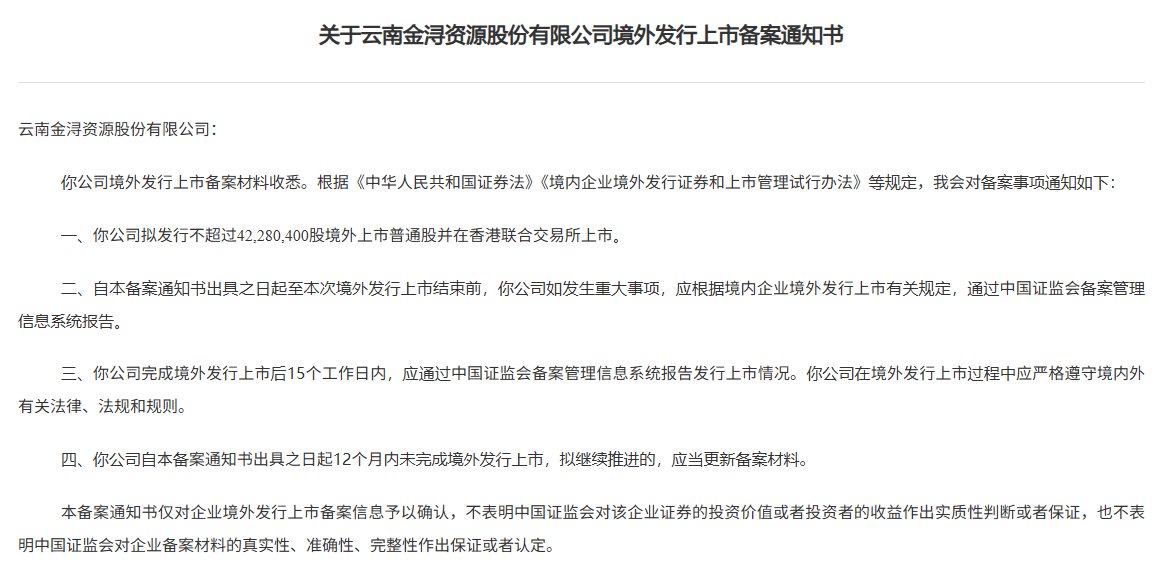
11月28日,中国证监会国际合作司发布《关于云南金浔资源股份有限公司境外发行上市备案通知书》。金浔股份拟发行不超过42,280,400股境外上市普通股 并在香港联合交易所上市。 招股书显示,金浔股份是优质阴极铜的领先制造商,根据弗若斯特沙利文的资料,截至2024年12月31日,按在刚果(金)及赞比亚的产量计, 公司在中国阴极 铜生产商中排名第五,并为两个司法权区中唯一排名前五大的中国公 司。具体而言,公司于2024年在刚果(金)及赞比亚分别生产约16,000吨及5,000吨阴极 铜。在中国的民营企业中,按2024年的产量计,公司于刚果(金)排名第三,并于赞比亚排名第一。 ...
铜月报(2025年11月)-20251128
Zhong Hang Qi Huo· 2025-11-28 11:16
Report Information - Report Title: Copper Monthly Report (November 2025) - Report Date: 2025 - 11 - 28 - Report Institution: AVIC Futures - Analyst: Fan Ling - Futures Practitioner Qualification Number: F0272984 - Investment Consulting Qualification Number: Z0011970 1. Report Industry Investment Rating No relevant content provided. 2. Core Viewpoints - In November, copper prices showed a high - level volatile trend. The macro - driving force weakened due to the Fed's interest rate cut and the US government shutdown. In December, the expectation of an interest rate cut increased, and the long - term broad - money cycle would drive copper prices upward. However, the copper market was affected by multiple factors such as supply and demand, inventory, and substitution, with both upward and downward pressures [7][8][13]. 3. Summary by Directory 3.1 Market Review - In November, copper prices generally showed a high - level volatile trend. The Fed's interest rate cut in November and the US government shutdown event caused market concerns about the US economic outlook, weakening the macro - driving force [7][8]. 3.2 Macro - aspect - **US Economic Data**: The US economic data was mixed. The ISM manufacturing PMI continued to contract, the ADP employment data was inconsistent, the unemployment rate rose, the PPI increased, retail sales were lower than expected, and the private - sector employment loss intensified. Although Nvidia's performance was good, the market was skeptical about the current valuation bubble. The hawkish officials' stance shifted, and the expectation of an interest rate cut in December rose to 75%. In the long - term, the market priced in more than three interest rate cuts within a year, and the broad - money cycle would drive copper prices upward [13]. - **Domestic Economy**: The domestic national economy was stable, and attention should be paid to the introduction of more growth - stabilizing policies [15]. 3.3 Fundamental - aspect - **Supply Side** - **Copper Ore Import**: In October 2025, China's copper ore concentrate imports were 2,451,487.80 tons, a month - on - month decrease of 5.24% and a year - on - year increase of 6.08%. The supply from major countries increased, but that from other countries decreased. The domestic copper concentrate spot processing fee was hovering at a low level, and the tight supply situation of copper ore was still difficult to ease [17]. - **Copper Production**: In October 2025, China's refined copper production was 1.204 million tons, a year - on - year increase of 8.9%. Due to some smelters' maintenance and the difficulty in purchasing anode copper, the production decreased month - on - month. In November, some smelter maintenance was postponed, and the impact would be more reflected in December. Some enterprises' long - term maintenance affected production in November and December. The China Non - Ferrous Metals Industry Association suggested setting an upper limit on the smelting capacity of key metals [30]. - **Scrap Copper Import**: In October, China's scrap copper imports were 196,600 tons, a month - on - month increase of 6.81% and a year - on - year increase of 7.35%. From January to October, the cumulative imports were 1.8956 million tons, a year - on - year increase of 1.99%. The main import sources were Japan, Thailand, South Korea, and Malaysia. However, the domestic recycled copper raw material demand was limited by the low operating rate [34]. - **Refined Copper Import and Export**: In October, China's refined copper imports were 323,144.72 tons, a month - on - month decrease of 13.62% and a year - on - year decrease of 16.32%. The exports were 65,945 tons, a year - on - year increase of more than five times and a month - on - month increase of nearly 1.5 times. The decrease in imports was due to the decline in supply from major countries, the expansion of the LME - COMEX arbitrage spread, and the deterioration of the import parity [37]. - **Demand Side** - **Copper Product Output**: In October, the output of copper strips decreased by 3.62% month - on - month to 189,100 tons, lower than the same period last year. The output of refined copper rods decreased by 10.99% month - on - month to 756,000 tons, affected by high copper prices [39][42]. - **End - use Industries** - **Real Estate**: From January to October, the national real estate development investment decreased by 14.7% year - on - year, new - built commercial housing sales area decreased by 6.8%, and sales volume decreased by 9.6%. The real estate market was in an adjustment period, suppressing copper demand in the real - estate field [45]. - **New Energy**: In October, China's new - energy vehicle production was 1.71 million, a year - on - year increase of 19.3%. From January to October, the cumulative production was 12.672 million, a year - on - year increase of 28.1%. The new - energy power generation showed a differentiated trend. Photovoltaic had a short - term adjustment, with a 38% year - on - year decrease in new - installed capacity in October but a 39% year - on - year increase in cumulative new - installed capacity from January to October. Wind power continued to be booming, with a 34% year - on - year increase in new - installed capacity in October and a 53% year - on - year increase in cumulative new - installed capacity from January to October [49]. - **Home Appliances**: In October, the output of air - conditioners decreased by 13.5% year - on - year, refrigerators decreased by 6.0%, washing machines decreased by 2.0%, and color TVs increased by 1.7%. The home - appliance market was under pressure, and the follow - up sales were expected to remain under pressure [51]. - **Inventory** - The LME copper inventory was 156,575 tons, the New York copper inventory was 415,880 tons, and the SHFE copper inventory was 110,603 tons in the week of November 21. The total inventory exceeded 800,000 tons, remaining above the central level. The US's siphoning effect on global refined copper gradually weakened, but South American refined copper would still be preferentially exported to the US [23]. - **Substitution** - The copper - to - aluminum ratio exceeded the 4.0 mark in October. Historically, when the copper - to - aluminum ratio exceeded the "mean + one - standard - deviation", the aluminum price tended to be stronger than the copper price. The strengthening of the copper - to - aluminum ratio was conducive to the substitution of copper by aluminum, suppressing copper consumption [26].
终端需求表现平稳 沪铅期货或呈现宽幅震荡格局
Jin Tou Wang· 2025-11-28 08:18
Core Viewpoint - The domestic non-ferrous metal market showed significant gains on November 28, with lead futures performing strongly, closing up 1.09% at 17,090.00 CNY/ton [1] Market Performance - The Shanghai market reported that Chihong Zn & Ge lead was priced between 17,000-17,060 CNY/ton, with a premium of 0-50 CNY/ton over the SHFE lead 2512 contract [1] Supply and Demand Dynamics - According to Nanhua Futures, the domestic smelting sector is experiencing mixed changes, with unresolved issues regarding primary lead raw materials and a continued decline in treatment charges (TC) [1] - In Hebei, the supply of recycled lead is regionally tight, and the profitability of recycled lead smelting has weakened, leading to a decrease in operational willingness, with current recycled lead finished product inventories at historical lows [1] - Demand remains stable, with SMM reporting that the weekly operating rate of lead-acid battery plants in Guangzhou is steady at 70.56%, and terminal demand in the lead market is showing stability, with battery plants purchasing on dips and a slight improvement in the spot trading atmosphere [1] Future Outlook - Southwest Futures indicates that the supply of lead concentrate is tight, and by-product revenues are supporting primary lead production. Strict regulations in northern regions are affecting the circulation of waste batteries, leading to slow growth in recycled lead output [1] - There is strong demand for energy storage batteries and a recovery in automotive battery replacement needs, although demand for electric bicycle batteries has shifted from strong to weak, with high dealer inventories [1] - Last week, social inventories of electrolytic lead increased by 2,800 tons, and the market is expected to experience fluctuations driven by supply disruptions and resilient demand, potentially leading to a wide-ranging oscillation pattern [1]

广发早知道:汇总版-20251128
Guang Fa Qi Huo· 2025-11-28 02:29
Report Industry Investment Rating - Not provided in the content. Report's Core View - The report provides a comprehensive analysis of various sectors in the futures market, including financial derivatives, precious metals, base metals, black metals, and agricultural products. It offers insights into market trends, supply - demand dynamics, and provides operation suggestions for each sector. Summary by Directory Financial Derivatives Financial Futures - **Stock Index Futures**: A - share markets had mixed performance with some indices rising and others falling. The four major index futures contracts declined, and the basis discount was repaired. It is recommended to wait for the market to stabilize and suggest a wait - and - see approach, with a possible light - position short - put option strategy [2][3][4]. - **Treasury Futures**: Treasury futures mostly declined. The market sentiment is weak in the short - term, but there may be a rebound if the central bank's bond - buying scale exceeds expectations. It is recommended to wait and see, and pay attention to the 2603 contract cash - and - carry strategy [5][8]. Precious Metals - Gold, silver, platinum, and palladium are analyzed. The long - term bull market in precious metals is expected to continue due to factors such as central bank purchases and increased allocation of financial - attribute commodities. Short - term price fluctuations may be intensified by factors like Fed officials' divergence and economic data. Specific strategies are provided for each metal, such as holding silver long - positions and a long - platinum short - palladium hedge [9][11][12]. Commodity Futures Base Metals - **Copper**: The price is expected to be volatile and upward - biased in the short - term, with 12 - month interest rate cut expectations and improving downstream demand. The mid - to - long - term supply - demand contradiction supports a rising price bottom [13][16]. - **Alumina**: The market is in a bottom - range oscillation. The supply shows signs of contraction, and the inventory accumulation rate is slowing down. The price is expected to remain in the 2700 - 2850 yuan/ton range [17][19]. - **Aluminum**: The price is expected to remain in a high - level oscillation, with a strong - expectation and weak - reality situation. The overseas supply risk and domestic weak demand are in a stand - off [20][21]. - **Aluminum Alloy**: The price is expected to be in a wide - range oscillation. The cost is supportive, and the demand shows resilience, but high prices still suppress overall procurement [22][23]. - **Zinc**: The price is expected to oscillate. The supply pressure eases, and the demand shows structural improvement. The LME inventory starts to accumulate, and the squeeze risk eases slightly [24][27]. - **Tin**: The price is expected to be strong and oscillating. The supply is tight, and the demand in the South China region shows resilience [28][31]. - **Nickel**: The price is expected to oscillate in a range. The low - valuation and production cuts drive a small - scale recovery, but the overall upward drive is limited [32][34]. - **Stainless Steel**: The price is expected to oscillate. The cost support weakens, and the supply pressure remains high, with weak demand in the off - season [35][37]. - **Lithium Carbonate**: The price is expected to have a wide - range oscillation. The market may have increased divergence, with a current situation of strong supply and demand and social inventory reduction [38][41]. - **Polysilicon**: The price is expected to oscillate in a high - level range. The spot price stabilizes, while the silicon wafer and cell prices continue to fall [41][43]. - **Industrial Silicon**: The price is expected to oscillate in a low - level range. The supply decreases, and the demand is not optimistic, with inventory accumulation pressure [44][45]. Black Metals - **Steel**: The price is expected to have a central - downward movement in a range. It is recommended to pay attention to the long - rebar short - iron ore arbitrage [47][49]. - **Iron Ore**: The price is expected to run weakly in the short - term. The supply and demand situation is complex, and it is difficult to have an independent unilateral market without new macro - drivers [50][52]. - **Coking Coal**: The price is expected to be oscillating and bearish. The supply is relatively loose, and the demand for replenishment weakens [53][57]. - **Coke**: The price is expected to be oscillating and bearish. The supply increases, the demand weakens, and the inventory is moderately increasing [58][59]. Agricultural Products - **Meal**: The soybean meal market is in a loose pattern, and the price is expected to oscillate. There is a risk of a decline after short - term chasing [60][62]. - **Pig**: The supply pressure remains, and it is necessary to pay attention to the logic of production capacity reduction [63].
A股小幅低开,贵金属走强,港股高开低走,消费板块延续涨势,多只万科债临停
Hua Er Jie Jian Wen· 2025-11-28 02:03
Market Overview - A-shares opened slightly lower, with the Shanghai Composite Index down 0.11% and the ChiNext Index down 0.04% [1] - The total trading volume in the Wande All A collection auction was only 12.9 billion, marking a new low for the stage [1] - Hong Kong stocks opened higher but turned negative, with the Hang Seng Index down 0.33% and the Hang Seng Tech Index down 0.2% [1][2] Sector Performance - OCS concept stocks mostly retreated, while sectors like deep-sea technology, gold, and superconductors performed well [1] - Large technology stocks in Hong Kong saw minor increases, with Alibaba, Baidu, and JD.com all rising less than 0.9% [1] - The non-ferrous metals sector continued its upward trend, with Chalco International rising by 6% [1] Bond Market - Government bond futures opened higher across the board, with the 30-year main contract up 0.11% and the 10-year main contract up 0.02% [2][3] Currency Exchange - The RMB to USD central parity rate was reported at 7.0789, down 10 points from the previous day [7]


套保额度再增1亿元,从行业龙头看企业风险管理升级
Qi Huo Ri Bao· 2025-11-27 23:29
Core Viewpoint - Zinc Industry Co., Ltd. has approved an increase in the hedging business margin limit for 2025 from 600 million to 700 million yuan, reflecting the company's proactive approach to managing market price volatility and indicating a trend towards more sophisticated risk management in the domestic non-ferrous metal industry [1][3][8] Summary by Sections Hedging Limit Increase: A Proactive Measure Against Market Volatility - The increase in the hedging limit aims to mitigate price volatility risks associated with raw materials and product inventories in the non-ferrous metal smelting and processing business, ensuring stable operational performance [3] - In the first half of 2025, Zinc Industry reported significant fluctuations in zinc and copper prices, which pressured the smelting segment's profitability. However, the company achieved revenue and net profit growth, with net profit rising by 99.07% year-on-year, highlighting the effectiveness of risk management tools [3][8] Industry Overview: Hedging Becoming a "Must-Have" for Listed Companies - The increase in hedging limits by Zinc Industry is part of a broader trend among listed companies, particularly in the non-ferrous metal sector, to strengthen risk management practices. Since 2025, many companies have announced hedging measures in response to increased market volatility [5] - Statistics show that at least 1,583 A-share listed companies in the real economy have issued hedging announcements this year, surpassing the total of 1,503 for all of 2024, marking a historical high [5] Upgrade Trend: Diversification of Tools and Scope - Zinc Industry's announcement indicates a clear upgrade in risk management strategies, expanding from traditional commodity price risks to include foreign exchange risks and exploring a variety of tools beyond just futures [7] - The trend of tool diversification is evident, with some non-ferrous metal companies beginning to use combination strategies like "futures + options." Zinc Industry has implemented a dual mechanism of "spot lock + futures hedging" to address exchange rate volatility [7][8]
