Qi Huo Ri Bao

Search documents
期债修复窗口开启
Qi Huo Ri Bao· 2025-10-14 20:00
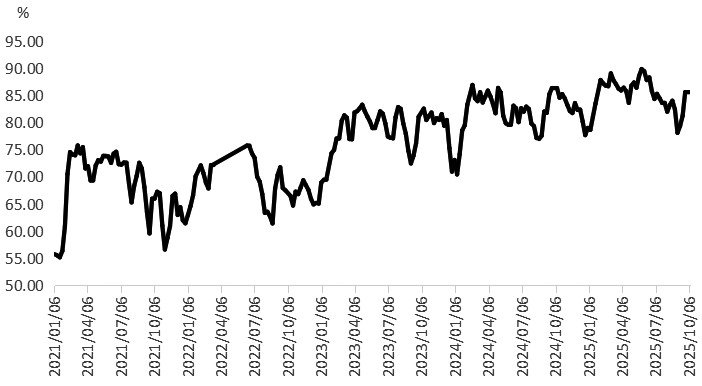
Core Viewpoint - The bond futures market has experienced fluctuations driven by policy expectations and risk aversion, with significant performance in the 10-year and 30-year bonds [1] Group 1: Market Dynamics - Since September, the bond futures market has gone through a cycle of "volatile decline → rebound driven by policy expectations → increase driven by risk aversion" [1] - The 30-year bond futures contract hit a six-month low on September 24, while the 10-year bond futures fluctuated around 107.7 yuan [1] - After the National Day holiday, a relaxed funding environment helped the bond market recover, with the 10-year bond yield dropping by 3.2 basis points to 1.743%, marking a new low for the period [1] Group 2: Trade Tensions Impact - The escalation of trade tensions has introduced new shocks to the market, with "TACO trading" being the main theme prior to late September [2] - Historical patterns indicate that trade tensions affect the real economy primarily through inventory cycles, with U.S. importers stockpiling goods before new tariffs take effect [2] - The Nasdaq Composite Index's price-to-earnings ratio has increased from 24 times in April to 31 times currently, suggesting a higher likelihood of market volatility [2] Group 3: Domestic Asset Allocation - The logic of under-allocation in domestic assets continues, with expectations of seasonal declines in credit issuance as the "golden September and silver October" peak season passes [3] - The insurance industry is projected to generate over 3 trillion yuan in new premiums by 2025, creating a rigid allocation gap for long-term bonds [3] - The expectation of the inclusion of Chinese government bonds in global indices may lead to a cessation of foreign capital reduction, prompting increased allocation to government and local bonds, particularly 30-year and 50-year bonds [3] Group 4: Monetary Policy Outlook - The central bank is expected to maintain a moderately loose monetary policy, with a projected 0.5 percentage point reserve requirement ratio cut in the fourth quarter to support economic growth [3] - The central bank will utilize open market operations and other tools to ensure ample liquidity, with the DR007 rate likely to remain between 1.5% and 1.6% [3] - A downward testing of the 10-year bond yield towards 1.70% is possible if credit expansion remains weak, with the policy mix potentially shifting to a "loose + hedging" model [3]

短期有望保持强势
Qi Huo Ri Bao· 2025-10-14 20:00
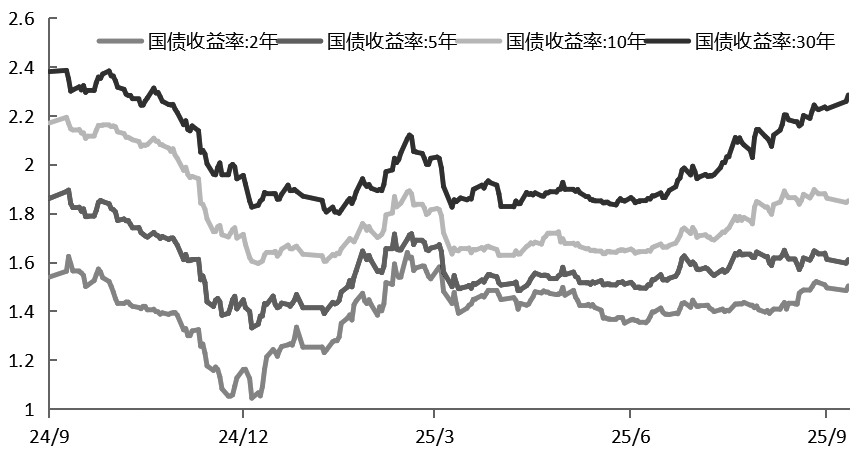
受上周末贸易摩擦升级影响,海外市场情绪恶化,美国科技股及主要板块抛压严重,美股显著下跌,美债收益率回落。10 月11日,基金和证券等机构积极买入债券,国内现券收益率大幅下行。10月13日,国债期货普遍高开,TL2512合约涨幅一 度超过0.6%,尾盘随着权益市场企稳,国债期货涨幅收窄。 图为国债收益率走势(单位:%) 3月下旬至4月初,加税风波使市场避险情绪升温,10年期国债收益率从3月18日的高点1.89%快速回落至4月7日的1.63%, 13个交易日回落幅度超过26BP。此次美国总统特朗普关于中美贸易的言论略超市场预期,对美股、美债市场产生较大影 响。我国商务部回应近期中方相关经贸措施时指出,美方的行为严重损害中方利益,严重破坏双方经贸会谈氛围,中方对 此坚决反对。如果美方一意孤行,中方必将坚决采取相应措施,维护自身正当权益。 随着美国政府"停摆",市场预计美联储10月降息25个基点的概率大幅提升,明年年底利率中枢将回到3%左右。美联储进入 降息周期,一方面,会缩小中美国债利差,提升人民币债券的吸引力;另一方面,将缓解人民币汇率的压力,为我国央行 实施更宽松的货币政策提供更大的外部空间和更好的时间窗口。 ...
分析人士:不利因素逐步减少
Qi Huo Ri Bao· 2025-10-14 20:00
Core Viewpoint - The recent volatility in the government bond futures market is influenced by various factors, including rising market risk aversion due to trade tensions, changes in monetary policy expectations, and uncertainties in the economic fundamentals of China [1][2]. Group 1: Market Influences - The increase in market risk aversion is primarily driven by escalating trade frictions, which have heightened the demand for safe-haven assets [1]. - The People's Bank of China (PBOC) has engaged in significant monetary operations, including a 1.1 trillion yuan reverse repurchase operation, which has raised expectations for continued monetary easing [1]. - The manufacturing PMI for September remains in contraction territory, indicating ongoing uncertainties in China's economic recovery, although there is optimism regarding technology-led growth [1]. Group 2: Regulatory and Economic Factors - The release of the draft regulation on the management of public fund sales fees has introduced new uncertainties, leading some institutions to preemptively sell off assets, which has pressured the market [1]. - The strong performance of the stock market in September has also exerted some downward pressure on the bond market [1]. Group 3: Future Outlook - The bond market's future performance will depend on the development of trade tensions; a short-lived escalation may not significantly alter monetary policy expectations [2]. - The upcoming Fourth Plenary Session of the 20th Central Committee of the Communist Party of China is crucial, as any signals regarding economic stability could impact market confidence [2][3]. - Continuous monitoring of supply-demand dynamics in the bond market and changes in liquidity conditions is essential [3].
前9个月我国新能源汽车产销双破千万辆
Qi Huo Ri Bao· 2025-10-14 16:11
整体来看,1至9月,我国汽车产销分别完成2433.3万辆和2436.3万辆,同比分别增长13.3%和12.9%。9 月单月,汽车产销量分别为327.6万辆和322.6万辆,环比分别增长16.4%和12.9%,同比分别增长17.1% 和14.9%。 "产销月度同比增速已连续5个月保持10%以上,新动能加快释放,对外贸易呈现韧性。"中汽协会副秘 书长陈士华表示,近期,汽车以旧换新政策继续显效,地方车展火热进行,企业新品密集上市,汽车市 场整体延续良好态势。 据新华社电 中国汽车工业协会14日发布数据显示,2025年前9个月,我国新能源汽车产销量双双突破千 万辆,同比增幅均超过30%,彰显汽车产业蓬勃活力。 具体来看,1至9月,新能源汽车产销分别完成1124.3万辆和1122.8万辆,同比分别增长35.2%和34.9%, 新能源汽车新车销量达到汽车新车总销量的46.1%。 ...

衍生品助力新疆棉花产业华丽转身
Qi Huo Ri Bao· 2025-10-14 16:07
Core Insights - The cotton industry in Xinjiang is undergoing a transformation, moving from traditional harvesting methods to a more integrated and modernized supply chain, enhancing the quality and efficiency of cotton production [1][2][3] Group 1: Cotton Production - Xinjiang cotton farmers are achieving high yields, with many reporting an average output of over 500 kilograms per mu, and some exceeding 600 kilograms per mu [1][2] - The focus on selecting superior cotton varieties has significantly improved the quality of cotton produced in the region, benefiting both farmers and downstream industries [2][3] Group 2: Industry Development - The number of spindles in Xinjiang has reached approximately 30 million, accounting for 37% of the national textile industry, indicating the region's growing importance in the textile sector [4] - Major textile enterprises are establishing operations in Xinjiang, attracted by favorable policies and the availability of local resources, which enhances the overall competitiveness of the industry [3][4] Group 3: Financial Instruments and Risk Management - The introduction of cotton futures and options has provided essential financial tools for risk management, allowing farmers and textile companies to stabilize their operations and secure profits [5][6] - The "insurance + futures" model has helped bridge the gap between small-scale production and large markets, offering price guarantees to cotton farmers [6]
发挥期市功能赋能硅产业高质量发展
Qi Huo Ri Bao· 2025-10-14 16:07
Core Insights - The seminar focused on the current status and development trends of the polysilicon and industrial silicon industries, discussing how futures and derivative tools can empower silicon-based enterprises for high-quality development and how the futures market can support the development of the silicon industry [1] Group 1: Industry Overview - The silicon industry has seen rapid development during the "14th Five-Year Plan" period, becoming increasingly significant in national strategy and economic development, while also facing supply-demand mismatches [1][2] - Currently, the silicon industry chain has sufficient supply, but demand growth is below expectations, leading to high inventory levels and downward pressure on silicon prices [2] Group 2: Future Development Focus - The key tasks for the "15th Five-Year Plan" for the crystalline silicon photovoltaic industry include controlling new capacity, eliminating outdated capacity, addressing "involution" competition, promoting industrial clustering, establishing monitoring and risk assessment systems, and deepening power system reforms [2] - It is anticipated that by 2030, "photovoltaics + energy storage" will achieve grid parity, leading to a resurgence in the silicon industry [2] Group 3: Role of Futures and Derivatives - Futures and derivative tools are crucial for stabilizing price risks and enhancing the operational efficiency of silicon enterprises, particularly during industry downturns [2] - The industrial silicon and polysilicon futures markets are showing steady progress, with increased transaction volumes and open interest, effectively reflecting the supply-demand relationship in the spot market [3] - The futures markets for industrial silicon and polysilicon are playing a significant role in optimizing resource pricing, assisting in risk management, and standardizing industry operations, thereby enhancing China's influence on global photovoltaic pricing [3]
橡胶系期价集体大跌
Qi Huo Ri Bao· 2025-10-14 08:34
Core Viewpoint - The rubber market is currently experiencing a weak fundamental outlook, exacerbated by renewed tensions in US-China trade relations, leading to significant declines in rubber futures prices [1][2]. Price Movements - As of October 13, the main natural rubber futures contract RU2601 fell below 15,000 yuan/ton, closing at 14,940 yuan/ton, with a daily decline of 2.45% [1]. - The main 20 rubber futures contract NR2511 reported a price of 12,040 yuan/ton, down 2.51% [1]. - The main butadiene rubber futures contract BR2511 closed at 10,920 yuan/ton, with a drop of 2.67% [1]. Market Drivers - The recent price drop is primarily driven by a combination of macroeconomic factors and fundamental market conditions [2]. - The impact of US-China trade friction has led to increased pressure on global financial markets and heightened volatility in investor sentiment [2]. Supply and Demand Dynamics - The decline in futures prices for natural and synthetic rubber has outpaced that of spot prices [3]. - Synthetic rubber prices are more significantly affected by weakening crude oil prices, resulting in larger declines compared to natural rubber [3]. - Despite adverse weather conditions, including frequent typhoons and continuous rainfall in major production areas like Hainan, Yunnan, Thailand, and Vietnam, the market has not reacted positively [3]. - Instead, the market anticipates a concentrated release of supply in the fourth quarter, further intensifying downward price pressure [3].
张传合:电解铝、再生铝、铝加工业产业主动拥抱期货工具撬动新质生产力,迈向高端化
Qi Huo Ri Bao· 2025-10-14 07:29
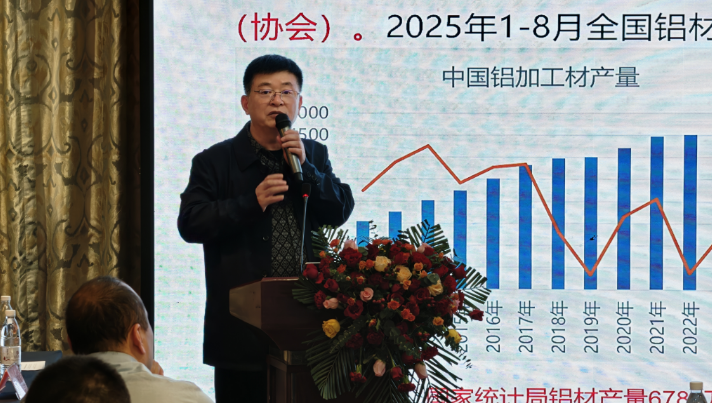
Core Insights - The aluminum industry in China is currently undergoing a critical transformation and upgrading phase, with a focus on high-quality development amidst challenges such as export tax policy adjustments and intensified internal competition [2] Group 1: Industry Development - The aluminum industry has shown strong resilience and vitality in 2024, despite facing economic slowdowns, cooling traditional consumption, and tight resource supply [1] - The dependency on imported bauxite has significantly increased to 68%, while the alumina sector has achieved record high profitability [1] - Electrolytic aluminum production has exceeded expectations, nearing the national production cap of 45 million tons [1] - The proportion of green electricity consumption in electrolytic aluminum has reached 25.2%, with plans to integrate into the national carbon market [1] Group 2: Role of Financial Instruments - The futures market plays an irreplaceable role in price discovery and risk management, with alumina futures providing effective price references and hedging tools for industry chain enterprises [2] - Financial instruments like futures and options are expected to enhance the industry's green and low-carbon transformation, as well as improve the resilience of supply chains [2] Group 3: Regional Development - Henan province is highlighted as a significant aluminum industrial base in China, with a complete industrial chain and advantages in deep processing [2] - The province is making strides in transferring electrolytic aluminum production capacity and achieving breakthroughs in recycled aluminum, high-end aluminum material research, and smart manufacturing [2] Group 4: Future Outlook - Despite challenges such as resource supply pressures and peak aluminum consumption, the industry has vast development potential, particularly in emerging fields like new energy vehicles, photovoltaics, and energy storage [3] - The industry is urged to focus on green, intelligent, and high-end development, ensuring resource security and promoting the integration of recycled aluminum with high-quality processing [3] - Emphasis is placed on risk prevention and the use of financial tools to manage market risks, alongside strengthening industry self-discipline to avoid vicious competition [3]
旺季成色不足 玻璃易跌难涨
Qi Huo Ri Bao· 2025-10-14 02:15
Core Viewpoint - The glass market is facing a significant contradiction where demand continues to decline while production is on the rise, leading to an oversupply situation that is expected to keep prices under pressure [8]. Supply and Demand Analysis - Glass inventory has returned to historically high levels, indicating a clear oversupply, making it difficult for prices to rise unless effective "anti-involution" policies are implemented [1][10]. - As of October 10, the production profit for float glass using coal as fuel increased to 143.93 CNY/ton, up 36.39 CNY/ton from early September, while profits for oil coke and natural gas processes also saw significant increases [2]. - The daily production of float glass reached 161,300 tons as of October 10, slightly up from 159,600 tons on September 2, nearing last year's levels, but the production and sales rate has been declining [4]. - The average production and sales rate for float glass across major regions was 84% as of October 10, remaining below 100% for 12 consecutive days, indicating weak demand [4]. Real Estate Sector Performance - The real estate sector, a key downstream industry for glass, has shown weak performance, with the transaction area of commercial housing in 30 major cities dropping by 11.78% year-on-year in September [5]. - From January to August 2025, domestic real estate investment totaled 49,589.45 billion CNY, down 13.67% year-on-year, with new construction area and completed area also showing significant declines [5]. - The inventory of unsold commercial housing reached 76.2 million square meters, the highest level since 2019, further indicating a contraction in demand for glass [5]. Processed Glass Demand - Demand for processed glass remains weak, with order days for downstream manufacturers dropping to 11 days, the lowest level for the same period in the past seven years [6]. - Although automotive production has increased by 10.5% year-on-year, accounting for only 15%-20% of flat glass demand, it is insufficient to offset the decline in demand from the real estate sector [6]. Market Outlook - The current supply-demand imbalance is expected to lead to further inventory accumulation, with float glass factory inventory reaching 62.824 million heavy boxes, a 6.76% increase year-on-year and the second-highest level for the same period in history [8][10]. - Without a significant reduction in production capacity through policy measures, glass prices are likely to remain under pressure, making it advisable for companies to consider hedging opportunities during price rebounds [10].
供应压力难减 尿素向下寻底
Qi Huo Ri Bao· 2025-10-14 02:12
10月13日,尿素期货主力合约价格最低触及1583元/吨,创5年新低。 图为尿素开工负荷 国庆假期期间,由于下游基本暂停备货,国内尿素生产企业库存大幅上升。截至10月9日,国内尿素企 业总库存量为144.39万吨,较国庆节前上升21.22万吨,升幅为17.23%,并且明显高于往年同期水平。 相对而言,由于尿素出口仍在进行,国庆假期期间尿素港口库存有所下降。截至10月9日,国内尿素港 口样本库存为41.5万吨,环比下降3.8万吨,降幅为8.39%。虽然尿素港口库存下降,但是同样明显高于 往年同期水平。整体来看,无论是尿素企业库存还是港口库存,均显著高于往年同期水平,去库存压力 巨大,高库存对尿素价格形成较强压制。 整体来看,国内尿素产能持续上升,四季度新产能投放压力较大,虽然气头工艺存在降负荷预期,但是 主流工艺尚有利润,开工负荷下降空间有限,企业库存和港口库存偏高。在这种情况下,国内尿素整体 供应充足的现状难以改变。 需求难有起色 供应压力难减 按照资讯机构年初公布的信息,2025年国内累计有约800万吨尿素新产能计划投放,全部落地后国内尿 素总产能将达到8171万吨。前三季度,国内累计有469万吨尿素新装置 ...