
Qi Huo Ri Bao

Search documents
MLF加量续作
Qi Huo Ri Bao· 2025-09-26 06:54
Core Viewpoint - Domestic market interest rates are showing a strong trend due to high demand for funds at the end of the quarter, with expectations of a weaker rate next week as short-term funding needs are likely to ease [1] Interest Rate Summary - As of September 25, the Shanghai Interbank Offered Rate (Shibor) overnight rate closed at 1.472%, a decrease of 4.2 basis points from September 18 [1] - The rates for 1-week, 2-week, 1-month, 3-month, 6-month, 9-month, and 1-year periods are reported at 1.584%, 1.625%, 1.564%, 1.574%, 1.635%, 1.669%, and 1.679% respectively, with increases of 5.6, 4.4, 2, 1.8, 0.4, 0.7, and 0.6 basis points compared to September 18 [1] Central Bank Operations - This week, the central bank has 18,268 billion yuan of reverse repos maturing, and has conducted 17,016 billion yuan of reverse repos in the first four working days [1] - The central bank has 300 billion yuan of Medium-term Lending Facility (MLF) maturing and has rolled over 600 billion yuan of MLF, injecting 300 billion yuan of liquidity into the market [1] Future Outlook - The probability of weaker domestic market interest rates next week is high due to the release of short-term funding needs before the holiday and the central bank's liquidity injection through MLF, which helps stabilize medium to long-term rates [1]
债券 调整之势难以改变
Qi Huo Ri Bao· 2025-09-26 06:53
Group 1 - The core viewpoint indicates a significant decline in bond futures prices across various maturities, with the 30-year bond futures dropping by 2.7% and the 10-year bond futures down by 0.4% since September [1] - The equity market's strength is exerting pressure on the bond market, leading to a noticeable "see-saw" effect between stocks and bonds, as liquidity shifts from the bond market to equities [1] - Economic data from August shows weakness, with the official manufacturing PMI improving but still below the growth line, indicating economic pressure [1] Group 2 - The article highlights the importance of responding to potential liquidity tightening risks, suggesting strategies for hedging in such scenarios [2] - Historical research indicates that the basis is significantly influenced by funding rates, with tightening conditions favoring long positions in bond futures [2] - The article recommends participating in interest rate flattening strategies and prioritizing the "short TS long T" arbitrage strategy, as the net basis showed a pattern of first expanding and then contracting in September [2]
中州期货:为何高炉铁水产量仍维持高位
Qi Huo Ri Bao· 2025-09-26 00:43
Group 1: Steel Consumption Performance - Overall steel consumption has been poor, with rebar consumption down 4.5% year-on-year and wire rod down 7.8% [1] - Despite the decline in construction steel consumption, plate consumption has increased, supporting high furnace iron output [2] - The average daily transaction volume of building materials in September is only slightly up by 1% compared to previous years, indicating weaker demand during the peak season [3] Group 2: Production and Profitability - Steel mills are facing significant profit pressure due to falling steel prices and rising raw material costs, with rebar profits nearing a loss state [1][4] - High furnace iron output remains elevated at 237.2 million tons per day, despite poor steel consumption, due to strong plate demand [2] - Steel mills may need to reduce production to restore profitability, but this is contingent on various factors, including potential government policies [4][5] Group 3: Market Dynamics and Future Outlook - The market is currently in a phase of unclear trends, with both upward and downward pressures on steel prices [7] - The potential for government policies to stimulate consumption or enforce production cuts could significantly impact the steel market [6][7] - The steel industry is undergoing a "反内卷" (anti-involution) movement aimed at improving product quality and managing competition [7]
全球第二大铜矿因事故停产 铜精矿紧缺“雪上加霜”
Qi Huo Ri Bao· 2025-09-26 00:11
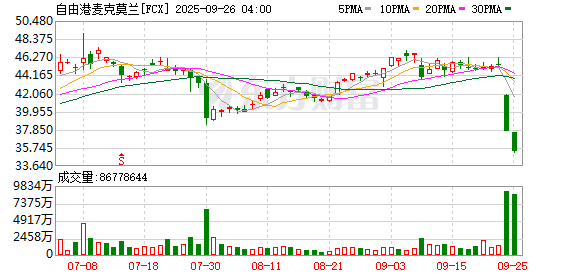
Core Viewpoint - The recent landslide incident at Freeport McMoRan's Grasberg mine in Indonesia has led to a significant disruption in copper supply, causing a sharp increase in copper prices globally [2][3][4]. Group 1: Incident Details - The Grasberg mine, one of the largest copper mines in the world, experienced a major landslide on September 8, resulting in the entrapment of seven workers and the subsequent suspension of operations [2]. - As of September 24, two of the trapped workers have been confirmed dead, while efforts continue to rescue the remaining five [2]. - The Grasberg mine was transitioning from open-pit to underground mining and had recently ramped up production capacity before the incident [2]. Group 2: Production and Supply Impact - Freeport McMoRan has officially lowered its production guidance, indicating that it will not meet its original sales target of 445 million pounds (approximately 200,000 tons) of copper for Q4 this year [3]. - The company has reduced its 2026 production target from 1.7 billion pounds to 1.1 billion pounds, a 35% decrease, and expects the mine's actual output this year to be around 500,000 tons [3]. - The incident is expected to exacerbate the existing tight supply conditions in the copper market, with potential supply shortages projected to increase over the next two years [3][4]. Group 3: Broader Market Implications - The copper industry has seen an increase in supply disruptions globally, with other mines also facing operational challenges, leading to a potential decline in copper concentrate supply by over 5% this year [4]. - Analysts predict that the International Copper Study Group (ICSG) may revise its copper concentrate production forecasts downward due to the recent incidents [4]. - The supply-demand balance for copper is expected to shift towards a tighter market, particularly with the ongoing issues at the Grasberg mine and other global supply challenges [5][6].

炼焦行业协会专题市场分析会: “建议全行业限产30%以上”
Qi Huo Ri Bao· 2025-09-26 00:09
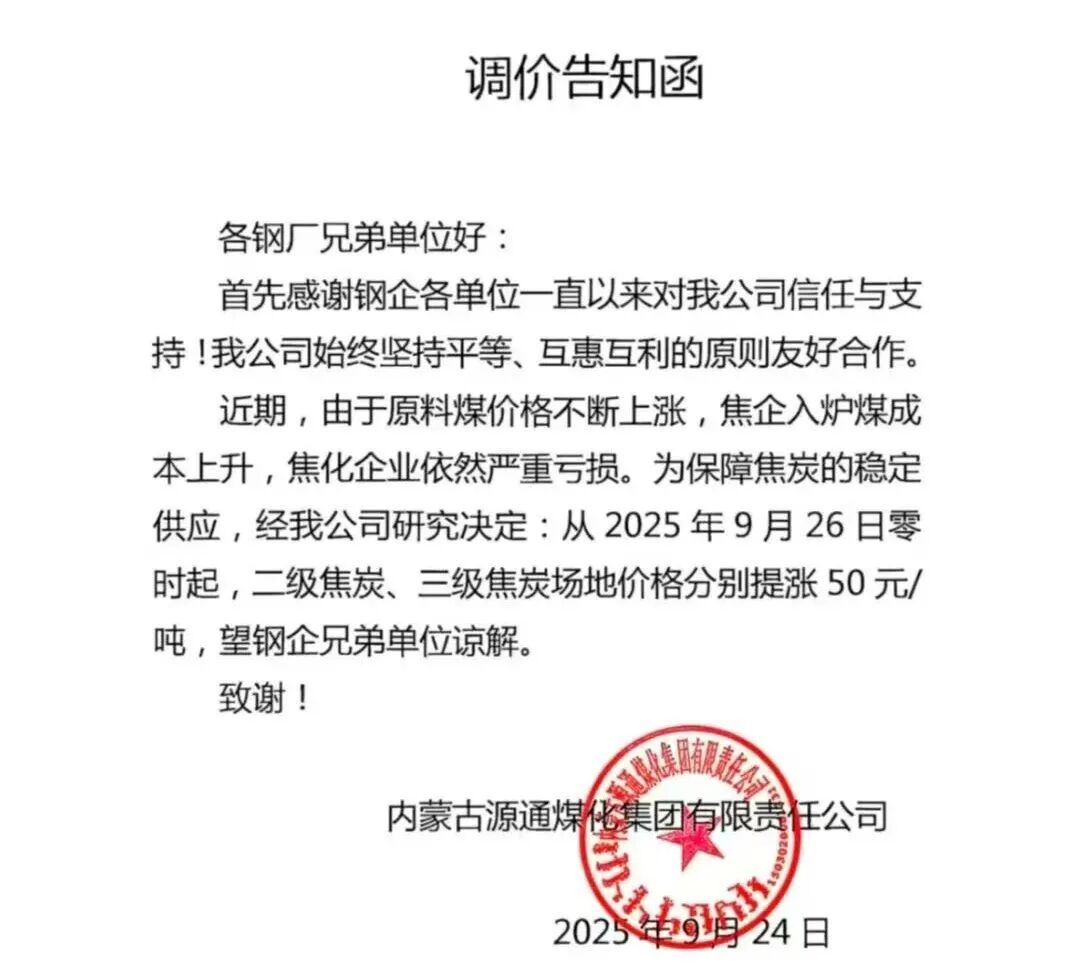
Core Viewpoint - The meeting of the China Coking Industry Association's Market Committee on September 25 resulted in a decision to raise prices for various types of coke and to recommend a production cut of over 30% across the industry to maintain reasonable profit levels and healthy development [1][2]. Group 1: Price Adjustments - Effective from September 26, prices for different types of coke will be increased: 50 CNY/ton for solid wet quenching coke, 55 CNY/ton for solid dry quenching coke, 80 CNY/ton for top-loaded wet quenching coke, and 85 CNY/ton for top-loaded dry quenching coke [1]. - Recent days have seen several companies raise prices for coking coal and coke [1]. Group 2: Industry Structure and Production - The coking coal industry is dominated by large state-owned enterprises, with Shanxi Coking Coal Group holding over 50% of the national resources. The projected domestic coking coal production for 2024 is 472 million tons [2]. - The total coking capacity in China is approximately 560 million tons, with independent coking capacity accounting for about 65%. The projected production of coke and semi-coke for 2024 is 489 million tons [2]. Group 3: Supply and Demand Dynamics - The overall supply-demand situation for coking coal and coke is tight, with iron water production increasing at a higher rate than coke production. This supports the prices of both coking coal and coke [3][4]. - As of mid-September, the cumulative iron water production from 247 sample steel mills was 630 million tons, a year-on-year increase of 3.6%, while the cumulative coke production was approximately 300 million tons, a year-on-year increase of 0.6% [2]. Group 4: Market Sentiment and Future Outlook - The market is currently in a state of "anti-involution" and "weak reality," with expectations of price support due to downstream replenishment before the National Day holiday [4]. - Analysts suggest that the coking coal market has strong cost support, and with sustained high iron water production, there is potential for a price increase in coke, with expectations of 2 to 3 rounds of price hikes [4].
重磅会议!“建议全行业限产30%以上”,涉及这些品种→
Qi Huo Ri Bao· 2025-09-25 23:52
Core Viewpoint - The Chinese coking industry is experiencing a tightening supply-demand situation, leading to price increases for coking coal and coke, as well as calls for production cuts to maintain industry profitability [1][4][5]. Group 1: Market Analysis - A special market analysis meeting was held by the China Coking Industry Association on September 25, where representatives from major coking enterprises discussed the current macroeconomic environment and industry dynamics [1]. - From September 26, prices for various types of coke will be increased: 50 CNY/ton for wet quenching coke, 55 CNY/ton for dry quenching coke, 80 CNY/ton for top-loading wet quenching coke, and 85 CNY/ton for top-loading dry quenching coke [1]. - The industry is advised to limit production by over 30% and to adopt measures such as reducing or halting shipments to uncooperative clients to protect industry interests [1]. Group 2: Supply and Demand Dynamics - The domestic coking coal market is dominated by large state-owned enterprises, with Shanxi Coking Coal Group holding over 50% of the national resources [4]. - In 2024, the domestic production of coking coal is projected to be 472 million tons, while imports of coking coal are expected to reach 122 million tons, with Mongolian coal accounting for 46.7% of imports [4]. - The total coking capacity in China is approximately 560 million tons, with independent coking capacity making up about 65% [4]. Group 3: Price Trends and Future Outlook - The overall supply-demand situation for coking coal and coke is tight, supporting price increases [5]. - Despite a slight accumulation of coke inventory, the market is expected to see continued upward pressure on prices due to stable iron output and pre-holiday restocking demands [5][6]. - Analysts predict that the coking market may experience 2 to 3 rounds of price increases in the near future, driven by strong cost support and high steel production levels [6].
刚刚,全线暴跌,超25万人爆仓!美联储,降息大消息
Qi Huo Ri Bao· 2025-09-25 23:49
Cryptocurrency Market - Ethereum's price dropped significantly, falling below the psychological threshold of $4000, with a daily decline of 6.25% to $3898, marking a seven-week low [1] - Bitcoin also experienced a decline, dropping 3.25% and falling below the $110,000 key support level [1] - Solana saw a 7.8% decrease, marking its sixth consecutive day of decline [1] - Institutional fund inflows into Ethereum have cooled, contributing to the price drop, as indicated by cryptocurrency analyst Rachael Lucas [3] Ethereum ETF Withdrawals - Investors have withdrawn nearly $300 million from U.S.-listed Ethereum ETFs since the beginning of the week, coinciding with a significant market downturn [4] - The total net inflow for Ethereum ETFs in September is only $11 million, a stark contrast to over $3.8 billion in inflows in August [4] Copper Market - Freeport McMoRan announced a production halt at its Grasberg mine in Indonesia due to a landslide, triggering a force majeure on supply contracts [8] - The Grasberg mine is the second-largest copper mine globally, with an expected production of 816,500 tons in 2024, accounting for approximately 3.5% of global output [8] - Following the incident, Freeport has lowered its production guidance, indicating it will not meet its original sales target of 445 million pounds (approximately 200,000 tons) for Q4 [9] - The copper market is facing a tightening supply situation, exacerbated by the Grasberg mine's production halt and other recent supply disruptions [10] Future Outlook for Copper - Analysts predict that the copper market may shift towards a tight balance in Q4 due to supply constraints from the Grasberg mine and other factors [11] - The potential for increased demand from sectors such as data centers and renewable energy could lead to a significant rise in copper prices if supply remains constrained [11]

股指 有望重拾上行趋势
Qi Huo Ri Bao· 2025-09-25 23:40
Group 1 - Domestic policy expectations are rising, with "anti-involution" and demand expansion policies expected to work in tandem, further stabilizing the economy's endogenous momentum [1][5] - Global macro liquidity is improving, and the micro funding environment is favorable, providing support for stock indices [1][4][5] - The stock index is expected to resume an upward trend after a period of consolidation, driven by both fundamental and liquidity boosts [1][5] Group 2 - In August, broad fiscal revenue and expenditure growth rates declined, with broad fiscal revenue increasing by 0.3% year-on-year, a decrease of 3.3 percentage points from the previous month [2] - Tax revenue showed a positive trend, with corporate income tax increasing by 33.4% year-on-year, a significant improvement of 27 percentage points from the previous month [2][3] - Land-related tax revenues continued to show negative growth, with government fund revenue declining by 5.7% year-on-year in August [2][3] Group 3 - Public budget expenditure growth is accelerating, with social welfare-related expenditures maintaining growth, while infrastructure-related expenditures are declining [3] - The government is expected to continue policy support due to the current economic pressures, particularly in light of weak land-related revenues [3] - The significant increase in corporate income tax reflects the effectiveness of "anti-involution" policies, and there are signs of recovery in corporate profits as PPI declines narrow [3] Group 4 - The Federal Reserve's recent 25 basis point rate cut is part of a "preventive" easing cycle, contributing to global macro liquidity improvement [4] - The Chinese central bank maintains a supportive monetary policy stance, with expectations for continued moderate easing in the future [4] - The market is experiencing active sentiment, supported by sustained high levels of financing and increased non-bank deposits [4]
有人乐意“闲”,有人享受“充电”
Qi Huo Ri Bao· 2025-09-25 23:40
Core Insights - The article discusses the unique experience of futures traders during the National Day holiday in China, highlighting the contrast between market activity and personal reflection [1][2][3] Group 1: Market Dynamics - Futures exchanges will be closed from October 1 to October 8, with trading resuming on October 9, indicating a structured break in trading activities [1] - The last trading days before the holiday often see increased market volatility, with potential margin adjustments and risk warnings issued by exchanges [1] Group 2: Trader Behavior - Some futures traders choose to close their positions before the holiday to avoid uncertainties in international markets, allowing for personal time and reflection [2] - Others remain engaged with the market during the holiday, monitoring global price movements and preparing for post-holiday trading [2] Group 3: Personal Reflection and Preparation - The holiday serves as a time for traders to recharge, review past trades, and learn new analytical tools, emphasizing the connection between market activities and real-world economic indicators [2] - Upon returning to the market, traders bring insights gained during the break, ready to face the challenges of trading with renewed understanding and support from family [3]
债市 难言企稳
Qi Huo Ri Bao· 2025-09-25 20:41
Group 1 - The bond market is experiencing a weak trend due to the "seesaw" effect between stocks and bonds, as well as the implementation of new public fund sales regulations, making it difficult for the bond market to stabilize in the short term [1][6] - As of September 24, the yields on 10-year and 30-year government bonds are at 1.8125% and 2.111%, respectively, showing an increase of 1.75 and 1.9 basis points compared to the previous Friday's close [1] - The futures market for government bonds has seen declines, with the main contracts for 30-year, 10-year, 5-year, and 2-year bonds dropping by 0.71%, 0.1%, 0.06%, and 0.04% respectively [1] Group 2 - There is a divergence in market expectations regarding the increase of accommodative monetary policy, as the recent press conference did not signal any immediate policy adjustments [2][3] - The September LPR (Loan Prime Rate) quotes remained unchanged for both 1-year and 5-year rates, aligning with market expectations, but reflecting a lack of signals for further monetary easing [3] - Economic data from July to August showed a decline, leading to expectations for increased accommodative monetary policy, while the potential for the RMB to appreciate and stable financial markets reduce the necessity for such measures [3] Group 3 - The deadline for public fund sales regulations is approaching, which may lead to increased redemption pressure on short-term bonds as investors shift towards bond ETFs due to higher short-term redemption fees [4] - The central bank's recent adjustments to the 14-day reverse repurchase operations indicate a shift towards fixed quantity and multi-price bidding, with a recent operation of 300 billion yuan [5] - The likelihood of the central bank restarting bond purchases in September is low, depending on signals for incremental policy and fiscal stimulus [5] Group 4 - The current global liquidity environment remains loose, with a weak dollar and high market risk appetite, contributing to a challenging environment for the bond market [6] - In the medium term, if inflation and corporate earnings data improve significantly, the bond market may enter a larger-scale "bear market" [6] - The recommendation for trading strategies is to maintain a cautious approach with a focus on trend observation and consider arbitrage opportunities in steep yield curves [6]