中金点睛

Search documents
中金 | 深度布局“十五五”:基础材料与工程篇
中金点睛· 2025-11-15 00:07
Core Viewpoint - The article emphasizes the importance of optimizing supply and focusing on high-quality development across various industries during the "15th Five-Year Plan" period, highlighting the need for structural adjustments and sustainable growth strategies. Coal Industry - The coal consumption is expected to peak between 4.95 to 5.1 billion tons during the "15th Five-Year Plan" period, with a slight decline to around 4.9 billion tons by 2030 [2] - Coal remains a crucial stabilizer for energy supply during the transition to a new energy system, with a gradual reduction in coal usage expected [3] - The coal sector is projected to maintain investment value due to favorable supply-demand dynamics, with high-quality companies expected to sustain profitability and cash flow [3] Building Materials - Cement demand is forecasted to decline by 30-40% from 2024 to 2030, necessitating capacity reduction to maintain profitability [4] - The industry is expected to focus on overseas expansion, particularly in Africa, as a growth strategy [4] - Glass fiber demand is anticipated to grow at an annual rate of around 5%, driven by wind power installations [4] - The construction materials sector is under pressure, but segments like coatings are expected to recover, with the market size projected to exceed 100 billion yuan by 2030 [5] Steel Industry - The steel industry is transitioning from scale expansion to quality and efficiency improvement, with a focus on high-end product development [6] - Demand for construction steel is expected to decline due to demographic changes, while high-end manufacturing will continue to drive demand for specialized steel products [6] - The industry is undergoing supply-side reforms to eliminate inefficient capacity and improve competitiveness [6] - Green transformation initiatives are being prioritized, with a focus on reducing carbon emissions and enhancing sustainability [7] - The industry aims to increase self-sufficiency in iron ore and expand overseas operations to enhance global competitiveness [8] Paper Industry - The paper industry is experiencing a slowdown in capacity expansion, with demand expected to recover moderately due to supportive consumption policies [9] - The industry is shifting towards self-produced pulp to enhance profit margins amid fluctuating raw material prices [9] Construction Industry - The construction sector is expected to focus on "stock clearance and incremental transformation," with significant government support for infrastructure investment [10] - The sector's financial health is projected to improve as local government debt restructuring progresses, enhancing cash flow and reducing impairment losses [10] - New business models and overseas expansion are seen as key growth drivers for construction companies [12]


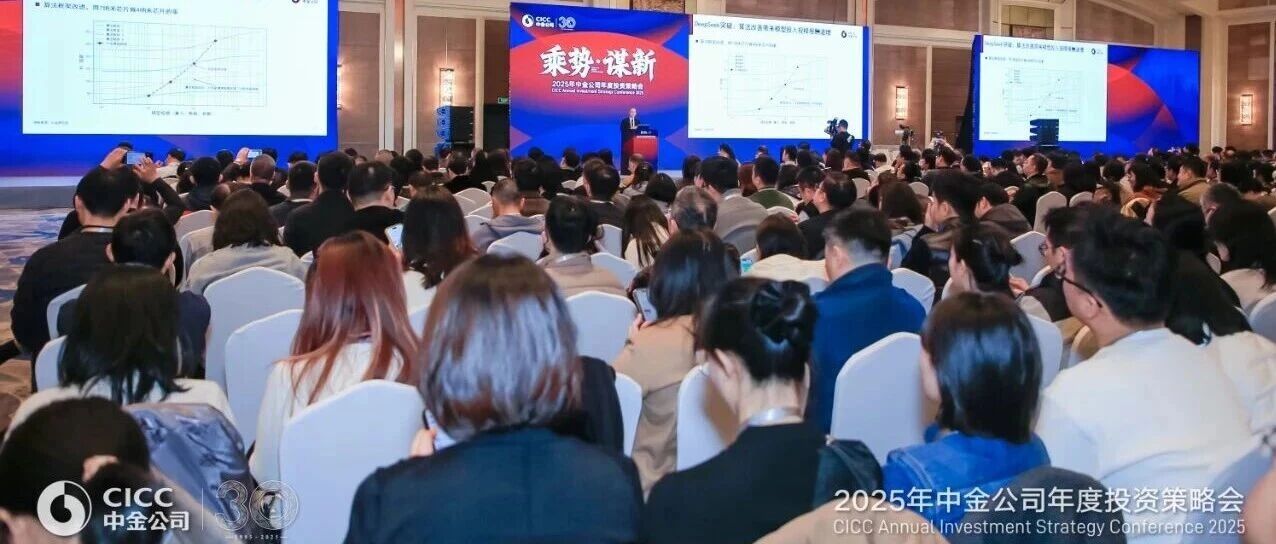
中金公司成功举办2025年度投资策略会
中金点睛· 2025-11-14 11:50
Core Viewpoint - The article discusses the 2025 CICC Annual Investment Strategy Conference, emphasizing the themes of new supply, new technology, new consumption, and new finance, reflecting the evolving landscape of China's economy and capital markets [4][5]. Group 1: Economic Outlook - The global landscape is undergoing significant changes due to a new round of technological revolutions and industrial transformations, reshaping global competition [5][7]. - China's economy is in a critical phase of transitioning from old to new growth drivers, with technology innovation and green development becoming core engines for economic growth [7]. - The development of artificial intelligence (AI) is highlighted as a unique competitive advantage for China, driven by its large population and market scale [7]. Group 2: Capital Market Dynamics - CICC aims to support technological innovation and economic transformation through its integrated services in investment banking, research, and asset management [7]. - The capital market is expected to play a crucial role in supporting technology innovation and facilitating economic transformation [7][9]. Group 3: Geopolitical and Economic Relations - The U.S.-China economic relationship is entering a new phase characterized by a "fragile balance," with both countries needing to achieve economic rebalancing [12]. - The internal and external economic cycles in China are expected to promote mutual reinforcement, focusing on innovation and boosting domestic demand [11]. Group 4: Market Strategies and Recommendations - The A-share market is anticipated to continue its upward trend, with a focus on sectors benefiting from AI technology and innovation [17]. - Investment strategies should consider three main lines: growth in AI technology, opportunities in overseas markets, and sectors poised for cyclical recovery [17][20]. Group 5: Research and Digital Innovation - CICC is committed to enhancing its research capabilities and providing comprehensive, forward-looking research services to investors [24]. - The CICC digital research platform aims to offer a one-stop service for institutional investors, facilitating access to research reports, databases, and event information [23].

中金 | 深度布局“十五五”:医药生物篇
中金点睛· 2025-11-14 00:18
Core Viewpoint - The article emphasizes the acceleration of innovation in the pharmaceutical and medical device industries in China, driven by supportive policies and a shift from generic to innovative drug development, which is expected to enhance the industry's quality and global competitiveness [2][3][5]. Policy Support for Innovation - Since 2020, numerous favorable policies have been introduced to improve the ecosystem for innovative drugs, focusing on research standards, review and approval systems, patent protection, and reimbursement mechanisms [2]. - The "14th Five-Year Plan" highlights the importance of supporting innovative drugs and medical devices, indicating their critical role in national health and economic development [3][5]. Clinical Trials and Market Dynamics - The number of clinical trials for innovative drugs in China has surpassed 1,900, outpacing the US, Europe, and Japan, reflecting a significant increase in research quality and efficiency [3][8]. - By 2024, 39 innovative drugs approved for the first time in China were domestically developed, increasing from 31% in 2020 to 42% in 2024, indicating a strong trend towards domestic innovation [3][5]. Medical Insurance and Payment Systems - The narrowing surplus of the national medical insurance fund has created a mismatch between the commercialization of innovative drugs and their approval timelines, necessitating improvements in the commercial insurance system [8][27]. - The "15th Five-Year Plan" aims to establish a multi-tiered medical insurance system, which is expected to enhance the role of commercial health insurance in providing payment support for innovative drugs [27][32]. Medical Devices and Technological Innovation - The approval of innovative medical devices has increased by 43% from 2016-2020 to 2021-2024, driven by improved regulatory mechanisms and support for high-end medical device innovation [10][13]. - The article notes that while domestic brands are gaining global competitiveness, the industry still faces challenges in achieving systematic original innovation and key technology breakthroughs [13][19]. Emerging Technologies - The application of AI and brain-machine interfaces in healthcare is progressing towards industrialization, with the establishment of preliminary frameworks for clinical applications and payment rules [14][18]. - The integration of high-quality data flow in healthcare is anticipated to enhance the clinical benefits of new technologies, improving resource utilization and patient outcomes [18][19]. Biomanufacturing Developments - The biomanufacturing sector in China is transitioning from a "follower" to a "runner" stage, with significant advancements in technology and policy support, laying a solid foundation for future growth [19][20]. - The article highlights the importance of focusing on high-value, environmentally friendly products, such as biodegradable materials, to expand market opportunities [22][26].

中金 | 深度布局“十五五”:软件和电信服务
中金点睛· 2025-11-14 00:18
Core Viewpoint - The article emphasizes the strategic importance of technological self-reliance and innovation in China's modernization process, as outlined in the "14th Five-Year Plan" [2][3]. Group 1: Technological Self-Reliance and Innovation - The "14th Five-Year Plan" prioritizes technological self-reliance, establishing a comprehensive framework for enhancing the national innovation system and integrating technological and industrial innovation [2][3]. - The focus on foundational software as a key area highlights both the risks from external supply chain controls and the strategic opportunities for improvement in usability and functionality [3]. - The plan encourages enterprises to take a leading role in innovation, promoting collaboration between research institutions and industry to enhance the efficiency of resource allocation and innovation outcomes [4]. Group 2: Talent Development and Education - The "14th Five-Year Plan" proposes a mechanism for integrated development of education, technology, and talent, focusing on key talent groups such as strategic scientists and engineers [5]. - Reforms aimed at breaking down barriers to talent mobility are expected to stimulate innovation and creativity across various sectors [5]. Group 3: Future Industries and Infrastructure - The plan outlines a forward-looking approach to future industries, identifying key areas such as quantum technology, biomanufacturing, and 6G as focal points for development [6][7]. - New infrastructure construction is deemed essential for supporting future industries, with a focus on building a robust digital economy framework [7][8]. Group 4: Institutional Reforms - The "14th Five-Year Plan" emphasizes institutional reforms to eliminate barriers to high-quality development, particularly in finance and taxation, which are expected to create new market demands [8][9]. - The financial sector is set to undergo significant changes, including upgrades to trading systems and enhanced risk monitoring capabilities [8]. Group 5: Global Cooperation and Market Expansion - The plan advocates for high-level openness and cooperation, particularly in technology export and global collaboration, creating opportunities for domestic companies to expand internationally [10]. - The focus on digital infrastructure development in countries along the "Belt and Road" initiative aligns with China's strengths in digital technology, facilitating market entry for Chinese firms [10].

中金缪延亮:中美经贸关系新阶段意味着什么?
中金点睛· 2025-11-14 00:18
Core Viewpoint - The article discusses the new phase of China-US economic and trade relations, highlighting the transition from conflict to a more balanced dialogue, which may have significant implications for global governance and the international monetary order [2][3]. Group 1: New Phase of China-US Economic Relations - The economic relationship between China and the US has evolved through three distinct phases: "coexistence and win-win" (2005-2016), increasing trade friction (2017-2024), and a new phase of equal dialogue starting in 2025 [4][5][12]. - The "coexistence and win-win" phase was characterized by strong economic interdependence, with China providing cheap labor and the US benefiting from low inflation and financial prosperity [5][7]. - The increasing trade friction phase saw the US imposing tariffs, with the effective tariff rate on China remaining high at 19.3% even after some easing in 2020 [11][12]. Group 2: Characteristics and Policy Implications of the New Phase - The new phase is marked by a balance of power, allowing for negotiations that could lead to mutually beneficial agreements, such as adjustments in tariffs on agricultural products and strategic resources [20][21]. - The US's reliance on China for certain exports and the need for China to maintain its economic growth create a scenario where both countries have incentives to engage in dialogue [20][22]. - The potential for currency adjustments, such as the appreciation of the yuan and the reduction of US tariffs, could help rebalance trade and improve consumer purchasing power in both countries [21][22]. Group 3: International Monetary Order and Asset Implications - The new phase may reinforce the ongoing restructuring of the international monetary order, with a shift away from dollar dominance towards a more fragmented and diversified system [26][28]. - The trend of capital returning to domestic markets, particularly in China, indicates a growing preference for local investments amid global uncertainties [28][30]. - The long-term competition between the US and China is likely to drive increased investment in research and development, impacting various asset classes differently, with strategic resources like rare earths gaining importance [54][55].

中金 | 深度布局“十五五”:消费篇
中金点睛· 2025-11-14 00:18
Core Viewpoint - The article emphasizes the importance of the consumption sector in China's economic development, highlighting the goal of significantly increasing the resident consumption rate and enhancing domestic demand as a primary driver of economic growth during the "14th Five-Year Plan" period [2][3]. Group 1: Importance of the Consumption Sector - The "Suggestions" state that a strong domestic market is the strategic foundation for Chinese modernization, advocating for the expansion of domestic demand and the promotion of consumption [3]. - China's resident consumption rate is currently at 40%, which is lower than that of developed countries like the US (over 60%) and Japan (over 50%), indicating significant room for improvement [3][5]. Group 2: Institutional Improvements and Market Environment - The article discusses the need to eliminate barriers to the establishment of a unified national market, addressing issues such as unfair competition and inconsistent quality standards [5]. - The implementation of policies to enhance consumer rights and improve the market environment is expected to boost consumer experience and expand the consumption market [5][6]. Group 3: Investment in People - The "Suggestions" highlight the importance of promoting high-quality employment, improving income distribution, and enhancing social security systems to support consumer demand [6]. - Various initiatives aimed at increasing consumer capacity and willingness, such as childcare subsidies and consumption vouchers, are anticipated to positively impact consumer spending [6][8]. Group 4: Investment in Goods and Services - The article notes the need for increased investment in consumer-related infrastructure and services to improve consumer experience [15]. - The current service consumption rate in China is about 46%, which is lower than in the US (69%), UK (62%), and Japan (56%), suggesting potential for growth in service consumption as GDP rises [15][16]. Group 5: International Trade and Market Expansion - The "Suggestions" advocate for expanding international trade and investment cooperation, which could enhance the scale of the consumption market and facilitate the internationalization of high-quality domestic brands [18][19]. - The increase in inbound tourism, with 26.94 million foreign visitors in 2024 (up 96% year-on-year), reflects the potential for expanding the domestic consumption market through greater openness [18][19].

中金 | 深度布局“十五五”:绿色发展篇
中金点睛· 2025-11-14 00:18
Core Viewpoint - The "15th Five-Year Plan" is crucial for achieving carbon peak goals and sets the direction for economic and social development in China, emphasizing the importance of carbon emission control and the transition to a new energy system [2][3]. Group 1: Carbon Emission Control - The transition from energy consumption dual control to carbon emission dual control begins in the "15th Five-Year Plan," focusing on intensity control as a primary measure [3][5]. - The carbon intensity reduction target during the "15th Five-Year Plan" is based on achieving a 65% reduction from 2005 levels by 2030, with coal and oil consumption peaking as key objectives [5][6]. - Predictions indicate that coal consumption will peak around 2028, while oil consumption is expected to peak between 2025 and 2027, with estimates of 7.7 to 8 million tons [6][7][8]. Group 2: New Energy System Development - The "15th Five-Year Plan" prioritizes the construction of a new energy system, aiming for non-fossil energy to account for over 25% of energy consumption by 2030, requiring an annual increase of 1% during this period [6][9]. - The plan outlines three main actions for achieving carbon peak: industrial structure optimization, electrification of economic activities, and cleaner power generation [9][10]. Group 3: Industrial and Economic Transformation - Key industries such as steel, petrochemicals, and building materials, which account for about 50% of carbon emissions, will undergo energy-saving and carbon reduction transformations, targeting a reduction of approximately 4 million tons of CO2 emissions [10][12]. - The electrification of industrial, building, and transportation sectors is projected to contribute to a reduction of 3.5 million tons of carbon emissions by 2030, with significant growth expected in the electric vehicle market [14][15][18]. Group 4: Green Investment and Market Creation - Achieving carbon peak will require an estimated investment of 17.5 trillion yuan, with an average annual investment of 3.5 trillion yuan, expected to boost GDP growth by 1.2% [24][25]. - The green finance sector is anticipated to grow, with a current capacity to support 2.5 trillion yuan annually, necessitating policies to reduce the green premium and enhance investment in low-carbon technologies [25][26]. Group 5: Carbon Market Development - The carbon market will evolve in two phases: the first phase focuses on expanding coverage and establishing a foundation by 2027, while the second phase aims to make the carbon market a primary channel for greenhouse gas reduction by 2030 [26][29]. - By the end of the "15th Five-Year Plan," the carbon market is expected to cover 80% of carbon emissions, with a focus on improving the efficiency of renewable energy systems and reducing costs [26][30].

中金 | 深度布局“十五五”:非银金融篇
中金点睛· 2025-11-14 00:18
Core Viewpoint - The article emphasizes that the high-quality development of the capital market will provide critical support for the "14th Five-Year Plan" period, enabling Chinese securities firms to embark on a journey towards becoming first-class investment banks [9][10]. Group 1: High-Quality Development of Capital Markets - The capital market is positioned as a crucial hub for modern economy and finance, facilitating precise resource allocation to strategic sectors, promoting technological innovation, and enhancing wealth accumulation for residents [3][4]. - The "14th Five-Year Plan" highlights the need for a financial powerhouse, advocating for the development of technology finance, green finance, inclusive finance, pension finance, and digital finance [3][4]. - The focus during the "14th Five-Year Plan" will be on three main directions: the dual expansion of quality assets and funds, steady advancement of high-level institutional openness, and continuous optimization of market ecology under strong regulation [4][5]. Group 2: Asset and Fund Expansion - The article notes that the demand for quality investment and financing tools will continue to grow, with a focus on nurturing a group of quality listed companies and enhancing the direct financing of equity and bonds [5][6]. - Specific measures include deepening reforms in the Sci-Tech Innovation Board and the Growth Enterprise Market, improving the identification and pricing mechanisms for technology innovation enterprises, and developing private equity and venture capital funds [5][6]. Group 3: High-Level Institutional Openness - The article discusses the ongoing emphasis on openness in China's capital market, with significant achievements during the "13th Five-Year Plan" period, such as the removal of foreign ownership limits and the optimization of the Qualified Foreign Institutional Investor system [6][7]. - The "14th Five-Year Plan" aims to further expand institutional openness, supporting the coordinated development of onshore and offshore markets and enhancing the international competitiveness of China's capital market [6][7]. Group 4: Regulatory Environment - The article highlights that a precise and efficient regulatory framework is essential for the stable operation of the capital market, with a focus on enhancing financial regulation and risk prevention mechanisms [7][8]. - The "14th Five-Year Plan" proposes a comprehensive strengthening of financial regulation, emphasizing the need for collaboration between central and local regulatory bodies [7][8]. Group 5: Opportunities for Securities Firms - The high-quality development of the capital market is expected to provide significant opportunities for Chinese securities firms, enabling them to transform their business models and expand their operational scope [9][10]. - The article suggests that the dual expansion of quality assets and funds will drive the transformation of securities firms, while high-level openness will help them break through local boundaries [9][10].

中金 | 深度布局“十五五”:传媒篇
中金点睛· 2025-11-14 00:18
Group 1: Core Insights - The article emphasizes the importance of a favorable policy environment in fostering a new content cycle in the cultural industry, particularly in gaming and long-form video content [2][3] - It highlights the need for continuous innovation in high-quality content to retain users on long video platforms, with a focus on flexible funding and creative energy [2][3] - The article predicts that the period from 2026 to 2028 will be crucial for content innovation and mechanism optimization in the industry [3] Group 2: AI Integration - AI is entering a new stage of development, promoting deep integration with various industries, including media, where significant breakthroughs in AI applications are expected by 2025 [6] - The article outlines specific areas of AI application, including film and television, gaming, advertising, and social media, where AI is enhancing efficiency and commercial viability [6][7] - It anticipates that as AI technology matures, there will be a shift towards highly automated content generation across multiple sectors, leading to increased user engagement and monetization [7] Group 3: Cultural Export - The article discusses the trend of "cultural export," where Chinese cultural products are increasingly tailored for global markets, moving from generic content to high-quality, culturally rich offerings [9] - It notes that leading companies in the gaming sector are achieving global distribution success, while web literature and short dramas are also adapting to local markets through translation and localization efforts [9] - The integration of AI is expected to further enhance the scalability of cultural exports, allowing for more efficient production and distribution [9] Group 4: IP Economy - The article highlights the growing demand for high-quality, serialized content, driving the IP economy, which involves monetizing intellectual property through various media and product forms [11] - It observes that content IP companies are increasingly focusing on strategic IP development to mitigate profit volatility and expand commercial opportunities [11] - The article suggests that the maturation of the domestic IP industry will lead to a systematic revaluation of IP assets, with companies possessing differentiated IP reserves gaining competitive advantages [11]

中金 | 深度布局“十五五”:银行篇
中金点睛· 2025-11-14 00:18
Core Insights - The article outlines the ten major trends expected in the banking sector during the "15th Five-Year Plan" period, emphasizing a shift towards high-quality economic development and a more balanced credit supply-demand relationship [2][9]. Group 1: Monetary Policy and Credit Allocation - The focus will shift from traditional quantity-based monetary control to a more nuanced approach, with M2 growth expected to decline from 9.4% during the "14th Five-Year Plan" to 6%-8% during the "15th Five-Year Plan" [2]. - There will be a significant decrease in the proportion of real estate loans, dropping from approximately 40% in 2017 to around 0% by 2025, while loans for infrastructure, manufacturing, and green finance are expected to rise to over 70% of new credit [2][3]. Group 2: Policy Coordination and Risk Management - Enhanced coordination with fiscal and industrial policies is anticipated, utilizing policy tools to stimulate credit demand and mitigate credit costs for banks [3]. - The banking sector will focus on combating "involution" in competition, moving away from price wars to risk pricing and comprehensive service offerings [4]. Group 3: Profitability and Risk Control - The pressure to maintain reasonable interest margins and profits is expected to increase, with banks needing to balance loan volume and pricing while addressing credit costs [5]. - The "15th Five-Year Plan" will see a push for debt restructuring among real estate companies, with banks facing pressure to write down debts for problematic firms [6]. Group 4: Support for New Real Estate Models and Local Debt Resolution - The banking sector will explore financing systems for current housing sales, focusing on urban renewal and rental housing to meet demand [6]. - A significant issuance of local government bonds, estimated at 10 trillion yuan, is planned to replace hidden debts, with banks expected to participate in this process [7]. Group 5: Financial Stability and Capital Supplementation - A comprehensive financial safety net will be developed, with a focus on reducing the number of high-risk financial institutions [9]. - External capital supplementation will be necessary due to declining profit margins, with state-owned banks and smaller banks likely to receive fiscal injections [7][9].