华尔街见闻

Search documents
世界正从“1920s”滑向“1930”?
华尔街见闻· 2026-01-22 08:22
Core Insights - The discussion highlighted the alarming similarities between the current economic climate and the prelude to the Great Depression of 1929, driven by technological exuberance, rising sovereign debt, and geopolitical fragmentation [2][3][8] Debt Crisis - Ken Griffin criticized reckless government spending, particularly in the U.S., as the primary threat to the market, stating that nearly all governments are overspending [4][9] - The U.S. national debt has reached $38 trillion, raising concerns about the sustainability of such spending without significant productivity gains from AI [9] Tariff Costs - Lagarde noted that tariffs between the U.S. and Europe have surged from an average of 2% to over 12%, with potential increases to 15% [5][12] - Griffin warned that tariffs act as a regressive tax on consumers and could foster crony capitalism, stifling the vitality of small and medium enterprises [5][13] Central Bank Independence - Lagarde emphasized the importance of central bank independence, arguing that fiscal consolidation should not rely on central banks as a safety net [6][15] - The current political climate necessitates maintaining the "knave-proof" nature of central banks to prevent moral hazard [17] AI and Economic Disparity - Larry Fink described the current economic landscape as a "K-shaped" recovery, where large firms leverage AI to gain a competitive edge over smaller companies [10] - The cost of developing cutting-edge AI models has skyrocketed to $1 billion, creating a high barrier to entry that favors large capitalized firms [10] Geopolitical Fragmentation - Lagarde warned that geopolitical tensions and protectionism are undermining the data flow and energy access necessary for AI efficiency, posing a significant threat to its expansion [9][10]


不动武、也不加税了!特朗普上演“格陵兰TACO”,黄金跌破4800
华尔街见闻· 2026-01-22 04:27
Core Viewpoint - The article discusses President Trump's dramatic shift in stance regarding Greenland, moving from threats of military action and tariffs to seeking a negotiated solution, which has eased market tensions and improved risk sentiment [1][7][10]. Market Reactions - U.S. stock markets recovered losses, with the dollar and U.S. Treasury bonds rebounding, while spot gold prices approached $4900 before declining [2]. - In the Asia-Pacific region, market sentiment improved, leading to a general rise in stock markets, while safe-haven assets like gold fell below $4800 [3]. Political Developments - Trump's change of heart was influenced by behind-the-scenes negotiations with European leaders, resulting in a preliminary framework agreement concerning Arctic security, mineral resources, and military bases [9][14]. - The agreement aims to prevent Russia from gaining a foothold in Greenland while allowing the U.S. priority rights to mineral investments [14]. Negotiation Dynamics - The negotiations are expected to focus on U.S. military presence in Greenland and European efforts to enhance Arctic security, with Trump expressing optimism about the potential agreement [14][15]. - Trump's earlier threats of tariffs on eight countries were retracted as part of the negotiation process, indicating a willingness to compromise [13][17]. Divergent Interpretations - U.S. officials believe Trump's tough stance forced European leaders to negotiate, while European officials argue that their united front against territorial acquisition persuaded Trump to seek a non-territorial agreement [18]. - Concerns among Trump's advisors suggest that his aggressive rhetoric may complicate reaching an agreement with Denmark [19].
最赚钱对冲基金,要来A股了
华尔街见闻· 2026-01-21 10:37
Core Viewpoint - Citadel Advisors Singapore Pte. Limited, a subsidiary of Citadel, has received approval from the China Securities Regulatory Commission (CSRC) for Qualified Foreign Institutional Investor (QFII) status, marking a significant step in its strategy to re-enter the Chinese market, especially after a strong performance in the A-share market [3][22]. Group 1: Citadel's Performance and Strategy - Citadel has generated a total net profit of $83 billion (approximately 578.4 billion RMB) since its inception in 1990, making it the most profitable hedge fund in history [3][13]. - The flagship Wellington fund has achieved an average annual return of 19.2% since its inception, significantly outperforming the market average [5][9]. - Despite a challenging year in 2025 with a return of 10.2%, which is the worst since 2018, Citadel remains the second-best performing hedge fund globally [10][11]. Group 2: Expansion into the Chinese Market - Citadel's renewed focus on the Chinese market is driven by the potential for growth and the recent strong performance of the A-share market, which saw the Shanghai Composite Index rise for 17 consecutive trading days [3][14]. - The company plans to leverage its QFII status to access a broader range of investment opportunities in China, including the ability to participate in the STAR Market and engage in margin trading [24]. - Citadel's previous attempts to enter the Chinese market faced regulatory challenges, but recent developments indicate a more favorable environment for foreign investment [20][21]. Group 3: Market Context and Implications - The hedge fund industry in Asia, particularly in Singapore and Hong Kong, has seen significant growth, with Singapore's hedge fund assets increasing by 37% to reach 327 billion SGD (approximately 254 billion USD) by the end of 2024 [24]. - The influx of foreign capital, including Citadel's, is expected to enhance liquidity in the A-share market, benefiting overall market dynamics [25].

桥水达利欧警告:特朗普政策可能引发“资本战”
华尔街见闻· 2026-01-21 10:37
Core Viewpoint - Ray Dalio, founder of Bridgewater Associates, warns that President Trump's policies may lead to a "capital war," causing foreign governments and investors to reduce their investments in U.S. assets [2][5] Group 1: Economic and Market Implications - Dalio highlights that escalating trade tensions and increasing fiscal deficits could undermine confidence in U.S. debt, prompting investors to shift towards hard assets like gold [2][6] - He emphasizes the importance of diversification in investment portfolios, recommending that investors allocate 5% to 15% of their portfolios to gold as a key hedge [2][6] - Following Dalio's remarks, gold prices surged, reaching over $4,760 for the first time, reflecting a flight to safety amid fears of a potential tariff war between the U.S. and Europe [2] Group 2: Potential European Responses - Deutsche Bank warns that Europe, holding over $8 trillion in U.S. assets, could "weaponize" capital in response to U.S. tariffs, escalating the conflict beyond mere trade disputes [5][12] - The European Union is considering three levels of response to U.S. tariffs, including postponing trade agreements, imposing tariffs on $108 billion worth of U.S. goods, and activating the Anti-Coercion Instrument (ACI) to counter economic pressure [8][9][10] Group 3: Capital War Risks - Dalio expresses concern that countries holding significant amounts of U.S. dollars and debt may become reluctant to finance U.S. deficits if trust erodes [6][12] - Historical precedents show that economic conflicts can escalate from trade disputes to capital and currency conflicts, leading to a preference for hard currencies over holding each other's debt [6][12] - Deutsche Bank notes that if the ACI is activated, it could lead to regulatory tightening and tax investigations on U.S. assets in Europe, potentially causing asymmetric damage to U.S. businesses [12] Group 4: Market Reactions and Predictions - Market tensions have already emerged, with U.S. stock futures, European markets, and the dollar under pressure, while gold and safe-haven currencies like the Swiss franc and euro have gained [14] - Goldman Sachs estimates that a 10% tariff could reduce the GDP of affected countries by 0.1% to 0.2%, with Germany facing a relatively larger impact [13]


“AI入口大战”--字节已成“倒逼之势”,阿里腾讯“输不起”
华尔街见闻· 2026-01-21 10:37
Core Viewpoint - ByteDance is aggressively expanding in both AI cloud infrastructure and consumer applications, creating significant pressure on Alibaba and Tencent to increase investments by 2026 to defend their core markets [1][2]. Group 1: AI Cloud Market Dynamics - ByteDance's Volcano Engine has rapidly become the second-largest AI infrastructure provider in China, achieving a market share of 13% in AI cloud services by mid-2025, trailing only Alibaba's 23% [1][3]. - ByteDance is leveraging its first-mover advantage in AI to disrupt the long-standing dominance of Alibaba, Tencent, and Huawei in the cloud market [2][3]. - The company's strategy includes expanding its sales team and utilizing aggressive pricing to weaken competitors, focusing on selling AI products based on its extensive database and computing infrastructure [3][4]. Group 2: Consumer Application Impact - The shift in user behavior towards AI as a primary interface poses a risk of marginalizing traditional apps, as users may prefer to interact with AI first rather than using search engines [2][5]. - ByteDance's control over user engagement time is a critical advantage, as it can influence user actions during idle moments, positioning its AI applications favorably [6][7]. Group 3: Strategic Implications for Competitors - Goldman Sachs identifies 2026 as a pivotal year for Chinese internet giants, emphasizing the need for Alibaba and Tencent to significantly increase their capital and operational expenditures in AI to maintain their market positions [2][8]. - The competition is not merely about technology but also about who can establish a "default entry point" for users, which will redefine traffic distribution and advertising budgets [8][9]. Group 4: Investment Logic Transformation - The investment landscape is expected to shift from valuing "visions" to focusing on profitability growth and new narratives by 2026, with an emphasis on "alpha" returns rather than mere valuation expansion [9][10]. - Investors are advised to prioritize metrics related to "entry success rates" and the progress of transaction closures over emotional responses to models [10][11]. Group 5: The Nature of the AI Super Entry Battle - The AI super entry battle does not require all players to succeed; it only needs one dominant entry point, with others potentially becoming secondary features [12].


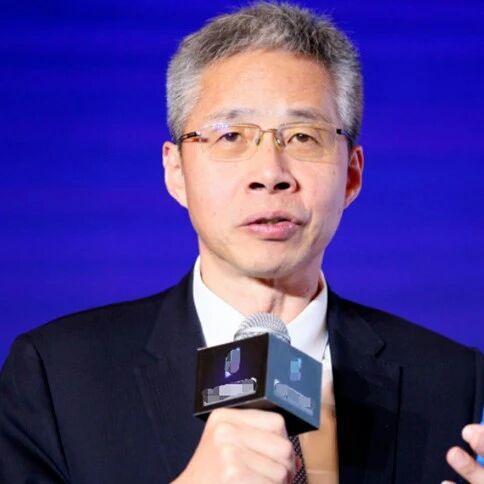
但斌、李迅雷对话:未来十年A股可能都是结构性行情,不是普涨普跌,AI是10年机会,即使明年有小型AI股灾,抗住就行
华尔街见闻· 2026-01-21 10:37
Core Viewpoint - The current market rally is primarily driven by an increase in risk appetite rather than profit-driven factors, indicating a slow bull or structural bull market influenced by fundamental changes [1][84]. Group 1: Market Dynamics - The market is increasingly showing signs of differentiation, moving away from the past trend of collective gains and losses [3][32]. - Structural opportunities are identified, focusing on major trends such as technology leadership and mean reversion opportunities during systemic risks or extreme panic [4][128]. - The current era is characterized as the AI era, necessitating investments in high-tech and innovation-related sectors [5][46]. Group 2: Investment Strategies - Value investment is emphasized over mere long-term investment, highlighting the importance of adapting to changing market conditions [6][46]. - The potential for significant returns exists if investors can identify leading companies within the AI sector [13][77]. - The gold market is likened to a volcano, with potential for significant price movements, although timing for adjustments remains uncertain [14][57]. Group 3: Economic Outlook - The next decade is expected to be dominated by structural market conditions rather than broad market movements, with a focus on specific sectors like AI and technology [19][95]. - The economic landscape is influenced by cyclical and structural issues, including the real estate downturn and demographic changes, which could impact traditional industries [125][126]. - The importance of fiscal policy in supporting income growth and addressing structural economic challenges is highlighted [91][92]. Group 4: AI and Future Trends - The AI sector is anticipated to experience a bull market over the next decade, with significant investment and application growth expected in the coming year [17][120]. - The current investment climate is marked by substantial funding in AI, with major companies leading the charge, suggesting a robust future despite potential short-term volatility [60][68]. - The discussion around AI bubbles indicates that caution is warranted, but the potential for long-term gains remains strong if investors focus on sound companies [11][70].

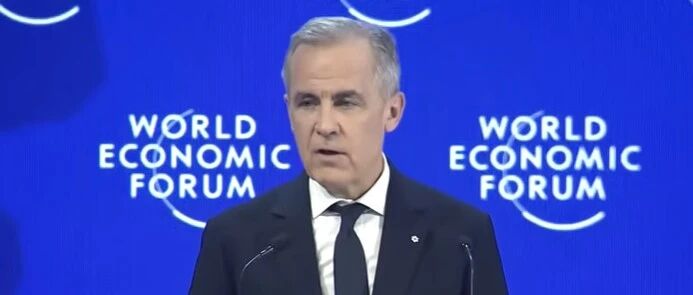
加拿大总理卡尼重磅演讲:基于规则的秩序已死,中等强国应团结行动,抵制某些大国胁迫
华尔街见闻· 2026-01-21 08:41
据新华社报道,加拿大总理卡尼(Mark Carney)20日在瑞士达沃斯举办的世界经济论坛年会上说,加拿大强烈反对美国为得到格陵兰岛加征关税。 卡尼表示,近来,一些大国把关税当作施压杠杆,把金融基础设施作为胁迫工具。他指出,包括世界贸易组织、联合国在内,集体解决问题的制度架构正面临 威胁。 媒体报道称,卡尼当日发表了一场措辞强硬的演讲并警示: 中等国家必须觉醒。 他直言不讳地指出,二战后建立的"基于规则的国际秩序正在消亡",世界已进入 大国零和博弈 的时代。卡尼警告称,在这种环境下,"'霸权国家'可以为所欲 为,弱者只能承受苦难"。 卡尼在演讲中呼吁全球中等强国放弃"'顺从'能换取安全"的幻想,转而采取联合行动抵制"霸权国家"的胁迫。 他强调,面对将贸易、金融和供应链武器化的霸权行为,中等国家必须建立新的联盟架构, "因为如果我们不在谈判桌上,我们就会成为别人的盘中餐(if we're not at the table, we're on the menu)。" 这一表态发生的背景十分敏感。近期,美国总统特朗普威胁对盟友加征关税,并再次荒谬地提出"购买格陵兰岛",甚至赤裸裸地发布了一张美国国旗覆盖格陵 兰和加 ...
股债汇三杀!“抛售美国”交易重回,习惯了TACO的市场为何突变?
华尔街见闻· 2026-01-21 00:56
Core Viewpoint - The geopolitical tensions surrounding Greenland and Japan's domestic fiscal concerns have disrupted the previously calm financial markets, leading to a significant sell-off in U.S. assets [2][3]. Group 1: Market Reactions - U.S. financial markets experienced a "triple whammy" with major indices like the S&P 500 dropping over 2%, erasing all gains for the year and marking the largest single-day decline in over three months [3][6]. - The VIX index, which measures market volatility, surged to its highest level since November of the previous year, indicating heightened investor fear [3]. - Gold prices reached a historic high of over $4,700 per ounce, while U.S. Treasury yields rose significantly, leading to a decline in the dollar's value [3]. Group 2: Causes of Market Turmoil - The initial trigger for the global sell-off was a spike in Japan's 30-year government bond yields, which rose over 25 basis points due to concerns over Prime Minister Fumio Kishida's tax cuts and spending plans [3][8]. - This spike threatened the "carry trade" strategy of borrowing low-interest yen to invest in global assets, causing a ripple effect that pushed bond yields higher in other regions [8]. - Investor patience regarding the Trump administration's actions, including its aggressive stance towards Venezuela and NATO allies, is waning, leading to increased market anxiety [3]. Group 3: Investor Sentiment and Strategies - Analysts suggest that creating market volatility may be a strategy for European governments to exert pressure, as President Trump is particularly sensitive to market movements [4]. - The previous month saw historically low volatility in U.S. bonds, stocks, and the dollar, attributed to traders' immunity to Trump's rhetoric, a strategy known as "TACO" trading [4]. - The recent market downturn signifies a reversal of this sentiment, with long-term U.S. Treasury bonds experiencing the most significant impact, as yields approached their highest levels for 2023 [4]. Group 4: Geopolitical Concerns and Future Outlook - The aggressive posture of the Trump administration towards European allies has raised investor concerns, prompting some, like Denmark's AkademikerPension, to divest from U.S. Treasuries due to perceived credit risks [10][11]. - Despite a general belief that diplomatic solutions will be reached regarding Greenland, the chaotic negotiation style of the White House is undermining market confidence [11]. - Analysts predict that while a resolution may eventually be found, the interim period will likely see increased volatility, benefiting sectors such as defense, finance, and gold [11].

高调做空报告来了!Capitalwatch指控APPLovin“广告即洗钱”,协助“东南亚杀猪盘”
华尔街见闻· 2026-01-20 11:17
Core Viewpoint - Capitalwatch has released a short-selling report accusing AppLovin Corporation of systemic compliance risks and significant financial crimes related to its core shareholder structure [2][5]. Group 1: Allegations of Illegal Funding and Money Laundering - The report claims that AppLovin's major shareholder, Hao Tang, and his capital network are suspected of injecting illegal funds from China and Southeast Asia into the U.S. capital markets [3]. - AppLovin is accused of significant fraudulent concealment in SEC filings and of ignoring anti-money laundering (AML) laws, thereby facilitating the legitimization of assets for the Prince Group, classified as a transnational criminal organization by the U.S. Department of Justice (DOJ) [5]. - The report details a closed loop where illegal funds are converted into advertising fees through a Cambodian super app, WOWNOW, flowing into AppLovin's platform and eventually becoming legitimate U.S. dollar assets through revenue sharing and stock price appreciation [6]. Group 2: Technical Complicity - AppLovin's technology algorithms, Array and AXON, are described as "digital weapons" that assist criminal groups in precisely targeting victims and distributing malware [7]. - The report indicates that AppLovin's SDK includes commands that effectively strip users of their choice, turning their devices into tools for advertisers [27]. Group 3: Connections to Southeast Asian Crime Networks - The Prince Group, led by Chen Zhi, is identified as providing ongoing cash flow and laundering infrastructure for Hao Tang, with the group being designated as a transnational criminal organization by U.S. authorities [17][18]. - The report highlights that the DOJ has seized approximately $15 billion in cryptocurrency linked to Chen Zhi, underscoring the Prince Group's significant financial capabilities [18]. Group 4: Financial Interconnections - The report reveals a deep connection between Hao Tang and Chen Zhi in the Hong Kong capital market, particularly during a critical period for Tang when he sought offshore funding avenues [20][21]. - AppLovin's relationship with the Prince Group extends beyond capital investment, as its technology products are implicated in facilitating illegal activities [23]. Group 5: Money Laundering Mechanism - The report outlines a money laundering scheme where the Prince Group uses AppLovin as a central hub for laundering funds through digital advertising transactions, creating a "money laundering machine" [28]. - The process involves the Prince Group opening advertising accounts on AppLovin, paying hundreds of millions for ad traffic, and then AppLovin recognizing this income as legitimate revenue [30][31]. Group 6: Compliance Crisis and Regulatory Risks - AppLovin is described as being on a compliance volcano, with the report warning that if the funds of major shareholders are proven to be criminal proceeds, the company faces delisting risks [34][35]. - The report calls for immediate action from regulatory bodies, including freezing shares held by Hao Tang and Ling Tang, and conducting a forensic audit of AppLovin's advertising revenue sources [38].

摩根大通:别慌!格陵兰岛危机可能在达沃斯就会解决
华尔街见闻· 2026-01-20 11:17
Core Viewpoint - The current market turmoil is expected to downgrade into a "negotiated arrangement" rather than escalate into a full-blown crisis, as interpreted by JPMorgan's international market intelligence team [1]. Group 1: Market Dynamics - The EU's response to potential retaliatory tariffs and the use of anti-coercion tools is seen more as a strategic posture rather than a genuine threat [2]. - JPMorgan analyst Federico Manicardi believes the situation is not fundamentally difficult to resolve, with potential solutions emerging during the World Economic Forum (WEF) [3]. - Despite the volatility caused by "Trumpism," JPMorgan maintains a positive outlook on the market, indicating that a moderate single-digit market decline would be unexpected [4][5]. Group 2: Strategic Insights - The threats surrounding Greenland have caused market fluctuations, but JPMorgan remains cautiously optimistic [6]. - Manicardi elaborates that the most likely outcome is a "negotiated arrangement" that expands U.S. security and economic presence in Greenland while allowing Denmark to retain sovereignty [8]. - The possibility of "selling" Greenland is deemed low, as the U.S. can achieve its strategic goals without formal territorial control, and any invasion scenario is considered a very low-probability tail risk [8]. Group 3: Key Catalysts - Key catalysts for investors include Trump's speech scheduled for January 21 at the WEF, which may focus on potential candidates for the Federal Reserve Chair and affordability issues [8]. - The U.S. Supreme Court is set to hear oral arguments regarding Federal Reserve Governor Lisa Cook, which could impact market sentiment [8]. Group 4: Macroeconomic Outlook - JPMorgan observes a strong start to the year, with industries and regions leading, as investors anticipate an economic reboot by 2026 [9].