华尔街见闻

Search documents
这个周末,大事很多
华尔街见闻· 2026-01-09 09:43
Group 1 - The market is currently facing multiple significant events that could reshape its direction, impacting U.S. stocks, bonds, and precious metals pricing logic [3][4]. - Over 1,000 companies have filed lawsuits against the current tariff policies, seeking refunds totaling up to $100 billion, including major firms like Costco and Goodyear [8][10]. - The U.S. Supreme Court is expected to make a ruling on the legality of the comprehensive tariff plan initiated by former President Trump, with potential implications for corporate profits and government revenue [12][13]. Group 2 - The results of the U.S. "232 clause" investigation regarding key minerals, including silver and platinum, are anticipated to be announced soon, which will directly affect their market dynamics [14]. - If tariffs are imposed, there may be a temporary surge in domestic pricing and futures premiums for these metals, while a lack of tariffs could lead to price corrections as metals flow out of the U.S. [15][18]. - The Bloomberg Commodity Index (BCOM) is undergoing a significant rebalancing, which is expected to exert selling pressure on precious metals, particularly silver, which faces a potential sell-off of up to 9% of total holdings [21][23]. Group 3 - The recent surge in precious metal prices, with gold rising over 70% and silver nearly 150% in 2025, has created a fragile market environment susceptible to liquidity events [29]. - Analysts suggest that the tight inventory situation in London will be a key factor in determining prices, despite the ongoing passive fund rebalancing causing short-term volatility [30].


“特朗普版QE”?特朗普指示“两房”购买2000亿美元美国抵押贷款债券
华尔街见闻· 2026-01-09 09:43
Core Viewpoint - The article discusses President Trump's announcement to have Fannie Mae and Freddie Mac purchase $200 billion in mortgage-backed securities, aiming to lower mortgage rates and housing costs, which is seen as a form of "Trump-style quantitative easing" [1][2]. Group 1: Trump's Initiative - The initiative is intended to address housing affordability, a key issue in the political narrative, especially as the midterm elections approach [2]. - Trump criticized former President Biden's handling of the housing market and claimed that his decision not to sell Fannie Mae and Freddie Mac has resulted in significant financial gains for these institutions [2]. - The announcement comes alongside Trump's push to ban institutional investors from purchasing single-family homes, highlighting the political implications of housing affordability for the Republican Party [2]. Group 2: Implementation and Market Impact - The Federal Housing Finance Agency (FHFA) confirmed that Fannie Mae and Freddie Mac are prepared to execute these purchases quickly, leveraging their substantial cash reserves [4]. - In recent months, Fannie Mae and Freddie Mac have increased their retained investment portfolios by over 25%, indicating a strategy to improve their financial standing ahead of a potential public offering [4]. - The article notes that while the Federal Reserve has previously engaged in similar bond purchases, it remains uncertain whether Trump's actions will effectively influence mortgage rates [5][6]. Group 3: Broader Economic Context - The White House is reportedly drafting an executive order to address rising living costs, which may include allowing individuals to use retirement and college savings accounts for home down payments [3][6]. - Analysts suggest that enabling citizens to convert savings into home purchase funds could stimulate demand, potentially leading to higher home prices and necessitating further market interventions [6].

2026年,银行开始拒绝客户“无脑买金”
华尔街见闻· 2026-01-09 09:43
Core Viewpoint - The article discusses the evolving landscape of gold investment in 2026, highlighting banks' strategies to discourage retail investors from traditional gold accumulation products while promoting structured deposits linked to gold as an alternative investment option [1][4]. Group 1: Changes in Banking Products - Industrial and commercial banks are tightening access to gold accumulation products, officially categorizing them as R3 (balanced) risk level, which excludes conservative investors who previously viewed these products as safe savings options [1][2]. - Some banks, such as Ningbo Bank and Citic Bank, have already implemented restrictions on gold accumulation products for conservative and stable investors, limiting access to those with a higher risk tolerance [2]. Group 2: Market Dynamics and Bank Strategies - The gold market is experiencing significant volatility, with daily price drops exceeding 3% occurring multiple times in the past year, prompting banks to reassess their risk exposure to low-risk clients [3]. - Banks are shifting focus to structured deposits linked to gold, which provide a stable funding source while allowing them to manage risk more effectively. These products are seen as a way to attract funds from clients who are now excluded from traditional gold accumulation options [5][6]. Group 3: Product Offerings and Investor Segmentation - Various banks are launching structured deposits linked to gold, with differing terms and returns, such as DBS Bank's 12-month product with annual returns of 1.5% and 4%, and HSBC's product linked to mining companies with a 4.5% annual return [5][6]. - The restructuring of gold investment offerings indicates a clear segmentation strategy: aggressive investors are still offered direct gold products, while conservative investors are guided towards safer structured deposits [7][8].



目标直指绝对第一:阿里为淘宝闪购按下份额扩张“加速键”
华尔街见闻· 2026-01-08 13:09
一次 " 力出一孔 " 的战略下注 此次闭门会释放的信号异常清晰 —— 市场份额第一, 成为淘宝闪购内部 绝对目标 。 而 阿里此次将目标锁定在 "市场份额第一",并非激进冒险,而是 一种 理性商业 考量 下 的 必然 选择。 在即时零售赛道的激烈角逐中, 阿里巴巴 终于亮出了最明确的底牌。 在 FY26Q3财报前瞻 交流中 ,阿里首次将淘宝闪购 2026年的核心目标直白定调为—— 市场份额增长 ,终极目标是拿下即时零售市场的 "绝对第一" 。 这一表态几乎没有留下 模糊地带 ,也彻底打消了市场此前关于阿里是否会对闪购业务 "战略性收缩"的疑虑。 这一决策 有着充分的行业背景 。商务部研究院在《即时零售行业发展报告( 2025)》中预计, 2026年我国即时零售市场规模将突破1万亿元,2030年 有望达到2万亿元,"十五五"期间年均增速达12.6% 。 即时零售,已从零售体系中的补充形态,演变为确定性最强的新增长引擎之一。 更重要的是,行业格局正处于 被重塑的关键阶段。淘宝闪购在此时选择全面加码,意味着阿里在即时零售领域的战略定位已经发生转变: 从 " 参与竞争 ",升级为"必须赢得竞争" 。 围绕万亿级市场 ...


汇丰中国财富洞察:全球投资机会何处寻,分散布局机遇正凸显|财富交想“汇”
华尔街见闻· 2026-01-08 12:18
Core Viewpoint - The article discusses the shifting focus of global investors from the US stock market to European and Asian markets, highlighting potential investment opportunities and strategies for 2026 [1]. Group 1: Market Trends - Global investors are expected to continue increasing their allocation to global markets for better risk diversification [6]. - European stocks, despite a strong performance in 2025, still offer good value compared to the higher valuations of US stocks [7]. - EU fiscal policies are likely to continue supporting the economy and employment, which will help stabilize markets and boost investor confidence [8]. Group 2: Investment Opportunities - Europe has a strong foundation in green energy and sustainable development, along with a range of world-class consumer brands, making it an attractive investment destination [9]. - The demand for AI is robust, and while it has not reached speculative bubble levels, it requires higher stock-picking skills from investors, with a recommendation to focus on European AI opportunities [11]. - The AI ecosystem presents investment opportunities beyond just technology applications, encompassing energy manufacturing, chips, sensors, data storage, algorithm development, and system integration [15]. - The healthcare sector, despite a relatively flat performance in the past two years, is worth focusing on due to medical innovation and aging population demands [17]. Group 3: Investment Strategies - Active management is crucial as the tech sector enters a new phase characterized by increased vendor financing and rising corporate leverage, leading to concentration risks [12]. - A strategy involving selling index call options on a classic high-yield stock portfolio can generate stable option income while participating in market upswings [21]. - Backtesting shows that such strategies can achieve an annualized dividend yield of 7-9%, while controlling volatility at levels similar to the market, thus balancing returns and risks [22]. Group 4: Technological Empowerment - The company emphasizes the use of technology to enhance investment processes [23]. - A self-developed platform integrates global research, portfolio management, and risk analysis for efficient information sharing and investment decision-making [24]. - Data-driven research utilizes 40 years of internal data, employing machine learning and natural language processing to analyze vast amounts of unstructured information for investment insights [25]. - Real-time analysis of over 150 risk data points aims to accurately identify potential risks, striving for a flexible balance between macro and individual stock risks [26].

存储芯片价格失控!华尔街再调预期:2026年DRAM或暴涨88%,NAND涨74%
华尔街见闻· 2026-01-08 12:18
Core Viewpoint - Citi's latest outlook presents a more aggressive bullish stance compared to Nomura, predicting a significant price surge in storage chips driven by the proliferation of AI Agents and a surge in AI CPU memory demand, with DRAM average selling prices (ASP) expected to rise by 88% and NAND by 74% by 2026 [1][2]. Group 1: Price Projections - Citi forecasts a "severe supply shortage" in the commodity memory market by 2026, driven by structural data growth rather than temporary supply chain disruptions [2]. - The ASP for server DRAM is projected to skyrocket by 144% in 2026, significantly up from a previous estimate of 91%, with the price of mainstream 64GB DDR5 RDIMM expected to reach $620 in Q1 2026, a 38% increase from earlier predictions [3]. - In the NAND sector, Citi has raised its ASP growth forecast from 44% to 74%, with enterprise SSD ASP expected to increase by 87% [4]. Group 2: Company Impact - Based on these aggressive price forecasts, Citi has significantly revised its earnings outlook for Samsung Electronics, projecting an operating profit of 155 trillion KRW in 2026, a staggering 253% increase year-over-year, up from a previous estimate of 115 trillion KRW [5]. - Citi has raised Samsung's target price from 170,000 KRW to 200,000 KRW, reflecting the expected strong profitability due to rising DRAM and NAND prices [5]. Group 3: Market Dynamics - Nomura's report introduced the concept of a "triple super cycle" in the global storage market, predicting a 98% growth to $445 billion by 2026, although their price increase estimates are lower than Citi's [6][8]. - The divergence in price predictions stems from differing interpretations of demand, with Nomura focusing on the dual resonance of AI servers and general servers, while Citi emphasizes the explosive data generation from AI Agents [9]. - A critical supply constraint is the shortage of cleanroom availability, which limits the ability of manufacturers to expand production, thereby exacerbating the supply-demand mismatch and supporting Citi's bold price predictions [12].

“短缺终将导致过剩”,a16z安德森2026年展望:AI芯片将迎来产能爆发与价格崩塌
华尔街见闻· 2026-01-08 12:18
AI Technology Scale - AI represents a technological revolution larger than the internet, comparable to electricity and microprocessors, and is still in a "very early" stage [2] - The unit cost of AI is decreasing at a rate that far exceeds Moore's Law, leading to explosive demand growth [2] Market Dynamics - Following the historical pattern of "shortage leads to surplus," the large-scale construction of GPUs and data centers will eventually result in oversupply, further driving down AI costs [3] - The future AI market structure will resemble the computer industry, with a few "god-level models" at the top and a vast number of low-cost "small models" proliferating at the edges [3] US-China Competition - The competition between the US and China is characterized as a dual hegemony, with Chinese companies like DeepSeek and Kimi making remarkable progress in speed, open-source strategies, and chip self-research [3][10] - The emergence of DeepSeek has surprised both Washington and Silicon Valley, indicating a shift in global price competition that may influence US regulatory approaches [10] Business Model Evolution - AI applications are transitioning from "pay-per-token" to "value-based pricing," with startups moving beyond being mere wrappers to integrating their own models [4][12] - High pricing can benefit customers by supporting better research and development, as AI startups demonstrate more creativity in pricing compared to SaaS companies [12] European AI Landscape - The EU's inability to lead in innovation has led to a focus on "regulatory leadership," which has stifled local AI development and caused major companies like Apple and Meta to withhold new features in Europe [5] AI Democratization - Advanced AI technologies are now accessible to anyone, breaking down barriers and allowing immediate use and validation of previously expensive technologies [6] - Public sentiment shows fear of AI replacement, yet actual behavior indicates a rapid adoption of AI technologies [6] Cost Deflation and Investment Outlook - The extreme deflation of AI input costs is expected to drive demand growth beyond expectations, with significant investments anticipated in the coming years [8] - Historical cycles suggest that shortages will lead to oversupply, resulting in a dramatic decrease in AI companies' unit costs over the next decade [8] Model Competition - The future of AI will not be a zero-sum game between closed large models and open-source small models, but rather a clearly defined "intellectual pyramid" [13] - The industry structure will feature a few supercomputer-like "god models" at the top, with numerous smaller models extending to embedded systems [13]

重要商品指数再平衡今日开启,两大投行预言“白银两周内调整”,高盛“关键还是伦敦”
华尔街见闻· 2026-01-08 12:18
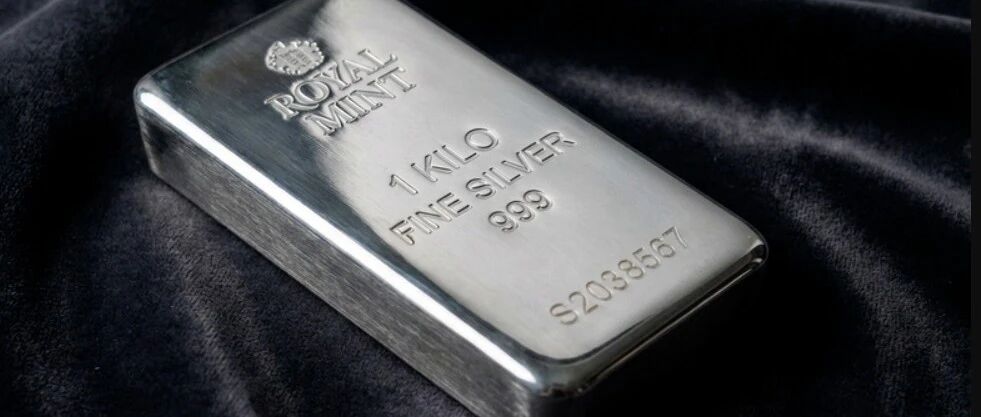
Core Viewpoint - The upcoming annual rebalancing of the Bloomberg Commodity Index (BCOM) will significantly reduce the weight of gold from 20.4% to 14.9% and silver from 9.6% to 3.94%, leading to substantial selling pressure on silver [1][2]. Group 1: Rebalancing Impact - Deutsche Bank and TD Securities estimate that $7.7 billion worth of silver will flood the market in the next two weeks, equating to 13% of the total open interest in the COMEX silver market, which may trigger a significant price correction [2][10]. - The rebalancing process is expected to unfold over several days, not just one, indicating a prolonged period of selling pressure on precious metals, particularly silver [5]. Group 2: Market Reactions - Analysts from Deutsche Bank suggest that the rebalancing will negatively impact precious metals while benefiting crude oil [3][5]. - TD Securities highlights that the trading volume of the largest silver ETF has reached extreme levels, typically seen only at market peaks, indicating speculative fervor among retail investors [3][10]. Group 3: Supply and Demand Dynamics - Goldman Sachs emphasizes that liquidity in the London market is crucial for determining silver price trends, with tight inventory conditions likely to lead to extreme price volatility [4][12]. - The current tightness in the London market is exacerbated by speculative activities surrounding U.S. trade policies, which have led to a significant outflow of silver from London inventories [12][13]. Group 4: Price Sensitivity - Deutsche Bank estimates that a sale of 2.4 million ounces of gold could lead to a price drop of 2.5%-3.0%, depending on the sensitivity model used [7]. - In tight market conditions, the sensitivity of silver prices to net demand has increased significantly, with a typical weekly demand of 1,000 tons pushing prices up by about 2%, now heightened to 7% [13].
新年最牛天使轮诞生了
华尔街见闻· 2026-01-08 12:18
Core Viewpoint - The article highlights the significant investment and development in nuclear fusion technology in Shanghai, particularly focusing on Dongsheng Fusion, which has completed a substantial angel round financing to advance its clean energy initiatives [4][6][8]. Group 1: Company Overview - Dongsheng Fusion (Shanghai) Technology Co., Ltd. has completed several hundred million yuan in angel round financing, with notable investors including Fudan Science and Technology, Sequoia China, IDG Capital, and others [4][6]. - The company is incubated by a team from Fudan University's magnetic confinement fusion team, focusing on high-temperature superconducting magnetic confinement fusion and AI-driven fusion physics research [6][8]. - Dongsheng Fusion aims to achieve net energy gain (Q>1) from deuterium-helium-3 fusion within the next 12 years, with the first-generation experimental device "Morning Light" already launched [7][8]. Group 2: Technology and Innovation - Dongsheng Fusion is pursuing a deuterium-helium-3 fusion route, which is considered safer and more cost-effective compared to the mainstream deuterium-tritium approach, as it involves no nuclear tritium [6][8]. - The project focuses on two core technological breakthroughs: high-temperature superconducting magnets for enhanced plasma stability and efficiency, and AI algorithms for precise plasma control and operational optimization [6][8]. Group 3: Industry Landscape - Shanghai is emerging as a hub for nuclear fusion technology, with multiple companies and significant investments in the sector, including China Fusion Energy Co., which aims for commercial fusion energy applications [9][10]. - A total of 11.492 billion yuan has been pledged by various investors in the nuclear fusion sector, indicating strong financial backing for the industry [10]. - The Shanghai Future Industry Fund has made strategic investments in fusion companies, marking a significant step in the city's energy strategy [12][20]. Group 4: Future Prospects - The article emphasizes the potential of nuclear fusion as a "ultimate energy" source, with the possibility of revolutionizing human production and lifestyle once commercialized [19][20]. - Shanghai's government is actively promoting nuclear fusion as a key future industry, with various action plans aimed at fostering innovation and development in this field [20][21]. - The article concludes with a vision of nuclear fusion as a feasible solution for humanity's energy needs, with ongoing investments and research indicating a commitment to overcoming the challenges associated with this technology [25].

5000亿营收预测太保守!英伟达CFO称“肯定会更高”,黄仁勋称客户需求强劲
华尔街见闻· 2026-01-07 12:43
Core Viewpoint - Nvidia's CFO Colette Kress expressed strong optimism regarding the company's data center business, projecting that revenue from data center chips will exceed the previously forecasted $500 billion by the end of 2026 due to robust demand [1][4][5]. Revenue Projections - Kress indicated that customer interest has been increasing since the $500 billion forecast was made in October 2025, suggesting that the revenue estimate will likely be revised upwards [4]. - The $500 billion target is significantly higher than the market consensus of $4.47 trillion, which is about 12% lower than Nvidia's projection [5]. Product Launch and Performance - Nvidia's new Vera Rubin AI platform has been fully launched, featuring six new chips that significantly enhance inference cost and training efficiency, with initial deliveries expected in the second half of 2026 [6]. - The Rubin GPU boasts a performance of 50 PFLOPS for inference and 35 PFLOPS for training, marking a substantial improvement over the previous Blackwell platform [6][8]. Market Impact - Nvidia's announcements have led to significant stock movements, with storage chip giant SanDisk seeing a nearly 27.6% increase in stock price, while data center cooling system manufacturers experienced declines [9][10][12]. - The comments made by Nvidia's leadership have raised concerns about the long-term positioning of cooling equipment in data centers, particularly with the increasing adoption of liquid cooling technologies [14].