
GEELY AUTO(00175)

Search documents
汽车行业周报:低增长之年,追寻高质量发展-20260119
Guoyuan Securities· 2026-01-19 05:23
Investment Rating - The report maintains a "Recommended" investment rating for the automotive industry, indicating a positive outlook for certain segments within the sector [6]. Core Insights - The automotive industry is expected to experience low growth in 2026, with total vehicle sales projected to reach 34.75 million units, reflecting a year-on-year increase of 1%. Passenger vehicle sales are anticipated to grow by 0.5%, while commercial vehicle sales are expected to rise by 4.7%. The new energy vehicle (NEV) segment is projected to grow significantly, with sales expected to reach 19 million units, a 15.2% increase year-on-year, highlighting its role as a key growth driver [3][35]. - The report emphasizes the importance of macroeconomic policies and GDP growth targets in influencing vehicle sales, particularly in the passenger vehicle segment. The report suggests that sustained policy support is crucial for maintaining sales momentum [3][35]. Summary by Sections 1. Weekly Market Review (January 10-16, 2026) - The automotive sector index increased by 0.49%, outperforming the Shanghai Composite Index by 1.06 percentage points. The automotive services sector saw the highest gains, with a 4.51% increase [12][15]. 2. Weekly Data Tracking (January 10-16, 2026) - Retail sales of passenger vehicles from January 1-11 totaled 328,000 units, a 32% decrease year-on-year. Wholesale figures showed a similar trend, with 381,000 units sold, down 40% year-on-year. The NEV market also faced declines, with retail sales of 117,000 units, down 38% year-on-year [20][21]. 3. Industry News (January 10-16, 2026) - Key developments include partnerships for advanced driving technologies and initiatives to promote autonomous vehicle testing in regions like Hong Kong. Additionally, the report highlights the ongoing negotiations between China and the EU regarding electric vehicle trade, which could stabilize market conditions [25][28][30]. 4. Investment Recommendations - The report suggests focusing on structural opportunities within the automotive sector, particularly high-growth companies and regions, as well as the recovery of commercial vehicles and advancements in automotive technology [4].





一季度整车有望反弹,零部件聚焦新产业投资:汽车行业周报(20260112-20260118)-20260118
Huachuang Securities· 2026-01-18 12:26
Investment Rating - The report maintains a positive outlook for the automotive industry, expecting a rebound in vehicle sales in Q1 and focusing on investments in intelligent driving, robotics, and liquid cooling technologies [3]. Core Insights - The automotive sector is experiencing significant dynamics, including sales, pricing, exports, and robotics developments [2]. - The report highlights that January's early sales data shows a substantial year-on-year decline, primarily due to subsidy reductions and rising vehicle prices, leading to consumer hesitation [5]. - The report anticipates that the pressure on vehicle prices will be managed through strict enforcement of anti-competitive practices, aiming to stabilize prices and profit margins [5]. - The export market is expected to grow rapidly, supported by agreements that lower trade barriers for electric vehicles, enhancing profitability for manufacturers and dealers [5]. - The robotics sector is gaining traction, with the Optimus V3 generating market excitement and expectations for product launches [5]. Data Tracking - In early January, the average discount rate remained stable, with a 9.6% increase year-on-year, and the average discount amount reached 22,259 yuan, up by 2,192 yuan year-on-year [4]. - December's wholesale vehicle sales were reported at 2.85 million units, reflecting a year-on-year decline of 8.7% and a month-on-month decline of 6.3% [4]. - Notable sales performance in December included significant year-on-year growth for new energy vehicle manufacturers like NIO and Li Auto, while traditional automakers like SAIC and Changan showed mixed results [6]. Industry News - The report discusses various industry developments, including the price commitments for electric vehicles between China and Europe, which aim to facilitate trade [27]. - The Ministry of Industry and Information Technology is focusing on enhancing the competitiveness of the new energy vehicle sector and regulating market practices to prevent price wars [27]. - Recent data indicates a significant drop in retail sales of passenger vehicles in early January, with a 32% year-on-year decline [27]. Market Performance - The automotive sector saw a weekly increase of 0.71%, ranking 8th out of 29 sectors, while the overall market indices showed mixed results [10].



汽车行业周报:中欧电动汽车反补贴案取得阶段性进展,机器人量产进程提速-20260118
SINOLINK SECURITIES· 2026-01-18 12:11
Investment Rating - The report suggests a focus on the automotive industry, particularly on companies like BYD and Geely for vehicle manufacturing, and companies like Li Auto, Xpeng Motors, and others in the smart technology and robotics sectors [3][20]. Core Insights - The EU's implementation of a price commitment mechanism is expected to significantly alleviate the tariff pressure faced by Chinese electric vehicle manufacturers exporting to Europe, improving their profitability per vehicle [1][13]. - Boston Dynamics' Atlas humanoid robot is set to begin mass production in 2026, marking a shift from technology validation to commercial deployment, with significant partnerships in manufacturing and logistics [2][14]. - The first week of 2026 saw a decline in retail sales of passenger vehicles, but there is optimism for recovery in Q1 2026 due to upcoming policy support and seasonal demand [19][3]. - The report highlights the ongoing trend of increasing exports of passenger vehicles, particularly in the context of recovering demand in markets like Russia and the growing penetration of new energy vehicles [3][19]. Industry Data Tracking - The Shanghai Composite Index decreased by 0.57%, while the automotive index increased by 0.49%, ranking 10th among 31 sectors [21]. - In the first week of January 2026, wholesale passenger vehicle sales were 381,000 units, down 40% year-on-year, with new energy vehicle sales at 167,000 units, also down 30% [5][27]. - In December 2025, the total wholesale passenger vehicle sales were 2.787 million units, a year-on-year decrease of 9.3%, while new energy vehicle sales increased by 3.4% [6][34]. - Exports of passenger vehicles in December 2025 reached 588,000 units, a year-on-year increase of 45.5%, with new energy vehicle exports at 270,000 units, up 122.9% [6][50][54]. Industry Dynamics - The report notes significant developments in the automotive sector, including the establishment of a new company by Jetta to focus on new energy vehicles, and plans by XPeng to build an independent overseas supply chain team [62][64]. - The Hong Kong government is advancing autonomous driving tests, which could provide valuable insights for the application of such technologies in urban environments [61].
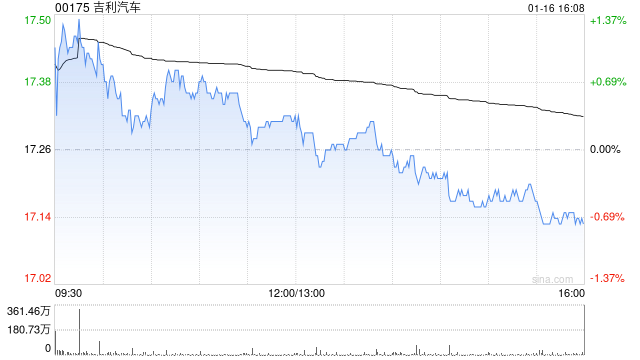
吉利汽车因认股权获行使而发行9.19万股
Xin Lang Cai Jing· 2026-01-18 09:03
责任编辑:卢昱君 吉利汽车(00175)发布公告,该公司于2026年1月16日因本集团雇员根据认股权计划(于2023年4月28 日获采纳)行使认股权而发行的普通股股份9.19万股。 责任编辑:卢昱君 热点栏目 自选股 数据中心 行情中心 资金流向 模拟交易 客户端 热点栏目 自选股 数据中心 行情中心 资金流向 模拟交易 客户端 吉利汽车(00175)发布公告,该公司于2026年1月16日因本集团雇员根据认股权计划(于2023年4月28 日获采纳)行使认股权而发行的普通股股份9.19万股。 ...

新能源车的“硬核”战事,2026年卷向何处?
Xin Lang Cai Jing· 2026-01-18 02:02
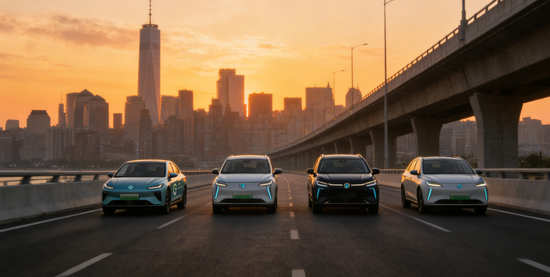
Core Insights - The electric vehicle (EV) industry in China is transitioning from reliance on government policies to market-driven growth, marking the end of the "policy infusion" era and the beginning of "self-sustaining" operations [2][4][17] Group 1: Market Dynamics - In 2025, the penetration rate of new energy vehicles (NEVs) in China surpassed 50%, reaching 59.5% by November, indicating a significant shift towards electric vehicles [5][25] - The charging infrastructure has improved significantly, with a total of 19.32 million charging points by the end of November 2025, a 52% year-on-year increase, and over 5,000 battery swap stations established [5][25] - The competition landscape has changed, with Tesla's retail sales in China declining by 4.8% to 625,698 units, while domestic brands like BYD, Geely, and Changan have seen substantial growth [5][27] Group 2: Sales Performance - BYD led the NEV sales in 2025 with 3.48 million units sold, despite a 6.3% year-on-year decline, holding a market share of 27.2% [6][27] - Geely and Changan reported significant sales increases of 81.3% and 26.8%, respectively, with Geely selling 1.56 million units and Changan 789,141 units [6][27] - New entrants like Leap Motor and Xiaomi have emerged as strong competitors, with Leap Motor's sales increasing by 86.3% to 529,503 units and Xiaomi entering the rankings with 411,837 units, a 200.9% increase [6][27] Group 3: Technological Advancements - The focus on "intelligent driving" has intensified, with companies like BYD, NIO, and Xpeng launching advanced driver-assistance systems and AI-driven models [11][32] - Despite advancements, there remains a gap between technology and user experience, with consumers expressing concerns over the reliability of intelligent driving systems [11][35] - The industry is witnessing a shift towards more comprehensive AI models that aim to enhance decision-making capabilities in complex driving scenarios [12][33] Group 4: Future Outlook - Starting in 2026, the EV industry will face new challenges as the government reduces subsidies, shifting the focus to market-driven strategies and user experience [15][38] - The competitive landscape is expected to evolve with a mix of pure electric, hybrid, and range-extended vehicles, as traditional automakers and new entrants adapt to changing consumer preferences [19][40] - Companies are increasingly looking to expand internationally, marking a new phase of competition that emphasizes technology depth, cost efficiency, and brand loyalty [20][41]

民营力量扛旗 浙江商业航天“攻略”新质生产力高地
Zhong Guo Xin Wen Wang· 2026-01-17 09:02
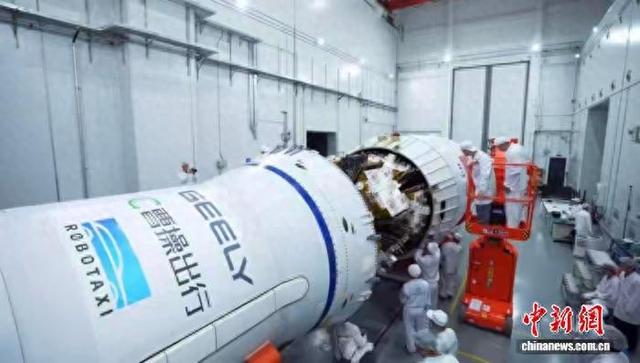
Core Insights - Zhejiang Province is accelerating its aerospace ambitions, with a focus on nurturing emerging industries, particularly aerospace, as a key pillar for future growth [1][4] Group 1: Industry Development - The aerospace industry in Zhejiang is characterized by high R&D efficiency, low costs, and a flexible market mechanism, allowing private enterprises to thrive [3][4] - The province has established a clear aerospace industry map, with leading companies like Blue Arrow Aerospace and a complete satellite R&D supply chain forming in cities like Hangzhou and Taizhou [3][4] - The "14th Five-Year Plan" for aerospace development was released, positioning Zhejiang as one of the first provinces in China to develop a commercial aerospace industry [3][4] Group 2: Investment and Support - Taizhou has prioritized the aerospace industry since 2016, creating a robust ecosystem with multiple enterprises and a solid industrial foundation [5] - The region has established various funds, including a 10 billion RMB low-altitude economy fund, to support the growth of the aerospace sector [5][6] - By 2028, the aerospace industry in Taizhou aims to exceed 30 billion RMB in output value, with a focus on nurturing key enterprises and innovation [6] Group 3: Technological Advancements - The launch of the "Three-body Computing Constellation" marks the beginning of China's "space computing" era, integrating AI with aerospace [3] - Companies like Geely's Time Space Universe have successfully launched a network of 64 low-orbit satellites, enhancing communication capabilities across various sectors [8] - The focus is shifting from "how to build" to "how to utilize" advanced aerospace technologies, emphasizing market transformation [8][9] Group 4: Policy and Future Outlook - Commercial aerospace has been included in Zhejiang's key industry development list, with plans for action schemes to promote related sectors [9] - The province aims to implement the "Spark Plan" for future industries, focusing on advanced fields like embodied intelligence and quantum technology [9] - Challenges such as rapid technological iteration and international competition remain, necessitating continuous efforts in ecological competition and market application [9]
崔东树:2025年汽车企业整车出口超强!国产车出口同比增21%
智通财经网· 2026-01-17 06:43
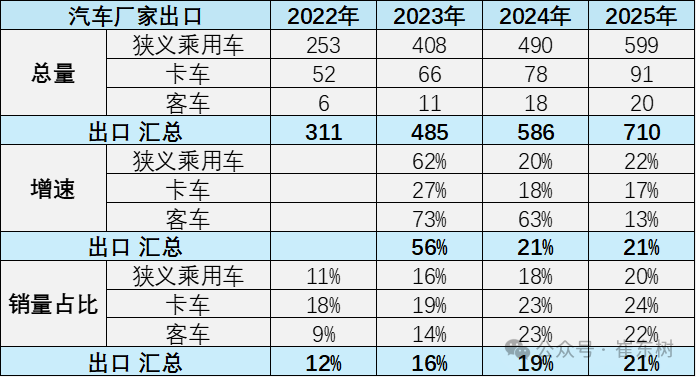
Overall Situation of Automobile Exports - In 2025, China's automobile manufacturers are expected to export a total of 7.1 million vehicles, representing a year-on-year growth of 21%, maintaining the position as the world's largest automobile exporter [1] - The export growth is characterized by an increase in both volume and value, with a significant enhancement in product added value [1] Export Growth Drivers - Passenger vehicles have become the core engine of export growth, significantly outpacing the growth of bus exports [2] - The main export destinations remain Europe, ASEAN, and South America, with a notable performance in countries along the "Belt and Road" initiative [2] Structure of Exporting Enterprises - The structure of automobile export enterprises has undergone significant changes, with a trend of increased concentration among leading companies, the rise of private enterprises, and a reduction in the market share of foreign-funded enterprises [4] - Domestic brands have shown remarkable performance, with their export share increasing from 22% in 2024 to 24% in 2025 [4] Performance of Major Automobile Groups - BYD leads the industry with an export volume of 1.05 million new energy vehicles, particularly excelling in high-end markets such as Europe and Japan [5] - SAIC Group exported 950,000 vehicles, leveraging its joint ventures and domestic brands to maintain a leading position in ASEAN and South American markets [5] Export Performance of Different Types of Enterprises - Different types of automobile enterprises show varied export performance, with leading companies demonstrating strong results [7] - New energy vehicle companies like BYD, Leap Motor, and Xpeng have seen significant year-on-year growth in export volumes [8] Challenges and Recommendations - The industry faces challenges such as overseas trade barriers, supply chain risks, and intensified global market competition [1] - Companies are advised to increase investment in core technology research and development, optimize export products, and strengthen localized production and services to enhance global supply chain influence [1]

这一车型第30万辆整车下线
Si Chuan Ri Bao· 2026-01-16 22:11
Group 1 - Lynk & Co's model 06 has officially reached its 300,000th unit production since its launch in 2020, maintaining a leading position in the fuel small SUV market [1] - The company plans to expand its market reach in 2024 to regions including the Middle East, Southeast Asia, and Latin America, with a goal of over 350,000 units produced this year [1] - The Chengdu factory is a significant automotive manufacturing base, producing multiple models including Lynk & Co 06, Lynk & Co Z20, Zeekr X, and Geely Xingyuan [1] Group 2 - Chengdu Economic Development Zone is enhancing the automotive industry with a focus on "stabilizing oil and strengthening electricity," aiming for significant upgrades in 2025 [2] - Major projects such as Geely Group's new energy vehicle transformation and Dongfeng New Energy are set to be signed and implemented [2] - The total vehicle production in the region is projected to reach 870,000 units, with 210,000 units being new energy vehicles, reflecting a year-on-year growth of 177% [2]
企业竞相打出“全域AI”明牌造车下半场“含模量”飙升
Xin Lang Cai Jing· 2026-01-16 20:08
Core Insights - The automotive industry in China is experiencing significant growth, with vehicle sales reaching 34.4 million units in 2025, a year-on-year increase of 9.4% [1] - The shift towards "full-domain AI" is becoming prominent, with major automotive manufacturers and supply chain giants like Geely and Bosch increasing their investments in AI technologies [1][2] - Geely has introduced a comprehensive technology system that includes the WAM model for intelligent cockpits and the G-ASD platform for advanced driving assistance, indicating a trend towards AI-driven automotive solutions [2][5] - The automotive sector is transitioning from electric vehicle transformation to AI-driven innovations, with "model inclusion" becoming a key metric for evaluating future trends in vehicle manufacturing [1][4] Industry Developments - AI is evolving from peripheral features to a central role in automotive technology, with companies adopting "full-domain AI" strategies to enhance user experience and operational efficiency [2][3] - Geely's G-ASD system is noted for its advanced capabilities, utilizing a SmartAIAgent architecture and achieving a high level of model inclusion, making it one of the leading driving assistance systems globally [2][4] - Bosch has unveiled a new AI cockpit platform that integrates personalized features and real-time environmental interpretation, showcasing the trend towards highly customized user experiences in vehicles [3] Technological Advancements - The automotive industry is witnessing a shift towards data and model-driven approaches in intelligent driving technologies, with systems like Geely's G-ASD integrating multi-modal models to enhance performance [4][5] - The introduction of high-performance AI models is expected to increase computational demands, necessitating significant investments in data centers and computational resources for training and validation [6][7] - The development of autonomous driving systems requires extensive data input and ongoing algorithm training, which may lead to increased costs and resource allocation challenges for companies [6][7] Competitive Landscape - The year 2026 is anticipated to be a pivotal moment for the automotive industry's "model inclusion" competition, with companies possessing robust self-research capabilities likely to capture higher market segments [7] - Smaller manufacturers lacking sufficient R&D investment may face marginalization in the rapidly evolving technological landscape [7] - Geely is positioned as a leader in the full-domain AI landscape, being the first to establish a comprehensive ecosystem that includes automotive, chip, satellite, and AI technologies [8] Strategic Recommendations - The Chinese automotive industry is encouraged to maintain a "self-controllable" approach in AI technology development, focusing on core models and safety mechanisms to avoid dependency on external sources [7][9] - Collaboration with global standards and open-source communities is recommended to mitigate technological gaps and enhance innovation [9]
这款“成都造”第30万辆整车下线
Xin Lang Cai Jing· 2026-01-16 18:01
Group 1 - The 30,000th vehicle of the "Chengdu-made" brand has been produced, with significant performance in new energy vehicles, achieving a production volume of 196,232 units and a production value of 14.356 billion yuan, representing year-on-year increases of 433.47% and 222.17% respectively [1] - The Chengdu factory of Lynk & Co plans to introduce a new energy vehicle in the second half of this year, aiming to exceed a total production of 350,000 vehicles for the year [1] - The collaboration between Geely Group and Chengdu Economic Development Zone has deepened since 2007, evolving from single models like Volvo and Polestar to the establishment of the Lynk & Co factory in 2017, contributing to the growth of the automotive industry in Chengdu [1] Group 2 - Chengdu Economic Development Zone aims to enhance the automotive industry level with a target of 870,000 vehicles by 2025, including 210,000 new energy vehicles, representing a growth of 177% [2] - Major projects such as Geely Group's new energy transformation and the establishment of Jetta Automotive Technology Company have been signed and implemented, achieving integrated operations of research, production, supply, and sales for local automotive enterprises [2] - New models like Volvo ES90 and Jetta VS8 have been launched, while popular models such as Toyota Prado and Lynk & Co Z20 are being expanded in production, with Geely's Xingyuan model topping national sales across all categories [2]