
GWMOTOR(601633)

Search documents
用户共创为核、技术实力为基,长城汽车全新平台直播解锁发展新蓝图
Zhong Guo Jing Ji Wang· 2025-12-31 07:39
12月30日,长城汽车(601633)以《求教》为主题开启全网直播。这场直播是长城汽车董事长魏建军在 央视《求真》对话中预告全新平台并向网友征名后的重磅回应,围绕全新平台征名、技术价值观、用户 利益保障等核心话题展开深度交流,全方位展现了长城汽车以用户为中心、以技术为支撑的发展理念与 战略布局。 用户共创贯穿始终命名权与价值感双重交付 此次直播最引人关注的,是长城汽车将全新平台命名权彻底交还给全网用户的创新举措。这一动作深刻 践行了"源于用户、服务用户"的核心思想,标志着企业从"工程师定义"向"用户共创"的再度升级。直播 中,魏建军坦言"新平台起名比造车还难",对网友的热情参与表达诚挚感谢。直播结束后,长城汽车随 即发布10个呼声最高的命名启动全网投票,最终命名将在一周后揭晓,真正实现了"让用户说了算"的互 动承诺。 坚守初心布局未来新起点孕育新变革 回顾2025年,魏建军堪称国内最忙碌的车企老板。这一年,他不仅积极服务全球用户,致敬都江堰、敦 煌等中国文化符号,为行业发展仗义执言,更解锁赛车手、电竞队员等新身份,以多元方式深度融入用 户。但无论身份如何拓展,长城汽车"诚信造车、良心造车"的初心始终未变——敬 ...

车企孵化的智能化公司,为何多数都难善终?
雷峰网· 2025-12-31 03:44
Core Viewpoint - The article discusses the challenges faced by automotive companies in their pursuit of smart driving technology, highlighting the high expectations and subsequent failures of many startups in this sector, often resulting in a rapid rise and fall [2][3]. Group 1: Challenges in Smart Driving Startups - Two notable events in 2025 marked a downturn in the smart driving industry, with major companies like Maomao Zhixing and Dazhuo Intelligent facing significant operational challenges [2]. - The decline of these companies reflects broader issues within the automotive industry's approach to smart technology, including unclear positioning, resource misallocation, and cultural clashes between traditional automotive and tech talent [2][4]. Group 2: Equity Structure Issues - Many smart driving companies established by traditional automakers suffer from problematic equity structures, often leading to conflicts in decision-making and operational inefficiencies [5][6]. - For instance, Maomao Zhixing is over 53% controlled by Great Wall Motors, which has led to a lack of decision-making power for its management team, ultimately contributing to its struggles [6][10]. - Dazhuo Intelligent's structure, with 80% ownership by Chery, similarly restricts its founder's ability to drive technological innovation due to a lack of authority [10][11]. Group 3: Strategic Positioning Confusion - The strategic positioning of many smart driving companies remains ambiguous, often serving as mere suppliers to their parent companies rather than independent market players [17][18]. - Maomao Zhixing's initial focus was to provide smart driving solutions exclusively for Great Wall Motors, which tied its success to the parent company's market performance [18][19]. - This dependency on a single client has led to operational difficulties, especially when Great Wall Motors sought alternative suppliers for smart driving technology [19][20]. Group 4: Cultural Conflicts - The cultural clash between traditional automotive companies and tech startups creates significant barriers to innovation and talent retention [29][30]. - Traditional automotive firms often have rigid hierarchical structures and lengthy approval processes, which hinder the agility required in the fast-paced tech environment of smart driving [29][30]. - This cultural mismatch has resulted in missed opportunities for smart driving companies to attract top talent and respond swiftly to market changes [30][31]. Group 5: Competitive Pressures - The emergence of tech giants like Huawei and Baidu has intensified competition, as they offer comprehensive solutions that outpace the capabilities of traditional automaker startups [38][39]. - Huawei's substantial investment in smart driving technology, exceeding 10 billion annually, has positioned it as a market leader, further squeezing the viability of smaller, automaker-affiliated startups [39][40]. - As traditional automakers enhance their own R&D capabilities, the original purpose of these smart driving companies—to fill technological gaps—has diminished, leading to their integration or dissolution [40][41].




身边的十四五•我们的小美满 | 中欧班列开行 河北发货,世界签收
Xin Lang Cai Jing· 2025-12-30 13:56
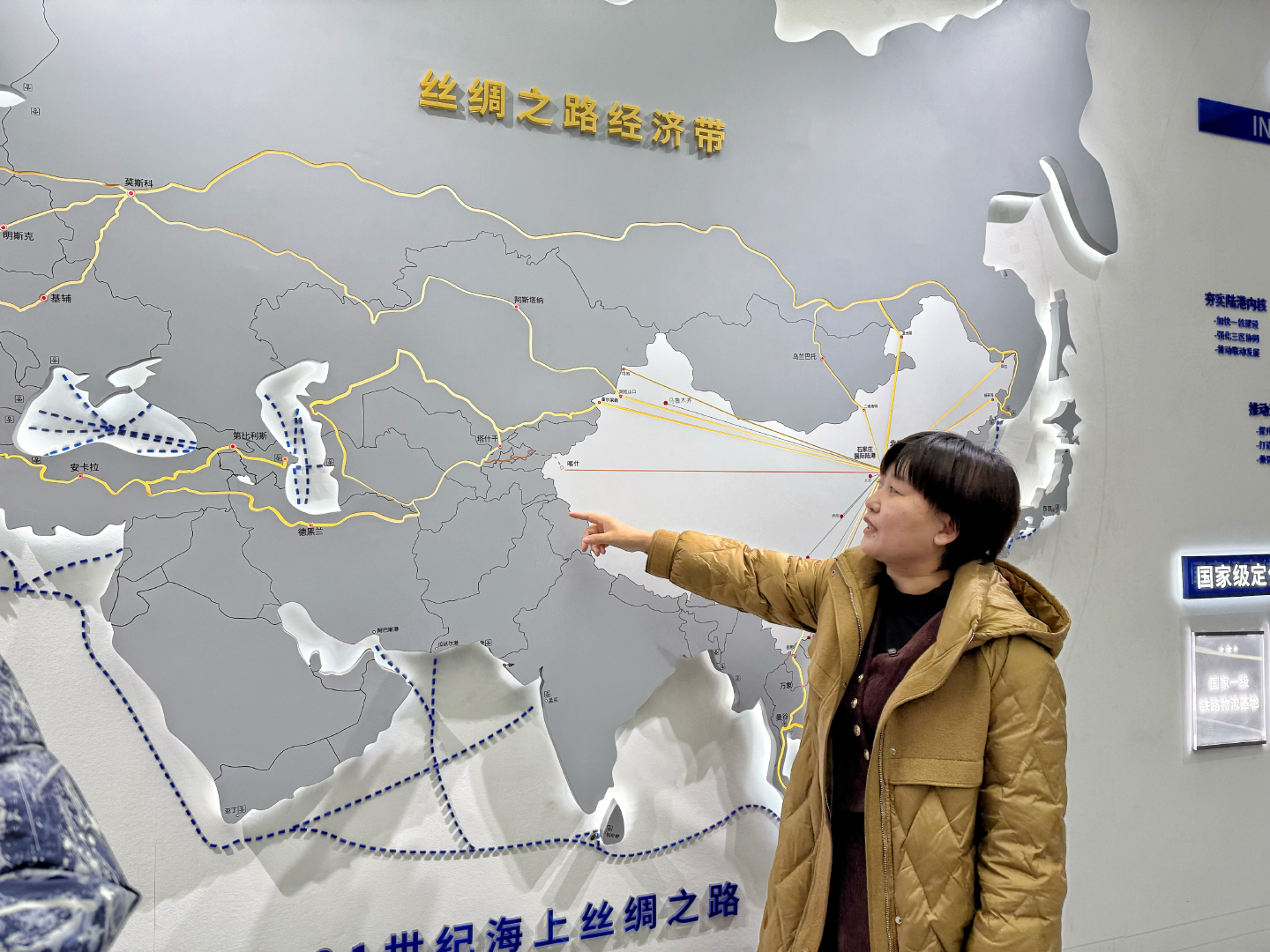
Core Viewpoint - The development of the Shijiazhuang International Land Port and the operation of the China-Europe Railway Express have significantly improved logistics efficiency and connectivity between Hebei and the global market, marking a transformative period during the 14th Five-Year Plan. Group 1: Operational Achievements - The first China-Europe Railway Express from Shijiazhuang was launched in June 2018, with a steady increase in operational capacity since then [2] - By November 2025, the Shijiazhuang International Land Port had operated 1,148 China-Europe Railway Express trains, becoming the first hub in North China to exceed 1,000 trains in a year [1][12] - The return trip ratio reached 1:1 in September 2022, with 367 return trains operated in the first half of 2023, surpassing the outbound trains [9] Group 2: Infrastructure Development - The land port has seen significant infrastructure upgrades, including a 350,000 square meter standardized warehouse and a 100,000 square meter container yard [6] - The integration of six dedicated railway lines into the national "eight vertical and eight horizontal" railway network has enhanced operational efficiency [6] Group 3: Process Optimization - The implementation of the "railway fast pass" model by customs has reduced logistics time by 2 to 4 days per train, streamlining the customs process [10] - The collaboration between railway, customs, and enterprises has improved operational efficiency, allowing one operator to manage multiple shipping orders effectively [10][12] Group 4: Product Diversification - The types of goods exported have diversified, with high-value products such as automotive parts and pharmaceuticals becoming regular exports, reflecting the growth of "Hebei manufacturing" [9] - The first complete vehicle export train carrying 261 Great Wall Motors vehicles to Central Asia was a notable achievement, showcasing the capability of local manufacturing [9]
科技浪潮之下,企业如何保持清醒
3 6 Ke· 2025-12-30 13:36
Core Insights - The rapid advancement of technology, particularly AI, has outpaced the ability of businesses to effectively integrate and capitalize on these innovations, leading to strategic confusion and misallocation of resources [3][5][12] - Companies are increasingly recognizing the value of external perspectives to recalibrate their strategies and clarify their market positions amidst uncertainty [5][10][20] Group 1: Industry Challenges - Many companies are struggling to translate technological innovations into sustainable business value, resulting in a lack of clear growth trajectories [3][12] - The overwhelming pace of innovation has led to a situation where businesses find it difficult to determine where to allocate resources and when to pivot, often resulting in costly trial-and-error processes [3][12] - The issue is not a lack of innovation but rather an excess of it, with many firms focusing on technological capabilities without adequately addressing specific market needs [3][12] Group 2: Strategic Insights - The introduction of strategic consulting firms, such as Ries, has become crucial for companies seeking to navigate complex environments and make informed decisions about long-term investments [5][10] - Successful companies often rely on external consultants to help them compress complexity and clarify strategic choices, which is essential in a rapidly changing market landscape [5][10] - The importance of positioning theory is highlighted, emphasizing that businesses must solve real, identifiable problems for users to achieve sustainable growth [12][21] Group 3: Case Studies - The collaboration between Great Wall Motors and Ries Consulting exemplifies how strategic positioning can lead to significant growth, as seen in the development of the Haval and Tank brands [8][22] - The case of Xpeng Motors illustrates the importance of redefining a company's identity to align with market needs, transitioning from a traditional car manufacturer to a global AI driving technology company [15][21] - The success of brands like Junlebao and Weilong in the competitive dairy and snack markets demonstrates how precise positioning and addressing consumer needs can create new growth opportunities [22][23] Group 4: Market Dynamics - As the Chinese economy shifts from high-speed growth to a more stable phase, companies must adapt their strategies to focus on clarity in decision-making rather than merely expanding [18][20] - The competitive landscape is evolving, with technology becoming less scarce and the challenge now being the ability to translate it into understandable and marketable business forms [21][24] - Companies face the dual challenge of leveraging technological advancements while establishing a clear mental position in the market to ensure sustainable growth [20][25]


科技浪潮之下,企业如何保持清醒
36氪· 2025-12-30 13:13
Core Insights - The rapid pace of technological advancement, particularly in AI, has outstripped the ability of businesses to effectively integrate these innovations into sustainable commercial value, leading to strategic confusion among companies [3][5] - Many companies are struggling to determine where to allocate resources amidst a plethora of technological options, resulting in costly trial-and-error processes [3][5] - The importance of external perspectives is highlighted, as companies begin to engage strategic consulting firms to help clarify their positioning and strategic direction [5][15] Group 1 - The issue is not a lack of innovation but rather an overwhelming density of innovation, leading to difficulties in identifying specific commercial applications for new technologies [3][20] - Companies often become trapped in their internal narratives, leading to decision-making failures even during periods of apparent success [9][13] - The case of Great Wall Motors illustrates the tension between successful niche positioning and the risks of over-expansion and strategic dilution [10][11] Group 2 - The concept of "category innovation" is emphasized as a response to saturated markets, where companies must redefine their market positions to achieve growth [29][30] - The strategic opportunities for Chinese companies include leveraging AI technologies, adapting to evolving consumer perceptions, and establishing global brands [29][30] - The competitive landscape is shifting, requiring companies to establish clear mental positions in the minds of consumers to navigate the complexities of the market [25][33] Group 3 - The need for clarity in strategic direction is underscored, as companies face the challenge of distinguishing between various growth opportunities and determining which are worth long-term investment [27][29] - The role of strategic consulting is framed as essential for helping companies navigate the complexities of modern competition and avoid confirmation bias [15][16] - The ongoing evolution of the positioning theory reflects the necessity for companies to continuously recalibrate their strategies in response to changing market dynamics [32][33]

西部研究月度金股报告系列(2026年1月):迎接繁荣的起点,1月如何布局?-20251230
Western Securities· 2025-12-30 13:05
Group 1 - The report indicates that China is entering a period of prosperity similar to Japan in 1978, driven by high industrial value added and export ratios, along with continued trade surpluses and wage growth [1][11] - The cash flow statements of the real economy in China have been damaged from 2022 to 2024 due to the Fed's interest rate hikes and a decline in real estate prices, leading to capital outflows and reduced cash flow [2][12] - The resumption of the Fed's interest rate cuts is expected to reverse the outflow of cross-border capital, thereby repairing the cash flow statements of enterprises and households [3][13] Group 2 - The report emphasizes the necessity of debt restructuring in China, drawing parallels with Japan's experience in the 1990s, where failure to act led to prolonged economic stagnation [4][14] - The potential for the Fed's quantitative easing (QE) to provide the necessary liquidity for China's central bank to undertake debt restructuring is highlighted, which could alleviate external constraints on the yuan [4][14] - The year 2026 is projected to mark the beginning of a new prosperity phase for China's economy, with a cyclical shift expected in manufacturing and consumption sectors [6][15] Group 3 - The report recommends a selection of stocks for January 2026, including Huafeng Aluminum, Zijin Mining, and TCL Technology, among others, indicating a focus on sectors poised for growth [9][10] - The automotive sector is highlighted, with Great Wall Motors and Leap Motor being noted for their strategic positioning in high-end and global markets [32][38] - In the chemical sector, Dongfang Tower is recognized for its growth potential driven by increasing potassium and phosphorus production [41][43]




长城汽车|写入《2025 汽车行业影响力年鉴》
Jing Ji Guan Cha Bao· 2025-12-30 11:23
Core Viewpoint - The Chinese automotive industry is entering a new development stage, emphasizing "high-quality development" over speed and scale, with a focus on efficiency, order, and long-term capability building [1][2] Group 1: Industry Trends - The term "anti-involution" has become a key focus in industry policy and regulation, shifting the automotive industry's understanding of development [1] - The ongoing price war and competitive tactics that breach reasonable boundaries highlight the need for companies to self-regulate and maintain manufacturing standards [1] Group 2: Company Positioning - Great Wall Motors has taken a proactive stance in addressing market disruptions, particularly regarding "zero-kilometer used cars," emphasizing the potential impact on industry credit and manufacturing foundations [1] - The company's chairman, Wei Jianjun, has publicly called for maintaining industry standards, aligning with national efforts to curb disorderly competition and promote high-quality development [1] Group 3: Product and Technology Focus - Great Wall Motors is committed to delivering technology to users, integrating VLA large model capabilities with Hi4 hybrid systems to enhance product experience in real-world scenarios [2] - The company’s approach emphasizes engineering-driven technology advancements, resulting in positive market feedback and improved sales and reputation [2] Group 4: Globalization Strategy - Unlike previous strategies that relied on export scale, Great Wall Motors is focusing on establishing local manufacturing capabilities and supply chain collaboration in overseas markets [2] - This shift from "selling overseas" to "rooting locally" aims to enhance stability and sustainability in its global operations [2] Group 5: Recognition - Great Wall Motors has been recognized in the "2025 Automotive Industry Influence Yearbook" as a representative company exemplifying high-quality development paths [2]
乘用车板块12月30日跌0.25%,海马汽车领跌,主力资金净流出8531.2万元
Zheng Xing Xing Ye Ri Bao· 2025-12-30 08:56
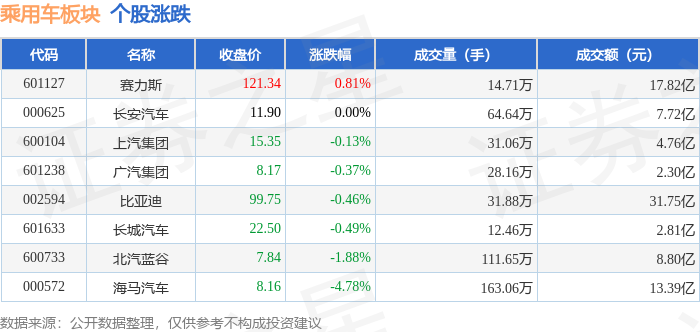
Group 1 - The passenger car sector experienced a decline of 0.25% compared to the previous trading day, with Haima Automobile leading the drop [1] - The Shanghai Composite Index closed at 3965.12, showing no change, while the Shenzhen Component Index rose by 0.49% to 13604.07 [1] - The trading volume for the passenger car sector showed a net outflow of 85.31 million yuan from institutional investors and 186 million yuan from retail investors, while retail investors had a net inflow of 271 million yuan [1] Group 2 - The table of individual stocks in the passenger car sector indicates that Sairus (601127) had a closing price of 121.34 with a gain of 0.81%, while Haima Automobile (000572) closed at 8.16 with a significant drop of 4.78% [1] - The net capital flow for Sairus was 89.44 million yuan from institutional investors, while it faced a net outflow of 51.52 million yuan from speculative investors [2] - BYD (002594) saw a net inflow of 24.64 million yuan from institutional investors, despite a net outflow of 62.58 million yuan from speculative investors [2]




以文化为引擎:长城汽车探索中国汽车产业高质量发展新途径
Huan Qiu Wang· 2025-12-30 07:55
Core Viewpoint - The article emphasizes the concept of "Cultural Engine" proposed by Wei Jianjun, Chairman of Great Wall Motors, as a new approach to drive the transformation and high-quality development of the automotive industry, moving from scale expansion and technological catch-up to value innovation and brand elevation [1] Group 1: Differentiation Pathway - The automotive industry is facing intensified homogenization and price wars, leading to a bottleneck in growth based solely on cost and scale advantages [1] - The "Cultural Engine" concept advocates shifting from low-level competition to building unique cultural identity and brand spirit, marking a transition from visible parameters and prices to invisible cultural values and emotional resonance [1] - Great Wall Motors' "Technology + Culture" dual empowerment system exemplifies this new approach [1] Group 2: Technological and Design Dimensions - The company creatively draws inspiration from historical cultural elements, such as the "wisdom of Dujiangyan," to innovate technologies like the Hi4-Z power distribution system, enhancing both off-road performance and energy efficiency [2] - Cultural elements are integrated into product design, with colors inspired by Dunhuang murals, making vehicles like the Tank 500 and Tank 400 symbols of Dunhuang culture [4] - The design philosophy of the new Wei brand models incorporates cultural connotations, showcasing unique Eastern aesthetic design language [4] Group 3: User Value - The focus on high-quality brand development is centered on creating tangible value for users, with cultural empowerment translating into enhanced product performance [5] - Great Wall Motors aims to establish a spiritual connection with users by fostering off-road culture and integrating cultural experiences into their products [5] - The relationship between the brand and users is based on cultural recognition, which is more enduring than price-based connections [5] Group 4: Global Perspective and Cultural Confidence - The "Cultural Engine" concept is positioned within a global context, emphasizing the importance of cultural and value output alongside product and market expansion [6] - Great Wall Motors is changing perceptions of "Made in China" by embedding Eastern aesthetics and values into its products, moving from a "cost-performance" label to a "cultural value" recognition [6] Group 5: Roles in Industry Transformation - Great Wall Motors acts as a learner, beneficiary, and practitioner of cultural soft power, recognizing its core value in industrial development [8] - The company has successfully integrated cultural elements into technology, product design, and brand building, establishing a differentiated high-end brand image [8] - As a practitioner, Great Wall Motors has initiated impactful cultural actions, demonstrating a commitment to preserving cultural heritage and integrating it into modern industrial practices [9] Group 6: Future Development - The year 2025 is designated as the "Cultural Year" for Great Wall Motors, indicating a systematic construction of its developmental "thickness" across technology, products, and brand [10] - The concept of "thickening the Great Wall" signifies an expansion of competitive foundations to include cultural values, brand spirit, and user emotions [10] - This approach aims to help the Chinese automotive industry overcome bottlenecks and explore sustainable upward development paths, contributing to the transition from a major automotive nation to a strong automotive power [10]
汽车行业2026年投资策略:智驾+出海驱动新增长,机器人开启未来篇章
Huajin Securities· 2025-12-30 06:27
Core Insights - The report emphasizes that the automotive industry will experience new growth driven by "smart driving and overseas expansion" in 2026, with L3-level autonomous driving penetration expected to continue increasing and new energy vehicle (NEV) exports maintaining high growth [2][3] - The report anticipates that the overall export of vehicles will exceed expectations in 2025, with strong momentum for NEV exports in regions such as Europe, the Middle East, and North America, indicating a new growth phase for domestic brands [2] - The report highlights that the L3 window period is clearly defined, with multiple domestic manufacturers set to mass-produce vehicles equipped with advanced driving assistance systems, leading to increased penetration of intelligent components [2] Vehicle Sector - The overall demand in the vehicle market remains stable, with a projected retail sales volume of 2,494 million units in 2026, reflecting a year-on-year growth rate of 1% [45] - NEV sales are steadily increasing, with a retail penetration rate exceeding 50%, and a cumulative retail sales volume of 10.15 million units from January to October 2025, representing a year-on-year growth of 21.9% [13] - The average price of passenger vehicles is on a downward trend, with the average price in the first ten months of 2025 being 170,000 yuan, a decrease of 7,000 yuan from the previous year [19] Component Sector - The report indicates that the trend towards electrification remains unchanged, with the penetration of intelligent components expected to continue rising, benefiting from the ongoing development of the automotive supply chain [2] - The report suggests that the domestic automotive supply chain, combined with overseas expansion, is likely to accelerate in 2026, providing incremental opportunities for relevant component manufacturers [2] Robotics Sector - The report notes that humanoid robots are entering a critical stage of industrialization, with significant demand for complex scene interactions driving the growth of core components, benefiting companies with relevant layouts in the robotics field [2] - The report emphasizes that the core components of humanoid robots will enjoy the dividends of industrial development, with companies positioned in this sector expected to benefit first [2] Low-altitude Economy - The report states that the domestic low-altitude economy has transitioned from a nascent stage to a period of rapid development, with the market scale expected to leap from hundreds of billions to trillions [2] - Several automotive companies are entering the low-altitude economy sector, indicating a promising future for growth [2] Policy and Market Dynamics - The report highlights that the 2026 NEV purchase tax subsidy will be reduced, leading to increased market competition, while the overall trend of NEV penetration and intelligentization is expected to drive the rise of domestic brands [2][38] - The tightening of "two new" policies is anticipated to increase the marginal cost for consumers, with various regions adjusting or suspending vehicle replacement and scrapping subsidy policies [39][40]
