蜜雪冰城

Search documents
每一朵繁花都曾奋力开放——2025年河南经济记忆
He Nan Ri Bao· 2025-12-29 23:36
Core Insights - The economic narrative of Henan in 2025 is shaped by individual stories and experiences, emphasizing the human aspect of economic activities rather than just macro data [2][3] - The resilience of Henan's economy is reflected in the diverse experiences of its entrepreneurs and businesses, showcasing innovation and adaptability in various sectors [2][5] Group 1: New Entrepreneurs - Chen Zemin, an octogenarian entrepreneur, expanded his geothermal heating business nationwide and made a strategic investment in the nuclear battery industry, marking his third entrepreneurial phase [5][7] - Four Henan entrepreneurs were recognized in the 2025 influential entrepreneurs list, highlighting the region's significant contributions to various industries [7] - The stories of these entrepreneurs illustrate that innovation knows no age and that the spirit of entrepreneurship is about continuous exploration [7] Group 2: Retail Evolution - The phrase "China's retail looks to Henan" reflects the growing significance of Henan's retail sector, with established players like Dazhang Group evolving to meet new market demands [8] - Dazhang Group's new store format aims to reshape consumer perceptions and adapt to increased competition from both local and national brands [8] - The emergence of a unique "Henan retail phenomenon" showcases the region's ability to attract attention and become a must-visit destination for consumers [8][9] Group 3: Cultural Economy - The "Guzi economy" (related to popular culture IPs) saw a surge in popularity in 2025, transitioning from a frenzy to a more rational market approach [9][10] - The emotional connection of the Z generation with cultural products is crucial for the sustainability of the "Guzi economy," which is projected to exceed 300 billion yuan by 2029 [11] - The focus on quality and value is essential for the long-term success of the "Guzi economy," moving beyond mere trends to establish a solid market foundation [11] Group 4: Performing Arts and Entertainment - The micro-drama industry in Henan is experiencing growth, with increased interest from graduates of prestigious drama schools seeking opportunities in the region [12][16] - The integration of local culture into the entertainment market is a key strategy for enhancing the economic impact of the performing arts [16][17] - Policies supporting the development of the performing arts sector are expected to drive further growth and innovation in Henan's cultural economy [17] Group 5: Foreign Trade and Resilience - Entrepreneurs in Yiwu, including those from Henan, are adapting to new challenges in the e-commerce landscape, demonstrating resilience and a proactive approach to market changes [13][14] - The collective growth of the Henan business community is attributed to their cultural strengths and the ability to navigate challenges effectively [15]


何言:枢纽与支点
He Nan Ri Bao· 2025-12-29 23:30
Group 1 - The core theme of the economic work in Henan for the year is the "big market," emphasizing the strategic importance of expanding domestic demand to stabilize China's economy [3][6][9] - Henan's economic indicators show significant growth, with industrial added value increasing by 8.4%, import and export value rising by 13.5%, and retail sales of consumer goods growing by 5.8% in the first 11 months of the year [2] - The establishment of a unified national market is seen as essential for achieving high-quality development and gaining a competitive edge in international markets [2][4] Group 2 - The construction of a modern market infrastructure system is crucial for enhancing Henan's market hub functions and facilitating the integration into the national unified market [49][52] - The logistics and transportation network in Henan is being developed to break regional barriers, with significant investments in high-speed rail and container ports to enhance connectivity [27][28] - The province aims to transform its transportation and logistics hubs into industrial and economic hubs, attracting major enterprises and fostering industry clusters [31][32] Group 3 - The retail and consumption landscape in Henan is vibrant, with a population of nearly 100 million and a middle-income group exceeding 22 million, indicating substantial market capacity and consumer potential [18][19] - The rise of e-commerce and retail giants in Zhengzhou reflects the region's attractiveness for business, driven by supply chain advantages and a growing consumer base [19][22] - The local government is actively promoting policies to enhance the business environment, streamline regulations, and support the growth of the private economy, which is crucial for the province's economic health [40][46][45]


洪九果品确定退市;七鲜小厨招募经营合伙人
Sou Hu Cai Jing· 2025-12-29 16:51
Group 1 - JD's restaurant brand "Qixian Xiaochu" has launched a nationwide partner recruitment plan, focusing on key regions including Beijing-Tianjin-Hebei, Yangtze River Delta, and Pearl River Delta, with plans to open new stores in major cities by January 2026 [1][16] - Three squirrels have opened the first seven lifestyle stores in southern Anhui, marking a shift towards community retail, with over 90% of products being self-owned brands and a focus on fresh supply [3] - The scale of China's supermarket on-site food sales has surpassed 100 billion yuan, with top companies accounting for 10%-20% of sales, highlighting the need for systematic operations and digital efficiency improvements [4] Group 2 - Tmall has released six major consumer trends for 2025, emphasizing a consumer philosophy centered around personal enjoyment and emotional spending [6] - The first community canteens in Guangzhou's Liwan District have been launched on Taobao Flash Purchase, providing convenient meal delivery for the elderly [7] - The first independent burger brand "V BURGER" from Pizza Hut is set to open in Shenzhen, focusing on high-quality burgers made with premium ingredients [18] Group 3 - Dongfang Zhenxuan's self-operated sausage sales have exceeded 1 billion yuan, with significant sales figures reported [12] - Meituan reported a 98% year-on-year increase in reservations for international cuisine restaurants on New Year's Eve, with major cities like Shanghai and Beijing leading the demand [12] - Hongjiu Fruit, known as the "first fruit stock," is set to be delisted due to financial reporting issues and governance failures, just 40 months after its IPO [13] Group 4 - Haidilao has introduced mini portion dishes priced from 4.9 yuan, catering to consumer demand for smaller meal options [19] - Mijue Ice City has opened its first flagship store in Hangzhou, featuring a large space and a variety of products beyond beverages [20] - Yuanji Cloud Dumplings has opened its first store in Thailand, expanding its international presence after establishing a foothold in Singapore [20]

华源晨会精粹20251229-20251229
Hua Yuan Zheng Quan· 2025-12-29 13:07
Fixed Income - The bond market in 2026 is expected to perform better than anticipated, driven by a continuation of weak economic recovery and a divergence of new and old growth drivers, with infrastructure and real estate continuing to drag on the economy [9][12] - The central bank's monetary policy remains moderately accommodative, which is expected to keep social financing costs low and promote a reasonable recovery in prices [9][12] - The credit spreads for various sectors have shown mixed movements, with significant compression in the AA+ textile and apparel sector, while AAA real estate and AA+ pharmaceutical sectors have seen notable expansions [13][17] Construction and Building Materials - The construction sector is expected to experience a "spring surge" as the "14th Five-Year Plan" approaches, with significant government signals indicating a focus on urban renewal and housing security [20][21] - Key investment themes for 2026 include major national projects like the canal system and the Tibet railway, high-dividend low-valuation state-owned enterprises, and private construction firms leveraging cash flow in new sectors such as clean rooms and AI infrastructure [22][24] Pharmaceutical Industry - The pharmaceutical sector is anticipated to see concentrated catalysts in 2026, particularly in areas like brain-machine interfaces and AI medical technologies, with a focus on companies that have shown strong fundamentals and potential for recovery [25][27] - The brain-machine interface industry is highlighted as a key growth area, supported by government policies and clinical trials, with companies like Mai Lande and Meihua Medical recommended for investment [26][27] Commercial Aerospace - The commercial aerospace industry is poised for significant developments, with new listing standards for commercial rocket companies and a series of supportive government measures aimed at enhancing the sector's growth [31][32] - The cost competitiveness of China's commercial aerospace has improved, with private rockets nearing international standards, although there remains a gap compared to established players like SpaceX [31][32] New Consumption - The expansion of new consumption brands like Mixue Ice City and Huaxizi into international markets signifies a strategic move towards global brand recognition, with ongoing store openings in the Americas [4][5] - The pet market is also expanding, with companies like Lusi focusing on high-value product lines and stable relationships with core customers, indicating growth potential in both domestic and export markets [6]
“打酒铺”火了,散酒模式能成酒企的“压力出口”吗?
Nan Fang Du Shi Bao· 2025-12-29 05:36
Core Insights - The Chinese liquor industry is undergoing significant transformation in 2025, facing challenges such as high channel inventory and weak terminal sales, while also experiencing new opportunities driven by changing policies, consumption patterns, and scenarios [1] Group 1: Market Trends - The trend of "loose liquor" has resurfaced as a new phenomenon, with various new-style "liquor shops" emerging, allowing consumers to purchase liquor by the cup, which has gained recognition among younger consumers [2][3] - The "liquor shop" model has become popular, particularly in urban areas, with high demand observed in places like Guangzhou, where consumers are eager to try premium brands at lower prices [3][4] - The market for loose liquor is projected to exceed 800 billion yuan in 2024 and reach a trillion yuan by 2025, indicating a strong potential for growth [6] Group 2: Company Strategies - Major liquor companies are entering the "liquor shop" space, with brands like Gujing Gongjiu and Kuozi Jiu actively opening their own liquor shops to cater to community needs and alleviate inventory pressure [5][6] - The new liquor shops are designed to appeal to younger consumers, offering a social space that combines quality and affordability, thus addressing the evolving consumer preferences [6][7] Group 3: Challenges and Concerns - Despite the potential of the "liquor shop" model, there are concerns regarding profitability, cost pressures, and the balance of interests with traditional distributors [8] - Food safety issues related to loose liquor have raised public concerns, with incidents of contamination affecting consumer trust and potentially hindering the expansion of this model [9]


消费者服务行业周报(20251222-20251226):关注海南封关、冰雪游对服务消费的带动-20251229
Huachuang Securities· 2025-12-29 04:34
Investment Rating - The report maintains a "Recommendation" rating for the consumer services industry, indicating an expected increase in the industry index by more than 5% over the next 3-6 months compared to the benchmark index [41][43]. Core Insights - The report highlights the positive impact of Hainan's customs closure and the winter sports season on service consumption, predicting a robust demand for hospitality and travel services in 2026. Notably, Hainan's first week of duty-free shopping post-closure saw sales of 1.1 billion RMB, with year-on-year growth of 54.9% [4]. - The report anticipates a significant increase in domestic ski and ice tourism ticket bookings, with a projected year-on-year growth of approximately 70% from November 2025 to February 2026 [4]. - Key investment targets include hotels with balanced supply and demand, human resources services, the duty-free sector, and internet platforms that integrate online and offline operations [4]. Industry Basic Data - The consumer services industry comprises 55 listed companies with a total market capitalization of 498.8 billion RMB and a circulating market capitalization of 457.1 billion RMB [1]. Market Performance - The consumer services sector experienced a decline of 1.05% in the week from December 22 to December 26, 2025, while the overall A-share market rose by 2.77% [7][10]. - The report notes that the hospitality sector, including hotels, saw varied performance, with some companies like Green Tea Group and Dingdong Maicai showing significant gains [16][19]. Important Announcements - Key announcements from companies in the consumer services sector include share buybacks and financial updates, such as Guilin Tourism's court ruling to recover illegal profits of 52.15 million RMB [31][30]. Upcoming Shareholder Meetings - Several companies in the consumer services sector have scheduled shareholder meetings in the upcoming month, including Nanjing Commercial Travel and Changbai Mountain [34].
2025资本市场十大新闻出炉!A股突破4000点,港股强势回归
Mei Ri Jing Ji Xin Wen· 2025-12-28 22:47
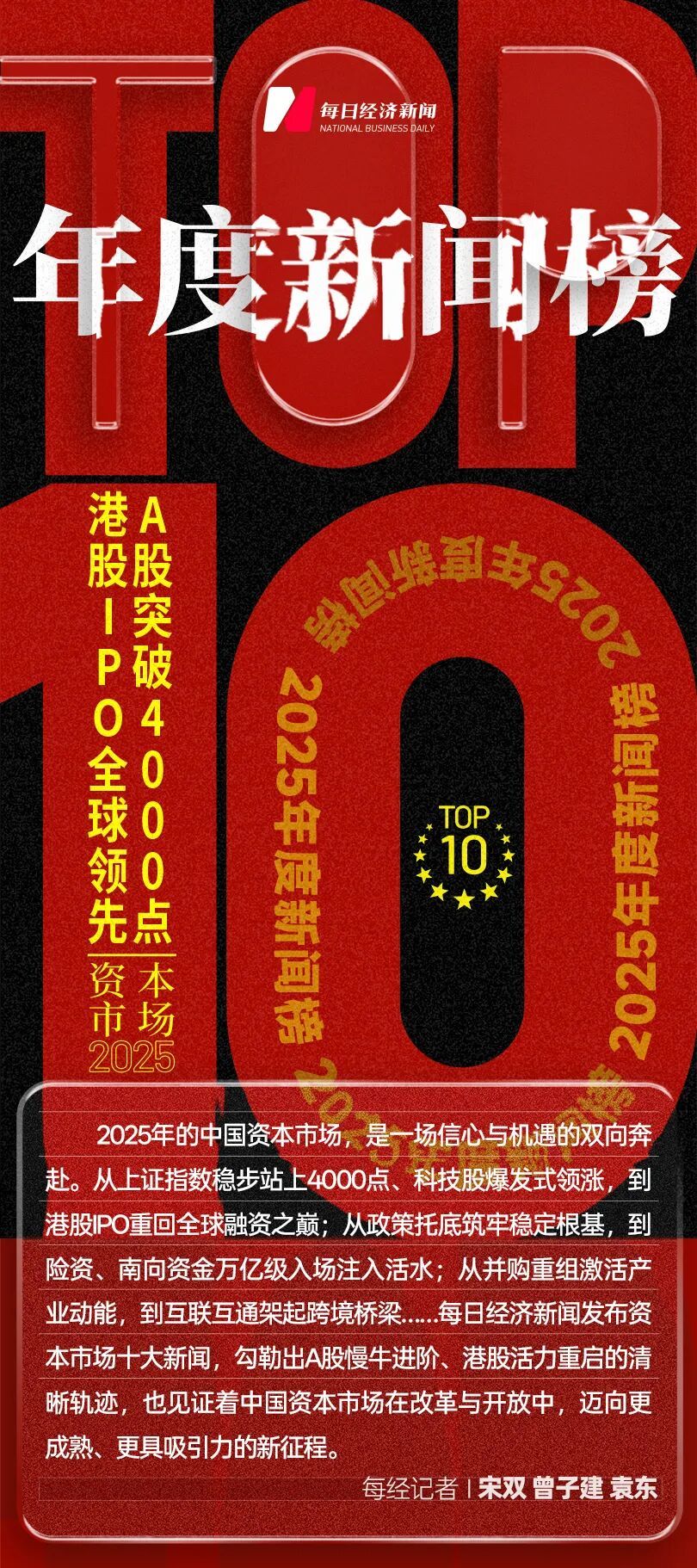
Group 1 - The core viewpoint of the article highlights the dual momentum of confidence and opportunity in China's capital market in 2025, marked by the Shanghai Composite Index surpassing 4000 points and a resurgence in Hong Kong IPOs [2][3] - The A-share market is experiencing a "slow bull" phase, with the Shanghai Composite Index reaching a ten-year high and trading volumes frequently exceeding 3 trillion yuan [3][5] - The central government is playing a stabilizing role through the Central Huijin Investment and the People's Bank of China, which provides sufficient re-lending support, creating a "dual insurance" model for market stability [5][6] Group 2 - Insurance capital is increasing its allocation to A-shares, with the Financial Regulatory Bureau approving a 60 billion yuan pilot quota for long-term investments, and large state-owned insurance companies allocating 30% of new premiums to A-share investments [6][7] - The implementation of the revised "Major Asset Restructuring Management Measures" has led to a significant increase in the number of major asset restructurings, with 90 new cases in the Shanghai market and 109 in the Shenzhen market [8][9] - The listing of domestic GPU companies has sparked a record-breaking enthusiasm for new stock subscriptions, with the first domestic GPU stock, Moore Threads, achieving a first-day increase of 468.78% and a subscription multiple of 1572 times [10] Group 3 - The Hong Kong stock market has seen a strong recovery, with IPO fundraising reaching approximately 260 billion HKD, marking its return to the top of global financing [11][12] - Southbound funds have net inflows exceeding 1.28 trillion yuan, indicating strong liquidity support for the Hong Kong market and a recognition of valuation advantages by mainland investors [13][14] - The Hong Kong government has proposed multiple reforms to enhance market vitality and competitiveness, including shortening the stock settlement cycle and improving the "same share different rights" listing regulations [14][15]
一周新消费NO.341|蒙牛纯甄上新「冻梨口味风味酸奶」;刘昊然亮相VICUTU新年衣橱以马上行系列开启新年叙事
新消费智库· 2025-12-28 13:03
New Products - Mengniu launched "Frozen Pear Flavor Yogurt" which uses French imported dual-strain fermentation, suitable for various scenarios like breakfast and outdoor activities [8] - Shuanghui and Tmall Supermarket introduced "Spicy Beef Strips" with ≥90% beef content and ≥27g protein per 100g [8] - Bawang Tea Ji launched the "Return to Yunnan" series with three flavors, using a blend of 65% Menghai Pu'er and 35% Mengku Ice Island ripe Pu'er [11] - Heytea collaborated with Pop Mart to introduce a new product line featuring custom star-shaped drinks and themed stores [11] - Watsons launched a limited edition "Biquan Sweet Apricot Jasmine Green Tea" using high-quality apricot puree [12] Industry Events - McDonald's opened its first stores in Ningxia and Qinghai, completing its presence in all provincial-level administrative regions in China [16] - Anta officially joined Taobao Flash Sale, with plans to cover over 4,000 stores by 2026 [18] - JD Health and Ganhe Group signed a strategic cooperation agreement to enhance supply chain efficiency and user health management [18] Investment Trends - Zhongyan Alkali Industry received a strategic investment of 3.92 billion RMB for green mining expansion [22] - Safilo acquired 25% of Inspecs Group for £21.7 million [22] - Qianjue Technology completed a Pre-A++ round financing of nearly 100 million RMB for technology development [22] - Sequoia China acquired a controlling stake in Golden Goose [22] Food Industry Developments - Mixue Ice City opened its first flagship store in Hangzhou, featuring a wide range of drinks and cultural products [28] - Haidilao introduced a small portion menu with prices starting from 3.8 RMB [28] - Mengniu launched "Soft Milk" using EHT enzyme hydrolysis technology for better nutrient absorption [28] - Nestlé completed the sale of its remaining 40% stake in Herta Foods to Casa Tarradelas [32]


百万华人涌入,变革中的斯坦国
创业邦· 2025-12-28 10:29
Core Viewpoint - The article highlights the growing trend of Chinese businesses expanding into Central Asia, particularly Kazakhstan, as a new frontier for trade and investment opportunities, driven by increasing consumer demand and digital transformation in the region [5][6][7]. Group 1: Market Trends - In the first eleven months of this year, over 876,000 Chinese tourists visited Kazakhstan, with a significant increase in flight and hotel bookings, indicating a strong interest in the region [5]. - The number of China-Central Asia freight trains has also surged, with 13,089 trains operating and 1,031,695 TEUs shipped, reflecting a 30.6% year-on-year growth [5]. - Kazakhstan is transitioning from a "marginal market" to a "foreign trade growth pole" for Chinese enterprises, with sectors like infrastructure, renewable energy, and cross-border e-commerce leading the charge [6]. Group 2: E-commerce Growth - Kazakhstan has become a leader in e-commerce within Central Asia, with an internet penetration rate of 92.9% and a mobile connection rate of 128%, leading to a stable online shopping habit among consumers [13]. - E-commerce's share of retail has increased from 0.5% in 2013 to 14.1% in 2024, with the market size reaching approximately 3.156 trillion tenge (around $6.5 billion), growing by 33% year-on-year [13]. - Local and international e-commerce platforms, including Kaspi.kz and Alibaba's AliExpress, are thriving, facilitating smooth transactions and product availability for consumers [13][14]. Group 3: Consumer Behavior and Preferences - The influx of Chinese brands, such as new tea beverage companies, is indicative of a broader consumption upgrade in Kazakhstan, where local consumers are increasingly open to foreign products [24][29]. - The demand for electric vehicles is rising, with Chinese brands like BYD and Li Auto becoming more visible on the streets, as Kazakhstan's government plans to promote new car purchases through incentives [30][35]. - Local consumers are showing a preference for products that resonate with their cultural context, emphasizing the need for brands to adapt their marketing strategies to local tastes and preferences [22]. Group 4: Challenges and Considerations - Despite the opportunities, Chinese businesses face challenges in establishing trust and credibility with local consumers, who often prefer to buy from local retailers due to past negative experiences with Chinese companies [36][37]. - The article emphasizes the importance of local partnerships and understanding the market dynamics to navigate the complexities of doing business in Kazakhstan [42]. - The evolving regulatory environment and the need for localized strategies are critical for success in this emerging market [43].

今年,消费彻底变了
Ge Long Hui A P P· 2025-12-28 08:57
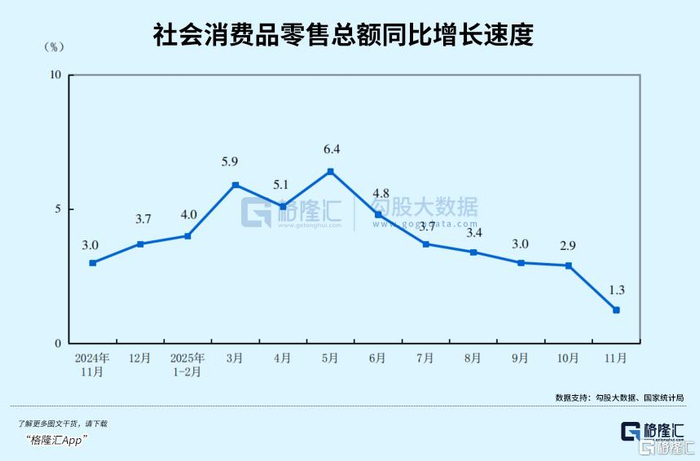
Core Insights - The consumption industry has undergone significant changes over the past year, with a shift in focus from traditional products like liquor to new consumption trends driven by emotional and social factors [1][10]. Group 1: Consumption Trends - Despite perceptions of a cooling consumption market, consumer demand has shown stability, with retail sales growing by 4.0% year-on-year in the first 11 months of this year, surpassing the 3.5% growth expected for the entire year of 2024 [4][5]. - The contribution of final consumption expenditure to economic growth reached 53.5% in the first three quarters of 2025, an increase of 9 percentage points compared to the entire year of 2024 [4]. - The concept of "new consumption" has emerged, characterized by emotional and social attributes, as seen in the popularity of brands like Bubble Mart and the rise of "self-reward" consumption [8][9]. Group 2: Consumer Behavior - Young consumers, particularly those from the Z generation, are becoming the main drivers of consumption, with 56.3% of them willing to spend on emotional value and interests, a 16.2 percentage point increase from 2024 [10][9]. - The trend of "rational consumption" is also evident, where consumers are increasingly focused on quality and value, with 47% of respondents indicating they only purchase essentials to avoid waste, while 68% are willing to spend more on products that help relieve stress [11][10]. Group 3: Market Opportunities - The second-hand economy is thriving, with platforms like Xianyu seeing a 30% year-on-year increase in transaction volume, reflecting young consumers' acceptance of "recycled consumption" [12]. - The health and wellness industry is benefiting from consumers' desire to invest in personal growth, with products like smart home devices and effective skincare gaining traction [14][13]. - The pet economy is emerging as a significant market, driven by the emotional support pets provide, with a wide range of related products and services [24]. Group 4: Future Outlook - The emotional consumption market in China is projected to reach 2.3 trillion yuan in 2024, with expectations to exceed 4.5 trillion yuan by 2029, indicating substantial growth potential [16]. - The consumption landscape is evolving into a complex ecosystem where rational and emotional consumption coexist, reshaping investment strategies and market dynamics [27].