
避险情绪

Search documents
期货市场交易指引:2025年10月13日-20251013
Chang Jiang Qi Huo· 2025-10-13 06:24
1. Report Industry Investment Ratings - **Macro - finance**: Index futures are long - term optimistic, suggesting buying on dips; treasury bonds should be kept under observation [1][5][6] - **Black building materials**: Coking coal and rebar suggest range trading; glass suggests buying on dips [1][8][9] - **Non - ferrous metals**: Copper suggests holding long positions on dips; aluminum suggests buying on dips after pullbacks; nickel suggests observation or shorting on rallies; tin suggests range trading; gold suggests buying on dips; silver suggests range trading [1][10][11][17][18][19][20][21] - **Energy and chemical industry**: PVC, caustic soda, styrene, rubber, urea, and methanol are expected to oscillate; polyolefins are expected to have wide - range oscillations; the 01 contract of soda ash suggests a short - selling strategy [1][22][23][24][25][26][27][28][29][30][31][32][33][34] - **Cotton textile industry chain**: Cotton and cotton yarn are expected to oscillate; PTA suggests range trading within 4500 - 4750; apples and jujubes are expected to be strongly oscillating [1][35][36][37][38] - **Agricultural and livestock industry**: Pigs and eggs suggest shorting on rallies; corn suggests wide - range oscillations; soybean meal suggests range oscillations; oils are expected to be strongly oscillating [1][40][43][45][47][49] 2. Core Views of the Report - The market has short - term fluctuations due to factors such as Trump's remarks on tariffs and geopolitical events, but a full - scale panic is unlikely. The long - term trends of industries like AI in China and the US are clear, and the US monetary and fiscal policies are in force [5] - In the commodity market, different products have different trends and investment strategies due to their own supply - demand relationships, cost factors, and macro - environment impacts 3. Summary According to Related Catalogs 3.1 Macro - finance - **Index futures**: They are expected to oscillate and are long - term optimistic. Due to trade concerns, geopolitical events, and other factors, there may be short - term fluctuations, but full - scale panic is unlikely. Investors can either wait for better opportunities or lock in positions [5] - **Treasury bonds**: They should be kept under observation. Trump's remarks on retaliatory measures may cause short - term oscillations [6] 3.2 Black building materials - **Coking coal**: It is expected to oscillate. Affected by rainfall and weak demand, the pit - mouth price shows a differentiated trend [8] - **Rebar**: It is expected to oscillate. Currently, the price is under the cost of electric - arc furnace valley electricity and long - process production. In October, the price is expected to be weak first and then strong [8] - **Glass**: It suggests buying on dips. Although the current market has some supply - demand problems, under the background of policy expectations, the glass price is expected to be easy to rise and difficult to fall [9] 3.3 Non - ferrous metals - **Copper**: It is expected to have high - level oscillations. Due to the intensification of Sino - US trade tensions, the price has dropped significantly recently, but the long - term supply - demand situation is still optimistic [10][11] - **Aluminum**: It is expected to have high - level oscillations. The supply of alumina is relatively loose, while the production capacity of electrolytic aluminum is increasing steadily, and the demand is entering the peak season. Long positions can be held [12] - **Nickel**: It is expected to oscillate. The new RKAB policy in Indonesia has some uncertainties for the supply of nickel ore. In the medium - to - long - term, the supply of nickel is in surplus, and it is recommended to observe or short on rallies [17] - **Tin**: It is expected to oscillate. The supply of tin ore is tight, and the downstream consumption is warming up. It is recommended to conduct range trading [18] - **Gold and silver**: They are expected to oscillate. Affected by factors such as the delay of non - farm payroll data and the risk of the US government shutdown, the prices are rising. It is recommended to trade cautiously after price pullbacks [19][20][21] 3.4 Energy and chemical industry - **PVC**: It is expected to oscillate weakly. The supply is at a high level, the demand is under pressure, and the inventory is accumulating. The 01 contract temporarily focuses on the pressure at 4850 [22][23] - **Caustic soda**: It is expected to oscillate. The 01 contract temporarily focuses on the range of 2380 - 2530. The market is affected by factors such as upstream inventory and downstream demand [24][25] - **Styrene**: It is expected to oscillate weakly. The supply - demand situation is weak, and it focuses on the range of 6600 - 6900 [26][27] - **Rubber**: It is expected to oscillate. The supply growth expectation is strong, and it focuses on the support at 15000 [28][29] - **Urea**: It is expected to oscillate. The supply is increasing, the demand is scattered, and the inventory is accumulating [30] - **Methanol**: It is expected to oscillate. The supply in the mainland is recovering, and the demand for methanol - to - olefins is increasing [32] - **Polyolefins**: They are expected to oscillate. The supply pressure is large after the festival, the demand is weak, and the inventory is accumulating. The L2601 contract focuses on the support at 6900, and the PP2601 contract focuses on the support at 6600 [31][32][33] - **Soda ash**: The 01 contract suggests a short - selling strategy. The supply is abundant, the demand is flat, and the inventory is accumulating [33][34] 3.5 Cotton textile industry chain - **Cotton and cotton yarn**: They are expected to oscillate. The global cotton supply - demand situation has some changes, and there are uncertainties in Sino - US relations [35][36] - **PTA**: It suggests range trading within 4500 - 4750. Affected by factors such as oil prices and supply - demand relationships, the price is weakly oscillating [36] - **Apples and jujubes**: They are expected to be strongly oscillating. Apples are affected by weather, and jujubes are affected by factors such as production areas and market demand [37][38] 3.6 Agricultural and livestock industry - **Pigs**: They are overall under pressure. The supply is increasing, the demand is limited, and the price is weak in the short - term. Different contracts have different investment strategies [40][42] - **Eggs**: The rebound is under pressure. The short - term supply is sufficient, the demand is weakening, and different contracts have different investment strategies [43][44][45] - **Corn**: It suggests range oscillations. It is in the period of new and old crop connection, and the price is affected by factors such as new crop listing and demand [45][46] - **Soybean meal**: The rebound is limited. The US soybeans are affected by factors such as harvest pressure and Sino - US talks, and the domestic soybean meal is affected by import expectations [47][48] - **Oils**: They are in high - level adjustment. Short - term回调 risks are increasing, and it is recommended to wait for the end of the回调 before considering long positions [49][50][54]
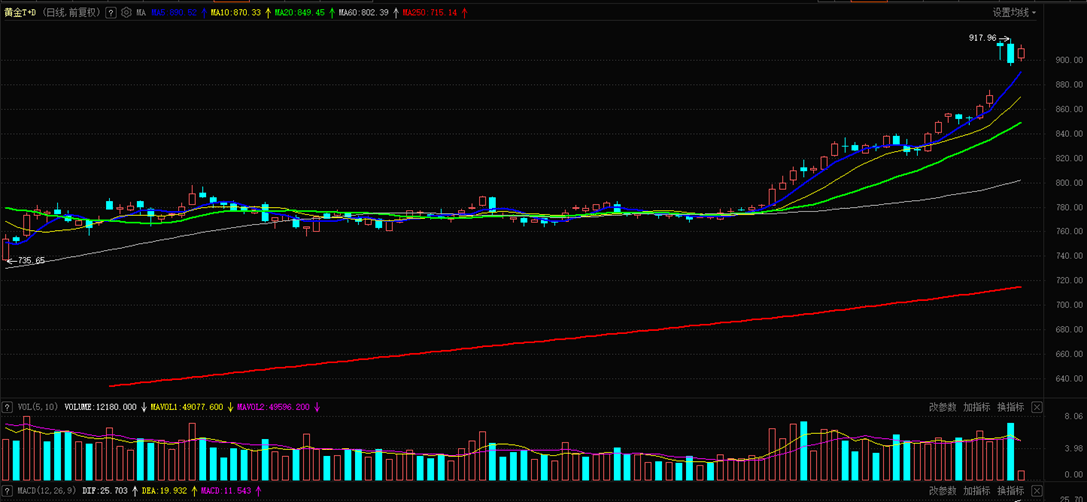
领峰环球金银评论:白宫裁员夜 金市避险时
Sou Hu Cai Jing· 2025-10-13 06:23
Fundamental Analysis - The initial value of the U.S. one-year inflation expectation for October is 4.6%, slightly lower than the forecast and previous value of 4.7%, but still at a relatively high historical level, providing significant support for gold prices [1] - The slight decline in inflation expectations has not fundamentally alleviated market concerns about long-term price pressures, instead reinforcing gold's appeal as an inflation hedge amid overall uncertainty [1] - Increasing domestic economic pressures in the U.S., including a government plan to lay off over 4,000 employees primarily from the Democratic Party, may exacerbate social division and policy uncertainty, driving safe-haven funds towards the gold market [1] - The potential for significant adjustments in monetary policy is indicated by Trump's narrowing of the Federal Reserve chair candidate list to five, alongside the upcoming release of the September CPI report on October 24, which continues to fuel uncertainty regarding inflation and interest rate policies, providing solid potential support for gold prices [1] - Escalating tensions in South Asia, particularly between Pakistan and Afghanistan, and Trump's potential intervention highlight the seriousness of the conflict, while the possibility of providing "Tomahawk" missiles to Ukraine could significantly escalate the situation, further supporting gold prices due to increased safe-haven sentiment [1] Technical Analysis - The current gold price (XAUUSD) shows a strong bullish upward trend, with the moving average system in a bullish arrangement, indicating a potential for further upward movement after short-term corrections [4] - The CCI indicator is in the overbought zone and may suggest a short-term correction opportunity, but the overall market sentiment remains bullish [4] Trading Strategy - For gold, a buy position is recommended around 4015.6, with a stop loss at 4005.0 and a target range of 4090.0-4110.0 [5] - For silver (XAGUSD), the price is on a strong upward trajectory, with a buy position suggested around 50.10, a stop loss at 49.90, and a target range of 51.21-51.50 [9] News Events - Upcoming events include China's September trade balance and the World Bank and IMF's autumn meetings, along with a speech by Federal Reserve's Paulson [9]


金属周报 | 关税风暴下的资产再定价:金强铜弱的宏观逻辑与持久性
对冲研投· 2025-10-13 06:13
Group 1 - The article highlights the significant impact of Trump's announcement to impose a 100% tariff on all Chinese goods starting November 1, leading to a risk-off sentiment in the market, resulting in a notable decline in U.S. stocks and copper prices, while gold remained strong [2][5][8] - In the precious metals sector, COMEX gold rose by 3.15%, while silver fell by 0.95%. The SHFE gold contract increased by 3.11%, and SHFE silver rose by 1.5% [4][29] - The copper market experienced a sharp decline due to renewed trade concerns, with COMEX copper prices dropping by 4.72% and SHFE copper prices fluctuating [4][10] Group 2 - The article discusses the divergence in performance between gold and copper, with gold prices remaining strong amid macroeconomic risks, while copper faced downward pressure due to trade tensions and domestic consumption issues [7][57] - The COMEX copper price curve has shifted downward, indicating a contango structure, with significant inventory accumulation observed, surpassing 330,000 tons [10][11] - The copper concentrate market is under pressure, with processing fees remaining low and expectations for a rebound in processing fees being limited in the short term [15][23] Group 3 - The article notes that the gold market is expected to remain strong in the medium to long term due to ongoing geopolitical tensions and the decoupling of U.S.-China trade, despite potential short-term volatility [7][57] - The inventory levels for COMEX gold decreased by approximately 170,000 ounces, while COMEX silver inventory increased by about 941,000 ounces [45] - The SPDR gold ETF holdings increased by 2.3 tons to 1,017 tons, indicating a growing interest in gold as a safe-haven asset [50]

日度策略参考-20251013
Guo Mao Qi Huo· 2025-10-13 06:12
Report Industry Investment Ratings - Gold: Bullish [1] - Silver: Sideways [1] - Copper: Sideways [1] - Aluminum: Sideways [1] - Alumina: Sideways [1] - Zinc: Sideways [1] - Nickel: Sideways [1] - Industrial Silicon: Sideways [1] - Polysilicon: Sideways [1] - Lithium Carbonate: Bullish [1] - Rebar: Sideways [1] - Hot Rolled Coil: Sideways [1] - Iron Ore: Sideways [1] - Ferro - Silicon: Sideways [1] - Coke: Sideways [1] - Coking Coal: Sideways [1] - Palm Oil: Sideways [1] - Soybean Oil: Bullish [1] - Rapeseed Oil: Sideways [1] - Cotton: Sideways [1] - Sugar: Sideways [1] - Corn: Bearish [1] - Soybean Meal: Sideways [1] - Pulp: Sideways [1] - Logs: Bullish [1] - Live Hogs: Bearish [1] - Crude Oil: Bearish [1] - Fuel Oil: Bearish [1] - Asphalt: Bearish [1] - Natural Rubber: Sideways [1] - BR Rubber: Sideways [1] - PTA: Sideways [1] - Ethylene Glycol: Sideways [1] - Short - Fiber: Bullish [1] - Styrene: Bullish [1] - Urea: Sideways [1] - Refinery Gasoline: Sideways [1] - PP: Sideways [1] - PVC: Sideways [1] - Caustic Soda: Bearish in short - term, Bullish in medium - term [1] - LPG: Bearish [1] - Container Shipping: Sideways [1] Core Viewpoints - The escalation of Sino - US tariff policies may cause significant shocks and fluctuations to small - and medium - cap stocks with high technology stock weights, while the CSI 300 and SSE 50 indices dominated by large - cap blue - chip stocks are expected to show stronger resilience [1] - Asset shortages and a weak economy are beneficial for bond futures, but the central bank's short - term warning on interest rate risks suppresses the upside space [1] - Sino - US trade uncertainties provide support for gold, while silver may experience short - term sideways adjustments [1] - Due to the escalation of global trade frictions and rising risk - aversion sentiment, base metals may face correction risks, but some metals have different fundamental factors [1] - In the energy and chemical sector, factors such as OPEC+ production increases, geopolitical situation changes, and seasonal demand fluctuations affect product prices [1] - In the agricultural products sector, factors like supply - demand relationships, policy changes, and weather conditions influence prices [1] Summary by Related Catalogs Macro - finance - Asset shortages and a weak economy are beneficial for bond futures, but the central bank's short - term warning on interest rate risks suppresses the upside space [1] - Sino - US trade uncertainties provide support for gold, while silver may experience short - term sideways adjustments [1] Non - ferrous Metals - Sino - US trade frictions and rising risk - aversion sentiment may cause the non - ferrous metals sector to face correction risks [1] - For different non - ferrous metals, factors such as inventory changes, production policies, and supply - demand relationships vary [1] Industrial Products - In the industrial silicon and polysilicon sectors, factors such as production schedules, capacity changes, and market sentiment affect prices [1] - In the steel and iron sectors, factors such as production restrictions, seasonal demand, and inventory levels influence prices [1] - In the coke and coking coal sectors, the price trends are affected by factors such as market expectations and trading behavior [1] Agricultural Products - In the palm oil, soybean oil, and rapeseed oil sectors, factors such as production reports, export policies, and international market trends affect prices [1] - In the cotton, sugar, and corn sectors, factors such as supply - demand relationships, new product listings, and policy expectations influence prices [1] Energy and Chemicals - In the crude oil, fuel oil, and asphalt sectors, factors such as OPEC+ production increases, geopolitical situation changes, and seasonal demand fluctuations affect prices [1] - In the rubber, PTA, and ethylene glycol sectors, factors such as supply - demand relationships, production schedules, and market sentiment influence prices [1] - In the short - fiber, styrene, and urea sectors, factors such as production resumption, market transactions, and cost factors affect prices [1] - In the caustic soda and LPG sectors, factors such as production plans, inventory levels, and international market prices influence prices [1] Others - In the container shipping sector, factors such as price levels, market rhythms, and cost lines affect price trends [1]
期货眼日迹
Yin He Qi Huo· 2025-10-13 05:58
1. Report Industry Investment Ratings No industry investment ratings are provided in the report. 2. Core Viewpoints of the Report The report provides a daily morning observation of various commodities, including agricultural products, black metals, non-ferrous metals, and energy chemicals. The market trends of each commodity are analyzed based on factors such as supply and demand, macroeconomic conditions, and trade policies. The report suggests corresponding trading strategies for each commodity, including unilateral trading, arbitrage, and options trading. 3. Summaries by Relevant Catalogs Agricultural Products - **Soybean Meal**: Macro influences increase, and the volatility of meal products widens. The CBOT soybean and soybean meal indices decline. South American soybean exports to China offset the decrease in US soybean exports. It is recommended to short the soybean meal 05 contract at high points, hold long positions in rapeseed meal, and conduct M11 - 1 positive spreads [15][16][17]. - **Sugar**: Typhoon weather is favorable for the market. ICE and London sugar prices decline. Brazilian sugar production may increase, and the domestic sugar market is affected by the typhoon. It is expected that the international sugar price will fluctuate within a range, and the domestic sugar price will also show a short - term oscillatory trend [17][18][20]. - **Oilseeds and Oils**: Sino - US tariffs resurface, and the market maintains a short - term oscillatory trend. The Malaysian palm oil inventory increases in September, and domestic soybean oil may gradually reduce inventory. It is recommended to wait and see first and consider lightly going long on dips [21][22][23]. - **Corn/Corn Starch**: New grain is concentrated on the market, and the price oscillates at the bottom. The US corn price is weak, and domestic new - crop corn is abundant. It is recommended to go long on the 12 - month corn contract on dips, and gradually establish long - term long positions in the 05 and 07 corn contracts [24][25][27]. - **Hogs**: The pressure of slaughter continues to be reflected, and the spot price continues to decline. Hog prices fall in various regions, and the overall supply is sufficient. It is recommended to short at high points and conduct LH15 reverse spreads [27][28][29]. - **Peanuts**: Harvest is affected by rainfall, and peanuts are short - term bullish. The average price of peanuts declines slightly, and the inventory of peanut oil manufacturers changes. It is recommended to go long on the 01 and 05 peanut contracts lightly [30][31][32]. - **Eggs**: Oscillate weakly. Egg prices decline, and the inventory of laying hens is high. It is recommended to short near - month contracts at high points [33][34][36]. - **Apples**: Oscillate slightly bullishly. Apple inventory decreases, and new - crop apples are affected by rainfall. It is expected that the price will oscillate slightly bullishly in the short term [37][38][42]. - **Cotton - Cotton Yarn**: Oscillate slightly bearishly. ICE cotton prices decline. The Sino - US trade war affects cotton consumption. It is expected that the US cotton price will oscillate, and the Zhengzhou cotton price will oscillate slightly bearishly [43][44][46]. Black Metals - **Steel**: US tariff increases put slight pressure on steel prices. The black sector oscillates weakly, and steel inventories accumulate. It is recommended to maintain a bottom - oscillating trend and go long on the spread between hot - rolled and rebar at low points [48][49][50]. - **Coking Coal and Coke**: Long positions can be lightly established on dips. The market may be affected by macro - market sentiment, but the impact is expected to be small. It is recommended to go long on dips [50][51][53]. - **Iron Ore**: Adopt a bearish approach at high levels. Global iron ore shipments increase, and the demand is weak. It is recommended to hedge at high levels in the spot market and conduct reverse cash - and - carry arbitrage [53][54][56]. - **Ferroalloys**: The valuation is not high, and short positions can be reduced during macro - shocks. The prices of ferrosilicon and silicomanganese are stable to weak. It is recommended to reduce short positions during macro - shocks [56][57][58]. Non - Ferrous Metals - **Precious Metals**: Trade disputes resurface, and they are driven by short - term risk - aversion sentiment. Gold and silver prices rise, and the US dollar index and bond yields decline. It is recommended to go long at low points [59][60][62]. - **Copper**: Tariffs cause a short - term setback in copper prices, but the long - term trend remains unchanged. Copper prices decline, and the supply is tight while consumption is weak. It is recommended to go long on dips [64][65][67]. - **Alumina**: The weak trend due to supply - demand surplus remains unchanged. The price of alumina declines, and the supply exceeds demand. It is expected to maintain a weak - oscillating and bottom - grinding trend [69][70][71]. - **Cast Aluminum Alloy**: Weakens with the increase in tariff policies, but the scrap aluminum price may be relatively firm. The futures price of cast aluminum alloy declines. The impact of tariffs is expected to be less severe than in April. It is necessary to pay attention to subsequent policies [74][75]. - **Electrolytic Aluminum**: The short - term volatility increases due to panic sentiment, and the medium - term bullish trend remains unchanged. The price of electrolytic aluminum declines. The impact of tariffs is limited, and the medium - term price may strengthen [75][76][78]. - **Zinc**: There is obvious support below, and the zinc price may rebound. The domestic zinc price is under pressure, and the overseas price is strong. It is recommended to close out profitable short positions and go short again at high points [79][80][82]. - **Lead**: Supply and demand are both weak, and be wary of the lead price falling after rising. The lead price rises, and the supply may increase in the second half of October. It is recommended to be cautious as the price may fall after rising [83][84][87]. - **Nickel**: Volatility increases, and the price center moves down. The LME nickel price declines, and the inventory increases. The nickel market is in an oversupply situation, and the price is expected to decline [88][89][91]. - **Stainless Steel**: Oscillates downward. The stainless steel inventory increases, and the price is affected by tariffs. It is expected to oscillate weakly [92][93][95]. Energy and Chemicals - **Industrial Silicon**: Go long at the lower end of the range. Some silicon plants experience production disruptions, and the demand is strong in the short term. It is recommended to go long near the low point of the September disk [95][96][97]. - **Polysilicon**: The supply - side expectations are intertwined with weak reality. The US government cancels some energy projects. The polysilicon market is affected by production increases and potential cuts [97][98].
香港第一金PPLI:多重不确定性持续为黄金白银提供支撑
Sou Hu Cai Jing· 2025-10-13 04:52
Group 1: Market Overview - The recent increase in holdings of gold ETFs indicates a rising demand for gold as a safe-haven asset, with holdings reaching 1017.16 tons, up by 3.72 tons from the previous trading day and a net increase of 4.28 tons for the month [1] - The complex global economic and geopolitical landscape, including escalating US-China trade tensions and regulatory investigations, is contributing to the heightened appeal of precious metals [1][2] - The ongoing US government shutdown and concerns over the US debt situation are creating uncertainty in the market, with the public debt-to-GDP ratio reaching 99% last year, prompting a reevaluation of the dollar's credibility [2][3] Group 2: Investment Strategies - For gold, the technical analysis suggests a bullish outlook with a recommendation to buy on dips, particularly in the price range of 4043.6 to 4049.6, with a stop-loss at 4038.6 and a target of 4053.6 to 4059.6 [5] - Silver's technical indicators show a similar pattern to gold, with a recommendation to enter long positions when prices fall to the 49.53 to 50.03 range, setting a stop-loss at 49.43 and targeting 50.13 to 50.63 [6] Group 3: Key Data and Events - Important upcoming data includes China's September electricity consumption and trade balance, as well as the OPEC monthly oil market report, which could influence market dynamics [7] - The World Bank and IMF's annual meeting is set to take place from October 15 to 18, where policy signals may impact the financial markets [7]
华安期货:10月13日黄金白银预计偏强震荡
Sou Hu Cai Jing· 2025-10-13 04:25
Core Viewpoint - The ongoing U.S. government shutdown and escalating tariff conflicts are increasing risk aversion and inflation expectations, providing support for gold prices [1][3]. Group 1: Key Information - China announced countermeasures against the U.S. 301 investigation into its shipbuilding industry, starting on October 14, imposing special port fees on U.S. vessels [1]. - On October 9, the Chinese Ministry of Commerce announced a comprehensive upgrade of rare earth export controls, adding five types of medium and heavy rare earth elements and implementing "long-arm jurisdiction" over technology, equipment, and overseas products [1]. - On October 10, Trump declared on social media that starting November 1, an additional 100% tariff would be imposed on all products from China, on top of existing tariffs [1]. - Major asset classes saw declines on Friday due to heightened trade risks and the ongoing U.S. government shutdown, with U.S. and European stock markets falling collectively, U.S. oil main contracts dropping over 5%, and LME copper down approximately 4.5%. The U.S. dollar index fell by over 0.5%, while U.S. Treasury bonds and gold prices rose, with COMEX gold increasing by about 1.6%, marking an eight-week consecutive rise [1]. Group 2: Market Outlook - The market is expected to experience a strong oscillation trend [3].

中美贸易摩擦再升级,贵金属或延续偏强运行
Guo Mao Qi Huo· 2025-10-13 03:43
投资咨询业务资格:证监许可【2012】31号 【贵金属周报(AU、AG)】 中美贸易摩擦再升级,贵金属或延续偏强运行 国贸期货 宏观金融研究中心 2025-10-13 白素娜 从业资格证号:F3023916 投资咨询证号:Z0013700 本报告非期货交易咨询业务项下服务,其中的观点和信息仅供参考,不构成任何投资建议;期市有风险,投资需谨慎 周度观点摘要 | ◆ 上周黄金白银冲高回落,但周线仍大幅上涨。主要影响因素分析如下:国庆假期,因美国联 | | 黄金相关数据指标跟踪 | | | | | | --- | --- | --- | --- | --- | --- | --- | | | 指标 | 单位 | 本期 | 上一期 | 周度变化 | 周度涨跌幅 | | 邦政府时隔7年再度"停摆"、法国日本政治不确定提升等大幅提升市场避险情绪,与此同时,美 | | | | | | | | | 伦敦现货黄金 | 美元/盎司 | 4017.845 | 3885.660 | 132.185 | 3.40% | | 国9月ADP数据不及预期和市场担忧美国政府停摆将增加经济走弱风险,强化美联储10月降息预期, | 沪金主力 | ...
宏观周报(10月第2周):中美贸易局势紧张加大避险情绪-20251013
Century Securities· 2025-10-13 03:28
Group 1: Macroeconomic Overview - The tension in China-US trade relations has heightened risk aversion in the market[1] - During the period from September 29 to October 10, the average daily trading volume increased by 82.1 billion RMB, reaching 2.3953 trillion RMB[9] - The Shanghai Composite Index rose by 1.80%, while the Shenzhen Component Index increased by 1.11%[9] Group 2: Economic Indicators - The September PMI showed a weaker-than-seasonal recovery, indicating ongoing supply-demand imbalances[9] - Real estate sales experienced a significant year-on-year decline, reflecting continued pressure in the sector[9] - Exports in September maintained resilience due to a low base, supporting investment recovery prospects[9] Group 3: Fixed Income Market - During the same period, the yield on 30-year government bonds increased, while other maturities saw slight declines[9] - The central bank's operations indicated a commitment to maintaining liquidity, with a potential increase in the probability of interest rate cuts in October[9] - The overall sentiment in the bond market is cautiously optimistic, despite uncertainties from the stock market and fund redemption regulations[9] Group 4: International Market Dynamics - US stock markets experienced declines, with the Dow Jones falling by 1.66% and the S&P 500 down by 1.37%[9] - The US government shutdown has intensified economic pressures, with an estimated daily loss of approximately 400 million USD in wages[9] - Trump's threat to impose a 100% tariff on Chinese goods starting November 1 has further escalated market risk aversion[9]
流动性周报:避险情绪,是追是止?-20251013
China Post Securities· 2025-10-13 03:20
Group 1: Report Overview - Report Type: Fixed Income Report - Release Date: October 13, 2025 - Analyst: Liang Weichao - SAC Registration Number: S1340523070001 - Email: liangweichao@cnpsec.com [1][2] Group 2: Investment Rating - No specific industry investment rating is provided in the report. Group 3: Core Viewpoints - The bond market is expected to move in a volatile manner in the fourth quarter. The 30 - 10 and 10 - 1 year Treasury yield spreads have reflected the risk preference repair, and the current bond market has allocation value. Supply pressure is expected to ease, there may be opportunities for monetary easing, and redemption pressure will persist. The bond market may alternate between repair and adjustment, with repair driven by allocation value and adjustment due to redemption pressure. If there is an opportunity for monetary easing, the emotional repair will accelerate, followed by faster unwinding and selling [3][10]. - After the holiday, liquidity enters the seasonal easing window at the beginning of the quarter. The marginal easing of the capital market has intensified, and the current capital price has fallen to the lowest level in the same period of history, with the central level dropping back to the policy rate. The continued decline in capital prices has promoted the warming of easing expectations and the repair of bond market sentiment [3][10]. - The short - end is in a high - allocation value range, and the long - short term spread has fully priced in the risk preference repair. The current pricing level is close to the historical average, so the long - short term spread is reasonably priced, which can control the risk of further upward movement of the long - end. The downward drive of the long - end depends on the decline of risk preference or the opportunity of monetary easing [3][12]. - Recently, the risk - aversion sentiment has increased, and bond market trading is "better to stop than to chase". The risk - aversion sentiment comes from international geopolitics with high uncertainty, the disturbance of redemption problems still exists during the market repair, and the yield is about to fall to the chip - intensive area. Therefore, although the bond market has recovered under the drive of risk - aversion sentiment, the yield is unlikely to return to the state of rapid decline, and chasing the rise requires caution [4][14]. Group 4: Summary by Directory 1. Is it time to chase or stop the risk - aversion sentiment? - **Market Outlook**: The bond market in the fourth quarter may move in a volatile manner. The yield spreads have reflected risk preference repair, and the market has allocation value. Supply pressure may ease, there may be monetary easing opportunities, and redemption pressure will continue. The market may alternate between repair and adjustment [10]. - **Liquidity Analysis**: After the holiday, liquidity enters the seasonal easing window at the beginning of the quarter. The capital price has fallen to the lowest level in the same period of history, and the continued decline has promoted the warming of easing expectations and bond market sentiment. This is related to the calendar effect of funds and the central bank's liquidity management [10]. - **Short - end and Term Spread Analysis**: The short - end is in a high - allocation value range as the risk of capital tightening is low. The long - short term spread has fully priced in the risk preference repair, and the current pricing is close to the historical average, which can control the long - end upward risk. The long - end downward drive depends on risk preference decline or monetary easing [12]. - **Risk - aversion and Trading Advice**: The risk - aversion sentiment comes from international geopolitics with high uncertainty. The redemption problem still disturbs the market, and the yield is about to fall to the chip - intensive area. Bond market trading is "better to stop than to chase" [14][15].