货币政策

Search documents
美财长贝森特:特朗普或于本月敲定下一任美联储主席人选 利率仍“明显高于中性水平”
智通财经网· 2026-01-08 22:25
Group 1 - The U.S. Treasury Secretary Mnuchin indicated that President Trump is expected to decide on the next Federal Reserve Chair by January, possibly around the time of the World Economic Forum in Davos [1] - There are currently four candidates for the position: NEC Director Hassett, former Fed Governor Warsh, current Fed Governor Waller, and BlackRock executive Riedel, with Riedel being the only candidate yet to be interviewed [1] - Mnuchin stated that current interest rates are still considered high, suggesting that monetary policy should not be in a restrictive state, with appropriate rates estimated to be between 2.5% and 3.25% [1] Group 2 - Mnuchin emphasized the need for the Federal Reserve to fulfill its responsibility to promote investment growth, while also supporting the economic agenda of the Trump administration, which he claims has laid the foundation for strong economic growth [2] - He praised the tax cuts, trade agreements, and deregulation policies enacted last year, while criticizing the Biden administration's trade policies, high taxes, and heavy regulations for weakening economic vitality [2] - Regarding housing policy, Mnuchin noted that large financial institutions have been buying single-family homes since the global financial crisis, and he highlighted Trump's plan to restrict institutional investors from purchasing single-family homes to alleviate housing affordability issues [2] Group 3 - The government has not yet finalized the specific thresholds for what constitutes an institution in terms of housing purchases, with discussions ongoing about the number of homes that would classify an entity as an aggregator [3]
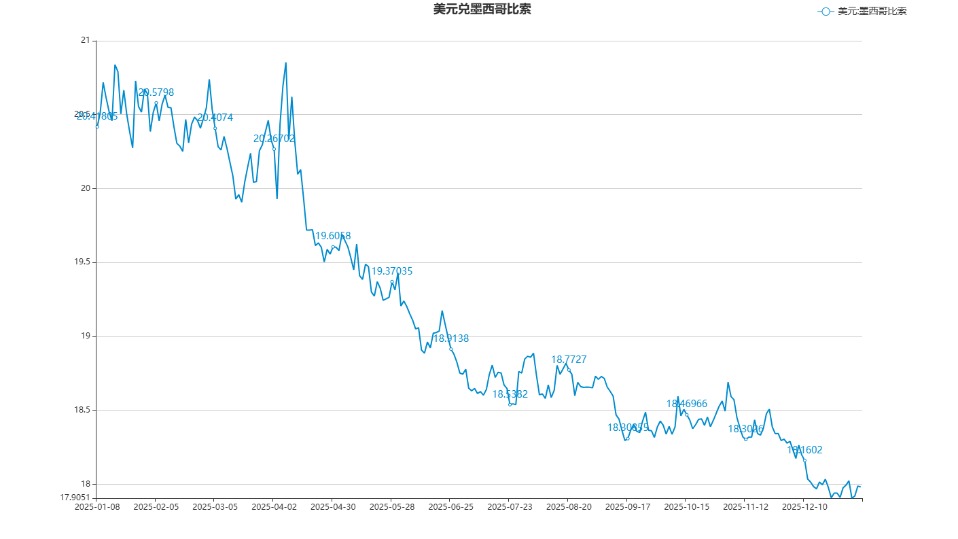
【2026年汇市展望】强势难掩隐忧 2026年墨西哥比索波动性或显著上升
Xin Hua Cai Jing· 2026-01-08 22:18
Core Viewpoint - In 2025, the Mexican peso appreciated nearly 20% against the US dollar, becoming one of the best-performing currencies in emerging markets despite global trade tensions and geopolitical risks [1][2]. Group 1: Peso Performance Overview - The peso exhibited characteristics of "high-level operation, significant fluctuations, and strengthening at year-end" throughout 2025 [2]. - The peso's appreciation was supported by the Mexican central bank's restrained monetary policy and influenced by external factors such as the Federal Reserve's policies and global capital flows [4][5]. Group 2: Economic and Policy Context - The Mexican economy showed "low growth but resilience," with GDP growth expectations adjusted to approximately 0.7% for 2025, supported by stable labor markets and ongoing investment projects [6]. - Inflation rates decreased from previous highs but showed volatility, with overall inflation reaching 3.8% in November 2025, prompting the central bank to lower the benchmark interest rate to 7% [7][8]. Group 3: Future Outlook and Risks - In 2026, the peso's performance will be influenced by the Federal Reserve's policies, potential changes in carry trade structures, and uncertainties surrounding trade and political issues [9][10]. - The peso is expected to enter a "rebalancing phase" after its strong performance in 2025, with increased volatility anticipated due to external factors and capital flow changes [10].

央行投放“精耕细作” 资金面料延续宽松态势
Zhong Guo Zheng Quan Bao· 2026-01-08 22:14
Core Viewpoint - The People's Bank of China (PBOC) is expected to maintain liquidity through various monetary policy tools, indicating a continued loose monetary stance in January 2026 [1][3][4] Group 1: Liquidity Operations - On January 8, the PBOC conducted a 99 billion yuan reverse repo operation with a fixed rate of 1.4%, resulting in a net injection of 99 billion yuan due to the maturity of other repos [1] - The PBOC is likely to continue using tools such as government bond transactions and Medium-term Lending Facility (MLF) to ensure ample liquidity in the market [1][3] Group 2: Factors Affecting Liquidity - Multiple factors are expected to disturb liquidity in January, including fiscal deposits and credit issuance, with a projected net increase in fiscal deposits of approximately 620 billion yuan [2] - The liquidity gap for January 2026 is estimated to be around 1.9 trillion yuan, influenced by cash withdrawals and bank reserve requirements [2] Group 3: Policy Tool Utilization - The market anticipates that the PBOC will intensify the use of policy tools to stabilize the funding environment, with expectations of a more proactive approach [3] - The PBOC is expected to employ a combination of reverse repos, MLF, and government bond transactions to inject medium-term liquidity, reflecting a continued "moderately loose" monetary policy [3][4] Group 4: Long-term Monetary Policy Signals - The PBOC's recent work meeting emphasized the importance of maintaining ample liquidity to support high-quality economic development and reasonable price recovery [4] - The overall monetary policy for 2026 is expected to exhibit characteristics of "quantity expansion and price stability," with a cautious approach towards tools like reserve requirement ratio (RRR) cuts and interest rate reductions [4][5]
贝森特称税收减免将在2026年助力美国经济
Sou Hu Cai Jing· 2026-01-08 22:03
Core Viewpoint - The early start of the 2026 tax filing season is expected to boost the U.S. economy, allowing the benefits of the tax cuts passed by the Republican Party to reach Americans quickly [1] Group 1 - The U.S. Treasury Secretary, Yellen, announced that the IRS will begin accepting tax returns on January 26, marking one of the earliest starts in the last decade [1] - Yellen urged the Federal Reserve to maintain an 'open mind' in its monetary policy decisions and to play a role in stimulating investment [1]
资金面料延续宽松态势
Zhong Guo Zheng Quan Bao· 2026-01-08 20:50
Core Viewpoint - The People's Bank of China (PBOC) is expected to maintain liquidity through various monetary policy tools, including reverse repos and medium-term lending facilities (MLF), amid multiple factors affecting January's liquidity [1][2][3][4] Group 1: Liquidity Operations - On January 8, the PBOC conducted a 99 billion yuan 7-day reverse repo operation at a rate of 1.4%, resulting in a net injection of 99 billion yuan due to the maturity of other repos [1] - The PBOC is likely to continue using tools like government bond transactions and MLF to ensure ample liquidity, with expectations of a sustained loose monetary environment [1][3] Group 2: Factors Affecting Liquidity - January's liquidity is influenced by multiple factors, including fiscal deposits and credit issuance, with a projected net increase in fiscal deposits of approximately 620 billion yuan, potentially widening the liquidity gap [2] - Credit issuance is expected to have an above-seasonal performance in January, driven by banks' early lending strategies, which may further increase the liquidity gap [2] Group 3: Policy Tool Utilization - The market anticipates that the PBOC will intensify the use of policy tools to stabilize liquidity, with expectations of less volatility in funding rates compared to seasonal patterns [2][3] - The PBOC's monetary policy is expected to remain "moderately loose," utilizing a combination of reverse repos, MLF, and government bond transactions to inject medium-term liquidity [4] Group 4: Long-term Monetary Policy Outlook - The PBOC's 2026 monetary policy is characterized by "quantity expansion and price stability," with a focus on maintaining liquidity while being cautious with tools like reserve requirement ratio (RRR) cuts and interest rate reductions [4] - The overall liquidity environment is projected to remain ample, with low volatility in funding rates becoming the norm, supported by the PBOC's targeted operations [4]
贝森特:2026 年税收减免将为美国经济带来“顺风”
Sou Hu Cai Jing· 2026-01-08 18:12
Core Viewpoint - The early start of the 2026 tax season is expected to quickly benefit Americans from the tax cuts passed by the Republican Party, providing a positive impact on the U.S. economy [1] Group 1: Tax Season and Economic Impact - The IRS will begin accepting tax returns on January 26, marking one of the earliest tax seasons in a decade [1] - The early tax season is anticipated to facilitate the rapid realization of benefits from the Republican tax cuts for American citizens [1] Group 2: Monetary Policy - The Treasury Secretary urged the Federal Reserve to adopt an "open-minded" approach to monetary policy [1] - There is an emphasis on the Fed's responsibility to help stimulate investment in the economy [1]
人民银行开年最新动作点燃市场
Xin Lang Cai Jing· 2026-01-08 16:57
Core Viewpoint - The People's Bank of China (PBOC) is maintaining liquidity in the banking system through a series of monetary policy tools, including a significant reverse repurchase operation of 1.1 trillion yuan, indicating a continued supportive stance for the economy [1][4][6]. Group 1: Reverse Repo Operations - On January 8, the PBOC conducted a 1.1 trillion yuan buyout reverse repo operation with a term of 3 months, marking the third consecutive month of equal volume operations [1][4]. - The PBOC also executed a 99 billion yuan 7-day reverse repo operation on the same day, highlighting the distinction between buyout and regular reverse repos in terms of ownership transfer and liquidity management [3][4]. - Analysts suggest that the equal volume continuation of the 3-month buyout reverse repo is linked to the funding needs of financial institutions and does not indicate a reduction in liquidity provision [3][4]. Group 2: Economic Context and Projections - The combined buyout reverse repo operations for January are expected to inject medium-term liquidity into the market for the eighth consecutive month, driven by the need to support major projects and economic recovery [4][6]. - The early issuance of local government bonds for 2026 and the completion of a 500 billion yuan policy financial tool in October 2025 are anticipated to stimulate loan growth and enhance the "opening red" effect in credit [4][6]. - The PBOC is likely to utilize both buyout reverse repos and Medium-term Lending Facility (MLF) tools to maintain liquidity, reflecting a continued "moderately loose" monetary policy stance [4][6]. Group 3: Broader Monetary Policy Tools - In May 2025, the PBOC reduced the reserve requirement ratio by 0.5 percentage points, injecting approximately 1 trillion yuan of long-term liquidity into the market [5]. - The PBOC's 2026 work conference emphasized the importance of maintaining liquidity and promoting high-quality economic development through flexible monetary policy tools [6]. - Market expectations for further reserve requirement cuts and interest rate reductions are present, although the timing for such measures may be delayed due to the effectiveness of growth-stabilizing policies and strong external demand [6].

美联储理事米兰:预计2026年降息约150个基点,可增加100万个就业岗位
Sou Hu Cai Jing· 2026-01-08 13:40
Core Viewpoint - Current policy interest rates are considered "clearly above neutral levels" according to Federal Reserve Governor Milan, who also anticipates a cumulative interest rate cut of approximately 150 basis points by 2026 [1] Group 1: Monetary Policy Insights - Milan emphasizes that it is "hard to believe" that current policy rates are neutral, indicating a preference for lower interest rates [1] - He advocates for the potential of the U.S. economy to expand employment without triggering inflation, suggesting that around one million jobs could be added without causing inflationary pressures [1] Group 2: Economic Indicators - The ADP Research report shows that private sector employment in the U.S. increased by 41,000 in December, which fell short of market expectations [1] - The upcoming non-farm payroll data from the U.S. Labor Department is anticipated, with economists predicting a slight decrease in the unemployment rate to 4.5% for December [1]
谢光启出任央行货币政策司司长|政策与监管
清华金融评论· 2026-01-08 09:56
Core Viewpoint - The article discusses the recent statements made by Xie Guangqi, the new head of the Monetary Policy Department of the People's Bank of China, regarding the implementation of a moderately accommodative monetary policy in 2026 to promote stable economic growth and reasonable price recovery [1]. Group 1: Monetary Policy Implementation - The Central Economic Work Conference has emphasized the continuation of a moderately accommodative monetary policy in 2026, with the People's Bank of China committed to fully implementing this directive [1]. - The focus will be on enhancing counter-cyclical and cross-cyclical adjustments to stabilize economic growth and ensure reasonable price recovery [1]. Group 2: Background of the Monetary Policy Department - The Monetary Policy Department is a core division of the central bank, responsible for formulating, executing, and regulating monetary policy, closely tied to China's financial reform and the evolution of its monetary policy framework [3]. - Established in 1998, the department's core functions include formulating and implementing monetary policy, utilizing tools, and maintaining currency stability [3]. Group 3: Profile of Xie Guangqi - Xie Guangqi, born in 1977, has a Ph.D. in economics from Peking University and has been with the People's Bank of China since 2004, holding various positions within the Monetary Policy Department [5]. - He has been a key contributor to significant economic and monetary policy reports and has witnessed and participated in the critical transformation of China's monetary policy [6]. Group 4: Contributions to Monetary Policy - Xie has provided in-depth analyses and forward-looking policy recommendations, including a 2010 report on inflation mechanisms and a 2014 commentary on the challenges faced by small and micro enterprises in accessing loans [7]. - His insights emphasize the importance of monitoring various factors affecting macroeconomic stability and the need for a balanced approach to monetary policy that does not compromise long-term goals for short-term structural stimuli [7].

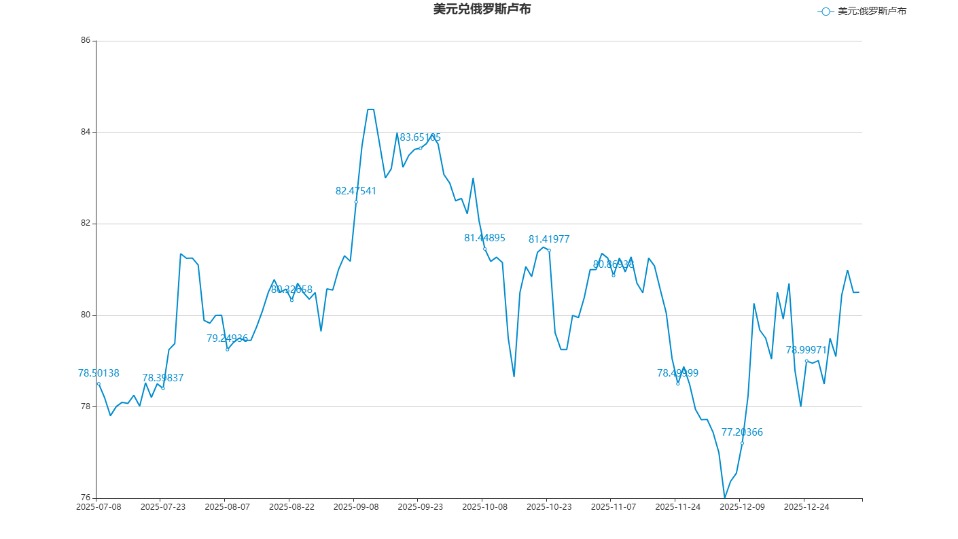
【2026年汇市展望】2025卢布领跑全球 2026俄罗斯能否驾驭“强币陷阱”?
Xin Hua Cai Jing· 2026-01-08 08:42
Core Viewpoint - The Russian ruble appreciated by 45% in 2025, leading among major global currencies, marking the largest increase since 1994. This appreciation, while positioning the ruble among the top five assets globally in terms of returns, poses potential risks to the Russian economy, particularly in balancing export competitiveness and foreign exchange income in 2026 [1][10]. Group 1: Ruble Performance and Economic Impact - The ruble's rise contradicts expectations of depreciation due to falling oil prices and geopolitical tensions, with the USD/RUB exchange rate stabilizing below 80 rubles per dollar by year-end, down from over 100 rubles at the beginning of the year [2][4]. - International financial sanctions have reduced Russia's demand for foreign exchange, leading to a decreased need for rubles among businesses and consumers. The restructuring of payment flows to favor domestic currencies in trade has further diminished reliance on the USD and EUR [4][5]. - The ruble's strength is attributed to reduced foreign exchange dependency, tight monetary policy, and structural changes in productivity, with experts noting that the ruble's appreciation has significantly impacted the economy, contributing to a slowdown [5][6]. Group 2: Monetary Policy and Inflation - The Central Bank of Russia's high benchmark interest rates have been a key factor in the ruble's strength, with a series of rate cuts in the latter half of 2025 reducing the rate from 21% to 16% [6][7]. - Inflation rates have decreased, with December figures showing inflation below 6%, but risks remain due to fiscal stimulus and potential price increases from VAT hikes [7][8]. - The Russian economy is projected to grow at approximately 1% in 2025, with factors such as reduced fiscal stimulus and the impact of tight monetary policy on businesses and consumers contributing to this slowdown [8][11]. Group 3: Structural Changes and Future Outlook - The Russian economy is undergoing a structural transformation, with experts indicating that the transition's success will depend on resolving geopolitical issues and effectively reallocating investments to civilian sectors [9][10]. - Economists predict that the ruble may stabilize in 2026, but its strength could undermine Russia's export competitiveness in energy and raw materials, which are crucial for foreign exchange income [10][11]. - The key challenge for 2026 will be maintaining a balance between a strong ruble and export competitiveness, especially as oil revenues decline and the Central Bank reduces foreign exchange sales [11][12].