Workflow
供需关系
icon
Search documents
美国政府结束“停摆”,投资者乐观情绪提振有色
Zhong Xin Qi Huo· 2025-11-14 00:43
1. Report Industry Investment Rating There is no information provided regarding the report's industry investment rating. 2. Core Viewpoints of the Report - The end of the US government shutdown has boosted investors' optimism, and the macro - outlook is expected to be stable. The raw material supply remains tight and is spreading to the smelting end. The actual supply - demand of base metals is slightly weak, but the long - term supply - demand is expected to tighten. It is optimistic about the price trends of copper, aluminum, and tin. In the short - and medium - term, supply disruptions support base metal prices, but weak actual demand may limit price increases. [2] - The report provides individual views on various non - ferrous metals: copper prices are expected to oscillate and recover; alumina prices will maintain an oscillating trend; aluminum prices will continue to rise; aluminum alloy prices will oscillate upwards; zinc prices will oscillate at a high level; lead prices will oscillate upwards; nickel prices are expected to be slightly stronger in the short - term; stainless steel prices will oscillate; tin prices will rise significantly. [3] 3. Summary by Related Catalogs I. Market Views Copper - Macro factors: The signing of the temporary appropriation bill by Trump has revived market optimism, pulling up copper prices. - Supply - demand: Copper mine supply disruptions are increasing, processing fees are low, and the cost and difficulty of scrap copper recycling have risen. The production of electrolytic copper has declined, and terminal demand is weak, but the acceptance of copper prices by downstream users is increasing. - Outlook: Copper prices are expected to be oscillating and slightly stronger. [7] Alumina - Information: Inventory is accumulating rapidly, and spot prices are stable. - Main logic: High - cost production capacity has fluctuations, and the supply contraction is not obvious. The market is in a state of over - supply, but the valuation is low, so the price may fluctuate. - Outlook: Alumina prices will maintain an oscillating trend. [7] Aluminum - Information: The price has increased, inventory has decreased slightly, and exports have declined. - Main logic: The macro - environment is positive, the domestic supply is at a high level with some restrictions, and overseas supply has disturbances. The terminal demand is stable, and inventory has decreased slightly. - Outlook: In the short - term, aluminum prices are expected to be oscillating and slightly stronger, and the price center may rise in the medium - term. [9][10][11] Aluminum Alloy - Information: The price has increased, and the supply of scrap aluminum is tight. - Main logic: The supply of scrap aluminum is tight, and the cost support is strong. The supply is affected by various factors, and demand has marginally improved. - Outlook: The price is expected to be oscillating and slightly stronger in the short - and medium - term. [12][13] Zinc - Information: The export window has opened, and the supply of zinc ore has become looser. - Main logic: The macro - environment is optimistic, the short - term supply of zinc ore is loose, and the smelting profit is good. The domestic consumption is in the off - season, and the demand is average. - Outlook: Zinc prices will oscillate in the short - term and may decline in the long - term. [14][17] Lead - Information: The social inventory is low, and the price has increased. - Main logic: The spot premium has decreased slightly, the supply has increased, and the demand is in the peak season. - Outlook: Lead prices are expected to be oscillating and slightly stronger. [18][19] Nickel - Information: LME inventory is accumulating, and domestic inventory is balanced through exports. - Main logic: Market sentiment dominates the market, the industrial fundamentals are weakening marginally, and the supply of nickel ore is relatively loose. - Outlook: Nickel prices are expected to be slightly stronger in the short - term. [20][23] Stainless Steel - Information: Nickel iron prices have declined, and inventory has decreased slightly. - Main logic: The cost support has weakened, production has increased, and demand is in the off - season. - Outlook: Stainless steel prices will maintain an interval oscillation. [24][25] Tin - Information: Supply disruptions are continuous, and prices have increased significantly. - Main logic: Supply disruptions in Wa State and Indonesia have tightened the supply, and the domestic ore supply is also tight. - Outlook: Tin prices are expected to be oscillating and slightly stronger. [26][27] II. Market Monitoring There is no specific content provided for market monitoring in the text, so it cannot be summarized. III. Commodity Index - Comprehensive Index: The commodity index increased by 0.47% to 2269.39, the commodity 20 index increased by 0.54% to 2577.33, the industrial products index decreased by 0.01% to 2223.17, and the PPI commodity index increased by 0.54% to 1352.02. - Plate Index: The non - ferrous metal index increased by 0.67% on November 13, 2025, with a 5 - day increase of 1.51%, a 1 - month increase of 2.72%, and a year - to - date increase of 8.77%. [149][150]
“业盾有限,板块震荡运行
Zhong Xin Qi Huo· 2025-11-14 00:43
1. Report Industry Investment Rating - The mid - term outlook for the industry is "oscillation" [6] 2. Core View of the Report - The contradictions in the black产业链 are still limited, and the steel market continues the pattern of weak supply and demand in the off - season. The inventory of rebar is decreasing, while the destocking of hot - rolled coils is not smooth. The increase in Tangshan's hot metal production corresponds to the previous concentrated resumption of blast furnaces, but considering the arrival of the maintenance season, hot metal output is expected to decline, and iron ore inventory will continue to increase marginally. Coke has no prominent contradictions and maintains a small - scale destocking. Although coking coal inventory has increased, it is mainly in the Mongolian coal import segment, and the overall inventory is low, so the downward pressure on coal prices is limited. Overall, the current industry's supply - demand situation is weakening marginally, and the short - term oscillation trend remains unchanged. If there are still positive releases from the macro and policy fronts in the later stage, attention can be paid to potential phased upward opportunities [2][6] 3. Summary by Relevant Catalogs 3.1 Iron Element - After the resumption of work in Tangshan's blast furnaces last week, the output of hot metal in Tangshan has increased, driving up the national hot metal output. However, with the arrival of the steel mill maintenance season, especially in northern steel mills, maintenance plans have been announced one after another. Therefore, it is expected that hot metal output will continue to decline, and iron ore is likely to accumulate inventory, putting pressure on ore prices. In the short term, ore prices will maintain an oscillatory operation. The fundamentals of scrap steel show weak supply and demand, and it is expected that the short - term spot price will oscillate following the finished products [2] 3.2 Carbon Element - After the lifting of environmental protection restrictions, steel mills are still actively producing, and the demand for coke is still supported. Coupled with strong cost support, the expectation of a fourth round of price increases is high. The coke futures price is expected to oscillate following coking coal. The supply of coking coal is expected to remain tight. Although Mongolian coal imports may remain at a high level, the supplementary effect is limited. Although the downstream procurement is gradually slowing down, the fundamentals are still healthy, and the spot coal price is strongly supported. However, the futures price is still suppressed by finished products, and it is expected that coking coal prices will oscillate [3] 3.3 Alloys - In the short term, the firm cost supports the price of ferromanganese - silicon, but the market supply - demand situation is loose, and there is insufficient driving force for price increases. The short - term cost trend supports the price of ferrosilicon, but the market supply - demand relationship is also relatively loose, and the price is expected to operate at a low level around the cost [3] 3.4 Glass and Soda Ash - There are still expectations of supply disruptions, but the inventory of the middle and lower reaches is moderately high. Fundamentally, the current supply - demand is still in surplus. If there is no more cold - repair by the end of the year, the high inventory will always suppress the price, and it is expected to oscillate weakly; otherwise, the price will rise. The cost of the soda ash industry has increased, and the bottom support is obvious. However, the surplus supply - demand pattern always suppresses price increases. Recently, the weakening of glass prices has dragged down the expected price of soda ash. In the short term, it is expected to oscillate, and in the long term, the surplus supply pattern will intensify, and the price center will continue to decline, promoting capacity reduction [3][6][14] 3.5 Specific Product Analysis 3.5.1 Steel - The fundamentals show weak supply and demand, and the futures price oscillates at a low level. The spot market trading is average, mainly with low - price transactions. Recently, the profits of steel mills and electric furnaces are poor, the steel production has decreased significantly, and the demand has also declined. The overall steel inventory continues to decrease, but the inventory level is still higher than the same period last year, and there are still contradictions in the fundamentals. In the off - season, the demand is under pressure to weaken, and the futures valuation is low, with limited downward space. Attention should be paid to the potential upward driving force from the macro and policy aspects [7] 3.5.2 Iron Ore - The hot metal output has significantly recovered, and the inventory continues to accumulate. The spot price has weakened. The overseas mine shipping is relatively stable, and the arrival of ships has decreased. The daily average hot metal output has recovered, but there is still a seasonal weakening expectation. The port inventory has increased, and the overall inventory pressure is gradually accumulating. Although there is a seasonal weakening expectation for hot metal, the short - term increase in hot metal and the un - released restocking demand may lead to a short - term oscillatory strengthening. Attention should be paid to market sentiment and hot metal demand changes [7] 3.5.3 Scrap Steel - The daily consumption of steel mills has slightly decreased, and the price oscillates. The supply of scrap steel has decreased, and the demand is also weak. The total daily consumption of 255 steel mills has slightly decreased, and the inventory has slightly accumulated. It is expected that the short - term spot price will oscillate following the finished products [8] 3.5.4 Coke - The supply continues to decline, and the hot metal output has increased. The futures price oscillates at a low level. The supply has decreased due to high costs, environmental protection requirements, and some coke oven maintenance. The demand has increased as some blast furnaces have resumed full - production. The upstream coke enterprise inventory remains low. In the off - season, the supply - demand is weak, but the demand support still exists, and the fundamentals have few contradictions. After the lifting of environmental protection restrictions, the demand for coke is still supported, and the expectation of a fourth - round price increase is high. The futures price is expected to oscillate following coking coal [8][10][11] 3.5.5 Coking Coal - The supply recovery is limited, and the upstream inventory has slightly increased. The futures price oscillates at a low level. The supply is still tight due to production capacity restrictions in some coal mines. The Mongolian coal import is at a high level, but the high - quality resources are still scarce. The coke production has declined, and the downstream procurement has slowed down, but the upstream coal mine inventory has slightly increased with little pressure. The spot price is still firm. It is expected that the coking coal supply will remain tight, and the price will oscillate [12] 3.5.6 Glass - The destocking this week is limited. Attention should be paid to whether supply reduction through cold - repair can promote upstream destocking. The macro environment is neutral. The short - term supply has decreased, but the demand is weak, and the inventory of the middle and lower reaches is high, suppressing the price. If there is no more cold - repair by the end of the year, the price is expected to oscillate weakly; otherwise, it will rise [14] 3.5.7 Soda Ash - The spot trading is good, and the futures price oscillates. The macro environment is neutral. The supply has limited changes, and the demand is stable. The industry is in the stage of clearing at the bottom of the cycle. The cost support has strengthened, but the downstream demand is declining, and the expected surplus is intensifying. In the short term, the price is expected to oscillate. In the long term, the surplus pattern will intensify, and the price center will decline [14] 3.5.8 Ferromanganese - Silicon - The tender price of HBIS is flat, and the supply pressure is difficult to relieve. The cost increase supports the bottom of the futures price, but the market supply - demand is loose, and the price increase driving force is insufficient. The downstream demand is expected to decline, and the new production capacity is about to be put into use, so the inventory pressure is difficult to relieve. It is expected that the futures price will operate at a low level around the cost [16] 3.5.9 Ferrosilicon - The pricing of HBIS has slightly increased, but the price is under pressure due to loose supply - demand. The cost support has strengthened, but the supply - demand pattern is loose, and the price increase driving force is limited. The production reduction is limited, and the market destocking is difficult. The downstream demand is expected to decline. It is expected that the futures price will operate at a low level around the cost [16][17] 3.6 Index Information - **Comprehensive Index**: The commodity index is 2269.39, up 0.47%; the commodity 20 index is 2577.33, up 0.54%; the industrial product index is 2223.17, down 0.01%; the PPI commodity index is 1352.02, up 0.54% [100] - **Plate Index**: The steel industry chain index on November 13, 2025, is 1983.80, with a daily decline of 0.04%, a decline of 0.30% in the past 5 days, an increase of 0.57% in the past month, and a decline of 5.90% since the beginning of the year [101]
农业策略报:郑糖反弹,站回5500元/吨之上
Zhong Xin Qi Huo· 2025-11-14 00:38
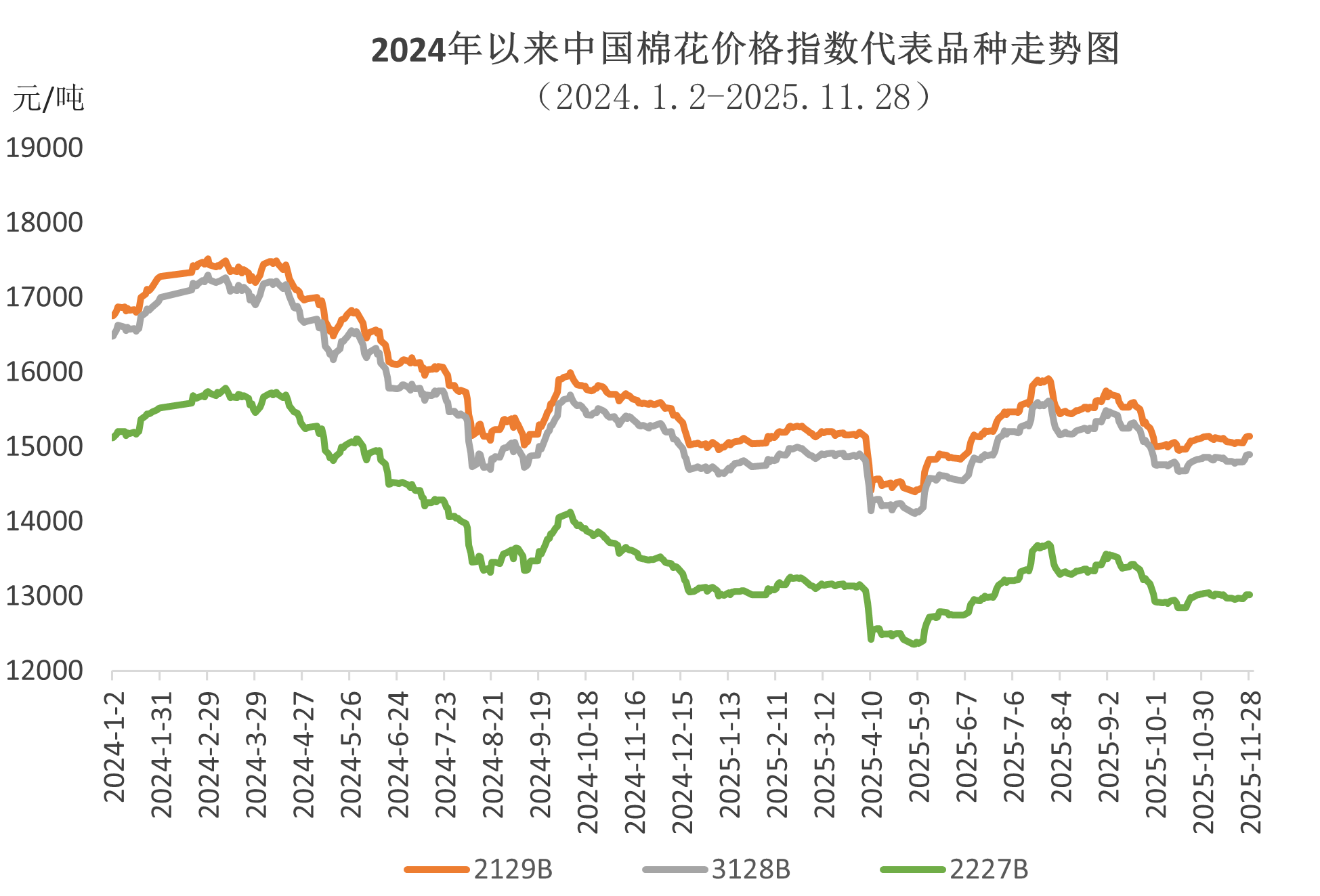
1. Report Industry Investment Rating The report does not explicitly mention an overall industry investment rating. However, it provides individual outlooks for different agricultural products: - **Oils and Fats**: Expected to be fluctuating upward, with soybean oil, palm oil, and rapeseed oil all showing a bias towards strengthening [4]. - **Protein Meals**: Forecasted to have a fluctuating upward trend, including soybean meal and rapeseed meal [5]. - **Corn and Starch**: Anticipated to be fluctuating strongly in the short - term [6]. - **Hogs**: Predicted to be fluctuating weakly, with a "weak present + strong future" pattern [7]. - **Natural Rubber**: Expected to maintain a bottom - fluctuating and high - elasticity trend [9]. - **Synthetic Rubber**: Suggested to take a short - selling approach when prices are high [13]. - **Cotton**: Forecasted to have a short - term range - bound fluctuation and a long - term upward trend [13]. - **Sugar**: Expected to be fluctuating weakly in the medium - to - long - term and range - bound between 5400 - 5500 yuan/ton in the short - term [15]. - **Pulp**: Anticipated to be fluctuating, with a divergence between futures and spot markets [16]. - **Double - Glued Paper**: Forecasted to have a range - bound fluctuation, with a possible first - rising - then - falling trend [17]. - **Logs**: Expected to be fluctuating weakly at a low level [20]. 2. Core Viewpoints of the Report The report analyzes the market conditions of various agricultural products, including factors such as supply and demand, macro - environment, and industry policies. It provides short - term and medium - to - long - term outlooks for each product, highlighting potential investment opportunities and risks in the agricultural market. 3. Summary by Relevant Catalogs 3.1 Market Conditions and Outlook for Each Product - **Oils and Fats**: The market is affected by factors such as the USDA report, South American weather, and domestic soybean imports. Overall, it is expected to be fluctuating upward, with different trends for soybean oil, palm oil, and rapeseed oil [4]. - **Protein Meals**: Market expectations are that the supply - demand report will be bullish. With the US soybean harvest nearing completion and South American soybean sowing progressing smoothly, soybean meal and rapeseed meal are expected to have a fluctuating upward trend [5]. - **Corn and Starch**: The short - term supply shortage has not been alleviated, and prices are expected to be fluctuating strongly. However, there may be pressure on prices in the fourth quarter due to new grain listings [6][7]. - **Hogs**: The market shows a pattern of near - term weakness and long - term strength. Short - term supply is large, but long - term supply pressure may gradually ease in the second half of 2026 [7]. - **Natural Rubber**: Driven by a strong macro - environment, rubber prices are rising. However, there may be downward pressure on prices without strong expectations or macro - driving forces [9][11]. - **Synthetic Rubber**: The market is rebounding, but due to weak fundamentals and raw material pressure, it is recommended to take a short - selling approach when prices are high [13]. - **Cotton**: After the digestion of previous bullish factors, short - term upward momentum is weak. With increased supply expectations, prices may have a short - term correction, but the cost of new cotton provides support [13]. - **Sugar**: In the international and domestic markets, there is downward pressure on sugar prices in the medium - to - long - term due to expected supply surpluses. In the short - term, it is expected to fluctuate within a certain range [15]. - **Pulp**: The futures market is driven by capital, while the spot market is affected by factors such as weak demand and supply pressure. Overall, it is expected to be fluctuating [16]. - **Double - Glued Paper**: The market may show a first - rising - then - falling trend, with price rebounds in November and potential declines in December and the first quarter of 2026 [17]. - **Logs**: The market is affected by factors such as supply pressure, demand weakness, and inventory trends. Prices are expected to be fluctuating weakly at a low level [20]. 3.2 Key Information and Data - **Sugar**: On November 13, the Zhengzhou Sugar 01 contract closed at 5512 yuan/ton, up 34 yuan/ton from the previous day [1][13][15]. - **Protein Meals**: On November 12, 2025, the international soybean trade premium quotes were: US Gulf soybeans at 238 cents/bushel, down 5 cents/bushel or 2.06% from the previous day; US West soybeans at 225 cents/bushel, down 20 cents/bushel or 8.16%; South American soybeans at 220 cents/bushel, up 3 cents/bushel or 1.38%. On November 13, the average profit of Chinese imported soybean crushing was - 70.4 yuan/ton, up 26.32 yuan/ton or - 27.21% from the previous day [4][5]. - **Corn**: According to Mysteel, the FOB price at Jinzhou Port was 2200 yuan/ton, up 10 yuan/ton from the previous day. The closing price of the main contract was 2177 yuan/ton, up 0.93% [6]. - **Hogs**: On November 13, the price of live hogs (external ternary) in Henan was 11.86 yuan/kg, unchanged from the previous day; the closing price of the live hog futures (active contract) was 11860 yuan/ton, up 0.55% [7]. - **Natural Rubber**: On November 13, the RMB - denominated Thai mixed rubber in Qingdao Free Trade Zone was 14780 yuan/ton, up 80 yuan; the domestic full - latex old rubber was 14850 yuan/ton, up 100 yuan; the spot price of STR20 in the free trade zone was 1860, up 10 [9]. - **Cotton**: On November 13, the Zhengzhou Cotton 01 contract closed at 13490 yuan/ton, up 25 yuan/ton. The number of 24/25 annual warehouse receipts was 2220, down 15; the number of 25/26 annual warehouse receipts was 1960, up 311 [13]. - **Pulp**: According to Zhuochuang Information, the price of Russian softwood pulp in Shandong was 5125 yuan/ton, unchanged; the price of Pacific pulp was 5465 yuan/ton, up 25 yuan; the price of Silver Star pulp was 5565 yuan/ton, up 25 yuan. The price of Shandong Goldfish pulp was 4390 yuan/ton, up 15 yuan [15]. 3.3 Market Influencing Factors - **Macro - environment**: The end of the US government shutdown, the release of US economic data, the Fed's monetary policy, and OPEC's adjustment of global oil demand forecasts all have an impact on the agricultural product market [4][9]. - **Supply and demand**: Supply factors include factors such as planting area, yield, and import volume; demand factors include factors such as consumption and inventory. For example, the expected increase in sugar production in India, Thailand, and Brazil, and the new grain listing of corn all affect market supply; the consumption of soybean meal and the inventory of hogs affect market demand [1][4][5][6][7][13][15]. - **Industry policies**: Policies such as import policies for sugar syrup and pre - mixed powder, and the government's attention to hog production reduction all have an impact on the market [7][15].
帮主郑重:油价反弹金价跌,大宗商品异动,A股中长线机会藏这了!
Sou Hu Cai Jing· 2025-11-13 23:26
Group 1: Oil Market Insights - Oil prices are currently experiencing a tug-of-war between supply and demand, with a short-term rebound seen as a temporary relief rather than a reversal [3] - The International Energy Agency has indicated a supply surplus for oil next year, while U.S. crude oil inventories increased by 6.4 million barrels, the largest rise since July [3] - The market is reacting to increased sanctions on Russian oil companies and a decline in refined oil inventories, suggesting that demand remains resilient [3] Group 2: Copper Market Dynamics - Copper prices have stabilized after four consecutive days of increases, driven by the end of the U.S. government shutdown, which had previously hindered the release of key economic data [3] - Copper is viewed as an "industrial barometer," closely tied to infrastructure and manufacturing, with domestic growth initiatives supporting demand [3] Group 3: Gold Market Trends - The recent decline in gold prices is primarily attributed to changing expectations regarding interest rate cuts by the Federal Reserve, with the probability of a December rate cut now at 50% [4] - Gold's appeal diminishes when interest rates do not decrease or rise, but its long-term value is still linked to inflation and global risk sentiment [4] Group 4: Investment Strategies - Companies in the energy sector should focus on those with reasonable valuations and stable cash flows, particularly in oil and gas extraction and refining [5] - For copper-related investments, attention should be given to firms tied to domestic infrastructure and new energy projects, as demand is expected to remain strong [5] - In the gold sector, a wait-and-see approach is recommended until interest rate expectations become clearer or global risk sentiment increases [5]
支持性货币政策促进物价回升的效果会持续显现
Jin Rong Shi Bao· 2025-11-13 09:59
Group 1 - The latest CPI and PPI data indicate positive signals for the economy, with CPI rising 0.2% month-on-month and year-on-year, and core CPI increasing 1.2% year-on-year for six consecutive months [1] - The PPI has shown a month-on-month increase of 0.1%, marking the first rise this year, while the year-on-year decline has narrowed to 2.1% [1] - The improvement in price stability is attributed to supportive monetary policies and a favorable financial environment, with social financing and M2 growth rates consistently above 8% [1] Group 2 - The positive effects of monetary policy are expected to continue, as past adjustments and measures will accumulate over time, although caution is advised regarding potential negative effects of excessive monetary easing [2] - Maintaining a balanced approach to monetary policy is crucial to support the real economy while avoiding issues such as capital market volatility [2] Group 3 - A comprehensive approach involving both monetary and fiscal policies is necessary for a reasonable price recovery, including optimizing fiscal spending and enhancing consumer capacity [3] - The long-term inflation target of around 2% should be viewed from a mid-to-long-term perspective, as international experience suggests that policy effects take time to materialize [3] - The overall positive trend of the economy remains intact, with supportive policies expected to gradually bring prices back to a reasonable range and further consolidate economic recovery [3]
华宝期货晨报铁矿石-20251113
Hua Bao Qi Huo· 2025-11-13 05:11
Report Industry Investment Rating No relevant content provided. Core Viewpoints of the Report - The domestic and international macro environment is in a vacuum, with the core focus of the fundamentals on the domestic demand side. The supply side remains stable with a slight increase. Currently in the seasonal production - reduction period, overall demand is on a marginal decline. However, considering the low inventory level at the steel - mill end, large basis rate, and significant internal - external price difference, the current price is expected to be at a relatively low level. In the short term, there's no need to be overly pessimistic. Overall, the price is expected to move down but remain range - bound [2]. - The price is expected to operate within a range. The main contract of Dalian Iron Ore Futures is expected to be in the range of 750 - 785 yuan/ton, corresponding to an external market price of about 100.5 - 104.5 US dollars/ton. The strategy is to conduct range operations and sell put options [2]. Summary by Relevant Catalogs Supply - External iron ore shipments declined on a week - on - week basis but remained at a high level year - on - year, with the supply - side support remaining weak. As of the week ending November 10, the total global iron ore shipments were 3,069.0 million tons, a week - on - week decrease of 144.8 million tons. The total shipments from Australia and Brazil were 2,548.6 million tons, a week - on - week decrease of 210.6 million tons. From the perspective of the 5 - week average shipments, the global iron ore shipments were 3,242.3 million tons, a year - on - year increase of 216 million tons. The arrival volume at 47 ports in China was 2,797.6 million tons, a year - on - year increase of 295.3 million tons [2]. Demand - The loss - making range of domestic blast - furnace steel mills continues to expand. In addition, environmental protection restrictions in Handan have been tightened, leading to an increase in the number of blast - furnace overhauls. Multiple regions such as Shanxi, Shaanxi, Jiangsu, and Northeast China have seen a decline in demand and losses. Although the number of blast - furnace restarts in North China has increased, due to the sintering restriction policy in North China, the blast - furnace operating rate has increased while the molten iron output has decreased. Overall, domestic iron ore demand has shown a trend of decline due to environmental protection factors and shrinking production profits, which is in line with the seasonal production - reduction pattern. There is also an expectation of seasonal production cuts by steel mills in regions such as Xinjiang in the later stage. It is likely that the molten iron output will continue to decline slowly [2]. Inventory - Under the pattern of strong supply and weak demand, the inventory at domestic ports has continued to accumulate. In the short term, the pressure on the supply side remains, and although the decline rate of the demand side may slow down, it is still in a downward cycle. As of November 7, the total inventory of imported iron ore at 45 ports across the country was 14,898.83 million tons, a week - on - week increase of 356.35 million tons and a year - on - year decrease of 370.23 million tons [2].
日度策略参考-20251113
Guo Mao Qi Huo· 2025-11-13 02:59
Report Summary 1) Report Industry Investment Ratings - The report does not explicitly provide overall industry investment ratings. However, it gives outlooks for various commodities, including "看多" (bullish) for copper, nickel, stainless steel, and soybeans, and "震荡" (sideways) for most other commodities such as aluminum, zinc, gold, silver, etc. [1] 2) Core Views - The A-share market is currently in a relatively vacuous macro environment, lacking a clear upward trend. It is in a sideways movement, accumulating momentum for the next upward move. With policy support and ample macro - liquidity, the stock index has strong downside support. [1] - The bond futures are favored by the asset shortage and weak economy, but the central bank's short - term interest rate risk warning restricts the upside. [1] - For commodities, different factors affect their prices. For example, high copper prices suppress downstream demand, but the increasing acceptance of copper prices by downstream and improved macro sentiment may lead to a stronger copper price. [1] 3) Summary by Commodity Categories Macro - Financial - The A - share market is in a sideways trend, accumulating energy for an upward move. With policy and liquidity support, the downside of the stock index is limited. Asset shortage and weak economy are favorable for bond futures, but short - term interest rate risk warnings restrict the upside. [1] Non - Ferrous Metals - **Copper**: High copper prices suppress downstream demand, but the increasing acceptance of copper prices by downstream and improved macro sentiment may lead to a stronger copper price. [1] - **Aluminum**: Limited industrial drivers recently, but improved macro sentiment leads to a stronger aluminum price. [1] - **Alumina**: With production still having a small profit, domestic alumina production capacity is continuously released, resulting in a double - increase in production and inventory, and a weak fundamental pattern. [1] - **Zinc**: There is still a risk of a squeeze in LME zinc, and the zinc price is expected to remain high. However, due to the domestic supply surplus, caution is needed when chasing high prices. [1] - **Nickel**: The US Senate's progress on ending the government shutdown causes fluctuations in market risk appetite. Indonesia restricts nickel - related smelting project approvals. The nickel price may fluctuate in the short term, and high inventory pressure should be watched out for. [1] - **Stainless Steel**: The price of raw material ferronickel weakens, and the social inventory of stainless steel decreases slightly. Steel mills' production in November decreases. The stainless steel futures are looking for a bottom in a sideways movement. [1] - **Tin**: The raw material end has not recovered, and the new demand is expected to be good. It is recommended to pay attention to buying opportunities on dips in the medium - to - long term. [1] Precious Metals and New Energy - **Gold**: Supported by the dual - liquidity easing expectations of the US fiscal and monetary policies, but there are still differences within the Fed regarding a December interest rate cut. The gold price may fluctuate in a high - level range. [1] - **Silver**: Boosted by liquidity, the silver price may be stronger in the short term. [1] - **Industrial Silicon**: Northwest production capacity is recovering, and the impact of the dry season is weakening. Polysilicon production in November is decreasing. [1] - **Polysilicon**: There is an expectation of production capacity reduction in the long term, and the terminal installation in the fourth quarter is increasing marginally. [1] - **Lithium Carbonate**: The traditional peak season for new energy vehicles is approaching, and the energy storage demand is strong, but there is high hedging pressure. [1] Steel and Iron - **Rebar**: There are concerns about potential weakening of industrial demand in the off - season. After the macro sentiment is realized, attention should be paid to the upward pressure on prices. [1] - **Hot Rolled Coil**: The off - season effect is not obvious, but the industrial structure is still loose. Attention should be paid to the upward pressure on prices after the macro sentiment is realized. [1] - **Iron Ore**: The near - month contract is restricted by production cuts, but the far - month contract still has upward potential due to good commodity sentiment. [1] - **Coking Coal and Coke**: Coking coal is struggling at the previous high. Coke's price includes the expectation of five rounds of price increases, but the steel - coking game is intense. It is recommended to wait and see in the short term and go long at low levels in the medium - to - long term. [1] Agricultural Products - **Palm Oil**: A 4% production cut in Malaysia in early November fails to drive inventory reduction, and the domestic supply in the fourth quarter is relatively loose. [1] - **Soybean Oil**: China's commitment to purchase US soybeans has no substantial impact on soybean oil, and the domestic inventory is decreasing. It is recommended to be long in arbitrage. [1] - **Cotton**: The new domestic cotton harvest is expected to be good, and the purchase price supports the cost of lint. The downstream demand is weak, but there is rigid restocking demand. The cotton market is currently in a situation of "having support but no driver". [1] - **Sugar**: The global sugar supply changes from shortage to surplus, and the domestic new - crop supply pressure increases year - on - year. The Zhengzhou sugar price is expected to follow the decline of the raw sugar price. [1] - **Corn**: The short - term market has a strong willingness to purchase high - quality corn, and the spot price is firm. The upward movement of the futures price lacks strong drivers before the supply pressure is fully released. [1] - **Soybeans**: The domestic soybean purchase and crushing profit is poor, and the purchase progress for the 12 - 1 ship is slow. The domestic futures are expected to follow the US market and move sideways and strongly before the USDA report. [1] Energy and Chemicals - **Crude Oil**: OPEC+ plans to maintain a small increase in production in December. The short - term geopolitical situation cools down, and the market sentiment eases. [1] - **Fuel Oil**: Similar to crude oil, affected by OPEC+ production plans, geopolitical situation, and market sentiment. [1] - **Asphalt**: The raw material cost has strong support, the futures - spot price difference is low, and the commodity market sentiment is positive. [1] - **Natural Rubber**: The cost of butadiene provides insufficient support, the synthetic rubber supply is loose, and the price has stopped falling recently. [1] - **PTA**: Gasoline profit and low benzene price support PX. Overseas and domestic device problems lead to a decline in PTA production. [1] - **Ethylene Glycol**: The ethylene glycol price follows the decline of the crude oil price, and the coal - based cost support strengthens slightly. [1] - **Short Fiber**: The short - fiber price closely follows the cost due to the support of PX and the strengthening of the basis. [1] - **Benzene and Styrene**: The Asian benzene price is weak, the US benzene price rises, and the number of styrene overhauls increases. [1] - **Urea**: The export sentiment eases, the domestic demand is insufficient, but there is support from anti -内卷 policies and the cost end. [1] - **PP**: New production capacity is released, the overhaul intensity weakens, and the downstream improvement is less than expected. [1] - **PVC**: The market returns to fundamentals, the number of overhauls increases slightly, but demand weakens. [1] - **Caustic Soda**: Guangxi alumina starts delivery, the subsequent overhaul concentration decreases, the caustic soda inventory decreases, and there is a risk of a squeeze in the near - month contract. [1] - **LPG**: The international oil and gas fundamentals are loose, the CP/FEI price weakens, and the domestic LPG fundamentals are stable. [1] Shipping - **Container Shipping to Europe**: The macro - positive sentiment is gradually digested, the peak - season price increase expectation is priced in advance, and the shipping capacity supply in November is relatively loose. [1]
中辉能化观点-20251113
Zhong Hui Qi Huo· 2025-11-13 02:30
Report Industry Investment Ratings - Crude oil: Cautiously bearish [2] - LPG: Cautiously bearish [2] - L: Bearish continuation [2] - PP: Bearish continuation [2] - PVC: Bearish continuation [2] - PX: Cautiously bullish [2] - PTA: Cautiously bullish [4] - Ethylene glycol: Cautiously bearish [4] - Methanol: Sideways at the bottom [4] - Urea: Short on rallies [4] - Natural gas: Cautiously bullish [7] - Asphalt: Cautiously bearish [7] - Glass: Bearish continuation [7] - Soda ash: Bearish rebound [7] Core Views - Crude oil: The oversupply in the off - season remains the core driver, and the upside of oil prices is under pressure. OPEC's latest monthly report predicts an oversupply in 2026, and OPEC+ plans to expand production in December and then pause in early next year. With the start of the consumption off - season and OPEC+ still in the expansion cycle, the pressure of oversupply is rising, and oil prices face significant downward pressure [2]. - LPG: Weak oil prices bring negative impacts to the cost side, and the trend of LPG is weak. Although the supply - demand fundamentals have improved, the cost - side pressure restricts its upward movement [2]. - L: The decline in oil prices and the restart of devices may cause the market to continue to bottom. The supply is loose, and the demand for replenishing inventory is insufficient, with weak cost support [2]. - PP: The sharp decline in coking coal and the weak cost side lead to a weak fundamental situation. There is high pressure to destock, and oil prices still face the risk of further decline in the medium term [2]. - PVC: The market follows coking coal to find the bottom. Although the inventory is high, the low - valuation support limits the further decline space. The market maintains a high premium, and industries are advised to hedge at high prices [2]. - PX: The supply - side devices have increased their loads, and the demand has improved recently but is expected to weaken. The PXN and PX - MX spreads are relatively high, and the crude oil supply - demand pattern is loose. It is recommended to be cautious when chasing up [2]. - PTA: The processing fee is generally low, and the planned device maintenance may relieve the supply - side pressure. The terminal demand has slightly improved, but the rebound height may be limited due to the pressure on crude oil [4]. - Ethylene glycol: Domestic device maintenance has increased, and new device production and the resumption of maintenance devices will increase supply pressure. The demand has improved but is expected to weaken, and there is an expectation of inventory accumulation in November. It has low valuation but lacks upward drivers [4]. - Methanol: High inventory suppresses the rebound of prices. The supply - side pressure is still large, and the demand performance is average. The cost - side support is weak and stable, and the overall fundamentals remain weak [4]. - Urea: The supply - side pressure is expected to increase, and the demand has slightly improved. The inventory in factories is accumulating, and under the background of "export quota system" and "ensuring supply and stabilizing prices", the market has a ceiling and a floor. It is necessary to be vigilant against the downward risk [4]. - Natural gas: As the temperature drops, the consumption peak season arrives, and the demand has a warming expectation, making gas prices likely to rise and difficult to fall [7]. - Asphalt: The cost - side oil price has回调ed, and the supply - demand fundamentals are loose. The demand has entered the off - season, and the valuation is high. The price center still has room to move down [7]. - Glass: The fundamentals are weak, and the market continues to look for support downward. The supply is unlikely to decline further, and the demand support is insufficient [7]. - Soda ash: The increase in photovoltaic daily melting volume and device maintenance has led to a short - term rebound. However, in the long - term, the supply will remain loose [7]. Summaries by Related Catalogs Crude Oil - **Market Review**: Overnight international oil prices dropped significantly. WTI rose 1.43%, Brent rose 1.72%, and SC fell 0.17% [9]. - **Basic Logic**: The core driver is the oversupply in the off - season, and the short - term driver is OPEC's prediction of oversupply in 2026. OPEC predicts an increase of 600,000 barrels per day in non - OPEC production in 2026, and the global demand increments in 2025 and 2026 are 1.3 million barrels per day and 1.38 million barrels per day respectively. As of the week ending October 31, US crude oil inventory increased by 5.2 million barrels, gasoline inventory decreased by 4.7 million barrels, distillate inventory decreased by 643,000 barrels, and strategic crude oil reserve increased by 5.924 million barrels per day [10][11]. - **Strategy Recommendation**: In the medium - to - long - term, OPEC+ is expanding production, and oil prices are in a low - price range. Technically, although the short - term trend is strong, the upward pressure is increasing. It is recommended to partially take profits on previous short positions. Pay attention to the range of [460 - 475] for SC [12]. LPG - **Market Review**: On November 12, the PG main contract closed at 4,349 yuan/ton, up 0.39% month - on - month. Spot prices in Shandong, East China, and South China showed different changes [14]. - **Basic Logic**: The trend is tied to the cost - side oil price, which is weak. The supply has decreased slightly, and the demand has shown some resilience. The inventory in ports and factories has declined, and the import profit has increased, with expected higher future imports [15]. - **Strategy Recommendation**: In the medium - to - long - term, the upstream crude oil supply exceeds demand, and the central price is expected to decline. The current ratio of LPG to crude oil is similar to that of the same period last year, with a low basis and high valuation. It is recommended to hold short positions and pay attention to the range of [4300 - 4400] for PG [16]. L - **Market Review**: The L2601 contract closed at 6,788 yuan/ton, up 28 yuan. The basis and other indicators also had corresponding changes [19]. - **Basic Logic**: The sharp decline in oil prices and the restart of devices may cause the market to continue to bottom. The supply is loose, and the demand for replenishing inventory is insufficient. The oil price still has a downward risk in the medium term, with weak cost support [20]. - **Strategy Recommendation**: At the absolute low price, partially reduce short positions. In the medium - to - long - term, wait for rebounds to go short. Pay attention to the range of [6700 - 6850] for L [20]. PP - **Market Review**: The PP2601 contract closed at 6,429 yuan/ton, down 51 yuan. The basis and other indicators changed accordingly [23]. - **Basic Logic**: The sharp decline in coking coal leads to a weak fundamental situation. The inventory in the upper and middle reaches is at a high level, and the demand support is insufficient. OPEC+ is still in the production - increasing cycle, and oil prices face the risk of further decline in the medium term [24]. - **Strategy Recommendation**: At the absolute low price, short - term decline stops, and short positions can be reduced. In the medium - to - long - term, wait for rebounds to go short. Pay attention to the range of [6350 - 6500] for PP [24]. PVC - **Market Review**: The V2601 contract closed at 4,572 yuan/ton, down 42 yuan. The basis and other indicators changed [27]. - **Basic Logic**: The market follows coking coal to find the bottom. The basis is strengthening, and the warehouse receipts are decreasing from a high level. In the short - term, during the macro - policy window period, the market returns to weak fundamentals. Although the inventory is high, the low - valuation support limits the further decline space [28]. - **Strategy Recommendation**: The market maintains a high premium. Industries are advised to hedge at high prices. Be cautious when chasing short due to low - valuation support. Pay attention to the range of [4500 - 4650] for V [28]. PX - **Basic Logic**: The supply - side devices at home and abroad have increased their loads. The PXN and PX - MX spreads are at relatively high levels this year. The demand has improved recently but is expected to weaken. The crude oil supply - demand pattern is loose, and PX follows the cost in the short term [29]. - **Strategy Recommendation**: Be cautious when chasing up on a single - side trade. For arbitrage, pay attention to expanding the downstream processing margin (i.e., go long on PTA and short on PX). Pay attention to the range of [6680 - 6770] for PX [30]. PTA - **Market Review**: The prices of TA contracts and spot prices, as well as basis, spreads, and other indicators, showed corresponding changes [31]. - **Basic Logic**: The processing fee is low, and the planned device maintenance may relieve the supply - side pressure. The terminal demand has slightly improved, but the stability needs to be tracked. There is an expectation of inventory accumulation in November. Although the fundamentals have improved in the short term, the upward space is limited due to the pressure on crude oil [32]. - **Strategy Recommendation**: On a single - side trade, look for opportunities to go long on dips. For arbitrage, pay attention to expanding the TA processing margin (i.e., go long on PTA and short on PX). Pay attention to the range of [4600 - 4670] for TA [33]. Ethylene Glycol - **Market Review**: The prices of EG contracts and spot prices, as well as basis, spreads, and other indicators, changed [34]. - **Basic Logic**: Domestic device maintenance has increased, and new device production and the resumption of maintenance devices will increase supply pressure. The demand has improved but is expected to weaken. There is an expectation of inventory accumulation in November. The valuation is low, but it lacks upward drivers and follows the cost in the short term [35]. - **Strategy Recommendation**: It is in a low - level oscillation. Look for opportunities to go short on rebounds. Pay attention to the range of [3835 - 3900] for EG [36]. Methanol - **Basic Logic**: High inventory suppresses the rebound of prices. The supply - side pressure is still large, and the demand performance is average. The cost - side support is weak and stable, and the overall fundamentals remain weak [39]. - **Strategy Recommendation**: It is in a weak sideways trend. Hold short positions cautiously at low valuations. For arbitrage, pay attention to the MA1 - 3 reverse spread [4]. Urea - **Market Review**: The prices of urea contracts and spot prices, as well as basis, spreads, and other indicators, changed [42]. - **Basic Logic**: The supply - side pressure is expected to increase, and the demand has slightly improved. The inventory in factories is accumulating, and under the background of "export quota system" and "ensuring supply and stabilizing prices", the market has a ceiling and a floor. There are short - term positive factors, but be vigilant against the downward risk [43]. - **Strategy Recommendation**: Although the export boosts market sentiment, the fundamentals remain weak. Be vigilant against the risk of the market falling back after rising. Pay attention to the range of [1620 - 1650] for UR [44]. Natural Gas - **Market Review**: On November 12, the NG main contract closed at $4.764 per million British thermal units, up 4.47% month - on - month. Spot prices in different regions also changed [47]. - **Basic Logic**: The decline in global temperature leads to an increase in demand for combustion and heating, and the gas price is likely to rise. The domestic LNG retail profit has increased. The supply - side has some changes, and the demand has shown certain characteristics. The US natural gas inventory has increased [48]. - **Strategy Recommendation**: As the temperature cools down, the demand for combustion and heating increases, and the price is likely to rise. However, due to sufficient supply and recent sharp increases, the upward momentum has weakened, and the upward space is limited. Pay attention to the range of [4.415 - 4.581] for NG [49]. Asphalt - **Market Review**: On November 12, the BU main contract closed at 3,063 yuan/ton, up 0.43% month - on - month. Spot prices in different regions changed [52]. - **Basic Logic**: The trend is mainly tied to the cost - side oil price, which is weak. The cost - side support is decreasing. The supply in November is expected to decline, and the demand has also decreased. The inventory of sample enterprises has decreased [53]. - **Strategy Recommendation**: Hold short positions. [51] Glass - **Basic Logic**: The fundamentals are weak, and the market continues to look for support downward. The supply is unlikely to decline further, and the demand support is insufficient [7]. - **Strategy Recommendation**: In the short - term, there is support from cold repairs. In the medium - to - long - term, the demand from the real - estate sector is weak, and the loose pattern is difficult to change. Go short on rebounds [7]. Soda Ash - **Basic Logic**: The increase in photovoltaic daily melting volume and device maintenance has led to a short - term rebound. However, in the long - term, the supply will remain loose [7]. - **Strategy Recommendation**: The market maintains a premium structure. Industries are advised to sell and hedge at high prices. Technically, it is bullish in the short term, but go short on rebounds in the medium - to - long - term [7].
原木期货日报-20251113
Guang Fa Qi Huo· 2025-11-13 02:09
1. Report Industry Investment Rating - No information provided 2. Core View of the Report - In the context of a weak supply - demand pattern, the log futures market is expected to continue its weak and volatile operation. The supply of logs is expected to increase this week, and the spot price is declining, putting pressure on the market. However, the current futures price is relatively low, and the significant inversion between domestic and foreign prices provides some support from import costs, limiting the downside space of the futures price [2][3] 3. Summary According to Relevant Catalogs 3.1 Futures and Spot Prices - **Futures Prices**: On November 12, 2025, the prices of log futures contracts showed minor fluctuations. For example, the price of log 2601 was 778.5 yuan/cubic meter, up 2 yuan/cubic meter from the previous day, with a daily increase of 0.26%. The price of log 2603 was 792.5 yuan/cubic meter, up 1 yuan/cubic meter, with a daily increase of 0.13%. The price of log 2605 was 812 yuan/cubic meter, up 1.5 yuan/cubic meter, with a daily increase of 0.19%. The price of log 2511 remained unchanged at 740 yuan/cubic meter [1] - **Spot Prices**: The spot prices of various types of logs in ports such as Rizhao and Taicang remained stable on November 12, 2025, with no price changes compared to the previous day. For instance, the price of 3.9A small - sized radiata pine in Rizhao Port was 700 yuan/cubic meter, and the price of 4A small - sized radiata pine in Taicang Port was 710 yuan/cubic meter [1] - **Foreign Quotes**: As of November 14 and November 7, the CFR prices of radiata pine 4 - meter medium A and spruce 11.8 - meter remained unchanged at 116 US dollars/JAS cubic meter and 126 euros/JAS cubic meter respectively [1] - **Cost Calculation**: On November 12, 2025, the RMB - US dollar exchange rate was 7.121 yuan, down 0.003 from the previous day, with a decrease of 0%. The import theoretical cost was 811.82 yuan, down 0.34 yuan from the previous day, with a decrease of 0% [1] 3.2 Supply - **Monthly Supply**: In October 2025, the port throughput was 201.3 million cubic meters, an increase of 24.7 million cubic meters from September, with a growth rate of 13.99%. The number of ships arriving at the port from New Zealand to China, Japan, and South Korea increased from 46 to 54, with a growth rate of 17.39% [1] - **Weekly Forecast**: From November 10 - 16, 2025, the number of pre - arriving New Zealand log ships at 13 Chinese ports was 12, a decrease of 4 from the previous week, with a week - on - week decrease of 25%. The total arrival volume was about 39.5 million cubic meters, a decrease of 13.6 million cubic meters from the previous week, with a week - on - week decrease of 26% [2] 3.3 Inventory - **Weekly Inventory**: As of November 7, 2025, the total inventory of logs in major Chinese ports was 293 million cubic meters, an increase of 5 million cubic meters from October 31, with a growth rate of 1.74%. In Shandong, the inventory was 191.5 million cubic meters, an increase of 3.2 million cubic meters, with a growth rate of 1.70%. In Jiangsu, the inventory was 82.45 million cubic meters, an increase of 0.2 million cubic meters, with a growth rate of 0.24% [1][2] 3.4 Demand - **Weekly Demand**: As of November 7, 2025, the daily average log出库 volume in China was 6.63 million cubic meters, an increase of 0.35 million cubic meters from October 31, with a growth rate of 6%. In Shandong, it was 3.79 million cubic meters, an increase of 0.6 million cubic meters, with a growth rate of 19%. In Jiangsu, it was 2.28 million cubic meters, a decrease of 0.15 million cubic meters, with a decrease rate of - 6% [2]
2025年11月13日:期货市场交易指引-20251113
Chang Jiang Qi Huo· 2025-11-13 02:03
Report Industry Investment Ratings - **Macro Finance**: Index futures are long - term bullish with a strategy of buying on dips; Treasury bonds are expected to trade in a range [1][5] - **Black Building Materials**: Coking coal and rebar are for range trading; Glass is recommended for selling call options [1][7][8] - **Non - ferrous Metals**: Copper is for taking profits on long positions at high levels or range short - term trading; Aluminum is suggested to buy on dips; Nickel is for waiting and watching or shorting on rallies; Tin, gold, and silver are for range trading [1][10][11][18] - **Energy and Chemicals**: PVC, caustic soda, styrene, rubber, urea, methanol, and polyolefins are expected to trade in a range; Soda ash 01 contract is for a short - selling strategy [1][21][23][24][30][32] - **Cotton Textile Industry Chain**: Cotton and cotton yarn are expected to trade in a range; PTA is in low - level oscillation; Apples are expected to be slightly bullish; Jujubes are expected to be slightly bearish [1][33][34][35] - **Agricultural and Livestock**: Pigs are facing resistance in rebound; Eggs have limited upside; Corn is in a bottom - building phase; Soybean meal is in range oscillation; Oils are in a bottom - building and rebounding phase [1][37][39][41][43][45] Core Views - The overall market shows a complex situation with different trends in various sectors. Some sectors are affected by policy, supply - demand, and international factors. For example, the macro - financial sector is influenced by domestic policies and global risk preferences; the non - ferrous metals sector is affected by international trade and supply - demand fundamentals; the agricultural and livestock sector is related to production capacity, consumption seasons, and policies [5][10][37] Summary by Directory Macro Finance - **Index Futures**: A - share market is in oscillation. Global risk preference and domestic policies fail to boost market sentiment. The market lacks a clear main line, so index futures may oscillate. Long - term bullish with a strategy of buying on dips [5] - **Treasury Bonds**: The third - quarter monetary policy report maintains a moderately loose tone. The possibility of using total - volume monetary policy tools this year is limited. The bond market is in a range - trading phase, waiting for policy signals from the December Central Economic Work Conference [5] Black Building Materials - **Double - Coking**: The coal market has tight supply - demand and rising prices. Supply is restricted by mine shutdowns, and demand is improving. It is expected to trade in a range [7] - **Rebar**: The futures price is in narrow - range oscillation. The market is affected by macro - policies and supply - demand fundamentals. The price has limited downside due to low valuation [7] - **Glass**: Production cuts are implemented. Supply is reduced, but demand is weak. The inventory is relatively high, and there is delivery pressure. It is recommended to sell call options [8] Non - ferrous Metals - **Copper**: The price hits a record high and then falls. It is affected by trade, supply, and interest - rate policies. The supply is tightening, but the demand is suppressed by high prices. It is expected to trade in a high - level range [10][11] - **Aluminum**: The bauxite supply is expected to improve. The production capacity and inventory are changing. The market is over - trading some expectations. It is recommended to strengthen observation [10][11] - **Nickel**: The new RKAB policy brings uncertainty. The supply is expected to be loose in the long - term. It is recommended to wait and watch or short on rallies [16] - **Tin**: The production is changing, and the supply is expected to improve. The downstream consumption is weak. It is recommended for range trading [18] - **Silver and Gold**: Affected by the US government shutdown, employment, and interest - rate policies, they are in oscillation. They are supported by interest - rate cut expectations and risk - aversion demand. It is recommended for range trading [18][20] Energy and Chemicals - **PVC**: The cost is under pressure, supply is high, and demand is weak. The export growth sustainability is questionable. It is expected to be slightly bearish in oscillation [22] - **Caustic Soda**: Affected by alumina production and inventory, the valuation is under pressure. It is expected to be slightly bearish in oscillation [24] - **Styrene**: The cost and supply - demand fundamentals are weak. It is expected to be slightly bearish in oscillation [25][26] - **Rubber**: The market lacks a clear driving force. The inventory and production capacity utilization are changing. It is expected to trade in a range [26] - **Urea**: The supply is increasing, and the demand is spreading. The price is expected to oscillate, and the rebound sustainability needs attention [27][28] - **Methanol**: The supply is recovering, and the demand is weak. The inventory is increasing. It is expected to trade in a range [28] - **Polyolefins**: The supply pressure is increasing, and the demand improvement is limited. It is expected to be bearish in oscillation [30] - **Soda Ash**: The supply is in surplus, and the demand is weak. The 01 contract is for a short - selling strategy [32] Cotton Textile Industry Chain - **Cotton and Cotton Yarn**: The global cotton supply - demand situation is changing. The seed - cotton price is high, and trade negotiations are progressing. It is expected to trade in a range [33] - **PTA**: The oil price is affecting, and the supply - demand is in a state of inventory accumulation. It is in low - level oscillation [34] - **Apples**: The ground trading is ending, and the出库 is starting. The production and quality are declining. It is expected to be slightly bullish [34] - **Jujubes**: The acquisition price is changing, and the market sentiment is weak. It is expected to be slightly bearish [36] Agricultural and Livestock - **Pigs**: The short - term price is in narrow - range oscillation. The long - term supply is high, and the price is under pressure. It is recommended to hold short positions and pay attention to arbitrage [37][38][39] - **Eggs**: The supply is sufficient, and the demand is stable. The price increase is limited. It is recommended to short on rallies for the 12 - contract and trade in a range for the 01 - contract [39][40] - **Corn**: The short - term supply is sufficient, and the demand is weak. The long - term cost has support. It is in a bottom - building phase [41][42] - **Soybean Meal**: Affected by US policies and Brazilian planting, it is in range oscillation. It is recommended to pay attention to the 3000 - yuan support level [43][44] - **Oils**: Different oils have different supply - demand situations. They are expected to bottom - build and rebound in the short - term and trade in a wide range in the long - term [45][49]