AI资本开支

Search documents
股市缩量调整,债市震荡?强
Zhong Xin Qi Huo· 2026-02-06 01:32
Report Industry Investment Rating - The outlook for stock index futures is "shockingly strong" [6] - The outlook for stock index options is "shock" [6] - The outlook for treasury bond futures is "shock" [7] Core Viewpoints - Stock index futures: The stock market closed down on low volume, and the consumer sector showed seasonal strength. Before the Spring Festival, it is advisable to buy IM long positions at low prices to wait for an opportunity to attack [1][6] - Stock index options: Implied volatility showed a divergent trend, indicating a range - bound trading sentiment. It is recommended to hold a covered strategy to increase returns [2][6] - Treasury bond futures: Treasury bond futures rose across the board. In the short term, arbitrage trading is the main strategy, and attention should be paid to the opportunity for the spread between 30 - year and 10 - year treasury bonds to converge [3][7] Summary by Directory 1. Market Views Stock index futures - The Shanghai Composite Index closed down on Thursday with further significant volume contraction. Before the Spring Festival, low - level consumer stocks such as film, beauty care, tourism, and food retail strengthened, while sectors like computing power hardware and space photovoltaics declined. AMD's earnings decline in the US stock market affected the A - share computing power chain. Historically, value dividends are dominant before the Spring Festival, and small - cap growth stocks have a high winning rate after the long holiday. It is advisable to hold IM long positions or ChiNext and STAR Market ETFs [6] Stock index options - On Thursday, the underlying assets fluctuated and adjusted, with the large - cap style stronger than the small - cap style. The total trading volume of financial options was 1.039 billion yuan, a 5.2% increase from Wednesday. The implied volatility of different options showed a divergent trend, and sentiment indicators suggested a range - bound trading sentiment. It is recommended to hold a covered strategy [6] Treasury bond futures - Treasury bond futures rose across the board. The long - term treasury bond yield declined, and the short - term yield remained flat, making the yield curve flatter. The central bank provided continuous liquidity support, and the market sentiment was optimistic. The bond market may maintain a range - bound pattern before the "Two Sessions". It is recommended to focus on arbitrage opportunities [7] 2. Derivatives Market Monitoring - The content only lists the sub - items of stock index futures data, stock index option data, and treasury bond futures data, without specific data content, so no further summary is made [9][13][25]
20260202A股风格及行业配置周报:继续看好中盘蓝筹,关注化工、农业等涨价线索-20260203
Orient Securities· 2026-02-03 12:15
Group 1 - The report maintains a positive outlook on mid-cap blue chips, with a focus on price increases in the chemical and agricultural sectors [6][27] - Liquidity expectations are shifting, leading to increased volatility in non-ferrous metals, while the demand for industrial products driven by AI capital expenditure is expected to support price increases in cyclical goods [6][27] - Agricultural products are anticipated to experience a comprehensive price increase due to upstream price transmission and a tight supply-demand balance in major commodities like sugar, corn, and oilseeds [12][27] Group 2 - The trading sentiment across large, mid, and small-cap stocks has cooled, but medium-term uncertainty remains relatively stable [17][27] - The trend for mid-cap blue chips related to cyclical sectors (non-ferrous metals and basic chemicals) remains strong, while media and defense industries are showing strengthening trends [20][27] - Short-term uncertainty is rising for non-ferrous metals and petrochemicals, while medium-term uncertainty for basic chemicals is stable and for agriculture is declining [23][27]
研报掘金丨国盛证券:首予圣晖集成“买入”评级,看好后续美国区域业务突破带动业绩增长
Ge Long Hui A P P· 2026-02-02 06:09
Core Viewpoint - Shenghui Integrated is a leading Taiwanese electronic cleanroom company, experiencing accelerated growth due to its strong positioning in packaging and precision manufacturing sectors [1] Company Overview - Shenghui Integrated has established a significant leadership position in the cleanroom sector, accumulating high-quality client resources including Daylight (Siliconware Precision Industries), Foxconn, Pegatron, and Wistron [1] - The company's revenue is projected to steadily expand to 2 billion yuan from 2018 to 2024, with a compound annual growth rate (CAGR) of 14% [1] Financial Performance - In Q1-Q3 of 2025, the company is expected to continue its rapid expansion, achieving revenue of 2.1 billion yuan, representing a year-on-year growth of 46% [1] - Forecasted net profits attributable to the parent company for 2025-2027 are 144 million, 230 million, and 347 million yuan, reflecting year-on-year growth rates of 26%, 59%, and 51% respectively [1] - Corresponding earnings per share (EPS) are projected to be 1.44, 2.30, and 3.47 yuan per share for the same period, with current price-to-earnings (PE) ratios of 77, 48, and 32 times [1] Market Dynamics - Strong capital expenditure in AI in the U.S. has led to a significant mismatch in cleanroom supply and demand [1] - The establishment of a U.S. subsidiary is expected to contribute significantly to the company's performance [1] - High demand in Southeast Asia, particularly in PCB and other capital expenditures, is anticipated to drive growth [1] - The backlog of orders at the end of Q4 has increased by 46%, which is expected to accelerate this year's performance growth [1] Investment Outlook - The company is viewed positively due to the anticipated breakthroughs in the U.S. market, leading to performance growth, and has been given a "buy" rating for the first coverage [1]

中信建投期货:2月2日工业品早报
Xin Lang Cai Jing· 2026-02-02 01:39
Group 1: Copper Market - The main copper futures in Shanghai fell by 4.75% to 103,190 yuan, while London copper dropped to around 13,050 USD [4][17] - Macro sentiment is neutral to bearish due to Trump's nomination of Waller as Fed Chair, which has reduced interest rate cut expectations and led to a broader decline in the non-ferrous sector [5][17] - Global copper inventory increased to 1.031 million tons, with domestic copper slightly decreasing by 0.16 thousand tons to 332 thousand tons, while LME copper inventory rose by about 0.45 thousand tons to 175 thousand tons [5][17] - Despite short-term pressure on copper prices from market risk sentiment adjustments, strong supply constraints may limit further price declines, with a reference range for today's main copper futures set at 100,000 to 104,500 yuan per ton [5][17] Group 2: Nickel and Stainless Steel - The nomination of Waller as the next Fed Chair has led to tightening liquidity expectations, causing the non-ferrous sector to give back gains [6][18] - Nickel ore shipments from the Philippines are hindered by weather conditions, while supply from Indonesian nickel laterite is also tight due to rainfall [6][18] - The market for nickel iron is showing average transaction performance, and stainless steel faces oversupply pressure with limited terminal demand [6][18] - The operational strategy suggests light short positions in nickel and stainless steel, with reference ranges for nickel at 130,000 to 150,000 yuan per ton and stainless steel at 13,000 to 15,000 yuan per ton [6][18] Group 3: Aluminum Market - The alumina market showed a strong performance last week, with the May contract experiencing a reduction in positions [20][21] - A strike at a Chinese-funded mine in Guinea, which produces 15 million tons annually, has raised concerns about ore supply, although negotiations are ongoing [20][21] - The price of long-term contracts for ore has been reduced to 62 USD per ton, and domestic alumina production costs are expected to decrease significantly starting in March [20][21] - The operational strategy remains focused on short positions due to ongoing oversupply pressures in the alumina market, with reference ranges for the May contract set at 2,550 to 2,900 yuan per ton [20][21] Group 4: Zinc Market - Zinc prices showed weakness last Friday, influenced by macroeconomic factors and the nomination of Waller as Fed Chair, which is perceived as hawkish [23][24] - The processing fee for zinc is expected to see a slight increase in February, while supply is projected to decrease by over 50,000 tons due to production days and maintenance [23][24] - Zinc ingot inventories have been declining for two consecutive weeks, primarily due to reduced supply and slow arrivals [23][24] - The operational strategy suggests a wait-and-see approach for zinc, with the main contract expected to trade within a range of 24,800 to 26,000 yuan per ton [23][24] Group 5: Lead Market - The Shanghai Futures Exchange is seeking public opinion on including recycled lead as a deliverable commodity, which may reduce delivery disruptions in the future [24] - The supply of primary lead remains tight, although some previously shut-down smelters are resuming operations, leading to a relatively loose spot supply [24] - The lead market is expected to experience a range-bound trading pattern due to weak supply and demand dynamics, with the main contract projected to operate within a range of 16,800 to 17,800 yuan per ton [24] Group 6: Precious Metals - Precious metals experienced a significant pullback, with silver dropping over 20%, attributed to crowded long positions and panic selling triggered by Waller's nomination [27] - The market had seen four consecutive weeks of gains prior to the pullback, leading to a high concentration of long positions that were vulnerable to correction [27] - The operational strategy suggests reducing long positions in gold while remaining cautious with silver, platinum, and palladium [27] - Reference ranges for gold are set at 1,000 to 1,100 yuan per gram, silver at 19,000 to 25,000 yuan per kilogram, platinum at 520 to 570 yuan per gram, and palladium at 395 to 440 yuan per gram [27]



美债买点将至
2026-01-29 02:43
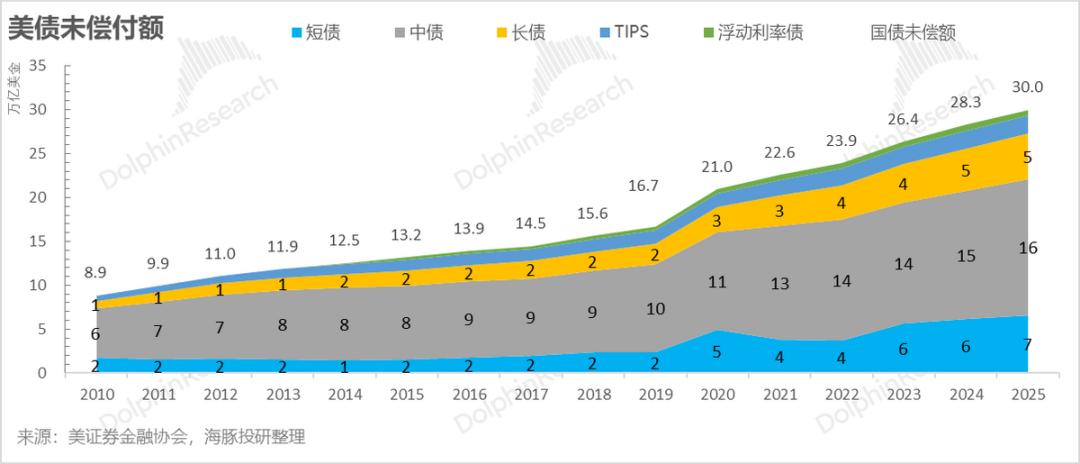
今年年初以来,全球权益资产表现较好,其中商品类资产表现最为突出。美元 之外的其他货币整体升值,包括人民币、欧元和日元等。在美日联合干预的情 况下,这些货币也取得了向上的走势。然而,与之相对的是国债类资产表现不 佳,美债和日债均处于较弱状态。美债收益率自去年 12 月会议结束后,从之 前的低点 3.9 左右反弹了约 30 个基点,成为近期市场最弱的资产。 美债收益率上行的原因有哪些? 美债买点将至?20260128 摘要 美债收益率受多重利空因素影响上行,包括降息利好出尽、市场交易复 苏及通胀预期,以及特朗普政策和鲍威尔调查对美元资产信誉的冲击, 海外债市颓势和季节性因素亦有影响。 短期内美债收益率或高位震荡,但全年仍存交易机会。当前收益率较高, 汇率压力释放后,美债或迎买点。长期看,美国经济增速与当前利率不 匹配,AI 资本开支回落,预计联储将降息,美债收益率将下行。 预计美国经济增速将逐步下行,高利率难以支撑经济复苏,AI 相关资本 开支增速将回落,传统消费等领域难改善。因此,预计联储将继续降息, 美债收益率将回落,滞胀风险有限。 2026 年美国通胀压力预计不大,商品关税影响达峰,大宗商品权重较 低,服务 ...
2025年1-12月工业企业效益数据点评:新动能及反内卷支撑下,全年工企利润实现增长
BOHAI SECURITIES· 2026-01-27 09:19
宏观数据点评报告 新动能及反内卷支撑下,全年工企利润实现增长 ――2025 年 1-12 月工业企业效益数据点评 分析师: 严佩佩 SAC NO: S1150520110001 2026 年 1 月 27 日 [Table_Summary] [Table_Author] 证券分析师 事件:2026 年 1 月 27 日,统计局公布了 2025 年 12 月的规模以上工业企业 效益数据。 点评: SAC NO:S1150520110001 宋亦威 022-23861608 SAC NO:S1150514080001 songyw@bhzq.com 研究助理 靳沛芃[Table_IndInvest] 022-23839160 SAC NO:S1150124030005 jinpp@bhzq.com 2025 年 1-12 月规模以上工业企业利润同比增速边际回升 0.5 个百分点至 0.6%;其中,12 月规模以上工业企业利润同比增长 5.3%,由负转正回升 18.4 个百分点。从量、价、利润率三因素来看,首先,受出口韧性以及高技术产 业和装备制造业的拉动,2025 年 12 月规模以上工业增加值同比增长 5.2% ...
“双十”基金经理最新调仓:朱少醒再买紫金矿业,谢治宇加码科技
Sou Hu Cai Jing· 2026-01-22 09:21
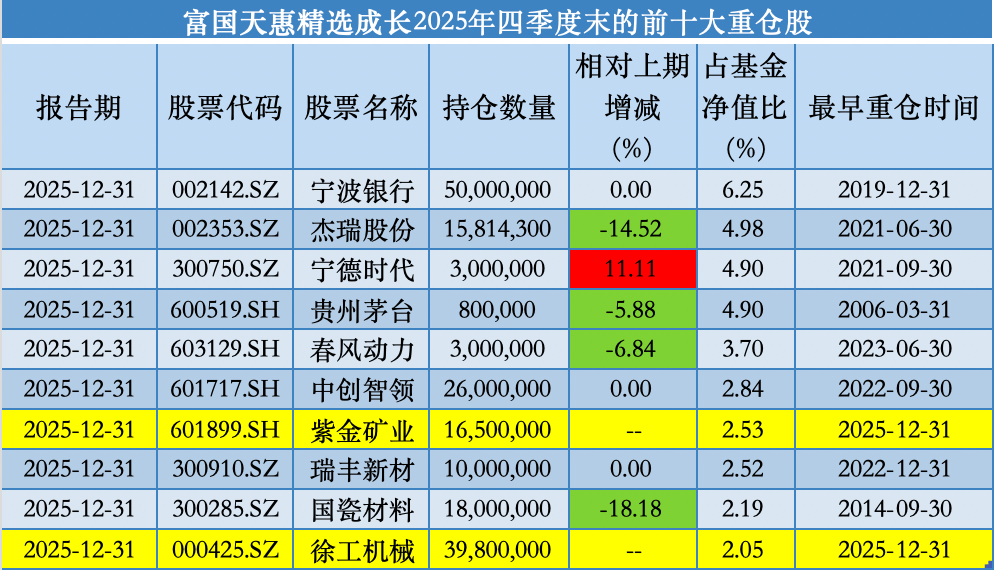
Core Viewpoint - The latest quarterly reports reveal significant adjustments in the portfolios of renowned fund managers Zhu Shaoxing and Xie Zhiyu, highlighting their investment strategies and stock selections for Q4 2025. Group 1: Zhu Shaoxing's Investment Strategy - Zhu Shaoxing's fund, Fuqun Tianhui Select Growth, increased its holdings in Ningde Times and made a notable "reverse operation" by selling Zijin Mining in the first half of 2025 and repurchasing it in the second half [2][3] - As of the end of Q4 2025, the fund's net asset value was 22.484 billion yuan, with top ten holdings including Ningbo Bank, Jerry Holdings, Ningde Times, and Guizhou Moutai [3][4] - Zhu's portfolio adjustments indicate a focus on sectors benefiting from anti-involution policies, suggesting a positive outlook for the A-share market despite rising valuations [4][5] Group 2: Xie Zhiyu's Investment Strategy - Xie Zhiyu's fund, Xingquan Helun, reported a total fund size of 38.618 billion yuan, with significant new investments in stocks like Baiwei Storage, Tuojing Technology, and Huahai Qingke [6][7] - The fund increased its position in Ningde Times while reducing holdings in several other stocks, including East Mountain Precision and Lixun Precision [6][7] - Xie expressed optimism about the domestic supply chain's growing influence in international markets and highlighted opportunities in the storage and semiconductor sectors driven by AI-related capital expenditures [7][8]



从海外长债开始的连锁反应
HTSC· 2026-01-21 10:57
Report Industry Investment Rating No relevant content provided. Core Views of the Report - The recent rapid increase in long - term interest rates in the US and Japan has dragged down the performance of global bond markets, stock markets, and some commodity markets. This reflects not only the warming of the fundamentals and the rise in inflation expectations but also the loss of fiscal discipline in developed countries, challenges to central bank independence, and concerns about long - term bond demand under the background of global order reconstruction, resulting in the "anchor loss" of long - term and ultra - long - term interest rates and a rapid steepening of the yield curve [2][24]. - In the context of continuous global fiscal expansion and monetary coordination, if the upward slope of inflation is limited, a relatively positive attitude can still be maintained towards stocks and commodities such as non - ferrous metals. However, it is advisable to turn to a wait - and - see approach in the short term, wait for adjustments, and then allocate at low prices. Moderately bet on the TACO trade or the fed put market [2][26]. - The impact of the rise in global long - term interest rates on the domestic bond market is small, and the comparison effect is very limited. A decline in risk appetite and RMB appreciation may even bring certain benefits. There are certain uncertainties in both the technology stocks and high - dividend sectors of the Hong Kong stock market [2][26]. Summary by Relevant Catalogs Market Conditions Assessment - **Domestic**: Last week's data showed that external demand remained high, prices rose, and domestic demand recovery was differentiated, with the production side maintaining resilience. High - frequency data indicated accelerated infrastructure investment. Consumption showed high travel enthusiasm but a year - on - year decline in automobile consumption. In the real estate market, transaction heat recovered from a low level, with second - hand housing showing stronger repair elasticity. External demand had high throughput year - on - year, and the production side was positively affected by the late Spring Festival. Industrial freight volume decline narrowed, and some industrial and construction indicators were stronger than seasonal levels. Prices of crude oil and black - series products rose [31]. - **Overseas**: Last week, US inflation and employment data were better than expected. The investigation of Powell intensified market concerns about the independence of the Federal Reserve, and the selection of the Fed chairman became a short - term focus. Geopolitical tensions fluctuated, increasing risk - aversion sentiment. The US 12 - month core CPI growth rate was 0.2%, and the initial jobless claims were lower than expected [32]. Configuration Suggestions - **A - shares**: After the market showed a large trading volume last week, there were frequent signals to cool down the market. The Spring Festival market is not over yet, and a "technical correction" is needed. Investors are advised to maintain their positions but adjust their portfolio structures, avoid broad - based ETF heavy - position stocks, high - valuation speculative sectors, and overseas liquidity - sensitive varieties, and focus on the opportunity for high - performance stocks to make up for losses [28]. - **Domestic Bonds**: There are short - term favorable conditions, with the 30 - 10 - year Treasury yield spread approaching 50bp. The operation strategy is "band trading + equity exposure + coupon > leverage operation > variety selection > credit downgrade". Continue to earn coupons in the short term and bet on long - term bands. It is recommended to reduce the convertible bond position to a neutral level [27]. - **US Bonds**: The probability of Kevin Warsh becoming the Fed chairman has risen to 61%. His policy of "interest rate cut + balance - sheet reduction" may lead to a steeper yield curve and an upward risk of long - term yields. Pay attention to the final appointment of the Fed chairman and whether Powell will continue to serve as a director. The 10 - year US Treasury has broken through the key resistance level of 4.2%, and it is more likely to continue rising in the short term [29]. - **US Stocks**: The new round of trade frictions between the US and Europe has suppressed risk appetite. The US may enter a state of "macro - cold + micro - hot" in the short term. The market is slightly overcrowded, but if there is a significant adjustment, it can be regarded as an opportunity. Structurally, the trend of style re - balancing may continue [30]. - **Commodities**: Geopolitical tensions have increased the demand for precious metals as a safe - haven asset, but price volatility has increased after reaching new highs. It is recommended to follow the trend and set stop - loss levels. Copper may face short - term adjustment pressure, energy metals are relatively strong but volatile, and crude oil price volatility has increased. The sentiment of black - series commodities has weakened [30]. Follow - up Concerns - **Domestic**: The 19th Asian Financial Forum and the news conference of the Ministry of Commerce [6][47] - **Overseas**: The Davos Forum, the IEA's monthly crude oil market report, the European Central Bank's December monetary policy meeting minutes, the Bank of Japan's interest rate decision, US economic data such as the January S&P Global PMI preliminary value, and the eurozone's January consumer confidence index preliminary value [6][47]
2026年有色金属的思考总结与展望
雪球· 2026-01-14 07:41
Core Viewpoint - The article discusses the significant changes in the pricing logic of non-ferrous metals, emphasizing the rise of strategic resource populism as a key factor influencing market pricing, particularly after the implementation of equal tariffs in the second half of 2025 [2][3]. Non-Ferrous Metals Market Analysis - The traditional pricing framework for non-ferrous metals has been driven by global macro liquidity, economic expectations, and the US dollar index, but recent years have shown a divergence between metal prices and global economic indicators [4][6]. - The current economic environment is characterized by low global PMI levels, yet non-ferrous metal prices have outperformed expectations, indicating a shift in market dynamics influenced by monetary attributes and strategic reserve demands [4][7]. Trading Framework and Historical Performance - The core trading framework focuses on the economic cycle, particularly inventory cycles, with liquidity as an important extension. However, this framework has faced challenges in the non-ferrous metals sector due to unique supply and demand dynamics [6][7]. - Historical trading experiences highlight the importance of adhering to a core framework while recognizing the evolving market conditions, leading to successful investments in precious metals and strategic small metals [9][10]. Sector-Specific Insights - Precious Metals (Gold, Silver): The article notes a strong performance in gold and silver due to anticipated changes in US monetary policy and geopolitical tensions, with significant gains observed over the past three years [9][10]. - Strategic Small Metals (Antimony, Tungsten, Rare Earths): The author emphasizes early positioning in strategic small metals, benefiting from export controls and geopolitical shifts, resulting in substantial price increases [11][12]. - Industrial Metals (Copper, Aluminum): Despite a generally positive long-term outlook, concerns remain regarding the sustainability of demand due to ongoing issues in the real estate sector and uncertainties in US economic growth [13][14]. 2026 Outlook for Non-Ferrous Metals - The market for non-ferrous metals is expected to remain active, but the author advocates for a cautious approach, focusing on identifying clear entry points rather than participating in the current market excitement [16][17]. - Industrial metals are viewed with caution due to unresolved concerns about the real estate market and the sustainability of AI-driven capital expenditures, with a recommendation to monitor these sectors closely [17][18]. - For strategic small metals, the long-term outlook remains positive, but current high prices necessitate waiting for favorable entry points [20][21]. - Precious metals continue to show long-term benefits, but short-term caution is advised due to market volatility and the need for clear buying signals [21][22]. Conclusion - The article concludes that while the non-ferrous metals market is currently vibrant, the focus should remain on waiting for definitive buying opportunities rather than engaging in all market trends, emphasizing the importance of patience and strategic decision-making in investment [22][24].

2026,美股从“估值狂欢”到“盈利长征”?
3 6 Ke· 2026-01-05 23:46
Group 1 - The article discusses the completion of a full fiscal, monetary, and economic cycle in the U.S. since 2020, questioning whether the stock market will thrive in the new cycle starting in 2026 [1] - The U.S. economy's growth over the past few years has been driven by debt expansion and increased productivity due to AI, but the efficiency of debt-driven growth appears to be declining [6] - By 2025, the U.S. national debt is projected to reach approximately $32 trillion, with a macro debt ratio of 257%, indicating a structural increase compared to pre-pandemic levels [1][6] Group 2 - In 2026, the Federal Reserve is expected to adopt a "fiscalized" approach, releasing short-term liquidity to address tightening conditions in the banking system [7] - The U.S. Treasury is projected to issue around $2 trillion in net debt in 2026, corresponding to a fiscal deficit of approximately $2 trillion and a need for liquidity support from the Federal Reserve [9] - The long-term bond market is expected to remain under pressure with rates above 4%, while short-term debt instruments may become more attractive due to favorable rates [11][14] Group 3 - The Federal Reserve may continue to lower interest rates and implement "small-scale quantitative easing" to support the financing needs of the Treasury, particularly in light of the "Beautiful America" plan [14][15] - The economic growth in 2026 is anticipated to be driven by a combination of government debt and private sector AI investment, leading to a scenario of a depreciating dollar and inflationary pressures [15]