
市场情绪

Search documents
量化择时周报:行业间交易波动率上升,市场情绪继续修复-20251110
Shenwan Hongyuan Securities· 2025-11-10 07:40
Group 1 - Market sentiment score has continued to rise, reaching 3 as of November 7, up from 2.7 the previous week, indicating further recovery in market sentiment and a bullish outlook [7][11][19] - The trading volatility between industries has increased rapidly, breaking through the upper Bollinger Band, suggesting accelerated sector switching and a short-term improvement in sentiment [19][22] - The average daily trading volume for the entire A-share market decreased slightly to 20,123.50 billion yuan, with the highest trading day on November 3 at 21,329.04 billion yuan [14][18] Group 2 - The short-term trend scores for industries such as banking, petrochemicals, light manufacturing, electric equipment, and steel have shown significant upward movement, with utilities currently having the highest short-term score of 100 [38][39] - The crowdedness of capital in sectors like electric equipment, steel, and coal has increased, indicating potential volatility risks due to high valuations and sentiment corrections [40][44] - The model indicates a preference for large-cap and value styles, with signals suggesting that these styles may strengthen in the future [49][56]
五矿期货农产品早报-20251110
Wu Kuang Qi Huo· 2025-11-10 02:28
Report Industry Investment Rating No relevant content provided. Core Viewpoints of the Report - For protein meal, it is expected to rise in the short - term following the import cost, with improved crushing margins, but in the medium - term, the global soybean supply is expected to be loose, so it is advisable to sell on rebounds [4]. - For palm oil, if the high production in Indonesia cannot be sustained, the inventory - building situation may reverse in the fourth quarter and the first quarter of next year. Before the export of Malaysian palm oil improves, it should be regarded as having a weak - oscillating trend, and turn to a long - position thinking if there are signals of production decline [6]. - For sugar, due to strengthened import controls on syrup and premixes, Zhengzhou sugar prices have rebounded, but the external market is still weak. It is recommended to short after the rebound weakens [10]. - For cotton, the fundamentals are weak, and it is expected that the cotton price will continue to oscillate in the short - term [13]. - For eggs, in the short - term, they are expected to be in a strong - consolidation state, and in the medium - term, pay attention to the upper pressure and wait to short [17]. - For pigs, in the long - term, the strategy is to short on rebounds, currently, the reverse spread is the first - choice strategy, followed by shorting after rebounds [20]. Summary by Relevant Catalogs Protein Meal Market Information - Last Friday, CBOT soybeans rose slightly. Brazilian soybean premiums fell last week. Domestic soybean meal spot prices were stable over the weekend, with the East China price at 2,990 yuan/ton. Last week, soybean meal trading was weak, but pick - up was good. Feed enterprise inventory days decreased by 0.26 days to 7.75 days. MYSTEEL expects this week's domestic soybean crushing volume to be 2.1579 million tons, compared with 1.8057 million tons last week. In the next two weeks, rainfall in major Brazilian planting areas will be at a neutral level, and soybean planting may proceed normally. China's announcement of resuming the soybean export qualifications of several institutions such as CHS and the import qualification of US logs on Friday led to optimistic expectations for US soybean demand, causing the CBOT soybean market to rebound [3]. Strategy Viewpoints - In terms of import cost, although there are signals of China importing US soybeans, the rise in US soybean prices may be offset by the decline in Brazilian premiums, so the import cost will mainly oscillate. Domestic soybean inventory is at a record high, and soybean meal inventory is large, putting pressure on crushing margins. However, as it gradually enters the destocking season, there is some support. It is expected that soybean meal will rise in the short - term following the import cost, with improved crushing margins, which will stimulate vessel bookings. In the medium - term, the expectation of a loose global soybean supply remains unchanged, and it is advisable to sell on rebounds [4]. Fats and Oils Market Information - ITS and AMSPEC data show that Malaysia's palm oil exports in October increased by 4.31% - 5.19% compared with the same period last month. SPPOMA data show that Malaysia's palm oil production increased by 5.55% in October and 6.8% in the first 5 days of November. The US Department of Agriculture will release monthly supply - demand forecasts on November 14, and MPOB will release the palm oil monthly report at 12:30 on November 10. Last Friday, domestic fats and oils oscillated weakly, and the overall commodity market corrected. Palm oil prices are still constrained by the high production in Malaysia and Indonesia recently, and no signal of production decline has been seen. Domestic spot basis is stable at a low level [5]. Strategy Viewpoints - The unexpectedly high production of palm oil in Malaysia and Indonesia suppresses the market performance. The current situation of inventory - building due to large supply may reverse in the fourth quarter and the first quarter of next year. If Indonesia's high production cannot be sustained, the destocking time may come earlier. If Indonesia maintains its recent high - production record, palm oil will continue to be weak. It is recommended to regard it as having a weak - oscillating trend before the export of Malaysian palm oil improves, and turn to a long - position thinking if there are signals of production decline [6]. Sugar Market Information - On Friday, the Zhengzhou sugar futures price oscillated narrowly. The closing price of the January contract was 5,457 yuan/ton, up 9 yuan/ton or 0.17% from the previous trading day. In the spot market, Guangxi sugar - making groups quoted 5,690 - 5,730 yuan/ton, up 10 - 30 yuan/ton from the previous trading day; Yunnan sugar - making groups quoted 5,530 - 5,580 yuan/ton, down 0 - 10 yuan/ton from the previous trading day; the mainstream price range of processing sugar mills was 5,790 - 5,890 yuan/ton, unchanged from the previous trading day. The basis of Guangxi spot - Zhengzhou sugar main contract (sr2601) was 233 yuan/ton. Brazil exported 4.205 million tons of sugar in October, a year - on - year increase of 12.8%. As of October in the 2025/26 sugar - crushing season, the cumulative sugar exports were 21.95 million tons, a year - on - year decrease of 5.27%. Brazil's Conab estimated that the sugarcane output in the central - southern region in the 2025/26 sugar - crushing season would be 607.38 million tons, lower than the previous estimate of 609.76 million tons. Sugar production is expected to be 41.34 million tons, higher than the previous estimate of 40.64 million tons. India's ISMA estimated that the total sugar production (before deducting the amount used for ethanol production) in the 2025/26 sugar - crushing season would be 34.35 million tons; after deducting the estimated 3.4 million tons used for ethanol production, the net sugar production is expected to be 30.95 million tons [9]. Strategy Viewpoints - Recently, due to strengthened import controls on syrup and premixes, Zhengzhou sugar prices have rebounded, but the external market is still very weak. Since August this year, due to a significant year - on - year increase in the proportion of sugarcane used for sugar production, the cumulative sugar production in the central - southern region of Brazil has exceeded that of last year, leading to a continuous decline in raw sugar prices. Currently, it is expected that the main northern hemisphere producing countries will increase production in the 2025/26 new sugar - crushing season, and the upward space for raw sugar is limited. As a result, the import profit has reached a five - year high. It is recommended to short after the rebound weakens [10]. Cotton Market Information - On Friday, the Zhengzhou cotton futures price continued to oscillate. The closing price of the January contract was 13,580 yuan/ton, down 25 yuan/ton or 0.18% from the previous trading day. In the spot market, the China Cotton Price Index (CCIndex) 3128B was 14,859 yuan/ton, up 39 yuan/ton from the previous trading day. The basis of the China Cotton Price Index (CCIndex) 3128B - Zhengzhou cotton main contract (CF2601) was 1,279 yuan/ton. As of the week of November 7, the spinning mill operating rate was 65.4%, down 0.2 percentage points from the previous week, 6.3 percentage points lower than the same period last year, and 8.64 percentage points lower than the five - year average of 74.04%. On November 6, the machine - picked cotton purchase index in Xinjiang was 6.26 yuan/kg, and the hand - picked cotton purchase index was 6.98 yuan/kg, both unchanged from the previous day [12]. Strategy Viewpoints - Fundamentally, demand is weak this year, and the operating rate of the downstream industry chain has declined significantly compared with the same period in previous years. In the new year, there is a large domestic harvest, and the pressure of selling for hedging is high. Recently, the new cotton purchase price has risen slightly, driving the rebound of Zhengzhou cotton, but the fundamentals are still weak. It is expected that the cotton price will continue to oscillate in the short - term [13]. Eggs Market Information - Over the weekend, domestic egg prices showed a mixed trend of rising, falling, and remaining stable, with overall small fluctuations. The large - sized eggs in Heishan remained unchanged at 2.9 yuan/jin, and the small - sized eggs in Guantao decreased by 0.04 yuan to 2.76 yuan/jin. With a decrease in newly - laid hens and continuous hen culling, the in - production hen inventory is gradually reaching its peak and declining. However, the overall supply scale is still large, which may limit the price increase space. On the demand side, since November, it has been frequently stimulated by factors such as stockpiling and restocking, and there is strong support at the bottom. Overall, egg prices will mainly oscillate strongly until the end of the inventory - building season [15]. Strategy Viewpoints - The expectation of the inventory reaching its peak and declining due to continuous low replenishment and high culling, combined with the increasing stockpiling sentiment after the temperature drop, has broken the previous downward spiral of egg prices. With the continuation of consumption themes such as the Double Eleven and pre - holiday restocking, the improved sentiment is expected to drive the market to build inventory. The futures market has reacted in advance to the price increase expectation, but with the futures price at a premium to the spot price, long - position traders are generally cautious, and the expectation of high - supply suppression still exists. It is expected to be in a strong - consolidation state in the short - term, and it is advisable to wait and see or conduct short - term trading. In the medium - term, pay attention to the upper pressure and wait to short [17]. Pigs Market Information - Over the weekend, domestic pig prices were mainly stable, with local small increases. The average price in Henan rose 0.17 yuan to 12.2 yuan/kg, and the average price in Sichuan rose 0.04 yuan to 11.51 yuan/kg. The plan completion rate in the first ten days was good, and farmers had a mentality of holding up prices. However, after the pig price rose, slaughterhouses were resistant, which may cause a short - term reduction in volume. It is expected that today's pig prices will be mainly stable, with local small increases or decreases [19]. Strategy Viewpoints - This round of rebound is mainly driven by frozen product warehousing and increased second - fattening. The subsequent supply generated will, together with the basic supply and future pre - supply, jointly establish a bearish pattern of high - volume slaughter and large - sized pigs before the Spring Festival. Against the background of oversupply, the long - term direction of the futures market still points to shorting on rebounds. Currently, a game pattern of low prices and high positions has been formed. With limited short - term negative factors, the futures market may rebound. Considering the large near - term supply and the expectation of capacity reduction in the long - term, the current strategy first recommends a reverse spread, followed by shorting after rebounds [20].
国投期货农产品日报-20251106
Guo Tou Qi Huo· 2025-11-06 12:28
Report Investment Ratings - **Beans 1**: ★★★ (Predicted trending up) [1] - **Soybean Oil**: ☆☆☆ (Predicted trending down) [1] - **Palm Oil**: ☆☆☆ (Predicted trending down) [1] - **Soybean Meal**: ★★☆ (Holding long, clear upward trend) [1] - **Rapeseed Meal**: ★★☆ (Holding long, clear upward trend) [1] - **Rapeseed Oil**: ☆☆☆ (Predicted trending down) [1] - **Corn**: ☆☆☆ (Predicted trending down) [1] - **Pigs**: ☆☆☆ (Predicted trending down) [1] - **Eggs**: ★★★ (Predicted trending up) [1] Core Views - The market for high - protein soybeans is optimistic due to tight supply and government procurement. The overall soybean and soybean meal market is affected by import costs and trade policies. Palm oil may stage a temporary stabilization. The strategy for rapeseed meal is bullish, and the view on rapeseed oil shifts to neutral. Corn prices are in a weak bottom - range oscillation. Pig prices are likely to have a second bottoming next year. Egg futures' near - term contracts are strong, waiting for short - selling opportunities in Q4. [2][3][4][5][6][7][8] Section Summaries **Beans 1** - Beans 1 showed strong performance, breaking through previous highs. Cofco's soybean procurement and the tight supply of high - protein soybeans due to adverse weather have led to an optimistic market outlook. Short - term focus is on policy guidance. [2] **Soybeans & Soybean Meal** - US soybeans led the decline in the domestic market. The import tax rate for US soybeans is 13%, making commercial imports unprofitable. The current soybean meal price is driven by rising import costs and expected destocking in Q1 next year. Attention should be paid to the resumption of USDA reports and potential long - entry opportunities after Sino - US trade eases. [3] **Soybean Oil & Palm Oil** - Palm oil rebounded, with the oil - tank ratio and soybean - palm oil spread changing. After recent declines, palm oil's downward momentum has eased. The market will focus on USDA reports. There is a possibility of short - term stabilization for palm oil. [4] **Rapeseed Meal & Rapeseed Oil** - Rapeseed meal prices rose, and the strategy remains bullish. Rapeseed oil's view shifted from bearish to neutral, with a focus on changes in imports. The market is watching Australian rapeseed arrivals and Canadian trade policies. [5] **Corn** - Dalian corn futures rose 0.75% at the end of the session. Northeast corn supply growth has slowed, while Shandong's supply has increased. The import tax rate for US corn has changed. The market should watch for new Sino - US trade agreements and changes in Northeast farmers' selling enthusiasm. [6] **Pigs** - Pig spot prices are weakly stable, and futures are consolidating. The number of breeding sows decreased in October, but the later supply is still increasing. The second - round fattening will increase future supply pressure. Pig prices are likely to have a second bottoming next year. [7] **Eggs** - Egg futures' near - term contracts hit new highs, and spot prices rose slightly. The October laying - hen inventory decreased slightly, and chick replenishment was low. The market is waiting for short - selling opportunities in Q4. [8]
黑色建材日报:市场情绪一般,黑色震荡运行-20251106
Hua Tai Qi Huo· 2025-11-06 03:12
Report Industry Investment Rating No relevant content provided. Core Viewpoints - The market sentiment is average, and the black commodities are oscillating. Steel prices are running weakly, iron ore prices face downward pressure but are difficult to show a trend direction in the short - term, coking coal prices are oscillating, and power coal prices are rising [1][3][4][6] Summary by Related Catalogs Steel Market Analysis - Yesterday, the main contract of rebar closed at 3,024 yuan/ton, and the main contract of hot - rolled coil closed at 3,253 yuan/ton, continuing the weak oscillation. The overall performance of spot steel transactions was average, with the total national building materials trading volume at 9.39 tons, still maintaining a low trading volume [1] Supply - Demand and Logic - The cost - side support for rebar remains, and the policy side needs further observation. Under the current fundamentals, the futures market will continue the weak oscillation pattern. The consumption of hot - rolled coils still has certain resilience. The iron water flows to hot - rolled coils, so the production is at a relatively high level. Since steel mills currently have profits, their willingness to reduce production is low. In November, the number of planned maintenance and production reduction of steel mills increases, and there are also environmental protection restrictions in the north from time to time [1] Strategy - Unilateral: Oscillating weakly; No strategies for inter - period, inter - variety, spot - futures, and options [2] Iron Ore Market Analysis - Yesterday, the iron ore futures prices oscillated. In the spot market, the prices of mainstream imported iron ore varieties fluctuated slightly. The enthusiasm of traders to offer was average, and the quotes mostly followed the market. Steel mills' purchases were mainly for rigid demand. The cumulative transaction volume of iron ore at major national ports was 1.088 million tons, a month - on - month decrease of 25.53%; the cumulative transaction volume of forward - looking spot was 1.499 million tons, a month - on - month increase of 107.62% [3] Supply - Demand and Logic - This week, the arrival volume of iron ore at ports rebounded significantly, a month - on - month increase of 58.6%. The current overall valuation of iron ore is neutral, and the supply - demand pattern of iron ore is changing from tight balance to looseness. The iron ore price faces downward pressure, but it is difficult to show a trend direction in the short - term under the support of downstream restocking demand. With the loss and production reduction of steel mills, the resilience of the demand side of iron ore has loosened, and the iron ore price faces correction pressure. Attention should be paid to the molten iron production and downstream inventory changes in the future [3] Strategy - Unilateral: Oscillating weakly; No strategies for inter - period, inter - variety, spot - futures, and options [3] Coking Coal and Coke Market Analysis - Yesterday, the coking coal and coke futures markets showed an oscillating and sorting trend, with obvious price differentiation between contracts. The closing prices of the main contracts of coking coal and coke both declined slightly. For imported Mongolian coking coal, the recent customs clearance volume has rebounded rapidly, the quotes fluctuate and adjust with the futures market, the trading volume is average, and the market is mostly in a cautious wait - and - see state [4] Logic and Viewpoints - For coking coal, the domestic mine supply has not fully recovered, but the recent rapid rebound of Mongolian coking coal customs clearance volume has a certain impact on the short - term price. From the perspective of inventory, the inventory at all links in the industry is at a medium - low level, and the coking coal inventory is significantly lower than the same period last year, which supports the market fundamentals to maintain resilience. The market's expectation of the subsequent rise of raw material prices continues to increase. The continuous rise of thermal coal spot prices further strengthens the support for coking coal prices. For coke, the supply has shrunk, the third round of price increase is still in progress, and the downstream steel enterprises on the demand side still mainly purchase for rigid demand. Attention should be paid to the implementation of the new round of coke price increase, the steel mills' production reduction plans, and the recovery progress of coking coal supply [5] Strategy - Coking coal: Oscillating; Coke: Oscillating; No strategies for inter - period, inter - variety, spot - futures, and options [5] Power Coal Market Analysis - In the production areas, the coal prices are still strong, and the supply is still tight. With the railway transportation discount again, the platforms and traders are actively pulling and transporting, and the miners' inventory has been at a low level for a long time. Miners are optimistic about the future price increase recently, believing that the supply - demand mismatch is difficult to change in the short - term. At the ports, the port transactions are still mainly long - term agreements. Affected by the upstream price increase, the traders' quotes remain high, but the downstream acceptance of high - priced coal is low. Currently, it is difficult to find low - priced coal at the ports, the inventory accumulation is less than expected, the downstream demand is good, and the short - term price will mainly rise. In terms of imports, the recent import coal market has been actively tendering, the domestic - foreign price difference is large, there is a certain profit in imported coal, and the center of the recently awarded bid prices has also risen [6] Demand and Logic - Affected by the tight supply in the production areas, the short - term price will oscillate strongly. In the long - term, the pattern of loose supply remains unchanged, but the winter heating peak season is coming, and the non - power demand of the downstream is strong. Attention should be paid to the overall consumption and restocking situation in the future [6] Strategy - No strategy provided [6]
【金融工程】市场情绪仍偏高,警惕高位股调整风险——市场环境因子跟踪周报(2025.11.05)
华宝财富魔方· 2025-11-05 09:40
Group 1 - The core viewpoint of the article suggests a potential short-term shift in market style towards small-cap stocks due to high market sentiment and the onset of the Federal Reserve's interest rate cuts, which may lead to a weaker dollar providing support for the market [2][6] - Large-cap growth stocks, which have seen significant price increases, may face a phase of adjustment due to high valuations and pressure from performance verification [2][6] - The article emphasizes the importance of focusing on sectors with reasonable valuations and clear industry trends while being cautious of the adjustment risks associated with high-priced large-cap stocks [2][6] Group 2 - In the equity market, the style has shifted towards small-cap stocks, and the value style has gained preference over growth [8][10] - The volatility of both large-cap and value-growth styles has decreased, indicating a more stable market environment [8][10] - The market structure shows an increase in the dispersion of excess returns across industries, while the speed of industry rotation has decreased, and the proportion of rising constituent stocks has declined [8][10] Group 3 - In the commodity market, the trend strength of the non-ferrous and energy chemical sectors has increased, while other sectors have seen a decline in trend strength [13][14] - The volatility of most sectors has risen, except for agricultural products, indicating increased market uncertainty [13][14] - Liquidity performance varies across sectors, suggesting differing levels of market activity [13][14] Group 4 - In the options market, the implied volatility levels for the Shanghai Stock Exchange 50 and the CSI 1000 have remained stable, but there is an increasing skew towards put options, indicating heightened risk hedging by market participants [18] - The ratio of open interest between put and call options continues to rise, reflecting a growing concern about potential risks [18] Group 5 - The convertible bond market has shown a slight recovery, with the premium rate for conversion remaining stable and showing a small upward trend [20] - The proportion of low premium convertible bonds has rebounded, indicating a shift in investor interest [20] - Market transaction volumes have increased, suggesting a more active trading environment [20]


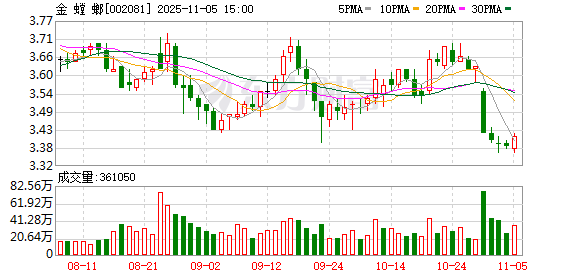
金螳螂:公司股价短期波动受宏观经济等多重因素共同影响
Zheng Quan Ri Bao· 2025-11-05 09:09
Group 1 - The company's stock price short-term fluctuations are influenced by multiple factors including macroeconomic conditions, industry cycles, and market sentiment [2] - Some institutional investors' trading behaviors are based on their independent strategies, and the core shareholder structure of the company remains stable [2] - Changes in the shareholder structure do not reflect a fundamental change in the company's intrinsic value [2]

股市缩量调整,债市曲线?平
Zhong Xin Qi Huo· 2025-11-05 05:24
1. Report Industry Investment Rating - Not provided in the content 2. Core Views of the Report - The stock market is in a state of volume - shrinking adjustment, with the view for November remaining volatile, waiting for the spring rally. The bond market curve continues to flatten, and it is expected to be volatile and slightly bullish. For stock index options, the decline persists, and a covered call strategy is recommended for defense [1][3][7] 3. Summary by Related Catalogs 3.1 Market Views 3.1.1 Stock Index Futures - Yesterday, the equity market had a volume - shrinking adjustment, with some indexes like Beizheng 50 and Kechuang 200 falling over 2%. The market volume dropped below 2 trillion. Only the dividend index rose, and banks and consumer services performed well. The decline is related to the weak Asia - Pacific market. The view for November is volatile, and it is advisable to hold IM + dividend index [1][7] 3.1.2 Stock Index Options - The underlying market continued to decline yesterday, with small - and medium - cap stocks having a larger pullback. The option market's turnover increased by 2.24% to 93.16 billion yuan, and liquidity was basically flat. It is recommended to use a covered call strategy for defense [2][7] 3.1.3 Treasury Bond Futures - Yesterday, most treasury bond futures closed down, with the 30 - year contract up 0.03%, the 10 - year flat, and the 5 - year and 2 - year down 0.01%. The yield of major inter - bank interest - rate bonds mostly rose, and the curve flattened. It is expected to be volatile and slightly bullish, and different strategies are recommended for different trading purposes [3][8][9] 3.2 Economic Calendar - China's October SPGI manufacturing PMI was 50.6 (previous value 51.2, forecast 50.9), and the US October ISM manufacturing PMI was 48.7 (previous value 49.1, forecast 49.5). Other data such as the US October ADP employment change, China's October trade balance, and the US November Michigan consumer confidence index are yet to be released [10] 3.3 Important Information and News Tracking - On November 4, Fed Governor Cook said that each Fed meeting is real - time for monetary policy, and there is a possibility of a rate cut in December depending on new information. Recently, a draft for public comments on the performance comparison benchmark element library of public funds was issued. The central bank's net investment in open - market treasury bonds in October was 20 billion yuan, with 200 billion yuan in medium - term lending facilities and 400 billion yuan in repurchase agreements [11] 3.4 Derivatives Market Monitoring - The content only mentions the headings for stock index futures, stock index options, and treasury bond futures data, but no specific data summaries are provided [12][16][28]
广发期货《有色》日报-20251105
Guang Fa Qi Huo· 2025-11-05 05:04
Group 1: Report Industry Investment Ratings - No relevant information provided Group 2: Core Views of the Report Copper - Overseas liquidity is tight, the US dollar index is strong, and copper prices weakened yesterday. In the medium - long term, supply - demand contradictions support the upward shift of the bottom center of copper prices, but short - term rapid increases suppress demand. The support for the main contract is at 84000 - 85000 [1]. Aluminum - Alumina prices are expected to remain weakly volatile, with the main contract reference range of 2750 - 2900 yuan/ton. Aluminum prices will likely fluctuate between event - driven factors and weak fundamentals in the short term, and there is a risk of a callback to 20500 - 20800 yuan/ton if inventory accumulates [4]. Aluminum Alloy - ADC12 prices are expected to maintain a relatively strong oscillating trend, with the main contract reference range of 20400 - 21000 yuan/ton [6]. Zinc - Zinc prices will show a short - term oscillating and strengthening trend, but the fundamentals provide limited elasticity for the continuous upward movement of Shanghai zinc. It may maintain range - bound oscillations, with the main contract reference range of 22300 - 23000 [8]. Tin - Considering the strong fundamentals, a strategy of buying on dips is recommended. If the supply from Myanmar recovers smoothly, tin prices may weaken; otherwise, they are expected to continue the strong trend [11]. Nickel - The nickel market is expected to oscillate within a range, with the main contract reference range of 118000 - 126000. Attention should be paid to macro - expectations and Indonesian industrial policies [13]. Stainless Steel - The stainless - steel market is expected to remain weakly volatile in the short term, with the main contract reference range of 12500 - 13000. Attention should be paid to macro - expectations and steel mill supply [15]. Lithium Carbonate - Lithium carbonate prices are expected to be weakly adjusted, with the main contract reference range of 76000 - 82000 yuan/ton [17]. Group 3: Summary by Relevant Catalogs Copper - **Price and Basis**: SMM 1 electrolytic copper was at 86590 yuan/ton, down 0.29% from the previous day. The import profit and loss was - 685 yuan/ton, up 186.69 yuan/ton from the previous day [1]. - **Monthly Spread**: The 2512 - 2601 spread was 30 yuan/ton, up 110 yuan/ton from the previous day [1]. - **Fundamental Data**: In October, electrolytic copper production was 109.16 million tons, down 2.62% month - on - month; in September, imports were 33.43 million tons, up 26.50% month - on - month [1]. Aluminum - **Price and Spread**: SMM A00 aluminum was at 21440 yuan/ton, with no change from the previous day. The import profit and loss was - 2608 yuan/ton, down 2.8 yuan/ton from the previous day [4]. - **Monthly Spread**: The 2511 - 2512 spread was - 35 yuan/ton, down 30 yuan/ton from the previous day [4]. - **Fundamental Data**: In October, alumina production was 778.53 million tons, up 2.39% month - on - month; electrolytic aluminum production was 374.21 million tons, up 3.52% month - on - month [4]. Aluminum Alloy - **Price and Spread**: SMM aluminum alloy ADC12 was at 21400 yuan/ton, with no change from the previous day. The 2511 - 2512 spread was - 115 yuan/ton, down 65 yuan/ton from the previous day [6]. - **Fundamental Data**: In September, the production of recycled aluminum alloy ingots was 66.10 million tons, up 7.48% month - on - month; the production of primary aluminum alloy ingots was 28.30 million tons, up 4.43% month - on - month [6]. Zinc - **Price and Spread**: SMM 0 zinc ingot was at 22580 yuan/ton, up 1.03% from the previous day. The import profit and loss was - 4758 yuan/ton, down 276.57 yuan/ton from the previous day [8]. - **Monthly Spread**: The 2511 - 2512 spread was - 55 yuan/ton, down 5 yuan/ton from the previous day [8]. - **Fundamental Data**: In October, refined zinc production was 61.72 million tons, up 2.85% month - on - month; in September, imports were 2.27 million tons, down 11.61% month - on - month [8]. Tin - **Spot Price and Basis**: SMM 1 tin was at 285400 yuan/ton, with no change from the previous day. The LME 0 - 3 premium was 74.00 dollars/ton, up 85.00% from the previous day [11]. - **Monthly Spread**: The 2511 - 2512 spread was - 310 yuan/ton, down 66.07% from the previous day [11]. - **Fundamental Data**: In September, tin ore imports were 8714 tons, down 15.13% month - on - month; SMM refined tin production was 10510 tons, down 31.71% month - on - month [11]. Nickel - **Price and Basis**: SMM 1 electrolytic nickel was at 121800 yuan/ton, down 0.16% from the previous day. The LME 0 - 3 was - 212 dollars/ton, down 3.25% from the previous day [13]. - **Monthly Spread**: The 2512 - 2601 spread was - 240 yuan/ton, down 10 yuan/ton from the previous day [13]. - **Supply and Inventory**: In October, China's refined nickel production was 35900 tons, up 0.84% month - on - month; imports were 38164 tons, up 124.36% month - on - month [13]. Stainless Steel - **Price and Basis**: 304/2B (Wuxi Hongwang 2.0 roll) was at 12800 yuan/ton, with no change from the previous day. The futures - spot price difference was 425 yuan/ton, up 25.00% from the previous day [15]. - **Monthly Spread**: The 2512 - 2601 spread was - 65 yuan/ton, down 10 yuan/ton from the previous day [15]. - **Fundamental Data**: In October, China's 300 - series stainless - steel crude steel production (43 companies) was 182.17 million tons, up 0.38% month - on - month; Indonesia's 300 - series stainless - steel crude steel production (Qinglong) was 42.35 million tons, up 0.36% month - on - month [15]. Lithium Carbonate - **Price and Basis**: SMM battery - grade lithium carbonate was at 80608 yuan/ton, down 0.12% from the previous day. The basis (SMM battery - grade lithium carbonate benchmark) was 280 yuan/ton, down 83.53% from the previous day [17]. - **Monthly Spread**: The 2511 - 2512 spread was - 1480 yuan/ton, down 60 yuan/ton from the previous day [17]. - **Fundamental Data**: In October, lithium carbonate production was 92260 tons, up 5.73% month - on - month; demand was 126961 tons, up 8.70% month - on - month [17].
《有色》日报-20251105
Guang Fa Qi Huo· 2025-11-05 03:32
1. Report Industry Investment Ratings No relevant information provided. 2. Core Views Copper - Overseas market liquidity is tightening, and the US dollar index is strong, suppressing copper prices. In the long - term, the supply - demand contradiction supports the upward movement of the copper price bottom, but short - term rapid increases may inhibit demand. The subsequent focus is on demand changes and overseas liquidity, with the main contract supported at 84000 - 85000 [1]. Aluminum - Alumina prices are expected to remain weakly volatile, with the main contract ranging from 2750 - 2900 yuan/ton. Aluminum prices will fluctuate between event - driven factors and weak fundamentals in the short term, and there is a risk of correction if inventories continue to accumulate [4]. Aluminum Alloy - The ADC12 price is expected to maintain a relatively strong volatile trend, with the main contract ranging from 20400 - 21000 yuan/ton. Attention should be paid to scrap aluminum supply, procurement costs, and inventory reduction [6]. Zinc - Against the background of concerns about LME zinc squeezing, Shanghai zinc oscillated at a high level. In the short term, zinc prices will be oscillating and relatively strong, but the fundamentals may limit the upward space, with the main contract ranging from 22300 - 23000 [8]. Tin - Tin supply is tight, and demand is weak. With a strong fundamental outlook, a strategy of buying on dips is recommended. Future trends depend on macro - level changes and the supply recovery in Myanmar [11]. Nickel - Macro sentiment is stable, and cost has some support, but the overall fundamentals are flat. In the medium - term, the supply is expected to be loose, restricting the upward space of prices. The main contract is expected to oscillate in the range of 118000 - 126000 [13]. Stainless Steel - Policy and macro - level driving forces are weakening, and the fundamentals have not improved significantly. The short - term market is expected to be weakly volatile, with the main contract ranging from 12500 - 13000 [15]. Lithium Carbonate - The short - term strong fundamentals support the price, but the trading logic has switched recently. The price is expected to be weakly adjusted, with the main contract ranging from 76000 - 82000 [17]. 3. Summary by Directory Copper Price and Basis - SMM 1 electrolytic copper price was 86590 yuan/ton, down 0.29% from the previous day. The import profit and loss was - 685 yuan/ton, up 186.69 yuan/ton from the previous day [1]. Monthly Spread - The 2512 - 2601 spread was 30 yuan/ton, up 110 yuan/ton from the previous day [1]. Fundamental Data - In October, electrolytic copper production was 109.16 million tons, down 2.62% month - on - month. In September, imports were 33.43 million tons, up 26.50% month - on - month [1]. Aluminum Price and Spread - SMM A00 aluminum price was 21440 yuan/ton, unchanged from the previous day. The import profit and loss was - 2608 yuan/ton, down 2.8 yuan/ton from the previous day [4]. Monthly Spread - The 2511 - 2512 spread was - 35 yuan/ton, down 30 yuan/ton from the previous day [4]. Fundamental Data - In October, alumina production was 778.53 million tons, up 2.39% month - on - month, and electrolytic aluminum production was 374.21 million tons, up 3.52% month - on - month [4]. Aluminum Alloy Price and Spread - SMM aluminum alloy ADC12 price was 21400 yuan/ton, unchanged from the previous day. The scrap - to - refined price difference in Foshan for broken primary aluminum was 1789 yuan/ton, up 0.56% from the previous day [6]. Monthly Spread - The 2511 - 2512 spread was - 115 yuan/ton, down 50 yuan/ton from the previous day [6]. Fundamental Data - In September, recycled aluminum alloy ingot production was 66.10 million tons, up 7.48% month - on - month [6]. Zinc Price and Spread - SMM 0 zinc ingot price was 22580 yuan/ton, up 1.03% from the previous day. The import profit and loss was - 4758 yuan/ton, down 276.57 yuan/ton from the previous day [8]. Monthly Spread - The 2511 - 2512 spread was - 55 yuan/ton, down 5 yuan/ton from the previous day [8]. Fundamental Data - In October, refined zinc production was 61.72 million tons, up 2.85% month - on - month. In September, imports were 2.27 million tons, down 11.61% month - on - month [8]. Tin Spot Price and Basis - SMM 1 tin price was 285400 yuan/ton, unchanged from the previous day. The LME 0 - 3 spread was 74 dollars/ton, up 85% from the previous day [11]. Monthly Spread - The 2511 - 2512 spread was - 30 yuan/ton, down 66.07% from the previous day [11]. Fundamental Data - In September, tin ore imports were 8714 tons, down 15.13% month - on - month, and SMM refined tin production was 10510 tons, down 31.71% month - on - month [11]. Nickel Price and Basis - SMM 1 electrolytic nickel price was 121800 yuan/ton, down 0.16% from the previous day. The LME 0 - 3 spread was - 212 dollars/ton, down 3.25% from the previous day [13]. Monthly Spread - The 2512 - 2601 spread was - 240 yuan/ton, down 10 yuan/ton from the previous day [13]. Supply and Inventory - China's refined nickel production was 35900 tons, up 0.84% month - on - month. Imports were 38164 tons, up 124.36% month - on - month [13]. Stainless Steel Price and Spread - The price of 304/2B (Wuxi Hongwang 2.0 coil) was 12800 yuan/ton, unchanged from the previous day. The futures - spot price difference was 425 yuan/ton, up 25% from the previous day [15]. Monthly Spread - The 2512 - 2601 spread was - 65 yuan/ton, down 10 yuan/ton from the previous day [15]. Fundamental Data - China's 300 - series stainless steel crude steel production (43 companies) was 182.17 million tons, up 0.38% month - on - month. Imports were 12.03 million tons, up 2.70% month - on - month [15]. Lithium Carbonate Price and Basis - SMM battery - grade lithium carbonate average price was 80608 yuan/ton, down 0.12% from the previous day. The basis (SMM battery - grade lithium carbonate benchmark) was 280 yuan/ton, down 83.53% from the previous day [17]. Monthly Spread - The 2511 - 2512 spread was - 1480 yuan/ton, down 60 yuan/ton from the previous day [17]. Fundamental Data - In October, lithium carbonate production was 92260 tons, up 5.73% month - on - month. The total inventory was 84234 tons, down 10.90% month - on - month [17].
市场情绪偏空,天胶盘面延续下跌
Zhong Xin Qi Huo· 2025-11-05 03:12
1. Report Industry Investment Rating No relevant content provided. 2. Core Views of the Report - The overall market sentiment is bearish, with most agricultural product prices showing downward or volatile trends [1]. - The prices of natural rubber and synthetic rubber are under pressure, while the prices of some products such as corn and cotton are in a range - bound state [1]. 3. Summary by Relevant Catalogs 3.1 Market Quotes and Views 3.1.1 Oils and Fats - **View**: Yesterday, the prices rose first and then fell, and nearly half of the Brazilian soybeans have been planted. - **Logic**: Optimistic expectations for US soybean exports led to an increase in US soybeans and soybean oil on Monday. Domestically, the prices of oils and fats rose first and then fell yesterday, with soybean oil relatively strong. The US government shutdown, doubts about the Fed's interest - rate cut, and OPEC +'s decision to suspend production increase have affected the market. The US soybean harvest is nearing completion, and the probability of a decrease in US soybean yield is high. Brazilian soybean planting is progressing smoothly, with a planting progress of 47.1% as of November 1st. The expected arrival volume of imported soybeans in China is at a relatively high level, and the speed of domestic soybean oil inventory reduction is expected to be slow. Malaysian palm oil may continue to accumulate inventory in October, while Indonesian palm oil inventory remains low. Indian vegetable oil imports may decline seasonally. The supply of rapeseed oil in China is expected to increase [8]. - **Outlook**: Palm oil and rapeseed oil are expected to be in a weak shock state, while soybean oil will be in a shock state [8]. 3.1.2 Protein Meals - **View**: The crushing profit continues to recover, and the M1 - 5 reverse spread should be held. - **Logic**: CBOT soybeans are overbought, and soybean meal is in a high - level shock state, while the upward trend of rapeseed meal has slowed down. The US government's statement on China's soybean - purchasing plan has boosted the export expectation of US soybeans. The export volume of old - crop Brazilian soybeans in October decreased. In November, Brazilian soybeans enter the critical growth period, and the impact of La Nina needs to be monitored. Domestically, the short - term crushing profit of imported soybeans has recovered, and the import expectation is high. In the medium term, the quantity of China's soybean purchases from the US, South American weather, and the strength of the consumption peak season in the fourth quarter will determine the upward height of soybean meal. In the long term, there is no supply gap for soybeans in the fourth quarter of 2025 and the first quarter of 2026. The demand for soybean meal is expected to be stable or increase slightly, while rapeseed meal may follow the trend of soybean meal [9]. - **Outlook**: US soybeans and Dalian soybean meal will be in a shock state. The soybean meal 1 - 5 reverse spread should be held, and put options should be held [9]. 3.1.3 Corn and Starch - **View**: Farmers' reluctance to sell has increased, and downstream rigid demand provides support. - **Logic**: The domestic corn price is generally stable, with slight fluctuations in some areas. In the Northeast, farmers' reluctance to sell has increased, the circulation of grain sources has slowed down, and the supply pressure has been relieved. At the same time, the increase in external flow, transportation bottlenecks, and regional shortages in the sales area have supported the price. However, considering the expected high yield in the Northeast and the fact that the grain in some areas has not been fully marketed, the spot price still faces pressure [9][10]. - **Outlook**: Corn will be in a shock state, and short - term waiting and watching are recommended [10]. 3.1.4 Pigs - **View**: The supply for slaughter is abundant, and the price is weak. - **Logic**: In the short term, the utilization rate of secondary fattening pens has increased, but the rebound in pig prices has suppressed the sentiment of secondary fattening. The large - scale pig farms have a fast slaughter rhythm. In the medium term, the national sow inventory was still at a high level in the first half of 2025, and the number of newborn piglets increased continuously from January to September. It is expected that the slaughter volume of pigs will continue to increase in the fourth quarter. In the long term, the sow inventory has started to decline, and the reduction of sows is expected to accelerate in the fourth quarter, and the supply pressure will gradually ease in the second half of 2026 [10][11]. - **Outlook**: The price of pigs will be in a weak shock state. In the near - term, the price is weak, while in the far - term, the price is supported by the expectation of production capacity reduction. Attention should be paid to the reverse spread strategy [11]. 3.1.5 Natural Rubber - **View**: The market sentiment is bearish, and the price continues to decline. - **Logic**: The bearish sentiment in the financial market has led to a continuous decline in the natural rubber price. The cancellation of RU warehouse receipts and the slow progress of new rubber registration have made the valuation of RU lower than that of NR. In November, the import pressure may be relatively large, which will put pressure on NR. The short - term RU - NR spread may have a corrective market. The recent price fluctuations are mainly affected by the macro - environment. If there is no new macro - driving force, the rubber price may continue to adjust downward. However, due to the approaching domestic rubber - cutting season and the potential for speculation on RU warehouse receipts, the downward space is limited [3][12][13]. - **Outlook**: The rubber price will maintain a high - elasticity shock at the bottom. It is difficult to have a unilateral trend, and attention should be paid to widening the RU - NR spread in the short term [3][13]. 3.1.6 Synthetic Rubber - **View**: The price of raw materials continues to decline, and the price hits a new low. - **Logic**: The continuous decline in the price of butadiene and the weak sentiment in the commodity market have led to a new low in the synthetic rubber price. The main reason is the rapid decline in the price of butadiene, which has weakened the bottom support of the market. The supply of butadiene is expected to be in excess in the next two months before the end of the year, and the price may continue to decline [14]. - **Outlook**: The fundamentals and raw material prices are under great pressure. Before the obvious supply - demand contradiction of butadiene is resolved, short - selling on rallies is recommended [14]. 3.1.7 Cotton - **View**: The short - term upward momentum of cotton prices has weakened, and a slight correction may occur. - **Logic**: The new - season cotton production in Xinjiang is less than expected, and the increase in the purchase price in southern Xinjiang since October has supported the cotton price. However, most of the positive factors have been priced in. The improvement in Sino - US trade relations has limited short - term impact on actual trade. Currently, it is the peak season for new cotton listing, and the increase in inventory and hedging activities will limit the upward space of cotton prices. However, the cost provides certain support [15]. - **Outlook**: In the short term, the 01 contract will be in a range - bound state. In the long term, the cotton price may rise due to the expected reduction of inventory in the 2025/2026 cotton year [15]. 3.1.8 Sugar - **View**: The general direction is to maintain a bearish operation. - **Logic**: In the international market, the peak season of Brazilian sugar production has ended, and the export volume in October has decreased. However, as the Northern Hemisphere enters the peak crushing season, the supply of new sugar will increase, and the downward pressure on international sugar prices remains. The market still expects an increase in Brazilian sugar production, and Thailand and India are also expected to have an increase in production in the new season. In the domestic market, the demand from August to September was average, and the industrial inventory in Guangxi and Yunnan increased year - on - year. Although the tightening of import control and the expectation of limited future imports have supported the domestic sugar price, as the southern sugar - producing areas enter the peak crushing season, the supply will increase, and the domestic sugar price also faces downward pressure [16]. - **Outlook**: In the medium - to - long term, the sugar price will be in a weak shock state. A short - selling strategy on rallies is recommended, and the price is expected to fluctuate between 5400 - 5500 yuan/ton [16]. 3.1.9 Pulp - **View**: The strong upward trend has paused, and the market has returned to a quiet state. - **Logic**: The recent upward trend of pulp has paused, and the spot trading has become quiet again. The previous increase was due to the expected increase in the price of downstream paper and the improvement in the tender demand for cultural paper. In the medium term, the previous negative factors in the pulp market have not been fully digested, and the positive factors in downstream demand can only bring short - term support. Fundamentally, the demand for softwood pulp is low, and there is export pressure from overseas to China. The hardwood pulp is in a state of over - supply. The futures price is approaching the spot price, and it is difficult for the futures to have a premium. The large number of expiring warehouse receipts also puts pressure on the futures price. However, there are also some positive factors, such as the increase in the price of packaging paper, the increase in the cost of hardwood imports, and the expected improvement in the demand for cultural paper in November and December [18]. - **Outlook**: The pulp price will be in a shock state. The market is dominated by warehouse receipts and weak supply - demand, and the change in waste pulp may cause fluctuations. It is recommended to wait and watch [18]. 3.1.10 Double - Glued Paper - **View**: Double - glued paper is in a shock state. - **Logic**: The main contract of double - glued paper closed at 4266 yuan/ton yesterday, with a slight increase. The supply of paper is still in a serious over - supply situation, and the demand from the publishing tender has started, but the social orders have not improved significantly, and the downstream consumption is still weak. Some paper mills are facing great production and sales pressure. Although some paper mills have announced a price increase plan in early November, the market is in a wait - and - see state, and most prices are stable at the end of the month. In the future, in November, paper mills may increase their quotes as planned, and the price of double - glued paper is expected to stabilize [19]. - **Outlook**: A wait - and - see strategy is recommended for the unilateral strategy. Attention should be paid to the impact of new driving factors on market sentiment [20]. 3.1.11 Logs - **View**: Logs maintain a bottom - shock state. - **Logic**: The fundamentals of logs have continued to weaken this week, and the spot and futures prices have continued to decline. The recent concentrated arrival of logs at ports and the decline in the sales of laminated wood have put pressure on the spot price. The increase in the US dollar - based price two weeks ago has made it difficult for foreign quotes to be accepted. As New Zealand enters summer, the pressure of blue - stained logs on arrival will increase. After the peak season in the fourth quarter, logs may accumulate inventory again. However, the current valuation of logs is not high, and the inventory in the Jiangsu market is relatively low, so the downward space is limited [22]. - **Outlook**: The fundamentals of logs are weak, and the spot price may decline. The market will be in a bottom - shock state in the near term [22]. 3.2 Variety Data Monitoring No specific data content provided for detailed summary. 3.3 Index Data - **Comprehensive Index**: On November 4, 2025, the commodity index was 2229.67, down 0.92%; the commodity 20 index was 2521.83, down 0.98%; the industrial product index was 2213.57, down 1.07% [177]. - **Agricultural Product Index**: On November 4, 2025, the agricultural product index was 923.28, down 0.41% today, down 0.57% in the past 5 days, down 1.97% in the past month, and down 3.29% since the beginning of the year [179].