
反内卷政策

Search documents
建信期货能源化工周报-20251219
Jian Xin Qi Huo· 2025-12-19 11:48
Report Information - Report Title: Energy and Chemical Weekly Report [1] - Date: December 19, 2025 [2] - Research Team: Energy and Chemical Research Team [4] Report Industry Investment Rating No information provided. Core Views - Crude oil: Short - term fundamentals are neutral, with prices expected to fluctuate. Medium - term supply pressure may lead to price declines. Consider reverse arbitrage [7][8]. - Asphalt: Without obvious drivers, it is expected to continue to fluctuate [29][30]. - Polyester: PTA is expected to run warmly, while ethylene glycol will maintain low - level fluctuations [58][59]. - Short - fiber: Prices may increase due to improved cost support and stalemate in supply and demand [68][70]. - Soda ash: In the short term, the market may continue to grind at the bottom and fluctuate. In the medium - to - long term, adopt a bearish view on rebounds [72][75]. - Polysilicon: Continue to run cautiously and strongly in the short term, with support at around 58,000 yuan/ton [94][95]. - Industrial silicon: The spot price remains stable, and the supply - demand pattern is loose. The price of the 05 contract is expected to move between 8,500 - 9,000 yuan, and a bearish approach should be taken above 9,000 yuan [116][117]. - Rubber: The natural rubber market may show range - bound fluctuations. Pay attention to inventory and downstream开工 rate changes [129][133]. Summary by Directory Crude Oil - **Market Review and Operation Suggestion** - WTI, Brent, and SC crude oil prices all declined this week. Geopolitical factors and inventory data are neutral. In the short term, prices are expected to fluctuate, and in the medium term, there is downward pressure. Consider reverse arbitrage [7][8]. - **Fundamental Changes** - Geopolitical situation: The US strengthened sanctions on Venezuelan crude oil, affecting about 400,000 barrels per day. Other buyers may increase purchases of other sanctioned oil types [9]. - Inventory data: US crude oil inventories declined, while refined oil inventories increased. The IEA and EIA have different views on supply and demand forecasts, and the supply surplus in the fourth quarter has deepened [10][11]. Asphalt - **Market Review and Operation Suggestion** - The asphalt futures price declined slightly this week. The supply side may see a slight decline in the start - up rate, and the demand side is weak due to cold weather. It is expected to continue to fluctuate [29][30]. - **Fundamental Changes** - Cost side: US sanctions on Venezuelan crude oil have a greater impact on the asphalt market. Crude oil prices are expected to fluctuate in the short term and decline in the medium term [31]. - Spot market: Prices in most regions declined, with sufficient supply in the south and weakening demand in the north [31][32]. - Supply side: The overall start - up rate of asphalt plants declined slightly, but it is expected to rise slightly next week [32]. - Profit side: Production profits increased slightly in the short term but are under pressure in the medium - to - long term [33]. - Demand side: Demand shows regional differentiation, with "stable in the north and weak in the south" [33]. - Inventory side: Factory inventories increased slightly, while social inventories decreased slightly [33]. Polyester - **Market Review and Operation Suggestion** - PTA was weak last week but may run warmly this week. Ethylene glycol prices declined last week and are expected to maintain low - level fluctuations this week [58][59]. - **Main Driving Forces** - Downstream consumption: Demand is expected to be stable this week, and polyester load may increase slightly in the short term but has a seasonal weakening trend [60]. - PTA: Supply may increase slightly this week. PX prices are expected to be firm, and PTA is expected to run warmly [61][62]. - MEG: The start - up rate decreased slightly last week, and port inventories may increase slightly. It is expected to maintain low - level fluctuations [63][64]. Short - fiber - **Market Review and Operation Suggestion** - The price of polyester short - fiber fluctuated narrowly last week and may increase this week due to improved cost support and stalemate in supply and demand [68]. - **Main Driving Forces** - Downstream consumption: The start - up rate of short - fiber downstream yarn mills is expected to weaken, and consumption support is expected to decline [69]. - Short - fiber: The start - up rate was stable last week and is expected to remain so this week. Supply is sufficient, but cost support has improved, so prices may increase [70]. Soda Ash - **Market Review and Operation Suggestion** - The soda ash futures price was weak this week. The supply side is increasing, and the demand side is weak. It is not recommended to go long in the short term, and a bearish view on rebounds should be adopted in the medium - to - long term [72][75]. - **Soda Ash Market Situation** - Supply: The start - up rate and output have increased, and supply pressure is rising. Pay attention to policy changes [76]. - Inventory: The inventory has decreased, but the sustainability is uncertain, and the core contradiction of supply - demand imbalance remains [78][84]. - Spot: The spot price is expected to fluctuate narrowly between 1,200 - 1,300 yuan/ton, with a weak balance in supply and demand [85]. - Downstream: The demand for soda ash is limited due to the weak supply - demand situation of float glass. The photovoltaic glass market is also under pressure [87][88]. Polysilicon - **Polysilicon Market Review and Outlook** - The polysilicon price fluctuated narrowly this week. The futures price showed a bullish pattern, but the short - term spot price increase faces downstream resistance. It is expected to run cautiously and strongly in the short term [94][95]. - **Photovoltaic Industry Fundamentals** - The "polysilicon capacity integration and acquisition platform" has been established. The prices of some products in the photovoltaic industry chain are strong, but the terminal demand has not recovered [96][98]. Industrial Silicon - **Industrial Silicon Futures Review and Outlook** - The industrial silicon futures price rebounded in a "V" shape this week. The spot price is stable, and the supply - demand pattern is loose. The price of the 05 contract is expected to move between 8,500 - 9,000 yuan [116][117]. - **Industrial Silicon Fundamentals** - Supply: Production has entered a seasonal low, and the output in the southwest has limited room for further decline [118]. - Demand: The demand for polysilicon and organic silicon has decreased, and the supply - demand pattern is loose. Exports are stable [119][120]. - Inventory: The spot inventory is slowly accumulating, and the futures inventory is out of storage [120]. Rubber - **Market Review and Operation Suggestion** - The Shanghai rubber price fluctuated narrowly this week. The supply side is decreasing in China but increasing overseas. The demand side is weak, and the inventory is high. It is expected to show range - bound fluctuations [129][133]. - **Rubber Market Situation** - Supply: Domestic production has decreased, while overseas production is increasing. The supply surplus overseas suppresses the market [135][136]. - Import and Export: The import volume in November increased, and the arrival pressure is high [141]. - Inventory: The inventory of the Shanghai Futures Exchange and the social inventory have increased [146]. - Downstream Enterprises: The start - up rate of all - steel tires increased slightly, while that of semi - steel tires decreased slightly. The terminal demand is weak [148][151]. - Terminal Consumption: The automobile production and sales in November increased year - on - year and month - on - month [155].
弘业期货钢材年报
Hong Ye Qi Huo· 2025-12-19 08:56
钢材年报 2025 年 12 月 钢材年报 2025-12 摘要: 2025 年,钢材价格先抑后扬再回落,上半年受海外征加关税和反倾销政 策影响,市场情绪受到扰动,钢价承压,在反内卷政策带动下钢价短暂反弹, 随后需求疲弱旺季不及预期再度回落。钢厂利润改善,钢厂生产仍有积极性, 铁水产量同比往年高位。螺纹钢产量累计同比往年下降,需求较疲弱,终端房 地产仍有拖累。热卷产量维持高位,两新政策拉动消费,制造业受到支撑,热 卷需求仍有韧性,库存保持高位。宏观方面,中央经济工作会议提出要继续实 施更加积极的财政政策,要继续实施适度宽松的货币政策,增强宏观政策取向 一致性和有效性。着力稳定房地产市场,因城施策控增量、去库存、优供给, 鼓励收购存量商品房重点用于保障性住房等,加快构建房地产发展新模式。 | | | 投资咨询业务资格: 证监许可【2011】 1448 号 研究员: 周贵升 从业资格证号: F3036194 投资咨询资格证号: Z0015986 段怡雯 从业资格证号: F03131526 风险因素:供给端减产,宏观变化,需求下行 1 需求下行 | 一、行情回顾 | 3 | | --- | --- | | 二、20 ...
迎山破阵,套保护航
Dong Zheng Qi Huo· 2025-12-19 08:19
1. Report Industry Investment Rating - The rating for government bonds is bearish [1] 2. Core Viewpoints of the Report - In 2025, the bond market turned from bullish to bearish, mainly due to the reversal of the macro - narrative. Looking ahead to 2026, inflation will moderately rebound, the equity market will continue to suppress bonds, the bond market will show a bearish steepening trend, and the futures rhythm will be similar to an "M" shape. Strategies such as short - selling on rallies, short - hedging, and steepening the curve are recommended [1][2][3][4] 3. Summary According to the Directory 3.1 2025 National Debt Trend Review - The bond market turned bearish in 2025, with the whole - year market divided into five stages. The change in the macro - narrative was the core reason for the bear market [14][21] - The yield curve first flattened and then steepened. The basis spread had a relatively low central level overall, with a phased increase during market adjustments [17][18] 3.2 Policy Foundation of the Positive Macro - Narrative: Dual - Circulation Strategy 3.2.1 Policy Ideas of the Dual - Circulation Strategy - Proposed in 2020 to cope with economic challenges, it aims to optimize supply, improve corporate profits, and gradually form stable growth and moderate inflation through measures like developing technology, anti - involution, investing in people, and promoting "Belt and Road" and RMB trade [24][27][31] 3.2.2 Fiscal and Monetary Policy Ideas under the Dual - Circulation Strategy - Fiscal policy is generally positive but will increase moderately and make decisions based on the situation. Fiscal expenditure is shifting towards high - tech industries, people's livelihood, and resolving local government hidden debts [38][40] - Monetary policy will actively cooperate with fiscal policy, maintaining a low - interest - rate environment cautiously, gradually shifting to asset - price transmission, and building a RMB sovereign credit system [40][43] 3.3 Outlook for 2026: Moderate Rebound in Inflation 3.3.1 Supply - side Clearance: De - investment and De - capacity - In 2026, anti - involution policies will expand. The effectiveness of these policies is already visible, and manufacturing investment growth will have a low central level, optimized structure, and a front - low and back - high rhythm [45][48][49] 3.3.2 Real Estate Still a Drag, but Year - on - Year Decline in Data Expected to Narrow - Real estate data weakened again in 2025. Policy thinking is changing, with long - term transformation as the main focus and short - term support as a supplement. Real estate data may still weaken month - on - month, but the year - on - year decline is expected to narrow [50][53][57] 3.3.3 External Demand is the Most Important Force to Offset Real Estate - China's export growth exceeded expectations in 2025. In 2026, global terminal demand is relatively strong, and emerging demand is booming. The export growth rate is expected to remain high, with ASEAN, the EU, and Africa continuing to drive exports [58][62][65] 3.3.4 Overseas Inflation will Moderately Transmit to the Domestic Market - Overseas inflation has an upward risk, but the transmission to the domestic market is moderate. Overall, domestic prices have the impetus to rise moderately in 2026, and the bond market will remain weak [66][71][72] 3.4 The Equity Market will Continue to Suppress Bonds 3.4.1 The Logic of the Technology Narrative is Hard to Be Falsified in the Short Term - The trading theme may shift to Sino - US technological competition in 2026. The technology narrative is difficult to be falsified, and the bull market in Chinese technology stocks is expected to continue [74][76][77] 3.4.2 The Stock Market is Likely to Remain in a Bull Market in 2026 - The stock market is expected to shift from the first stage (fund - driven) to the second stage (inflation and profit - driven) in 2026. With the weakening of the US dollar index, overseas funds will flow back, and policy support will continue, so the bull market is likely to continue, suppressing the bond market [78][80][86] 3.5 The Bond Market will Show a Bearish Steepening Trend, and the Futures Rhythm will be Similar to an "M" Shape 3.5.1 Short - term Bonds are Relatively Stable, Determined by Monetary Policy and Funds - Monetary policy in 2026 will remain "moderately loose," with one expected interest rate cut of 10BP and one reserve requirement ratio cut of 50BP. Short - term bond interest rates are expected to be relatively stable, with the 1Y Treasury bond interest rate centered around 1.3% [90][91][94] 3.5.2 Long - term Bonds Face Supply - Demand Imbalance, and the Curve will Steepen with Volatility - Long - term bonds are more sensitive to inflation and the stock market. The supply - demand imbalance in the long - term bond market is obvious. The 10Y Treasury bond interest rate is expected to reach a high of around 2.0%, and the 30Y Treasury bond interest rate may reach a high of 2.5% - 2.6% [95][98][113] 3.5.3 Treasury Bond Futures will have a Winding Trend, Similar to an "M" Shape - The trend of the bond market in 2026 will be winding. It is expected to strengthen from the beginning of the year to before the Spring Festival, decline from after the Spring Festival to the end of Q2 with possible rebounds due to interest rate cuts, have increased volatility in Q3 with a slowing pace of interest rate increase, and show an uncertain trend in Q4, generally similar to an "M" shape [114][115][116] 3.6 Treasury Bond Futures Strategy Recommendations - Unilateral strategy: Short - sell Treasury bond futures on rallies [119] - Spot - futures strategy: Pay high attention to short - hedging strategies [120] - Curve strategy: Pay attention to strategies such as steepening the 10Y - 1Y curve and going long on 3T and short on TL [121]
宏观快报点评:核心CPI同比维持高位
Haitong Securities International· 2025-12-19 07:03
Group 1: CPI Insights - In November 2025, the CPI increased by 0.7% year-on-year, while the PPI decreased by 2.2% year-on-year[7] - The core CPI remained high at 1.2% year-on-year, unchanged from the previous month, marking the highest level since February 2024[10] - Food prices contributed positively to the CPI, with fresh vegetable prices rising by 7.2% month-on-month, while pork prices fell by 2.2%[8] Group 2: PPI Analysis - The PPI showed a month-on-month increase of 0.1%, but the year-on-year decline expanded to 2.2%[15] - Upstream prices were supported by rising global non-ferrous metal prices, while the impact of "anti-involution" policies continued to manifest in certain industries[15] - Coal mining and non-ferrous mining sectors led the PPI increase, with coal prices rising by 4.1% month-on-month[15] Group 3: Policy and Market Outlook - The "14th Five-Year Plan" and recent central economic meetings emphasized the importance of service consumption, indicating a potential shift in price recovery drivers towards service CPI in 2026[14] - The effectiveness of fiscal subsidies and anti-involution policies is expected to continue influencing market dynamics, with a focus on core service CPI recovery elasticity[14] - Risks remain regarding the uncertainty in the real estate market and the potential inadequacy of policy measures[4]
供需结构改善,工业硅企稳反弹
Tong Guan Jin Yuan Qi Huo· 2025-12-19 01:56
Report Industry Investment Rating No relevant content provided. Core Views of the Report - In 2026, the Fed will gradually slow down the pace of interest rate cuts, and the US government's vision to revitalize traditional manufacturing will restrict the growth rate of the global photovoltaic industry. China is expected to implement an expansionary fiscal policy and a moderately loose monetary policy, aiming for a good start in the 15th Five - Year Plan [3][57]. - In terms of supply, Xinjiang's production share has increased this year, while Sichuan and Yunnan's operations are generally low. New production in Inner Mongolia and Gansu has been released steadily. The number of operating furnaces has decreased, and social inventory is high. Silicon enterprises' production profits turned positive in the second half of this year. The planned new production capacity in 2026 is only 700,000 tons. Domestic cumulative production is expected to drop to 4.15 million tons this year and further to 4 million tons in 2026, a year - on - year decrease of 3.6% [3][57]. - In terms of demand, with the establishment of a new polysilicon platform company, a new sustainable industry ecosystem will be built. The production capacity of downstream battery and component markets will be further compressed, and photovoltaic terminal installations will enter a self - adaptive deceleration period. The silicone industry will enter a new balance cycle through production cuts. The aluminum alloy industry's production growth is limited due to the decline in construction and building materials demand. The overall demand growth rate of industrial silicon will continue to slow down in 2026, with a projected 3% decline in consumption growth [3][58]. - In 2026, the supply - demand structure of industrial silicon is expected to improve. The anti - involution policy will be further implemented. The photovoltaic industry will shift from high - growth to high - quality development, and the futures price center may stabilize and recover. The main operating range of industrial silicon in 2026 is expected to be between 8,000 - 11,000 yuan/ton [3][58]. Summary by Directory 2025 Market Review - In 2025, the industrial silicon market showed a trend of bottoming out and rebounding. The futures price dropped from a maximum of 11,130 yuan/ton at the beginning of the year to a minimum of 6,990 yuan/ton in early June, a decline of 37.2%. In the second half of the year, due to supply contraction and improved market sentiment, the price gradually recovered. By December 12, the main contract SI2605 closed at 8,390 yuan/ton, a significant drop of 2595 yuan/ton compared to the end of last year, a decline of 23.6%. The annual price fluctuated between 6,990 - 11,130 yuan/ton [8]. Macroeconomic Analysis Fourth Plenary Session Focuses on High - Quality Development and Domestic Demand - China's traditional manufacturing faces internal and external pressures. The "15th Five - Year Plan" proposes requirements for economic development, including promoting high - quality development, technological innovation, and the development of strategic emerging industries such as new energy and new materials. The development of artificial intelligence is also emphasized in multiple aspects [11][12]. Dual Loose Monetary and Fiscal Policies for Stable Economic Growth - China's Q3 GDP grew by 4.8% year - on - year, and the cumulative GDP in the first three quarters increased by 5.2% year - on - year. The official manufacturing PMI in November was 50.2. The economy has maintained a stable and progressive development trend, with rapid industrial growth, stable employment, and increasing resident income. In 2026, China is expected to implement an expansionary fiscal policy and a moderately loose monetary policy [14]. Fundamental Analysis Increasing Northern Production Share and Profit Turnaround in Southwest - In November 2025, China's industrial silicon production was 401,700 tons, a year - on - year decrease of 11.2%. From January to November, the cumulative production was 3.868 million tons, a year - on - year decrease of 14.7%. Xinjiang's production showed a trend of low - to - high, while Sichuan and Yunnan increased production from the dry season to the wet season. The new production capacity in Inner Mongolia and Gansu was limited. In the context of anti - involution policies, the supply side has contracted [16]. Only 700,000 Tons of New Production Capacity Planned in 2026 - As of now, China's total industrial silicon production capacity is 7.879 million tons, with an effective capacity of 7.846 million tons. The new and expanded production capacity projects from the second half of 2025 to 2026 have significantly slowed down. The planned new production capacity in 2026 is only 700,000 tons, a significant drop compared to 2025. It is expected that the total production capacity in 2026 will reach about 8.3 million tons, with a decreasing growth rate [27][30]. High Social Inventory and Stable Export Growth - As of December 12, the social inventory of industrial silicon reached 561,000 tons, a 4.6% increase from the end of last year. The exchange's average warehouse receipt inventory was between 150,000 - 180,000 tons. From January to October, the export volume was 607,000 tons, a 1% year - on - year decrease. In 2026, the domestic social inventory is expected to be high in the first half and low in the second half, and the export growth rate is expected to be 5 - 8% [36][37]. Industrial Silicon Demand Analysis New Polysilicon Platform Company and Anti - Involution in Photovoltaic Industry - From January to November 2024, China's polysilicon production was 1.206 million tons, a 27.3% year - on - year decrease. In December 2025, the "polysilicon capacity integration and acquisition platform" was officially established. In 2026, the photovoltaic industry will focus on capacity regulation, price monitoring, and eliminating backward production capacity. The industry is expected to enter a new balance cycle [40][43]. Silicone Industry Enters a New Ecosystem - From January to November 2025, China's silicone DMC production was 2.272 million tons, a 4.6% year - on - year increase. After the industry's anti - involution meeting in November, enterprises reached a consensus on a 30% production cut and joint price support. The DMC price has rebounded from 11,050 yuan/ton to 13,600 yuan/ton. In 2026, the silicone production is expected to grow limitedly and enter a sustainable development model [44]. Limited Growth in Aluminum Alloy Production - From January to October, China's aluminum alloy production was 15.76 million tons, a 15.7% year - on - year increase. Affected by the real estate industry, the demand for aluminum processing products was weak. In the fourth quarter, there were both production increases and decreases in different regions. It is expected that the aluminum alloy production will maintain a low growth rate in 2026 [46]. Slowing Demand Growth but More Balanced Supply - Demand in 2026 - In 2026, the demand growth rate of industrial silicon will continue to slow down, but the supply - demand structure will be more balanced. The consumption growth rate is expected to decline by about 3% [47][48]. 2026 Market Outlook - In 2026, the Fed will slow down the interest rate cut, and the US government's policy will restrict the global photovoltaic industry. China will implement expansionary fiscal and monetary policies. The supply of industrial silicon will contract, and the demand growth will slow down. The supply - demand structure is expected to improve, and the futures price may stabilize and recover, with a main operating range of 8,000 - 11,000 yuan/ton [57][58].
权益市场展望:风险可控趋势未满,逢低布局正当时
Mei Ri Jing Ji Xin Wen· 2025-12-19 01:35
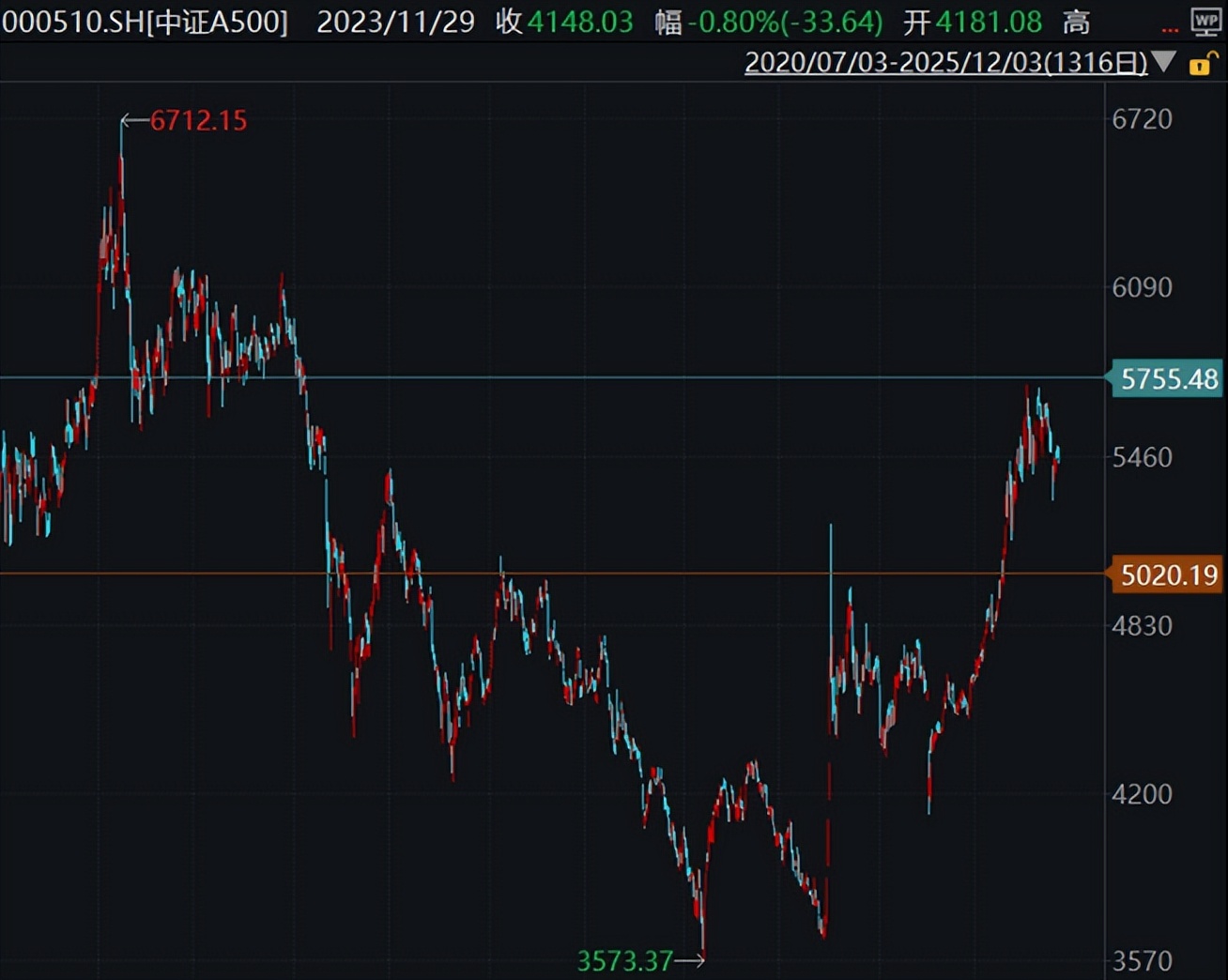
Core Viewpoint - The equity market is currently characterized by controllable risks and an incomplete upward trend, with risks primarily stemming from market confidence and liquidity concerns [1] Group 1: Market Rhythm - The market is in a phase of upward continuation and consolidation, with recent technical analysis indicating a return to a lower trading range after multiple failed attempts to break higher [1] - Trading volume has shown a declining trend, with daily transactions now averaging between 1.5 trillion to 2 trillion, down from previous highs of 2 trillion to 3 trillion [1] Group 2: Market Space - The current market structure indicates pressure from above and support from below, with recent rapid price increases leading to profit-taking and heightened fear of overvaluation [2] - The CSI A500 index, a key benchmark, reflects this dynamic, as it is seen as a core broad-based index in the current market environment [2] Group 3: Economic Fundamentals - The fundamental changes in the economy are lagging, with the recent anti-involution policies signaling a shift but requiring time to materialize [4] - Compared to the previous bull market peak, current economic fundamentals are under pressure, indicating a need for improvement before further market gains can be expected [4] Group 4: Future Market Potential - Despite current pressures, there is potential for market momentum if economic conditions improve, as the Shanghai Composite Index has surpassed its ten-year high, while the CSI 300 and CSI A500 have not yet done so [5] - The market is expected to maintain rationality, suggesting that upward trends will not abruptly halt [5] Group 5: Investment Direction - Investment strategies should focus on "technology as king" and value-based approaches, emphasizing the importance of corporate profitability and valuation levels [6] - The manufacturing sector is highlighted as a critical component of the economy, with the effectiveness of anti-involution policies influencing performance [6] - Future breakthroughs in the A-share market are likely to follow paths related to corporate profitability and valuation enhancement in the technology sector [6]

华泰期货:焦煤领涨黑色版块,需谨慎对待当前价格
Xin Lang Cai Jing· 2025-12-19 01:33
昨日黑色板块商品普遍上涨,焦煤表现突出,涨幅超3%,领涨黑色板块,市场情绪好转,盘面成交活 跃。 焦煤上涨主要原因主要在于以下方面: 1、宏观层面,在反内卷等政策刺激带动下,市场情绪有所修复。由于前期焦煤价格调整较为充分,下 跌过程中盘面大幅贴水现货,情绪拉动下焦煤价格快速反弹。 热点栏目 自选股 数据中心 行情中心 资金流向 模拟交易 客户端 来源:华泰期货 作者: 黑色建材组 2、需求方面,临近年底,下游企业有刚需补库需求。同时在盘面反弹过程中,前期空头离场叠加下游 有补库需求,焦煤成交好转,流拍率持续下滑,现货与盘面小幅共振。 整体来看,当前蒙煤通关持续高位,汾渭口径下矿山维持减产累库,焦煤供需整体趋向宽松,动力煤现 货维持跌势,焦煤成本支撑较弱。盘面近月合约受仓单逻辑压制,远月焦煤受供应政策预期扰动,短期 缺乏明确的趋势性矛盾,需谨慎对待当前价格。关注市场情绪变化、煤炭现货价格及供应情况。 风险提示:宏观政策、煤炭供给、钢厂利润、焦化利润、基差风险等。 投资咨询业务资格: 证监许可【2011】1289号 免责声明: 本报告基于本公司认为可靠的、已公开的信息编制,但本公司对该等信息的准确性及完整性不作任 ...

永赢基金王乾:2026年市场风格或再平衡,消费、地产产业链值得关注
Sou Hu Cai Jing· 2025-12-18 08:32
Core Viewpoint - The A-share market is expected to reach a milestone in 2025, with a total market value exceeding 100 trillion yuan and the Shanghai Composite Index surpassing 4,000 points, marking a significant recovery and growth trajectory for 2026 [2] Market Performance and Drivers - The A-share market experienced a notable rally in the past year, driven by a policy shift and improved liquidity, with the rally beginning from the "924" policy change in 2024 [4][7] - The entry of state-owned funds at market lows significantly boosted investor confidence, leading to a noticeable inflow of incremental funds into the market [4][7] Market Structure and Future Outlook - In 2026, there is a cautious optimism regarding the overall market, with a potential shift in market style and a focus on sectors related to domestic demand, real estate, and cyclical industries benefiting from "anti-involution" policies [6][10] - The cyclical and value-related stocks, which lagged in 2025, may see a balanced rise in 2026, contingent on macroeconomic recovery and industry fundamentals [5][9] Key Investment Themes - The real estate sector is highlighted as a critical area for investment, as it is expected to stabilize and influence consumer behavior significantly [13] - Domestic consumption stocks, which underperformed in 2025, are also seen as having potential for recovery in 2026, despite current fundamental challenges [14] - The "anti-involution" policy is anticipated to create opportunities in cyclical industries, with signs of improvement already emerging in Q4 of 2025 [15][18] Valuation and Investment Strategy - The valuation methods for cyclical and technology growth assets differ significantly, with traditional assets relying more on current value assessments, while tech assets are evaluated based on future potential [19][20] - Investors are advised to maintain a long-term perspective and understand the underlying logic of their investments, emphasizing the importance of value investing [26]

永赢基金王乾:2026年市场风格或再平衡,消费、地产产业链值得关注|基遇2026
Sou Hu Cai Jing· 2025-12-18 08:21
Group 1 - The A-share market is expected to reach a milestone with a total market value exceeding 100 trillion yuan and the Shanghai Composite Index surpassing 4,000 points by 2025, marking a significant development in the market [2] - The market's performance in 2025 was driven by a policy shift in 2024 and improved liquidity, with significant confidence injected by early state-owned enterprises entering the market [4][6] - The structural characteristics of the market in 2025 showed that technology and growth stocks performed well, while cyclical and value stocks lagged behind [7][8] Group 2 - For 2026, the market is expected to be cautiously optimistic, with a potential rebalancing of market styles, particularly for cyclical and value-related assets that have underperformed [5][8] - The real estate sector is highlighted as a key area for investment, as it is in a process of bottoming out and may influence consumer behavior and wealth effects [12][13] - The "anti-involution" policy is anticipated to impact industry profitability positively, although the extent of this effect may vary across different sectors [16][17] Group 3 - The consumer sector, particularly domestic consumption stocks, is seen as an area with potential opportunities in 2026, despite having underperformed in previous years [13][14] - The overall economic indicators, including price levels and macroeconomic data, are crucial for assessing investment opportunities and market trends [9][10] - The technology sector is undergoing a "purification" process, where only companies with viable business models will succeed in the long term [20][21]

本钢板材(000761) - 2025年12月17日投资者关系活动记录表
2025-12-18 07:30
Group 1: Asset Replacement and Financial Performance - The company is currently evaluating the feasibility and compliance of a major asset replacement plan disclosed in June 2023, which may significantly increase the proportion of related sales and impact the company's independent operational capabilities [2] - The company has faced losses due to higher sales and procurement costs compared to industry standards, exacerbated by long cold periods in Northeast China, but has seen improvements in performance year-on-year [2][3] Group 2: Profitability Improvement Measures - The company is focusing on developing high value-added products to narrow the competitive gap with leading steel enterprises, aiming to increase prices and gross margins through differentiated products [3] - Efforts to reduce procurement costs include strategic purchasing, product substitution, and optimizing inventory management to enhance operational efficiency and capacity utilization [3] Group 3: Convertible Bond and Financing Strategies - The company is preparing for the upcoming maturity of its convertible bonds by enhancing its market value management and exploring financing channels to ensure timely repayment [3] - Strategies include cost reduction, efficiency improvement, and professional integration to elevate the company's overall quality and valuation [3] Group 4: Industry Response and Operational Strategy - The company is committed to responding to the "anti-involution" policy by optimizing production based on market trends and ensuring stable operations while enhancing quality and efficiency [3]
