贸易摩擦

Search documents
饲料养殖产业日报-2025-04-08
Chang Jiang Qi Huo· 2025-04-08 01:43
Report Industry Investment Rating No relevant content provided. Core View of the Report - The report provides daily insights on the feed and aquaculture industry, covering various products such as live pigs, eggs, oils, soybean meal, and corn. It analyzes the current market situation, supply - demand dynamics, and price trends of each product, and offers corresponding trading strategies [1][2][4]. Summary by Related Catalogs Live Pigs - **Spot Price**: On April 8, the spot prices in Liaoning, Henan, Sichuan, and Guangdong were stable. The price in Liaoning was 14.1 - 14.4 yuan/kg, in Henan 14.3 - 15 yuan/kg, in Sichuan 14.2 - 14.6 yuan/kg, and in Guangdong 15.1 - 15.6 yuan/kg [1]. - **Market Analysis**: China's 34% counter - tariff on US imports from April 10 has limited direct impact on the pork market as the domestic pork import accounts for only about 5% and the US share is less than 1%. Currently, the industry still has breeding profits. In the short - term, large - scale farms control the weight of pigs for sale, and the low - price entry of secondary fattening and low slaughter inventory support the price. However, the price is under pressure due to cautious secondary fattening after price increases, increased large - pig sales, and limited terminal consumption. In the medium - to - long - term, the supply from April to September is expected to increase, and the price may fall back to the cost level. The forward price is also under pressure [1]. - **Trading Strategy**: The futures are at a discount, reflecting a weak expectation. The general direction is to go short on rebounds. For the 05 contract, pay attention to the pressure at 13,500 - 13,600; for the 07 contract, 13,600 - 13,800; and for the 09 contract, 14,300 - 14,500. Sell out - of - the - money call options on the 07 and 09 contracts at high prices [1]. Eggs - **Spot Price**: On April 8, the price in Shandong Dezhou was 3.05 yuan/jin, up 0.1 yuan/jin from the previous day, and in Beijing it was 3.25 yuan/jin, up 0.09 yuan/jin [2]. - **Market Analysis**: In April, the supply pressure is large due to the increasing number of old hens undergoing molting and newly - hatched chickens starting to lay eggs. The egg price is under pressure, but the increased culling of old hens and the digestion of inventory have marginally improved the supply - demand pattern. In the long - term, the high breeding profit from December 2024 to February 2025 led to high replenishment enthusiasm, resulting in more newly - laying hens in the second quarter. The supply increase trend in the second half of the year may be difficult to reverse [2]. - **Trading Strategy**: The 05 contract on the futures market has a slight premium over the spot. For non - holders, be cautious about shorting. The 08 and 09 contracts are considered bearish in general, but pay attention to the impact of feed costs and culling [2]. Oils - **Futures Price Movement**: On April 7, the US soybean oil May contract fell 1.14% to 45.20 cents/pound, and the Malaysian palm oil June contract fell 3.40% to 4,182 ringgit/ton. The domestic palm oil price fell 410 - 460 yuan/ton, soybean oil 150 - 250 yuan/ton, and rapeseed oil 250 - 280 yuan/ton [4]. - **Palm Oil**: Trump's tariff policy has increased the global economic recession expectation, dragging down the oil market. In Malaysia, the March export increased by 0.4 - 3.9% month - on - month, but the production increased by 5.10 - 9.48%. The inventory is expected to rise. After the Tomb - Sweeping Festival, Malaysian palm oil is expected to fluctuate weakly. In China, the supply - demand is in a tight balance in the short - term, but the price may decline in the long - term [5]. - **Soybean Oil**: Although the US may increase the biodiesel blending ratio, the overall fundamentals are bearish. After the mutual tariff imposition, the domestic import of US soybeans incurs heavy losses, and the South American supply pressure is large. The US soybean is expected to fluctuate weakly in the short - term. In China, the soybean and soybean oil inventories are decreasing, but the supply pressure will increase in the second quarter. The price may first fall and then rise in the long - term [6]. - **Rapeseed Oil**: The uncertainties in the relations between the US, Canada, and China have affected the Canadian rapeseed export. The domestic rapeseed oil inventory is high, but the supply pressure will ease after May. In the long - term, the rapeseed oil price is expected to stop falling and rebound [7]. - **Trading Strategy**: After the festival, domestic oils are expected to fluctuate weakly, with soybean oil and rapeseed oil relatively strong. In the second quarter, the overall oil price may decline, and then rebound in the third quarter. Temporarily observe the 05 contracts of soybean, palm, and rapeseed oils, and pay attention to the support levels. Close the spread - widening position of the 09 contract of rapeseed oil and soybean oil [8]. Soybean Meal - **Futures and Spot Price**: On April 7, the US soybean 05 contract rose 6 cents to 983 cents/bu. The domestic soybean meal spot price in the East China region was 3,120 yuan/ton, with a basis of 05 + 220 yuan/ton [8]. - **Market Analysis**: China's tariff policy on US imports has a limited direct impact on soybean meal before July, but it may push up the bottom price of the 05 and 07 contracts due to sentiment. The abundant supply from South America will limit the upward space. In the long - term, the tariff will increase the import cost and tighten the supply, driving up the domestic soybean meal price [8]. - **Trading Strategy**: Be cautious about going long on the 05 and 07 contracts. Go long on the 09 contract at low prices. Do a reverse spread on the 7 - 9 contract and a positive spread on the 9 - 1 contract. For spot enterprises, be cautious about arranging the basis from May to September, and price at low levels if there is an existing basis. Arrange the basis after September according to the crushing profit or use the 9 - 1 positive spread [8]. Corn - **Spot Price**: On April 7, the new corn purchase price at Jinzhou Port was 2,180 yuan/ton, and the closing price was 2,230 yuan/ton. The purchase price in Shandong Weifang Xingmao was 2,334 yuan/ton, up 10 yuan/ton from the previous day [9]. - **Market Analysis**: In the short - term, there is still a selling demand from the grass - roots level, and the port inventory is high, putting pressure on the spot price. However, the market sentiment is bullish, and the downstream has replenishment demand. In the long - term, the corn production in the 24/25 season has decreased, and the import has continued to decline, but the supply is supplemented by substitutes, limiting the upward space [10]. - **Trading Strategy**: Generally, be bullish on the corn market. Look for opportunities to go long on the 05 contract on pullbacks, and pay attention to the 2,250 support level. Do positive spreads on the 5 - 9 and 5 - 7 contracts [10]. Today's Futures Market Overview - The report provides the closing prices, price changes, and other information of various futures and spot products such as CBOT soybeans, soybean meal, corn, soybean oil, palm oil, rapeseed oil, eggs, live pigs, etc. on the previous and the day before the previous trading days [11].
宏源期货品种策略日报:油脂油料-2025-04-08
Hong Yuan Qi Huo· 2025-04-08 01:42
1. Report Industry Investment Rating - No relevant content provided 2. Core Viewpoints - Affected by the implementation of US tariffs and OPEC+ production increase, the international oil price continued to decline sharply, causing the cost - side support of PX to collapse. The PTA demand side was weak, and the market was bearish. Although the PTA supply was sufficient, it was in the process of de - stocking. The polyester bottle - chip market was also affected by trade frictions, with a bearish sentiment and the cost - pricing logic continuing to operate. It was expected that PX, PTA, and PR would operate weakly [2]. 3. Summary by Related Contents 3.1 Price Changes - **Upstream Products**: On April 7, 2025, the futures settlement prices of WTI and Brent crude oil decreased by 9.34% and 8.45% respectively compared to the previous values. The spot prices of naphtha, xylene, and PX also declined significantly, with the spot price of PX CFR China Main Port dropping by 12.40% [1]. - **PTA**: The closing and settlement prices of CZCE TA contracts all decreased, with the settlement price of the main contract dropping by 6.03%. The domestic spot price of PTA decreased by 1.22%, and the CCFEI price index of PTA decreased by 5.89% [1]. - **PX**: The closing and settlement prices of CZCE PX contracts decreased, with the settlement price of the main contract dropping by 7.01%. The domestic spot price of PX decreased by 5.46% [1]. - **PR**: The closing and settlement prices of CZCE PR contracts decreased, with the settlement price of the main contract dropping by 6.03%. The market prices of polyester bottle - chips in the East and South China markets decreased by 5.72% and 4.29% respectively [1]. - **Downstream Products**: The CCFEI price indices of various polyester products such as polyester filament and short - fiber all decreased, with the CCFEI price index of polyester FDY68D dropping by 4.08% [2]. 3.2 Spread Changes - The PXN spread decreased by 6.81% to 208.75 dollars/ton, and the PX - MX spread decreased by 13.12% to 96 dollars/ton. The near - far month spread of PTA increased by 6.00% to - 46 yuan/ton, and the basis of PTA decreased by 33 yuan/ton to 0 yuan/ton. The basis of PX increased by 27 yuan/ton to 71 yuan/ton. The basis of PR in the East China market decreased by 3 yuan/ton to 15 yuan/ton, and in the South China market, it increased by 82 yuan/ton to 130 yuan/ton [1]. 3.3 Operating Conditions - The PX operating rate remained unchanged at 73.35%. The PTA factory load rate decreased by 3.01% to 76.77%, the polyester factory load rate increased by 0.31% to 89.35%, the bottle - chip factory load rate increased by 2.31% to 75.47%, and the Jiangsu and Zhejiang loom load rate decreased by 0.42% to 66.76%. The sales - to - production ratios of polyester filament, short - fiber, and polyester chips all decreased, with the polyester short - fiber sales - to - production ratio dropping by 35 percentage points to 49% [1]. 3.4 Device Information - The 2.2 - million - ton PTA device in Northeast China and the 2.5 - million - ton PTA device in South China are planned to be overhauled soon, but the situation needs further attention [2]. 3.5 Trading Strategy - On the previous trading day, due to the impact of tariff policies, the 2505 contract of PTA closed at 4,550 yuan/ton, down 6.03%, with an intraday trading volume of 31,800 lots; the 2505 contract of PX closed at 6,392 yuan/ton, down 7.01%, with an intraday trading volume of 4,061 lots; the 2505 contract of PR closed at 5,670 yuan/ton, down 6.03%, with an intraday trading volume of 1,436 lots. It is expected that PX, PTA, and PR will operate weakly (PX view score: - 2, PTA view score: - 2, PR view score: - 2) [2].
黄金市场“牛回头”了吗?
Sou Hu Cai Jing· 2025-04-07 23:08
Group 1 - The recent decline in gold prices is attributed to multiple factors, including concerns over escalating trade tensions and a strong US dollar, which have led investors to withdraw from safe-haven assets like gold [2] - The gold market has experienced a strong performance since 2024, with COMEX gold futures reaching over $2810 per ounce in January, marking a more than 6% increase from the beginning of the year [1] - Domestic gold prices in China also saw significant fluctuations, with Au99.99 reaching a historical high of 747.5 yuan per gram on April 3, before dropping to 713.98 yuan per gram on April 7 [1] Group 2 - Analysts suggest that the current drop in gold prices is a result of a combination of factors, including a shift in Federal Reserve policy, a stronger dollar, and a recovery in risk appetite among investors [2] - Despite the recent downturn, there is a bullish outlook for gold in the medium to long term, with expectations of potential price increases in the coming years [2] - Investors are advised to remain rational and avoid impulsive trading decisions in the current volatile market [2]
如何看待关税措施对债市的影响:利率下行方向重新确立
Xinda Securities· 2025-04-07 07:14
Report Industry Investment Rating Not provided in the content Core Viewpoints - The shock pattern of China's domestic bond market was broken by the escalation of trade frictions last week. After the introduction of the US's so - called "reciprocal tariffs", the global risk - aversion sentiment has increased, and the yields of domestic bonds have declined significantly. The direction of interest rate decline has been re - established, and the probability of reserve requirement ratio cuts and interest rate cuts in Q2 has increased significantly [2][3][6]. - Although the final implementation of short - term tariffs remains to be observed and the market may fluctuate, in the next quarter, long - term interest rates may hit new lows. At present, it is recommended to pay more attention to the duration strategy and appropriately lengthen the duration of the portfolio [3][36]. Summary by Directory 1. US Reciprocal Tariff Rates Significantly Exceed Expectations, and the Overseas Market Enters a Risk - Aversion Mode - After Trump took office in January, the US imposed tariffs on imports from China, Canada, and Mexico on the grounds of "fentanyl" and immigration issues, and also imposed tariffs on specific products such as steel, aluminum, and automobiles. On February 13, Trump signed a memorandum to impose reciprocal tariffs on trading partners. The market originally thought this would reduce the possibility of a significant increase in overall US tariffs [2][6][7]. - On April 2, the announced reciprocal tariffs first imposed a 10% tariff on all US imports. For economies with large trade deficits, additional differential tariffs were imposed. This greatly exceeded market expectations, bringing high uncertainty to the global economy, potentially pushing up US inflation in the short term and reducing economic growth, and thus increasing global risk - aversion sentiment [2]. - After the reciprocal tariffs were introduced, most economies said they would negotiate with the US. China announced a series of counter - measures on April 4, showing more preparedness for potential tariff risks and enhanced economic resilience. There is still room for negotiation between China and the US, and the final tariff rate is likely to be lower than the current level, but the impact on the fundamentals may exceed previous expectations [2]. 2. The Implementation of Tariffs is Expected to Accelerate the Relaxation of Aggregate Policies. Pay Attention to the Decline of the Central Level of Funding Rates - After the end of the cross - quarter period last week, the funding became looser, and on Thursday, the central bank's open - market operations turned to net injection, pushing DR007 below 1.7%, the lowest level since mid - January. The central bank may re - evaluate the economic and financial situation due to the escalation of global trade frictions, and the decline of the central level of funding rates may accelerate [18]. - Although the funding rate dropped below 1.7% on Thursday, the bank's rigid net financing scale declined, indicating that the central bank may not be ready to lower the central level of funding rates to 1.5% or lower. However, if there is greater pressure on the equity market or external demand, the time for reserve requirement ratio cuts and interest rate cuts may be advanced, and the central level of funding rates may decline further [21]. - The scale of 91 - day discounted Treasury bonds issued last week was lower than expected, leading to a downward revision of the forecast for the April Treasury bond issuance scale. It is expected that the central financial institution capital injection special Treasury bonds will be publicly issued, and the overall government bond issuance scale in April is expected to be about 2.23 trillion yuan, with a net financing of about 86 billion yuan, a decrease of about 61 billion yuan compared with March [3][24][30]. 3. The Direction of Interest Rate Decline is Re - established, and the Rhythm and Magnitude Depend on the Central Bank's Follow - up Actions - Before the implementation of the tariff measures last week, it was believed that the bond market rally driven by the revision of fundamental expectations in the second quarter might repeat in 2025. After the escalation of trade frictions, the yields of bonds at all maturities declined significantly, and investors were concerned about the downward space of interest rates [35]. - If priced at a funding rate of 1.65% - 1.7%, the downward space for short - and medium - term interest rates may be limited. However, due to the increased uncertainty in the domestic fundamental environment, the central bank may be more inclined to reduce costs, and the probability of reserve requirement ratio cuts and interest rate cuts in Q2 has increased significantly. In the short term, long - term interest rates may be more certain, and 3 - 5 - year credit bonds also have strong allocation value [36].

重磅!中方反制,对美加征34%关税、中重稀土出口管制!
证券时报· 2025-04-04 10:19
Group 1: Tariff Measures - The Chinese government announced a 34% tariff on all imported goods originating from the United States, effective from April 10, 2025, at 12:01 PM [2][4] - Existing tax exemption policies remain unchanged, and the newly imposed tariffs will not be eligible for reduction or exemption [3] - Goods that have already been shipped before April 10, 2025, will not be subject to the new tariffs if they arrive between April 10, 2025, and May 13, 2025 [4] Group 2: Export Controls - The Ministry of Commerce and the General Administration of Customs announced export controls on seven categories of medium and heavy rare earth materials, effective immediately [6] - The export control measures aim to safeguard national security and fulfill international obligations, reflecting China's commitment to maintaining global peace and regional stability [6] - The Ministry of Commerce has placed 16 U.S. entities under export control, prohibiting the export of dual-use items to these entities due to potential threats to China's national security [8] Group 3: Unreliable Entity List - The Ministry of Commerce has added 11 U.S. companies, including Skydio Inc., to the unreliable entity list, prohibiting them from engaging in import and export activities related to China [10][14] - These companies are restricted from making new investments in China, as part of measures to protect national sovereignty and security [11][12] Group 4: WTO Dispute - China has filed a lawsuit with the World Trade Organization (WTO) against the U.S. for imposing "reciprocal tariffs," arguing that such actions violate international trade rules and harm legitimate rights of WTO members [15][16]


建信期货油脂日报-2025-04-03
Jian Xin Qi Huo· 2025-04-03 01:18
Report Overview - Report Date: April 3, 2025 [2] - Industry: Oil and Fats [1] - Research Team: Agricultural Products Research Team [4] - Researchers: Yu Lanlan, Lin Zhenlei, Wang Haifeng, Hong Chenliang, Liu Youran [3] 1. Investment Rating No investment rating information is provided in the report. 2. Core View - The market is concerned about the prospects of the US biomass diesel policy, and the USDA monthly crush report shows that the US soybean oil inventory is lower than expected. The sharp rise in US soybean oil drives the entire oil and fat sector. The increase in biomass diesel blending volume may increase the demand for US soybean oil by about 1.8 million tons. - Domestic oils and fats have different upward trends. Soybean oil is mainly traded in the domestic market, and the peak season of imported soybean arrivals in the second quarter puts pressure on soybean oils and fats. The spread arbitrage of going long on soybean oil 09 and short on palm oil 09 performs poorly. - China's additional 100% tariff on rapeseed oil and oilseed cake from Canada has taken effect, and the anti - dumping investigation on rapeseed is pending. Affected by policies, future supply is uncertain, which is beneficial to far - month contracts. - Biodiesel policies and trade frictions significantly amplify market volatility risks. Supported by policies, the overall oil and fat market remains strong. Attention should be paid to policy changes. [8] 3. Summary by Directory 3.1 Market Review and Operation Suggestions - Market Review: In the East China region, the price of first - grade soybean oil is Y2505 + 260 from April to May, Y2509 + 220 from June to July, Y2509 + 230 from June to August, and Y2509 + 240 from June to September. In Dongguan, the quoted price of first - grade rapeseed oil from each factory is 05 + 200, and the quoted price of third - grade rapeseed oil is 05 + 40. In South China, the basis quotes are Dongguan 18 - degree palm oil P05 + 720 yuan/ton and Dongguan 24 - degree palm oil P05 + 460 yuan/ton. - Market Comments: The rise in US soybean oil drives the entire oil and fat sector. The potential increase in biomass diesel blending volume may increase US soybean oil demand. Domestic oils and fats have different trends, and policies have an impact on supply and price trends. [7][8] 3.2 Industry News - As of the end of February, the US soybean oil inventory was 1.924 billion pounds, a month - on - month increase of 5.9% and a year - on - year decrease of 10.4%, which was much lower than analysts' forecasts. - The 2024/25 Brazilian soybean production is expected to be 167.54 million tons, lower than the previous forecast due to poor weather in Rio Grande do Sul. - Brazil's soybean exports in March reached 16.09 million tons, setting a new monthly record. - The USDA expects US farmers to plant 83.495 million acres of soybeans in 2025, lower than market expectations. [9][16] 3.3 Data Overview The report provides multiple data charts, including the basis changes of soybean oil, rapeseed oil, and palm oil, the spot prices of East China third - grade rapeseed oil, East China fourth - grade soybean oil, and South China 24 - degree palm oil, the P1 - 5, P5 - 9, and P9 - 1 spreads of palm oil, and the exchange rates of the US dollar against the Chinese yuan and the Malaysian ringgit. [12][14][15][17][22][23]
智昇黄金原油分析:贸易摩擦明显 金价再创新高
Sou Hu Cai Jing· 2025-04-01 09:37
Group 1: Gold Market - President Trump is set to announce reciprocal tariffs on April 2, affecting all countries, which is raising risk aversion and pushing gold prices higher [1] - The Federal Reserve maintains a cautious stance on interest rate cuts, with officials indicating the need for confidence in declining inflation before making decisions [1] - Technical analysis shows a strong upward trend in gold prices, with a focus on the support level around $3110 [1] Group 2: Oil Market - Geopolitical uncertainties, including the US-Russia tensions over Ukraine and threats from Iran, are increasing risks to oil supply, which is supportive of oil prices [2] - China's March manufacturing PMI data at 50.5, slightly better than the previous value, is expected to improve oil demand [2] - Despite negative fundamental factors, geopolitical tensions and improved manufacturing data are expected to provide marginal support for oil prices [2] - Technical indicators show a strong upward trend in oil prices, with a focus on the support level around $70 [2] Group 3: Nikkei 225 and Copper Market - The Nikkei 225 index has shown a weak trend with multiple days of decline, indicating bearish sentiment [3] - Copper prices are testing the 20-day moving average support, with potential for further gains if it stabilizes [3] - Technical analysis indicates a risk of weakness in copper prices, with attention on the resistance level around $5.09 [3]
全球市场迎接“关税风暴”
Bei Jing Shang Bao· 2025-03-31 15:06
过去一周,关税硝烟渐浓,全球市场波动加剧。随着4月2日美国总统特朗普原定的"对等关税"生效日临近,美股 和亚太股市大幅跳水,经历"黑色星期一"。而在避险情绪下,美元指数冲高,黄金价格创下历史新高,一举突破 3100美元大关,铜价也在3月26日创出年内新高。但也有分析认为,4月2日可能无法为市场带来明确答案,投资者 不应视之为"靴子落地"的时刻。 日韩股市领跌 3月31日,亚洲金融市场迎来"黑色星期一"。上午开盘仅一小时,日本股市便成为风暴中心。日经225指数暴跌超 1500点,最大跌幅达4.2%,创2024年9月以来最大单日跌幅;东证指数同步下挫1.2%,半导体巨头瑞萨电子、丰 田汽车分别跌超7%和3%。 百达资产管理策略主管Jumpei Tanaka指出:"供应链中断风险与美股期货走弱形成共振,日本市场抛压短期内难以 缓解。" 韩国股市同样惨烈,随着韩国时隔17个月重启卖空,电动汽车电池供应链成为空头狙击目标。当天韩国综合指数 收跌3%,三星电子跌3.9%、SK海力士跌4.3%、现代汽车跌3%。 投行分析显示,此类股票在卖空禁令前已积累大量空单,政策松绑后引发连锁反应。韩国金融服务委员会委员长 金英焕强调, ...

豆粕日报-2025-03-31
Zhong Hui Qi Huo· 2025-03-31 11:52
Report Industry Investment Rating No relevant content provided. Core Views of the Report - The soybean meal market is expected to experience short - term high - level fluctuations due to the intertwining of multiple factors, and attention should be paid to the release of US soybean planting area data and Sino - US trade developments [1][4]. - Rapeseed meal will have short - term fluctuations, following the trend of soybean meal, and the actual positive impact of the tariff increase on Canadian rapeseed meal is limited [1][6]. - Palm oil is predicted to have short - term high - level fluctuations. Although the supply and demand factors in March are weakening, it shows a rebound due to certain events [1][8]. - Cotton is in a state of stopping decline and consolidation, with the market waiting for the official US cotton planting intention. The domestic market may maintain range - bound oscillations [1][12]. - Red dates are expected to operate weakly in the short term, as the current supply - strong and demand - weak pattern has not improved significantly [1][14]. - The price of live pigs is expected to decline slightly, with the supply - strong and demand - weak pattern restricting the price rebound space, and attention should be paid to the reverse spread opportunities in the second half of the year [1][17]. Summaries According to Related Catalogs Soybean Meal - **Market Situation**: The Brazilian soybean production outlook is stable, and in Argentina, rainfall will return to above - normal levels in the next 15 days. China and the US have imposed reciprocal 10% tariffs on soybeans, and the trade dispute has temporarily ended. Domestic port and soybean inventories decreased this week, while oil - mill soybean meal inventories increased. From April to June, the monthly average soybean imports will exceed 10 million tons [1][3]. - **Price Movement**: The futures price of the main contract closed at 2,813 yuan/ton, a decrease of 0.46% from the previous day. The national average spot price was 3,168.86 yuan/ton, a decrease of 1.18% [2]. - **Analysis**: The short - term market is in a state of high - level fluctuations. The market's bullish sentiment has weakened due to the small reduction in the estimated US soybean planting area. Attention should be paid to the release of planting area data and Sino - US trade progress. Near - month contracts face the risk of weakening due to the expected increase in soybean imports in April [1][4]. Rapeseed Meal - **Market Situation**: The inventories of rapeseed and rapeseed meal in coastal oil mills decreased this week, but the short - term supply is generally sufficient. China has imposed a 100% tariff on Canadian rapeseed meal and rapeseed oil, but the actual positive impact is limited [6]. - **Price Movement**: The price has fallen from a high level and is currently in a narrow - range weak consolidation, following the trend of soybean meal [1][6]. - **Analysis**: Short - term fluctuations are expected, and attention should be paid to the release of US soybean area data [1][6]. Palm Oil - **Market Situation**: In March, the Ramadan festival led to a decline in international import demand, and Southeast Asian palm oil production is gradually recovering. The domestic supply is tight, and the spot trading of palm oil is still sluggish due to the inverted price difference between soybean oil and palm oil [8]. - **Price Movement**: The futures price of the main contract closed at 9,088 yuan/ton, an increase of 2.27% from the previous day. The national average price was 9,673 yuan/ton, an increase of 2.06% [7]. - **Analysis**: Although the supply and demand factors in March are weakening, the price shows a rebound due to the Indonesian tariff adjustment and the US plan to increase the blending volume of biodiesel. Short - term high - level fluctuations are expected [1][8]. Cotton - **Market Situation**: Internationally, US cotton farmers are more likely to reduce planting areas, and US cotton exports have declined recently. Domestically, the new - season cotton planting area is expected to increase, the commercial cotton inventory is decreasing, and the import is shrinking. The downstream orders have improved slightly, but the export is under pressure [10][11]. - **Price Movement**: The futures price of the main contract CF2505 closed at 13,565 yuan/ton, a decrease of 0.29% intraday. The domestic spot price decreased slightly by 0.01% [10]. - **Analysis**: The market is in a state of stopping decline and consolidation. The US cotton has a recovery expectation, and the domestic market may maintain range - bound oscillations. Attention should be paid to the follow - up strength of consumption - promoting policies [1][12]. Red Dates - **Market Situation**: The trading volume in the market is low, and the inventory of 36 sample enterprises has decreased slightly. The supply - strong and demand - weak pattern has not improved significantly [13][14]. - **Price Movement**: The futures price of the main contract CJ2505 closed at 9,120 yuan/ton, a decrease of 0.11% intraday [14]. - **Analysis**: The short - term operation is expected to be weak, and attention should be paid to the situation of the new production season [1][14]. Live Pigs - **Market Situation**: The supply pressure in the live pig market continues to be released, and the supply of standard pigs is sufficient. Although the demand has increased slightly, it is still weak overall [16]. - **Price Movement**: The futures price of the main contract Lh2505 closed at 13,225 yuan/ton, a decrease of 2.07% intraday. The domestic spot price remained stable [16]. - **Analysis**: The price is expected to decline slightly. The supply - strong and demand - weak pattern restricts the price rebound space. Attention should be paid to the reverse spread opportunities in the second half of the year [1][17].
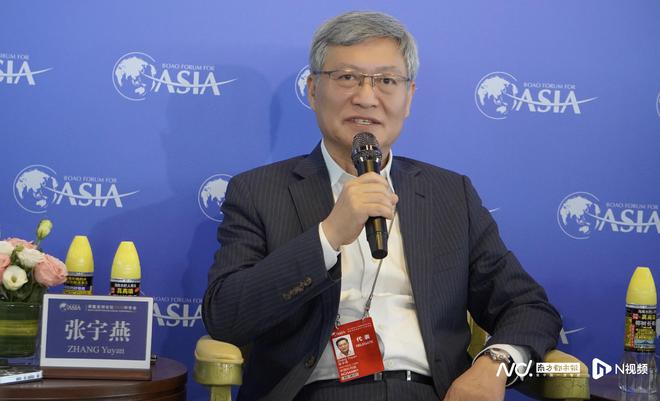
博鳌报告:DeepSeek凸显美国制裁下中国的发展韧性
Nan Fang Du Shi Bao· 2025-03-25 06:50
Core Insights - The report highlights the resilience of China's economy and key industries under U.S. sanctions, using DeepSeek as a case study to illustrate innovation and growth potential in the face of geopolitical challenges [3]. Economic Outlook - The "Asian Economic Outlook and Integration Process 2025 Report" predicts a moderate recovery in Asian economies, with growth expected to rise to 4.5% in 2025 from 4.4% in 2024. The GDP share of Asian economies in the world is projected to increase from 48.1% in 2024 to 48.6% in 2025 [2]. - Excluding China, the weighted actual GDP growth rate for other East Asian economies is expected to decline by 1.0 percentage points to 3.3% in 2025, while the growth rate for other Asian economies is projected to decrease by 0.3 percentage points to 4.2% [2]. Trade and Investment Challenges - Ongoing trade tensions, particularly with the U.S. imposing tariffs on goods from Mexico, Canada, and China, are expected to create significant uncertainty for global trade and investment in 2025 [2]. - The report emphasizes that these trade frictions will put overall pressure on trade and investment in Asia [2]. E-commerce and Digital Trade - E-commerce and digital trade are highlighted as key growth areas, with the Asia-Pacific region's retail e-commerce growth expected to reach 8.4% in 2024. China's cross-border e-commerce import and export total is projected at 2.63 trillion yuan (approximately 369 billion USD), reflecting a year-on-year growth of 10.8% [4]. - Southeast Asia's e-commerce sector is also experiencing significant growth, with a gross merchandise value (GMV) of 263 billion USD, up 15% year-on-year [4]. - However, compliance risks related to cross-border e-commerce are noted, particularly due to changes in U.S. customs policies and new regulations from the EU regarding low-value goods [4]. Employment Trends - The employment growth rate in Asia is expected to decline significantly from 1.94% in 2024 to 1.22% in 2025, which is lower than the global growth rate of 1.28% [6]. - Despite this decline, the overall unemployment rate in Asia is projected to slightly decrease from 4.40% in 2024 to 4.39% in 2025, remaining below the global rate of 4.96% [6]. - The impact of artificial intelligence on employment is highlighted, with varying effects across regions and genders. The highest impact is expected in Northern, Southern, and Western Europe, while East Asia shows the highest proportion of affected employment in Asia [6][8].