
供给侧改革

Search documents
大宗商品反弹,仅仅是因为反内卷吗?
对冲研投· 2025-07-10 10:09
Core Viewpoint - The recent rebound in bulk commodities, particularly polysilicon, is not solely due to the "anti-involution" discussions but is supported by macroeconomic and industrial fundamentals [1][4]. Group 1: Commodity Market Dynamics - The weakest bulk commodities this year are closely related to "coal + real estate," particularly black building materials and new energy products, which have entered a bottoming phase since June due to cost stabilization and unexpected demand [2]. - The oversupply of coal in the past two years has led to a collapse in costs for coal-related products, but recent stabilization in coal prices, driven by seasonal demand, has provided a foundation for the rebound of downstream commodities [2][3]. - Demand has exceeded expectations, with China's exports continuing to perform well despite global concerns, supported by a stable U.S. economy and the passage of the "Big and Beautiful" act, which will boost the U.S. economy in the short term [2][3]. Group 2: Supply-Side Reform and Its Implications - The recent "anti-involution" policies have acted as a catalyst for further commodity rebounds, but the current supply-side reforms differ significantly from those initiated in late 2015, which focused on substantial capacity reduction in coal and steel industries [3]. - The current supply-side reform primarily targets the new energy sector, which has a smaller impact compared to previous reforms, as it mainly involves midstream manufacturing and does not significantly control raw material demand [3][4]. - The iron ore supply is global, and an increase in production is expected next year, indicating that coal, coke, and steel industries are not the main focus of the current supply-side reforms [3]. Group 3: Future Outlook - The impact of the current "anti-involution" is expected to be milder, serving as a trigger rather than the main driver of the commodity rebound, which is fundamentally supported [4]. - In the short term, due to healthy fundamentals, related commodities may still have room for rebound, but the potential for "coal + real estate" related commodities is limited due to ongoing oversupply [4]. - The future performance of leading polysilicon companies will largely depend on the implementation of policies, with prices previously driven down to industry minimum costs, and any recovery will hinge on policy execution and effectiveness [4].


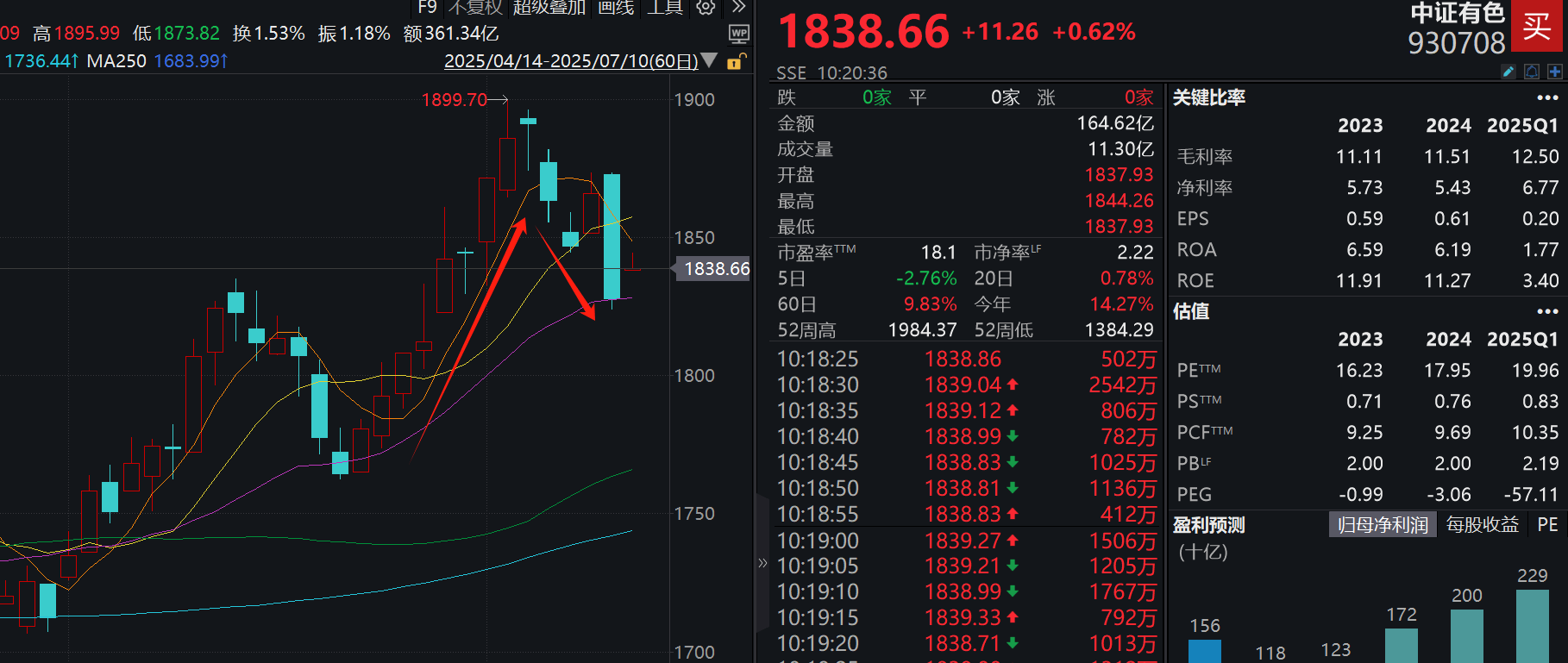
双面因素交织,有色ETF的十字路口如何抉择?
Sou Hu Cai Jing· 2025-07-10 07:59
Core Viewpoint - The recent fluctuations in non-ferrous metals prices are influenced by supply-side reforms in China and the announcement of a 50% tariff on copper imports by the U.S. starting August 1, 2025, which has created a divergence in copper prices between the U.S. and China [1][7]. Group 1: Market Dynamics - The supply-side reforms in China have benefitted traditional industries like aluminum, steel, and coal, leading to price increases due to low inventory levels [1]. - Following the U.S. tariff announcement, copper prices in New York rose over 2%, while domestic copper prices in China fell, indicating market concerns about reduced global demand for copper [1][7]. - The China Securities Non-Ferrous Metals Index showed a strong upward trend initially but experienced a significant drop during the tariff announcement period, reflecting market volatility [1]. Group 2: Financing Trends - As of July 9, 2025, the financing balance for the non-ferrous metals sector increased by 9.64 billion, indicating strong investor interest despite market fluctuations [4][6]. - The construction materials sector saw the highest financing balance growth rate at 1.43%, followed by non-ferrous metals at 1.22% [4][6]. Group 3: ETF Strategies - The non-ferrous metals ETFs are relatively small in scale, with three funds exceeding 4 billion in size, including the leading Southern CSI Shenwan Non-Ferrous Metals ETF [8][10]. - The Dachen Non-Ferrous Metals Futures ETF is sensitive to price fluctuations due to its direct tracking of futures contracts, making it suitable for investors who closely monitor commodity prices [10][12]. - The Southern CSI Shenwan Non-Ferrous Metals ETF, with a scale exceeding 50 billion, is favored by investors for its comprehensive coverage of the non-ferrous metals sector [10][13]. Group 4: Long-term Outlook - Despite short-term risks from U.S. tariffs and seasonal demand fluctuations, supply constraints are expected to support copper prices in the medium term [7]. - The long-term demand for copper and aluminum is anticipated to increase, driven by structural changes in downstream consumption, which may elevate the price stability of these metals [19].
策略深度报告:对比供给侧改革经验,如何看待“反内卷”的市场影响?
Ping An Securities· 2025-07-10 07:58
Group 1: "Anti-Involution" Framework - The government has shifted its focus from merely preventing "involution" to a comprehensive rectification of "involution-style" competition, emphasizing the need for industry self-discipline and the elimination of local protectionism [5][6][8] - Recent high-level meetings have highlighted the importance of addressing "involution-style" competition, with specific measures aimed at promoting a unified national market and improving regulatory frameworks [5][6][8] Group 2: Supply-Side Reform Review - The previous supply-side reform focused on reducing excess capacity in traditional industries through administrative measures, while the current "anti-involution" approach aims to mitigate low-price competition in emerging industries using market-oriented methods [2][17] - The supply-side reform from 2015 to 2017 resulted in significant capacity reductions, with over 170 million tons of steel and 1 billion tons of coal capacity eliminated, leading to improved profitability in related sectors [18][19] Group 3: Market Outlook - The current "anti-involution" market is still in the expectation catalysis phase, with industries like photovoltaic and steel showing positive performance, while others like lithium batteries and e-commerce are lagging [2][3] - The report suggests that industries with lower capacity utilization and higher profit pressures are more likely to self-correct, indicating a potential for improvement in sectors such as photovoltaic equipment and construction materials [2][3] Group 4: Industry-Specific Measures - The government is promoting industry self-discipline and innovation, with initiatives encouraging companies to enhance product quality and phase out outdated capacities [7][14] - Specific industries, including photovoltaic, steel, and cement, are being targeted for regulatory measures to curb low-price competition and promote sustainable development [7][14][16]
日度策略参考-20250710
Guo Mao Qi Huo· 2025-07-10 06:47
Report Summary 1. Investment Ratings The report does not explicitly provide an overall industry investment rating. However, it offers specific outlooks and trading suggestions for various commodities. 2. Core Views - **Macro Environment**: Market uncertainties persist across different sectors, influencing the price movements of various commodities. The economic situation, policy changes, and geopolitical factors all play significant roles in shaping market trends [1]. - **Commodity - Specific Trends**: Different commodities have distinct price trends based on their supply - demand fundamentals, cost factors, and external influences such as tariffs and geopolitical events. For example, some metals are expected to face downward pressure due to factors like supply increases or cost - related issues, while others may see price rebounds or stabilizations [1]. 3. Summary by Commodity Categories **Macro - Financial** - **Equity Index**: In the short term, with limited domestic and international positive factors, but decent market sentiment and liquidity, the equity index may show a relatively strong oscillatory pattern [1]. - **Treasury Bonds**: Asset shortage and a weak economy are favorable for bond futures, but the central bank's short - term warning about interest - rate risks restricts upward movement [1]. **Precious Metals** - **Gold**: Given market uncertainties, the gold price is expected to mainly oscillate in the short term [1]. - **Silver**: Similar to gold, the silver price is likely to oscillate due to market uncertainties [1]. **Base Metals** - **Copper**: The potential implementation of US copper tariffs may lead to a back - flow of non - US copper, posing a risk of price correction for Shanghai and London copper [1]. - **Aluminum**: With the cooling of the Fed's interest - rate cut expectations and high prices suppressing downstream demand, the aluminum price faces a risk of decline. However, the domestic anti - involution policy boosts the expectation of supply - side reform, causing the alumina price to stabilize and rebound [1]. - **Zinc**: Tariff disturbances are increasing, and the expected inventory build - up is still pressuring the zinc price. Traders are advised to look for short - selling opportunities [1]. - **Nickel**: With macro uncertainties and a slight decline in the premium of Indonesian nickel ore, the nickel price is expected to oscillate weakly. Short - term short - selling is recommended, and in the long - term, the oversupply of primary nickel will continue to exert downward pressure [1]. - **Stainless Steel**: After a rebound, the sustainability of the stainless - steel price is uncertain. Short - term trading is advised, and selling hedges can be considered at high prices, while keeping an eye on raw - material changes and steel production [1]. - **Tin**: With increasing tariff disturbances, the tin price is mainly priced based on macro factors. In the short term, the supply - demand situation is weak, and the driving force for price movement is limited [1]. - **Industrial Silicon**: The supply shows a pattern of decrease in the north and increase in the south. Although the demand for polysilicon has a marginal increase, there are expectations of future production cuts. After the price rally, market divergence is likely to emerge [1]. - **Polysilicon**: There are expectations of supply - side reform in the photovoltaic market, and market sentiment is high [1]. - **Carbonate Lithium**: The supply side has not seen production cuts, downstream replenishment is mainly by traders, and there is capital - based gaming in the market [1]. **Black Metals** - **Rebar and Hot - Rolled Coil**: The strong performance of furnace materials provides cost support, but the spot market for hot - rolled coils has a risk of marginal weakening. Both are expected to oscillate [1]. - **Iron Ore**: In the short term, production has increased, demand is decent, supply - demand is relatively balanced, but cost support is insufficient, and the price is under pressure [1]. - **Manganese Silicon**: The price is under pressure due to short - term production increases, relatively balanced supply - demand, and insufficient cost support [1]. - **Silicon Iron**: Production has slightly increased, demand is okay, and supply - demand is relatively balanced [1]. - **Glass**: There is an improvement in the supply - demand margin in the short term, with stable supply and resilient demand. However, in the medium - term, oversupply may make it difficult for the price to rise [1]. - **Soda Ash**: Supply has been disrupted, direct and terminal demand is weak, cost support has weakened, and the price is under pressure [1]. - **Coking Coal and Coke**: For coking coal, short - term short - selling opportunities can be considered, and for coke, focus on selling hedges when the futures price has a premium [1]. **Agricultural Products** - **Palm Oil**: OPEC +'s unexpected production increase causes a decline in crude oil prices, and palm oil is expected to follow suit. In the long run, international oil - fat demand is expected to increase, so a bullish view is taken on far - month contracts [1]. - **Soybean Oil**: The near - month fundamentals are weak, but it may show a relatively strong performance due to the influence of palm oil [1]. - **Cotton**: In the short term, there are disturbances such as trade negotiations and weather premiums for US cotton. In the long - term, macro uncertainties are high. The domestic cotton - spinning industry is in the off - season, and downstream inventories are starting to accumulate. Overall, the domestic cotton price is expected to show a weakly oscillatory downward trend [1]. - **Sugar**: Brazil's 2025/26 sugar production is expected to reach a record high, but if crude oil prices continue to be weak, it may affect the sugar - production ratio and lead to higher - than - expected sugar output [1]. - **Corn**: Short - term policy - driven grain releases and a low wheat - corn price difference have a negative impact on the corn market. The futures price is expected to oscillate, and for the far - month CO1 contract, short - selling opportunities at high prices can be considered [1]. - **Soybean Meal**: In the US, the supply - demand balance sheet is expected to tighten. If Sino - US trade policies remain unchanged, there is an expectation of inventory reduction in the fourth quarter for soybean meal, and the far - month contract price is expected to rise. If an agreement is reached, the overall decline in the futures price is expected to be limited [1]. **Energy and Chemicals** - **Crude Oil and Fuel Oil**: With the cooling of the Middle - East geopolitical situation, the market returns to being dominated by supply - demand logic. OPEC +'s unexpected production increase and strong short - term consumption in Europe and the US during the peak season are the main influencing factors [1]. - **Natural Rubber**: The downstream demand is showing a weakening trend, the supply - side production is expected to increase, and inventory has slightly increased [1]. - **BR Rubber**: There have been recent device disturbances stimulating the price increase, OPEC's unexpected production increase, the fundamentals of synthetic rubber are under pressure, and attention should be paid to the price adjustments of butadiene and cis - butadiene and the de - stocking progress of synthetic rubber [1]. - **PTA**: The PTA basis continues to weaken, but the crude - oil price remains strong. The polyester downstream load remains at 90% despite the expectation of reduction, and the PTA spot market is becoming more abundant, with low replenishment willingness from polyester manufacturers due to profit compression [1]. - **Ethylene Glycol**: The coal price has slightly increased, the future arrival volume of ethylene glycol is large, and the concentrated procurement due to improved polyester sales has an impact on the market [1]. - **Short - Fiber**: The short - fiber warehouse - receipt registration volume is low, and factory maintenance has increased. With a high basis, the cost of short - fiber is closely related to the market [1]. - **Styrene**: The pure - benzene price has slightly recovered, the import volume has decreased, the styrene device load has increased, the styrene inventory is concentrated, and the styrene basis has significantly weakened [1]. - **Urea**: Domestic demand is average, the summer agricultural demand is coming to an end, but the export expectation in the second half of the year is improving [1]. - **PE**: With good macro - sentiment, many maintenance activities, and mainly rigid demand, the price is expected to oscillate strongly [1]. - **PP**: The maintenance support is limited, orders are mainly for rigid demand, and the anti - involution policy has boosted market sentiment, causing the price to oscillate strongly [1]. - **PVC**: The price of coking coal has increased, the market sentiment is good, the number of maintenance activities has decreased compared to the previous period, but the downstream has entered the seasonal off - season, and the supply pressure has increased. The price is expected to oscillate strongly [1]. - **Caustic Soda**: Maintenance is nearly over, the spot price has dropped to a low level, the decline in liquid chlorine has eroded the comprehensive profit of the chlor - alkali industry, and the number of current warehouse receipts is low. Attention should be paid to the change in liquid chlorine [1]. - **LPG**: The July CP prices of propane and butane have both decreased, OPEC + has unexpectedly increased production, the combustion and chemical demand for LPG is in the seasonal off - season, and the spot price decline is slow, so the PG price still has room to fall [1]. **Shipping** - **Container Shipping (European Route)**: There is a pattern of stable current situation and weak future expectations. The freight rate is expected to reach its peak in mid - July, showing an arc - top trend, and the peak - reaching time is advanced. The subsequent weeks will have sufficient capacity deployment [1].
新世纪期货交易提示(2025-7-10)-20250710
Xin Shi Ji Qi Huo· 2025-07-10 03:29
Report Industry Investment Ratings - Iron ore: Short-term rebound, long-term supply-demand surplus, focus on whether the 2509 contract can effectively break through 740 yuan/ton [2] - Coking coal and coke: Rebound, pay attention to the trends of hot metal and supply side [2] - Rolled steel: Rebound, short-term supply contraction expectation, mild demand decline [2] - Glass: Rebound, short-term valuation is relatively low, pay attention to downstream demand recovery [2] - Soda ash: Oscillation [2] - Stock index futures/options: Shanghai Composite 50 rebounds, CSI 300 oscillates, CSI 500 and CSI 1000 go up, it is recommended to hold long positions in stock index [2][4] - Treasury bonds: 2-year and 5-year treasury bonds oscillate, 10-year treasury bond rebounds, hold long positions in treasury bonds lightly [4] - Gold: High-level oscillation [4] - Silver: High-level oscillation [4] - Pulp: Oscillation [5] - Logs: Oscillation, pay attention to the impact of log futures delivery on prices [5] - Oils and fats: Oscillation, palm oil may be relatively stronger supported by production reduction in the origin [5] - Meal: Oscillation with a downward bias [5] - Live pigs: Rebound, the price is expected to continue rising [7] - Rubber: Rebound, expected to maintain a wide-range oscillating trend [9] - PX: Wait-and-see [9] - PTA: Try shorting at high prices [9] - MEG: Try shorting at high prices [9] - PR: Wait-and-see [9] - PF: Wait-and-see [9] Core Viewpoints - The report analyzes the market trends of various commodities including black industry, financial products, precious metals, light industrial products, agricultural products, and soft commodities, and provides corresponding investment suggestions based on supply-demand relationships, policy impacts, and market sentiment [2][4][5][7][9] Summaries by Related Catalogs Black Industry - Iron ore: Recently, the iron ore futures price rebounded due to emotional influence. The end-of-quarter rush of mines is basically over, and the shipments from Australia and Brazil have decreased. The short-term supply is still loose. In the long term, the supply will gradually increase, the demand will be relatively low, and the port inventory will enter the accumulation stage. The 2509 contract should focus on whether it can effectively break through 740 yuan/ton [2] - Coking coal and coke: Affected by supply-side reform news and Tangshan's production restrictions, the prices of black commodities rose, and raw materials followed. The supply of the coking coal and coke market is expected to increase. Coke prices were suppressed by steel mills, and the inventory pressure of coking enterprises increased. Pay attention to the trends of hot metal and supply side [2] - Rolled steel: The "anti-involution" in the supply side has boosted positive sentiment. If the hard emission reduction measures in Tangshan are implemented as planned, the capacity utilization rate is expected to decline. The demand for building materials has slightly increased in the off-season, and the profits of the five major steel products are acceptable. The total inventory of steel products remains flat, and the supply-demand contradiction is not prominent [2] - Glass: There is no substantial positive news in the glass fundamentals. The speculative sentiment in the small-plate market in Shahe has been reignited. The daily melting volume needs to be reduced to below 154,000 tons to meet the seasonal inventory reduction. The demand is expected to weaken in the rainy season, and the total inventory of national float glass sample enterprises is still at a high level in the same period of the past two years [2] - Soda ash: The long-term real estate industry is still in the adjustment period, and the glass demand is difficult to recover significantly. The short-term valuation is relatively low, and the futures price has risen sharply due to emotional influence. Pay attention to the downstream demand recovery [2] Financial Products - Stock index futures/options: The previous trading day, the Shanghai Composite 300 index fell by 0.18%, the Shanghai Composite 50 index fell by 0.26%, the CSI 500 index fell by 0.41%, and the CSI 1000 index fell by 0.27%. The funds flowed into the education and diversified finance sectors, and flowed out of the precious metals and insurance sectors. China's economic data shows resilience, and the market risk aversion sentiment has eased. It is recommended to hold long positions in stock index [2][4] - Treasury bonds: The yield of the 10-year China bond at maturity remained flat, FR007 remained flat, and SHIBOR3M decreased by 1bp. The central bank carried out 75.5 billion yuan of 7-day reverse repurchase operations, and the net withdrawal on the day was 23 billion yuan. The market interest rate is consolidating, and the treasury bond trend has a narrow rebound. Hold long positions in treasury bonds lightly [4] Precious Metals - Gold: In the context of a high-interest rate environment and globalization restructuring, the pricing mechanism of gold is shifting from the traditional focus on real interest rates to central bank gold purchases. The currency, financial, and risk aversion attributes of gold are affected by various factors such as the US debt problem, global interest rates, and geopolitical risks. The current logic driving the rise in gold prices has not completely reversed, and it is expected to maintain high-level oscillation [4] - Silver: It is in a high-level oscillation state. Pay attention to the release of June CPI data and the impact of tariff policies on inflation. The short-term market risk aversion sentiment has rebounded, boosting the gold price. The market has postponed the expected earliest interest rate cut by the Fed to October [4] Light Industrial Products - Pulp: The spot market prices showed mixed trends. The cost price decline weakened the support for pulp prices. The papermaking industry's profitability is at a low level, and the demand is in the off-season. The pulp fundamentals present a situation of weak supply and demand, and it is expected to oscillate mainly [5] - Logs: The daily average shipment volume of logs at ports increased slightly last week. The shipment volume from New Zealand to China in May increased by 18% compared with the previous month. The expected arrival volume this week decreased by 25.73% month-on-month. The port inventory decreased by 130,000 cubic meters compared with the previous week. The cost-side support has strengthened. The short-term supply pressure has eased, and the supply-demand contradiction is not significant. Pay attention to the impact of log futures delivery on prices [5] Oils and Fats and Meals - Oils and fats: The production of Malaysian palm oil decreased month-on-month. With Malaysia continuing to lower the export tariff of palm oil in July, the strong export momentum is expected to continue, and the inventory of Malaysian palm oil may decline. The B40 policy in Indonesia is still undecided. Geopolitical risks have eased, and the supply concerns have been eliminated. Crude oil has dragged down the oils and fats, while the US biodiesel policy expectation has boosted the oils and fats. The domestic inventory of the three major oils and fats continues to rise, and the supply is abundant while the demand is in the off-season. It is expected to oscillate in the short term, and palm oil may be relatively stronger supported by production reduction in the origin [5] - Meals: The soybean planting area in 2025 was only slightly adjusted compared with the March intention. The growth of US soybeans is good, and the extreme high-temperature weather is expected to decrease in the coming weeks. South American soybeans have a bumper harvest, and the soybean market remains weak. The domestic import of soybeans in July is expected to be about 10 million tons. The inventory of soybean meal has continued to rise, and it is expected to oscillate with a downward bias [5] Agricultural Products - Live pigs: The current pig farmers have a strong sentiment of holding back prices, and the pig prices in the north are moving smoothly. The supply of pigs in the south is expected to be tight in July, and the prices may continue to rise. The average trading weight of pigs across the country has continued to decline. The price of pork has risen following the increase in pig prices, and the terminal procurement enthusiasm has significantly increased. The average settlement price of pigs at key slaughtering enterprises across the country has continued to rise, and the opening rate has decreased slightly. It is expected that the pig prices will continue to rise in the next period [7] Soft Commodities - Rubber: On the supply side, the natural rubber production areas at home and abroad are generally affected by rainfall, and the raw material supply is tight. On the demand side, the capacity utilization rate of the tire industry in China has shown a structural recovery. The inventory of natural rubber in China has increased slightly. It is expected that the inventory at Qingdao Port will continue to decline slightly, and the rubber price is expected to maintain a wide-range oscillating trend [9] - PX: The positive driving force is limited, and the oil price faces a callback risk. The PX load has slightly declined, and the PTA load has slightly oscillated and rebounded, but the polyester load has slightly decreased. The short-term supply and demand of near-month PX remain tight, and the PX price fluctuates with the oil price [9] - PTA: The cost side oscillates after a decline, the overall supply of PTA fluctuates narrowly, and the load of downstream polyester factories has slightly decreased. In the medium term, the supply and demand of PTA will weaken. The short-term PTA price mainly fluctuates with the cost [9] - MEG: The arrival volume has rebounded, and the port inventory has increased last week. It is gradually entering a period of supply and demand inventory accumulation. With the rapid recovery of coal-based production capacity, the supply pressure may emerge, and the price is under pressure to fluctuate [9] - PR: The terminal is gradually replenishing at low prices, and the supply side continues to tighten. The polyester bottle chip market has limited room for further decline. However, the spot circulation is still loose, and in the short term, it may operate in a range [9] - PF: Although the overnight oil price continued to rise, the downstream orders remain sluggish, and the sales data of the polyester staple fiber market have been weak recently. Without new positive news, it is expected to weaken and consolidate today [9]
光大期货金融期货日报-20250710
Guang Da Qi Huo· 2025-07-10 03:25
1. Report Industry Investment Rating - No specific industry investment rating is provided in the report. 2. Core Viewpoints - **Stock Index**: The A-share market is expected to continue to fluctuate. The index fundamentals depend on the domestic economic recovery process. Although the corporate profit situation in the first half of 2025 has improved significantly compared to 2024, and there is support from allocation funds, the index is difficult to break through the central level and rise significantly due to credit contraction and insufficient demand under the background of debt resolution. On the other hand, it will not experience a sharp decline in the short term [1]. - **Treasury Bonds**: The bond market is in an environment with loose funds, stable economy, and low short-term interest rate cut expectations. With insufficient upward and downward momentum, it is expected to continue the fluctuating trend in the short term [2]. 3. Summary by Relevant Catalogs 3.1 Research Views - **Stock Index**: On July 9, 2025, the A-share market fluctuated and closed down. The Wind All A index fell 0.18% with a trading volume of 1.53 trillion yuan. The CSI 1000, CSI 500, SSE 50, and SSE 300 indices also declined. The media sector led the rise, while the non-ferrous metals sector corrected. The recent Central Financial and Economic Commission emphasized the construction of a unified national market, but the impact on related themes depends on the transfer mode and scale of central fiscal incremental policies. Overseas, the Fed's interest rate cut expectation has slowed down, and the boost to domestic small-cap indices has weakened. The fundamentals of the index depend on the domestic economic recovery process, and it is expected to fluctuate [1]. - **Treasury Bonds**: On July 9, 2025, treasury bond futures closed with gains. The central bank conducted 755 billion yuan of 7-day reverse repurchase operations with a stable interest rate of 1.4%. The net withdrawal of funds was 230 billion yuan. The overall capital situation was loose, and the price index remained stable. The bond market is expected to continue to fluctuate in the short term [1][2]. 3.2 Daily Price Changes - **Stock Index Futures**: On July 9, 2025, compared with the previous day, the IH, IF, IC, and IM contracts all declined, with declines of -0.14%, -0.15%, -0.47%, and -0.35% respectively [3]. - **Stock Indices**: The SSE 50, SSE 300, CSI 500, and CSI 1000 indices also declined, with declines of -0.26%, -0.18%, -0.41%, and -0.27% respectively [3]. - **Treasury Bond Futures**: The TS, TF, T, and TL contracts all rose, with increases of 0.00%, 0.02%, 0.03%, and 0.14% respectively [3]. 3.3 Market News - From 2021 to 2024, China's economy maintained an average annual growth rate of 5.5%. The average contribution rate of domestic demand to economic growth was 86.4%, and the average contribution rate of final consumption to economic growth reached 56.2%, 8.6 percentage points higher than that during the 13th Five-Year Plan period [4]. 3.4 Chart Analysis - **Stock Index Futures**: The report presents the trend charts of the main contracts and the basis of IH, IF, IC, and IM [6][7][9]. - **Treasury Bond Futures**: The report shows the trend charts of the main contracts, spot bond yields, basis, inter - period spreads, cross - variety spreads, and capital interest rates of treasury bond futures [13][15][17]. - **Exchange Rates**: The report provides the trend charts of the central parity rates of the US dollar, euro against the RMB, forward exchange rates, and exchange rates of other currency pairs [20][21][22]
山金期货黑色板块日报-20250710
Shan Jin Qi Huo· 2025-07-10 02:06
Report Summary 1. Investment Rating No investment rating for the industry is provided in the report. 2. Core Views - The recent rise in black - series commodity prices may not be sustainable as the main goal of the Central Financial and Economic Commission meeting is anti - involution in downstream manufacturing rather than supply - side reform in the black and building materials industries. The real estate market is still in the process of bottoming out, and the current market is trading on weak reality and strong expectations [2]. - For iron ore, with the end of the downstream consumption peak and steel mill production restrictions, iron ore production is expected to decline. Although it may maintain a slightly stronger oscillation in the short term, it is in a long - term downward cycle [5]. 3. Section Summaries 3.1 Thread and Hot - Rolled Coil - **Market Analysis**: The May economic data was slightly below expectations, and the June PMI improved. The real estate market is still bottoming out, with the total sales of top 100 real estate enterprises from January to June down 11.8% year - on - year. The supply - demand situation shows weak supply and demand, and demand is expected to weaken further with high - temperature weather. Technically, it's uncertain whether the futures price can break through upwards [2]. - **Operation Suggestions**: Short - term long positions can be held and should be closed at high prices. The medium - term strategy is to wait for the top signal and then short at high prices [3]. - **Data Highlights**: The closing price of the rebar main contract was 3063 yuan/ton, up 2.00% from last week; the hot - rolled coil main contract was 3191 yuan/ton, up 1.75% from last week. The national building materials steel trading volume (7 - day moving average) was 16.05 tons, down 20.54% from last week [3]. 3.2 Iron Ore - **Market Analysis**: The profitability of steel mills is acceptable, but iron ore production is expected to decline due to the end of the consumption peak and production restrictions. The global shipment is high, and port inventory decline is slowing, putting pressure on futures prices. It may maintain a slightly stronger oscillation in the short term but faces resistance [5]. - **Operation Suggestions**: Short - term long positions can be lightly held and closed at high prices. The medium - term strategy is to wait for the top signal and then short at high prices [5]. - **Data Highlights**: The settlement price of the DCE iron ore main contract was 733 yuan/dry ton, up 3.46% from last week. Australian iron ore shipments were 1585.2 tons, down 8.40% from last week; Brazilian shipments were 578.9 tons, down 25.47% from last week [5]. 3.3 Industry News On July 9, in the Lvliang coking coal online auction market, the average transaction price of Lishi low - sulfur primary coking coal was 1123 yuan/ton, up 123 yuan/ton from the previous period on June 25 [7].
宝城期货甲醇早报-20250710
Bao Cheng Qi Huo· 2025-07-10 01:49
投资咨询业务资格:证监许可【2011】1778 号 晨会纪要 宝城期货甲醇早报-2025-07-10 品种晨会纪要 时间周期说明:短期为一周以内、中期为两周至一月 | 品种 | 短期 | 中期 | 日内 | 观点参考 | 核心逻辑概要 | | --- | --- | --- | --- | --- | --- | | 甲醇 2509 | 震荡 | 震荡 | 震荡 偏强 | 偏强运行 | 煤炭价格反弹,甲醇震荡偏强 | 备注: 1.有夜盘的品种以夜盘收盘价为起始价格,无夜盘的品种以昨日收盘价为起始价格,当日日盘收盘 价为终点价格,计算涨跌幅度。 日内观点:震荡偏强 中期观点:震荡 参考观点:偏强运行 核心逻辑:随着国内甲醇产能持续释放,内部供应压力有增无减。叠加海外船货不断到港,外部供 应预期逐渐增大,港口迎来累库周期,而下游需求则步入淡季,供需结构趋于宽松。在经历前期大 幅回调以后,利空情绪得到释放。近日国内高层会议定调,最核心的两个:治理低价无序竞争和推 动落后产能有序退出,新一轮供给侧改革可能到来提振国内商品期货。在煤炭期货价格反弹带动下, 本周三夜盘国内甲醇期货维持震荡偏强的走势,期价小幅收涨 1.18 ...
宝城期货橡胶早报-20250710
Bao Cheng Qi Huo· 2025-07-10 01:48
Report Summary 1. Report Industry Investment Rating - Not provided in the given content 2. Report's Core View - Both Shanghai rubber (RU) and synthetic rubber (BR) are expected to run strongly, with an intraday view of being strongly volatile and a medium - term view of being volatile [1][5][7] 3. Summary by Related Catalogs Shanghai Rubber (RU) - **Market Conditions**: On Wednesday night, the 2509 contract of domestic Shanghai rubber futures showed a volatile rebound, with the futures price rising 2.28% to 14325 yuan/ton. It is expected to maintain a strongly volatile trend on Thursday [5] - **Core Logic**: Recent high - level meetings may bring a new round of supply - side reform, boosting domestic commodity futures. However, the supply side is in the peak tapping season with strong incremental expectations, and downstream demand is weak, with slowing tire production and sales growth and a coming off - season for terminal demand [5] Synthetic Rubber (BR) - **Market Conditions**: On Wednesday night, the 2509 contract of domestic synthetic rubber futures showed a volatile rebound, with the futures price rising 1.78% to 11445 yuan/ton. It is expected to maintain a strongly volatile trend on Thursday [7] - **Core Logic**: High - level meetings may bring a new round of supply - side reform, boosting domestic commodity futures. The load of some private butadiene rubber plants in East and South China has increased slightly, driving up production and capacity utilization. But downstream demand is weak, with slowing tire production and sales growth and a coming off - season for terminal demand [7]
需求进入淡季,沪钢涨势放缓
Qi Huo Ri Bao· 2025-07-10 00:38
Core Viewpoint - The recent emphasis on advancing the national unified market construction and regulating low-price disorderly competition is expected to enhance market expectations for supply-side reforms, leading to a rebound in rebar futures prices, although the upward momentum may slow as market sentiment stabilizes and fundamentals take precedence [1] Group 1: Supply Side Dynamics - There is an increasing expectation in the market for steel mills to reduce production, particularly in light of the recent "anti-involution" meeting and potential production restrictions in Tangshan from July 4-15 [2] - The current steel industry situation is significantly different from 2016, with this year's steelmaking profits reaching the highest level in three years, and the total profit for the black metal smelting and rolling industry from January to May turning profitable at 31.6 billion yuan [2] - Despite the high profits in steelmaking, the willingness of steel mills to actively reduce production remains low, and the overall impact of the Tangshan production restrictions is expected to be limited [2] Group 2: Demand Pressure - The market anticipates a decline in rebar demand as the end-user demand enters a low season, although recent consumption has shown resilience with a weekly apparent consumption of 2.2487 million tons, slightly exceeding market expectations [3] - The total inventory of rebar has seen a slight decrease of 37,900 tons, maintaining a total of 5.4521 million tons, indicating that the turning point for inventory accumulation has not yet appeared [3] - The ongoing adjustment cycle in the real estate sector and suboptimal infrastructure funding are expected to continue to suppress rebar demand, with high temperatures and rainy weather in July further limiting demand improvement [3] Group 3: Market Outlook - Overall, the rebar market is expected to enter a phase of weak supply and demand as the low season deepens, with limited upward potential until new macroeconomic benefits emerge, particularly around the pressure level of 3,100 yuan per ton [4]