消费品行业

Search documents
10月PMI数据解读|宏观经济
清华金融评论· 2025-10-31 01:39
Group 1: Manufacturing PMI Analysis - In October, the Manufacturing Purchasing Managers' Index (PMI) decreased to 49.0%, down 0.8 percentage points from the previous month, indicating a slowdown in manufacturing activity [4] - Both production index and new orders index fell to 49.7% and 48.8%, respectively, reflecting a decline in production and market demand [4] - Large enterprises maintained a PMI above the critical point, with indices at 50.9% for production and 50.1% for new orders, indicating sustained demand in this segment [4] Group 2: Key Industry Performance - High-tech manufacturing, equipment manufacturing, and consumer goods industries continued to expand, with PMIs of 50.5%, 50.2%, and 50.1%, respectively, all above the overall manufacturing level [5] - Conversely, high-energy-consuming industries saw a PMI of 47.3%, indicating a decline in economic activity [5] - Market expectations remain optimistic, with a production and business activity expectation index of 52.8%, suggesting confidence among manufacturers [5] Group 3: Non-Manufacturing PMI Insights - The Non-Manufacturing Business Activity Index rose to 50.1%, up 0.1 percentage points, indicating a slight recovery in the non-manufacturing sector [6] - The service sector's business activity index increased to 50.2%, with significant growth in sectors related to consumer travel and spending, such as rail and air transport [6][7] - The construction sector's business activity index fell to 49.1%, indicating a slight decline, but the business activity expectation index improved to 56.0%, reflecting better future outlooks [7] Group 4: Composite PMI Overview - The Composite PMI Output Index stood at 50.0%, indicating overall stability in production and business activities across sectors [8] - The manufacturing production index was recorded at 49.7%, while the non-manufacturing business activity index was at 50.1%, contributing to the composite figure [8]


上海市前三季度外贸“阶梯式”上行 9月份规模突破4000亿元大关
Xin Hua Cai Jing· 2025-10-22 13:46
Core Insights - Shanghai's total import and export value reached 3.34 trillion yuan in the first three quarters of the year, marking a 5.4% increase year-on-year, with the growth rate accelerating by 0.9 percentage points compared to the first eight months of the year [1] Trade Performance - Exports totaled 1.48 trillion yuan, reflecting an 11.3% year-on-year increase, while imports amounted to 1.86 trillion yuan, showing a 1.1% growth [1] - The quarterly import and export values were 1.01 trillion yuan, 1.14 trillion yuan, and 1.19 trillion yuan respectively, with year-on-year changes of -2.5%, +7.2%, and +11.3% [1] - In September alone, the import and export value reached 405.9 billion yuan, surpassing the 400 billion yuan mark, with a year-on-year growth of 12.5% [1] Private Sector Contribution - Private enterprises accounted for 1.32 trillion yuan in import and export value, a 27.1% increase year-on-year, contributing 8.9 percentage points to the overall foreign trade growth [1] - The share of private enterprises in the total import and export value rose to 39.5%, an increase of 6.7 percentage points from the previous year, marking a historical high [1] Market Diversification - Imports and exports to emerging markets such as ASEAN, the Middle East, and Africa reached 474.82 billion yuan, 121.13 billion yuan, and 112.85 billion yuan respectively, with year-on-year growth rates of 12.5%, 22.9%, and 32.5% [2] - Trade with India and Mexico also saw significant increases, with import and export values of 74.14 billion yuan and 60.69 billion yuan, reflecting year-on-year growth of 33% and 17.4% respectively [2] - Trade with the EU slightly declined by 0.4%, totaling 600.31 billion yuan [2] Export Products - Key export products included integrated circuits, general machinery, and electrical control devices, with export values of 150.54 billion yuan, 29 billion yuan, and 27.72 billion yuan, showing year-on-year growth of 10%, 25%, and 20.5% respectively [2] - The export of green shipping equipment, particularly liquid cargo ships, surged by 82.7% to 20.63 billion yuan [2] - Emerging products like electric passenger vehicles, lithium batteries, and solar cells reached an export value of 112.17 billion yuan, a 6.3% increase, with lithium battery exports alone growing by 20.7% to 32.15 billion yuan [2] Import Trends - High-tech product imports totaled 601.58 billion yuan, a 6.4% increase, outpacing overall import growth by 5.3 percentage points [3] - Significant growth was observed in the import of semiconductor manufacturing equipment, computers and components, and aircraft, with increases of 22.6%, 16.1%, and 1.2 times respectively [3] - Consumer goods imports amounted to 358.54 billion yuan, despite a 6.5% decline overall, with essential items like dairy, fruits, and meat showing growth rates of 19.7%, 15.3%, and 2.8% respectively [3] Bulk Commodity Imports - Bulk commodity imports reached 214.81 billion yuan, reflecting a 2.5% year-on-year increase, with metal ore imports growing by 10.4% [4]
9月份经济数据解读:PPI低位企稳,供强需弱格局延续
Caixin Securities· 2025-10-20 08:49
Economic Overview - In the first three quarters of 2025, China's GDP grew by 5.2% year-on-year, exceeding the government's target of 5%[7] - The GDP growth rates for the first, second, and third quarters were 5.4%, 5.2%, and 4.8% respectively, indicating a trend of high growth followed by a decline[7] Export and Production - In September, China's export value increased by 8.3% year-on-year, a rise of 4.0 percentage points from August[6] - The industrial added value for large-scale enterprises grew by 6.5% year-on-year in September, up 1.3 percentage points from the previous month[6] - The manufacturing PMI for September was 49.8, indicating a slight recovery but remaining below the growth threshold for six consecutive months[10] Price Index and Inflation - The Producer Price Index (PPI) fell by 2.3% year-on-year in September, with the decline narrowing by 0.6 percentage points from the previous month[6] - The Consumer Price Index (CPI) rose by 1.0% year-on-year in September, marking the fifth consecutive month of increase[6] Investment and Consumption - Fixed asset investment (excluding rural households) decreased by 0.5% year-on-year in the first nine months of 2025, with real estate investment dropping by 13.9%[11] - Retail sales in September grew by 3.0% year-on-year, a decrease of 0.4 percentage points from the previous month[12] Financial Indicators - In September, the total social financing (TSF) increased by 35,296 billion yuan, exceeding expectations but still showing a year-on-year decrease of 2,339 billion yuan[23] - The M1 money supply growth rate rose to 7.2%, reflecting improved liquidity in the economy[6] Risks and Outlook - The report highlights risks including potential overseas economic recession, weak high-frequency economic data in China, and uncertainties surrounding U.S.-China trade relations[32] - The overall economic growth is expected to show a pattern of high growth followed by a decline, with a likelihood of achieving the annual target of 5%[27]
2025年9月通胀点评:政策效果持续扩散,核心CPI与PPI同比继续上升
Orient Securities· 2025-10-16 07:32
Inflation Trends - Core CPI in September increased by 0.9% year-on-year, continuing its upward trend, significantly outperforming the overall CPI which decreased by 0.3% due to falling pork prices[6] - Industrial consumer goods prices rose by 1.8%, marking the fifth consecutive month of growth, driven partly by rising prices of gold and copper[6] Price Dynamics - Gold jewelry and platinum prices increased by 42.1% and 33.6% year-on-year, respectively, reflecting the impact of international commodity price fluctuations[6] - The PPI decline narrowed to 2.3% year-on-year in September, with significant contributions from coal processing and black metal smelting industries, reducing the downward pressure on PPI by approximately 0.34 percentage points[6] Consumer Behavior - The shift from a "price war" to a "value war" in consumer goods indicates an improvement in supply quality, with household appliance CPI trends diverging from copper price movements[6] - Strong demand for personalized and upgraded products is evident, with prices for certain categories like arts and crafts increasing by 14.7% year-on-year[6] Economic Outlook - The report suggests that the main drivers of economic growth are shifting from external demand to high-quality domestic demand, indicating a structural transformation in the economy[6] - Future inflation dynamics will largely depend on internal policies, with expectations for continued support for domestic demand through fiscal and monetary measures[6]
下一站出海,中国企业如何从“走出去”到“扎下去”?
Feng Huang Wang Cai Jing· 2025-10-15 07:39
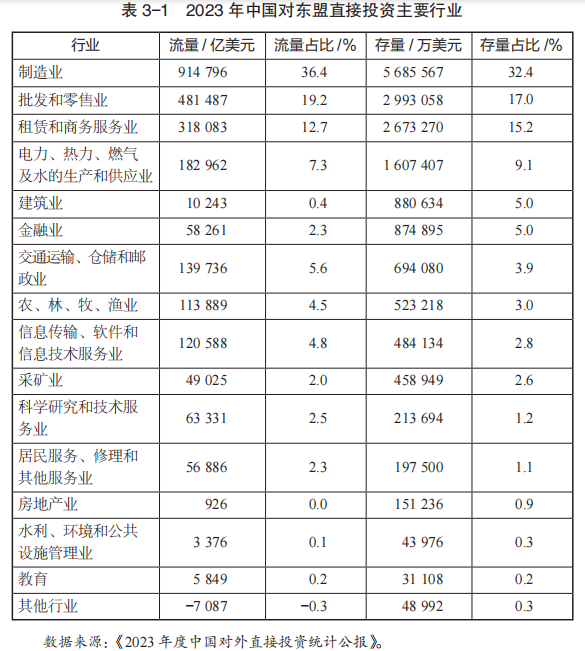
Group 1 - The core viewpoint of the articles highlights the significant acceleration of Chinese enterprises' globalization since the "Belt and Road" initiative was proposed in 2013, with a continuous increase in the number of companies and investment amounts in foreign markets [1][2][3] - By the end of 2023, there were 31,000 domestic enterprises in China establishing 48,000 foreign direct investment enterprises across 189 countries, with total overseas assets nearing $9 trillion [2] - The diversification of investment methods has become prominent, with greenfield investments and overseas mergers and acquisitions being the primary strategies, accounting for 46.4% and 32.3% respectively [4] Group 2 - The structure of foreign direct investment has shifted from being dominated by state-owned enterprises to a significant presence of private enterprises, which now account for 34.7% of the total [5] - A survey indicated that 48.6% of enterprises hold an optimistic view towards foreign investment, with 66.9% choosing "Belt and Road" countries as their preferred investment destinations [6][9] - Challenges faced by Chinese enterprises in overseas markets include political risks, legal compliance complexities, cultural differences, and talent shortages, which are critical for their international operations [12][15][16][17][19][21] Group 3 - The investment landscape shows that manufacturing remains the primary sector for Chinese investments in ASEAN countries, accounting for 32.4% of total investments, followed by wholesale and retail at 17% [3] - The increasing competition among Chinese enterprises in international markets has led to a compression of profit margins, with many relying on price competition due to a lack of differentiation [22] - There is a growing awareness of ESG (Environmental, Social, and Governance) issues among Chinese enterprises, although many still prioritize rapid expansion and profitability over sustainable practices [23]
金荣中国:贸易局势主导市场氛围,金价持续冲高涨势维持
Sou Hu Cai Jing· 2025-10-14 03:06
Market Overview - International gold prices saw a significant increase on October 13, opening at $4000.66 per ounce, reaching a high of $4107.37, a low of $3995.30, and closing at $4104.87 [1] - The largest gold ETF, SPDR Gold Trust, increased its holdings by 1.72 tons, bringing the total to 1018.88 tons [5] Monetary Policy Insights - Federal Reserve's Paulson indicated a preference for two more rate cuts this year, each by 25 basis points, suggesting that tariffs' impact on consumer prices should be disregarded in policy formulation [3] - Analysts from Standard Chartered noted that if the U.S. economy remains strong, the likelihood of further rate cuts in 2026 may decrease, potentially leading to higher dollar and U.S. Treasury yields [4] - Morgan Stanley analysts expect weak organic sales growth in the consumer goods sector for Q3, with a possibility of slight improvement by 2026, but overall growth may remain below long-term trends [4] Technical Analysis of Gold - Gold prices have shown a stable upward trend, with a significant rise after testing the $3995 level, stabilizing around $4131 [8][9] - Short-term indicators suggest a strong upward trend, but caution is advised due to potential overbought conditions [9] Trading Strategy - Suggested trading strategies include aggressive buying around $4090 with a stop loss of 3-5 points and a target above $4010, or a more conservative entry at $4060 with similar stop loss and a target above $4080 [10]

9月PMI点评:预计基本面对债市定价权逐步抬升
Changjiang Securities· 2025-10-09 02:43
1. Report Industry Investment Rating No relevant content provided. 2. Core Viewpoints of the Report - In September 2025, the manufacturing PMI increased by 0.4 pct month - on - month to 49.8%, slightly exceeding expectations but still below the boom - bust line, while the non - manufacturing PMI dropped by 0.3 pct to 50.0%. The supply - demand relationship needs optimization, and whether production is "front - loaded" remains to be seen. External demand is stable, domestic demand recovers slowly, and the gap between the "purchase price of major raw materials - ex - factory price" continues to widen, putting pressure on enterprise profit restoration. Small - scale enterprise sentiment has significantly improved, and the sentiment of emerging manufacturing industries has also improved. Service industry sentiment has declined, and the construction industry has improved but is still at a relatively low level. The sustainability of PMI restoration needs to be observed. The bond market priced the fundamentals further on the day the data was released, and it is expected that as the pricing power of fundamentals on the bond market gradually increases, the bond market performance in the fourth quarter may be better than that in the third quarter [2][7]. 3. Summary by Related Catalogs 3.1 Event Description - In September 2025, the manufacturing PMI was slightly better than expected but below the boom - bust line, rising 0.4 pct month - on - month to 49.8% (Bloomberg consensus forecast: 49.6%), basically in line with seasonality. The non - manufacturing PMI dropped 0.3 pct to 50.0% (Bloomberg consensus forecast: 50.2%), remaining at a seasonal low. Among them, the service industry PMI dropped 0.4 pct to 50.1%, and the construction industry PMI rose slightly by 0.2 pct to 49.3%, both weaker than seasonality [5]. 3.2 Event Comment - **Manufacturing Industry** - Manufacturing sentiment has moderately recovered, but the supply - demand relationship needs optimization, and whether production is "front - loaded" remains to be seen. In September, the manufacturing PMI improved more than expected, rising 0.4 pct to 49.8%. The production index rose 1.1 pct to 51.9%, reaching a new high since Q2 this year, while the new order index only increased 0.2 pct to 49.7%. The gap between the "production - new order" index widened to 2.2 pct, indicating that the supply recovery intensity may be greater than the demand improvement. Enterprises' willingness to replenish inventory has increased, but there are signs of inventory accumulation, and production may be "front - loaded" [7]. - There are differentiations in external and internal demand and price structure. External demand is stable, domestic demand recovers slowly, and the price indicators have generally improved, but the gap between the "purchase price of major raw materials - ex - factory price" continues to widen, which may still restrict enterprise profit restoration. In September, the purchase price index of major raw materials remained in the expansion range of 53.2%, while the ex - factory price index dropped to 48.2%, and the gap between the two widened to 5.0 pct. External demand remained resilient, with the new export order index rising to 47.8%, while domestic demand recovery was still relatively slow, with the new order index only increasing 0.2 pct to 49.7% [7]. - Small - scale enterprise sentiment has significantly improved, and the sentiment of emerging manufacturing industries has also improved. In September, the PMI of large - scale enterprises reached 51.0%, remaining in the expansion range. Small - scale enterprises improved significantly, with the PMI rising 1.6 pct month - on - month, while the sentiment of medium - scale enterprises declined. In terms of industries, the PMI of the equipment manufacturing and high - tech manufacturing industries remained in the high - sentiment range above 51%, with significant improvements in industries such as automobiles and railway, ship, and aerospace equipment. The PMI of the consumer goods industry also rose to 50.6% [7]. - **Non - manufacturing Industry** - Service industry sentiment has declined, and the construction industry has improved but is still at a seasonal low. In September, the non - manufacturing business activity index dropped 0.3 pct to 50.0%, and the service industry index dropped 0.4 pct to 50.1%. The end of the summer vacation effect is an important factor, with the sentiment of consumer - related industries such as catering and cultural and entertainment significantly declining, while modern service industries such as finance and telecommunications maintained high sentiment. The business activity index of the construction industry rose slightly by 0.2 pct, but the absolute level of 49.3% was still below the boom - bust line, indicating that real estate and infrastructure investment may continue to be under pressure [7]. - **Bond Market Outlook** - The sustainability of PMI restoration needs to be observed. On the day the data was released, the bond market priced the fundamentals further, with the yield of the 10 - year active treasury bond dropping 2 BP. A series of growth - stabilizing policies have been implemented recently, and the investment of 500 billion yuan in new policy - based financial instruments may support infrastructure investment. The expectation of optimizing real estate market regulation policies in many places has increased, but whether the economy will continue to improve in an environment of weak domestic demand and prices remains to be seen. It is expected that as the pricing power of fundamentals on the bond market gradually increases, the bond market performance in the fourth quarter may be better than that in the third quarter [7].
物价的三个变化——9月经济数据前瞻
一瑜中的· 2025-10-08 23:48
Core Viewpoint - The article highlights three significant changes in the economic landscape for September, focusing on manufacturing investment growth, price indicators, and the current state of demand, suggesting a need for policy adjustments to stimulate demand [2]. GDP - The GDP growth rate for the third quarter is expected to be around 4.8%, with a cumulative growth rate of approximately 5.1% for the first three quarters [4][11]. - Key downward factors include a decline in industrial production, construction, real estate, and wholesale retail sectors, with retail sales growth expected to drop to around 3.2% in September [4][12]. Prices - The Consumer Price Index (CPI) is projected to show a month-on-month increase of about 0.2% and a year-on-year decrease of around -0.2% in September [5][13]. - The Producer Price Index (PPI) is expected to decrease by approximately -0.2% month-on-month but improve from -2.9% to -2.5% year-on-year [5][14]. Production - Industrial production growth is anticipated to be around 6.0% in September, with strong performance in the manufacturing sector driven by increased production and external demand [15]. Foreign Trade - Exports are expected to grow by about 6% year-on-year in September, supported by low base effects and resilient non-U.S. demand [16]. - Imports are projected to increase by around 1%, influenced by rising commodity prices and stable export performance [17]. Fixed Asset Investment - Cumulative fixed asset investment growth is expected to decline to around -0.2% for the first nine months, with manufacturing investment growth dropping to 4.0% and real estate investment falling to -13.2% [18]. Real Estate Sales - Real estate sales are projected to have a growth rate of approximately 0% in September, with recent policy adjustments in major cities potentially leading to a slight recovery in sales [7][19]. Retail Sales - Retail sales growth is expected to be around 3.2% in September, influenced by high base effects and changes in consumer behavior [21][22]. Financial Indicators - New social financing is estimated at 3 trillion yuan in September, with a year-on-year decrease of 610 billion yuan, while M2 growth is projected at around 8.4% [8][23].

连续回升!9月制造业PMI为49.8%
Mei Ri Jing Ji Xin Wen· 2025-10-08 13:38
Core Insights - The September Purchasing Managers' Index (PMI) for China indicates a slight improvement in economic output, with the manufacturing PMI at 49.8%, up 0.4 percentage points from the previous month, while the non-manufacturing business activity index decreased to 50.0%, down 0.3 percentage points [1][2] Manufacturing Sector - The manufacturing PMI has shown a continuous recovery, with a production index of 51.9%, up 1.1 percentage points, reaching a six-month high, and a new orders index of 49.7%, up 0.2 percentage points [2] - Factors contributing to the recovery include seasonal improvements, the implementation of consumer loan subsidies, and a more active domestic capital market, which has boosted market confidence [2][3] - The prices of major raw materials have decreased, with purchasing prices down 0.1 percentage points to 53.2% and factory prices down 0.9 percentage points to 48.2% [3] - Key manufacturing sectors such as equipment manufacturing, high-tech manufacturing, and consumer goods are expanding, with PMIs of 51.9%, 51.6%, and 50.6% respectively, all above the manufacturing average [3] Non-Manufacturing Sector - The non-manufacturing business activity index fell to 50.0%, with the service sector index at 50.1%, both indicating a decline [4][5] - The drop in service sector activity is attributed to the seasonal effects post-summer and the timing of the Mid-Autumn Festival, which has delayed consumer activities [4][5] - Despite the overall decline, sectors such as postal, telecommunications, and financial services remain in a high-growth zone with indices above 60.0% [5] Construction Sector - The construction business activity index is at 49.3%, showing a slight increase of 0.2 percentage points, but still below the expansion threshold [6] - The construction activity is weak, particularly in civil engineering and housing, indicating a need for improved project coordination and funding [6] - Recent data shows a 9.0% month-on-month increase in housing transactions in 30 major cities, and a 14.4% increase in land transactions, reflecting typical seasonal patterns [6]
2025年四季度还能实施哪些稳增长举措?|政策与监管
清华金融评论· 2025-10-01 09:05
Core Viewpoint - The article presents six policy recommendations aimed at promoting stable economic growth and addressing current economic challenges, including limited domestic demand, structural overcapacity, deflationary pressures, and unstable expectations [1][4][8]. Group 1: Policy Recommendations - Recommendation 1: Advance the government investment and financing quotas for the next year to utilize fiscal resources effectively, with an expected increase in local special bond quotas to over 4.5 trillion yuan, suggesting an early allocation of 1.5-2 trillion yuan [9][10]. - Recommendation 2: Continue to release positive signals through monetary policy, potentially lowering the reserve requirement ratio by 0.5% and interest rates by 0.2% in the fourth quarter, while considering the resumption of government bond purchases [11][12]. - Recommendation 3: Lower the operational thresholds for two monetary policy tools supporting the capital market and standardize the operations of the Central Huijin Investment Company [12][13]. - Recommendation 4: Further reduce mortgage rates and optimize personal housing tax policies, including a suggested 25 basis point reduction in long-term housing provident fund loan rates [14][15]. - Recommendation 5: Increase the consumption subsidy for replacing old goods by 100 billion yuan and expand the subsidy scope to include various consumer goods [16][17]. - Recommendation 6: Strengthen fiscal and financial support, optimize tax refund services, enhance trade facilitation, and provide assistance to foreign trade enterprises and unemployed individuals [18][19][20]. Group 2: Economic Challenges - Domestic demand remains limited, with fixed asset investment growth slowing to 0.5% year-on-year from January to August, and infrastructure investment declining by 2.0% [4][5]. - The real estate market continues to face challenges, with a year-on-year drop in national commercial housing sales area of 11% in August, and real estate investment down by 12.9% from January to August [5][6]. - Credit growth is notably weak, with a decrease in credit balance for the first time since 2005, and new credit issuance in August at 590 billion yuan, below last year's already low levels [6][7]. - Deflationary pressures persist, with the Consumer Price Index (CPI) falling to -0.4% year-on-year in August, and the Producer Price Index (PPI) at -2.9% [7].