
科技

Search documents
港股三大指数集体高开,恒生科技指数高开0.8%,理想汽车绩后涨超2%
Mei Ri Jing Ji Xin Wen· 2025-08-29 02:04
Group 1 - The core viewpoint of the news is that Li Auto's Q2 financial performance met expectations, with a slight year-on-year revenue decline but a significant quarter-on-quarter increase, indicating resilience in the face of market challenges [1][2] - Li Auto reported Q2 revenue of 30.2 billion yuan, a year-on-year decrease of 4.5% but a quarter-on-quarter increase of 16.7% [1] - The company delivered 111,000 vehicles in Q2, reflecting a year-on-year growth of 2.3% [1] Group 2 - Net profit for Q2 was 1.1 billion yuan, showing a year-on-year decline of 0.4% but a substantial quarter-on-quarter increase of 69.6% [1] - The gross margin for Q2 was 20.1%, which is an increase of 0.6 percentage points year-on-year [1] - Analysts from Guojin Securities highlighted Li Auto's strengths in product development, strategic planning, and management, while noting the current pressure on its fundamentals [2] Group 3 - Haitong International Securities mentioned that Li Auto plans to reduce the number of SKUs and focus on its core models to simplify its product offerings [2] - The upcoming launch of the Li i6 is anticipated to continue the successful single-product strategy, potentially enhancing product competitiveness and value [2] - The Hang Seng Technology Index is expected to experience upward momentum, benefiting from improved external liquidity narratives, which may lead to a "catch-up" rally [2]

花旗银行德克·威勒:欧洲商业周期转向超配美股 看跌美元
2 1 Shi Ji Jing Ji Bao Dao· 2025-08-28 23:06
Group 1: Stock Market Insights - Dirk Willer highlighted that the core driver in the stock market is the resurgence of AI trading, with the technology sector leading the U.S. market as a key support [1] - Despite the U.S. stock market being perceived as expensive, valuations may stretch more than expected in a bubble phase, indicating potential for further capital inflow into U.S. equities [1] - Europe is viewed as a quality choice for diversification, as the business cycle is turning, and European investors are the largest holders of U.S. stocks, which could boost European markets if they choose to repatriate funds [1] Group 2: Bond Market Perspectives - Willer maintains a neutral stance on government bonds, noting a tug-of-war between potential Fed rate cuts and the need for an increase in the term premium of U.S. Treasuries [2] - He suggests a "steepening trade" strategy for U.S. Treasuries, benefiting from Fed policy repricing at the front end while facing pressure at the back end due to term premium concerns [2] - Optimism is expressed for emerging market bonds, particularly in Mexico, Brazil, and South Africa, as they typically perform well when the dollar weakens [2] Group 3: Currency Market Analysis - The dollar is facing both structural and cyclical bearish pressures, with expectations of continued weakness through the end of the year, particularly against high-yielding emerging market currencies [3] - Willer emphasizes that the anticipated Fed rate cuts will likely contribute to the dollar's decline [3] Group 4: Commodity Market Outlook - Citigroup holds a neutral stance on all commodities but advocates for a "buy on dips" strategy, particularly for gold, which is seen as a quality asset for reserve diversification [3] - Silver is favored due to its historical performance under current market conditions, where rising term premiums and a bullish stock market align favorably for silver [3] Group 5: Overall Market Sentiment - Citigroup maintains a positive outlook on global equity markets, particularly favoring the U.S. market due to its high exposure to AI [4] - A cautious approach is adopted towards U.S. bonds, with a preference for emerging market bonds, while maintaining a bearish view on the dollar [4]
“加班加点”取消对美所有工业品关税,欧盟承认:这有利于美国,但不得不干
Sou Hu Cai Jing· 2025-08-28 18:09
Group 1 - The EU is rapidly legislating to eliminate all tariffs on US industrial goods in exchange for the US reducing tariffs on EU automobiles [1][3] - The EU Commission acknowledges that the trade agreement favors the US but provides necessary stability and predictability for businesses [1][3] - EU Commission President von der Leyen defends the agreement as a thoughtful choice to avoid escalation and confrontation with the US [1][3] Group 2 - The EU is under pressure to complete legislation by the end of the month to meet US demands, which could significantly impact the EU automotive industry [3][4] - A survey by the German Chamber of Commerce indicates that 55% of industrial companies believe the trade agreement imposes a heavy burden on the European economy [4] - The German Mechanical Engineering Industry Association warns that 30% of machinery exported to the US faces 50% tariffs, urging the EU to negotiate for tariff exemptions [4] Group 3 - President Trump threatens high tariffs on countries that impose digital taxes targeting US tech companies, indicating potential trade tensions with the EU [5][6] - French President Macron suggests the EU should consider retaliatory measures against the US tech industry due to significant trade imbalances [5][6] - Despite calls for a stronger stance, EU member states show reluctance to engage in a full-scale trade war, limiting the EU's response options [6]


【商道论衡】 中国企业国际化的三种路径
Zheng Quan Shi Bao· 2025-08-28 17:55
Group 1: Stages of Internationalization - The international development of enterprises can be divided into three stages: export, internationalization, and globalization [1] - The second stage, international operation, involves establishing physical organizations overseas to directly engage with end-users and gather market feedback [1] Group 2: Paths to Internationalization - The first path involves local production and sales overseas, suitable for technology manufacturing companies, exemplified by Haier and TCL [2][3] - The second path is represented by Huawei's direct sales model, where the company directly engages with customers in overseas markets [3][4] - The third path is through cross-border mergers and acquisitions, allowing companies to quickly enter international markets, with Lenovo and Geely as notable examples [5][6] Group 3: Cross-Border Investments - Another method of internationalization is through cross-border equity investments, with Tencent being a prominent case, having invested in over 140 targets across 22 countries [7] - Despite significant overseas assets, Tencent's overseas revenue remains low compared to its investments [7] Group 4: Current Challenges - In the context of rising trade barriers and geopolitical risks, companies need to adapt their decision-making logic for internationalization [8]
瑞士隆奥:看好新兴市场股票 内地和香港股市料受惠资金流入
Zhi Tong Cai Jing· 2025-08-28 13:30
Group 1 - The company is currently overweight on emerging market equities, with a positive outlook on both mainland China and Hong Kong markets, although it remains neutral compared to other emerging markets [1] - The investment strategy anticipates that Hong Kong stocks will continue to benefit from capital inflows in the short term, although the sustainability of this trend is uncertain [1] - Recent capital inflows have shifted from short-term hedge fund investments to medium-term deployments, indicating a change in investor sentiment towards the Chinese market [1] Group 2 - The company highlights that the ongoing trade war stabilization and a weakening US dollar are contributing to increased capital inflows into emerging markets, which could positively impact the Chinese market, particularly benefiting technology stocks [1] - The company acknowledges the ongoing issue of "involution," which poses significant pressure on consumer-related stocks, while also noting the current sector rotation cycle that favors fundamentally strong sectors [1] - The mainland is undergoing a consumption transformation, with existing real estate market issues requiring time to resolve; a slowdown in economic growth in Q3 could catalyze increased policy measures [1] Group 3 - The company holds a negative view on the US dollar, predicting that interest rate cuts may lead to outflows from the $7 trillion money market fund, with potential inflows into currencies like the euro and yen [1] - It is anticipated that the Chinese yuan will appreciate, with the USD/CNY exchange rate potentially reaching 7 within the next 12 months [1]
机构风向标 | 观想科技(301213)2025年二季度已披露前十大机构持股比例合计下跌1.43个百分点
Sou Hu Cai Jing· 2025-08-28 11:01
Core Insights - Guanshang Technology (301213.SZ) released its semi-annual report for 2025 on August 28, 2025, indicating a total of 4 institutional investors holding shares, amounting to 13.4848 million shares, which represents 16.86% of the total share capital [1] Institutional Holdings - The institutional investors include Sichuan Guanshang Development Technology Partnership (Limited Partnership), Chengdu Tongde Chuangke Investment Management Partnership (Limited Partnership) - Sichuan Xintongde Big Data Industry Venture Capital Partnership (Limited Partnership), and two mutual funds: Jiaoyin Multi-Strategy Return Flexible Allocation Mixed A and Wanjia Insight Progress Mixed Initiation A [1] - The total institutional holding percentage decreased by 1.43 percentage points compared to the previous quarter [1] Public Fund Disclosures - In this period, two new public funds were disclosed compared to the previous quarter, which are Jiaoyin Multi-Strategy Return Flexible Allocation Mixed A and Wanjia Insight Progress Mixed Initiation A [1] Social Security Fund - One social security fund, the National Social Security Fund 503 Portfolio, was not disclosed in this period compared to the previous quarter [1]

罗永浩,九年熬出一碗泡面
创业家· 2025-08-28 10:13
Core Viewpoint - The article discusses the recent entrepreneurial activities of Luo Yonghao, focusing on his new product launch in the instant noodle market, which he claims will redefine the category, amidst a backdrop of declining consumption in the instant noodle sector in China [5][10][20]. Group 1: Product Launch and Marketing Strategy - Luo Yonghao announced the launch of a new instant noodle product called "TBT" in collaboration with Kang Shifu, emphasizing a meticulous nine-year development process [8][9]. - The product is priced at 39.9 yuan for four packs, which translates to 9.9 yuan per pack, leading to mixed reactions from consumers regarding its affordability [9][10]. - Despite selling 87,000 units during the launch, the sales figures are modest compared to other popular products, indicating a potential challenge in market acceptance [9][10]. Group 2: Market Context and Challenges - The instant noodle market in China has faced significant challenges, with consumption dropping by 4 billion packs since its peak in 2020, and projected sales continuing to decline [10][11]. - Kang Shifu reported a decrease in revenue from instant noodles by 3.49 billion yuan in the first half of the year, reflecting broader market trends [10]. Group 3: Luo Yonghao's Entrepreneurial Journey - Luo Yonghao's career has been marked by a series of high-profile ventures, from technology to e-commerce, with each transition generating significant public interest [12][14]. - His previous company, Smartisan Technology, faced financial difficulties leading to substantial debt, which he has been addressing through live-streaming sales [15][20]. - The article highlights Luo's shift from hardware to software, indicating a pivot in his business strategy as he explores new opportunities in AI and digital content creation [18][19]. Group 4: Public Perception and Future Prospects - Luo Yonghao's narrative of "disruption" has garnered both support and skepticism, with public sentiment fluctuating based on his business outcomes [20]. - The article questions whether Luo can maintain his influence and public trust as he continues to launch new products across different sectors, suggesting that repeated failures may erode his credibility [20].


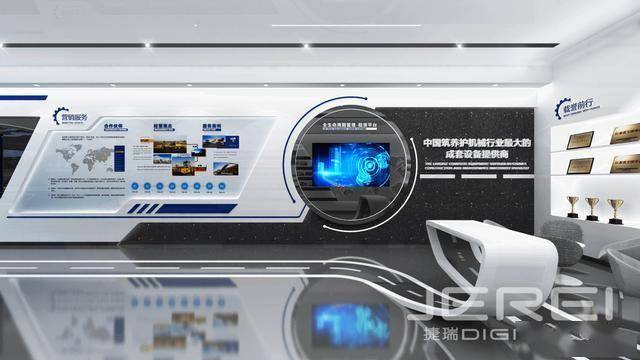
企业展厅——以空间叙事构建品牌价值场域
Sou Hu Cai Jing· 2025-08-28 08:47
Core Insights - The article emphasizes the transformation of corporate exhibition spaces from traditional display areas to core platforms for brand value expression, highlighting the importance of immersive experiences in conveying corporate strategy, culture, and technology [1] Group 1: Exhibition Hall Design - The design of corporate exhibition halls should prioritize user needs, with a focus on understanding the audience's profile, such as investors, partners, and general visitors [3] - A multi-layered narrative framework is essential for exhibition design, as demonstrated by a renewable energy company's exhibition that uses a storyline of "crisis awakening - technological breakthrough - ecological co-construction" [3] - The integration of technology should serve content expression, avoiding a cold, tech-heavy feel while enhancing product memory through interactive elements [3] Group 2: Spatial Layout Design - Spatial layout is a balance between audience movement and information density, with different layouts suited for varying narrative strengths [4] - The use of vertical space can enhance the perception of area, as seen in a project that utilized mirror ceilings and LED light strips to create a sense of expanded space [4] - Lighting design plays a crucial role in setting the emotional tone of the space, with different color temperatures used to evoke specific feelings in various exhibition areas [4] Group 3: Exhibition Hall Operation - A dynamic updating mechanism is recommended to maintain the vitality of the exhibition hall, combining fixed core exhibits with rotating auxiliary areas [5] - Data-driven operations can enhance space efficiency, utilizing tools like heat maps and eye-tracking to optimize visitor engagement [5] - The evolution of exhibition halls from "physical containers" to "ecological platforms" reflects a shift towards deeper brand-audience interactions, transforming visits into meaningful dialogues [5]
高盛顶尖交易员谈美股:“夏末逆风”要来了
华尔街见闻· 2025-08-28 04:26
Core Viewpoint - Goldman Sachs traders warn that investors should prepare for an upcoming "late summer headwind" affecting the U.S. stock market, driven by liquidity challenges and seasonal factors in September, despite the support from the Fed's dovish stance and volatility compression [1][3]. Group 1: Market Conditions - The fundamental conditions of the consumer and labor markets are described as "not ideal," with a risk of the employment market shifting from "no hiring, no layoffs" to direct deceleration, a risk not fully priced in by the market [2]. - The global sovereign debt yield increase is becoming an undeniable backdrop, with ongoing fiscal expansion raising the risk premium on long-term rates, compounded by over $180 billion in U.S. Treasury issuance this week, which will test market liquidity [3][8]. - Seasonal patterns indicate that market performance tends to deteriorate entering September, with liquidity concerns heightened by increased Treasury fund withdrawals at quarter-end [8]. Group 2: AI Sector and Technology Stocks - The AI trading theme, once a core driver of market gains, is showing signs of fatigue, with several key factors contributing to this pause in momentum [4]. - A paper from MIT highlighting that most AI projects fail to generate positive returns has gained unusual attention, alongside news of Meta slowing its hiring, which has negatively impacted market sentiment [5]. - Anticipated innovations like ChatGPT-5 have not met expectations, and comments from OpenAI's CEO regarding a "bubble" in the market have further dampened enthusiasm [5][6]. Group 3: Investment Strategies - A cautious stance on equities is recommended before September, with potential market pullbacks seen as buying opportunities for year-end [3]. - The consensus in the market is to bet on the Fed's dovish stance and to "short the dollar," although concerns regarding the political situation in France may pose short-term risks to this strategy [9][10]. - The Commodity Trading Advisors (CTA) hold long positions estimated at around $170 billion, nearing a $220 billion cap, which could lead to selling if volatility increases further [8].


秋季市场券商前瞻:科技主线与资金活水共舞
Zheng Quan Shi Bao· 2025-08-27 17:40
Core Insights - Multiple brokerages are optimistic about the continuation of policies and improvement in liquidity, expressing confidence in the long-term revaluation trend of Chinese assets [1][2] - The global asset allocation is gradually becoming more diversified and decentralized [1] Group 1: Economic Outlook - The domestic fiscal policy has exceeded expectations in its richness, with improved liquidity for residents, government, and markets, and a continuation of a growth-stabilizing policy stance is expected [2] - The chief macroeconomic analyst at Huatai Securities warns of potential declines in the credibility of the US dollar, suggesting investors should actively allocate to scarce assets like equities [2] - The domestic liquidity is expected to remain clear in Q4, with market focus shifting to whether earnings can follow the recovery in valuations and sentiment [2] Group 2: Market Dynamics - Trading funds are experiencing sustained net inflows, with activity levels reaching the highest since 2016, and there is still room for active foreign capital to increase positions in A-shares [4] - The net inflow of funds into A-shares this year is approximately 2.1% of the free float market value, indicating a slight net inflow status [4] - There is a potential shift of resident funds from bank wealth management products to non-bank wealth management products and capital markets [4] Group 3: Sector Focus - The Chinese capital market is entering an unprecedented new phase, requiring new thinking to understand future market dynamics [5] - The large technology sector is expected to continue to strengthen its resource allocation function, resembling the structural characteristics of the Nasdaq market [6] - Analysts suggest focusing on sectors benefiting from the recovery of overseas manufacturing, capital goods under accelerated investment, and insurance and brokerage firms expected to benefit from bottoming capital returns [6]
