农产品

Search documents
让泉城“菜篮子”装得满又拎得好
Feng Huang Wang Cai Jing· 2026-02-13 07:13
Core Viewpoint - The "vegetable basket" initiative is crucial for ensuring food security and promoting agricultural modernization, as highlighted in the 2026 Central Document No. 1, which emphasizes the importance of enhancing the quality and efficiency of this initiative for the benefit of people's livelihoods and development [1]. Group 1: Stability and Supply - Ensuring stable production and supply is the core principle of the "vegetable basket" project, which is essential for maintaining public confidence and market stability [3]. - Jinan has established 385 large-scale vegetable production bases of over 50 acres and more than 1,000 large-scale livestock farms, ensuring a sufficient supply of key agricultural products like vegetables, meat, and dairy [3]. Group 2: Technological Empowerment - Technological modernization is key to agricultural advancement, with Jinan implementing a digital management platform called "Qiancheng Liangtian" to enhance agricultural practices and shift from traditional methods to smart management [3]. Group 3: Brand Quality Enhancement - The demand for "vegetable basket" products has evolved from merely filling stomachs to seeking quality and uniqueness, making brand development essential for competitiveness [5]. - Jinan has established a public brand matrix called "Qianshui Renjia" and currently has 60 nationally recognized high-quality agricultural products, with a quality safety monitoring compliance rate of over 98% [5]. Group 4: Industry Integration - A comprehensive approach to the "vegetable basket" initiative is necessary, promoting integration across production, processing, sales, and tourism to enhance value and share benefits with farmers [5]. - Jinan plans to implement 10 key industrial chain projects this year to foster high-quality integration of the "vegetable basket" industry [5]. Group 5: Public Sentiment - The variety, price stability, and quality of the "vegetable basket" directly impact the happiness of the citizens, necessitating ongoing efforts in production stability, technological empowerment, brand building, and industry integration to improve the quality of life [6].

中证商品期货指数1月大幅上涨
Qi Huo Ri Bao· 2026-02-13 03:46
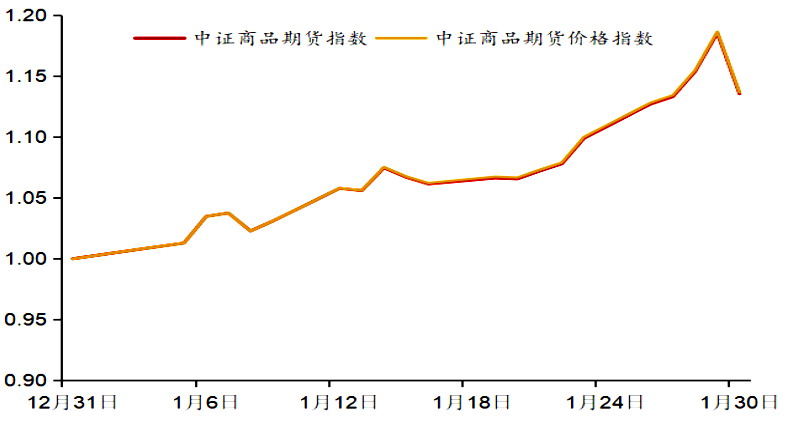
Core Viewpoint - In January, domestic policies aimed at stabilizing demand were implemented intensively, leading to significant support for market demand and a strong performance in the commodity market, as evidenced by the rise in the China Securities Commodity Futures Index and the China Securities Commodity Futures Price Index [1][5]. Index Performance Analysis - In January, the China Securities Commodity Futures Index rose by 13.57%, while the China Securities Commodity Futures Price Index increased by 13.64%, indicating a strong upward trend in the commodity indices with a volatility of 19.71% throughout the month [2]. - The commodity market's strong performance was influenced by international factors, including the Federal Reserve's monetary policy stance and geopolitical risks, which heightened market sentiment towards commodities [4]. Domestic Policy Impact - The implementation of a series of fiscal and financial policies aimed at boosting domestic demand has led to a significant improvement in the commodity market, with a broad-based increase replacing the previous differentiated performance [5]. - The People's Bank of China lowered the re-lending and rediscount rates by 0.25 percentage points, which has positively impacted the industrial sector [5]. Sector-Specific Analysis Energy and Chemical Sector - The energy and chemical sector showed a strong performance in January, with the China Securities Energy Chemical Industry Futures Index rising by 7.54%, driven by improved demand and cost support [8][10]. - The demand for energy products, such as gasoline and diesel, improved due to the implementation of domestic policies and international geopolitical tensions affecting oil prices [10]. Steel Sector - The China Securities Steel Futures Index increased by 0.64%, supported by high demand and inventory reduction, with hot-rolled coil export orders rising by 12% year-on-year [12]. - The supply side faced tightening due to disruptions in Brazilian iron ore shipments, which provided additional cost support for the steel sector [12]. Construction Materials Sector - The China Securities Construction Materials Futures Index rose by 1.87%, reflecting a recovery in demand driven by accelerated infrastructure projects and supply-side adjustments [13]. - The market sentiment improved as the issuance of long-term special government bonds directed funds towards construction material projects [13]. Agricultural Products Sector - The China Securities Agricultural Products Index increased by 1.72%, with notable performance in oilseeds and soft commodities, driven by supply constraints and recovering demand [14]. - Palm oil prices rose due to adverse weather conditions in Malaysia, while cotton prices were supported by rising domestic purchase prices and weakening dollar index [14]. Contribution to Index Returns - The top contributors to the China Securities Commodity Futures Index in January were silver (4.09%), gold (1.47%), and crude oil (1.01%), while the only negative contributor was soda ash (-0.01%) [15][17]. - The strong performance of precious metals was attributed to increased safe-haven buying amid Federal Reserve policy uncertainties and geopolitical tensions [17].
玉米 缺乏上行驱动力
Qi Huo Ri Bao· 2026-02-13 03:41
Group 1: Corn Market Overview - In 2025, domestic corn prices fell to low levels due to high yields and declining costs, with the main futures contract switching from 2603 to 2605 in February 2026 [1] - As of February 6, the national grain sales progress reached 61%, 4 percentage points faster year-on-year, with Northeast and North China regions showing even higher sales progress [1] - The increase in supply from farmers and grain holders has led to a noticeable rise in port arrivals, from 500,000 tons per week to 800,000 tons per week [1] Group 2: Deep Processing Industry - The starch industry operates at a capacity rate of 57.79%, higher than last year's 53.3%, but overall operational levels remain low [1] - Since 2025, high corn prices have exacerbated losses in the starch and alcohol industries, limiting the potential for increased operational rates [1] Group 3: Feed Demand and Pig Inventory - The inventory of breeding sows decreased to 39.61 million heads by the end of December 2025, but profitability returned in January 2026, potentially causing fluctuations in the capacity reduction process [2] - As of January, the inventory of breeding sows in monitored farms showed a slight increase, indicating a temporary stall in the capacity reduction process [2] - Despite fluctuations in corn prices, the overall supply of pigs is expected to remain ample for the next 10 months, supporting long-term feed demand [2] Group 4: Inventory Levels and Price Support - As of the end of January, port corn inventories were at historical lows, with significant year-on-year decreases, providing a bottom support for spot prices [2] - Pre-holiday stocking demand has led to a noticeable increase in inventory levels for grain enterprises, with feed companies' corn inventory days rising to 32.59 days, a near-high level [3] - Overall, while channel inventories are low, terminal enterprises have built sufficient stocks, indicating limited upward momentum for corn prices in the short term [3]

年后余粮有限,玉米反弹偏强
Hong Ye Qi Huo· 2026-02-13 03:33
Report Summary 1. Report's Industry Investment Rating - Not mentioned in the provided content 2. Core Viewpoint - The view that corn prices will fluctuate and rebound in the first half of the year remains unchanged, given the rapid sales of new grain, limited post - Chinese New Year surplus, and continuous public bidding and significant increase in imports, along with differentiated demand [6] 3. Summary by Related Catalogs Market Trends - Corn's main 2605 contract rebounded this week. Spot prices rose slightly, with the flat - hatch price in Bayuquan increasing from 2330 yuan/ton to around 2340 yuan/ton, and the arrival price at Shekou Port rising from 2440 yuan/ton to around 2460 yuan/ton. The corn basis weakened, and the discount of the futures price narrowed [3] - Starch's main 2605 contract also rebounded this week. The starch price remained stable, and the basis weakened [3] Supply - side Analysis - New grain sales were fast, with limited post - Chinese New Year surplus. As of February 12, the national grain sales progress was 65%, 4% faster than the same period last year. Northeast China was 66%, 7% faster; North China was 58%, the same as last year; Northwest China was 76%, 2% faster. The post - Chinese New Year surplus was about 35%, and the supply in the Northeast might be tight. The public bidding of the China National Grain Reserves Corporation was active, with 138900 tons put in and 105800 tons sold as of February 12 [3] - Port inventories varied. As of February 6, the corn inventory in the northern ports was 1.792 million tons, still rising but at a low level compared to the same period in recent years. The weekly shipping volume was 59200 tons, decreasing. The domestic - trade corn inventory at Guangdong Port was 43100 tons, and the foreign - trade inventory was 8700 tons, both decreasing [4] - Substitutes were insufficient, and corn imports increased significantly. The wheat - corn price difference remained high, making substitution unfeasible. In December, domestic corn imports increased by 44.1% month - on - month and 135.3% year - on - year. The total imports in 2025 were 264700 tons, a year - on - year decrease of 80.8%. Corn imports have been rising since last October and may continue to increase [4] Demand - side Analysis - Feed demand was strong. Pig prices fell, and breeding profits were divided. As of February 6, the profit of purchasing piglets for breeding was 91.42 yuan per pig, narrowing; the self - breeding and self - raising profit was - 38.09 yuan per pig, in loss again. In December, the national inventory of breeding sows was 39.61 million, decreasing; the national pig inventory was 429.67 million, with the first month - on - month decrease in recent years and only a 0.5% year - on - year increase. In the poultry sector, egg prices fell, and breeding was close to loss. In December, the sales of chicken chicks increased, and the culling of old chickens reached a recent high. Although the inventory of laying hens has been slightly decreasing, the base was high [5] - Deep - processing demand declined. The processing profits of starch processing enterprises were mostly in loss, and the operating rate decreased. As of February 13, the operating rate of starch processing enterprises was 55.68%, further decreasing; the starch inventory was 1.025 million tons, increasing. Alcohol processing enterprises suffered large losses, with an operating rate of 53.97%, decreasing to a recent low. The operating rates of downstream starch sugar enterprises and paper - making enterprises decreased, and some enterprises may have shutdown plans due to upcoming holidays [6] Market Outlook and Suggestions - The view that corn prices will fluctuate and rebound in the first half of the year remains unchanged. It is recommended that grain - using enterprises purchase spot goods as needed and maintain a safe reserve, while traders should buy at low prices and sell at high prices [6]
招商期货-期货研究报告:商品期货早班车-20260213
Zhao Shang Qi Huo· 2026-02-13 03:24
Report Industry Investment Rating - Not provided in the report Core Viewpoints of the Report - The precious metals market is highly volatile. Gold is recommended to hold long - term positions, while silver requires cautious participation [1]. - For base metals, copper and tin suggest waiting for stable buying opportunities. Aluminum is expected to be range - bound, and alumina has upward potential [2][4]. - In the industrial silicon market, the fundamentals show a situation of both weak supply and demand, and the price is expected to fluctuate within a certain range [4]. - In the black industry, it is recommended to close positions in rebar, iron ore, and coking coal [6]. - In the agricultural products market, soybeans and corn futures are expected to show different trends, and corresponding trading strategies are provided for each [7]. - In the energy and chemical market, different products have different supply - demand situations and trading suggestions, such as short - term weak fluctuations and medium - term improvement opportunities [9][10] Summary by Relevant Catalogs Precious Metals - **Market Performance**: Last night, precious metals fell rapidly. The Shanghai Gold 2604 contract barely held the 1100 - yuan mark, and the Shanghai Silver 2604 contract fell below the 20000 - yuan mark [1]. - **Fundamentals**: The U.S. Treasury Secretary's decision and concerns about AI investment led to drops in U.S. technology stocks and precious metals. There were changes in gold and silver inventories in various places [1]. - **Trading Strategy**: Hold long positions in gold and be cautious with silver [1] Base Metals Copper - **Market Performance**: Copper prices weakened significantly yesterday [2]. - **Fundamentals**: U.S. stock market decline, concerns about AI, dollar strengthening, tight copper ore supply, and the Spring Festival off - peak season affecting demand [2]. - **Trading Strategy**: Wait for stable buying opportunities [2] Aluminum - **Market Performance**: The closing price of the electrolytic aluminum main contract decreased by 0.21% compared with the previous trading day, and the 0 - 3 month spread was - 400 yuan/ton [2]. - **Fundamentals**: High - load production in electrolytic aluminum plants and a slight increase in the weekly aluminum product start - up rate [2]. - **Trading Strategy**: The price is expected to be range - bound in the short term [2] Alumina - **Market Performance**: The closing price of the alumina main contract decreased by 1.20% compared with the previous trading day, and the 0 - 3 month spread was - 206 yuan/ton [2]. - **Fundamentals**: Some alumina plants entered the production - reduction and rotation maintenance stage, while electrolytic aluminum plants maintained high - load production [2]. - **Trading Strategy**: Pay attention to subsequent maintenance and shutdown situations as the price has upward potential [2] Industrial Silicon - **Market Performance**: The main 05 contract closed at 8335 yuan/ton, a decrease of 35 yuan/ton from the previous trading day, with a closing price decrease of 0.42% [4]. - **Fundamentals**: Stable furnace - opening quantity and an overall start - up rate of 22.36%. Both the polysilicon and organic silicon industries are promoting anti - involution, with expected production declines [4]. - **Trading Strategy**: The price is expected to fluctuate between 8200 - 8800 yuan. Consider short - selling at high prices if the large - scale production reduction is short - term [4] Carbonate Lithium - **Market Performance**: LC2605 was 149,420 yuan/ton (- 840), a closing price decrease of 0.56% [4]. - **Fundamentals**: Changes in the prices of lithium - related products, production and inventory changes in the lithium salt industry, and expected production declines in downstream materials [4]. - **Trading Strategy**: The price is expected to fluctuate [4] Polysilicon - **Market Performance**: The main 05 contract closed at 49015 yuan/ton, a decrease of 165 yuan/ton from the previous trading day, with a closing price decrease of 0.43% [4]. - **Fundamentals**: Stable weekly production and inventory, changes in the production schedules of downstream products, and positive factors in the demand side [4]. - **Trading Strategy**: The main contract is expected to weakly fluctuate between 45000 - 53000 yuan [4] Tin - **Market Performance**: Tin prices weakened significantly yesterday [4]. - **Fundamentals**: Similar to copper, including U.S. stock market decline, dollar strengthening, and tight tin ore supply, along with a significant increase in domestic warehouse receipts [4]. - **Trading Strategy**: Wait for stable buying opportunities [4] Black Industry Rebar - **Market Performance**: The rebar main 2605 contract closed at 3056 yuan/ton, an increase of 11 yuan/ton from the previous night - session closing price [6]. - **Fundamentals**: Decrease in building material apparent demand and production, weak demand expectations but limited supply, and certain technical support for prices [6]. - **Trading Strategy**: Close positions. The reference range for RB05 is 3040 - 3100 yuan [6] Iron Ore - **Market Performance**: The iron ore main 2605 contract closed at 759.5 yuan/ton, a decrease of 2.5 yuan/ton from the previous night - session closing price [6]. - **Fundamentals**: Changes in iron ore inventory and molten iron production, neutral supply - demand situation, and certain technical support for prices [6]. - **Trading Strategy**: Close positions. The reference range for I05 is 750 - 780 yuan [6] Coking Coal - **Market Performance**: The coking coal main 2605 contract closed at 1121 yuan/ton, an increase of 1 yuan/ton from the previous night - session closing price [6]. - **Fundamentals**: Changes in molten iron production, weak supply - demand situation, and certain technical support for prices [6]. - **Trading Strategy**: Close positions. The reference range for JM05 is 1090 - 1140 yuan [6] Agricultural Products Soybean Meal - **Market Performance**: CBOT soybeans are short - term strong, reflecting the expectation of good U.S. soybean exports [7]. - **Fundamentals**: South American bumper harvest expectation, strong U.S. soybean crushing and increasing export expectations, and an overall improving U.S. soybean supply - demand but a globally loosening supply - demand [7]. - **Trading Strategy**: Pay attention to China's purchase of U.S. soybeans and South American production realization; the domestic market is weaker and range - bound [7] Corn - **Market Performance**: Corn futures prices are strong, and spot prices are stable [7]. - **Fundamentals**: More than 60% of grain sales are completed, with limited sales pressure. However, the selling mentality in the Northeast has changed, and downstream enterprises are replenishing inventory at low prices [7]. - **Trading Strategy**: The futures price is expected to be range - bound and slightly strong due to policy disturbances [7] Oils and Fats - **Market Performance**: The Malaysian market is short - term weak [8]. - **Fundamentals**: A 14% month - on - month decrease in Malaysian palm oil production in January, a 11% month - on - month increase in exports, and a 7.7% month - on - month decrease in inventory at the end of January [8]. - **Trading Strategy**: Oils and fats are weak. Consider an anti - spread strategy and pay attention to future production and biodiesel policies [8] Cotton - **Market Performance**: ICE U.S. cotton futures prices continued to rebound, while international crude oil futures prices fell sharply [8]. - **Fundamentals**: A 3.2% year - on - year decrease in the expected U.S. cotton planting area in the 26/27 season, and changes in U.S. cotton export sales and domestic cotton supply - demand [8]. - **Trading Strategy**: Buy at low prices. The price range is 14600 - 15000 yuan/ton [8] Eggs - **Market Performance**: Egg futures prices rebounded, and spot prices stopped quoting [8]. - **Fundamentals**: A decrease in the number of laying hens in production, active chick replenishment, and expected seasonal decline in egg prices due to weakening demand [8]. - **Trading Strategy**: The futures price is expected to be range - bound and weak [8] Pigs - **Market Performance**: Pig futures prices are weak, and spot prices have a slight increase [8]. - **Fundamentals**: Expected rapid decline in slaughter volume after the minor New Year, large daily slaughter pressure this month, and a situation of strong supply and weak demand [8]. - **Trading Strategy**: The futures price is expected to be range - bound and weak [8] Energy and Chemicals LLDPE - **Market Performance**: The LLDPE main contract continued to fluctuate slightly. The low - price spot in North China was 6530 yuan/ton, and the 05 - contract basis was 200 points lower than the futures price [9]. - **Fundamentals**: Easing domestic supply pressure and weakening downstream demand [9]. - **Trading Strategy**: Short - term weak fluctuations, and consider long - positions at low prices in the medium - term [9] PTA - **Market Performance**: PX CFR China price was 917 dollars/ton, and PTA East China spot price was 5180 yuan/ton, with a spot basis of - 73 yuan/ton [10]. - **Fundamentals**: High - level supply of PX and PTA, and a situation of inventory accumulation [10]. - **Trading Strategy**: Maintain a long - position view on PX in the medium - term, and consider taking profits on PTA [10] PP - **Market Performance**: The PP main contract continued to fluctuate slightly. The PP spot price in East China was 6550 yuan/ton, and the 01 - contract basis was 130 points lower than the futures price [10]. - **Fundamentals**: Increasing supply pressure and weakening downstream demand [10]. - **Trading Strategy**: Short - term weak fluctuations, and consider short - positions at high prices in the medium - term [10] MEG - **Market Performance**: The East China spot price was 3675 yuan/ton, with a spot basis of - 105 yuan/ton [10]. - **Fundamentals**: Increasing supply, inventory accumulation, and weakening downstream demand [10]. - **Trading Strategy**: Consider long - positions at appropriate times as the market may start to destock in March [10] Styrene - **Market Performance**: The styrene main contract fluctuated slightly. The East China spot market price was 7570 yuan/ton [10]. - **Fundamentals**: High - level pure benzene inventory, low - level styrene inventory, and weak supply - demand on both sides [10]. - **Trading Strategy**: Short - term wide - range fluctuations, and consider long - positions on styrene or related spread strategies in the medium - to - long - term [10]
商务预报:2月2日至8日食用农产品和生产资料价格略有下降
Shang Wu Bu Wang Zhan· 2026-02-13 03:15
Agricultural Products Market - The national market price of edible agricultural products decreased by 0.5% from the previous week [1] - The average wholesale price of 30 types of vegetables was 5.55 yuan per kilogram, down 2.5%, with specific declines in tomatoes, eggplants, and spinach of 6.7%, 6.6%, and 5.7% respectively [1] - Poultry product prices showed slight fluctuations, with eggs decreasing by 1.1% and whole chickens increasing by 0.3% [1] - Meat prices experienced minor fluctuations, with pork priced at 18.88 yuan per kilogram, down 1.3%, while lamb and beef increased by 1.0% and 0.7% respectively [1] - The average wholesale price of six types of fruits saw a slight increase, with bananas, pears, and grapes rising by 3.9%, 3.3%, and 1.6% respectively [1] Production Materials Market - Prices of non-ferrous metals slightly declined, with aluminum, zinc, and copper decreasing by 3.8%, 1.4%, and 0.4% respectively [2] - Steel prices continued to decrease, with rebar, hot-rolled strip steel, and ordinary medium plates priced at 3350 yuan, 3510 yuan, and 3627 yuan per ton, down 0.3%, 0.2%, and 0.2% respectively [2] - Coal prices saw a slight decline, with anthracite, thermal coal, and coking coal priced at 1134 yuan, 776 yuan, and 1048 yuan per ton, down 0.4%, 0.1%, and 0.1% respectively [2] - Prices of basic chemical raw materials showed slight fluctuations, with sulfuric acid increasing by 1.1%, while soda ash, polypropylene, and methanol decreased by 1.2%, 0.8%, and 0.6% respectively [2] - Fertilizer prices experienced slight increases, with compound fertilizers and urea rising by 0.2% and 0.1% respectively [2] - Finished oil wholesale prices saw a slight increase, with 95-octane gasoline, 92-octane gasoline, and 0-octane diesel rising by 1.8%, 1.7%, and 1.0% respectively [2]

广州价格监测:春节前,广州市重要民生商品量足价稳
Guang Zhou Ri Bao· 2026-02-13 02:44
Core Insights - The overall supply of essential livelihood commodities in Guangzhou is sufficient, with stable prices and smooth circulation in wholesale and retail markets [1][2] Group 1: Vegetable Market - Vegetable production is improving, with retail prices continuously declining; the retail price of 32 types of vegetables is 4.39 yuan per 500 grams, down 1.35% from the previous week [1] Group 2: Pork Market - Pork supply remains stable, with a slight decrease in retail prices; the average retail price for four types of pork is 19.41 yuan per 500 grams, down 0.15% from the previous week [1] Group 3: Egg Market - Egg supply is ample, with retail prices hovering at low levels; the retail price for eggs has remained around 5.60 yuan per 500 grams for the past two months, with minimal fluctuations [1] Group 4: Seafood and Grain Oil Market - Prices for seafood and grain oil are stable; the average retail price for five types of seafood is 13.52 yuan per 500 grams, while retail prices for flour, rice, and peanut oil are 3.75 yuan, 3.27 yuan, and 154.38 yuan per barrel, respectively [2] Group 5: Price Trends and Forecast - With the upcoming Spring Festival, demand is expected to rise due to holiday preparations, leading to a slight increase in prices for essential commodities during the holiday period, followed by a gradual decline post-holiday [2] - The Guangzhou Development and Reform Commission will closely monitor supply and price fluctuations, implementing measures to ensure price stability during the holiday [2]
中泰期货晨会纪要-20260213
Zhong Tai Qi Huo· 2026-02-13 01:49
交易咨询资格号: 证监许可[2012]112 晨会纪要 2026 年 2 月 13 日 | | [Table_Finance] | | | | | | --- | --- | --- | --- | --- | --- | | 联系人:王竣冬 | 2026/2/13 | | 基于基本面研判 | | | | 期货从业资格:F3024685 | 趋势空头 | 震荡偏空 | 震 荡 | 震荡偏多 | 趋势多头 | | 交易咨询从业证书号:Z0013759 | | 合成橡胶 | 碳酸锂 | 十债 | | | 研究咨询电话: | | 橡胶 | 尿素 | 三十债 | | | | | 红枣 | 棉花 | 二债 | | | 0531-81678626 | | PVC | 棉纱 | 五债 | | | 客服电话: | | 塑料 | 多晶硅 | 烧碱 | | | | | 原油 | 白糖 | 硅铁 | | | 400-618-6767 | | 中证1000指数期货 | 工业硅 | 苹果 | | | 公司网址: | | | 胶版印刷纸 | | | | www.ztqh.com | | | 燃油 | | | | | | | 沥青 | | ...
期货市场交易指引2026年02月13日-20260213
Chang Jiang Qi Huo· 2026-02-13 01:47
1. Report Industry Investment Ratings - **Macro Finance**: Bullish on stock indices in the medium to long term, suggesting buying on dips; expecting treasury bonds to trade in a range [1][5] - **Black Building Materials**: Short - term trading for coking coal; range trading for rebar; buying on dips for glass [1][7] - **Non - ferrous Metals**: Reducing trading positions for general traders before the holiday for copper, increasing hedging coverage; strengthening observation for aluminum; observing for nickel; range trading for tin, gold, and silver; expecting lithium carbonate to trade in a range [1][9] - **Energy and Chemicals**: Range trading for PVC, styrene, rubber, urea, and methanol; temporarily observing for caustic soda and soda ash; expecting polyolefins to trade weakly [1][15] - **Cotton Textile Industry Chain**: Expecting cotton and cotton yarn to adjust in a range; expecting apples and jujubes to trade in a range [1][25] - **Agriculture and Animal Husbandry**: Partially taking profits on short positions in hogs before the year, adopting a rolling short strategy on rebounds; reducing positions in eggs before the holiday, avoiding short - chasing; being cautious about chasing highs in corn, suggesting hedging on rebounds for grain - holding entities; observing the performance of the M2605 contract at 2700 for soybean meal, shorting on highs [1][27] - **Oils and Fats**: High - level oscillation, suggesting buying on dips, paying attention to position risks before the holiday [3][32] 2. Core Views - The report provides investment suggestions for various futures products based on their fundamentals, market trends, and macro - economic factors. It takes into account factors such as supply and demand, inventory, cost, and policy to analyze the price trends of different futures and gives corresponding trading strategies [1][5][9] 3. Summary by Directory Macro Finance - **Stock Indices**: In the medium to long term, they are bullish, and investors can buy on dips. Before the holiday, they may trade in a range, and it is advisable to hold positions lightly and focus on defense [1][5] - **Treasury Bonds**: They are expected to trade in a range. Although the overall price level shows a mild recovery, the bond market's reaction to price data is limited. After the holiday, there are uncertainties regarding important meetings and bond supply [5] Black Building Materials - **Coking Coal**: Short - term trading is recommended as the coal market shows short - term fluctuations, but the sustainability of the price increase is limited [1][7] - **Rebar**: It is expected to trade in a range. The futures price is undervalued, but the demand has declined, and the inventory is accumulating. It is advisable to trade lightly before the holiday [7] - **Glass**: Buying on dips is recommended. Although there are supply and demand constraints, the futures price has fallen to a relatively low level, and there may be variables before the contract expires [7][8] Non - ferrous Metals - **Copper**: It is expected to trade in a range. The recent sharp decline is mainly due to macro - level panic. Although the supply is tight, the demand is weakening, and the inventory is increasing. General traders are advised to reduce positions, while hedgers are advised to increase hedging coverage [9] - **Aluminum**: It is expected to trade at a high level. The supply is increasing, but the demand is weakening. It is advisable to strengthen observation and reduce positions before the holiday [10] - **Nickel**: It is expected to trade in a range. Although the nickel ore supply is strong, the fundamentals are weak. It is recommended to observe [12] - **Tin**: It is expected to trade in a range. The supply of tin ore is tight, and the downstream demand is stable. It is recommended to trade in a range and pay attention to supply and demand changes [13][14] - **Silver and Gold**: They are expected to trade in a range. The market is affected by factors such as the nomination of the Fed chairman and economic data. The medium - term price center is rising, and short - term adjustment is expected. It is recommended to trade in a range [14][15] - **Lithium Carbonate**: It is expected to trade in a range. The supply is increasing, and the demand is in the off - season. It is necessary to pay attention to the impact of mine - end disturbances [15] Energy and Chemicals - **PVC**: It is expected to trade in a wide range at a low level. The supply is high, the demand is weak, but the valuation is low. It is necessary to pay attention to policies and cost factors [15][17] - **Caustic Soda**: It is expected to trade at a low level. The demand is weak, and the supply pressure is high. It is recommended to observe [17] - **Styrene**: It is expected to trade in a range. The inventory is expected to decrease, but the valuation is high. It is necessary to be cautious about chasing highs [19] - **Rubber**: It is expected to trade in a range. The supply is in the off - season, and the demand is weak before the holiday. It is necessary to pay attention to inventory and downstream consumption [19][20] - **Urea**: It is expected to trade in a range. The supply is increasing, the demand is stable, and the inventory is at a low level. It is recommended to trade in the range of 1730 - 1830 [20] - **Methanol**: It is expected to trade in a range. The supply is decreasing, the demand is weak, and the price is affected by geopolitical and port factors [21] - **Polyolefins**: They are expected to trade weakly. The supply is high, the demand is weak, and the inventory is accumulating. It is recommended to short on highs [22][24] - **Soda Ash**: It is recommended to observe. The supply is in surplus, but the cost support is strong, and the downward space may be limited [24] Cotton Textile Industry Chain - **Cotton and Cotton Yarn**: They are expected to adjust in a range. Although the long - term outlook is optimistic, the short - term is under pressure from the internal - external price difference [25] - **Apples**: They are expected to trade in a range. The market is stable during the Spring Festival stocking period, and the trading volume of different grades of fruits varies [25] - **Jujubes**: They are expected to trade in a range. The acquisition price in the production area is based on quality [27] Agriculture and Animal Husbandry - **Hogs**: They are expected to build a bottom in a range. Before the year, partial profit - taking on short positions is recommended, and a rolling short strategy on rebounds can be adopted. In the long - term, the supply is expected to increase in the first half of the year, and the price may be under pressure [27] - **Eggs**: They are expected to rebound from a low level. Before the holiday, the position should be reduced, and short - chasing should be avoided. It is advisable to hedge on rebounds for the 05 and 06 contracts [29] - **Corn**: The price increase is limited. In the short - term, it is necessary to be cautious about chasing highs, and grain - holding entities can hedge on rebounds. In the long - term, the supply - demand pattern is relatively loose [30][31] - **Soybean Meal**: It is expected to trade in a range at a low level. The M2605 contract should pay attention to the support at 2700, and short positions can be established on highs [31] Oils and Fats - They are expected to oscillate at a high level. The fundamentals of the three major oils are mixed, with soybean oil expected to be relatively strong, and palm oil and rapeseed oil relatively weak. It is recommended to buy on dips and pay attention to position risks before the holiday [32][37]
黄金巨震、原油冲高、大豆破关,节后市场逻辑将如何演绎?
Sou Hu Cai Jing· 2026-02-13 01:35
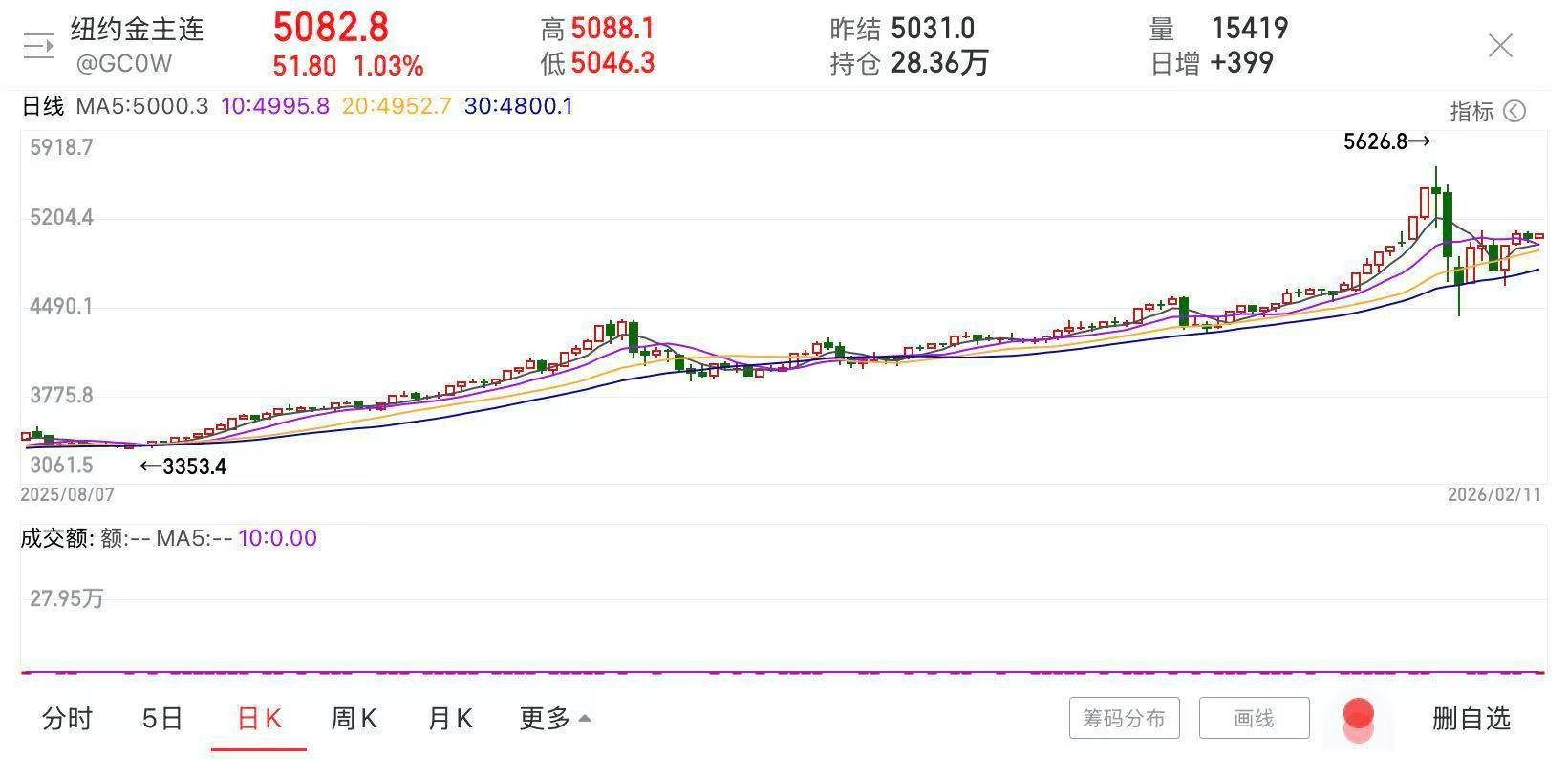
Group 1: Precious Metals - The recent volatility in precious metals, particularly gold and silver, has raised questions about whether the current price adjustments signify a market correction or the end of a bull market [1][2] - Gold prices surged to over $5600 per ounce at the end of January but have since dropped back to around $5000, while silver experienced a significant one-day drop exceeding 25% [1][2] - Factors contributing to the recent decline include increased geopolitical uncertainty, potential shifts in Federal Reserve monetary policy, and profit-taking from previous highs [2] Group 2: Oil Market - Oil prices have recently increased, with West Texas Intermediate crude rising from a low of $55 per barrel to a high of $66 per barrel, reflecting a more than $10 increase [3][6] - Tensions between the U.S. and Iran are a primary driver of oil price fluctuations, as Iran controls a significant portion of global oil reserves and key shipping routes [6] - The outlook for oil prices post-Chinese New Year will depend on geopolitical developments and the resumption of global economic activities, with predictions of a potential supply surplus in 2026 varying among major energy agencies [6][7] Group 3: Agricultural Products - The market reacted positively to President Trump's announcement regarding China's potential purchase of 20 million tons of soybeans, leading to a rise in soybean futures prices above $11 per bushel [8][12] - The increase in soybean prices is supported by improved trade expectations, supply changes in major producing regions, and favorable policy adjustments regarding biodiesel [12] - The soybean market's dynamics will shift post-holiday, focusing on seasonal supply and demand factors, with the consumption pace and recovery in end-user markets being critical for price movements [13]