
玻璃

Search documents
节前需求回落,盘?表现承压
Zhong Xin Qi Huo· 2026-02-13 01:07
投资咨询业务资格:证监许可【2012】669号 中信期货研究|⿊⾊建材策略⽇报 2026-02-13 节前需求回落,盘⾯表现承压 假期临近钢材端累库加快,基本⾯缺乏亮点,盘⾯表现疲软。铁矿⽯ 总库存压⼒持续增加,当前市场对节后需求预期⼀般,盘⾯表现承 压。煤炭供应端存在扰动,煤矿节前放假增多,但煤焦补库进⼊尾 声,需求⽀撑有限,盘⾯低位宽幅震荡。玻纯供需过剩压制盘⾯价 格。 假期临近钢材端累库加快,基本面缺乏亮点,盘面表现疲软。铁矿石 总库存压力持续增加,当前市场对节后需求预期一般,盘面表现承 压。煤炭供应端存在扰动,煤矿节前放假增多,但煤焦补库进入尾 声,需求支撑有限,盘面低位宽幅震荡。玻纯供需过剩压制盘面价 格。 1. 铁元素方面:铁矿石库存压力持续增加,供应端仍存天气扰动预 期,当前市场对节后需求预期一般,盘面表现承压,但节后即将召开 重要会议,宏观预期仍存,盘面快速回落后压力有所释放,关注市场 情绪变化。废钢供应、日耗均有季节性下降的预期,钢厂补库基本结 束,预计节前现货价格震荡。 2. 碳元素方面:焦炭供应后续增长空间有限,而下游钢厂复产预期 仍在,焦炭供需结构将持续保持健康,但基本面利多驱动同样有 ...
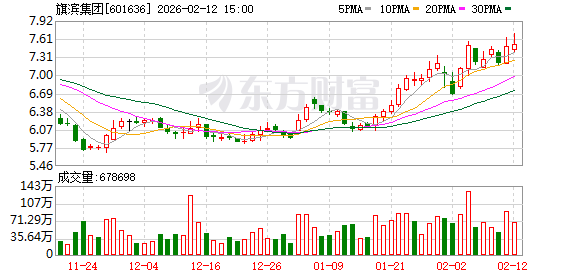
旗滨集团:截至2026年1月31日公司的股东数是93974户
Zheng Quan Ri Bao· 2026-02-12 10:13
Group 1 - The company, Qibin Group, reported that as of January 31, 2026, the number of its shareholders is 93,974 [2]


现实供需双弱,钢价小幅波动
Hua Tai Qi Huo· 2026-02-12 04:11
Report Industry Investment Rating There is no information provided in the content about the report industry investment rating. Core Views - The current supply and demand in the steel market are both weak, with steel prices showing small fluctuations [1]. - The trading atmosphere in the glass and soda ash market is cold, and the prices are weakly oscillating [1]. - The market fluctuations of ferrosilicon and silicomanganese have weakened, and the alloys are oscillating within a narrow range [3]. Summary by Related Catalogs Glass and Soda Ash Market Analysis - Glass: The main glass contract showed a weakly oscillating trend throughout the day. With the Spring Festival holiday approaching, the trading volume decreased, and the trading atmosphere in the spot and futures markets was cold [1]. - Soda Ash: The main soda ash contract continued to operate weakly, with narrow - range oscillations. The trading atmosphere in the spot market was cold, and the market was mainly for rigid - demand purchases [1]. Supply and Demand Logic - Glass: The fundamentals are still weak. There is an increasing expectation of production suspension in the Shahe area, which supports the market. However, the downstream is in the traditional consumption off - season, and the demand is cold. The current low price allows the market to tolerate higher inventory. In the short term, it will continue to operate in an oscillating manner [1]. - Soda Ash: The supply of soda ash remains loose. With the progress of new production projects, the supply pressure continues to increase. As the Spring Festival approaches, downstream consumption shows a seasonal decline due to more cold repairs. The total inventory of domestic soda ash manufacturers is still at a high level, and the de - stocking process is slow, with large overall supply - demand contradictions [1]. Strategy - Glass: Oscillating [2] - Soda Ash: Oscillating [2] Ferrosilicon and Silicomanganese Market Analysis - Silicomanganese: The silicomanganese futures showed a small - scale oscillation, and the volatility decreased compared to the previous period. The spot market was stable. There were new ignition situations in northern factories, with the price of 6517 in the northern market ranging from 5580 - 5680 yuan/ton and in the southern market from 5700 - 5750 yuan/ton [3]. - Ferrosilicon: The ferrosilicon futures followed the overall black market and operated weakly. The spot market was weak, and the market was full of a strong wait - and - see sentiment. The ex - factory price of 72 - grade ferrosilicon natural lumps in the main production areas was 5250 - 5350 yuan/ton, and the price of 75 - grade ferrosilicon was 5850 - 6000 yuan/ton [3]. Supply and Demand Logic - Silicomanganese: The fundamentals of silicomanganese have improved. There is an expectation of an increase in molten iron production, and the demand for silicomanganese has marginally improved. However, the inventory pressure is still large, and the supply - demand pattern remains loose. The recent South African tariff policy may increase the cost of manganese ore, and attention should be paid to the cost support of manganese ore and inventory changes [3]. - Ferrosilicon: The fundamental contradictions of ferrosilicon are controllable. Enterprises have actively reduced production loads. Considering the resumption of production in steel mills, the demand for ferrosilicon is expected to improve marginally. The overall over - capacity of ferrosilicon suppresses the price increase, and continuous attention should be paid to the de - stocking situation and power price policies in production areas [3]. Strategy - Silicomanganese: Oscillating [4] - Ferrosilicon: Oscillating [4]
淡季?盾积累,盘?表现承压
Zhong Xin Qi Huo· 2026-02-12 01:52
投资咨询业务资格:证监许可【2012】669号 中信期货研究|⿊⾊建材策略⽇报 2026-02-12 淡季⽭盾积累,盘⾯表现承压 钢材节前需求回落,基本⾯缺乏亮点,盘⾯表现疲软。钢⼚复产节奏 偏缓,但铁矿⽯发运端存在扰动,盘⾯低位震荡。冬储临近尾声,煤 焦补库⽀撑逐步转弱,盘⾯⽀撑有限。玻璃供应端存在扰动,但玻纯 供需过剩压制盘⾯价格。 钢材节前需求回落,基本面缺乏亮点,盘面表现疲软。钢厂复产节奏 偏缓,但铁矿石发运端存在扰动,盘面低位震荡。冬储临近尾声,煤 焦补库支撑逐步转弱,盘面支撑有限。玻璃供应端存在扰动,但玻纯 供需过剩压制盘面价格。 1. 铁元素方面:铁矿石库存压力持续增加,供应端仍存天气扰动预 期,当前市场对节后需求预期一般,盘面表现承压,但节后即将召开 重要会议,宏观预期仍存,盘面快速回落后压力有所释放,关注市场 情绪变化。废钢供应、日耗均有季节性下降的预期,随着补库接近尾 声,整体基本面将边际转弱,预计现货价格跟随成材为主。 2. 碳元素方面:焦炭供应后续增长空间有限,而下游钢厂复产预期 仍在,焦炭供需结构将持续保持健康,但基本面利多驱动同样有限, 现货预计暂稳运行,盘面预计仍将跟随成本端焦煤 ...
纯碱、玻璃日报-20260212
Jian Xin Qi Huo· 2026-02-12 01:15
行业 纯碱、玻璃日报 日期 2026 年 2 月 12 日 油) 021-60635738 lijie@ccb.ccbfutures.com 期货从业资格号:F3031215 021-60635737 renjunchi@ccb.ccbfutures.com 期货从业资格号:F3037892 021-60635740 pengjinglin@ccb.ccbfutures.com 期货从业资格号:F3075681 021-60635570 liuyouran@ccb.ccbfutures.com 期货从业资格号:F03094925 021-60635727 期货从业资格号:F03134307 fengzeren@ccb.ccbfutures.com 能源化工研究团队 研究员:李捷,CFA(原油燃料 研究员:任俊弛(PTA、MEG) 研究员:彭婧霖(聚烯烃) 研究员:刘悠然(纸浆) 研究员:冯泽仁(玻璃、纯碱) 请阅读正文后的声明 #summary# 每日报告 一、纯碱、玻璃行情回顾与操作建议 | 表1:纯碱、玻璃期货2月11日交易数据汇总 | | | | | | | | | | --- | --- | --- ...
黑色产业链日报-20260211
Dong Ya Qi Huo· 2026-02-11 10:29
Report Industry Investment Rating - Not provided in the content Core Views - **Steel**: Before the Spring Festival, terminal demand for steel shrinks, trading is lackluster, inventory accumulation of rebar accelerates year - on - year, and hot - rolled coil shifts from inventory reduction to accumulation. The fundamentals are weakening. Blast furnace profits are stable, leading to stable output, while EAF output is likely to significantly reduce. Supply is relatively stronger than demand, and falling raw material prices further suppress the market, though cost and policy provide support at the bottom [3]. - **Iron Ore**: On the supply side, overseas shipments of iron ore decline seasonally, and the rainy season in the Southern Hemisphere may affect Australian ore shipments. On the demand side, steel mills' restocking is nearly complete, hot - metal production is expected to rise, but it's the off - season for terminal consumption. Port inventories are accumulating above the seasonal norm, with high inventory pressure, and reduced market risk appetite is suppressing prices [23]. - **Coking Coal and Coke**: Before the festival, domestic coking coal mines reduce production, leading to a seasonal contraction in coking coal supply. Imported coal arrivals are at a low level, and there is an inverted price difference between domestic and international markets. The first round of coke price increase has been implemented, improving coking profits. Coke production is expected to pick up, and steel mills'复产 is leading to a slow increase in demand. In the short term, the supply - demand pattern is loose, and the post - festival resumption of production rhythm is the key factor to watch [34]. - **Ferroalloys**: Both silicon manganese and silicon iron face a game between cost support and downstream terminal inventory accumulation. Manganese ore prices are firm, providing bottom - line support. Ferroalloy profits have rebounded but are still in the red, and production remains low. Steel mills'复产 may drive demand, but the off - season for downstream steel consumption limits demand growth. Silicon manganese has a large inventory base and high de - stocking pressure, while the fundamentals of silicon iron are slightly better [48]. - **Soda Ash**: The rigid demand for soda ash is expected to weaken, and its price is oscillating weakly, with industrial contradictions still accumulating. If the futures price rises, there is some restocking space for mid - stream players such as futures - cash arbitrageurs, but the demand elasticity is limited. The downward price space needs to be opened up by inventory accumulation. In terms of supply - demand, with the release of new production capacities, daily soda ash output is at a high level, and the medium - to - long - term supply is expected to remain high. The inventory of the photovoltaic glass industry is at a high level, daily melting is temporarily stable, and overall rigid demand is weakening. The heavy - soda balance remains in surplus. Soda ash exports remain high, alleviating domestic pressure to some extent [67]. - **Glass**: Market news indicates that due to environmental protection pressure, four coal - fired production lines in Shahe may be cold - repaired before the Spring Festival, with a total daily melting capacity of 2,700 tons. Coupled with the 1,200 - ton cold - repair of Dongtai Zhongbo last week and the expected 1,000 - ton cold - repair of Deyang Xinyi before the Spring Festival, float glass will experience concentrated cold - repair before the Spring Festival, which is slightly beyond expectations. The daily melting capacity will drop to around 146,000 - 147,000 tons. Although there are many new production lines to be ignited in Shahe, the earliest they can be implemented is after the Spring Festival, and it will take months to produce products. The pre - festival concentrated cold - repair helps relieve the inventory and spot pressure after the Spring Festival. Float glass is in a pattern of weak supply and demand, and the high inventory in the middle - stream is a risk point. If a negative feedback occurs, the spot pressure will be large [91]. Summary by Related Categories Steel - **Price Data**: On February 11, 2026, the closing price of rebar 01 contract was 3132 yuan/ton, 05 contract was 3054 yuan/ton, and 10 contract was 3103 yuan/ton. The closing price of hot - rolled coil 01 contract was 3273 yuan/ton, 05 contract was 3228 yuan/ton, and 10 contract was 3247 yuan/ton. The rebar and hot - rolled coil spot prices in various regions remained stable compared to the previous day [4][9][12]. - **Ratio and Spread Data**: The 01 rebar/01 iron ore ratio was 4, and the 01 rebar/01 coke ratio was 2. The 01 - 05 month spread of rebar was 78, and that of hot - rolled coil was 45 [4][20]. Iron Ore - **Price Data**: On February 11, 2026, the closing price of iron ore 01 contract was 733.5 yuan/ton, 05 contract was 762.5 yuan/ton, and 09 contract was 745 yuan/ton. The 01 basis was 31 yuan/ton, 05 basis was 1.5 yuan/ton, and 09 basis was 19 yuan/ton [24]. - **Fundamental Data**: As of February 6, 2026, the daily average hot - metal output was 228.58 tons, the port desilting volume of 45 ports was 341.08 tons, the apparent demand of five major steel products was 761 tons, the global shipment volume was 2535.3 tons, the Australia - Brazil shipment volume was 1881.1 tons, the arrival volume at 45 ports was 2361.3 tons, the inventory at 45 ports was 17140.71 tons, the inventory of 247 steel mills was 10316.64 tons, and the available days for 247 steel mills were 36.55 days [28]. Coking Coal and Coke - **Price and Spread Data**: On February 11, 2026, the 09 - 01 spread of coking coal was - 173.5, the 05 - 09 spread was - 80, and the 01 - 05 spread was 253.5. The 09 - 01 spread of coke was - 90, the 05 - 09 spread was - 75, and the 01 - 05 spread was 165. The spot prices of coking coal and coke in various regions showed different degrees of change compared to the previous day and the previous week [35][37][38]. - **Profit Data**: The on - disk coking profit was - 37 yuan/ton, the main ore - coke ratio was 0.457, the main rebar - coke ratio was 1.832, and the main coke - coal ratio was 1.474 [37]. Ferroalloys - **Silicon Iron**: On February 10, 2026, the silicon iron basis in Ningxia was 40, the 01 - 05 spread was 144, the 05 - 09 spread was - 60, and the 09 - 01 spread was - 84. The spot prices in different regions showed a slight decline compared to the previous week [49]. - **Silicon Manganese**: On February 11, 2026, the silicon manganese basis in Inner Mongolia was 176, the 01 - 05 spread was 104, the 05 - 09 spread was - 42, and the 09 - 01 spread was - 62. The spot prices in various regions remained stable [50][52]. Soda Ash - **Price and Spread Data**: On February 11, 2026, the closing price of soda ash 05 contract was 1178 yuan/ton, 09 contract was 1240 yuan/ton, and 01 contract was 1288 yuan/ton. The 5 - 9 month spread was - 62, the 9 - 1 month spread was - 48, and the 1 - 5 month spread was 110. The spot prices of heavy and light soda ash in various regions remained stable [68]. - **Production and Inventory Data**: The daily production of soda ash is at a high level, the inventory of the photovoltaic glass industry is at a high level, and the rigid demand is weakening. Soda ash exports remain high [67]. Glass - **Price and Spread Data**: On February 11, 2026, the closing price of glass 05 contract was 1087 yuan/ton, 09 contract was 1189 yuan/ton, and 01 contract was 1226 yuan/ton. The 5 - 9 month spread was - 102, the 9 - 1 month spread was - 37, and the 1 - 5 month spread was 139 [92]. - **Production and Sales Data**: The daily production and sales data of glass in Shahe, Hubei, East China, and South China regions showed fluctuations in the recent period [92].
申万宏源:建材行业周期分化 关注消费建材个股修复
Zhi Tong Cai Jing· 2026-02-11 06:52
Group 1: Cement Industry - The cement industry is expected to see a phase of supply improvement starting in the second half of 2024, with profitability gradually recovering by 2026 [1][2] - The average cement price in 2025 is projected to be 372.8 yuan/ton, a decrease of 12.6 yuan/ton year-on-year, with a cumulative production decline of 7.2% [2] - A total of 16 million tons/year of capacity has been removed through capacity replacement, which may lead to asset impairment for several companies [2] Group 2: Glass Industry - The flat glass industry is experiencing a significant decline, with the average price in 2025 expected to be 1323.3 yuan/ton, down 383.4 yuan/ton year-on-year [3] - Daily melting capacity has dropped below 150,000 tons, a decrease of 27,000 tons/day from previous highs, indicating an acceleration in the cold repair cycle [3] - The profitability of photovoltaic glass is under pressure, with a projected average price of 21 yuan/square meter in 2025, down 3 yuan/square meter from 2024 [3] Group 3: Fiberglass and Electronic Fabrics - The average price of fiberglass yarn in 2025 is expected to be 3866 yuan/ton, an increase of 174 yuan/ton year-on-year, indicating stable market conditions [4] - The average price of ordinary electronic fabric is projected to be 9012 yuan/ton in 2025, up 539 yuan/ton year-on-year, reflecting improving market conditions [4] - Demand for special electronic fabrics is accelerating, contributing positively to the performance of companies in this segment [4] Group 4: Consumer Building Materials - Companies like Three Trees and Hanhai Group are maintaining strong revenue and profit performance through effective channel development and brand advantages [5] - Companies in the gypsum board and retail pipeline sectors are expected to maintain strong operational quality, with potential for significant performance improvement in 2026 [5] - Several consumer building material companies are anticipated to release credit risks in 2025, allowing for a more favorable performance outlook in 2026 [5]

黑色建材日报:淡季格局明显,钢价震荡偏弱-20260211
Hua Tai Qi Huo· 2026-02-11 05:18
1. Report Industry Investment Rating - Not provided in the given content 2. Core Views of the Report - The market is in a clear off - season pattern, with steel prices fluctuating weakly. Glass and soda ash markets also show a weakening trend due to shrinking downstream demand. The double - silicon market in the black sector is in a state of consolidation [1][3] - The glass market has an increasing expectation of production line cold - repair in the Shahe area, which provides some support to the market. The soda ash supply pressure is increasing with new projects, and the downstream consumption is seasonally declining [1] - The fundamentals of silicon manganese have improved slightly, but the inventory pressure is still high. The fundamentals of silicon iron are controllable, and the demand is expected to improve marginally [3] 3. Summary by Related Catalogs Glass and Soda Ash Market Analysis - Glass: The main glass contract fluctuated weakly yesterday, and the trading volume decreased approaching the Spring Festival. The spot price was stable, and downstream enterprises mainly made purchases based on rigid demand [1] - Soda Ash: The main soda ash contract continued to show a weakening trend, and the market sentiment was cautious. In the traditional off - season, the spot market mainly had transactions based on rigid demand [1] Supply - Demand and Logic - Glass: There is a strong expectation of production line cold - repair in the Shahe area, which supports the market. However, the fundamental contradictions have not been effectively resolved, and attention should be paid to cold - repair progress, terminal demand recovery, and coal price impact on costs [1] - Soda Ash: The current production of soda ash is high, and the supply pressure is increasing with new projects. Downstream consumption is seasonally declining, the total inventory of domestic soda ash manufacturers is high, and the de - stocking process is slow. Attention should be paid to new project situations [1] Strategy - Glass: Expected to fluctuate [2] - Soda Ash: Expected to fluctuate weakly [2] Double - Silicon (Silicon Manganese and Silicon Iron) Market Analysis - Silicon Manganese: The silicon manganese futures weakened yesterday, and the spot market was filled with a festive atmosphere. The price of 6517 in the northern market was 5580 - 5680 yuan/ton, and in the southern market was 5700 - 5750 yuan/ton [3] - Silicon Iron: The silicon iron futures fluctuated downward, the market was weak, and the sentiment of cautious waiting and seeing was strong. The ex - factory price of 72 - grade silicon iron in the main production area was 5250 - 5350 yuan/ton, and the price of 75 - grade silicon iron was 5850 - 6000 yuan/ton [3] Supply - Demand and Logic - Silicon Manganese: The fundamentals have improved, and the demand is expected to increase marginally. However, the inventory pressure is still high, and the supply - demand pattern is relatively loose. The South African tariff policy may increase the manganese ore cost, and attention should be paid to cost support and inventory changes [3] - Silicon Iron: The fundamental contradictions are controllable, and enterprises have actively reduced production loads. Considering the resumption of steel mills, the demand is expected to improve marginally. The overall over - capacity suppresses the price increase, and attention should be paid to the de - stocking situation and power price policies in production areas [3] Strategy - Both silicon manganese and silicon iron are expected to fluctuate [4]
节前需求回落,盘?表现疲软
Zhong Xin Qi Huo· 2026-02-11 01:04
Report Industry Investment Rating - The mid - term outlook for the black building materials industry is "oscillation" [6] Core Viewpoints - The demand for steel before the festival has declined, the fundamentals lack highlights, and the futures market is weak. The resumption of production in steel mills is slow, but there are disturbances in the iron ore shipping end, and the futures market shows signs of stabilization. As the winter storage is coming to an end, the support for coking coal and coke replenishment is gradually weakening, and the support for the futures market is limited. There are disturbances in the glass supply end, but the supply - demand surplus suppresses the futures price. In the short term, the futures market has downward adjustment pressure, but there are still macro disturbances before the Two Sessions, and the downside space is limited [1][2][3] Summary by Directory 1. Iron Element - The inventory pressure continues to increase, and there are still expectations of weather disturbances on the supply side. The current market has average expectations for post - festival demand, and the futures market is under pressure. However, important meetings will be held after the festival, and there are still macro expectations. After the rapid decline of the futures market, the pressure has been released. Pay attention to market sentiment changes. The supply and daily consumption of scrap steel are expected to decline seasonally. As the replenishment is approaching the end, the overall fundamentals will weaken marginally, and the spot price is expected to follow the finished products [2] 2. Carbon Element - The subsequent growth space of coke supply is limited, while the expectation of downstream steel mill复产 still exists. The coke supply - demand structure will remain healthy, but the bullish driving force of the fundamentals is also limited. The spot is expected to remain stable, and the futures market is expected to follow the cost - end coking coal. Before the Spring Festival, the supply and demand of coking coal are expected to decline. After the Spring Festival, the resumption of production in coal mines is still restricted, and the fundamentals of coking coal may continue to be healthy. The spot is expected to oscillate [2] 3. Alloys - In the manganese - silicon market, supply is stronger than demand, and the pressure on upstream inventory reduction is increasing. When the futures price rises to a high level, it will face selling - hedging pressure. It is expected that the futures price of the main manganese - silicon contract will oscillate around the cost. In the silicon - iron market, both supply and demand are weak, and the fundamental contradictions are limited. However, the trading activity in the market around the Spring Festival is low, and the upward driving force of the futures market is insufficient. It is expected that the silicon - iron futures price will run at a low level around the cost [3] 4. Glass and Soda Ash - There are still expectations of disturbances in the glass supply, but the inventory of the middle and downstream is moderately high. From the perspective of fundamentals, the current supply - demand is still in surplus. If there is no more cold repair before the end of the year, the high inventory will always suppress the price. The overall supply - demand of soda ash is still in surplus. It is expected to oscillate in the short term. In the long run, the supply - surplus pattern will further intensify, and the price center will still decline, promoting capacity reduction [3] 5. Individual Commodity Analysis Steel - Before the festival, the demand weakens, and the futures market is weak. The spot market trading is weak. The profitability of steel mills remains stable, the resumption of production in steel mills is slow, the molten iron output increases slightly, the electric furnaces begin to shut down one after another, and the output of five major steel products decreases slightly. The demand for building materials weakens seasonally, and the manufacturing demand is also in the off - season. The pressure of steel inventory accumulation is emerging, and the fundamentals are gradually accumulating contradictions. In the short term, the futures market has downward adjustment pressure, but there are still macro disturbances before the Two Sessions, and the downside space is limited [7] Iron Ore - The fundamentals are weakening, and the price is under pressure to oscillate. The global shipping volume has decreased slightly. If there are no other sudden disturbances, the supply side is expected to remain relatively loose. The demand for molten iron is still stable, and steel mills are accelerating the replenishment before the Spring Festival. As the replenishment progresses, the support for the price may gradually weaken. The inventory pressure is still accumulating, and the market sentiment has weakened recently. The futures market is under pressure. After the festival, the Two Sessions will be held, so pay attention to market sentiment changes [7][8] Scrap Steel - The electric furnaces are gradually shutting down, and the arrival of scrap steel at steel mills has decreased. The supply and daily consumption of scrap steel are expected to decline seasonally. As the replenishment is approaching the end, the overall fundamentals will weaken marginally, and the spot price is expected to follow the finished products [9] Coke - Before the festival, the sentiment is average, and the futures market is under pressure to operate. The supply of coke has increased month - on - month, the demand is supported by rigid demand, and the inventory in steel mills has increased. The supply - demand structure of coke is relatively healthy. After the spot price increase is implemented, it remains stable for the time being, and the futures market still follows the cost - end coking coal [10] Coking Coal - More coal mines are on holiday, and the futures and spot are under pressure to oscillate. Before the Spring Festival, the supply and demand of coking coal are expected to decline. After the Spring Festival, the resumption of production in coal mines is still restricted, and the fundamentals of coking coal may continue to be healthy. The spot is expected to oscillate, and the futures market is expected to oscillate widely under the influence of capital sentiment [11] Glass - Before the festival, the contradictions are limited, and the price oscillates. There are expectations of disturbances in the supply, but the inventory of the middle and downstream is moderately high. The current supply - demand is still in surplus. If there is no more cold repair before the end of the year, the high inventory will always suppress the price [12] Soda Ash - The supply remains at a high level, and the price oscillates. The supply - demand fundamentals have no obvious changes, and the industry is still in the stage of clearing at the bottom of the cycle. The downstream demand has a downward trend, and the dynamic surplus expectation is further intensified. The spot price may return to the price - cut channel, and it is expected to oscillate in the short term. In the long run, the supply - surplus pattern will further intensify, and the price center will still decline, promoting capacity reduction [12][15] Manganese - Silicon - The inventory tends to increase, and there is still pressure above. The upstream inventory of manganese - silicon is high, but the cost price is firm, which makes it difficult for the futures price to continue to fall. The market trading is cold before the holiday, and the demand support for the price is weakening. The supply may increase after the festival, and the market inventory may further accumulate. It is expected that the futures price of the main manganese - silicon contract will oscillate around the cost [16] Silicon - Iron - The trading atmosphere has become lighter, and the cost still provides support. The black - plate is under pressure in the off - season, and the market trading is rare before the holiday. The cost support of silicon - iron has become stronger. The demand support for the price is weakening, the production of silicon - iron remains at a low level, and the trading activity is low around the Spring Festival. It is expected that the silicon - iron futures price will run at a low level around the cost [18] 6. Index Information - On February 10, 2026, the comprehensive index of CITIC Futures commodities is 2383.17, up 0.35%; the commodity 20 index is 2722.24, up 0.43%; the industrial products index is 2281.60, up 0.12%. The steel industry chain index on February 10, 2026, is 1928.47, with a daily decline of 0.38%, a decline of 2.68% in the past 5 days, a decline of 4.76% in the past month, and a decline of 2.40% since the beginning of the year. The PPI commodity index is 1404.94, up 0.04% [104][105]
建材周专题2026W6:电子布上涨加速,关注水泥板块政策催化
Changjiang Securities· 2026-02-11 00:27
Investment Rating - The industry investment rating is "Positive" and maintained [7] Core Views - The report highlights the accelerating price increase of electronic fabrics and emphasizes the policy-driven opportunities in the cement sector [2][3] - The cement sector is showing clear signs of bottoming out after four consecutive years of demand decline and price competition, with significant losses reported among mid-tier and lower-tier companies [4] - The report identifies three main lines for 2026: the stock chain, the African chain, and the AI chain, suggesting a shift in demand dynamics and growth opportunities [6] Summary by Sections Cement Sector - Cement shipments have decreased month-on-month, with an average shipment rate of approximately 24% in key regions, down about 8 percentage points [5][18] - The average price of cement is reported at 346.61 yuan/ton, reflecting a month-on-month decrease of 3.23 yuan/ton and a year-on-year decrease of 53.06 yuan/ton [19] - The report anticipates a potential increase in industry capacity utilization by 10-15 percentage points starting in 2026 due to production constraints and policy enforcement [4] Glass Sector - The domestic float glass market is experiencing a slowdown in demand, with overall inventory pressure remaining significant, and production capacity is reported at 208 lines with a daily melting capacity of 148,935 tons [27] - The average price of glass is 63.18 yuan/weight box, with a slight month-on-month increase of 0.06 yuan/weight box, but a year-on-year decrease of 12.01 yuan/weight box [30] Electronic Fabrics - The report notes a dual prosperity in electronic fabrics, with AI electronic fabrics benefiting from high demand and price increases due to supply shortages [3] - Ordinary electronic fabrics are also expected to see continued price increases due to weaving machine bottlenecks, with significant price hikes noted in February [3] Future Outlook - The report suggests focusing on the stock chain, which is expected to drive demand back to historical highs, particularly in the renovation market, which currently accounts for about 50% of demand [6] - The African chain is highlighted as an undervalued growth opportunity, with companies like Keda Manufacturing and Huaxin Cement positioned for growth in the African market [6]