XPENG(XPEV)

Search documents
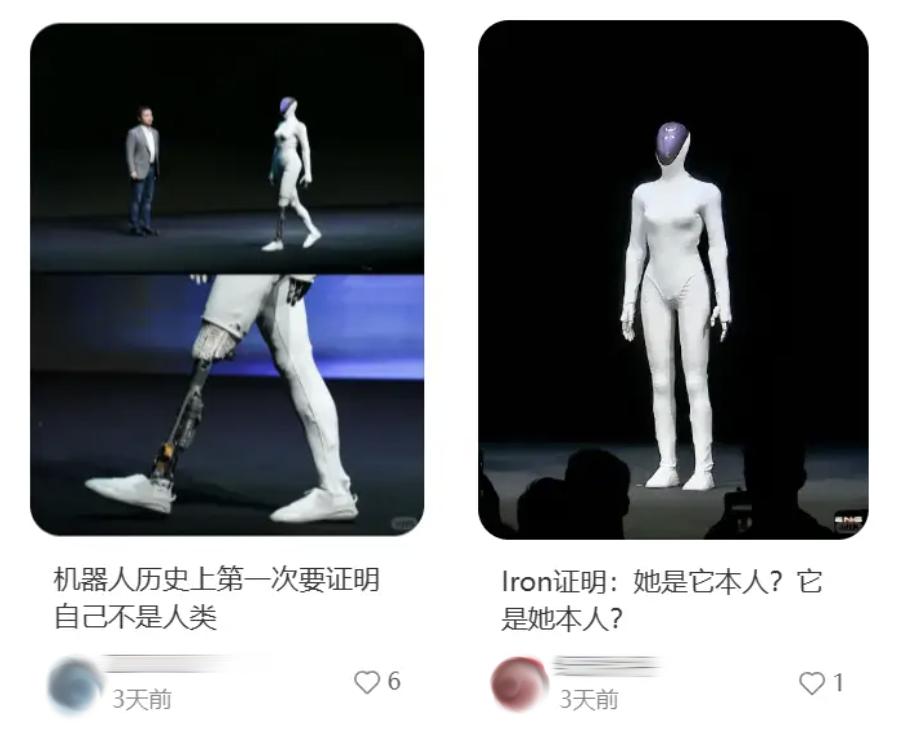
小鹏当场剪开皮肤证明里面没藏真人,但机器人长出胸部后到底能替打工人做点啥?
3 6 Ke· 2025-11-10 09:38
Core Viewpoint - The rapid development of humanoid robots, exemplified by Xiaopeng's IRON, raises questions about their capabilities and societal implications, particularly regarding their human-like appearance and functionality [1][3][20]. Group 1: Product Features and Development - Xiaopeng's humanoid robot IRON features a height of 178 cm and a weight of 70 kg, designed with a flexible fiber covering and a structure mimicking human anatomy [3][5]. - The robot's walking ability, which resembles a human's "catwalk," is a significant advancement, although the underlying technology is not considered groundbreaking within the industry [5][7]. - IRON's design includes movable joints in the shoulders and waist, enhancing its human-like movement, which is a departure from traditional robots that lack such features [7][20]. Group 2: Market Position and Applications - The initial application for IRON is as a sales assistant in car dealerships, highlighting its role in marketing rather than performing complex tasks [9][20]. - The rental market for humanoid robots has seen a drastic price drop, indicating a potential oversupply and raising questions about their practical applications beyond entertainment [10][12]. - Current uses for humanoid robots include performing at events and serving as customer service representatives, but their functionality in household tasks remains limited [12][13]. Group 3: Industry Challenges and Future Prospects - The humanoid robot industry faces challenges in achieving practical applications, with many robots still seen as novelty items rather than functional tools [10][18]. - The development of humanoid robots is driven by the need for market differentiation and the potential for high-value applications, despite current limitations in their capabilities [20][30]. - The expectation is that humanoid robots could eventually perform 40%-50% of tasks currently done by humans, but significant technological advancements are still required [30][31].


谷歌前CEO:中国正在塑造未来
Guan Cha Zhe Wang· 2025-11-10 09:33
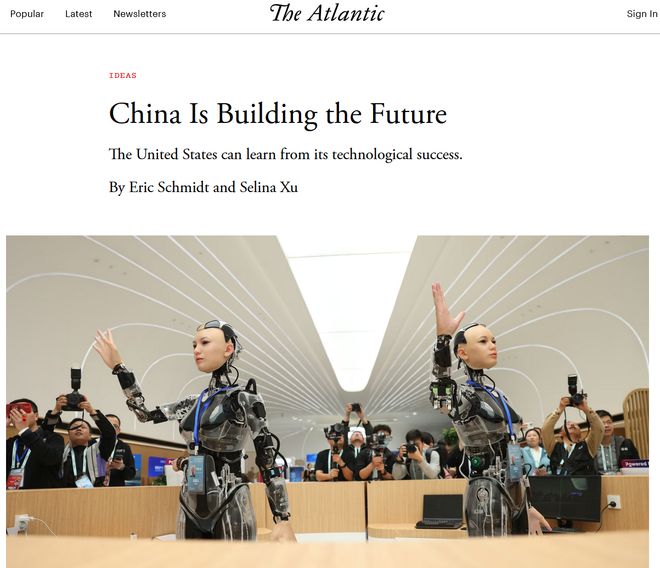
Core Viewpoint - The article emphasizes China's remarkable resilience and innovation in technology and manufacturing, showcasing its position as a global leader despite economic slowdowns [1][4][6]. Group 1: China's Technological and Manufacturing Dominance - China is the world's largest manufacturer and exporter, producing over two-thirds of global electric vehicles, four-fifths of photovoltaic components and battery cells, and approximately 60% of wind turbines [1][4]. - The country processes the majority of the world's rare earth materials, essential for various technologies from chips to military aircraft [1]. - China's industrial robot installations account for about half of the global total, with high-speed rail mileage and 5G base stations also representing over 70% and 50% of the global totals, respectively [4]. Group 2: Success Stories of Chinese Companies - Xiaomi, once seen as an imitator of Apple, has become one of China's most valuable companies with a market capitalization of approximately $150 billion and is set to launch its first electric vehicle in 2024 [4]. - Huawei has expanded from telecommunications equipment to producing automotive components, while Alibaba is developing AI inference chips for its AI models [5]. - The article highlights the importance of China's existing supply chain, infrastructure, and skilled workforce in supporting the rapid development of these companies [4][5]. Group 3: Open Source AI and Global Influence - The open-source movement in China's AI sector is flourishing, with major companies like Alibaba, ByteDance, and Baidu releasing open-source AI models, which could enhance China's technological competitiveness and attract more developers [5][6]. - China holds 70% of global AI patent authorizations and leads in clean energy technology patent applications, indicating its growing influence in these fields [6]. Group 4: Implications for the U.S. and Global Dynamics - The article suggests that if the U.S. aims for re-industrialization, it must focus on supporting research, attracting talent, and removing regulatory barriers, while acknowledging its shortcomings in hardware and AI diversity [6][7]. - A warning is issued that if the U.S. continues to adopt a hostile stance towards China, it risks becoming more closed off and protectionist, potentially losing its status as a leading global power [7].



美股异动丨小鹏汽车盘前涨超5% 美银上调其2025至2027年的销量及收入预测
Ge Long Hui· 2025-11-10 09:17
Core Viewpoint - Xpeng Motors (XPEV.US) shares rose 5.58% to $23.67 in pre-market trading following the announcement of significant advancements in physical AI and new product launches during the 2025 Xpeng Technology Day [1] Group 1: Product Developments - Xpeng unveiled four key applications of physical AI, including the second-generation VLA large model, Xpeng Robotaxi, a new generation of IRON humanoid robots, and the Huotian flying car [1] - The company aims to be a pioneer in the physical AI world, with all new product developments based on physical AI technology [1] Group 2: Financial Forecasts - Bank of America raised its sales forecasts for Xpeng Motors for 2025 to 2027 by 0.2%, 0.2%, and 0.3% respectively, and revenue forecasts by the same percentages [1] - The target price for Xpeng Motors' U.S. stock was increased from $26 to $27, maintaining a "buy" rating due to anticipated strong model launches in the second half of 2025 and into 2026 [1]
关注人形机器人、工程机械及流程工业
Xinda Securities· 2025-11-10 09:13
Investment Rating - The investment rating for the machinery equipment industry is "Positive" [2] Core Views - The report highlights a significant growth in the sales of excavators and loaders, with excavator sales reaching 18,096 units in October, a year-on-year increase of 7.8%, and loader sales increasing by 27.7% [12][58] - The humanoid robot sector is experiencing rapid advancements, with companies like Xiaopeng and ZhiYuan launching new models aimed for mass production by 2026 [12][55] - The report emphasizes the resilience of companies like Rihuan Technology and Kangst, which have shown strong revenue growth despite external pressures [3][4][14] Summary by Sections 1. Company Highlights - Rihuan Technology, a leading supplier of industrial X-ray intelligent detection equipment, saw a nearly 100% increase in new orders year-on-year and a 44.01% revenue growth in the first three quarters [3] - Kangst, involved in digital detection instruments, reported a 22.24% increase in revenue and a 30.66% increase in net profit in Q3, demonstrating strong operational resilience [4][14] - Newrui Co., which produces hard alloys and tools, experienced a significant profit increase of 75.40% in Q3, driven by effective cost management amid rising raw material prices [5][15] 2. Industry Trends - The machinery sector is witnessing a broad recovery, with excavator and loader sales showing strong growth, indicating a positive trend in construction and infrastructure investment [12][58] - The humanoid robot market is set for significant growth, with advancements in technology and increasing investments from major companies [12][55] 3. Market Performance - The machinery index saw a slight decline of 0.25% last week, while other major indices like the Shanghai Composite Index increased by 1.08% [16] - The report notes that the machinery industry is experiencing varied performance across sub-sectors, with some segments like power distribution equipment showing strong gains [22] 4. Policy Support - Recent government policies are aimed at enhancing the industrial machinery sector, including support for high-end machine tools and automation technologies [28][35]


人形机器人周报:特斯拉股权激励方案落地,马斯克将全力推进机器人业务-20251110
CMS· 2025-11-10 09:05
Investment Rating - The report maintains a positive outlook on the humanoid robotics industry, highlighting significant developments and investment opportunities in the sector [3][4]. Core Insights - The approval of Elon Musk's compensation plan on November 6 will lead to a full push for Tesla's robotics business, with a target of delivering over 1 million units of the Optimus robot in the next decade [4][6]. - Xiaopeng Motors unveiled its seventh-generation IRON humanoid robot, which boasts advanced features and aims for mass production by the end of 2026, showcasing the competitiveness of domestic robots against global standards [4][7]. - Several domestic robotics manufacturers are preparing for IPOs, indicating a trend towards capitalizing on the growing market [4][12]. Industry Overview - The humanoid robotics sector is experiencing rapid growth, with significant orders and partnerships being established, such as the strategic collaboration between Lens Technology and Yuejiang Robotics, which includes orders for 1,000 robots and 10,000 robotic dogs [4][8]. - UBTECH has secured a 160 million yuan order for its Walker S2 humanoid robot, bringing its total orders for the year to 790 million yuan, reflecting strong market demand [4][9]. - The introduction of the NavFoM navigation foundation model by Galaxy General and several universities marks a technological advancement in the field, enabling robots to operate in diverse environments [4][10]. Related Companies - Key companies to watch in the logistics equipment sector include Hangcha Group, Zhongli Co., Anhui Heli, and Jingsong Intelligent [3]. - In the T-chain related sector, notable companies include Sanhua Intelligent Control, Top Group, and Junsheng Electronics [3]. - The report highlights several leading companies in the humanoid robotics space, such as UBTECH, Yuejiang, and Zhongjian Technology, which are pivotal in driving innovation and market growth [5].



【月度分析】2025年10月份全国乘用车市场分析
乘联分会· 2025-11-10 08:08
Core Insights - The article provides a comprehensive analysis of the Chinese passenger car market for October 2025, highlighting trends in retail, wholesale, production, and exports, particularly focusing on the performance of new energy vehicles (NEVs) and the competitive landscape among domestic and foreign brands [17][18][19]. Market Overview - In October 2025, retail sales of passenger cars reached 2.242 million units, a year-on-year decrease of 0.8% and a month-on-month decrease of 0.1%. Cumulative retail sales for the year reached 19.25 million units, up 7.9% year-on-year [17]. - The wholesale volume for October was 2.932 million units, marking a historical high for the month, with a year-on-year increase of 7.6% and a month-on-month increase of 4.9% [21]. - Production in October totaled 2.951 million units, a year-on-year increase of 11.4% and a month-on-month increase of 3.7% [20]. New Energy Vehicle (NEV) Market - NEV retail sales in October reached 1.282 million units, a year-on-year increase of 7.3%, while cumulative sales for the year reached 10.151 million units, up 21.9% [23]. - The penetration rate of NEVs in the domestic market was 57.2%, an increase of 4.3 percentage points year-on-year [27]. - NEV wholesale volume was 1.621 million units in October, up 18.5% year-on-year, with cumulative wholesale reaching 12.058 million units, an increase of 29.9% [23]. Export Performance - In October, total passenger car exports reached 568,000 units, a year-on-year increase of 27.7% and a month-on-month increase of 7.5%. Cumulative exports for the year reached 4.567 million units, up 14.2% [20]. - NEVs accounted for 44.2% of total exports in October, with 251,000 units exported, reflecting a year-on-year increase of 104% [28]. Competitive Landscape - Domestic brands achieved a retail volume of 1.55 million units in October, a year-on-year increase of 4%, capturing a market share of 68.7% [19]. - Traditional automakers like Geely, Changan, and Great Wall have shown significant improvements in market share, while joint venture brands faced challenges with a 10% decline in retail volume [19][20]. - The new energy segment saw strong performances from brands like BYD, which sold 436,856 units, and other domestic brands also reported robust sales figures [30][31]. Future Outlook - The market is expected to see continued growth in November due to year-end purchasing urgency driven by tax incentives and seasonal factors [33]. - The export momentum is likely to persist, supported by increasing recognition of Chinese NEV brands in international markets [34].




从交通工具到智能体,具身智能开启了汽车产业万亿新赛道
3 6 Ke· 2025-11-10 08:01
Core Insights - The "14th Five-Year Plan" identifies embodied intelligence as a core growth point for future industries, marking a significant transition in the automotive sector from "transportation tools" to "intelligent mobility entities" [1][2] - The synergy between policy support and technological advancements is reshaping the automotive industry, driving a shift from traditional manufacturing to a comprehensive "intelligent manufacturing + services" model [1][2] Policy and Hardware Empowerment - The strategic positioning of embodied intelligence in the "14th Five-Year Plan" is part of a systematic approach to strengthen manufacturing and digitalization in China, with the automotive industry as a key application area [2] - The Ministry of Industry and Information Technology is focusing on critical technologies such as automotive AI and operating systems, while pilot cities for "vehicle-road-cloud integration" are being rapidly developed to support the application of embodied intelligent vehicles [2] Technological Synergy - The Xiaopeng Iron Robot utilizes AI chips and systems that leverage the company's long-term investments in intelligent driving, showcasing a shared technological foundation between automotive and robotics sectors [3][5] - The collaboration between automotive companies and robotics is becoming a trend, with companies like Changan and Huawei extending their technological capabilities across both domains [5][6] Industry Transformation - The emergence of embodied intelligence is shifting the competitive landscape of the automotive industry from hardware manufacturing to intelligent capabilities, prompting traditional automakers to evolve into "intelligent operators" [6][9] - The integration of robotics into automotive manufacturing processes is demonstrating the feasibility of transferring automotive technologies to robotics, thereby creating natural technological barriers for automotive companies [6][8] Market Expansion and Future Potential - The integration of embodied intelligence is leading to diverse application scenarios, expanding the automotive industry's boundaries from manufacturing to service sectors [10][12] - The market potential for embodied intelligence in the automotive sector is projected to grow significantly, with estimates suggesting a shift from a billion-dollar to a trillion-dollar market, driven by advancements in technology and supportive policies [12][13]
人形机器人产业周报:马斯克万亿薪酬方案通过,小鹏新一代IRON人形机器人亮相-20251110
Guoyuan Securities· 2025-11-10 07:15
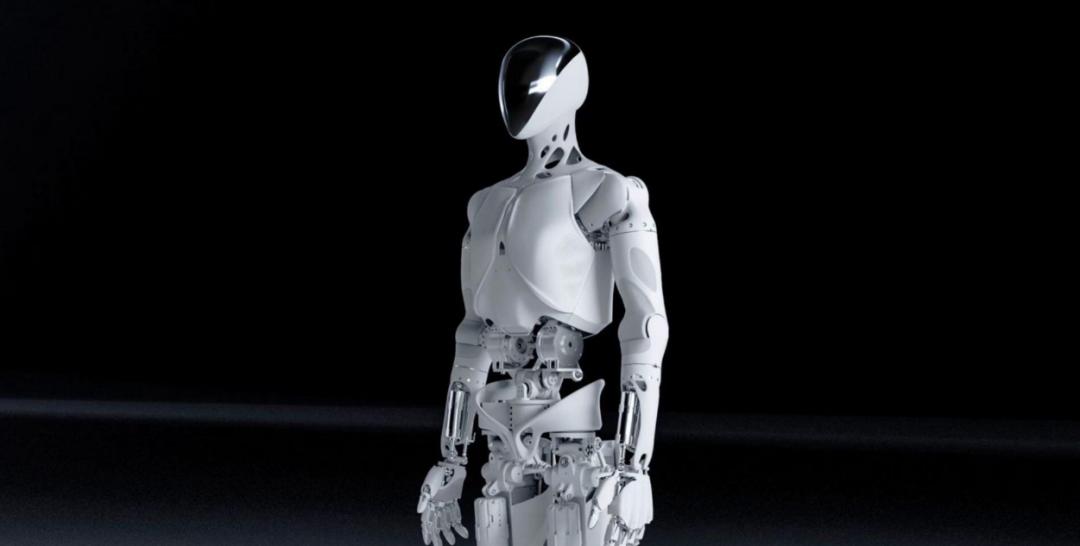
Investment Rating - The report maintains a "Recommended" investment rating for the humanoid robotics industry [7]. Core Insights - The humanoid robotics concept index experienced a weekly decline of 1.86% from November 2 to November 7, 2025, underperforming the CSI 300 index by 2.69 percentage points. However, year-to-date, the humanoid robotics index has risen by 72.20%, outperforming the CSI 300 index by 49.73 percentage points [2][12]. - Notable stock performance includes Wald's weekly increase of 25.79%, while Hengshuai shares saw a decline of 20.81% [17]. Weekly Market Review - The humanoid robotics concept index fell by 1.86% during the week, while the year-to-date performance shows a significant increase of 72.20% [12]. - Wald and Hengshuai were the top performers and underperformers, respectively, among related stocks [17]. Weekly Highlights Policy Developments - The Ministry of Industry and Information Technology supports domestic and international collaboration to advance humanoid robotics technology and product upgrades [20]. - Fujian Province announced measures to promote AI industry development, offering a one-time reward of 500,000 yuan for selected high-quality AI products [20]. Product and Technology Iteration - JD.com plans to establish the world's first unmanned delivery station by April 2026, integrating drones and autonomous delivery vehicles [21]. - Xiaopeng Motors aims to achieve mass production of its advanced humanoid robot, IRON, by the end of 2026 [21]. - Star Dynamics' humanoid robot is expected to enter mass production in 2026, with a focus on affordability for consumers [22]. Investment and Financing - Beijing Jijiashijie Technology completed a new round of financing, focusing on the development of physical AI intelligent models [24]. Key Company Announcements - Kabeiyi invested 100 million yuan to establish a wholly-owned subsidiary to accelerate the development of humanoid robot components [25]. - Baoxin Technology plans to establish a joint venture focusing on humanoid and quadruped robots [25]. - Zoomlion expects to start mass production of robots in 2026 [26]. - Hangcha Group aims to reduce the cost of logistics humanoid robots by 60%-70% within two years [26].
小鹏机器人 为啥真的像人?
3 6 Ke· 2025-11-10 06:49
Core Insights - The release of the humanoid robot IRON by Xiaopeng has sparked significant public interest and debate regarding its human-like appearance and movement capabilities [1][11] - The use of elastomer materials in robotics is highlighted as a key innovation that allows for more human-like movement and flexibility, which is essential for the integration of humanoid robots into daily life [2][6] Group 1: Humanoid Robot Development - Xiaopeng's humanoid robot IRON features a bipedal gait that closely resembles human movement, raising questions about its design and technology [1] - The robot's design incorporates a bionic spine, 82 degrees of freedom in joints, and advanced model training for human gait, showcasing significant technological advancements [1][9] - The use of elastomer materials allows for a more flexible and lightweight structure, reducing energy consumption and enhancing safety during human interaction [6][7] Group 2: Material Innovation - Elastomer materials, which are flexible and lightweight, are positioned as a crucial component for the future of humanoid robots, enabling them to mimic human muscle behavior [2][4] - The transition from traditional rigid materials to elastomers represents a significant shift in robotics, allowing for improved movement and adaptability in human environments [5][6] - 3D printing technology is essential for producing elastomer components, enabling precise control over internal structures that traditional manufacturing methods cannot achieve [8] Group 3: Market Potential and Strategy - Xiaopeng aims to create a closed-loop system where humanoid robots are utilized in automotive manufacturing, enhancing efficiency and data collection for further technological advancements [12][13] - The company believes that humanoid robots will become more commercially viable due to their human-like characteristics, leading to increased sales and cost reductions [11] - The market for robotics is projected to reach $20 trillion in the next 10-20 years, potentially surpassing the automotive market, indicating significant growth opportunities [13][14]
新能源产业链资讯
数说新能源· 2025-11-10 06:38
Battery Industry - The domestic lithium battery market remains strong, with a 3% month-on-month increase in production for November, which is notable given that many battery manufacturers are already operating at full capacity, with some exceeding production by 10% [1] - There is a low willingness to reduce production in December, and even if there are reductions in January, the decrease is expected to be limited [1] New Energy Vehicles - According to preliminary statistics from the Passenger Car Association, retail sales of passenger cars reached 2.387 million units in October, a year-on-year increase of 6% and a month-on-month increase of 7% [2] - Retail sales of new energy vehicles reached 1.4 million units in October, representing a year-on-year increase of 17% and a month-on-month increase of 8% [2] - The penetration rate of new energy vehicles reached 58.7%, an increase of 6.5 percentage points compared to the same period last year, with a cumulative penetration rate of 52.95%, up 8.12 percentage points year-on-year [2] - Major automakers reported sales figures for October: BYD 441,700 units, Geely 307,000 units, Leap Motor 70,200 units, NIO 40,300 units, Xpeng 42,000 units, Li Auto 31,000 units, Xiaomi over 40,000 units, and Hongmeng Zhixing 68,000 units; some popular models are experiencing tight battery supply [2] Recommendations - Main manufacturers are advised to balance performance and cost in battery cell procurement [4] Market Expansion - BYD is focusing on expanding its presence in Southeast Asia [8] - CATL is experiencing growth in the energy storage market that exceeds that of the power market [8]