
赤字率

Search documents
2025年10月财政数据点评:财政支出收紧有何深意?
Minsheng Securities· 2025-11-18 11:59
Revenue Insights - From January to October 2025, the national general public budget revenue reached 18.65 trillion yuan, a year-on-year increase of 0.8%, with a growth rate improvement of 0.3 percentage points compared to January to September[1] - In October, the general public budget revenue recorded a year-on-year growth of 3.2%, up from 2.6% in September, driven primarily by tax revenue which grew by 8.6%[1][2] - Personal income tax showed a remarkable year-on-year growth of 27.3%, significantly higher than the previous value of 16.7%, making it a core driver of tax revenue growth[2] Expenditure Trends - General public budget expenditure from January to October 2025 totaled 22.58 trillion yuan, reflecting a year-on-year increase of 2%[1] - In October, public budget expenditure decreased by 9.8%, marking the first negative growth of the year, attributed to earlier fiscal spending in the first half of the year and constraints from the annual deficit requirements[3] - Infrastructure spending saw a significant decline of 26.7%, indicating reduced support for traditional fiscal investment methods[5] Tax Revenue Dynamics - Non-tax revenue experienced a sharp decline of 33.0%, indicating an ongoing improvement in the quality of fiscal revenue[1] - Export tax rebates fell by 14.8%, suggesting a potential weakening in external demand, consistent with the downward trend in October's export growth[2] - The growth rate of securities transaction stamp duty normalized to 17.5%, down from a previous 342.4%, indicating a return to typical market conditions[2] Fiscal Policy Implications - The tightening of fiscal expenditure in October may necessitate an increase in the deficit ratio next year to support economic continuity, especially with the upcoming "14th Five-Year Plan"[3] - Local government land transfer revenue dropped by 27.3%, a significant increase in decline compared to the previous month's -1.0%, impacting government fund expenditures which fell by 38.2%[5]
2026年债市展望:蛰伏反击
HTSC· 2025-11-03 05:50
Group 1: Macroeconomic Outlook - The report highlights that both the US and China are entering critical years, with global investment driven by three and a half engines: AI investment, defense spending, and industrial restructuring [1][14] - The nominal GDP growth rate is expected to recover, with a focus on domestic demand and technology as key policy areas [1][2] - The transition from old to new economic drivers in China is anticipated to gain momentum, leading to a rebalancing of supply and demand [2][11] Group 2: Policy Environment - The "15th Five-Year Plan" sets a supportive policy tone, with monetary policy expected to remain accommodative, albeit with less room than in the current year [3][15] - Fiscal policy is projected to maintain a certain level of expansion, with total tools estimated at 15.7 trillion yuan, an increase of approximately 1.2 trillion yuan from this year [3][15] - The report emphasizes the importance of structural tools and the coordination between monetary and fiscal policies to support various sectors [3][15] Group 3: Supply and Demand Dynamics - The narrative of "asset scarcity" in the bond market is expected to weaken, with a focus on the verification of corporate profits and capacity utilization [4][18] - The report notes that government bond supply is likely to increase, but market pressure will be manageable due to central bank support [4][18] - Institutional behavior is identified as a major source of market volatility, with a reduction in stable funding leading to increased market fluctuations [4][18] Group 4: Bond Market Strategy - The bond market is expected to maintain a "low interest rate + high volatility" characteristic, with the central rate likely remaining stable or slightly increasing [5][18] - The report suggests a strategy of segment trading, coupon strategies, and equity exposure as priorities over duration adjustment and credit downgrading [5][18] - The ten-year government bond yield is projected to fluctuate between 1.6% and 2.1%, with a widening of term spreads anticipated [5][18]
“十五五”时期财政政策着力何处?赤字率、投资重点、地方政府债务……
经济观察报· 2025-10-23 14:27
Core Viewpoint - The article emphasizes the importance of fiscal policy during the "15th Five-Year Plan" period, advocating for proactive measures to support economic growth and address challenges, with a target GDP growth rate of approximately 4.7% to achieve the 2035 doubling goal [4][5]. Fiscal Policy Role - Fiscal policy is expected to play a crucial role in the "15th Five-Year Plan" period, with a focus on maintaining a high budget deficit to stimulate economic growth [4][5]. - The suggested budget deficit rate for 2026 is around 5%, with plans to utilize special bonds and other broad deficit tools to exceed 16 trillion yuan in total deficit [4][5]. Comparison with Other Economies - Compared to major economies like the U.S. and Japan, which have high deficit rates exceeding 6%, China's central government has a lower leverage ratio, indicating room for increased fiscal measures to boost social confidence and effective demand [5][6]. Shift in Fiscal Spending Focus - There is a proposed shift in fiscal spending from primarily investment-focused to a balanced approach that includes both investment and consumption, emphasizing the need for increased support in public services and consumer spending [6][7]. Addressing Local Government Debt - Addressing local government debt risks is highlighted as a key aspect of fiscal efforts, with recommendations for orderly debt replacement and improved asset management to alleviate financial pressures [7][8]. Structural Issues and Policy Coordination - The article stresses the need to view government debt expansion in a balanced manner, recognizing its potential positive effects on economic growth while advocating for structural reforms in the fiscal and tax systems [8][9]. Economic Resilience and Domestic Demand - The "15th Five-Year Plan" period is seen as a critical time for China to enhance its economic resilience and unleash domestic demand, supported by coordinated macroeconomic policies and ongoing urbanization efforts [9].


“十五五”时期财政政策着力何处?赤字率、投资重点、地方政府债务……
Jing Ji Guan Cha Wang· 2025-10-23 12:58
Core Points - The Fourth Plenary Session of the 20th Central Committee of the Communist Party of China emphasized the need to improve the macroeconomic governance system to ensure high-quality and sustainable development during the "14th Five-Year Plan" period [1] Fiscal Policy - Fiscal policy is expected to play a proactive role during the "14th Five-Year Plan" period, with a focus on addressing issues through development [2] - To achieve the goal of doubling GDP by 2035, the actual GDP growth rate needs to be maintained at around 4.7%, which requires a high budget deficit level to support economic growth [2] - The deficit rate is suggested to be set at around 5% for 2026, with plans to utilize special bonds and other broad deficit tools, aiming for a total broad deficit scale exceeding 16 trillion yuan [2] Government Debt and Investment - Compared to major economies like the US and Japan, China's central government has a lower leverage ratio, which can be increased to boost social confidence and effective demand [3] - The focus of fiscal policy during the "14th Five-Year Plan" will shift from primarily investment to a balance between investment and consumption, enhancing public service and addressing shortfalls in healthcare, education, and elderly care [3][4] - There will be an emphasis on expanding effective investment in infrastructure, particularly in transportation, energy, and water conservancy, as well as supporting new industries like digital economy and green energy [4] Local Government Debt Management - Addressing local government debt risks is crucial for sustainable fiscal development, with some progress already made, though challenges remain [4][5] - The strategy includes orderly debt replacement, dynamic adjustment of high-risk areas, and enhancing government asset management [5][6] Economic Growth and Structural Issues - The relationship between government debt expansion and economic growth should be viewed objectively, recognizing the positive effects of debt efficiency and structure optimization [6] - The "14th Five-Year Plan" period is seen as a critical phase for China's transition to high-quality development, with potential for domestic demand to be released and resilience in foreign trade [6]
黄金和铜,市场行情如何发展?
Hu Xiu· 2025-10-23 00:35
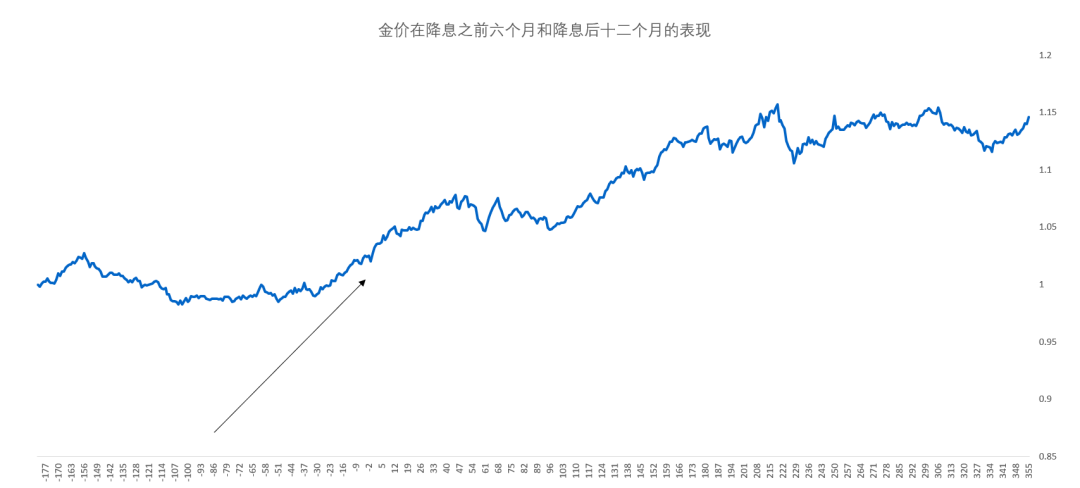
Group 1: Gold Market Insights - The current focus on gold is significant, with a recent pullback from around 4400 to 4000, indicating potential opportunities in the coming weeks due to geopolitical and economic events [3][4] - Gold is expected to experience a cyclical bull market combined with a structural bull market in 2025, driven by interest rate cuts and various structural narratives [4][5][7] - Major trading groups such as central banks, institutional investors, and ETFs are showing increased inflows into gold, reflecting a strong structural narrative [7][8][30] Group 2: Geopolitical Factors - The ongoing competition between the US and China introduces geopolitical uncertainties that could impact gold prices, with a focus on upcoming meetings and potential outcomes [10][11][12] - Historical patterns suggest that geopolitical tensions can lead to economic conditions that favor gold, as seen during the Cold War [13][19] - The potential for a short-term peace period between the US and China is being monitored, as it could influence market sentiment towards gold [12][19] Group 3: Copper Market Insights - In contrast to gold, copper is expected to face cyclical headwinds in 2025, with structural opportunities arising from supply and demand factors [28][29] - The copper market is influenced by structural supply issues, particularly in South America, where political instability affects production [32][34] - Demand for copper is being driven by factors such as tariffs, AI capital expenditures, and trade dynamics, which are mitigating the impact of economic slowdown [37][42] Group 4: Economic Outlook - The economic outlook for copper suggests that as long as US economic expectations remain stable, maintaining higher copper inventories is reasonable [43] - The interplay between supply-side and demand-side factors will shape the copper market in 2025 and 2026, with potential for both structural and cyclical opportunities [44][45] - The overall sentiment indicates that both gold and copper have not yet reached their peak in the current cycle, with gold being more sensitive to geopolitical developments and copper to economic recovery [46][47][48]
前三季度财政收入延续增长态势,卖地收入降幅收窄
Sou Hu Cai Jing· 2025-10-17 10:40
Core Insights - National general public budget revenue for the first three quarters reached 163,876 billion yuan, a year-on-year increase of 0.5%, with the growth rate expanding by 0.2 percentage points compared to the first eight months [1] - Tax revenue for the first three quarters was 132,664 billion yuan, up 0.7% year-on-year, while non-tax revenue decreased by 0.4% to 31,212 billion yuan [2] - General public budget expenditure for the first three quarters was 208,064 billion yuan, a year-on-year increase of 3.1%, with central government expenditure rising by 7.3% and local government expenditure increasing by 2.4% [2] Revenue Breakdown - Central government general public budget revenue was 70,837 billion yuan, down 1.2% year-on-year, while local government revenue was 93,039 billion yuan, up 1.8% [1] - Government fund budget revenue for the first three quarters was 30,717 billion yuan, a decrease of 0.5% year-on-year, with central government fund revenue increasing by 0.7% and local government fund revenue decreasing by 0.6% [5] Expenditure Insights - Social security and employment expenditure, agricultural and forestry expenditure, and energy conservation and environmental protection expenditure saw significant growth, increasing by 10%, 9%, and 8.8% respectively [3] - The Ministry of Finance plans to expedite the use of special bonds and other financial tools to support major project construction and address issues like debt defaults [5][6] Policy Considerations - The Ministry of Finance will continue to advance the 2026 new local government debt limit, focusing on major strategic projects and addressing hidden debt issues [6] - Market expectations for growth stabilization policies have increased, with a focus on fiscal priorities beyond infrastructure, including childcare subsidies and urban renewal [5]
财政部部长蓝佛安:我国财政政策空间进一步打开
Sou Hu Cai Jing· 2025-09-12 08:48
Core Viewpoint - The Chinese government has significantly increased its fiscal policy measures since the start of the 14th Five-Year Plan, focusing on both short-term economic stabilization and long-term development goals [1][2]. Group 1: Fiscal Policy Measures - The deficit rate has risen from 2.7% to 3.8% since the beginning of the 14th Five-Year Plan, with a further increase to 4% this year [1]. - A total of 19.4 trillion yuan in new local government special bonds has been allocated [1]. - Over 1 trillion yuan in new tax reductions and deferred tax payments have been implemented, expanding fiscal policy space [1]. Group 2: Policy Tools and Focus - The fiscal policy toolbox has become more diverse, utilizing government bonds, tax incentives, fiscal subsidies, and special funds to enhance the multiplier effect of policies [1]. - The government has creatively issued ultra-long special bonds to support comprehensive domestic demand expansion [1]. - Fiscal measures are increasingly targeted at addressing economic bottlenecks, such as a one-time allocation of 6 trillion yuan for replacing existing hidden debts, alleviating local debt repayment pressures [1]. Group 3: Future Fiscal Policy Outlook - The government plans to maintain a balance between risk prevention and development promotion, ensuring that there is still ample room for future fiscal policy actions [2]. - Continuous policy stability and flexibility will be prioritized, with an emphasis on proactive measures and timely adjustments based on economic conditions [2].
加力实施更加积极的财政政策 ——对话中央财经大学校长马海涛
Jing Ji Ri Bao· 2025-09-06 22:08
Core Viewpoint - The central economic work conference in 2024 emphasizes the implementation of a more proactive fiscal policy to stimulate economic growth, enhance employment, and support industrial transformation [1][2]. Fiscal Policy Adjustment - The shift from "active" to "more active" fiscal policy marks a significant adjustment in China's fiscal stance since 2008, aimed at addressing insufficient total demand and promoting high-quality economic development [2][3]. Fiscal Deficit and Debt Management - The fiscal deficit is set at around 4% for the year, with a deficit scale of 5.66 trillion yuan and plans to issue 1.3 trillion yuan in ultra-long-term special bonds, alongside 4.4 trillion yuan in new local government special bonds [3][4]. - The government maintains that the current deficit level is within a safe threshold, despite surpassing the traditional 3% warning line, as it reflects a strategic approach to fiscal space and debt management [5][7]. Economic Stimulus and Confidence Building - The proactive fiscal policy aims to expand domestic demand and stabilize confidence, providing financial support to stimulate consumption and investment, thereby enhancing overall economic activity [9][10]. - It also focuses on risk prevention in key areas, ensuring stable macroeconomic operations through targeted fiscal measures [10][11]. Support for Livelihood and Strategic Initiatives - The policy prioritizes investments in social welfare, education, healthcare, and other critical areas to enhance public services and support major national strategies, including green development and technological innovation [11][12]. - Specific measures include increasing subsidies for consumption, enhancing social security, and providing targeted support for vulnerable groups [12][22]. Coordination of Policies - There is a strong emphasis on the coordination between fiscal and monetary policies to enhance macroeconomic stability and promote a virtuous economic cycle [4][13]. - The government aims to leverage fiscal tools to attract social capital and ensure effective implementation of fiscal policies [13][19]. Challenges and Future Directions - The effectiveness of the more proactive fiscal policy may be constrained by existing inertia, systemic issues, and external economic pressures [14][16][17]. - Future efforts should focus on balancing short-term fiscal stability with long-term sustainability, optimizing fiscal resource allocation, and enhancing the overall impact of fiscal measures [19][20][21].
东盟观察丨东南亚多国一季度经济增速放缓,出口预期不稳致亚太股市转跌
Sou Hu Cai Jing· 2025-05-26 00:20
Group 1: Market Overview - The Asia-Pacific stock markets experienced mixed performance, with the Jakarta Composite Index rising by 1.51% while the Kuala Lumpur Composite Index fell by 2.31% [1][3] - The Nikkei 225 Index and KOSPI Index both saw declines of 1.57% and 1.32% respectively, indicating a broader trend of downward movement in major indices [1][3] - Analysts suggest that the recent fluctuations in the Asia-Pacific stock markets are normal market volatility, influenced by global macroeconomic changes and structural adjustments within certain industries [3] Group 2: Economic Growth in Southeast Asia - Five out of six major Southeast Asian economies are experiencing a slowdown in economic growth, with Malaysia, Singapore, and Thailand revising their growth forecasts downward [4][5] - Singapore's GDP growth for Q1 was reported at 3.9%, with a forecasted annual growth rate adjusted to between 0% and 2%, down from a previous estimate of 1% to 3% [4][5] - Other Southeast Asian countries, including Indonesia and Vietnam, also reported lower GDP growth rates compared to previous quarters, indicating a regional trend of economic deceleration [5][6] Group 3: Impact of U.S. Tax Policies - The potential implementation of U.S. tax cuts under President Trump is raising concerns about increasing deficit rates, which could negatively affect investor sentiment towards Asian capital markets [2][6] - The anticipated rise in U.S. deficit rates and the resulting high bond yields may lead to a shift in investment strategies, causing some Asian markets to weaken [2][6] Group 4: Japanese Bond Market Dynamics - The Japanese bond market is facing significant pressure, with a notable decline in demand and a rise in yields, attributed to higher inflation and potential fiscal stimulus measures [7] - The supply-demand imbalance in the Japanese bond market has contributed to upward pressure on global bond yields, particularly affecting U.S. Treasury yields [7]
中财期货:黄金长线具备走强动力
Qi Huo Ri Bao· 2025-05-13 02:05
Group 1: Global Trade Developments - The recent trade negotiations indicate a short-term easing of global tariff risks, with the US and UK reaching a trade agreement that retains a 10% tariff on UK goods, which has limited actual impact due to the UK's small trade share with the US [2] - The US-China high-level economic talks held in Geneva resulted in significant progress, despite a decrease in China's exports to the US since 2018, with approximately $500 billion in goods still being exported annually [2][4] Group 2: Economic Indicators and Trends - The US deficit rate has risen significantly since the COVID-19 pandemic, with projections indicating it will exceed 7%, and the federal budget deficit is expected to reach $2.7 trillion by 2035 [4] - The long-term expectation of rising deficit rates in major economies is seen as a bullish factor for gold prices, as evidenced by the rapid increase in gold and Bitcoin prices amid US monetary expansion [4][7] Group 3: Gold Demand and Market Dynamics - Global gold demand remains strong, with the World Gold Council reporting the highest first-quarter demand since 2016, driven by central bank purchases and a significant increase in gold ETF inflows [5] - China's retail investment in gold reached its second-highest quarterly level, contributing to the overall strong demand for gold, while geopolitical uncertainties continue to influence central banks' purchasing strategies [5][6]