
宏观经济

Search documents
综合晨报-20250922
Guo Tou Qi Huo· 2025-09-22 02:29
Report Investment Ratings - Not provided in the content Core Views - Different sectors in the market show diverse trends. Some sectors like precious metals and certain agricultural products have medium - term positive outlooks but face short - term adjustments, while others such as crude oil and some industrial metals have bearish or uncertain trends in the short to medium term [1][2] - The overall market is influenced by various factors including geopolitical events, supply - demand dynamics, policy changes, and macro - economic conditions Summary by Categories Energy - **Crude Oil**: Brent futures declined 0.33%. After the peak consumption season, there is a growing supply - demand surplus. The mid - term trend is bearish. Geopolitical factors may cause short - term fluctuations, and a strategy of combining short positions and call options is recommended [1] - **Fuel Oil & Low - Sulfur Fuel Oil**: High - sulfur fuel oil demand is weakening, and supply is abundant, but Russian attacks support its valuation. Low - sulfur fuel oil has limited supply - demand drivers [21] - **Liquefied Petroleum Gas**: Supply decreased slightly, and demand increased marginally. The price is supported, and the near - month contract is relatively strong [23] - **Urea**: Domestic supply is abundant, and the market is in a low - level oscillation. Attention should be paid to the progress of rigid demand [24] - **Methanol**: Short - term supply - demand gap is expected to narrow. High - inventory pressure exists, and long - term overseas gas restrictions need to be monitored [25] Metals - **Precious Metals**: Precious metals are in a high - level oscillation. The mid - term trend is positive, but short - term adjustments are possible [2] - **Base Metals**: - **Copper**: Copper prices are supported by domestic spot supply - demand, but consumption indicators are under pressure. It is expected to oscillate between 79,000 - 80,500 yuan [3] - **Aluminum**: Downstream开工率 is rising seasonally, but inventory has not turned around. The resistance level is at the March high [4] - **Zinc**: The export window is approaching, and domestic inventory is under pressure. The short - term trend is bearish [7] - **Lead**: The fundamentals are improving, and there is room for upward movement in the short term [8] - **Nickel**: Affected by the earthquake in Indonesia, the short - term trend is weak [9] - **Tin**: After price adjustments, inventory is decreasing, and the price is stable. It is recommended to wait and see or use a "buy low, sell high" strategy [10] - **Manganese Silicon & Silicon Iron**: Both are in a strong - oscillation trend, and prices are likely to rise due to the "anti - involution" background [18][19] - **Ferro - alloys**: - **Coke & Coking Coal**: Both have a high probability of strong - oscillation due to sufficient carbon supply, high iron - water production, and pre - holiday restocking [16][17] - **Non - Ferrous Metals Related**: - **Alumina**: Supply is in surplus, and the price is supported at around 2,830 yuan [6] - **Cast Aluminum Alloy**: It follows the decline of Shanghai aluminum but may show stronger resilience [5] Building Materials - **Steel**: - **Rebar & Hot - Rolled Coil**: Steel prices are in a strong - oscillation. Demand for rebar is improving, while that for hot - rolled coil is falling. Attention should be paid to environmental protection restrictions [14] - **Iron Ore**: The short - term trend is high - level oscillation. Supply is at a high level, and demand is supported by high iron - water production [15] - **Glass**: It has a high - supply and low - demand pattern. The price is expected to fluctuate with macro - sentiment [33] - **Soda Ash**: Supply is increasing, and the short - term price will fluctuate with macro - sentiment. The long - term trend is bearish due to over - supply [35] Chemicals - **Polypropylene, Plastic & Propylene**: The supply is increasing, but demand is improving, and the market is slowly recovering [28] - **PVC & Caustic Soda**: PVC has a loose supply - demand pattern and may decline. Caustic soda shows regional differences and is in an oscillation pattern [29] - **PX & PTA**: The short - term market is weak, but there is a possibility of downstream restocking after PX's negative factors are released [30] - **Ethylene Glycol**: It is at the bottom of the range. Supply pressure is expected but currently low [31] - **Short - Fiber & Bottle - Chip**: Short - fiber is recommended for long - position allocation in the near - month contract. Bottle - chip has limited processing - margin recovery [32] Agricultural Products - **Grains & Oils**: - **Soybeans & Soybean Meal**: The short - term trend is oscillatory. Long - term, soybean meal can be cautiously bullish [36] - **Soybean Oil & Palm Oil**: Short - term, pay attention to trade - relation expectations. Long - term, they can be bought at low prices [37] - **Rapeseed Meal & Rapeseed Oil**: The domestic supply bottleneck supports prices. Attention should be paid to the opening rate and trade - relation expectations [38] - **Corn**: After the new grain is on the market, the futures may continue to be weak at the bottom [40] - **Livestock & Poultry**: - **Pigs**: The supply pressure is high, and the futures are bearish [41] - **Eggs**: The seasonal peak is ending. Consider long - positions in the far - month contract [42] - **Cash Crops**: - **Cotton**: The short - term trend is bearish. Wait and see after the price break - down [43] - **Sugar**: The US sugar trend is downward, and the domestic market is in an oscillation [44] - **Apples**: The short - term price may decline due to lack of supply - side drivers [45] - **Timber**: The supply - demand situation is improving, but the short - term upward momentum is insufficient [46] Others - **Paper Pulp**: The supply is relatively loose, and the demand is average. The inventory is high. It is recommended to wait and see or use an oscillation strategy [47] - **Stock Index**: The A - share market may change from a smooth upward trend to an oscillatory one. Allocate more to technology - growth sectors and consider cyclical and consumer sectors [47] - **Treasury Bonds**: The futures prices are falling, and the yield curve is likely to steepen [48] - **Shipping**: The freight index is under pressure in the short term. The impact of the Poland - Belarus border closure on shipping demand needs to be monitored [20]
研究所晨会观点精萃-20250922
Dong Hai Qi Huo· 2025-09-22 01:37
Report Industry Investment Rating No relevant content provided. Core Views of the Report - Overseas: The Fed announced an expected rate cut but hinted at no rush for rapid cuts in the coming months. The US initial jobless claims had the largest decline in nearly four years, the US dollar index continued to rebound, and global risk appetite increased. Domestically: China's August consumption, January - August investment, and industrial added - value growth were all lower than previous values and market expectations, with domestic demand continuing to slow. However, short - term external risk uncertainty decreased and domestic easing expectations increased, leading to an overall rise in domestic risk appetite. The recent market trading logic focuses on domestic incremental stimulus policies and easing expectations, with short - term macro upward drivers strengthening. [2] - For assets: The stock index is expected to fluctuate in the short term, with cautious short - term long positions. Treasury bonds will fluctuate in the short term, and it's advisable to watch cautiously. In the commodity sector, black, non - ferrous, and energy - chemical products will fluctuate in the short term, with cautious short - term watching; precious metals will fluctuate strongly at high levels in the short term, with cautious short - term long positions. [2] Summary by Related Catalogs Macro Finance - Overseas: The Fed's rate cut, large decline in initial jobless claims led to the US dollar index rebound and increased global risk appetite. Domestically: Consumption, investment, and industrial added - value growth were lower than expected, with domestic demand slowing. Policies like the measures to expand service consumption were introduced. The trading logic focuses on domestic policies and easing expectations, with short - term upward drivers strengthening. [2] - Asset Recommendations: Stock index - short - term fluctuation, cautious short - term long; Treasury bonds - short - term fluctuation, cautious watching; black - short - term fluctuation, cautious watching; non - ferrous - short - term fluctuation, cautious watching; energy - chemical - short - term fluctuation, cautious watching; precious metals - short - term high - level strong fluctuation, cautious long. [2] Stock Index - The domestic stock market declined slightly due to the drag of sectors like humanoid robots, automobiles, and biomedicine. Fundamentals showed slow domestic demand. Policies aimed at expanding service consumption were introduced. Risk appetite increased. The trading logic focuses on policies and easing expectations, with short - term upward drivers strengthening. Short - term cautious long positions are recommended. [3] Black Metal - **Steel**: The steel futures and spot markets rebounded slightly. The Sino - US leaders' call and national meeting boosted market sentiment. Demand improved slightly but varied by variety, and supply decreased slightly. There were rumors of production restrictions in Tangshan. The market is likely to fluctuate in the short term. [4] - **Iron Ore**: Futures and spot prices rebounded. Steel mill profits narrowed but didn't trigger production cuts, and iron ore inventory increased due to pre - holiday restocking. Supply remained high, and port inventory increased slightly. The price will fluctuate in the short term. [4][5] - **Glass**: The glass market had stable supply and slightly improved demand but limited increments. With repeated policy sentiment, it will fluctuate in the short term. [6] Non - Ferrous and New Energy - **Copper**: The Fed's rate cut and positive Sino - US - Spanish economic and trade talks boosted market sentiment. However, copper demand may decline marginally, and the US economic slowdown restricts upward space. [7] - **Aluminum**: The price was flat. The recent increase was due to the Fed's rate cut and copper price spill - over, but the fundamentals are weak with increasing inventory. [7] - **Silicon Manganese/Silicon Ferrosilicon**: Spot prices were flat, and futures prices declined slightly. Supply increased slightly. Silicon ferrosilicon prices were supported by cost, and the market will continue to fluctuate. [8] - **Soda Ash**: The market had high supply, high inventory, and weak demand. In the short term, supply and demand will increase with the arrival of the peak season and upstream maintenance. In the long term, supply - side contradictions will drag down the price. [8] - **Aluminum Alloy**: Waste aluminum supply is tight, and demand is weak in the off - season. The price will fluctuate strongly in the short term but with limited upward space. [9] - **Tin**: Supply - side开工率 was low but expected to recover. Demand was weak. Inventory decreased significantly this week. The price will fluctuate in the short term with limited upward space. [9] - **Lithium Carbonate**: Production reached a new high, and inventory decreased slightly. Supply and demand increased, and the market will fluctuate strongly with attention to the upper pressure range. [10] - **Industrial Silicon**: Production increased, and inventory increased slightly. Supply and demand increased, and the price will fluctuate strongly in the short term. [10] - **Polysilicon**: The downstream prices changed, and inventory decreased slightly. There were rumors of storage and capacity reduction policies. It's easy to rise and difficult to fall, and it's advisable to go long at low prices. [11] Energy and Chemical - **Crude Oil**: The Fed's rate cut, good US inventory data, and geopolitical risks in Venezuela and Russia provided support to oil prices. The price will fluctuate with support in the short term. [12] - **Asphalt**: The price followed the stable oil price with limited upward space. Basis is decreasing, and inventory is not significantly reduced. It's necessary to pay attention to the follow - up increase with oil prices. [13][14] - **PX**: It will fluctuate weakly with support. The PXN spread decreased, and the polyester market declined. [8] - **PTA**: Downstream demand was weak, and inventory increased. However, low processing fees led to more maintenance plans, and there is support at the previous low. The price may decline in the short term. [8] - **Ethylene Glycol**: Port inventory increased, and demand was weak. The price will continue to fluctuate. [15] - **Short - Fibre**: It adjusted with the polyester sector. Terminal orders increased seasonally, and inventory increased slightly. The upward space is limited. [15] - **Methanol**: Supply was in excess, and high inventory pressured the price. [15] - **PP**: Production decreased due to maintenance, and downstream demand improved. However, supply remained loose, and the price will fluctuate weakly in the short term. [15] - **LLDPE**: Supply increased, and demand was weak. With low inventory and stable oil prices, the price will fluctuate weakly. [16] - **Urea**: Supply was strong, demand was weak, and inventory was divided. The market is under pressure in the short term. [16][17] Agricultural Products - **US Soybeans**: At the beginning of the US soybean listing, there were expectations of a decrease in the USDA - estimated yield. However, new harvests and lack of Chinese orders will increase downward pressure. [17] - **Soybean and Rapeseed Meal**: The domestic short - term supply was in excess. It's expected to stabilize in late September and October due to supply contraction in the fourth quarter and potential adjustment of the USDA - estimated yield. Rapeseed meal follows the soybean meal market. [17] - **Oils and Fats**: International oil and oilseed prices weakened. Palm oil production may recover, and exports decreased. Domestic palm oil demand weakened, and inventory increased. Soybean oil supply was sufficient, and consumption support was limited. The market for rapeseed oil was cautious. The domestic oil market will fluctuate with downward pressure. [17] - **Corn**: The new corn in Northeast China was listed smoothly, and the price was stable. The price in North China continued to fall but at a slower pace. The price in the sales area was stable. There is an expectation of price decline during the concentrated listing period from mid - October to November. [17] - **Pork**: With pork purchases for storage and pre - holiday stocking, the pork price may have a phased stable rebound. [17]
宏观经济宏观周报:高频指标出现回暖信号-20250921
Guoxin Securities· 2025-09-21 05:06
Economic Growth Indicators - The Guosen High-Frequency Macro Diffusion Index A turned positive this week, indicating a recovery in economic growth[10] - The standardized Index B rose by 0.71, significantly above historical averages, suggesting a notable rebound in domestic economic momentum[10] - Key sectors such as consumption, investment, and real estate showed improvement this week, with all three areas performing well[10] Price Trends - Food prices decreased this week, while non-food prices remained stable; September CPI is expected to show a month-on-month increase of approximately 0.3%[12] - The forecast for September PPI indicates a month-on-month decline of about -0.1%, with a year-on-year increase expected to reach -2.4% due to a low base effect[12] Asset Price Predictions - Current domestic interest rates are low, while the Shanghai Composite Index is considered high; predictions suggest a rise in the ten-year government bond yield and a decline in the Shanghai Composite Index for the week of September 26, 2025[10] - The predicted ten-year government bond yield for the week of September 26 is 2.32%, while the Shanghai Composite Index is forecasted to be 3,193.04[19]
黑色金属早报-20250919
Yin He Qi Huo· 2025-09-19 10:33
Report Summary 1. Industry Investment Rating - Not provided in the report 2. Core Viewpoints - The steel market is expected to be volatile and bullish in the short - term, with potential for price increases if downstream demand recovers more than expected from late September to October. The black - metal sector is supported by the approaching peak season and pre - National Day stockpiling [4]. - For coking coal and coke, short - term volatility adjustment is expected, and a mid - term strategy of buying on dips is recommended. The upside potential is limited by steel demand and profit [10][12]. - Iron ore prices may face pressure at high levels as the market may not have priced in the rapid weakening of terminal demand in the third quarter, despite potential recovery in domestic manufacturing steel demand in September [13]. - Ferroalloys are expected to trade at the bottom, with silicon iron and manganese silicon both showing bottom - oscillating trends [16][17]. 3. Summary by Category Steel - **Related Information**: In August 2025, China's air - conditioner production was 16.819 million units, a 12.3% year - on - year increase; refrigerator production was 9.453 million units, a 2.5% increase; washing - machine production was 10.132 million units, a 1.6% decrease; and color - TV production was 18.016 million units, a 3.2% decrease. As of September 18, the total volume of overhauled blast furnaces in 16 sample steel mills in Shanxi was 2010m³, with an overhaul volume ratio of 4.7%, and the blast - furnace capacity utilization rate was 12.3% higher than the same period last year [2]. - **Spot Prices**: In Shanghai, the price of rebar was 3240 yuan (- 20), and in Beijing, it was 3170 yuan (- 20). The price of hot - rolled coils in Shanghai was 3420 yuan (-), and in Tianjin, it was 3340 yuan (-) [3]. - **Logic Analysis**: The black - metal sector was volatile at night. Iron - water production increased slightly this week, and the production of the five major steel products was divided. Due to losses, EAF production decreased, and long - process production lines also switched production. Rebar production decreased significantly, while other varieties continued to increase. Demand is in the off - season, and the reduction in rebar production led to inventory depletion, while other varieties accumulated inventory. Steel demand is expected to recover slightly next week, and the black - metal sector is supported by the peak season and pre - holiday stockpiling [4]. - **Trading Strategies**: Unilateral: Steel prices will be volatile and bullish. Arbitrage: Hold the long 1 - 5 spread and shrink the spread between hot - rolled coils and rebar. Options: Buy out - of - the - money options on RB01 [7]. Coking Coal and Coke - **Related Information**: This week, the capacity utilization rate of 523 coking coal mine samples was 84.7%, a 1.9% increase from the previous week. The daily output of raw coal was 1.9 million tons, a 44,000 - ton increase. The raw - coal inventory was 4.7 million tons, a 32,000 - ton decrease. The daily output of clean coal was 761,000 tons, a 33,000 - ton increase, and the clean - coal inventory was 2.328 million tons, a 217,000 - ton decrease. The blast - furnace operating rate of 247 steel mills was 83.98%, a 0.15 - percentage - point increase from last week [8]. - **Logic Analysis**: Coking coal and coke were volatile at night. The coking coal spot market sentiment is good, with prices rising and auction flow rates decreasing. Downstream enterprises will stockpile raw materials before the National Day, supporting spot prices. The upside potential is limited by steel demand and profit [10][12]. - **Trading Strategies**: Unilateral: Short - term volatility adjustment, mid - term buying on dips. Arbitrage: Enter the long 1 - 5 spread of coking coal on dips. Options: Hold. Futures - cash: Hold [12]. Iron Ore - **Related Information**: The number of initial jobless claims in the US last week dropped to 231,000, the largest decline in nearly four years. The Bank of England maintained the interest rate at 4% and reduced the quantitative tightening scale. On September 18, the national main - port iron - ore trading volume was 974,000 tons, a 23% decrease from the previous day [13]. - **Logic Analysis**: Iron ore was narrowly volatile at night. In the third quarter, global iron - ore shipments increased significantly, mainly from Brazil. Terminal steel demand in China weakened in the third quarter, while overseas steel demand remained high. Iron - ore prices may face pressure at high levels [13]. - **Trading Strategies**: Not fully provided in the report, but the analyst's information is given [15]. Ferroalloys - **Related Information**: On the 18th, the price of semi - carbonate manganese ore (Mn36.02%) at Tianjin Port was 34.5 yuan/ton - degree. Jupiter announced the October 2025 manganese - ore shipping price to China [16]. - **Logic Analysis**: Silicon - iron spot prices were stable on the 18th. Supply rumors were false, and supply remained high. Demand was supported by steel production. Manganese - silicon spot prices were stable, with alloy - factory production increasing slightly. Demand was affected by the decline in rebar production, but cost was supported by high - priced manganese ore [16]. - **Trading Strategies**: Unilateral: Bottom - oscillating. Arbitrage: Hold. Options: Sell out - of - the - money straddle option combinations on rallies [17][19].
期货市场交易指引2025年09月19日-20250919
Chang Jiang Qi Huo· 2025-09-19 05:36
Report Industry Investment Ratings - **Macrofinance**: Long-term bullish on stock indices, recommended to buy on dips; neutral on government bonds, recommended to hold [1][5] - **Black Building Materials**: Neutral on coking coal and rebar, recommended for range trading; bullish on glass, recommended to buy on dips [1][7][9] - **Non-ferrous Metals**: Neutral on copper, recommended to hold long positions on dips or short-term trading; neutral on aluminum, recommended to go long on dips; neutral on nickel, recommended to short on rallies; neutral on tin, recommended for range trading; neutral on gold and silver, recommended for range trading [1][11][17] - **Energy and Chemicals**: Neutral on PVC, caustic soda, styrene, rubber, urea, methanol, and polyolefins, recommended for range trading; recommend shorting 01 contract and going long on 05 contract for soda ash [1][21][23][25] - **Cotton and Textile Industry Chain**: Neutral on cotton and yarn, recommended for range trading; neutral on PTA, recommended for range trading; bullish on apples, recommended for range trading with a bullish bias; bearish on dates, recommended for range trading with a bearish bias [1][37][38][39] - **Agriculture and Animal Husbandry**: Bearish on pigs and eggs, recommended to short on rallies; neutral on corn, recommended for range trading; neutral on soybean meal, recommended for range trading; bullish on oils, recommended for range trading with a bullish bias [1][41][43][45] Core Views - The Fed's interest rate cut has been confirmed, but the subsequent pace remains uncertain, with a moderate short-term boost to risk assets [5] - The coal industry is experiencing a "Golden September" market, with rising prices and increased market sentiment [8] - The glass market is expected to improve in the traditional peak season, with supply-side shutdown expectations and positive macro factors [10] - The copper market is affected by macro factors, with high prices weakening demand support, but there is still support from peak season demand and potential domestic policy adjustments [11] - The aluminum market is in a high and stable production state, with demand entering the peak season, but inventory accumulation indicates weak demand, and an arbitrage strategy can be considered [12] - The nickel market is affected by macro and ore news in the short term, with a long-term supply surplus, recommended to short on rallies [17] - The tin market has limited supply improvement and weak downstream demand in the off-season, with support for prices, recommended for range trading [18] - The precious metals market is expected to have support below due to weakening US economic data and concerns about the fiscal situation and geopolitical situation, recommended for range trading [18][19] - The PVC market has a weak supply-demand balance, with high inventory and uncertain export sustainability, recommended for range trading [22] - The caustic soda market is expected to be volatile, with downstream restocking before the National Day and expected alumina production in the far month, recommended to pay attention to downstream restocking rhythm and export situation [24] - The styrene market is expected to be volatile, with weak supply and demand expectations, recommended to pay attention to oil prices, pure benzene production and imports, and macro data and policies [25] - The rubber market is expected to maintain a narrow range of consolidation in the short term, with increased supply and weak demand [27] - The urea market has weak production and sales, with increased enterprise inventory and decreased port inventory, recommended to pay attention to compound fertilizer production, urea plant shutdown and maintenance, export policies, and coal price fluctuations [28][29][31] - The methanol market is expected to be volatile, with supply recovering and demand weakening, recommended to pay attention to the start-up of methanol-to-olefin plants and inventory changes [31] - The polyolefin market is affected by supply pressure and weakening crude oil prices, but terminal demand is improving, recommended to pay attention to downstream demand, Sino-US talks, Middle East situation, and crude oil price fluctuations [33] - The soda ash market is expected to fluctuate between expectations and reality, recommended to short 01 contract and go long on 05 contract [36] - The cotton market has positive expectations due to improved global supply and demand and peak season expectations, but there is pressure from increased new cotton production, recommended to prepare for hedging [37] - The PTA market has cost and supply-demand factors driving in opposite directions, with short-term price fluctuations, recommended to pay attention to the range of 4600 - 4950 [38] - The apple market is expected to be strong based on the firm prices of early-ripening fruits, recommended for range trading with a bullish bias [38] - The date market has weak consumption and high prices, with pressure increasing, recommended for range trading with a bearish bias [40] - The pig market is under pressure due to increased supply and slow demand growth, but there are restrictions on price declines from potential government policies and holiday restocking expectations, recommended to short on rallies and pay attention to an arbitrage strategy [42] - The egg market has increased supply in the short term and large long-term supply pressure, recommended to short on rallies for near-month contracts and be cautious about shorting for short-term contracts [43] - The corn market has sufficient supply in the short term and downward pressure on prices during the listing period, recommended to short on rallies and pay attention to an arbitrage strategy [45] - The soybean meal market has sufficient arrivals in September - October and is restricted by state reserve sales, with cost support, recommended to pay attention to the support level of the M2601 contract [46] - The oil market has experienced a high-level correction, with limited downward space and potential for a rebound, recommended to go long on dips and pay attention to arbitrage opportunities [52] Summaries by Directory Macrofinance - **Stock Indices**: The Fed's interest rate cut is in line with expectations, but the subsequent rhythm is uncertain. The A-share market may have some profit-taking on Thursday. The market volatility may further increase, and it is recommended to pay close attention to trading volume trends. Long-term bullish, recommended to buy on dips [5] - **Government Bonds**: The bond market continues to fluctuate, with yields hovering near important resistance levels. There is a lack of trend in the bond market, and most institutions prefer short-term operations. After the adjustment, the negative factors in the market are gradually fading, and the bond market does not have a basis for a significant decline. It is recommended to hold and wait patiently [5] Black Building Materials - **Double Coking Coal**: Multiple factors have driven up market sentiment, with rising coal prices and increased market activity. The investment strategy is to range trade [7][8] - **Rebar**: The rebar futures price fluctuated and declined on Thursday. The fundamental supply and demand are still weak, but it is the traditional peak demand season in September - October. It is recommended to go long on dips and pay attention to the support level of the RB2601 contract [8] - **Glass**: The glass market is expected to improve in the traditional peak season, with supply-side shutdown expectations and positive macro factors. It is recommended to go long on dips and pay attention to the support level of the 01 contract [10] Non-ferrous Metals - **Copper**: The Fed's interest rate cut and Powell's remarks have affected the copper market. High copper prices have weakened demand support, and the market is expected to be volatile before the holiday. It is recommended to hold long positions on dips and trade cautiously [11] - **Aluminum**: The aluminum market is affected by factors such as the rainy season in Guinea and the production status of alumina and electrolytic aluminum. Demand is entering the peak season, but inventory accumulation indicates weak demand. It is recommended to consider an arbitrage strategy or go long on dips [12] - **Nickel**: The nickel market is affected by the Indonesian nickel ore event and the upcoming nickel ore approval work. The nickel market is in a state of surplus, but there is support from traditional peak season expectations. It is recommended to short on rallies [17] - **Tin**: The tin market has limited supply improvement and weak downstream demand in the off-season, with support for prices. It is recommended to range trade and pay attention to supply resumption and downstream demand recovery [18] - **Silver and Gold**: The precious metals market is expected to have support below due to weakening US economic data and concerns about the fiscal situation and geopolitical situation. It is recommended to range trade and pay attention to the US interest rate decision [18][19] Energy and Chemicals - **PVC**: The PVC market has a weak supply-demand balance, with high inventory and uncertain export sustainability. It is recommended to range trade and pay attention to macro data, export situation, inventory, and upstream start-up [22] - **Caustic Soda**: The caustic soda market is expected to be volatile, with downstream restocking before the National Day and expected alumina production in the far month. It is recommended to pay attention to downstream restocking rhythm and export situation [24] - **Styrene**: The styrene market is expected to be volatile, with weak supply and demand expectations. It is recommended to pay attention to oil prices, pure benzene production and imports, and macro data and policies [25] - **Rubber**: The rubber market is expected to maintain a narrow range of consolidation in the short term, with increased supply and weak demand. It is recommended to pay attention to inventory changes and downstream demand [27] - **Urea**: The urea market has weak production and sales, with increased enterprise inventory and decreased port inventory. It is recommended to pay attention to compound fertilizer production, urea plant shutdown and maintenance, export policies, and coal price fluctuations [28][29][31] - **Methanol**: The methanol market is expected to be volatile, with supply recovering and demand weakening. It is recommended to pay attention to the start-up of methanol-to-olefin plants and inventory changes [31] - **Polyolefins**: The polyolefin market is affected by supply pressure and weakening crude oil prices, but terminal demand is improving. It is recommended to range trade and pay attention to downstream demand, Sino-US talks, Middle East situation, and crude oil price fluctuations [33] - **Soda Ash**: The soda ash market is expected to fluctuate between expectations and reality, with an obvious surplus in production. It is recommended to short the 01 contract and go long on the 05 contract [36] Cotton and Textile Industry Chain - **Cotton and Yarn**: The global cotton supply and demand are improving, and the macro environment is getting better. However, the large increase in new cotton production may put pressure on prices in the future. It is recommended to prepare for hedging [37] - **PTA**: The PTA market is affected by factors such as the decline in international oil prices and the restart of production facilities. The cost and supply-demand factors drive in opposite directions, with short-term price fluctuations. It is recommended to pay attention to the range of 4600 - 4950 [38] - **Apples**: The apple market is expected to be strong based on the firm prices of early-ripening fruits. It is recommended to range trade with a bullish bias [38] - **Dates**: The date market has weak consumption and high prices, with pressure increasing. It is recommended to range trade with a bearish bias [40] Agriculture and Animal Husbandry - **Pigs**: The pig market is under pressure due to increased supply and slow demand growth, but there are restrictions on price declines from potential government policies and holiday restocking expectations. It is recommended to short on rallies and pay attention to an arbitrage strategy [42] - **Eggs**: The egg market has increased supply in the short term and large long-term supply pressure. It is recommended to short on rallies for near-month contracts and be cautious about shorting for short-term contracts [43] - **Corn**: The corn market has sufficient supply in the short term and downward pressure on prices during the listing period. It is recommended to short on rallies and pay attention to an arbitrage strategy [45] - **Soybean Meal**: The soybean meal market has sufficient arrivals in September - October and is restricted by state reserve sales, with cost support. It is recommended to pay attention to the support level of the M2601 contract [46] - **Oils**: The oil market has experienced a high-level correction, with limited downward space and potential for a rebound. It is recommended to go long on dips and pay attention to arbitrage opportunities [52]
ATFX汇评:日本央行周五决议,再次加息概率较低
Sou Hu Cai Jing· 2025-09-18 10:00
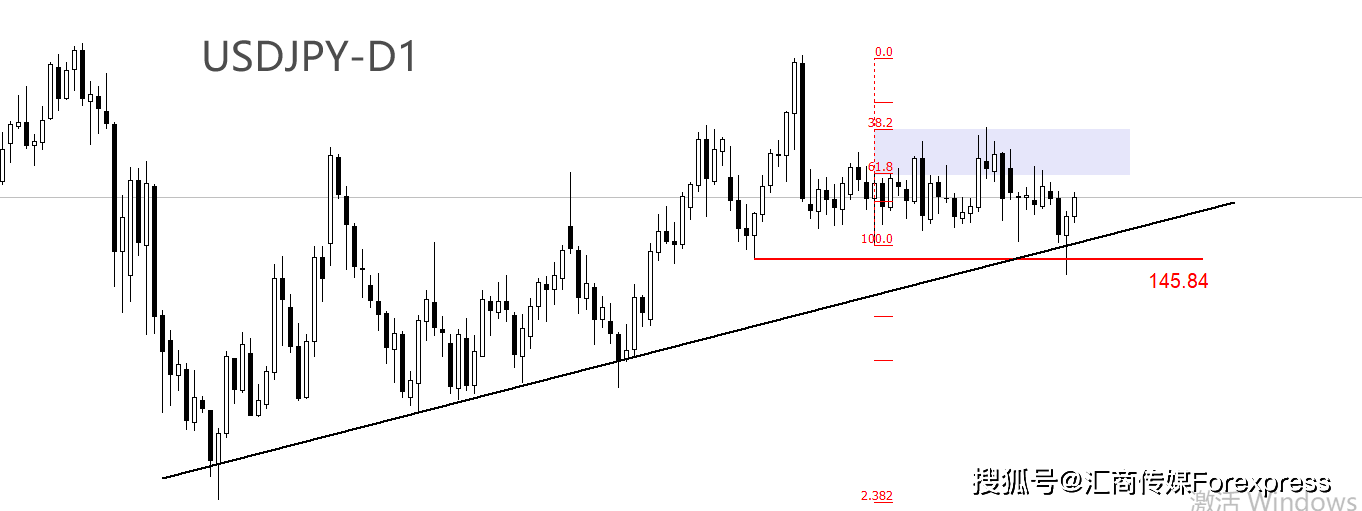
Group 1 - The Bank of Japan is expected to maintain its current interest rate during the upcoming monetary policy decision, with a low probability of an interest rate hike [1] - The divergence in monetary policy between the Bank of Japan and other major central banks, which are mostly in a rate-cutting or pausing phase, is notable, as the Bank of Japan has been increasing its benchmark interest rate [1] - Japan's macroeconomic outlook remains uncertain, with GDP growth at 1.2% year-on-year and core CPI at 3.1%, indicating a weak recovery influenced by U.S. tariff policies [2] Group 2 - The technical analysis of USDJPY indicates a long-term bearish trend, but a bottoming phase has begun since April 22, suggesting a potential rebound [4] - The recent candlestick pattern shows strong buying pressure, with a double bottom formation indicating a possible upward movement in USDJPY [4] - The projected rebound range for USDJPY is between 147.94 and 149.06 points, based on Fibonacci retracement levels [4]

有色早报-20250917
Yong An Qi Huo· 2025-09-17 02:49
Group 1: Overall Report Information - The report is a non - ferrous metals morning report released on September 17, 2025, by the non - ferrous metals team of the research center [1] Group 2: Copper - **Price and Inventory Data**: From September 10 - 16, 2025, the spot premium of Shanghai copper increased by 25, the spread between scrap and refined copper increased by 257, and the inventory of the Shanghai Futures Exchange increased by 3049. The LME inventory decreased by 1675 [1] - **Core View**: This week, copper prices fluctuated widely around 80,000, breaking upward on Thursday and Friday. Fundamentally, the domestic social inventory of copper did not accumulate despite the increase in imported copper arrivals. The downstream start - up weakened, and it was in the stage of consuming finished product inventory. Macroscopically, copper currently benefits from the global fiscal and monetary double - expansion. After the FOMC meeting next week, pay attention to the possible phased realization of bullish factors. The copper price is expected to be easy to rise and difficult to fall in the third and fourth quarters. If there is a callback after short - term bullish factors are realized, consider laying out medium - term long positions below 79,500 or selling put options below 78,000 [1] Group 3: Aluminum - **Price and Inventory Data**: From September 10 - 16, 2025, the price of Shanghai aluminum ingots remained unchanged, the domestic alumina price decreased by 9, and the aluminum exchange inventory remained unchanged. The aluminum LME inventory decreased by 1500 [1] - **Core View**: Supply increased slightly, with imports of aluminum ingots providing an increment from January to July. Downstream start - up improved, but overseas demand declined significantly. In September, inventory is expected to decline. In the short - term, the fundamentals are okay. Pay attention to demand. Hold at low prices in the low - inventory pattern and pay attention to inter - month and internal - external reverse arbitrage [1] Group 4: Zinc - **Price and Inventory Data**: From September 10 - 16, 2025, the spot premium remained at - 60, the price of Shanghai zinc ingots increased by 30, and the zinc social inventory remained unchanged. The LME zinc inventory decreased by 1175 [1][2] - **Core View**: This week, zinc prices fluctuated narrowly. On the supply side, the domestic TC decreased slightly, and the imported TC increased. In September, smelting production decreased slightly due to concentrated maintenance. On the demand side, domestic demand was seasonally weak, and overseas demand had some production resistance. The domestic social inventory continued to rise, and the overseas LME inventory decreased. The current pattern of strong overseas and weak domestic may further differentiate. In the short - term, it can be used as a short - side configuration, and the internal - external positive arbitrage can be continued to hold [2] Group 5: Nickel - **Price and Inventory Data**: From September 10 - 16, 2025, the price of 1.5% Philippine nickel ore remained unchanged, the price of Shanghai nickel spot increased by 50, and the LME inventory increased by 1950 [3] - **Core View**: On the supply side, the production of pure nickel remained at a high level. On the demand side, it was weak overall, and the premium was stable recently. In terms of inventory, there was a slight accumulation in the domestic market and an increase in overseas warehouse receipts. In the short - term, the fundamentals are weak, and the anti - involution sentiment in the macro - aspect has rebounded. Pay attention to the news that the Indonesian Forestry Bureau has taken over part of the world's largest nickel mine [4] Group 6: Stainless Steel - **Price and Inventory Data**: From September 10 - 16, 2025, the price of 304 cold - rolled coils increased by 50, and the price of 201 cold - rolled coils increased by 50 [5][6] - **Core View**: On the supply side, steel mills in the north are expected to resume production gradually. On the demand side, it is mainly for rigid demand. In terms of cost, the price of nickel iron remained stable, and the price of ferrochrome increased slightly. In terms of inventory, the inventory in Xijiao and Foshan remained stable, and the warehouse receipts decreased slightly. Fundamentally, it is still weak. Pay attention to the news that the Indonesian Forestry Bureau has taken over part of the world's largest nickel mine [6] Group 7: Lead - **Price and Inventory Data**: From September 10 - 16, 2025, the spot premium decreased by 5, the Shanghai - Henan price difference decreased by 25, and the LME inventory increased by 2225 [7] - **Core View**: This week, lead prices rose due to macro - factors. On the supply side, the scrap volume was weak year - on - year, and the supply of waste batteries was tight. On the demand side, the inventory of battery finished products was high, and the market was not prosperous in the peak season. The supply is expected to be tight, and the LME registered warehouse receipts decreased by 10,000. In September, there is an expectation of a peak season, but the terminal consumption and lead ingot procurement are weak this week. It is expected that lead prices will fluctuate significantly next week, in the range of 16,800 - 17,200 [7] Group 8: Tin - **Price and Inventory Data**: From September 10 - 16, 2025, the spot import earnings decreased by 2200.06, the spot export earnings increased by 1949.49, and the LME inventory remained unchanged [9] - **Core View**: This week, tin prices fluctuated widely. On the supply side, the processing fee of tin ore was at a low level, and some domestic smelters reduced production. Overseas, the import from Wa State was less than 200 metal tons in August, and the supply of raw materials is expected to increase gradually after October. On the demand side, the elasticity of solder is limited, and the domestic inventory fluctuates. The LME inventory has rebounded from a low level. In the short - term, the domestic fundamentals are in a situation of weak supply and demand. It is recommended to wait and see in the short - term and hold at low prices close to the cost line in the long - term [9] Group 9: Industrial Silicon - **Price and Inventory Data**: From September 10 - 16, 2025, the 421 Yunnan basis decreased by 15, the 421 Sichuan basis decreased by 65, and the number of warehouse receipts decreased by 33 [10] - **Core View**: This week, the leading enterprises in Xinjiang continued to resume production. Currently, the production in Sichuan and Yunnan is stable. In the short - term, the supply and demand in September and October are still in a tight balance state. In the long - term, the over - capacity of industrial silicon is still large, and the price is expected to fluctuate at the bottom of the cycle based on the seasonal marginal cost [10] Group 10: Lithium Carbonate - **Price and Inventory Data**: From September 10 - 16, 2025, the SMM electric carbon price increased by 400, the SMM industrial carbon price increased by 400, and the number of warehouse receipts decreased by 139 [12] - **Core View**: This week, lithium carbonate prices fluctuated widely. Affected by the expectation of CATL's resumption of production, the futures price dropped significantly in the middle of the week. On the raw material side, miners are not willing to sell at low prices. On the lithium salt side, upstream salt factories also have the sentiment of holding prices. The current basis level has strengthened slightly, and the supply of large - discount goods has decreased. The current contradiction is that under the background of over - capacity, the resource side faces phased compliance disturbances. In the seasonal peak season, the monthly balance after CATL's gradual production reduction turns to continuous inventory reduction, but the amplitude is small. The price elasticity is high after the speculation of supply - side disturbances is realized, and the price has strong downward support before the disturbances are realized [12]
建信期货棉花日报-20250917
Jian Xin Qi Huo· 2025-09-17 01:38
Report Information - Report Date: September 17, 2025 [2] - Industry: Cotton [1] - Researchers: Yulan Lan, Zhenlei Lin, Haifeng Wang, Chenliang Hong, Youran Liu [3] 1. Investment Rating - No investment rating information is provided in the report. 2. Core View - The cotton market is expected to experience short - term range - bound fluctuations. Macro factors such as Sino - US economic and trade talks and the upcoming Fed interest rate decision have strengthened short - term macro impacts. Overseas, the US cotton market shows a weakening trend with a decline in the weekly good - to - excellent rate, weaker weekly export data, and low net long positions of CFTC funds. In the domestic market, new cotton picking has started in some areas, and the demand side has a slight de - stocking of finished products, with seasonal recovery in the downstream weaving mills' operation rate and some rigid demand support [7][8]. 3. Summary by Section 3.1 Market Review and Operation Suggestions - **Market Performance**: Zhengzhou cotton is in a volatile adjustment. The latest 328 - grade cotton price index is 15,300 yuan/ton, up 51 yuan/ton from the previous trading day. The cotton yarn market has average trading, weaker than the same period in previous years, with stable prices and some local discounts. The cotton fabric market has weak demand, and the home textile market has increased sales but poor order continuity and difficult price increases [7]. - **Macro and Overseas Factors**: Sino - US economic and trade talks are held in Spain, and the Fed will announce its interest rate decision this week. The US cotton weekly good - to - excellent rate has decreased slightly, export data has weakened, and the CFTC fund net long position remains low, leading to a weakening trend in the overseas market [8]. - **Domestic Market**: Some domestic regions have started manual cotton picking, and mechanical picking will start next week. As of September 11, the national new cotton picking progress is 0.3%, 0.1 percentage points higher than the same period last year and 0.1 percentage points lower than the average of the past four years. The demand side has a slight de - stocking of finished products, and the downstream weaving mills' operation rate has a seasonal increase, with rigid demand support [8]. 3.2 Industry News - As of the week ending September 14, the US cotton boll opening rate is 50% (compared to 53% last year and a five - year average of 49%), the picking rate is 9% (compared to 10% last year and a five - year average of 8%), and the good - to - excellent rate is 52% (compared to 39% last year) [9]. 3.3 Data Overview - The report presents multiple data charts, including the China Cotton Price Index, cotton spot price, cotton futures price, cotton basis change, various cotton futures spreads, cotton commercial inventory, cotton industrial inventory, and the total number of warehouse receipts, as well as currency exchange rate data such as the US dollar against the Chinese yuan and the US dollar against the Indian rupee [16][17][20][26][28]
8月经济总体平稳,四季度稳增长政策需提前谋划
2 1 Shi Ji Jing Ji Bao Dao· 2025-09-16 13:30
Group 1 - The core task remains to boost effective demand, highlighting the increasing necessity for stable growth policies in the fourth quarter [1][8] - The economic growth rate for China in the first half of the year was 5.3%, achieved amidst challenges such as global trade uncertainties and the transition of economic drivers [1][2] - The August data from the National Bureau of Statistics indicates a narrowing decline in various economic indicators compared to July, suggesting a potential for policy intervention [2][3] Group 2 - The social financing scale increased by 25,693 billion yuan in August, but this represents a year-on-year decrease of 4,630 billion yuan, indicating weak credit demand [3][4] - Government bond financing has decreased, and the effectiveness of proactive fiscal policies needs to be supported in key quarters and months [5][6] - Fixed asset investment growth was only 0.5% year-on-year from January to August, with infrastructure investment growing by 2% and real estate investment declining by 12.9% [6][7] Group 3 - The investment sentiment among enterprises remains subdued, correlating with the slow growth in fixed asset investment observed this year [4][6] - The retail sales of consumer goods in August reached 39,668 billion yuan, growing by 3.4% year-on-year, with certain sectors like sports and home appliances performing well [7][8] - The necessity for structural monetary policies is increasing, with potential measures including the restart of government bond purchases to inject medium to long-term liquidity [8]
8月经济总体平稳,四季度稳增长政策需提前谋划 | 宏观月报
2 1 Shi Ji Jing Ji Bao Dao· 2025-09-16 13:28
Economic Overview - China's economy achieved a growth rate of 5.3% in the first half of the year, despite challenges from global trade uncertainties and the transition of economic drivers [1] - The necessity for stable growth policies in the fourth quarter is increasing, as indicated by the recent economic data [2] Financing and Credit - The growth rate of social financing decreased in August, with a total increment of 25,693 billion yuan, which is a year-on-year decrease of 4,630 billion yuan [3] - The demand for credit remains weak, with new loans amounting to 6,233 billion yuan in August, down by 4,178 billion yuan year-on-year [3][4] - Government bond financing has also seen a decline, indicating that the effectiveness of active fiscal policies needs to be supported in key quarters [5] Investment Trends - Fixed asset investment growth was only 0.5% year-on-year from January to August, with infrastructure investment growing by 2% and manufacturing investment by 5.1%, while real estate investment fell by 12.9% [6][7] - The government is focusing on stabilizing investment in key industries, particularly manufacturing, to support economic recovery [7] Consumption Patterns - In August, the total retail sales of consumer goods reached 39,668 billion yuan, with a year-on-year growth of 3.4%, although certain sectors like dining faced challenges [7][8] - The recovery in consumption is expected to take time, and effective demand needs to be stimulated [8] Policy Recommendations - There is a growing need for the introduction of stable growth policies in the fourth quarter, with potential measures including the issuance of special government bonds and the use of policy financial tools [2][8] - Structural policy tools may be accelerated to support key industries and foreign trade, while fiscal policies may need to be intensified [8]