
贸易摩擦

Search documents
以史为鉴!历史加征关税后有什么影响?我们该如何应对?
天天基金网· 2025-04-11 12:26
以下文章来源于兴证全球基金 ,作者与你相伴的 兴证全球基金 . 投资理财,有温度,有深度,有态度。 当地时间 4月2日下午,特朗普在白宫签署关于关税的行政令,宣布对所 有贸 易伙伴设立 10%的"最低基准关税",同时对数十个其他国家和地区在10%的 基础上加征更高关税 ,如对中国加征 34%、对越南加征46%等 ,在中国迅速 实施反制措施后,特朗普政府宣布对 中国加征 50%额外关税 ,并于 4月 9 日 将关税提升至 1 25% 。 此次加征关税援引《国际经济紧急权力法》,绕过国会,加征关税力度远超出此前市场预期。 4月3日至4日,主要市场股指普跌,跌幅最大的 是美国市场,纳斯达克指数下跌 -11.4% (进入技术性熊市) ,标普500指数 下跌-10.5%, 道琼斯工业指数下跌 -9.3%。 A股也在节后第一个交易日4月7日遭遇大跌,上证指数下跌-7 .34% ,创 业板指收跌 - 12.5% ,全球股市遭遇黑色星期一。 4月9日,在特朗普宣布对部分贸易伙伴暂停征税9 0 天后,美国三大 股指大幅收涨。 历史的车轮滚滚向前,却留下印迹。 回看 2 018-2019年 ,当时特朗普于第一任期时期也曾对我国相 ...


3月通胀数据点评:非能源通胀企稳
Bank of China Securities· 2025-04-11 07:17
Report Summary 1. Report Industry Investment Rating The document does not mention the industry investment rating. 2. Core Viewpoints of the Report - In March 2025 inflation data, the year - on - year change rates of core and food CPI improved compared to the previous month. Energy price inflation in March was affected by trade friction uncertainties and is expected to face pressure in April [3][6]. - Upstream prices showed a stabilizing trend, reflecting improved domestic demand. Stable domestic demand gives China more leverage in external negotiations [3][12]. - Moderate inflation gives China's monetary policy greater flexibility, but policy rate cuts are still somewhat restricted by the low net interest margin of banks. Whether to cut rates may mainly depend on the impact of trade friction on residents' savings propensity [3][15]. 3. Summary by Related Catalogs Event - On April 10, 2025, the National Bureau of Statistics released March 2025 inflation data. In March, the national consumer price index (CPI) decreased by 0.1% year - on - year, with food prices down 1.4% and non - food prices up 0.2%. The CPI decreased by 0.4% month - on - month. The national industrial producer price index (PPI) decreased by 2.5% year - on - year and 0.4% month - on - month [5]. Comment - Core and food CPI: The year - on - year change rates of core and food CPI improved in March. The core CPI was flat month - on - month and up 0.5% year - on - year. The rent - related CPI increased by 0.1% month - on - month, and the year - on - year decline narrowed to 0.1%. The average daily trading area of commercial housing in 30 large and medium - sized cities in March was about 291,000 square meters, higher than that in March 2024 [6]. - Food CPI: After the Spring Festival, the food CPI decreased month - on - month, but the year - on - year decline converged. In March, the food CPI decreased by 1.4% month - on - month, and the year - on - year decline also narrowed to 1.4% [9]. - Energy price inflation: Affected by trade friction uncertainties, international oil prices in March decreased compared to February, driving down domestic oil prices. In April, energy inflation is expected to continue facing pressure due to increased trade friction risks and OPEC +'s decision to accelerate production in May [12]. - Upstream prices: The price indices of edible agricultural products and production materials showed signs of stabilization at the end of March, reflecting improved domestic demand. China's counter - tariffs on the US may affect the prices of imported products such as agricultural products, but the sources of agricultural product imports have become more diversified [12]. - Monetary policy: Moderate inflation gives China's monetary policy greater flexibility, but policy rate cuts are restricted by the low net interest margin of banks. Whether to cut rates may depend on the impact of trade friction on residents' savings propensity. If the savings propensity can drive down the bank's liability cost, the logic of policy rate cuts is more reasonable [15].
关税“波动下”的风险与机遇?
2025-04-11 02:20
Summary of Key Points from Conference Call Industry and Company Involved - The conference call discusses the impact of U.S. tariff policies on global trade dynamics, particularly focusing on the U.S.-China trade relationship and its implications for various countries including Vietnam, Japan, and Canada [2][3][11]. Core Insights and Arguments - **U.S. Tariff Policy Changes**: The Trump administration's tariff policies differ fundamentally from previous U.S. administrations, focusing on altering the distribution system rather than enhancing efficiency through globalization [2][11]. - **Global Trade Responses**: Countries are responding to the tariff war with three strategies: hardline (e.g., China raising tariffs to 84%), moderate (e.g., EU's restrained actions), and compromise (e.g., Vietnam and Japan seeking negotiations) [2][5]. - **Economic Risks in the U.S.**: The U.S. economy faces risks from declining discretionary consumer demand and rising inflation, with the Federal Reserve maintaining a neutral stance, contributing to market volatility and increasing recession or stagflation uncertainties [2][8]. - **Impact on China’s Economy**: An increase of 1% in U.S. tariffs could lead to a 1.7% decline in Chinese exports to the U.S., potentially resulting in a GDP drop of 1-1.5% if tariffs reach 84% [2][16]. - **Market Volatility**: Global financial markets are experiencing significant volatility, with U.S. stocks and commodities declining sharply, while precious metals show strength but with notable fluctuations [2][17]. Other Important but Possibly Overlooked Content - **Investment Strategies**: A "barbell" strategy is recommended for RMB asset allocation, focusing on dividends and technology while also considering high-dividend stability and new energy development [2][29]. - **Long-term Economic Changes**: The current macroeconomic paradigm shift is affecting asset pricing, with a need for new pricing anchors like U.S. Treasury yields and the dollar index [2][18]. - **Potential for Commodity Markets**: The outlook for the commodity market, particularly for non-ferrous metals, is positive, while agricultural products are expected to remain weak in the U.S. but strong domestically [2][20]. - **Japan's Economic Position**: Japan is highlighted as a key non-U.S. market due to its potential for growth and the Bank of Japan's discussions on interest rate hikes, which could support domestic demand [2][26]. - **Future Risks and Market Reversal Conditions**: Market reversals may occur due to significant monetary easing or corrections in pessimistic expectations, with current conditions suggesting limited downside for commodities due to already low prices [2][23]. This summary encapsulates the critical insights from the conference call, focusing on the implications of U.S. tariff policies, global economic risks, and strategic investment opportunities.
资产配置日报:适时做多-20250410
HUAXI Securities· 2025-04-10 15:39
Market Overview - The report indicates a positive sentiment in the equity market, with major indices such as the Shanghai Composite Index, CSI 300, and CSI Dividend Index rising by 1.16%, 1.31%, and 0.95% respectively on April 10 [2] - The technology sector saw a rotation from large-cap stocks to small-cap stocks, with the STAR 50, STAR Composite Index, and ChiNext Index increasing by 1.09%, 2.06%, and 2.27% respectively [2] - The bond market exhibited a mixed performance, with short-term yields declining due to easing liquidity, while long-term yields rose amid expectations [2][4] Commodity Performance - Precious metals prices rebounded, with both London and New York gold surpassing $3100 per ounce, and domestic gold and silver rising by 3.21% and 3.44% respectively [3] - Industrial metals and energy prices also saw recovery, with New York copper increasing by over 4% and domestic copper rising by 3.86% [3] - In the domestic market, construction-related commodities such as rebar and iron ore saw increases of 2.01% and 3.06% respectively, while coking coal and glass experienced slight declines [3] Currency and Liquidity - The report notes a weakening of the US dollar, which alleviated depreciation pressure on the Chinese yuan, with both onshore and offshore yuan rates approaching 7.32 [3] - The liquidity environment improved, with the central bank conducting a net withdrawal operation of 157.5 billion yuan, yet funding rates remained stable [4] - Overnight funding costs fell to around 1.65%, indicating a comfortable liquidity position [4] Sector Performance - The consumer sector continued to lead gains, particularly in discretionary spending categories such as retail, automotive, and light manufacturing, with respective increases of 4.83%, 3.21%, and 2.93% [7] - The technology sector also performed well, with media, electronics, and communications indices rising by 3.20%, 2.58%, and 2.47% respectively [7] - The report highlights a strong rebound in the A-share market, driven by expectations of stable growth policies and a potential easing of trade tensions [6][7] Hong Kong Market Insights - The Hang Seng Index and Hang Seng Tech Index rose by 2.06% and 2.66% respectively, with consumer, materials, and defense sectors showing strong performance [8] - Despite a net outflow of 4.03 billion HKD from southbound funds, the market sentiment remained positive, reflecting a tendency for profit-taking after recent gains [8] - The report notes that the AH share premium index remains around 140, indicating that Hong Kong stocks are still in a recovery phase [8]
中美博弈系列(一):关注贸易摩擦下的上游能源及矿产供应链安全
CMS· 2025-04-10 12:35
Group 1: Supply Chain Security as a Focus of Great Power Competition - The report highlights that supply chain security has become a focal point in the geopolitical competition, particularly between the U.S. and China, with increased measures to weaken China's advantages in shipping and energy resources [4][7][13]. Group 2: Energy Supply Chain Vulnerabilities and Investment Opportunities - The report details the vulnerabilities in the energy supply chain, emphasizing the high import dependency rates for various energy sources, such as crude oil (72%), liquefied natural gas (79%), and nickel (100%) [4][14][27]. - It suggests that the oil and gas sectors, particularly crude oil and liquefied natural gas, are critical areas for short-term investment due to their exposure to supply chain risks [4][14][27]. Group 3: Metal Mineral Supply Chain Vulnerabilities and Investment Opportunities - The report outlines the high import dependency for key metals, including iron ore (54%), copper (92.9%), and manganese (98%), indicating a significant reliance on foreign sources [4][43][52]. - It identifies potential investment opportunities in the metal sector, particularly in companies involved in the extraction and processing of these minerals, given the ongoing demand and supply chain challenges [4][43][52].



宏源期货品种策略日报:油脂油料-20250410
Hong Yuan Qi Huo· 2025-04-10 01:39
Report Industry Investment Rating - No relevant information provided Core Viewpoints - Under the influence of the current US tariff policy, market risk aversion has increased, risk assets have continued to weaken, and oil prices have remained in a downward trend [2]. - In the second quarter, Asian PX plants will undergo concentrated maintenance, leading to a significant decline in supply, with the intensity of maintenance to be observed. It is expected that the market will shift from inventory accumulation to inventory reduction in the second quarter [2]. - Currently, cost is the most important influencing factor. Even if the fundamentals improve, it will be difficult to reverse the situation. The PX CFR China price on April 9 was $699 per ton. The escalation of the US tariff policy may trigger concerns about a global economic slowdown, causing a narrow decline in international oil prices and squeezing the cost side of PX [2]. - Amid the escalation of trade frictions, the market is filled with a strong sense of fear of price drops. Industry players are mainly adopting a wait - and - see attitude. The sales of downstream polyester products are lackluster, and the PTA market continues to decline. Although the PTA social inventory is at a neutral to high level compared to historical periods, there has been a slight decrease in inventory in the past month, and it is expected to see inventory reduction from April to May [2]. - The mainstream negotiation price of polyester bottle chips in the Jiangsu and Zhejiang markets is between 5,400 - 5,600 yuan per ton, a decrease of 215 yuan per ton from the previous trading day. The cost - pricing logic continues to operate, and it is difficult to break away from the follow - up logic in the short term [2]. - Due to the impact of the tariff policy, it is expected that PX, PTA, and PR will operate weakly (PX view score: - 2, PTA view score: - 2, PR view score: - 1) [2]. Summary by Related Catalogs Price Information - **Upstream**: On April 9, 2025, the futures settlement price (continuous) of WTI crude oil was $62.35 per barrel, up 4.65% from the previous value; the futures settlement price (continuous) of Brent crude oil was $65.48 per barrel, up 4.23%. The spot price (mid - price) of naphtha CFR Japan was $517.75 per ton, down 3.63%. The spot price (mid - price) of xylene (isomeric grade) FOB South Korea was $619 per ton, down 4.11%. The spot price of p - xylene PX CFR China's main port was $699 per ton, down 2.92% [1]. - **PTA**: On April 9, 2025, the closing price of the CZCE TA main contract was 4,110 yuan per ton, down 4.33%; the settlement price was 4,144 yuan per ton, down 4.95%. The closing price of the CZCE TA near - month contract was 4,122 yuan per ton, down 3.96%; the settlement price was 4,156 yuan per ton, down 3.80%. The domestic spot price of PTA was 4,366 yuan per ton, down 4.07%. The CCFEI price index of purified terephthalic acid PTA for the domestic market was 4,150 yuan per ton, down 4.71%; the CCFEI price index for the external market on April 8 was $559.5 per ton, down 1.76%. The near - far month spread was 12 yuan per ton, up 52 yuan; the basis was 40 yuan per ton, down 19 yuan [1]. - **PX**: On April 9, 2025, the closing price of the CZCE PX main contract was 5,724 yuan per ton, down 4.22%; the settlement price was 5,796 yuan per ton, down 4.98%. The closing price of the CZCE PX near - month contract was 5,752 yuan per ton, down 4.99%; the settlement price was 5,752 yuan per ton, down 4.99%. The domestic spot price of p - xylene was 5,781 yuan per ton, down 2.08%. The spot price (mid - price) of p - xylene CFR Taiwan, China was $700 per ton, down 2.91%; the spot price (mid - price) of p - xylene FOB South Korea was $675 per ton, down 3.02%. The PXN spread was $181.25 per ton, down 0.82%; the PX - MX spread was $80 per ton, up 7.38%. The basis was 57 yuan per ton, up 129 yuan [1]. - **PR**: On April 9, 2025, the closing price of the CZCE PR main contract was 5,378 yuan per ton, down 2.50%; the settlement price was 5,406 yuan per ton, down 2.98%. The closing price of the CZCE PR near - month contract was 5,350 yuan per ton, down 2.59%; the settlement price was 5,350 yuan per ton, down 2.59%. The mainstream market price of polyester bottle chips in the East China market was 5,420 yuan per ton, down 2.69%; in the South China market, it was 5,450 yuan per ton, down 3.54%. The basis in the East China market was 42 yuan per ton, down 12 yuan; in the South China market, it was 72 yuan per ton, down 62 yuan [1]. - **Downstream**: On April 9, 2025, the CCFEI price index of polyester DTY was 8,600 yuan per ton, down 1.15%; the CCFEI price index of polyester POY was 6,950 yuan per ton, down 1.07%; the CCFEI price index of polyester FDY68D was 6,800 yuan per ton, down 2.16%; the CCFEI price index of polyester FDY150D was 6,750 yuan per ton, down 2.17%; the CCFEI price index of polyester staple fiber was 6,230 yuan per ton, down 3.86%; the CCFEI price index of polyester chips was 5,440 yuan per ton, down 4.06%; the CCFEI price index of bottle - grade chips was 5,420 yuan per ton, down 2.69% [2]. Operating Conditions - On April 9, 2025, the operating rate of the PX in the polyester industry chain was 73.35%, unchanged from the previous value; the PTA industry chain load rate of PTA plants was 76.77%, unchanged; the PTA industry chain load rate of polyester plants was 89.35%, unchanged; the PTA industry chain load rate of bottle chip plants was 75.47%, unchanged; the PTA industry chain load rate of Jiangsu and Zhejiang looms was 66.76%, unchanged [1]. Production and Sales - On April 9, 2025, the sales rate of polyester filament was 25%, down 6 percentage points from the previous value; the sales rate of polyester staple fiber was 58%, up 14 percentage points; the sales rate of polyester chips was 44%, down 23 percentage points [1]. Device Information - The 2.2 - million - ton PTA plant in the Northeast and the 2.5 - million - ton PTA plant in the South China are planned to undergo maintenance in the near future, which requires further attention [2].
生猪养殖|特朗普2.0关税对商品的影响
新财富· 2025-04-09 08:18
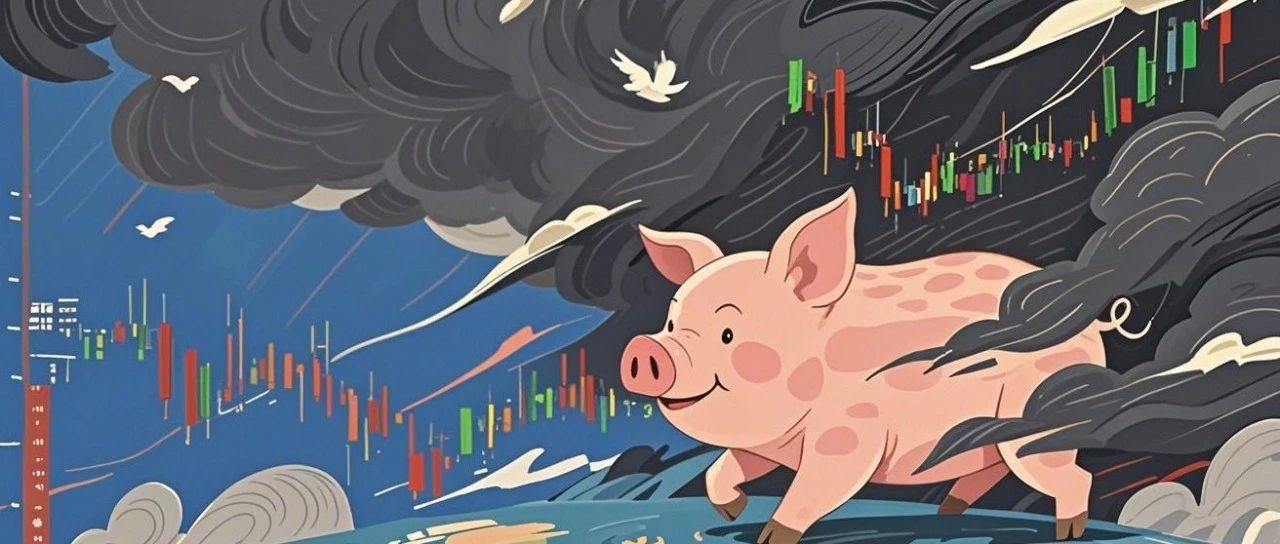
本文约 3 0 0 0 字,推荐阅读时长 1 5 分钟,欢迎关注新财富公众号。 1 关税漫谈 指针走过4月9日1 2点,对等关税正式生效。 3月底还是不一样的氛围,铜在交易关税溢价的"胀",原油还在7 0美元支撑位上方,纳斯达 克"跌到位"了,市场普遍认为美国经济状态对"关税力度"存在软约束,或者存在一定迂回空 间,对美联储提前降息抱有期待。 只针对大宗商品期货来讲,我们认为贸易摩擦带来的"滞"远大于"胀",贸易战继续升级的可 能性更大,在鲍威尔仍旧偏鹰派发言下,不能轻易言底。 4 月 2 日,美国总统特朗普在白宫签署两项关于所谓 " 对等关税 " 的 行政令 ,宣布美国对贸易 伙伴设立 1 0% 的 " 最低基准关税 " ,并对某些贸易伙伴征收更高关税。白宫发布的文件显示, 针对所有贸易伙伴加征的 1 0% 关税将于 5 日生效。 4 月 4 日,中国宣布对美国全部进口商品征收 3 4% 关税。截止发稿时间,除中国明确表示反制 政策,日本、韩国、越南等国具有明显谈判意向。 4 月 8 日,美国财政部长贝森特对记者 说: " 我们本周将有一名越南官员来访,日本人也非常渴望达成协议,我认为你们将很快看 到几个大 ...
3月外汇储备数据传递的信号:贸易环境是短期影响汇率的核心因素
ZHESHANG SECURITIES· 2025-04-08 12:58
Group 1: Foreign Exchange Reserves - In March, China's official foreign exchange reserves reached $32,406.65 billion, an increase of $13.441 billion month-on-month, primarily driven by exchange rate factors[1] - The positive contribution from exchange rates was significant, with the dollar index declining by 3.13% from the end of February, impacting reserves positively by approximately $60.625 billion[2] - The valuation effect negatively impacted reserves by about $4.73 billion due to falling European bond prices, leading to a net effect of approximately $55.901 billion on reserves[2] Group 2: Trade Environment and Currency Fluctuations - The short-term trade environment is identified as a core factor influencing exchange rates, with expectations of increased two-way volatility[3] - If trade tensions escalate with other major countries, they may devalue their currencies against the dollar, which could lead to a passive appreciation of the RMB[3] - Conversely, if major countries make concessions in trade negotiations, external pressures on China may increase, expanding the depreciation space for the RMB[3] Group 3: Gold Reserves - As of the end of March, gold reserves stood at 7.37 million ounces, marking the fifth consecutive month of increases[4] - Gold reserves now account for 6.4% of total foreign exchange reserves, with expectations for further increases in this ratio[4] - Short-term outlook suggests a potential slight decline in gold prices due to unmet U.S. gold tariff expectations, but a long-term forecast predicts new highs by 2025 driven by central bank purchases[4]
贸易影响增加,粕类继续走强
Yin He Qi Huo· 2025-04-08 11:14
大宗商品研究所 农产品研发报告 粕类日报 2025 年 4 月 8 日 【粕类日报】贸易影响增加 粕类继续走强 研究员:陈界正 期货从业证号: F3045719 投资咨询证号: Z0015458 联系方式: chenjiezheng_qh@chinastock.c om.cn | 粕类价格日报 | | | | | 2025/4/8 | | | --- | --- | --- | --- | --- | --- | --- | | 期 货 | | | | | 现货基差 | | | 品 种 合 约 | 收盘价 | 涨 跌 | 地 区 | 今 日 | 昨 日 | 涨 跌 | | 0 1 | 3127 | 103 | 天津 | 360 | 370 | -10 | | 0 5 豆粕 | 2973 | 8 8 | 东莞 | 110 | 120 | -10 | | 0 9 | 3164 | 108 | 张家港 | 200 | 220 | -20 | | | | | 日照 | 290 | 300 | -10 | | 0 1 | 2457 | 100 | 南通 | -125 | - 8 | -117 | | 菜粕 0 5 | ...
日度策略参考-2025-04-08
Guo Mao Qi Huo· 2025-04-08 07:07
| | | 投资咨询业务资格:证监许可【2012】 | C E H F . | | --- | --- | --- | --- | | | F | 唐策略示 | | | | | 发布日期:2025/04 | 研究院:李泽矩 | | | | | 从业资格号:F0251925 | | 品种 | 趋势研判 | 逻辑观点精粹及策略参考 | 行业板块 | | | | IF与IH的4月合约贴水大幅升高,加上国家队护盘方向主要在此,可考虑 | | | 股指 | 震荡 | 进行短多,交易反弹。 | | | 国债 | 震荡 | 资产荒和弱经济利好债期,但短期央行提示利率风险,压制上涨空间。 | 宏观金融 | | 黄金 | 震荡 | 短期调整后料进入震荡,长期仍有上涨空间。 | | | 日 银 | | 关税政策超预期,银价相对承压,短期或偏弱震荡。 | | | 铜 | 農汤 | 全球贸易摩擦升级,市场避险情绪升温,观望为主。 | | | 铝 氧化铝 | ○震荡 震荡 | 全球贸易摩擦升级,市场避险情绪升温,观望为主。由阳气 国内氧化铝产能持续释放,供应过剩格局延续,价格承压。 | | | | | 特朗普对等关税大超预期叠加基本面 ...