
供给侧改革

Search documents
光大期货金融期货日报-20250717
Guang Da Qi Huo· 2025-07-17 11:25
1. Report Industry Investment Rating - No information provided in the report 2. Core Viewpoints of the Report - The stock index is expected to remain volatile. The fundamentals of the index depend on the domestic economic recovery process. Although the market has high expectations for corporate profit recovery and inflation stabilization, the current main contradictions are credit contraction and insufficient demand, making it difficult for the index to break through the center and rise significantly. On the other hand, the A - share index will not decline significantly in the short term due to the improvement in corporate profitability in the first half of 2025 and the support of allocation funds [1]. - The bond market is also expected to show a volatile trend. The economic data in June was resilient, but under the care of monetary policy, there is no expectation of a significant tightening of the capital side, and the expectation of interest rate cuts is low in the short term. After the bullish factors have been fully interpreted, the bond market lacks the impetus to strengthen further [3]. 3. Summary According to the Directory 3.1 Research Views - **Stock Index**: On July 16, the A - share market fluctuated flat, with the Wind All - A rising 0.06% and a turnover of 1.46 trillion yuan. The CSI 1000 index rose 0.3%, while the CSI 500, SSE 50, and CSI 300 indices declined. The auto and pharmaceutical sectors recovered, while the steel and banking sectors fell. The second - quarter GDP increased by 5.2% year - on - year, and in June, the total retail sales of consumer goods increased by 4.8% year - on - year, and the added value of industrial enterprises above the designated size increased by 6.8% year - on - year. However, demand disturbances still exist, and investment continues to decline. The central government emphasizes the construction of a unified national market, but the impact of the "anti - involution" policy needs to consider the transfer mode and scale of central government fiscal incremental policies. Overseas, the Fed's interest - rate cut expectation has slowed down, and the boost to domestic small - cap indices has weakened [1]. - **Treasury Bonds**: On July 16, the 30 - year and 10 - year Treasury bond futures main contracts fell 0.05%, the 5 - year main contract fell 0.01%, and the 2 - year main contract rose 0.01%. The central bank conducted 520.1 billion yuan of 7 - day reverse repurchase operations, with a net investment of 444.6 billion yuan. As of July 16, the weighted average interest rates of DR001 and DR007 in the inter - bank market declined. The export growth rate in June exceeded expectations, and the financial data was strong. However, under the care of monetary policy, the bond market lacks the impetus to strengthen further in the short term [3]. 3.2 Daily Price Changes - **Stock Index Futures**: On July 16, IH decreased by 0.14%, IF decreased by 0.24%, IC decreased by 1.88%, and IM increased by 0.33% [4]. - **Stock Indices**: On July 16, the SSE 50 decreased by 0.23%, the CSI 300 decreased by 0.30%, the CSI 500 decreased by 0.03%, and the CSI 1000 increased by 0.30% [4]. - **Treasury Bond Futures**: On July 16, TS increased by 0.01%, TF decreased by 0.02%, T decreased by 0.05%, and TL remained unchanged [4]. - **Treasury Bond Yields**: On July 16, the yields of 2 - year, 5 - year, 10 - year, and 30 - year Treasury bonds changed to varying degrees [4]. 3.3 Market News - The State Council executive meeting listened to the report on standardizing the competition order of the new energy vehicle industry, aiming to promote the high - quality development of the industry by strengthening cost investigation, price monitoring, and product consistency supervision, and establishing a long - term mechanism for standardizing competition. The meeting also reviewed and approved the draft decision on amending the Regulations on the Administration of the Entry and Exit of Foreigners [6]. 3.4 Chart Analysis - **Stock Index Futures Charts**: The report presents the historical trends of the main contracts of IH, IF, IM, and IC, as well as their basis trends [8][9][11]. - **Treasury Bond Futures Charts**: It shows the trends of Treasury bond futures main contracts, Treasury bond spot yields, basis, inter - period spreads, cross - variety spreads, and capital interest rates [15][17][18][19]. - **Exchange Rate Charts**: The report includes charts of the central parity rates of the US dollar, euro against the RMB, forward exchange rates, and exchange rates between major currencies such as the US dollar, euro, pound, and yen [22][23][24][26][27].
现在一二手房市场越来越割裂了
虎嗅APP· 2025-07-17 10:48
Core Viewpoint - The article discusses the shifting dynamics in the real estate market, particularly the increasing competition between new and second-hand housing markets, highlighting a trend where new homes are capturing market share from second-hand homes due to product upgrades and changing consumer preferences [4][5][33]. Group 1: Second-Hand Market Dynamics - The second-hand housing market in Shanghai has been characterized by a significant reliance on older properties, which are becoming less competitive as new housing options emerge [5][7]. - Despite a relatively high transaction volume in the second-hand market, there is a noticeable lack of price appreciation, indicating a disconnect between volume and price [10][11][32]. - The average transaction price for second-hand homes has decreased, with Shanghai's average dropping from 2.1 million to 1.96 million, reflecting a broader trend of price reduction across major cities [20][22]. Group 2: New Housing Market Trends - The new housing market is experiencing a surge in demand, with cities like Guangzhou and Wuhan seeing a decline in second-hand home transactions as buyers shift towards new properties [33][37]. - New housing projects are increasingly featuring larger units and improved product quality, which is attracting buyers and leading to higher prices for new homes [41][62]. - The introduction of low-density land parcels in urban areas is enhancing the appeal of new developments, contributing to a more favorable market environment for new homes [62][68]. Group 3: Consumer Behavior and Market Segmentation - There is a growing trend of consumer preference shifting towards new homes, particularly among high-end buyers, indicating a potential long-term change in market dynamics [38][52]. - The article emphasizes that the primary purchasing power is now concentrated among affluent buyers and those seeking improved living conditions, rather than first-time buyers [52][54]. - The mismatch between purchasing power and market supply is identified as a critical issue, suggesting that activating demand will require addressing product offerings rather than merely adjusting prices [55][56].


日度策略参考-20250717
Guo Mao Qi Huo· 2025-07-17 09:57
Report Industry Investment Ratings - Bullish: Index Futures, Polysilicon [1] - Bearish: Copper, Aluminum, Zinc, Stainless Steel [1] - Volatile: Treasury Bonds, Gold, Silver, Alumina, Nickel, Industrial Silicon, Lithium Carbonate, Rebar, Hot Rolled Coil, Iron Ore, Manganese Silicon, Ferrosilicon, Glass, Soda Ash, Coking Coal, Coke, Palm Oil, Rapeseed Oil, Cotton, Sugar, Corn, Soybean Meal, Pulp, Live Pigs, Crude Oil, Fuel Oil, HK, BR Rubber, PTA, Ethylene Glycol, Short Fiber, Styrene, PE, PVC, Chlor - Alkali, LPG, Container Shipping European Line [1] Core Views - The market's reaction to negative news in the stock index has become dull, with strong trading volume and sentiment. The market's willingness to allocate equity assets has increased, and short - term index futures are expected to fluctuate strongly [1]. - Asset shortage and weak economy are beneficial to bond futures, but the central bank's short - term interest rate risk warning restricts the upward space [1]. - Gold and silver prices are expected to fluctuate in the short term due to various factors such as the strength of the US dollar and market uncertainties [1]. - Copper prices may fall due to US inflation rebound and potential copper tariff implementation [1]. - Aluminum prices are expected to weaken due to high prices suppressing demand and inventory accumulation [1]. - Alumina prices have stabilized and rebounded due to supply - side reform expectations [1]. - Zinc prices are under pressure, and short - selling opportunities should be watched for [1]. - Nickel prices are volatile, and short - term short - selling and long - term supply pressure should be considered [1]. - Tin prices have short - term support but may decline in the long term [1]. - The prices of various industrial and agricultural products are affected by factors such as supply and demand, policies, and macro - economic conditions, showing different trends of rise, fall, or fluctuation [1]. Summary by Related Catalogs Macro - finance - Index Futures: The market's reaction to negative news is dull, trading volume and sentiment are strong. With the "asset shell" situation and "national team" support, the market's willingness to allocate equity assets has increased. Short - term index futures are expected to fluctuate strongly [1] - Treasury Bonds: Asset shortage and weak economy are beneficial to bond futures, but the central bank's short - term interest rate risk warning restricts the upward space [1] Precious Metals - Gold: Market uncertainties exist, and gold prices are expected to fluctuate in the short term [1] - Silver: The strengthening of the US dollar may suppress silver prices, and silver prices are expected to fluctuate [1] Non - ferrous Metals - Copper: US inflation rebound and potential copper tariff implementation may lead to a decline in copper prices [1] - Aluminum: High prices suppress demand, inventory accumulates, and aluminum prices are expected to weaken [1] - Alumina: Supply - side reform expectations have led to price stabilization and rebound [1] - Zinc: Prices are under pressure, and short - selling opportunities should be watched for [1] - Nickel: Prices are volatile, and short - term short - selling and long - term supply pressure should be considered [1] - Stainless Steel: Futures prices are volatile, and short - selling hedging and positive basis trading opportunities should be grasped [1] - Tin: Short - term support exists, but prices may decline in the long term [1] Industrial Products - Industrial Silicon: Supply and demand factors co - exist, and the market has high sentiment [1] - Polysilicon: Bullish due to supply - side reform expectations and high market sentiment [1] - Lithium Carbonate: Supply and demand factors lead to price fluctuations [1] - Rebar and Hot Rolled Coil: Supported by strong furnace materials, prices are expected to fluctuate [1] - Iron Ore: Market sentiment is good, but fundamentals are weakening, and prices are expected to fluctuate [1] - Manganese Silicon and Ferrosilicon: Supply and demand are relatively balanced, and prices are expected to fluctuate [1] - Glass: Short - term support exists, but medium - term over - supply may limit price increases [1] - Soda Ash: Supply is expected to increase, demand is weak, and prices are under pressure [1] - Coking Coal and Coke: Due to market expectations, short - selling should be avoided in the short term, and positive basis trading opportunities should be grasped [1] Agricultural Products - Palm Oil: MPOB monthly report is neutral to bearish, and wait for a callback to buy the 01 contract [1] - Rapeseed Oil: The entry of Australian rapeseed may have a negative impact on prices in the short term [1] - Cotton: Domestic cotton prices are expected to fluctuate weakly [1] - Sugar: Brazilian sugar production is expected to increase, and price trends are affected by factors such as crude oil prices [1] - Corn: CO9 is expected to fluctuate, and C01 is recommended to short at high prices [1] - Soybean Meal: MO1 is supported, and a low - buying strategy can be adopted [1] Energy and Chemicals - Crude Oil and Fuel Oil: Affected by factors such as geopolitical situation, OPEC+ production, and seasonal consumption, prices are expected to fluctuate [1] - HK: Downstream demand is weakening, supply is expected to increase, and inventory is increasing slightly [1] - BR Rubber: Fundamentals are under pressure, but there is some support from device maintenance [1] - PTA: Supply has shrunk, but crude oil is strong. Polyester downstream load remains high, and market supply is becoming more abundant [1] - Ethylene Glycol: Coal prices have risen slightly, and there are factors of supply increase and decrease [1] - Short Fiber: Warehouse receipt registration is low, and cost follows closely [1] - Styrene: Device load has increased, and the basis has weakened [1] - PE: Macro - sentiment has subsided, and prices are expected to fluctuate weakly [1] - PVC: Affected by factors such as coking coal prices and seasonal demand, prices are expected to fluctuate strongly [1] - Chlor - Alkali: Maintenance is coming to an end, and attention should be paid to changes in liquid chlorine [1] - LPG: Affected by factors such as crude oil prices and seasonal demand, prices are expected to fluctuate weakly [1] Others - Container Shipping European Line: The freight rate is expected to show an arc - top trend, and the peak time is advanced [1]
华菱钢铁(000932) - 2025年7月10日投资者关系活动记录表(一)
2025-07-17 09:16
Group 1: Production and Market Outlook - The company's production and operational situation remains stable in Q2 2025, with differentiated demand in downstream industries such as shipbuilding and new energy vehicles, while real estate and infrastructure demand is weak [2] - The company maintains a certain proportion of long-term coal procurement to stabilize supply, with quarterly negotiations for long-term coal pricing [2] Group 2: Financial Performance and Taxation - In Q1 2025, the company's income tax expenses increased due to a rise in profits and tax reconciliation, with a corporate income tax rate of 15% for high-tech enterprises [3] - The expected tax expenses and VAT deductions for Q2 2025 are projected to remain at normal levels [3] Group 3: Capital Expenditure and Dividends - The company plans to invest CNY 5.467 billion in new projects in 2025, focusing on product structure upgrades and low-emission transformations [4] - For 2024, the cash dividend is set at CNY 1.00 per 10 shares, with a payout ratio of 34% of net profit, an increase of 2.7 percentage points from the previous year [4] Group 4: Product Development and Production Capacity - The company has achieved full production of 200,000 tons of non-oriented silicon steel in 2024 and is expanding production capacity with 100,000 tons of oriented silicon steel in trial production [5] - By the end of 2025, the company aims to have a production capacity of 400,000 tons of non-oriented silicon steel and 100,000 tons of oriented silicon steel [5] Group 5: Competitive Advantages and Industry Position - The company has improved its profitability since 2017 due to favorable policies and a strong market position in Hunan and Guangdong [6] - The company has implemented a competitive compensation mechanism and talent attraction policies, maintaining a 3-5% annual elimination rate for underperforming managers [7] - Significant cost reductions have been achieved, with the debt-to-asset ratio decreasing from 86.9% in 2016 to 57.24% in Q1 2025 [7] Group 6: Future Strategies and Innovations - The company is committed to high-end, green, and intelligent transformation, aiming to become a world-class steel enterprise [8] - The automotive sheet joint venture is progressing with feasibility studies for the third phase, while the steel battery pack solutions are being supplied in small batches [9]

“股债双牛”仍是后期主线
Qi Huo Ri Bao· 2025-07-17 08:32
Group 1 - The bond bull market remains intact, with potential for further declines in long-term interest rates, but a better trading window is needed, particularly around late July to early August [1][4][5] - Recent adjustments in the bond market are driven by risk appetite and asset pricing effects, alongside central bank's buyout reverse repo operations, indicating limited time and space for adjustments [1][2] - Economic data shows divergence, with strong industrial and service production but slowing retail sales and investment growth, highlighting the core contradiction in domestic demand and expectations [1][2] Group 2 - The widening gap between nominal and real economic growth rates indicates persistent low price pressures, with Q2 GDP growth at 5.2% and nominal GDP growth at 3.9%, a 0.5 percentage point increase from Q1 [1] - The supply-demand imbalance continues to deepen, primarily due to slowing investment growth, with external demand growth significantly outpacing domestic production and demand [1][3] - The "anti-involution" and urban renewal policies will need further observation for their impact on demand, with Q3 economic data being crucial for assessing internal economic momentum [2][4] Group 3 - The liquidity situation is influenced by tax payment periods, with significant fluctuations in funding rates observed around July 15, when major tax submissions are due [2] - The central bank's operations, including a substantial reverse repo on July 15, signal a commitment to support the market, with a net injection of 17.735 billion yuan on that day [2] - The current relationship between short and long-term interest rates is stable, with no signs of inversion, suggesting a low probability of continued funding stress [2][3] Group 4 - The "dual bull" market for stocks and bonds may remain a key theme, with bank stocks rising due to lower interest rates and increased attractiveness of dividend stocks [4] - The ongoing bull market in bonds is not fundamentally threatened by the current stock market dynamics, as the A-share market is not easily defined by fundamental bull trends [4][5] - The upcoming political meetings and potential tariff increases in August could influence market dynamics, with expectations for further declines in funding rates post-tax period [4][5]
现在一二手市场越来越割裂了
3 6 Ke· 2025-07-17 02:58
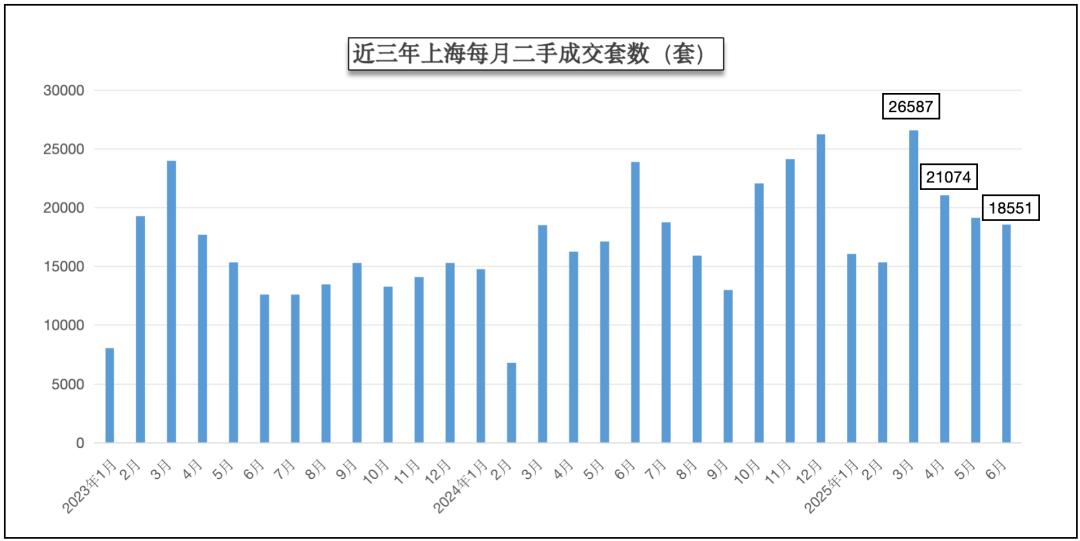
Core Insights - The article discusses the shifting dynamics between the new and second-hand housing markets in major Chinese cities, particularly Shanghai, highlighting how new housing supply is increasingly attracting buyers away from the second-hand market [1][13][24] Market Dynamics - Shanghai's central area is increasing the supply of core land, which is beneficial for the new housing market, while the second-hand market remains dominated by older, less desirable properties [1][5] - The second-hand market is experiencing a disconnect between transaction volume and price, with a significant number of transactions occurring without corresponding price increases [5][12][24] Transaction Trends - In Shanghai, the average monthly second-hand transactions have been around 19,500 units, but prices have shown little upward movement despite this volume [5][12] - The proportion of second-hand homes priced below 3 million yuan is significant, with major cities like Beijing seeing an increase in lower-priced transactions [8][10] Inventory and Supply Issues - The inventory of second-hand homes in Shanghai has reached historical highs, leading to a situation where the market is flooded with lower-priced listings, affecting overall price stability [10][12] - The article notes that while second-hand transactions are high, the market is characterized by a lack of enthusiasm among buyers, indicating a potential shift in buyer sentiment [4][12] New Housing Market Growth - The new housing market is gaining traction, with cities like Guangzhou and Wuhan seeing a decrease in second-hand market share as new homes become more appealing [13][16] - Notable sales in the new housing market include high-value projects, with Shanghai's 壹号院 achieving over 10 billion yuan in sales, indicating strong demand for new properties [18][19] Consumer Behavior - The article emphasizes a shift in consumer preferences, with buyers increasingly favoring new homes for their quality and product offerings, while the second-hand market struggles with outdated inventory [26][32] - The demand for high-end properties is rising, particularly in first-tier cities, while the second-hand market is losing its appeal to affluent buyers [19][26] Supply-Side Reforms - Recent changes in land supply and development regulations are enhancing the quality of new housing products, which may further widen the gap between new and second-hand markets [29][32] - The introduction of new construction technologies and lower-density land parcels is expected to improve the attractiveness of new homes, potentially leading to a more pronounced divide in the market [29][30]
新世纪期货交易提示(2025-7-17)-20250717
Xin Shi Ji Qi Huo· 2025-07-17 02:37
Report Industry Investment Ratings - Iron Ore: Upward [2] - Coking Coal and Coke: Upward [2] - Rolled Steel: Sideways [2] - Glass: Upward [2] - Soda Ash: Sideways [2] - Shanghai Stock Exchange 50 Index: Rebound [2] - CSI 300 Index: Sideways [4] - CSI 500 Index: Upward [4] - CSI 1000 Index: Upward [4] - 2 - year Treasury Bond: Sideways [4] - 5 - year Treasury Bond: Sideways [4] - 10 - year Treasury Bond: Rebound [4] - Gold: High - level Sideways [4] - Silver: Strong - trending [4] - Pulp: Sideways [5] - Logs: Sideways [5] - Soybean Oil: Sideways with an Upward Bias [5] - Palm Oil: Sideways with an Upward Bias [5] - Rapeseed Oil: Sideways with an Upward Bias [5] - Soybean Meal: Wide - range Fluctuation [5] - Rapeseed Meal: Wide - range Fluctuation [5] - Soybean No. 2: Wide - range Fluctuation [5] - Soybean No. 1: Wide - range Fluctuation [5] - Live Pigs: Rebound [7] - Rubber: Sideways [9] - PX: Wait - and - see [9] - PTA: Short on Highs [9] - MEG: Short on Highs [9] - PR: Wait - and - see [9] - PF: Wait - and - see [9] Core Viewpoints - The black industry is affected by supply - side reform news and production restrictions in Tangshan, with short - term price fluctuations. The iron ore market has short - term strength but a long - term oversupply situation. The coking coal and coke market may see increased supply, and downstream demand is weakening. The rolled steel market has limited supply - demand contradictions in the short term, and the glass market has short - term supply contraction expectations [2]. - In the financial sector, the stock index shows different trends, and the bond market has a narrow - range rebound. Gold is affected by multiple factors and is expected to maintain high - level sideways movement [4]. - The pulp and log markets have a supply - demand dual - weak pattern. The oil and fat market is supported by biodiesel expectations, while the粕类 market is affected by US soybean production and trade policies [5]. - The live pig market has a downward trend in transaction weight and a possible decline in the weekly average price due to increased supply and weak demand. The rubber market has tight supply and weak demand, with inventory adjustments [7][9]. - The PX, PTA, MEG, PR, and PF in the polyester sector have different supply - demand and price trends, with some suggesting short - selling opportunities on highs [9]. Summary by Category Black Industry - **Iron Ore**: Season - end impulse of mines is basically over, global iron ore shipments decline, proximal arrivals increase, and the supply is still abundant. The iron ore price is strong in the short term due to sentiment disturbances but has a long - term oversupply pattern [2]. - **Coking Coal and Coke**: Supply may increase as some coal mines and coke enterprises are expected to resume production. Coke enterprises' profits shrink, downstream demand weakens, and inventory pressure increases [2]. - **Rolled Steel**: The "anti - involution" policy boosts supply - side sentiment, but the market is affected by the less - than - expected central urban work conference. The supply - demand contradiction is not prominent in the short term [2]. - **Glass**: Spot prices decline slightly, inventory decreases, and the long - term demand is difficult to recover significantly. The short - term price is supported by policies [2]. - **Soda Ash**: The short - term valuation is relatively low, and the price is sideways with a slightly upward bias, depending on downstream demand recovery [2]. Financial Sector - **Stock Index**: Different stock indices show various trends, with capital flowing in and out of different sectors. The economic data reflects certain resilience [4]. - **Treasury Bond**: The central bank conducts reverse repurchase operations, and the bond market has a narrow - range rebound [4]. - **Gold and Silver**: Gold is affected by multiple factors such as currency, finance, safety - hedge, and commodity attributes, and is expected to maintain high - level sideways movement. Silver is strong - trending [4]. Light Industry - **Pulp**: The cost price drops, the papermaking industry's profit is low, and the demand is in the off - season, resulting in a supply - demand dual - weak pattern [5]. - **Logs**: The arrival volume is expected to decrease, the daily shipment volume is low, and the market is in a supply - demand dual - weak pattern, while the impact of futures delivery needs attention [5]. Oil, Fat, and Oilseed Meal - **Oils and Fats**: The production of Malaysian palm oil decreases, but inventory increases. The domestic oil inventory rises, and the market is supported by biodiesel expectations [5]. - **Oilseed Meal**: The US soybean production and trade policies affect the market, and the domestic soybean import volume is large, with the price showing wide - range fluctuations [5]. Agricultural Products - **Live Pigs**: The transaction weight may decline slightly, the slaughter enterprise's settlement price is volatile, and the opening rate may continue to decline, with the weekly average price possibly falling [7]. Soft Commodities - **Rubber**: The supply is tight due to weather conditions, the demand is weak, and the inventory is in the adjustment stage, with the price expected to be in wide - range fluctuations [9]. Polyester Sector - **PX**: The supply is tight in the short term, and the price follows the oil price [9]. - **PTA**: The supply increases, the downstream load decreases, and the medium - term supply - demand weakens, with the price following the cost in the short term [9]. - **MEG**: The port inventory decreases slightly, but the supply pressure may appear in the medium term, and the price is under pressure [9]. - **PR**: The cost support weakens, and the market is in a weak - stable pattern [9]. - **PF**: The terminal demand is weak, and the price may continue to be weak and sideways [9].
山金期货黑色板块日报-20250717
Shan Jin Qi Huo· 2025-07-17 01:20
Report Industry Investment Rating No relevant content provided. Core Viewpoints - For the steel industry, the real - estate data in Q2 and H1 2025 is still weak, indicating the industry is in the process of bottom - building. The market is trading on weak reality and strong expectations, with the strong expectation mainly coming from potential supply - side reforms. For now, the steel market is in a state of weak supply and demand, and with the arrival of hot weather, demand is expected to weaken further and inventory may rise slightly. In the short - term, the iron ore market is expected to maintain a volatile and slightly stronger trend, supported by the decline in port inventory, but the high inventory of port trade minerals should be noted [2][4]. Summary by Directory I. Threaded Rods and Hot - Rolled Coils - **Market Conditions**: The real - estate data is weak, and the central urban work conference did not bring the expected major positive news. Supply and demand are both weak. Last week, threaded rod production decreased, factory inventory rose, social inventory continued to decline, and total inventory also decreased. Apparent demand decreased month - on - month. With hot weather, demand will weaken further and inventory may rise slightly. The market is trading on weak reality and strong expectations, and the futures price has stopped falling and continued the previous medium - term upward trend [2]. - **Operation Suggestion**: Maintain a wait - and - see attitude [2]. - **Data Summary**: The closing price of the threaded rod main contract is 3106 yuan/ton, down 0.26% from the previous day and up 1.40% from last week; the closing price of the hot - rolled coil main contract is 3253 yuan/ton, down 0.18% from the previous day and up 1.97% from last week. The 247 - steel - mill blast furnace operating rate is 83.46%, and the daily average molten iron output is 239.81 million tons, down 0.43% from last week. The national building materials steel mill threaded rod production is 216.66 million tons, down 2.00% from last week; the hot - rolled coil production is 323.14 million tons, down 1.52% from last week [2]. II. Iron Ore - **Market Conditions**: The profitability of steel mills is acceptable, with the profit - making surface of sample steel mills approaching 60%. Last week, the molten iron output of 247 steel mills was 239.8 million tons, a decrease of 1.0 million tons from the previous week. It is expected that the molten iron output will further decline in the near future. The global iron ore shipment is at a relatively high level and rising seasonally. The port inventory is slowly decreasing, which supports the futures price, but the port trade mineral inventory is high. In the short - term, boosted by the rising prices of threaded rods, coking coal, and glass, iron ore is expected to maintain a volatile and slightly stronger trend [4]. - **Operation Suggestion**: Temporarily maintain a wait - and - see attitude and be cautious about chasing up [4]. - **Data Summary**: The settlement price of the DCE iron ore main contract is 773 yuan/dry ton, up 0.78% from the previous day and up 4.96% from last week. Australian iron ore shipments are 15.699 billion tons, down 0.97% from last week; Brazilian iron ore shipments are 7.099 billion tons, up 22.63% from last week. The port inventory is 137.6589 billion tons, down 0.81% from last week [4]. III. Industry News - According to the China Iron and Steel Association, in early July 2025, key steel enterprises produced 20.97 million tons of crude steel, with an average daily output of 2.097 million tons, a 1.5% decrease in daily output month - on - month; 19.31 million tons of pig iron, with an average daily output of 1.931 million tons, a 1.1% decrease in daily output month - on - month; and 19.88 million tons of steel, with an average daily output of 1.988 million tons, an 11.9% decrease in daily output month - on - month. It is estimated that the national daily output of crude steel is 2.71 million tons, a 1.5% decrease; the daily output of pig iron is 2.36 million tons, a 1.1% decrease; and the daily output of steel is 4.09 million tons, a 2.9% decrease [6]. - UMK announced its manganese ore quotation for China in August 2025, with the price of South African semi - carbonate lumps at 3.9 US dollars/ton degree (up 0.05) [7]. - Rio Tinto released its Q2 production and sales report. In terms of production, the iron ore output of the Pilbara business in Q2 was 83.7 million tons, a 20% increase quarter - on - quarter and a 5% increase year - on - year. In terms of shipments, the iron ore shipments of the Pilbara business in Q2 were 79.9 million tons, a 13% increase quarter - on - quarter and a 1% decrease year - on - year [7].
上游出栏,猪价承压
Zhong Xin Qi Huo· 2025-07-17 01:20
1. Report Industry Investment Rating Most of the industries in the report are rated as "oscillating", with the exception of the log industry which is rated as "oscillating weakly", and the sugar industry which is expected to "oscillate weakly" in the long - term and "oscillate" in the short - term [7][8][9][10][12][14][16][17][18]. 2. Core View of the Report The report analyzes multiple agricultural and related industries, finding that most industries are currently in an oscillating state. Some industries face supply - demand imbalances, such as the oversupply in the hog industry; others are affected by factors like weather, policies, and trade relations, such as the possible weather - related speculation in natural rubber and the impact of trade agreements on protein meal [1][7][8]. 3. Summary by Variety 3.1 Oils and Fats - **View**: Oscillating and differentiating, with soybean and rapeseed oils oscillating strongly yesterday. - **Logic**: Good growth of US soybeans, a decrease in US soybean oil inventory, an increase in the expected demand for soybean oil in biodiesel, and the Brazilian biodiesel blending ratio increase. However, there is also pressure from the increase in palm oil production and the high inventory of domestic rapeseed oil [7]. 3.2 Protein Meal - **View**: Due to the signing of the Sino - Australian trade memorandum of understanding, the double - meal oscillated and slightly declined. - **Logic**: Abroad, the growth of US soybeans is smooth, but the export prospects are worrying; Brazil's exports are still high. Domestically, the signing of the Sino - Australian memorandum implies new Australian seed imports, with supply pressure leading to weak spot prices, but concerns about Sino - US trade support the futures prices. It is expected to oscillate in the short - term and be strong in the long - term [8]. 3.3 Corn/Starch - **View**: Spot transactions are light, and futures and spot prices oscillate weakly. - **Logic**: Futures prices rebounded slightly during the day and then fell back. On the spot side, supply at ports and deep - processing plants decreased, and there were price adjustments at some deep - processing plants. Deep - processing production and consumption data changed slightly, and there is a risk of supply shortage before the new grain is listed in large quantities [9][10]. 3.4 Hogs - **View**: Upstream slaughtering puts pressure on hog prices. - **Logic**: In the short - term, large hogs are being slaughtered at an accelerated pace, but the average weight has bottomed out and rebounded, and farmers are still reluctant to sell standard hogs. In the medium - term, the number of new - born piglets has been increasing, and there is room for an increase in hog slaughter in the second half of the year. In the long - term, the current production capacity is still high. The demand for pork has increased week - on - week, and the weight - reduction trend is blocked. In the short - term, the market has positive sentiment, but in the medium - and long - term, there is supply pressure in the third quarter [1][10]. 3.5 Natural Rubber - **View**: There may be weather - related speculation, but the expected increase is limited. - **Logic**: The rubber price rose rapidly at the end of trading yesterday, possibly due to weather - related speculation about a typhoon landing in Hainan Island or external capital. The trading logic follows the macro - sentiment, and the fundamentals are currently stable. The supply is affected by the rainy season, and the demand is relatively stable [12][13]. 3.6 Synthetic Rubber - **View**: The futures price rebounded after a decline. - **Logic**: The futures price followed the commodity adjustment and then rebounded due to the impact of natural rubber. The upward driving force is not obvious, but there is support from the macro - environment and the improvement in butadiene trading. It is expected to oscillate within a range [14]. 3.7 Cotton - **View**: Cotton prices increased with increased positions, breaking through the 14,000 - yuan mark. - **Logic**: In the medium - and long - term, the cotton market is loose, and the new cotton in Xinjiang is expected to increase in production. The demand is in the off - season, but the current commercial inventory is low. Yesterday, the futures price increased with increased positions, but there are multiple factors restricting further increases, and there is a risk of decline when new cotton is listed in large quantities [14]. 3.8 Sugar - **View**: Sugar prices fluctuated within a narrow range. - **Logic**: In the medium - and long - term, sugar prices are under downward pressure due to the expected supply surplus in the 25/26 sugar - making season. In the short - term, the decline in Brazilian sugar production and high domestic sales rates support sugar prices, but the increase in Brazilian production and exports and domestic imports will increase supply pressure [16]. 3.9 Pulp - **View**: The trend is dominated by the macro - environment, with a stalemate - type fluctuation. - **Logic**: The futures price fluctuated horizontally, and the supply - demand relationship is in a stalemate. The upward driving force comes from the macro - environment, but there is pressure at 5200 - 5300 yuan. In the short - term, there is a slight rebound space, and in the medium - term, there may be a phased increase, but the height is limited [17]. 3.10 Logs - **View**: There are few fundamental contradictions, and the short - term futures price oscillates. - **Logic**: Spot prices are weak due to the impact of delivery products, and the cost of importers has increased. Although it is the off - season, the overall demand is stable, and the market is in the bottom - building stage. There is no clear driving force for upward or downward movement in the short - term [18][19].
工业硅、多晶硅日评:供给端扰动不断,硅系价格走势坚挺-20250717
Hong Yuan Qi Huo· 2025-07-17 00:54
Report Industry Investment Rating - Not provided in the document Core Viewpoints - The prices of silicon-based products are showing a firm trend. For industrial silicon, supply may be less than expected while demand from the polysilicon sector may increase, and short - term prices are expected to continue to be strong with potential for greater fluctuations. For polysilicon, the market is driven by supply - side reform expectations and spot price increases, but the upside space may be limited [1]. Summary by Related Content Price Changes - Industrial silicon: The average price of non - oxygenated 553 (East China) increased by 0.56% to 8,950 yuan/ton, the average price of 421 (East China) remained flat at 9,500 yuan/ton, and the futures main contract closing price decreased by 1.14% to 8,685 yuan/ton [1]. - Polysilicon: N - type dense material, N - type re - feeding material, N - type mixed material, and N - type granular silicon prices remained unchanged. The futures main contract closing price increased by 1.12% to 42,945 yuan/ton [1]. Industry News - On July 14, 2025, Yichang Henglong Chemical Co., Ltd.'s project for the reconstruction of water - free dyeing dyes and silicone oil was approved for filing, with planned production capacities of 3000 tons/year of water - free dyeing dyes and 1200 tons/year of silicone oil [1]. - An Anhui - based photovoltaic glass kiln production line with a designed capacity of 750 tons/day entered cold repair, leading to a decrease in supply and an improvement in downstream procurement sentiment [1]. Fundamental Analysis - Industrial silicon supply: Northern large - scale factories have production cuts with no restart news, while the southwest region is about to enter the wet season with lower power costs and gradually increasing enterprise operations, but the restart speed is slow, resulting in a possible supply reduction [1]. - Industrial silicon demand: Polysilicon enterprises are maintaining production cuts with some planned restarts in July, bringing some demand increase; the silicone industry has a strong willingness to cut production to support prices but weak demand, and the demand from silicon - aluminum alloy enterprises is based on needs [1]. - Polysilicon supply: Enterprises are maintaining production cuts, but some may have new capacity put into operation, with an expected slight increase in production in July, approaching 110,000 tons [1]. - Polysilicon demand: The photovoltaic market is weak overall, with increased inventory of silicon wafers and polysilicon. Although the trading atmosphere has improved, the terminal market remains weak due to over - consumption of demand in the first half of the year [1]. Investment Strategies - Industrial silicon: In the short - term, prices are expected to continue to be strong with greater fluctuations, and short - term operations are recommended. In the long - term, there will be selling pressure after the market rebounds [1]. - Polysilicon: The price may continue to be strong in the short - term, but the upside space is limited. Existing long positions can consider taking profits, and continuous attention should be paid to the actual operations of the industrial chain and the implementation of supply - side reforms [1].