
关税政策

Search documents
【环球财经】美媒:关税将推动美国皮革制品价格显著上涨
Xin Hua She· 2025-12-26 09:20
Core Insights - The article discusses the impact of U.S. tariff policies and supply chain disruptions on leather product prices, predicting significant price increases for boots, handbags, and other leather goods in the coming years [1]. Group 1: Price Increases - U.S. leather product prices are expected to rise significantly due to tariffs and a decrease in domestic cattle numbers over the next two years [1]. - The Yale University Budget Lab forecasts that leather product prices in the U.S. will increase by nearly 22% in the next one to two years due to inflation, supply chain bottlenecks, and high tariffs [1]. Group 2: Company Challenges - Texas-based footwear company, Texas Boot Company, faced chaos after the tariff announcement, with increased import costs and disrupted logistics affecting profit calculations [1]. - Other leather product retailers are experiencing similar challenges, with Coach's parent company, Tapestry, estimating tariff-related expenses could reach $160 million, impacting profits more than previously anticipated [1]. Group 3: Industry Responses - Industry experts indicate that as pre-tariff inventory is depleted, products on shelves will require more expensive leather materials, alongside rising foreign processing and shipping costs [1]. - Companies in the leather industry must decide whether to pass increased costs onto consumers or consider workforce reductions due to the financial strain caused by tariffs and supply chain issues [2].
美媒:关税将推动美国皮革制品价格显著上涨
Xin Hua She· 2025-12-26 08:56
Core Viewpoint - The article highlights that U.S. tariff policies and their impact on supply chains have led to increased prices for leather goods such as boots and handbags, with further significant price hikes expected in the next two years due to tariffs and a decrease in domestic cattle numbers [1] Group 1 - U.S. tariff policies are driving up prices for leather products, including boots and handbags, as of 2025 [1] - The prices of leather goods are projected to continue rising significantly over the next two years due to tariffs and a reduction in the domestic cattle population [1]
全球瞭望|美媒:关税将推动美国皮革制品价格显著上涨
Xin Hua Wang· 2025-12-26 08:55
Group 1 - The article highlights that U.S. tariff policies and supply chain disruptions are expected to significantly increase the prices of leather goods such as boots and handbags by 2025, with further increases anticipated in the next two years due to tariffs and a decrease in domestic cattle numbers [1] - Texas-based footwear company, known for its Western-style boots, faced chaos after the tariff announcement in April, with rising import costs and logistics disruptions forcing employees to constantly recalculate profit margins [1] - The parent company of Coach, a handbag brand, reported that tariff-related expenses could reach $160 million, indicating that the negative impact on profits would be greater than previously expected [1] Group 2 - Experts predict that as pre-tariff import inventories are depleted, products on shelves will require more expensive leather materials, alongside rising foreign processing and shipping costs, leading to higher retail prices for leather goods that are unlikely to decrease in the short term [1] - The Yale University Budget Lab forecasts that U.S. leather goods prices will rise by nearly 22% in the next one to two years due to inflation, supply chain bottlenecks, and high tariffs [1] - The price impact on the leather industry is expected to be more pronounced in 2026, prompting companies to decide whether to pass on increased costs to consumers or reduce workforce [2]
美国对华实施新一轮关税,中国拿出中美“釜山会晤”共识,奉劝特朗普不要心存侥幸!
Sou Hu Cai Jing· 2025-12-26 03:59
Core Viewpoint - The Trump administration's announcement of new tariffs on China's semiconductor industry, effective June 2027, reflects deeper geopolitical and economic considerations amidst global supply chain challenges [1][3]. Group 1: Tariff Announcement and Implications - The new tariffs are framed as a response to China's pursuit of industrial self-sufficiency, which the U.S. claims harms American interests [1]. - The delayed implementation until 2027 suggests a strategic compromise within the U.S. government, indicating uncertainty about the potential economic impact of these tariffs [3]. - The tariffs are perceived as a political maneuver ahead of upcoming midterm elections, showcasing a tough stance to voters while balancing internal economic considerations [3]. Group 2: China’s Response and Strategic Position - China's immediate and strong opposition to the tariffs highlights its shift from a passive to a more assertive role in international trade disputes [3][5]. - The ongoing trade tensions and the historical context of the tariff wars indicate a persistent struggle between the U.S. and China, with both sides maintaining consistent policies despite changes in administration [3][5]. - China's dominance in the rare earth supply chain provides it with significant leverage against U.S. trade pressures, suggesting that the U.S. may be underestimating China's resilience and strategic stability [5]. Group 3: Future Economic Landscape - The evolving U.S.-China relationship and the implementation of tariffs will serve as critical indicators of both countries' strategic approaches in the coming years [7]. - The outcome of this tariff battle will depend on the patience and strategic acumen displayed by both nations, with the potential for significant global economic implications [7]. - The ongoing tensions reflect a broader anxiety within the U.S. regarding China's rise, indicating that the economic competition will be a long-term engagement [5].

张尧浠:黄金年末预高位盘整、但来年仍剑指5000美元目标
Sou Hu Cai Jing· 2025-12-26 00:27
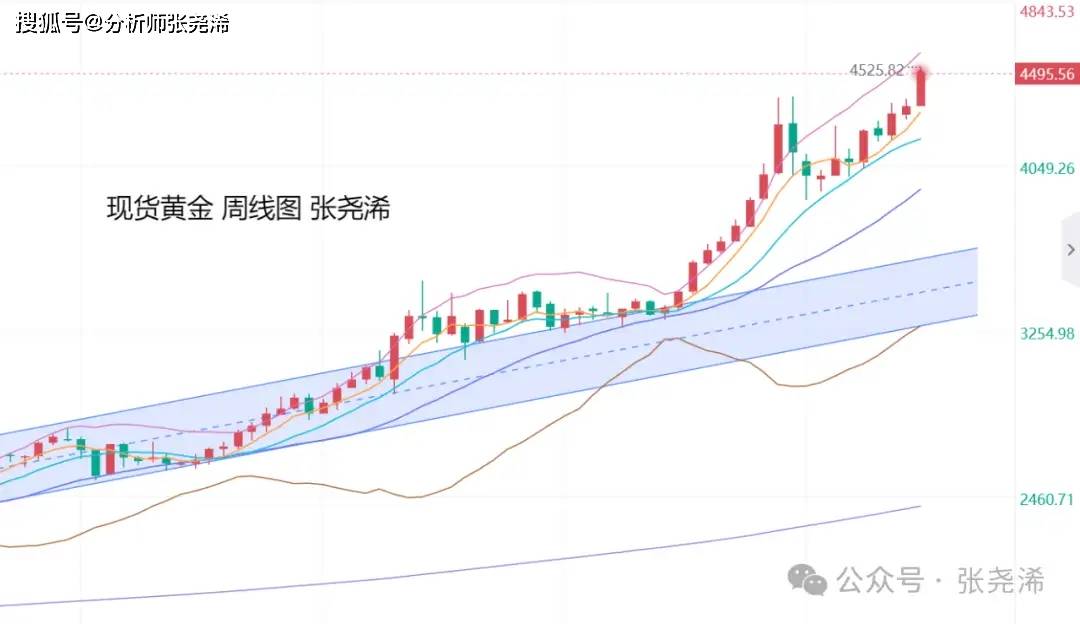
Core Viewpoint - The international gold price is expected to experience high-level consolidation at the end of the year, with a target of reaching $5,000 in the coming year [1][4][6]. Market Analysis - On December 24, gold prices reached a historical high of $4,525.42 but faced profit-taking before the Christmas holiday, leading to expectations of a short-term correction [1]. - The opening of the market on December 25 saw gold prices strengthen due to the recovery of liquidity post-holiday and bullish sentiment driven by interest rate cut expectations [3]. - The dollar index showed signs of recovery but remained under pressure, suggesting limited impact on gold prices in the short term [3]. Future Projections - Predictions indicate that gold prices could rise by 27% in 2024 due to Federal Reserve interest rate cuts, with further increases expected in 2025 driven by tariff policy concerns, geopolitical tensions, and ongoing central bank purchases [4][6]. - The average forecast for gold prices in 2026 is between $4,500 and $4,700 per ounce, with a potential high of $5,000 if macroeconomic conditions remain stable [6]. - The fundamental factors supporting gold prices over the past two years are expected to persist and strengthen, contributing to a bullish market outlook for the next year [6]. Technical Analysis - Monthly charts indicate a strong rebound in gold prices, dispelling previous bearish patterns and suggesting the potential for a new bull market [8]. - Weekly charts show a strong opening and breakout to new highs, increasing bullish momentum and indicating a target of $4,600 [9]. - Daily charts maintain an upward trend despite some weakening in bullish momentum, with key support levels identified at $4,480 and $4,460 [11].
被苹果掌门人库克300万美元逆市增持,耐克的转型阵痛还未过去
Di Yi Cai Jing· 2025-12-25 11:57
科技大佬自掏腰包买股支持或许可以为耐克带来一时关注度。受该消息刺激,当地时间周三(12月24 日),耐克股价一度大涨超5%。 此次的增持被市场人士看来是一次"抄底"。这两年里,全球运动品牌"一哥"耐克的日子并不好过,其股 价较 2021 年 11 月创下的 166.19 美元历史高点已累计下跌超过六成。 耐克公司在当地时间12月18日美股盘后公布其截至今年11月底的2026财年二季度财报,营收达 124 亿美 元,同比增长 1%,按固定汇率计算则基本持平;其中自营业务营收 46 亿美元,下降 8%,经销商业务 营收 75 亿美元,增长8%。同期,集团毛利率同比下降 3%至 40.6%;净利润为7.92亿美元,同比大降 32%;每股收益为0.53美元,低于上一财年同期的0.78美元。 耐克方面表示,与前几个季度相比,二季度北美地区的库存状况有所改善。耐克集团库存资产同比下降 3%至77亿美元,其中大中华区库存同比减少中双位数。 耐克的艰难时刻仍未结束。 苹果两任掌门人各有各的喜好,史蒂夫·乔布斯爱NB,但蒂姆·库克更爱耐克。 这位苹果公司现任的掌舵者日前斥资300万美元"抄底"耐克。根据库克12月23日向美国证 ...
特朗普过去24小时都忙了什么?(2025-12-25)
Xin Lang Cai Jing· 2025-12-25 09:40
炒股就看金麒麟分析师研报,权威,专业,及时,全面,助您挖掘潜力主题机会! 来源:金十数据 1. 泽连斯基要求见面——在美乌进行新一轮磋商后,泽连斯基要求与特朗普举行会晤,以解决未来与 俄罗斯和平协议中最敏感的问题,例如对领土的控制权。 2. 发表圣诞祝福 不忘自夸政绩——特朗普:祝大家圣诞快乐,也祝那些竭尽全力破坏我们国家的激进 左翼败类圣诞快乐,但他们注定会彻底失败。关税为我们带来了数万亿美元的增长和繁荣,以及前所未 有的强大国家安全。 3. 挑战纽约"绿灯法"受挫——联邦法官驳回了特朗普政府阻止纽约州实施"绿灯法"的请求。该法允许 无合法居留证明者申领驾照。 4. 与帕劳签署备忘录接受移民——西太平洋岛国帕劳与特朗普政府签署备忘录,将接收至多75名"第 三国国民",以换取750万美元的援助。 炒股就看金麒麟分析师研报,权威,专业,及时,全面,助您挖掘潜力主题机会! 来源:金十数据 1. 泽连斯基要求见面——在美乌进行新一轮磋商后,泽连斯基要求与特朗普举行会晤,以解决未来与 俄罗斯和平协议中最敏感的问题,例如对领土的控制权。 2. 发表圣诞祝福 不忘自夸政绩——特朗普:祝大家圣诞快乐,也祝那些竭尽全力破坏我 ...
三大核心因素驱动 伦敦银年内涨幅近150%
Jin Tou Wang· 2025-12-25 06:24
Group 1 - The core viewpoint of the articles highlights the significant rise in silver prices, driven by a long-term supply gap, concerns over physical supply due to U.S. tariff policies, and the Federal Reserve's shift to a rate-cutting cycle, which enhances market liquidity and risk appetite [1][2] - Silver prices reached a historical high of $72.70 per ounce, with an annual increase of nearly 150%, establishing silver as the standout precious metal of the year and expected to continue its strong performance into 2026 [1] - The demand for silver in sectors such as photovoltaics, electric vehicles, AI computing servers, and 5G communications has shown robust growth, with the photovoltaic industry's share of global silver demand rising from approximately 20% in 2022 to about 55% currently, fundamentally altering the demand structure for silver [1] Group 2 - The global silver ETF holdings have significantly increased since October, with institutions and high-net-worth individuals purchasing and hoarding physical silver through ETFs or investment banks, which has been a key factor in driving up spot prices [1] - In the futures market, silver is experiencing a backwardation structure, indicating extreme tightness in near-term physical supply [1] - The Federal Reserve's decision to cut rates and expand its balance sheet, along with rising unemployment rates, has led to a continued optimistic outlook for rate cuts in the coming year, contributing to a weakening U.S. dollar index [2]
川普不仅应该获得诺贝尔和平奖,而且应该获得经济学奖
Sou Hu Cai Jing· 2025-12-24 10:40
Economic Growth - The U.S. economy showed a strong recovery in Q3 2025, with GDP growth at 4.3%, significantly above market expectations of 3.3% and the previous quarter's 3.8%, marking the fastest quarterly growth since 2023 [1][4] - Personal consumption expenditure, which accounts for about 70% of the U.S. economy, grew by 3.5%, up from 2.5% in the previous quarter, contributing 2.39 percentage points to economic growth [4] - Exports increased by 8.8%, reversing a decline of 1.8% in the previous quarter, contributing 1.59 percentage points to growth, driven by capital goods and non-durable consumer goods [4] Inflation and Economic Predictions - The core PCE price index rose by 2.9%, in line with market expectations but up from 2.6% in the previous quarter, remaining above the Federal Reserve's long-term target of 2% [1] - Experts had predicted that high tariffs would lead to inflation, but this has not materialized, with various factors such as corporate inventory management and supply chain adjustments contributing to this outcome [5] - Predictions for Q4 economic growth suggest a slowdown due to potential government shutdowns, with an expected annual growth rate of 2% or lower for 2025, and inflation projected to rise to around 3.5% by the end of 2025 [7]
美国三季度GDP增速超预期,家庭债务创新高
Guo Ji Jin Rong Bao· 2025-12-24 08:20
Core Insights - The U.S. GDP grew by 4.3% in Q3, marking the fastest growth in two years, driven primarily by consumer spending and significant investments in artificial intelligence infrastructure [1][2] Consumer Spending - Consumer spending in Q3 saw an annualized growth rate of 3.5%, becoming the main engine of economic growth, with notable contributions from healthcare services, international travel, legal services, and technology products [2][3] - The top 10% of income earners in the U.S. accounted for nearly half of total consumer spending, supported by a booming stock market that bolstered high-end consumption and service demand [2][3] Artificial Intelligence Investment - Investment in artificial intelligence has slowed from previous highs but still contributed significantly to economic growth, with AI-related investments and high-income household consumption together accounting for nearly 70% of the growth in the quarter [3][4] Economic Imbalances - The economic growth is characterized by imbalances, with consumer confidence indices remaining low and durable goods spending slowing down, reflecting public concerns over high prices and the job market [3][4] - Non-residential fixed asset investment showed signs of weakness, and residential investment declined for the second consecutive quarter, with an annualized drop of 5.1% [3][4] Inflation and Income Dynamics - The core Personal Consumption Expenditures (PCE) price index rose to an annualized rate of 2.9%, up from 2.6% in the previous quarter, indicating a slight uptick in inflation [3][4] - After adjusting for inflation, disposable personal income remained flat, suggesting that income growth is barely keeping pace with rising prices, which is particularly challenging for low-income households [3][4] Household Debt Trends - U.S. household debt reached a record high of $18.6 trillion in Q3 2025, with mortgage debt being the largest component at $13.07 trillion [4][5] - The credit market is experiencing a "K-shaped" divergence, where low-income households face increasing financial pressure, while high-income borrowers benefit from stock market gains and rising property values [5]