
降息预期

Search documents
周观:何时是窄幅波动下债市的合适布局时机?(2025年第44期)
Soochow Securities· 2025-11-16 07:33
Group 1: Report General Information - The report is a fixed - income weekly report dated November 16, 2025, focusing on the bond market and related data [1] Group 2: Report Industry Investment Rating - No industry investment rating information is provided in the report Group 3: Report Core Views - The 10 - year Treasury bond active coupon yield is expected to remain in the range of 1.75% - 1.85% until the end of the year. There may be a better layout opportunity in the first quarter of next year when betting on interest rate cuts. A potential fund redemption fee new rule in early December could lead to a pulse - like rise in interest rates, presenting a good entry opportunity [13] - The US 12 - month interest rate cut probability has decreased, and US Treasury yields have collectively risen. The NFIB small - business optimism index in October was lower than expected, and the number of initial jobless claims in the week of November 8 decreased [15][20][21] Group 4: Summary by Directory 4.1 One - Week Views - **Domestic Bond Market**: From November 10 - 14, 2025, the 10 - year Treasury bond active coupon yield decreased by 0.1bp from 1.8060% to 1.8050%. The bond market was in a narrow - range fluctuation. Two factors restricted the interest rate from breaking through the range: market expectations of the weakening fundamentals and the higher probability of interest rate cuts in the first quarter of next year [9][13] - **US Bond Market**: The NFIB small - business optimism index in October was 98.2%, lower than the expected 98.3%. The number of initial jobless claims in the week of November 8 decreased from 228,000 to about 225,000. The probability of a December interest rate cut decreased, and US Treasury yields rose. The 10 - year US Treasury yield rose 4bp to 4.12%, and the 2 - year yield rose 2bp to 3.59% [15][20][21] 4.2 Domestic and Overseas Data Aggregation 4.2.1 Liquidity Tracking - Open - market operations from November 10 - 14, 2025, had a net injection of 781 billion yuan. Interest rate bonds' total issuance, total repayment, and net financing showed certain changes compared to the previous week [27] 4.2.2 Domestic and Overseas Macroeconomic Data Tracking - Commodity prices such as steel and LME non - ferrous metals had mixed rises and falls. The total floor area of commercial housing transactions showed a downward trend [50][51] 4.3 Local Bond One - Week Review 4.3.1 Primary Market Issuance Overview - From November 10 - 14, 2025, 73 local bonds were issued, with a total issuance amount of 285.066 billion yuan, a net financing of 242.792 billion yuan. The top five provinces in terms of issuance amount were Jiangsu, Zhejiang, Liaoning, Jilin, and Beijing [76][78] 4.3.2 Secondary Market Overview - The local bond stock was 54.01 trillion yuan, with a trading volume of 31.0134 billion yuan and a turnover rate of 0.57%. The top three provinces with active trading were Hubei, Guangdong, and Shandong [90] 4.3.3 This Month's Local Bond Issuance Plan - Some provinces and regions have planned local bond issuances from November 17 - 21, 2025 [98] 4.4 Credit Bond Market One - Week Review 4.4.1 Primary Market Issuance Overview - A total of 311 credit bonds were issued, with a total issuance of 268.14 billion yuan, a total repayment of 236.697 billion yuan, and a net financing of 31.443 billion yuan, a decrease of 59.068 billion yuan compared to the previous week [94] 4.4.2 Issuance Interest Rates - The short - term financing bill's latest issuance interest rate was 1.7115%, up 7.53bp; the medium - term note was 2.1127%, down 1.53bp; the corporate bond was not provided; the corporate bond was 2.2449%, up 2.72bp [106] 4.4.3 Secondary Market Transaction Overview - The total credit bond trading volume was 538.76 billion yuan, with different trading volumes for different ratings and bond types [107] 4.4.4 Maturity Yields - The maturity yields of national development bonds generally decreased, while those of credit bonds such as short - term financing bills, medium - term notes, corporate bonds, and urban investment bonds showed different trends [108][109][111] 4.4.5 Credit Spreads - The credit spreads of short - term financing bills and medium - term notes showed a differentiated trend, while those of corporate bonds and urban investment bonds generally widened [115][118][120] 4.4.6 Rating Spreads - The rating spreads of short - term financing bills, medium - term notes, corporate bonds, and urban investment bonds generally narrowed [124][127][131] 4.4.7 Trading Activity - The top five most actively traded bonds for each bond type were listed, and the industrial industry had the largest weekly bond trading volume [136][137] 4.4.8 Subject Rating Changes - There were no bonds with upgraded ratings or outlooks, and no bonds with downgraded ratings or outlooks this week [138][139]
美股大跌,降息预期骤降,英伟达市值蒸发1.2万亿
Sou Hu Cai Jing· 2025-11-16 04:33
英伟达这家公司市值在一夜之间缩水1686.42亿美元,换成人民币大约11966.67亿元,这个账单够吓人,说明资金撤出速度让人目瞪口呆; 热门的中概股也没能幸免,纳斯达克中国金龙指数当日收跌1.59%,百度当日跌超6%,哔哩哔哩跌超4%,小鹏和蔚来分别跌超3%,中概板块几乎是一片灰 色; 在这之前,美国政府刚刚经历了有史以来最长的43天停摆,停摆结束后重启运作,这个过程搞得数据发布时间乱七八糟,让市场多了一层不确定性; 停摆期间很多经济数据延后发布,信息缺口本身就像缺个指挥员,市场难免焦躁,投资者对未来的判断被打上了大大的问号; 美股一夜大跌,好像有人把舞台的灯全关了,英伟达市值蒸发得像是被人用手一挥,这事儿得说清楚,别让大家只记住"跌了"两个字,后面还有一串细节值 得看懂,接下来我把来龙去脉按时间和过程讲清楚,让你知道发生了什么,再别糊里糊涂地跟风恐慌。 11月13日美股收盘,三大指数集体下行,场面比较惨烈,尤其中小科技股被揍得更狠; 当天道琼斯下跌1.65%,标普500跌1.66%,纳指跌2.29%,这些数字说明了市场情绪一锅端式的恐慌; 市场上大型科技股普遍走弱,特斯拉当日跌超6%,英伟达下跌逾3%,谷 ...


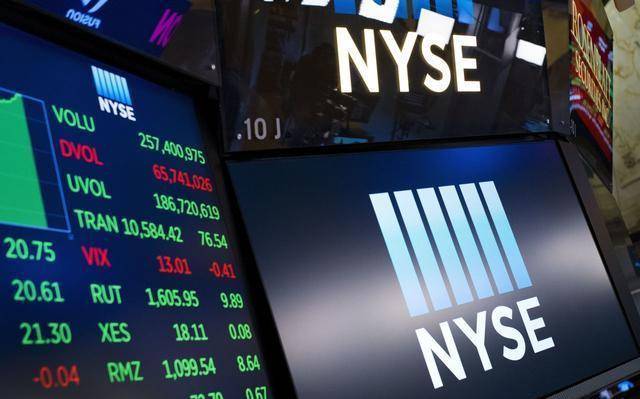
美股暴跌,降息预期急转,英伟达市值蒸发1.2万亿
Sou Hu Cai Jing· 2025-11-15 18:05
当地时间11月13日晚,交易大厅的屏幕像一面突然裂开的镜子,红色的数字从顶端向下流动,汇成一条无法停止的潮水。 那天早晨,我在纽约近郊的一家咖啡馆坐着,电视里播着国会停摆的最后几分钟,那场历时43天的僵局刚刚结束,市场却没有马上松一口气,反而像被重新 点燃的警报,投资者的手开始颤抖。 道琼斯、标普和纳斯达克的跌幅先后跳出,不同屏幕上的百分比像心电图上的波动,特斯拉、英伟达、谷歌、亚马逊相继变红,英伟达市值一夜蒸发约 1686.42亿美元,这是交易记录上的数字,也是电话那端分析师反复念出的冷数据,来源于交易所和公司市值统计。 我走进曼哈顿一家对冲基金的开放式办公室,几名交易员背对着窗外,指尖敲击键盘的速度没有停歇,但语气变得低沉,他们在讨论美联储政策预期的骤 变,芝商所FedWatch的数据显示,市场对12月降息25个基点的概率从70%降到了约47%,这个数据像一根针,刺在他们的自信上。 那晚,散户论坛的聊天记录被截图到微信群里,语句短促,情绪在键盘后堆积,有人问为什么会这样,有人转发财经媒体的解读,我把这些对话当作现场录 音,拼接成一个足以说明当下焦虑的切面,来源为公开论坛与参与者授权转述。 英伟达的市值蒸发 ...
【UNFX市场前瞻】美国政府重启后:关注经济数据补发、美联储政策与债市走势
Sou Hu Cai Jing· 2025-11-15 15:52
Core Insights - The end of the longest government shutdown in U.S. history has shifted market sentiment, reducing risk aversion and warming up risk assets, but volatility may still be on the horizon [1] Economic Data Release - Key economic data that was delayed due to the shutdown will be released next week, including Non-Farm Payrolls (NFP), CPI and PPI inflation data, retail sales, new housing starts and building permits, and consumer confidence index [2][6] Market Dynamics - The market has been operating on expectations during the shutdown, with the Federal Reserve unable to access the latest data. The release of this data may lead to a market re-evaluation [3] - The Federal Reserve has signaled a hawkish stance, reducing the market's expectation for a rate cut in December from approximately 72% to 50% [3] - The end of the shutdown has led to a short-term increase in risk appetite, with U.S. stock futures rebounding and the dollar stabilizing, although this rebound may not indicate a trend reversal [3] Potential Market Movements - The bond market may undergo re-pricing due to delayed fiscal spending, which could increase debt risks and put upward pressure on yields. Rising yields may first impact high-leverage assets like gold and tech stocks [3] - U.S. stocks may experience a "divergent market" where sector rotation occurs rather than a broad market rally, with tech stocks sensitive to yield changes and financial stocks reacting significantly to the interest rate cycle [4] Gold Market Outlook - Gold is at a critical juncture, with its price currently in a weak but unbroken range. The upcoming week will be pivotal for gold's direction, influenced by delayed data, the Federal Reserve's stance, bond yield trends, and the re-pricing of risk assets [5][8] - If economic data is weak, rate cut expectations may rise, potentially boosting gold prices and tech stocks. Conversely, strong data may lead to a higher likelihood of the Fed maintaining its stance, resulting in rising bond yields and pressure on both U.S. stocks and gold [7]
美股惊魂反转背后:降息预期降温与 AI 财报焦虑交织,市场多空博弈加剧
Sou Hu Cai Jing· 2025-11-15 03:58
Market Overview - The U.S. stock market experienced a "V-shaped" reversal on November 14, 2025, with major indices initially dropping over 1% before recovering in the afternoon, reflecting a complex interplay of factors including cooling interest rate cut expectations and rising U.S. Treasury yields [1][2] - The S&P 500 and Dow Jones managed to maintain slight weekly gains of 0.1% and 0.3%, respectively, while the Nasdaq Composite saw a cumulative decline of 0.5% for the week [1] Sector Performance - The technology sector showed structural differentiation, with high-valuation tech stocks like Apple and Google facing pressure due to the news that the probability of a December rate cut by the Federal Reserve fell below 50% [2] - Afternoon trading saw a shift towards more "certain" tech sub-sectors, particularly AI chip stocks, with Micron Technology rising 4.2% following a target price upgrade from Morgan Stanley [2] - Institutional investors demonstrated clear "reallocation actions," with a net inflow of $1.2 billion into tech ETFs (XLK) in the afternoon, while defensive sectors like consumer staples and utilities saw outflows [2] Monetary Policy and Economic Indicators - The core issue driving market volatility is the "repricing" of Federal Reserve monetary policy expectations, with the probability of a 25 basis point rate cut in December dropping from 67% to below 50% [2][4] - Key Federal Reserve officials expressed concerns about inflation, indicating that without compelling evidence of a significant decline in inflation or a cooling labor market, a rate cut is unlikely [2] AI Sector Focus - Nvidia's upcoming quarterly earnings report on November 19 is viewed as a critical test for the AI sector, with expectations that strong performance could bolster market confidence in AI growth [5] - Major investment firms like Morgan Stanley and Goldman Sachs maintain "overweight" ratings on Nvidia, citing its dominant market share in AI chips (over 80%) and robust demand for computing power [5] Commodity Market Dynamics - The global commodities market displayed contrasting trends, with gold prices experiencing significant volatility, dropping nearly 4% before closing down 2.37% due to rising U.S. Treasury yields and a stronger dollar [6] - Conversely, oil prices rebounded, with WTI crude rising 2.39% to $60.09 per barrel, supported by geopolitical risks in the Middle East and a decrease in U.S. crude oil inventories [7] Future Market Outlook - The U.S. stock market is expected to remain in a "range-bound" state due to ongoing "policy uncertainty" and the need to validate industry resilience [8] - Key upcoming events, including the Federal Reserve's December monetary policy meeting, Nvidia's earnings report, and delayed U.S. economic data releases, will significantly influence market sentiment [8]
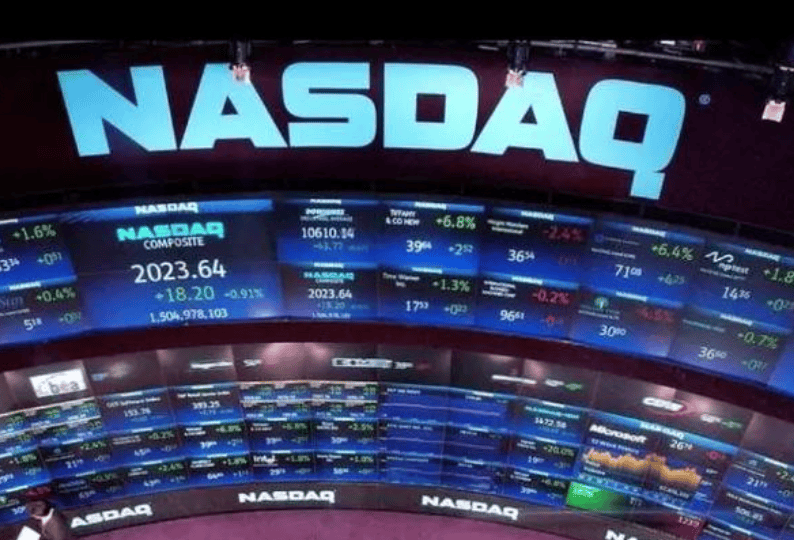
昨夜!黄金大跌,中概股下挫!美降息预期,悬了?
证券时报· 2025-11-15 00:14
Market Overview - The three major U.S. stock indices closed mixed, with the Dow Jones Industrial Average down 0.65% at 47147.48 points, the S&P 500 down 0.05% at 6734.11 points, and the Nasdaq up 0.13% at 22900.59 points. For the week, the Dow Jones rose 0.34%, the S&P 500 rose 0.08%, while the Nasdaq fell 0.45% [1][2]. European Market Performance - European indices closed lower across the board, with the German DAX down 0.65% at 23860.62 points, the French CAC40 down 0.76% at 8170.09 points, and the UK FTSE 100 down 1.11% at 9698.37 points. For the week, the DAX rose 1.34%, the CAC40 rose 2.77%, and the FTSE 100 rose 0.16% [2]. Chinese Concept Stocks - Most popular Chinese concept stocks declined, with Futu Holdings down over 7%, Gaotu Group down over 5%, Xpeng Motors down over 5%, JD Group down over 4%, Baidu down nearly 4%, Alibaba down nearly 4%, and Tiger Brokers down about 4%. However, Canadian Solar rose over 17%, WuXi AppTec rose over 10%, and Daqo New Energy rose nearly 6% [4]. Oracle's Financial Concerns - Concerns regarding AI investments have escalated, particularly with Oracle's significant stock drop, which highlights the high valuations of tech stocks and the risks associated with massive debt financing and rapidly increasing AI capital expenditures. Oracle's stock rebounded slightly, closing up 2.44%, but it has cumulatively dropped 6.85% for the week [5][6]. - Oracle's stock has fallen nearly 30% in the past month, erasing over $250 billion in market value since its partnership announcement with OpenAI. Barclays downgraded Oracle's debt rating to "underweight," warning that its credit rating could be downgraded to BBB-, just one step above junk status. The report also indicated that Oracle's interest-bearing debt has doubled over the past decade to $111.6 billion, with a debt-to-equity ratio of 500%, significantly higher than Amazon's 50% and Microsoft's 30% [5][6]. Federal Reserve Interest Rate Outlook - Expectations for a rate cut by the Federal Reserve in December have decreased significantly, with the probability of a 25 basis point cut dropping from 67% to below 50%. Kansas City Fed President Jeff Schmieding expressed concerns that further rate cuts could entrench high inflation rather than support the labor market [8]. Gold and Oil Market Movements - International gold prices fell over 2%, with COMEX gold futures down 2.62% at $4084.4 per ounce, while silver futures dropped 5.21% at $50.4 per ounce. The decline in gold prices is attributed to the market's cooling expectations for a Fed rate cut, as rising interest rates diminish the appeal of non-yielding assets like gold [10]. - Crude oil prices saw an increase, with the main contract for U.S. oil rising 2.15% to $59.95 per barrel, and Brent crude rising 1.97% to $64.25 per barrel, influenced by geopolitical tensions such as attacks on oil ports and the seizure of a tanker by Iran [11].


特朗普签署
Xin Lang Cai Jing· 2025-11-14 23:24
来源:市场资讯 (来源:每日经济新闻) 当地时间11月14日,美股三大指数开盘后集体下跌,不过,纳指与标普500指数跌幅迅速收窄,其中纳 指翻红,而道指跌幅仍较大。美联储官员再度对12月降息"鹰派"表态。 此外,据央视新闻报道,瑞士联邦委员会宣布,美国对瑞士产品征收的关税从目前的39%降至15%。自 2025年8月7日以来,美国对瑞士商品加征39%的进口关税。 当地时间11月14日,美国白宫公布总统特朗普签署的最新行政令,进一步调整"对等关税"的适用范围, 将部分农业产品排除在此前依据《对等关税行政令》所征收的附加关税之外。 行政令指出,基于国内相关产品需求与产能评估,以及政府机构最新建议等因素,特朗普认为有必要修 改关税清单,以应对其在《对等关税行政令》中所宣布的"国家紧急状态"。 更新后的关税豁免表及对"结盟伙伴"的潜在调整清单将自美东时间2025年11月13日0时1分起生效。行政 令同时要求修改《美国协调关税表》,并按规定处理可能涉及的关税退还。 图片来源:视觉中国 市场方面,截至14日收盘,道琼斯指数跌0.65%,标普500指数跌0.05%,纳斯达克综合指数涨0.13%。 科技股涨跌互现,甲骨文涨超2 ...


美股三大股指大幅低开,纳指跌1.42%
Sou Hu Cai Jing· 2025-11-14 14:47
Market Overview - The U.S. stock market opened significantly lower, with the Dow Jones down 0.78%, the Nasdaq down 1.42%, and the S&P 500 down 1.07% [1] - Market expectations for a Federal Reserve rate cut in December fell below 50% for the first time, driven by concerns from Fed officials about persistent inflation above target levels [1] Company Specifics - Applied Materials saw a decline of over 7% despite reporting Q4 earnings and Q1 guidance that exceeded expectations; however, export restrictions to China may lead to a revenue decrease of $600 million by 2026 [1] - Cidara Therapeutics experienced a pre-market surge of 105% following the announcement that Merck will acquire the company for $221.5 per share in cash, with the transaction expected to close in Q1 2026 [1] - Google shares fell nearly 3% after the company announced plans to appeal the European Commission's antitrust ruling and rejected the idea of breaking up its business [1]
美股开盘,三大股指大幅低开,道指跌0.78%,纳指跌1.42%,标普500指数跌1.07%
Mei Ri Jing Ji Xin Wen· 2025-11-14 14:44
Group 1 - The U.S. stock market opened significantly lower, with the Dow Jones down 0.78%, the Nasdaq down 1.42%, and the S&P 500 down 1.07% [1] - Concerns from Federal Reserve officials regarding inflation remaining above target have led to a decline in the probability of a rate cut in December, falling below 50% for the first time [1] - Applied Materials saw a drop of over 7%, despite exceeding expectations for Q4 performance and Q1 guidance, with potential revenue reduction of $600 million by 2026 due to export restrictions to China [1] Group 2 - Cidara Therapeutics experienced a pre-market surge of 105% following the announcement that Merck will acquire the company for $221.5 per share in cash, with the deal expected to close in Q1 2026 [1] - Google shares fell nearly 3% after the company announced plans to appeal the European Commission's antitrust ruling and rejected the idea of splitting its business [1]
基差方向周度预测-20251114
Guo Tai Jun An Qi Huo· 2025-11-14 11:31
1. Report Industry Investment Rating - No relevant content provided 2. Core Viewpoints of the Report - The central bank's third - quarter monetary policy implementation report indicates a natural decline in financial aggregate growth, and mentions points such as downplaying monetary policy quantity targets, maintaining a reasonable interest - rate ratio, and vigorously developing the bond market's "science and technology board". [2] - In October, both CPI and PPI increased year - on - year and month - on - month. Besides the contribution of the low - base effect, the effects of monetary and fiscal policies and industrial policies like anti - involution and capacity reduction are evident, especially in industries such as non - ferrous metals, building materials, and new energy. [2] - October financial data shows a slowdown in social financing and credit growth, with insufficient credit demand. At the same time, non - bank deposits increased by 77 billion yuan year - on - year, and the process of deposit transfer continues. [2] - The US federal government's temporary appropriation bill was passed, ending the 6 - week shutdown. The shutdown pulled down the US fourth - quarter annualized GDP growth rate by 1.5%, and the secondary impact on residents' lives is hard to estimate. The annual appropriation is still undetermined, and there may be another shutdown in two months. [2] - After the shutdown ended, the market trading theme shifted to interest - rate cuts. Hawkish remarks from Fed officials led to a significant decline in the market's expectation of a December interest - rate cut, triggering a sharp drop in US stocks and an increase in US bonds. [2] - This week's full - A trading volume was basically flat compared to last week, maintaining at around 2 trillion yuan per day. The margin trading balance rose slightly to nearly 2.5 trillion yuan. The Shanghai Composite Index once reached a new high since 4000 points but fell back at the end of Friday's session, declining 0.18% for the whole week. Major broad - based indexes turned negative at the end of Friday's session, with the CSI 300 and CSI 500 falling more than 1% for the week, the SSE 50 closing flat, and micro - cap stocks performing outstandingly. The correction of the STAR Market and ChiNext continues. [2] - In terms of basis, the recent basis fluctuation range is still small. The annualized basis of each variety has decreased compared to last week. The IH has switched to a slight discount state, and the annualized discounts of IF, IC, and IM have reached around 3%, 11%, and 14% respectively, with the term structure becoming steeper, and far - month contracts having a greater advantage in hedging costs. [2] 3. Summary According to the Catalog 3.1 Weekly Forecast Conclusion - This week's model predicts that the movement directions of the basis for IH, IF, IC, and IM next week are strengthening, weakening, weakening, and weakening respectively [4]