
地产

Search documents
第七届金麒麟海外市场研究最佳分析师第一名兴业证券张忆东最新研究观点:把握港股高股息资产的三条投资思路
Xin Lang Zheng Quan· 2025-12-01 06:16
Group 1 - The core viewpoint of the article emphasizes that the current market fluctuations do not alter the long-term bullish logic for the Chinese market, which is expected to be driven by the country's comprehensive strength and economic transformation over the next 20 years [2] - The new accounting standards for the insurance industry, effective from 2026, will significantly impact investment strategies, particularly in the classification and valuation of financial assets [3][4] - The shift to high-dividend stocks is becoming more pronounced among insurance companies due to the new accounting standards, which aim to stabilize profit reporting and reduce volatility [7][8] Group 2 - The new accounting standards (IFRS 9 and IFRS 17) will lead to a preference for high-dividend stocks as insurance companies seek stable cash flows to mitigate the impact of market interest rate fluctuations on their financial statements [6][8] - The allocation of insurance funds towards high-dividend stocks is expected to increase, with projections indicating that the scale of high-dividend stock investments could reach 1.6 trillion yuan by 2027 [10] - The demand for high-dividend assets is anticipated to rise as non-listed insurance companies adopt the new accounting standards, further driving investment into these assets [11]

高频半月观:10月底以来基建实物量持续走弱
GOLDEN SUN SECURITIES· 2025-12-01 02:59
Supply - The average operating rate of high furnaces decreased by 1.3 percentage points to 81.6%, compared to a 0.1 percentage point decrease year-on-year[2] - The asphalt operating rate fell by 3.1 percentage points to 26.3%, marking a new low for recent years[2] - The cement dispatch rate decreased by 1.8 percentage points to 33.4%, also the lowest in recent years[2] Demand - New housing sales in 30 major cities increased by 8.0% month-on-month but decreased by 31.7% year-on-year, remaining at the lowest level in recent years[3] - Second-hand housing sales in 18 key cities rose by 20.8% month-on-month but fell by 14.9% year-on-year[3] - Passenger car sales averaged 60,000 units per day, down 1.6% month-on-month and 11.4% year-on-year, primarily due to reduced coverage and support of vehicle replacement subsidies[3] Prices - The average price of rebar increased by 1.6% month-on-month, with the year-on-year decline narrowing to 4.7%[4] - The average price of pork decreased by 1.0% to approximately 17.9 CNY/kg, with a year-on-year decline of 24.0%[6] - The average price of cement fell by 0.8%, with a year-on-year decline expanding to 23.8%[4] Inventory - Steel inventory decreased by 6.0% month-on-month, while the year-on-year increase was 21.8%[7] - The average coal inventory at coastal power plants rose by 2.0% month-on-month but decreased by 5.4% year-on-year[7] - Asphalt inventory fell by 7.9% month-on-month, with a year-on-year increase of 11.0%[7] Liquidity - The central bank implemented a net liquidity injection of 38.98 billion CNY through open market operations in the past half month[9] - The issuance of government bonds totaled 12,026 billion CNY, with a month-on-month decrease of 382.7 billion CNY[9] - The yield on 10-year government bonds rose by 2.2 basis points to 1.844%[9]
中金:下一阶段的行业选择思路
中金点睛· 2025-11-30 23:49
Core Viewpoint - The market has been experiencing volatility due to high expectations and positions in the technology growth sector, alongside concerns about the AI bubble and the Federal Reserve's interest rate outlook, leading to a significant pullback in the Hang Seng Tech index by approximately 16.6% from its peak [2] - Despite attractive valuations in domestic consumption and real estate, the recent weakening of fundamentals has hindered consensus among investors, making dividend stocks a preferred choice in the current environment [2][7] - The company maintains an optimistic outlook for the Hang Seng Index at 26,000 points, validating this view despite fluctuations in October [2] Market Dynamics - The current market turmoil reflects a disconnect between fundamentals and expectations, indicative of a weakening domestic credit cycle, as evidenced by the peak in private social financing in June and a marginal decline in M1 growth in October [7][8] - The market's oscillation between dividend and technology stocks highlights the ongoing struggle between current fundamentals and future expectations [7] Investment Strategy - Investors are advised to consider the credit cycle as a guiding framework for macroeconomic direction and asset allocation, focusing on sectors that align with credit expansion [10][11] - The past two years have seen a trend of "excess liquidity" chasing "scarce assets," with the potential for rapid price increases followed by liquidity shifts to new opportunities [12] Sector Analysis - **Technology Sector**: The AI industry remains a key growth area, supported by domestic policy, but faces challenges due to high valuations and expectations. Short-term focus should be on hardware domestic substitution, while long-term prospects depend on application demand and profitability realization [20][21] - **Domestic Consumption and Real Estate**: Although these sectors have low expectations and valuations, the weakening fundamentals make sustained consensus difficult. Potential short-term trading opportunities may arise with policy catalysts, but caution is advised against "static valuation traps" [17][42] - **Dividend Stocks**: These assets serve as a hedge against weak domestic demand, with the Hang Seng High Dividend Index offering a static yield of approximately 5.8%. However, the range of high-dividend stocks has narrowed, with less than 25% of eligible stocks yielding above 5% [43][45] External Demand and Cyclical Opportunities - The recovery of the U.S. credit cycle may boost global manufacturing, benefiting sectors tied to exports and commodity pricing. Key indicators to watch include U.S. manufacturing PMI and existing home sales [34][37] - The cyclical recovery in external demand may provide short-term trading windows, particularly in the first quarter, as domestic PPI is expected to rise [39][42] Conclusion - The investment strategy should focus on a "barbell" approach, combining dividend and technology stocks while dynamically adjusting weights based on market conditions. External demand-driven cyclical sectors and innovative pharmaceuticals may offer additional flexibility in the portfolio [17][19]


不出意外,A股会迎来12月关键时刻了
Sou Hu Cai Jing· 2025-11-30 16:20
Group 1 - The current stock market requires confidence rather than capital, as evidenced by the lack of trading volume and the significant decrease in bond funds by 100 billion [1] - The market sentiment is low, with a noticeable drop in daily trading volume by 1 trillion, indicating a lack of investor interest as the year ends [1][3] - The increase in deposits and money market funds suggests poor investment willingness, with many preferring to lend money at a low interest rate of 1.4% rather than investing in equities [3] Group 2 - A potential market rally may occur soon, reminiscent of the pre-Chinese New Year period in 2019, where market sentiment was similarly low [5] - The current market is being supported by major banks' protective actions and localized interest in AI hardware stocks, which do not significantly impact the broader market [5] - If favorable news in the securities and real estate sectors catalyzes a rally, the Shanghai Composite Index could rise above 4000 points, boosting overall market sentiment [5] Group 3 - The market is at a critical juncture, with a strong possibility of a rally around the Chinese New Year, as prolonged low sentiment could lead to a return to bear market trading volumes [7] - The enthusiasm for A-shares has recently increased, making it unlikely for the market to revert to a bear state easily [7]

高频:地产销售依旧偏弱,电影票房明显回升
CAITONG SECURITIES· 2025-11-29 11:33
Report Industry Investment Rating No information provided in the content. Core Viewpoints - This week's main concerns include a slight rebound in the week-on-week new home sales in 20 cities, a widening year-on-year decline, and only Hangzhou's new home sales were higher than the same period last year. Overall, the real estate sales remained weak. Commodity prices mostly rose, the production remained stable with a differentiated performance in the operating rates. The box office was significantly higher than the seasonal level due to the release of popular movies, which concentratedly reflected the viewing demand [2]. - The year-on-year decline in new home sales widened this week. The week-on-week growth rate of the new home transaction area in 20 cities tracked by Wind was 3.08%, and the year-on-year decline was 33.38%. Specifically, the new home transactions decreased week-on-week, and the year-on-year decline widened. The new home transaction area in second-tier cities was slightly weaker than the previous period, while those in first-tier and third - fourth - tier cities were stronger than the previous period. The year-on-year decline widened significantly, and the new home transaction areas in all tiers of cities were much weaker than the same period last year [2]. - In terms of investment and production, most commodity prices rose. The price of rebar increased slightly, with robust demand, steel mills reducing production, and merchants reluctant to sell, which supported the price increase. The cement price increased slightly as the weather improved, construction accelerated, and manufacturers pushed up the price, but the demand support was limited. The glass futures price rose, with an enhanced expectation of supply contraction, solid cost support, and short - term improvement in production and sales. The asphalt price decreased slightly due to the seasonal shrinkage of demand, sufficient supply, and weakened cost - end support [2]. - In industrial production, the operating rates showed a differentiated performance. The operating rates of petroleum asphalt and automobile tires increased, the operating rate of coking enterprises increased slightly, while the operating rates of steel blast furnaces and PTA decreased, and the operating rate of polyester filament decreased slightly [2]. - In terms of consumption, the travel momentum was strong. The subway ridership, domestic flights, automobile consumption, and box office were higher than the seasonal levels [2]. - In terms of inflation, the pork price decreased, the vegetable price and oil price increased. This week, the vegetable price increased due to cold weather and rainfall leading to vegetable production reduction and poor supply connection. The crude oil price increased, driven by the expected production cut by OPEC+, the decline in US production, and geopolitical risks [2]. - In terms of exports, the SCFI and BDI increased this week. The transportation demand on the East Coast of the United States route rebounded, shipping companies promoted freight rate increases, and the operating cost provided support [2]. Summary by Directory 1. Real Estate Sales: New Home Sales Remained Weak Year-on-Year - From November 21st to November 27th, the new home transactions decreased week-on-week, and the year-on-year decline widened. The week-on-week growth rate of the new home transaction area in 20 cities tracked by Wind was 3.08%, and the year-on-year decline was 33.38%. Among them, the new home transaction area in second-tier cities was slightly weaker than the previous period, while those in first-tier and third - fourth - tier cities were stronger than the previous period. The year-on-year decline widened significantly, and the new home transaction areas in all tiers of cities were much weaker than the same period last year [2][7]. - In terms of key cities, from a week-on-week perspective, except for Beijing (-32.88%), Shenzhen (-28.09%), and Hangzhou (-1.38%), the new home transactions in other key cities were significantly stronger than the previous period. From a year-on-year perspective, except for Hangzhou (18.73%), the new home transaction areas in other key cities were much weaker than the same period last year [7]. - From November 21st to November 27th, the second - hand home transactions showed a differentiated week-on-week performance, and the year-on-year decline widened. In key cities, from a week-on-week perspective, except for Hangzhou (-1.46%) and Shenzhen (-7.75%), the second - hand home transaction areas in other key cities were stronger than the previous period. From a year-on-year perspective, the second - hand home transaction areas in all key cities decreased significantly compared with the same period last year [7]. 2. Investment: Commodity Prices Mostly Rose - In terms of investment, most commodity prices rose this week. The prices of rebar and cement increased slightly, the glass futures price rose, and the asphalt price decreased slightly [31]. 3. Production: Operating Rates Showed a Differentiated Performance - In production, the operating rates showed a differentiated performance this week. The operating rates of petroleum asphalt and automobile tires increased, the operating rate of coking enterprises increased slightly, while the operating rates of steel blast furnaces and PTA decreased, and the operating rate of polyester filament decreased slightly [39]. 4. Consumption: Travel Momentum was Strong - In terms of consumption, the subway ridership, domestic flights, automobile sales, and box office were higher than the seasonal levels [49]. 5. Exports: SCFI Increased, BDI Increased - In terms of exports, the SCFI index increased slightly, the BDI index increased, the port cargo throughput decreased, and the CRB spot index decreased slightly this week [55]. 6. Prices: Pork Price Decreased, Vegetable Price Increased, Oil Price Increased - In terms of prices, the pork price decreased slightly, the vegetable price increased, the oil price increased, and the rebar price increased slightly [60].
裁员10%!太古集团罕见动刀,旗下地产业务遭遇15年首亏
Guo Ji Jin Rong Bao· 2025-11-28 14:01
Core Viewpoint - Swire Group's Hong Kong headquarters has laid off approximately 10% of its staff, affecting around 40 employees across departments such as sustainability, finance, and risk management, including the head of sustainability, Mark Harper [1][2]. Group 1: Company Restructuring - The recent layoffs mark the first significant job cuts at Swire Group's headquarters in years, as the company aims to enhance overall efficiency and streamline processes [2]. - Swire Group, established in 1816, operates in five major sectors: real estate, aviation, beverages, marine services, and trading, employing over 121,000 people globally, with more than 500 at its Hong Kong headquarters [2]. Group 2: Real Estate Performance - Swire Properties' retail business has shown signs of recovery, with all three core shopping centers in Hong Kong maintaining a 100% occupancy rate and experiencing varying degrees of sales growth as of the end of September [2]. - Specific sales growth figures include a 3.6% increase for Taikoo Place, 3% for Taikoo City, and 0.2% for Cityplaza [2]. Group 3: Mainland Market Activity - The retail market in mainland China is more vibrant, with notable sales growth reported: 41.9% for Shanghai's Xinyi Taikoo Hui, 7.8% for Beijing's Sanlitun Taikoo Li, and 5.6% for Shanghai's Qiantan Taikoo Li [3]. Group 4: Office Property Challenges - The office property segment remains weak, with rental rates declining by 13% at Taikoo Place and 15% at Taikoo Square [5]. - As of the end of September, the overall office occupancy rate in Hong Kong was 92%, down from 93% in 2024, with Taikoo Square's occupancy dropping from 93% to 90% [5]. Group 5: Financial Performance - Swire Properties reported a significant fair value loss of HKD 4.68 billion in investment properties for the first half of the year, compared to HKD 879 million in the same period last year, primarily due to the Hong Kong office portfolio [6]. - Despite the challenges, the company achieved a revenue of HKD 8.723 billion, a 20% year-on-year increase, while the attributable recurring profit decreased by 4% to HKD 3.42 billion [6]. - This marks the first time in 15 years that Swire Properties has reported a loss in interim attributable profit, although the sale of multiple properties in Miami contributed to a 15% increase in basic earnings to HKD 4.42 billion [8].

宏观日报:地产下游小幅回暖-20251128
Hua Tai Qi Huo· 2025-11-28 03:14
Report Summary 1) Report Industry Investment Rating No information provided. 2) Core Viewpoints - The downstream real estate sector shows a slight recovery, while the service industry's domestic flight frequency experiences a minor decline [1][3]. - Upstream nickel and egg prices rise, while international crude oil and liquefied natural gas prices fluctuate downward. Mid - stream PX, urea, and PTA prices fall, power plant coal consumption is at a low level, and asphalt construction is in the off - season [3]. 3) Summary by Related Catalogs A. Mid - view Event Overview - **Production Industry**: At the National Development and Reform Commission's November press conference on November 27, the commission responded to market hot - spot issues such as humanoid robots and the expansion of infrastructure REITs project issuance. It aims to prevent high - repetition humanoid robot products from flooding the market and promote the healthy and standardized development of the embodied intelligence industry [1]. - **Service Industry**: Li Qiang chaired an executive meeting of the State Council to deploy the promotion of provincial - level overall planning of basic medical insurance. This is an important measure to improve the universal medical insurance system [1]. B. Industry Data - **Upstream**: - **Non - ferrous Metals**: Nickel prices rise slightly, with the spot price on November 27 at 119,366.7 yuan/ton, a 1.98% year - on - year increase [3][38]. - **Agriculture**: Egg prices recover, with the spot price on November 27 at 6.4 yuan/kg, a 2.74% year - on - year increase [3][38]. - **Energy**: International crude oil and liquefied natural gas prices fluctuate downward. On November 27, the spot price of WTI crude oil is 58.7 dollars/barrel, a 1.33% year - on - year decrease; the spot price of Brent crude oil is 62.5 dollars/barrel, a 1.53% year - on - year decrease; and the spot price of liquefied natural gas is 4,084 yuan/ton, a 2.34% year - on - year decrease [3][38]. - **Mid - stream**: - **Chemical Industry**: PX, urea, and PTA prices fall. On November 27, the spot price of PTA is 4,628.3 yuan/ton, a 0.61% year - on - year decrease; the spot price of polyethylene is 6,980 yuan/ton, a 0.26% year - on - year decrease [3][38]. - **Energy**: Power plant coal consumption is at a low level [3]. - **Infrastructure**: Asphalt construction is in the off - season [3]. - **Downstream**: - **Real Estate**: The sales of commercial housing in first - tier cities rise slightly [3]. - **Service**: The number of domestic flights decreases slightly [3].
股市面面观 | A股4000点三问:震荡何因?差异何在?未来何往?
Xin Hua Cai Jing· 2025-11-28 02:17
Core Viewpoint - The recent fluctuations around the 4000-point mark of the Shanghai Composite Index are attributed to a battle between bullish and bearish factors, alongside a transformation in market structure. Compared to historical instances, the current A-share market shows significant advantages in growth logic, valuation levels, and industrial foundation, suggesting a potential for a more stable mid-to-long-term market trend as multiple positive factors continue to unfold [1][2][7]. Group 1: Market Fluctuations - The 4000-point level serves as a crucial psychological barrier, leading to intense market fluctuations due to the clash of bullish and bearish sentiments. The Shanghai Composite Index briefly surpassed 4000 points on October 29, 2023, but subsequently fell below this level, indicating ongoing volatility [2][3]. - The internal structure of the market reveals that sector rotation and profit-taking demands are direct causes of the fluctuations. The recent rally has been primarily driven by AI technology stocks, which have seen rapid short-term gains, leading to adjustments as investors lock in profits [3][5]. Group 2: Market Structure Changes - The current market structure, valuation levels, and growth logic have undergone profound changes compared to previous instances of the index reaching 4000 points. The contribution of technology stocks to the index's rise has significantly increased, with their weight in the index rising from less than 5% in 2015 to 17% now [6]. - Valuation comparisons indicate that the current price-to-earnings (PE) ratio remains relatively reasonable, fluctuating between 16-17 times, compared to historical PE ratios that often exceeded 20-30 times when the index previously reached 4000 points [5][6]. Group 3: Future Outlook - Despite the current fluctuations, many institutions maintain a positive outlook for the A-share market, believing it can surpass the historical "curse" associated with the 4000-point level. Factors supporting this optimism include a low interest rate environment, ongoing industrial upgrades, and supportive policies aimed at encouraging investment and financing [7][8]. - The market is expected to transition from a previous focus on technology stocks to a more balanced structure, with an emphasis on sectors that demonstrate strong performance and growth potential. Investment strategies may include a "barbell" approach, focusing on both high-growth technology stocks and undervalued defensive sectors [8][9].
不出意外,接下来,A股会重演2024年行情了
Sou Hu Cai Jing· 2025-11-28 00:02
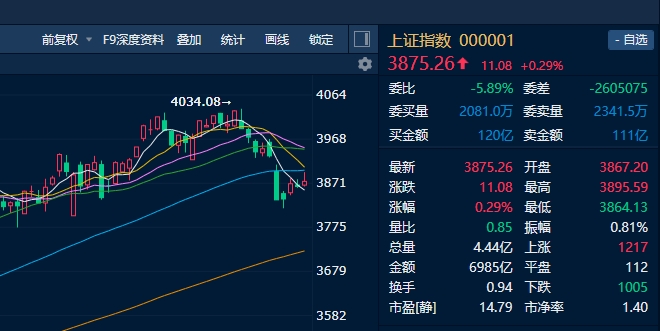
Group 1 - The Shanghai Composite Index has reached 4000 points this year, but the actual increase is limited when excluding the major banks and a few tech stocks, suggesting that many weighted industries are still around 3000 points [1] - If major stocks do not experience a rebound, the longer the time passes, the more unfavorable it will be for the index, indicating that the current bull market may have peaked at 4000 points [1] - The market is characterized by a localized bull market rather than a comprehensive one, with many stocks not performing well, and significant declines in tech assets occurring twice this year [3] Group 2 - There is a lack of significant profit effects in the market, with no noticeable increase in new account openings or discussions about the stock market, indicating a disconnect between the index performance and investor sentiment [5] - The trading volume has dropped significantly, with the market operating at bear market levels, and core weighted industries like liquor, securities, insurance, and banks showing low daily trading volumes [5] - The market requires incremental capital to drive growth, which can only come from rebounds in sectors like securities and real estate, similar to the market behavior seen in September 2024 [5][7]

国泰海通:消费景气线索增多 科技制造延续增长
Zhi Tong Cai Jing· 2025-11-27 22:44
Core Insights - The report from Guotai Junan indicates an increase in consumer sentiment and continued growth in the technology manufacturing sector, with notable trends in various industries [1] Consumer Sector - Domestic demand indicators are improving, with tourism and long-distance travel showing continuous recovery, suggesting a shift towards service-oriented and mass consumer goods consumption despite a contraction in real estate and durable goods [1] - Real estate transactions in 30 major cities saw a year-on-year decline of 25.8%, with first, second, and third-tier cities experiencing declines of 49.8%, 12.6%, and 22.3% respectively; the sales volume in major cities continues to struggle [1] - Durable goods consumption remains under pressure, with average daily retail sales of passenger cars declining year-on-year; in October, domestic sales and exports of air conditioners fell by 21.3% and 19.0% respectively [1][2] Technology & Manufacturing - The technology hardware sector is experiencing marginal growth slowdown, influenced by AI infrastructure investments; however, the overall sentiment remains strong, with October's PCB exports increasing by 23.4% year-on-year, despite a decline in growth rate [3] - Construction demand is still weak, with slight recovery in steel prices due to reduced operating rates of blast furnaces; prices for glass and cement continue to be under pressure [3] - The new energy lithium battery sector remains robust, with a year-on-year increase in power battery sales of 49.9% from January to October, while prices for lithium hexafluorophosphate and lithium carbonate continue to rise [3] Logistics & Transportation - Long-distance travel demand has improved significantly, with the Baidu migration index showing a month-on-month increase of 3.8% and a year-on-year increase of 18.0%; airline passenger load factors are high, indicating a recovery in business and tourism travel [4] - Freight logistics have seen a month-on-month decline, with highway truck traffic and railway freight volumes decreasing by 2.2% and 0.3% respectively; postal and express delivery volumes also fell significantly post "Double Eleven" [4] - Maritime transport prices for dry bulk and oil have risen sharply, driven by increased demand from iron ore and crude oil production [5]
