公用事业

Search documents
106只股上午收盘涨停(附股)
Zheng Quan Shi Bao Wang· 2026-01-06 04:26
Market Overview - The Shanghai Composite Index closed at 4069.38 points, up 1.14%, while the Shenzhen Component Index closed at 13940.24 points, up 0.81%. The ChiNext Index fell by 0.04%, and the Sci-Tech 50 Index rose by 1.95% [1]. Stock Performance - Among the tradable A-shares, 3463 stocks rose, accounting for 66.96%, while 1540 stocks fell, and 169 stocks remained flat. There were 106 stocks that hit the daily limit up, and 2 stocks hit the limit down [1]. - The sectors with the most stocks hitting the limit up included basic chemicals (13 stocks), machinery (12 stocks), and pharmaceuticals (11 stocks) [1]. Notable Stocks - **Yanshan Technology (002195)**: Closed at 8.58 CNY with a trading volume of 42,309.59 thousand shares and a total fund of 363.02 million CNY [1]. - **Fenglong Shares (002931)**: Closed at 38.36 CNY with a trading volume of 5,537.02 thousand shares and a total fund of 21.24 million CNY [1]. - **Innovative Medical (002173)**: Closed at 26.03 CNY with a trading volume of 7,616.63 thousand shares and a total fund of 198.26 million CNY [1]. - **Shan Zi Gao Ke (000981)**: Closed at 4.46 CNY with a trading volume of 32,067.58 thousand shares and a total fund of 143.02 million CNY [1]. ST Stocks - Among the stocks hitting the limit up, 19 were ST stocks, including *ST Yangguang and *ST Wanfang [1]. - **Sheng Tong Energy (001331)**: Closed at 50.94 CNY with a trading volume of 358.76 thousand shares and a total fund of 18.28 million CNY [2]. Sector Highlights - The basic chemicals sector showed strong performance with multiple stocks hitting the limit up, indicating potential investor interest [1]. - The machinery and medical sectors also had significant representation among the top gainers, suggesting a favorable market sentiment towards these industries [1].





251只港股获南向资金大比例持有
Sou Hu Cai Jing· 2026-01-06 01:47
Group 1 - The overall shareholding ratio of southbound funds in Hong Kong Stock Connect stocks is 19.39%, with 251 stocks having a shareholding ratio exceeding 20% [1] - As of January 5, southbound funds held a total of 4,931.52 million shares, accounting for 19.39% of the total share capital of the stocks, with a market value of 62,719.53 billion HKD, representing 14.70% of the total market value [1] - The highest shareholding ratio by southbound funds is in China Telecom, with 9,941.57 million shares, accounting for 71.63% of the issued shares [2] Group 2 - Southbound funds with a shareholding ratio exceeding 20% are mainly concentrated in the healthcare, industrial, and financial sectors, with 56, 38, and 34 stocks respectively [2] - Among the stocks with a shareholding ratio over 20%, 131 are AH concept stocks, making up 52.19% of that group [1] - The stock with the second-highest shareholding ratio is Green Power Environmental, with 28,233.20 million shares, accounting for 69.81% [2]

开门红可期
Huafu Securities· 2026-01-05 11:49
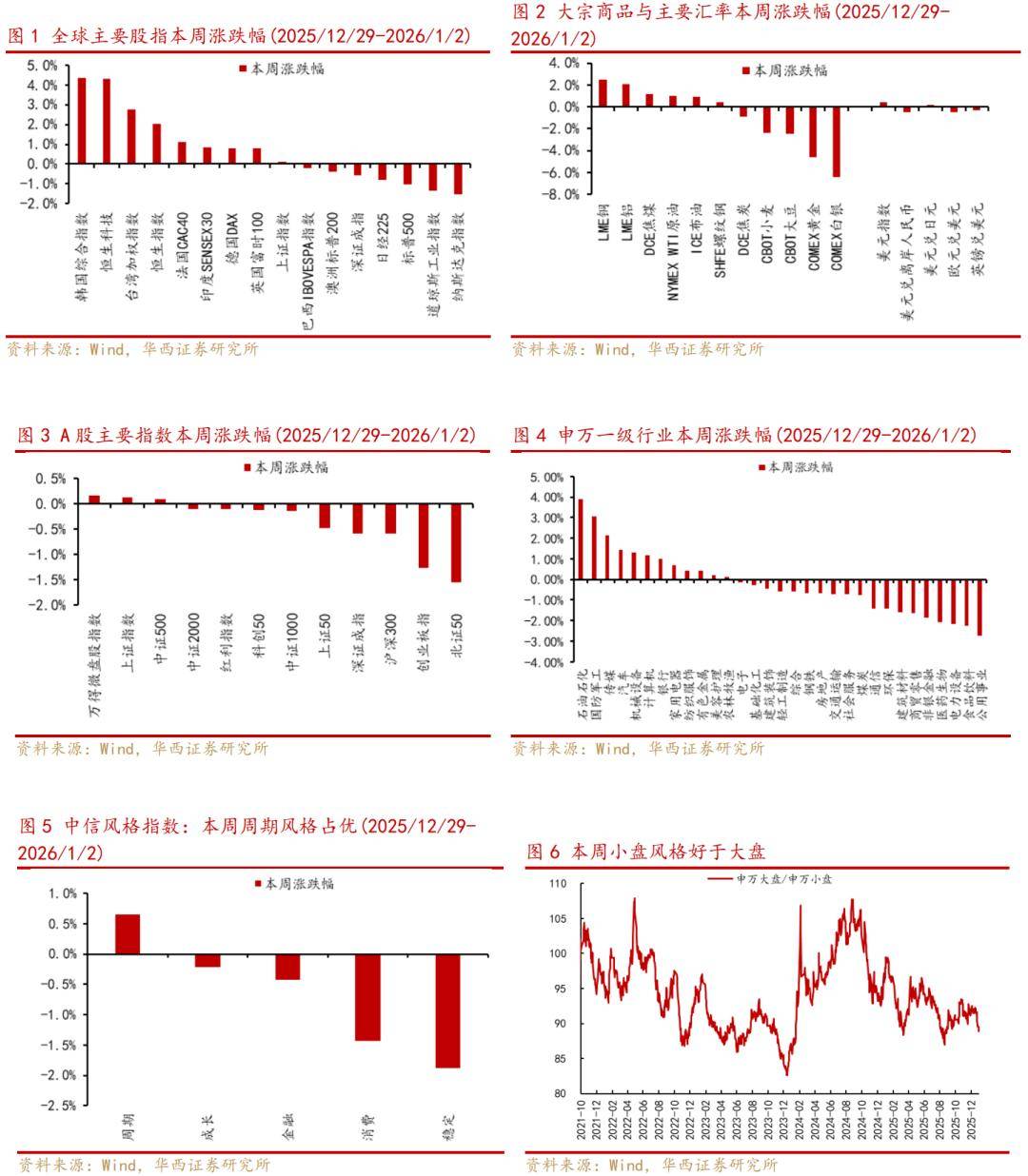
Group 1 - The market is expected to have a strong start in the new year, with a slight decline of 0.33% in the overall A-share market during the last week of December, influenced by the New Year holiday [3][13] - The Shanghai Composite Index and the CSI 500 saw slight increases, while the CSI 300 and ChiNext Index experienced declines. The technology and advanced manufacturing sectors showed slight gains, whereas consumer and healthcare sectors faced losses [3][13] - Among the 31 Shenwan industries, oil and petrochemicals, defense and military, and media sectors led the gains, while electric equipment, food and beverage, and public utilities lagged [3][13] Group 2 - The stock-bond yield spread has decreased to 0.5%, indicating a divergence in market valuations, with the valuation dispersion index rising by 1.7% [21] - Market sentiment has improved, with the sentiment index increasing by 25.2% to 59.9, while the industry rotation strength has decreased to 40, indicating a potential warning level [22][28] - The average daily trading volume of the Stock Connect increased by 519 billion yuan compared to the previous week, with significant inflows into the defense, automotive, and home appliance sectors [34] Group 3 - Meta announced the acquisition of Manus, deepening its layout in AI applications, which highlights the strategic value of AI agents in the current market [44] - Upwind New Materials officially entered the humanoid robot sector with the launch of the "Qiyuan Q1," indicating a growing interest in personal robotics [45] - Blue Arrow Aerospace's IPO application has been accepted, accelerating the capitalization process in the commercial aerospace sector, which is expected to bring new investment opportunities [46] Group 4 - The report maintains a positive outlook for the market, suggesting that the spring rally may start early, supported by improving overseas liquidity, expectations of renminbi appreciation, and positive industrial trends [48] - It is recommended to focus on opportunities in domestic computing power, as well as in commercial aerospace and intelligent driving sectors, which are expected to benefit from policy support [48]
滨海投资(02886)1月5日斥资4.83万港元回购4.2万股
智通财经网· 2026-01-05 10:10
智通财经APP讯,滨海投资(02886)发布公告,于2026年1月5日,该公司斥资4.83万港元回购4.2万股股 份,每股回购价格为1.15港元。 ...
最新股东户数揭秘:这26股股东户数连降三期
Zheng Quan Shi Bao Wang· 2026-01-05 08:50
Core Viewpoint - The continuous decline in the number of shareholders for certain companies indicates a trend of increasing concentration of shares, with 26 companies experiencing a decrease for more than three consecutive periods, and some, like Zhukebo Design, seeing a drop for 12 consecutive periods [1]. Group 1: Shareholder Trends - A total of 176 companies reported their latest shareholder numbers as of December 31, with 26 companies showing a continuous decline in shareholder numbers for over three periods [1]. - Notable companies with significant declines include Zhukebo Design, which has 10,500 shareholders (down 28.08% over 12 periods), and Dongruan Zhaibo, with 32,425 shareholders (down 11.67% over 9 periods) [1]. - Other companies with notable declines in shareholder numbers include Guotou Fengle, Changyuan Electric, and Li Xinengyuan [1]. Group 2: Market Performance - Among the companies with declining shareholder numbers, 6 have seen their stock prices rise, while 20 have experienced declines, with notable increases for Vanadium Titanium Co. (up 4.90%), Xingfa Group (up 3.89%), and COFCO Capital (up 2.94%) [2]. - Only 3 companies outperformed the Shanghai Composite Index during this period, representing 11.54% of the group, with Xingfa Group, Hongming Co., and Vanadium Titanium Co. showing relative returns of 3.77%, 2.76%, and 1.43%, respectively [2]. Group 3: Institutional Interest - In the past month, 6 companies with declining shareholder numbers have been subject to institutional research, with Xingfa Group, Chenshank Technology, and Li Xinengyuan attracting the most attention from institutions, with 95, 32, and 4 institutions participating in their research, respectively [2].




长城宏观:2026新开局,市场有望迈出关键一步
Sou Hu Cai Jing· 2026-01-05 08:16
Market Overview - The A-share market experienced a volatile adjustment last week, with significant divergence among major indices and notable structural characteristics in the market [1] - Technology applications strengthened, while the oil and petrochemical sectors saw consecutive weeks of gains; the commercial sector continued to boost the military industry, but the new energy sector faced a pullback [1] Macro Analysis - In December, the domestic manufacturing PMI showed a seasonal rebound, rising to 50.1%, an increase of 0.9 percentage points from November, marking the first time since April that it entered the expansion zone [2] - Among 21 surveyed industries, 16 reported a PMI increase compared to November, driven by improved trade conditions, increased external demand, and domestic policy adjustments [2] - Key macro policies include early issuance of local government debt limits for 2026 and a total of approximately 295 billion yuan allocated for early construction projects, aimed at accelerating fund disbursement [2] Overseas Economic Data - Recent U.S. economic data exceeded expectations, with pending home sales in November rising by 3.3%, significantly above the anticipated 0.9% [3] - Initial jobless claims unexpectedly fell to 199,000, compared to the expected 218,000 [3] - The December FOMC meeting minutes indicated a hawkish tone, with most participants supporting potential rate cuts if inflation trends downward, while also acknowledging risks of rising inflation [3] Investment Strategy - The company is optimistic about technology growth, non-bank financials, and cyclical assets as the Chinese stock market is expected to stabilize and surpass significant thresholds in 2026 [4] - Factors supporting this outlook include anticipated U.S. interest rate cuts, continued inflow of incremental capital, and policy measures aimed at stabilizing the real estate market [4] - The focus is on sectors benefiting from AI and emerging market industrialization trends, as well as cyclical valuation opportunities under domestic demand expansion [4] Sector-Specific Insights - In the technology growth sector, there is potential in domestic internet, electronics, media, and computing, particularly with the ongoing chip technology breakthroughs and storage price increases [5] - Non-bank financials are expected to benefit from increased wealth management demand and capital market reforms, with a focus on insurance and brokerage sectors [5] - Cyclical sectors are showing marginal improvements in valuation and are likely to benefit from policies aimed at expanding domestic demand and stabilizing the real estate market, including tourism, hospitality, and commodities [6]
2026年A股牛市逻辑或将发生变化
Sou Hu Cai Jing· 2026-01-05 06:12
(本文作者付一夫为苏商银行特约研究员) 刚刚过去的2025年,可谓是A股市场历史性的"跃升之年",在制度改革与产业趋势的双重驱动下,实现 了一系列标志性突破。 从指数层面看,市场走出了一轮特征鲜明的"慢牛"行情,上证指数中枢从年初的3200点左右稳步上行, 并一度成功站上4000点,创下近十年新高。至年末,沪指更是走出了"11连阳",展现出极为强劲的韧 性。不仅如此,A股市场的活跃度与体量达到全新水平,全年累计成交额首次突破400万亿元,日均成 交达1.72万亿元。此外,A股总市值在年内首次跨越100万亿元大关,成为全球第二大股票市场。而在结 构层面,大科技成为无可争议的最强主线,人工智能、半导体、算力、人形机器人等硬科技板块贯穿全 年行情,催生了多只翻倍牛股。 那么在2026年,A股又将如何表现?驱动逻辑是否会发生变化?收益预期是否需要调整?针对这些问 题,本文将尝试给出答案。 一、2026年宏观环境:内修外稳,质效并举 就基本面而言,2025年我国经济社会发展主要目标顺利实现,前三季度GDP同比增长5.2%,在全球主 要经济体中保持前列,为"十五五"开局奠定坚实基础。面对2026年复杂的内外环境,中央明确 ...
李立峰、张海燕:春季躁动提前启动,牛市格局依旧未改
Sou Hu Cai Jing· 2026-01-04 12:53
Market Review - The South Korean Composite Index, Hong Kong's Hang Seng Tech Index, and Taiwan Weighted Index led global gains, while US stock indices declined during the week of December 29, 2025, to January 2, 2026. In the A-share market, cyclical and growth sectors performed well, with oil and petrochemicals, military industry, and media leading gains, while utilities lagged behind. On January 2, 2026, the Hong Kong stock market opened strong, with the Hang Seng Tech Index surging 4%, particularly in semiconductor, AI computing, and internet giants, indicating a recovery in market risk appetite. In commodities, base metals and crude oil rose, while precious metals fell, with COMEX silver and gold down 6.39% and 4.63%, respectively. The offshore RMB strengthened against the US dollar, surpassing 6.97 on Friday [1][2][3]. Market Outlook - The market is expected to maintain a bullish trend into 2026, driven by several positive factors. The macro policy cycle is favorable, with multiple departments rolling out supportive industrial policies and investment plans as 2026 marks the start of the 14th Five-Year Plan. Coordinated fiscal and monetary policies are creating a friendly liquidity environment. Institutional funds, particularly in stock ETFs, have shown significant inflows, indicating a strong willingness to invest as foreign capital returns due to currency appreciation. The narrowing decline in PPI suggests a mild recovery in corporate profits, which will support market sentiment [2][4][5]. Key Focus Areas 1. **Overseas Developments**: The selection of a new Federal Reserve Chair is a key focus, with the December meeting minutes indicating a majority support for further rate cuts, though there are significant policy path divergences. The probability of a rate cut in January is low at 17%, with potential candidates like Hassett and Waller advocating for further easing [2][3]. 2. **PMI Data**: Both manufacturing and non-manufacturing PMIs returned to expansion territory in December 2025, with manufacturing PMI at 50.1% and non-manufacturing PMI at 50.2%. This improvement in production and new orders supports the spring market rally [3][4]. 3. **Policy Measures**: The government has implemented a series of targeted policies to boost market confidence, including a 295 billion yuan investment plan and early release of subsidies and local debt limits. The real estate sector is also seeing policy adjustments to lower transaction costs, which may stabilize market expectations [4][5]. 4. **Institutional Investment Trends**: There has been a notable net inflow of institutional funds into stock ETFs, particularly those related to the A500 index, indicating a proactive approach to the upcoming spring market rally. The favorable policy outlook and stable currency are expected to attract further foreign investment [5]. Industry Focus - The focus for industry investment should be on emerging growth sectors supported by policy, such as AI computing, robotics, and energy storage, as well as sectors benefiting from price increases and "anti-involution" trends, including chemicals and non-ferrous metals [5].

后巴菲特时代,阿贝尔可能比巴菲特赚得更狠!
Xin Lang Cai Jing· 2026-01-04 01:24
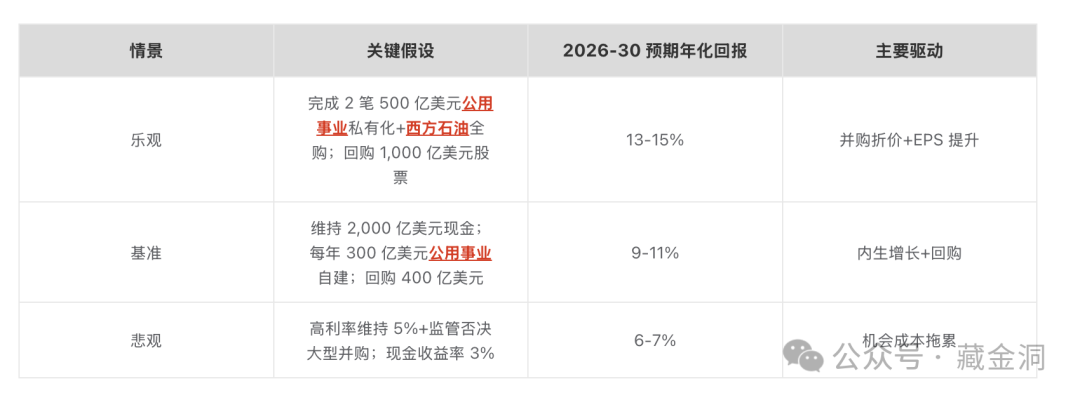
Core Viewpoint - The transition from Warren Buffett to Abel marks a significant shift in Berkshire Hathaway's strategy, moving from brand investment to resource control, with a focus on hard assets and cash management [1][7][30]. Group 1: Financial Position - Berkshire Hathaway's cash reserves have reached a record high of $381 billion, surpassing the total market value of its stock holdings, which stands at $283 billion [17][18]. - This unprecedented cash position indicates a strategic pivot, suggesting that Abel views the current stock market as inflated and prefers liquidity as a strategic asset [19][20]. Group 2: Leadership Transition - Abel, who has a background in energy and railroads, is characterized as a pragmatic and aggressive leader, contrasting with Buffett's more romantic investment philosophy [10][14]. - Abel's approach is expected to focus on acquiring distressed hard assets, such as utilities and infrastructure, rather than traditional consumer brands [21][23][28]. Group 3: Investment Strategy - The investment strategy under Abel is anticipated to shift towards "survival" rather than "pleasure," emphasizing essential services and resources [28][30]. - Abel's recent acquisition of $4.3 billion in Google stock reflects a strategic interest in stable cash flow assets related to AI data centers, rather than speculative technology investments [28]. Group 4: Market Outlook - The current market environment is characterized by high valuations and rising interest rates, which are seen as challenges for companies in utilities and energy sectors [20][21]. - Abel's strategy may involve privatization and full acquisitions of struggling companies, aiming to generate revenue through essential services rather than stock price appreciation [25][26]. Group 5: Future Projections - Projections for Berkshire's annualized returns from 2026 to 2030 vary based on different scenarios, with optimistic estimates suggesting returns of 13-15% through strategic acquisitions and share buybacks [29]. - The company is expected to evolve into a more stable income-generating entity, resembling a super bond or enhanced utility index ETF, with reduced volatility and increased dividend potential [3][30].
伯克希尔,跳水!
券商中国· 2026-01-03 12:40
Core Viewpoint - Berkshire Hathaway's stock price experienced a significant drop on the first trading day after Warren Buffett's retirement, reflecting investor concerns about the transition to new CEO Greg Abel and the company's future performance [1][2]. Group 1: Stock Performance - On January 2, 2026, Berkshire's stock fell over 2% during trading, closing down 1.41% at $744,100 per share, resulting in a market value loss of over $15 billion [1][2]. - In 2025, Berkshire's stock rose 10.9%, lagging behind the S&P 500's 16.4% increase, marking the tenth consecutive year of positive returns [2]. Group 2: Leadership Transition - Greg Abel officially took over as CEO on January 2, 2026, marking the end of Buffett's 60-year tenure, with investors evaluating Abel's ability to manage the company's vast operations and investment portfolio [2][5]. - Abel is expected to maintain Berkshire's decentralized structure, allowing subsidiary executives significant decision-making power, while also potentially implementing more traditional management practices [3][5]. Group 3: Cash Reserves and Investment Strategy - As of September 2025, Berkshire's cash reserves reached a record $381.6 billion, following a prolonged period of net stock sales [2][5]. - Abel will have the final say on capital allocation decisions, with Buffett expressing confidence in Abel's capabilities [2][5]. Group 4: Future Outlook - Investors are closely watching for changes in Berkshire's trajectory under Abel's leadership, although no drastic shifts are anticipated [5][6]. - Abel faces pressure to effectively utilize Berkshire's substantial cash reserves, which could lead to discussions about initiating dividends or stock buybacks if performance does not meet expectations [5][6].